



























Nigeria’s inflation surged to 33.2% in March, primarily propelled by soaring food prices. On an annual basis, food inflation skyrocketed to a record high of 40.01%, while the country’s core inflation, which excludes farm produce and energy, rose to 25.9%.
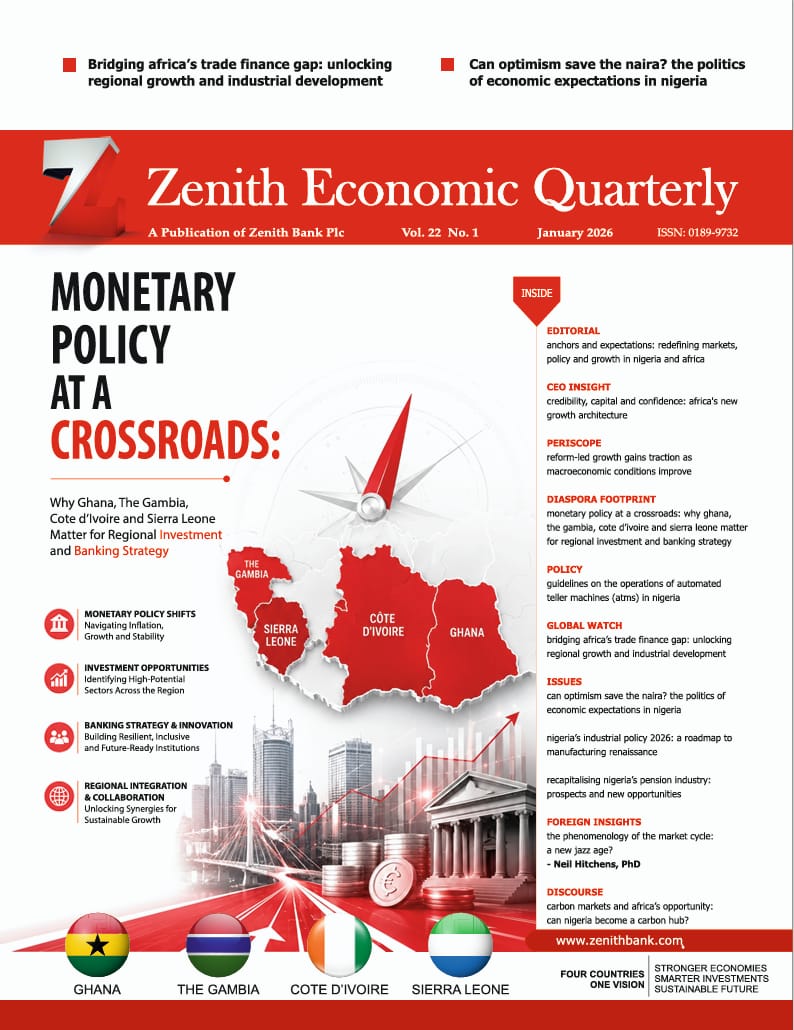 https://www.digital.zenithbank.com/ZEQ/ZEQ-jan-2026/index.html#p=1
The naira appreciation we saw from Mid-March is expected to pull down Nigeria’s inflation figure towards mid year. Also, the base effect is also expected to contribute to the fall in the country’s inflation figure in the second half of the year as prices begin to soar at a faster rate in July 2023.
The Naira was able to extend its appreciation from mid-March until mid-April before the recent decline. However, in April, it closed flat against the dollar, gaining only about 0.04% in the official market.
The Central Bank of Nigeria’s (CBN) aggressive interest rate increase of 600 basis points in early 2024, combined with government debt issuance, likely helped strengthen the Naira. However, increased FDI inflow will extend the naira strength for a long time.
Reserves:
In April, the country’s gross foreign reserves plummeted to $32.25 billion, marking a $1.32 billion reduction from March’s closing balance of $33.57 billion. This is a significant drop from a peak of USD34.4 billion in mid-March.
The reduction in the gross reserve was attributed partly to repayment of existing debt obligations, and FX sales to BDCs to support the currency. The initial increase in Nigeria’s foreign reserves was due to an increase in foreign remittance and an improvement in portfolio inflows.
Stock Market:
The Nigerian Stock Exchange (NGX) All-Share Index (ASI) saw a notable correction in April 2024, plummeting by a dramatic by 6.06% amidst bearish sentiments across all sectors, with the Banking sector being the hardest hit, contrasting with the market’s stellar and strong Year-to-Date (YTD) performance of 39.8% appreciation in the first quarter. his sudden downturn raises crucial questions: Was April merely a fleeting setback following a stellar Q1 performance, or does it signal a looming storm?
The market’s April downturn can be attributed to the Central Bank of Nigeria’s (CBN) tightening policies, which increased borrowing costs. Attractive yields in the fixed-income market diverted investor attention despite ongoing reforms and heightened foreign portfolio investment driving the market’s robust YTD gains.
The bearish sentiment in the Sub-Saharan Africa (SSA) euro bond space mirrors this uncertainty, marking a departure from the optimism of March. Influenced by expectations of prolonged contractionary monetary policy in the US, this downturn underscores the importance of economic stability.
Bank Recapitalization and Economic Growth:
Over the past twenty years, bank recapitalization has reshaped Nigeria’s financial institutions, steering them towards resilience.
The connection between financial restructuring and economic performance seems less pronounced. External economic hurdles, policy intricacies, and market dynamics blur the once-clear lines.
The real litmus test lies in how effectively banks wield this newfound capital. Despite uncertainties looming over the exact impact on the NGX ASI and Banking Index, the bank recapitalization effort is poised to be a driving force behind their sustained growth in the medium to long term.
April encapsulated a month of contrasting market sentiments, transitioning from bearish beginnings to bullish momentum. Despite challenges, such as increased yields in benchmark sovereign bonds, the market demonstrated resilience and attracted substantial investor interest, setting the stage for further exploration of market dynamics in the months ahead.