Category: Aviation

  • Emirates expands flight training academy’s aircraft fleet

    Emirates expands flight training academy’s aircraft fleet

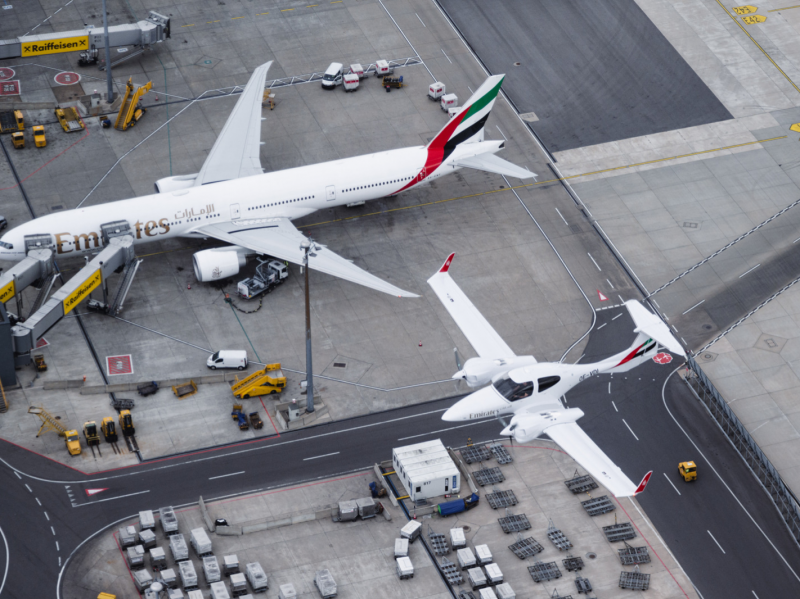
    Emirates Flight Training Academy (EFTA) continues to live up to its promise of offering cutting-edge tech and state-of-the-art aircraft to train pilots of the future and help close the industry’s skills gap. The Academy is now bolstering its current fleet with an order for three twin-engine DA42-VI and its corresponding flight simulator from Diamond Aircraft Industries – a leading manufacturer of aircraft in general aviation based in Austria. The total deal is worth EUR 4 million in list prices.

    The AUSTRO jet-fuel powered DA42-VI aircraft is slated to be the flagship that ushers in multi-engine piston (MEP) training at EFTA.

    Capt Abdulla Al Hammadi, Vice President, Emirates Flight Training Academy, said: “Our new fleet from Diamond Aircraft is part of our larger strategic intent for our cadet programme. It helps us design a bridging MEP programme for cadets to gain more flying experience while progressing from a single engine to a light jet aircraft. It strengthens our offering and makes it more unique, rounded and robust. Our cadets will benefit hugely as they gain experience on three different types of aircraft, even before they’re licensed. The new fleet also helps us go above and beyond on complying with the new GCAA guidelines. The DA42-VI is reliable, eco-friendly and a practical platform for MEP training. We’re confident we’ve made the right choice.”

    “We are thrilled that our DA42-VI is the choice for Emirates’ flight training. This, once again, solidifies the aircraft’s position as the industry leading multi-engine piston trainer,” said Liqun (Frank) Zhang, CEO, Diamond Aircraft Austria. “With Emirates we are adding another premier flight academy to our long list of renowned training operators and are looking forward to support them with the most advanced and eco-friendly aircraft available on the market today.”

    The 4-seat DA42-VI is the newest version of Diamond’s technology leading light piston twin-engine aircraft. It’s the first certified general aviation piston aircraft to combine modern technology airframe, avionics, and power plants.

    With its unique combination of performance and utility, the jet fuel powered DA42-VI is designed to make transitioning from single to twin engine much easier. The aircraft generates fuel savings of up to 50% compared to conventional AVGAS powered twins, and its panoramic canopy provides excellent visibility during all flight manoeuvres. 

    Since its introduction, well over 1,100 DA42 aircraft have been delivered, outselling all other certified piston twins combined. The all-composite DA42-VI is equipped with efficient, silent, clean and reliable 168hp jet fuel AUSTRO engines AE300, Garmin G1000 NXi with 3-axis Automatic Flight Control System and optional electrically driven air conditioning.

    Aircraft delivery is expected to commence soon, with all three slated to be received by EFTA in the first half of 2023. More than 100 cadets have successfully graduated from EFTA since 2020, creating a strong pilot recruitment pipeline for Emirates and the industry.

    In 2017, Emirates launched the Emirates Flight Training Academy in Dubai South to train UAE nationals and international cadets to become pilots. The Academy combines cutting-edge learning technologies and a modern fleet of 27 training aircraft to train cadets with no previous knowledge of flying. Currently, EFTA’s fleet has 22 x Cirrus SR22 G6 single-engine piston and 5 x Embraer Phenom 100EV very light jet aircraft.

    EFTA’s state-of-the-art facility, which is equal to 200 football fields, has 36 modern classrooms, 6 full motion flight simulators, an independent Air Traffic Control Tower, and a dedicated 1,800m long runway.

    Ground school (53 weeks): All 36 classrooms are equipped with two 86” touchscreens, running bespoke training software created specifically for EFTA. Cadets undergo 900 hours of training, and access the material via their own devices, which are all connected to each other, creating an interactive training environment. Flying school (250 hours): cadets currently train on simulators, single-engine Cirrus and Phenom jets.

    For more info, visit https://www.emiratesflighttrainingacademy.com

  • Passenger docked for False Claim of missing luggage on Ibom Air

    Passenger docked for False Claim of missing luggage on Ibom Air

    Recently, the aviation industry has been under siege in Nigeria, with a deluge of issues that keep coming up, requiring airlines to be extra vigilant.


    On the 20th of February 2023, there was a case of an alleged missing checked-in bag by a passenger (name and details withheld), who boarded Ibom Air flight QI0319 from Abuja to Lagos.


    On arrival, the passenger raised a concern, claiming that he was missing his checked baggage, knowing fully well that this was not true.

    Our officers swung into action for proper tracking. It was confirmed that all bags were loaded onto the aircraft from Abuja.Due to the passenger’s complaint, constant calls, disturbance, verbal abuse and threat to the company about his alleged missing bag and valuables items (Designer brand shoes, clothes, etc.) contained therein, we requested a replay of the CCTV footage of that day from Bicourtney Airline Services Limited, Managers of the Murtala Mohammed Airport Terminal 2 (MMA2) to ascertain what became of the bag.

    From the CCTV footage, it was discovered that the bag the passenger claimed to have been missing was his checked-in bag. The CCTV footage showed when the passenger picked up the bag from the conveyor belt with a bag tag on it; he proceeded to the restroom, where he removed the Bag tag from the bag in order to escape the waiting Ibom Air Security Baggage Reconciliation Team, who would have retrieved our baggage claim tag from him and went straight to the Ibom Air counter, where he raised a false alarm about his alleged missing checked baggage.

    When it was established that there was no missing bag and the passenger was dubious in his claim, the case was reported to the terminal’s aviation security and police.

    He was thereafter invited to the office for further investigation and resolution of the issue.Upon his arrival, he stood his ground and was handed over to the security agencies, where he made his statement.

    When confronted with the CCTV footage, he broke down and confessed to the crime.

    He was charged to court for the offense punishable under section 168(d) of the Criminal Law of Lagos State of Nigeria, 2015. He pleaded guilty to the charge, showed remorse for his actions, and promised not to repeat them. He was convicted with an option of a fine.

    This statement is issued to deter unscrupulous elements who are hell-bent on tarnishing the image of Airline Operators while seeking illegitimate gain. We would further like to assure our highly valued passengers of our continuous strive for excellence and the safety and security of our passengers and their checked baggage in our care.

  • Emirates ramps up operations across continents

    Emirates ramps up operations across continents

    Emirates has continued to expand its global network and to deploy its capacity to meet travel demand across the world.  A statement from Adnan Kazim, Emirates’ Chief Commercial Officer, remarked that the Airline’s financial year started relatively quietly as its ramp up was held back until the planned northern runway rehabilitation program at Dubai International airport was completed in June. He said, “From July 2022 onwards, it’s been non-stop expansion.” Emirates has boosted operations by 31% (total ASKMs) since the start of its financial year and has further plans to ramp up seat capacity in its latest published northern summer schedule starting 26 March 2023.

     In the past months, the airline has planned and executed the rapid growth of its network operations – reintroducing services to 5 cities; launching flights to one new destination (Tel Aviv), adding 251 weekly flights onto existing routes and continuing the roll-out of service enhancements in the air and on the ground.

     Kazim added that customer demand has been very strong, and the airline’s forward bookings have also remained robust. “Emirates is working hard on several fronts – to bring back operating capacity as quickly as the ecosystem can manage, while also upgrading our fleet and product to ensure our customers always enjoy the best possible Emirates experience. So far, four of our A380 aircrafts have been completely refurbished with our new cabin interiors and Premium Economy seats, and more will enter service as our US$2 billion cabin and service enhancement program picks up pace.” In the coming months, established routes to Europe, Australia and Africa will be served with more Emirates flights, while in East Asia, more cities are seeing route restarts.

     Emirates has continued to scale up its A380 operations with the reintroduction of the iconic double-decker across its network: Glasgow (from 26 March), Casablanca from (15 April), Beijing (from 01 May), Shanghai (from 04 June), Nice (from 1 June), Birmingham (from 1 July), Kuala Lumpur (from 01 August), and Taipei (from 01 August).

     Emirates had upcoming route enhancements by regions, including in Europe, Australia and New Zealand, East Asia, as well as in Africa which covers Cairo: from 25 to 28 weekly flights by 29 October; Dar es Salaam: from 5 flights a week to daily flights starting 01 May and Entebbe: from 6 flights a week to daily flights starting 01 July.

  • 200 Nigerian passengers stranded as Lufthansa diverts flight to Cotonou, Malabo

    200 Nigerian passengers stranded as Lufthansa diverts flight to Cotonou, Malabo

    Lufthansa Flight LH566 from Frankfurt that was destined to the Murtala Muhammed International Airport (MMIA) Lagos as a direct flight was on Friday diverted to Cotonou, Togo and later to Malabo, Capital of Equatorial Guinea by the pilot who lied to the passengers that the Lagos airport was closed.

    The flight with over 200 passengers and about only 15 passengers destined to Malabo was scheduled to arrive Lagos by 5:45 pm on March 3, 2023 before flying to Equatorial Guinea capital, but later arrived Lagos at 2:00 am on March 4, 2023.

    Findings investigations revealed that the Lagos airport was not closed at any time on March 3, and there was no indication that any other airline coming to Lagos diverted the flight to any other airport whether within Nigeria or outside the country.


    While enquiring from General Manager, Public Affairs, the Federal Airports Authority of Nigeria (FAAN), Mrs. Faithful Hope-Ivbaze, whether the Lagos airport was closed at any time on March 3, 2023 and she responded, “There was never a day/time that MMA was closed. I will let you know if there will be any closure in the coming days.”


    Anytime any airport is closed, the information is circulated to the world through Notice to Airmen (NOTAM), which is managed by the Nigeria Airspace Management Agency (NAMA), NOTAM desk also confirmed that the airport was not closed at any time on March 3, 2023.


    Eyewitness account narrated passengers’ experience in the Lufthansa Flight LH568. “They left Frankfurt yesterday (March 2, 2023) by 12 noon to Lagos and Malabo in Equatorial Guinea. This flight was supposed to be at Lagos by 5.45 pm. On getting to Lagos, the pilot told the passengers they couldn’t land because the Lagos airport was closed.


    “He took them to Contonou airport and landed, waiting for Lagos airport to open, according to the pilot. They were there for almost three hours, and during this time, relatives waiting for the flight were panicking. Then individuals were now calling relatives asking what was happening in the Lagos airport.

    “It was then passengers knew that Lagos airport was not closed.  They now demanded that the pilot should take them to Lagos.  After much argument, the pilot told them he was taking them to Malabo, to drop the 15 passengers before coming back to Lagos to drop off over 200 passengers.

    “This was what the pilot did. They now landed at 2: 00 am. When the passengers said they wouldn’t come down on arrival at Lagos without the airline making a proper arrangement for them, the pilot threatened them and said he would call the police to evacuate the passengers.”

    Because of the diversion of the flight, the return flight from Lagos to Frankfurt was delayed and so Lufthansa management issued a notice to the Frankfurt- bound passengers from Lagos. The circular dated March 3, 2023, stated,

    “Dear Lufthansa guest, Unfortunately, your flight LH569/3 March from Lagos to Frankfurt is delayed due to operational reasons. The incoming aircraft has been diverted and to land in Cotonou (Benin) and then to Malabo (Equatorial Guinea) before reaching Lagos destination.

    “Lufthansa would like to sincerely apologise for this delay and any inconvenience it may have caused your journey.  We have now planned an arrival of the aircraft in Lagos around 01:15 (it arrived 2:00 am) and we will do our best to manage a quick turnaround.”

    Many industry stakeholders were shocked about the pilot’s claim that the airport was closed. It prompted some stakeholders to suggest that the airport might have been closed without proper notification but conceded that if it were so it would not be only Lufthansa that would be affected.

    Airlines that arrive between 4:00 to 7:00 to the Murtala Muhammed International Airport every day include Lufthansa, KLM, Air France, British Airways and others.

    But further investigation carried out revealed that Flightradar24 Live Flight Tracker showed that the Lufthansa flight made circled flight around Lagos/Benin Republic airspace before it landed in Cotonou.

    In a conversation with the Head of Business Development, Zenith Travels and the spokesman of Aviation Round Table (ART), Olu Ohunayo, who monitored the incident.

    He said, “For me personally, I want to think that the pilot must have taken a safety precaution, according to the SOP (standard operating procedure) of Lufthansa. Because an airline cannot take off from Frankfurt and deliberately go and land in Cotonou, putting an extra cost on the airline and adding extra working hours to the crew and inconveniencing its passengers.”

  • Emirates recycles more than 500,000 kilograms of Plastic and Glass in One Year

    Emirates recycles more than 500,000 kilograms of Plastic and Glass in One Year

    Emirates has recycled more than 500,000 kilograms of plastic and glass over the course of 2022, by collecting discarded bottles onboard for repurposing. 500,000 kilograms is almost the same weight as a fully loaded Emirates flagship A380 aircraft.

    Onboard every flight that lands in Dubai, Emirates Cabin Crew work hard to quickly separate glass and plastic bottles, before they are sent to a recycling plant in Dubai. The glass is separated by colour and crushed. This ‘cullet’ or recycled glass that is ready to be re-melted, is then sent to glass manufacturers in the UAE to include in their batch mix for new bottles. The plastic bottles are cleaned, chopped into flakes, melted into pellets, and sent to manufacturers to make other plastic products. As a result, Emirates and Emirates Flight Catering divert thousands of kilograms of glass and plastic away from landfill each year.

    The glass and plastic recycling initiative onboard was suggested by environmentally conscious Emirates Cabin Crew in 2019, as part of regular webinars and events where they are given a platform to share feedback and encouraged to share innovative ideas to key departments. The proposal was well-received and implemented within weeks.

    Emirates has several other initiatives which focus on repurposing plastic or using sustainable materials where possible;

    Emirates blankets made from recycled plastic

    For the last 6 years, Emirates has offered cosy sustainable blankets made from recycled plastic bottles to Economy passengers on long haul flights. The soft and warm blankets are made from 28 recycled plastic bottles. The bottles are shredded into plastic chips before being turned into yarn, creating a fleece material. The fine thread is then woven into soft blankets. Over the 6 years since the initiative was introduced, Emirates blankets have prevented more than 95 million plastic bottles from going to landfill. As the largest sustainable blanket programme on board in the airline industry, the manufacturing process of using recycled polyethylene terephthalate (rPET) also reduces energy emissions by around 70%.

    Prioritising responsible sourcing

    Consuming responsibly is a key environmental focus area for Emirates, who have embedded an environmental requirement in the supplier code of conduct and consider the entire lifecycle of products from the design stage. For example, wooden tea and coffee stirrers, paper straws and inflight retail bags are made using wood and paper from responsibly managed forests.

    Emirates children’s toys made from sustainably sourced material

    For Emirates’ youngest customers, the airline’s complimentary toy bags, baby amenity kits and plush toys are also made from recycled plastic bottles and other sustainable materials. Belt bags, duffle bags and backpacks are designed with specific age groups in mind and are constructed from a yarn that is made from 100% recycled plastic bottles. Each Emirates kids’ backpack is made from 5.5 recycled plastic bottles and each duffle bag is made from 7. The production of the Emirates children’s bags has saved 8 million plastic bottles from landfill. The swing tags are made from recycled card, and even the outer cases that the products are shipped in are made from recycled card that can be recycled again.

    Emirates reusable onboard amenity kits

    Emirates’ Premium Economy and Economy Class range of amenity kits are complimentary for customers on long-haul flights, and feature designs that represent the four essential elements of nature – fire, water, earth, and air. The pouches are reusable and made from washable kraft paper with bespoke art printed in non-toxic soy-based ink. The contents include a selection of durable travel essentials made from environmentally friendly materials. The toothbrush is made from a combination of wheat straw and plastic, and the socks and eyeshades are made from recycled plastic, in this case, rPET (recycled polyethylene terephthalate). The packaging used for the dental kit, socks and eyeshades is made from 90 per cent rice paper.

  • NAMA to Reduce Airlines’ Operational Cost with SBAS Implementation

    NAMA to Reduce Airlines’ Operational Cost with SBAS Implementation

    The Nigerian Airspace Management Agency (NAMA) has said that it’s resolve to constantly upgrade navigational infrastructure in the country was borne out of the determination to enhance safety, improve operational efficiency of airlines and increase their profitability in the long run through reduced operational costs.

    The Acting Managing Director of NAMA, Matthew Lawrence Pwajok, made these remarks in Abuja after a successful test flight of the Satellite Based Augmentation System (SBAS) flight procedure using the agency’s calibration aircraft expressed confidence that the implementation of SBAS would not only enhance safety, efficiency and capacity of the Air Traffic Management system but would also increase the efficiency of the airlines through reduced flight time and turnaround time, reduced fuel consumption, reduced workload for both pilots and air traffic controllers and increased profitability over time.

    He recalled that NAMA had earlier implemented PBN in 32 airports including military, private, state government as well as federal government airports, adding that “the whole essence of the SBAS is to improve on the integrity, accuracy, availability and continuity of the PBN signals by deploying a ground infrastructure or a master station that receives signals from several satellites, triangulates them and takes the best location and then broadcast it through a broadcast media globally to be received by any aircraft within that airspace. So, we have done PBN that provides lateral guidance needed to locate an airport but we have gone a step further to improve on it by implementing precision approaches using the satellite provided by Nigerian Communications Satellite (NIGCOMSAT).” 

    Explaining further, Pwajok said, “while PBN provides lateral guidance for the aircraft to locate an airport, SBAS would provide improved accuracy, improved integrity of the signals, improved availability and continuity of the signals as it collects information from several signals or satellites rather than an aircraft using just one signal from a GPS to fly. So, the samples from several satellites would improve on the indication of accuracy.

    Aircraft can then use it for improved accuracy in approach and landing, improved accuracy in flying en route, and improved accuracy in even descent profile as it provides us with the capacity to give aircraft lateral guidance, and vertical guidance either for approach and landing or take-off and climb for enroute flight. By this, it has helped us to maximize the use of limited airspace and that reduces what we refer to as controlled flights into terrain.”

    The NAMA helmsman said, “the SBAS would be a win-win situation for airlines because over time they have been focusing attention on reducing cost and increasing profitability and this innovation will surely be of immense benefit to them in that regard.” He maintained that an aircraft would not require more than a retrofit for those that have been flying PBN and that it will not be capital-intensive for an airline to acquire a retrofit, stressing that given the cost-effectiveness of satellite navigation, SBAS would improve the economies of airlines in the long run. He also allayed insinuations that the agency will be phasing out Instrument Landing Systems (ILS).

    “In aviation, it is required that every critical service must have redundancy. For us, it is an improvement in terms of the availability of service. When we had the ground-based navigational facilities we still went ahead to implement PBN. This is because the ground equipment are susceptible to power fluctuations, weather changes, technical errors and maintenance issues as well. The ILS is a system and can go off. If the equipment goes off due to power failure or any other reason and an aircraft is trying to land, the pilot can switch to satellite navigation. We must have a contingency and that is required by the NCAA regulations Part 14, and by ICAO Annex 11, that every service you provide must have redundancies,” he said.

    He expressed satisfaction with the SBAS test flight saying that “the guidance was very impressive, the system was fully aligned, the level of deviations was very minimal. The pilot was able to bring the aircraft even further down than the ground equipment. And when an aircraft is able to come to a lower decision altitude that means the pilot had more access to the runway. The ability of a guidance system to bring an aircraft to a lower altitude enables the pilot to have more visibility to be able to make a successful landing.”

  • Wakanow Partners with ValueJet to Boost Local Flight Inventory

    Wakanow Partners with ValueJet to Boost Local Flight Inventory

    Wakanow, Africa’s foremost travel tech company, has today announced an exclusive distribution partnership with ValueJet, a Fly for Value Aviation Company and Nigeria’s newest domestic airline, to host ValueJet’s inventory on their website and increase local flight inventory available to local travelers.

    This partnership is aligned with Wakanow’s aim of delivering access to all local flight inventory in real-time and an all-year-round flight schedule. It also showcases her continuous commitment to the development of the domestic travel industry in Nigeria.

    ValueJet is the latest airline to partner with Wakanow, joining its network and enabling Wakanow-connected customers to find and use bespoke solutions to support their specific travel needs and requirements.  

    While speaking about the partnership, the Chief Executive Officer of Wakanow Nigeria, Mrs. Adenike Macaulay said, “As the foremost travel tech company in Nigeria and West Africa, this partnership for us is a reinforcement of our commitment to give our customers the best and to remain the Number one distribution partner to our Nigerian Airlines. We constantly innovate around our customers’ travel needs and partner with relevant stakeholders to ensure that our customers enjoy a robust and seamless service offering.  Partnering with ValueJet who share in our vision of delivering a unique travel experience at a great value to our joint customers was certain.”

    While corroborating the CEO, the Group Chief Technology Officer, Wakanow Group, Mr. Oyedeji Ojo said, “Wakanow, as a leader in the Nigerian travel industry, has continued to bring value to air travelers through collaborations. We’re delighted to welcome ValueJet as a Partner and together, we will serve our customers with great flight inventories and concentrate on creating enhanced traveler experiences across all customer touchpoints”.

    Speaking about the partnership, the Chief Commercial Officer of Value Jet, Trevor Henry said, “We are happy to announce our strategic partnership with Wakanow, making history as the first travel company to provide ValueJet’s Live Inventory bookable in real-time thus enabling the delivery of a seamless booking experience for Wakanow and ValueJet’s customers. ”

    Wakanow, Africa’s foremost travel tech agency, offers the best travel deals and experiences within the global travel industry to corporate and individual air travelers. 

  • Feature: No Policy Commitment or Manifesto Pledges from the Nigerian Presidential Candidates

    Feature: No Policy Commitment or Manifesto Pledges from the Nigerian Presidential Candidates

    by Ayo Akinfe

    Nigeria’s election campaign is devoid of policy commitments or manifesto pledges. All we are seeing are Chatham House photo opportunities, so I ask why we expect good governance from whoever wins

    [1] To address a nation’s socio-economic problems, you have to understand the thinking of its people, appreciate their outlook and understand the pace at which they are ready to advance. This will inform the choices you make as you try to accelerate the pace of development

    [2] My reading of the Nigerian mentality is that the average person is taught from a young age to go to school, work hard and then make as much money as they can. Every Friday and Sunday they go to the church or mosque to pray for deliverance and the rest of the weekend is spent enjoying themselves. Anything outside that is considered taking your average Nigerian beyond the confines of their comfort zone

    [3] Of late, things have changed significantly as people tend to be more daring, especially within the commercial sector. There are a lot of innovative young entrepreneurs who have torn up the rule book and ventured into hitherto forbidden areas. This is particularly the case with Nollywood and the music industry. One other area where I see this is with the growth of evangelical churches. Some of these new-age clergymen or pastorprueners are tearing up the old orthodoxy and re-writing the rules

    [4] Our problem as a people appears to be that this dynamism has not filtered through to the art of governance. While we get General Overseers who are daring enough to build the world’s largest churches, we do not produce local government chairmen, governors, commissioners, ministers and heads of parastatals keen on building the world’s tallest buildings, longest bridges, fastest trains, biggest dams, largest hospitals, etc

    [5] Now, if we want to be fair, most countries tend to grow organically and evolve over time. In Europe, for instance, it took about 300 years for most nations to grow from rural peasant societies into industrialised ones. Our challenge in Africa is that we do not have that luxury of time, so need to force the pace of development. This, however presents it own challenges

    [6] What this means is that we need radical leadership that will introduce accelerated development, as we saw in Singapore and Dubai and are currently witnessing in China. I still believe the global record was the Soviet Union, where Joseph Stalin’s forced collectivisation programme led to year-on-year 28% economic growth for about a decade. Given that Nigeria’s population is growing at a rate of almost 3%, we simply need to see double digit growth of this kind to notice any significant impact on people’s lives

    [7] Unfortunately, our religious leaning makes us think like the Children of Israel. We want a messiah to appear from nowhere ala Moses, who led them into the Promised Land and Jesus Christ who tore up the Mosaic Laws and gave them a new constitution. In both cases, their two gentlemen were sole administrators. They did not have to get consensus for their actions. They just led and their supporters followed

    [8] As a nation, we want that kind of messiah but would we be willing to follow him or her blindly without question in the knowledge that the destination is the Promised Land? I somehow doubt it. This is why the concept of waiting for “good leaders” or God-fearing/anointed rulers who will come and eliminate corruption, build infrastructure, end nepotism, etc is a pipe dream. If anything, what we need is more organic development across the board, as we have seen with our pastorprueners who have gone from nothing to becoming private jet owners within 10 years

    [9] When I look at someone like Bayo Ogunlesi, I can see what is missing in our political leaders and in the country at large. Here is a man who in 2009 bought London Gatwick Airport for £1.45bn and turned it around. At the time, BAA sold it to him because the airport was making a loss but he revamped it and a few years later, the airport was profitable again. Mr Ogunlesi also bought London City and Edinburgh airports, turning them round too. He sold London City Airport for a profit after turning its fortunes around

    [10] Across Europe, societies have been built by men and women like this who just have a passion for one thing and dedicate their whole lives to the cause. Be it railways, steel, wheat, roads, social housing, anatomy, power supply, rope manufacturing, garbage collection, retailing, clothing etc, what we have seen is men and women devote like 60 years of their lives to their passion. Many of them died penniless but contended because they saw their dreams come to fruition. We have to ask ourselves if we produce enough people like this. If we do not, do we have the moral right to demand leaders of this calibre?

  • Wakanow Restructures For Global Expansion

    Wakanow Restructures For Global Expansion

    …Bayo Adedeji and Adenike Macaulay repositioned to lead the charge

    Wakanow is defining the future in the travel industry, opening new doors, creating ease of travel, unlocking new destinations, and providing fintech services that enhance travel. The revolution is creating opportunities that are driving the future of how customers shop for travel and how they interface with travel agencies and the entire value chain of the travel industry.

    Keeping in step with the new frontiers being created, Wakanow has restructured to function as a Group entity. In line with that, the Board of Directors and Management of Wakanow Group has appointed Mr. Adebayo Adedeji as the Group Chief Executive Officer and Mrs. Adenike Macaulay as Chief Executive Officer of Wakanow Nigeria effective January 2023.

    At the tip of the spear in the new structure, Bayo Adedeji will be at the forefront of expanding the business in Africa (beginning with West Africa) and then exporting the Wakanow excellence into other regions of the world. Adenike Macaulay is tasked with leading the charge within the shores of Nigeria and ensuring that the business in Nigeria deepens its roots and spreads its tentacles across the regions of the country.

    Whilst announcing his new role, the new Group CEO Bayo Adedeji stated, “We are expanding into new verticals and Countries in Africa & beyond to take advantage of new business opportunities in the emerging competitive landscape leveraging our deep understanding of the African customer and expertise in the travel tech industry, and I will be leading this venture as Group CEO”

    He went on to state that, “The synergy I have built with Adenike over the last 18 months makes me super confident to take on this new challenge knowing that our core business will continually grow geometrically in her hands.”

    Also reacting to her promotion, Mrs. Adenike Macaulay the new Wakanow Nigeria CEO said, “I am delighted to receive the leadership torch of Wakanow Nigeria from Bayo and also excited to take on the new responsibility saddled upon me by the board and management of Wakanow and look forward to leading and building with an immensely talented team.”

    In addition to major executive management changes, the company has also strategically positioned its subsidiaries to open new frontiers, constantly innovating for a more satisfactory customer travel experience, delivering technologically powered solutions for things as basic as buying flight tickets to booking hotels and rides.

    These strategic changes are necessary considering the significant growth and success the company experienced post pandemic. Wakanow has since reclaimed its number-one position in Nigeria the largest market in West Africa. Another precursor to the structural changes is the commencement of operations in UAE, US, Sierra Leone and Gambia which kickstarts Wakanow’s drive to connect all of Africa and Africans beginning in West Africa. Plans are already in place to launch in UK, Senegal and Cote D’Ivoire in 2023.

    Wakanow has become renowned for her support to local and international airlines and for enhancing the Nigerian aviation industry with distinct products and services. The travel tech company is built to cater to all the travel needs of travel enthusiasts from flights, hotels, holiday experiences, visa processing, and COVID-19 tests, among other offerings for Nigerian travelers. Wakanow’s charge toward global expansion is now in full throttle and with the latest restructuring, new milestones are certain to be reached and surpassed. Wakanow supports African movie, music and entertainment industries to export Africa to the rest of the world.

  • LASG re-assures-Lagosians of Permanent Solution to Apapa Traffic Gridlocks

    LASG re-assures-Lagosians of Permanent Solution to Apapa Traffic Gridlocks

    The Lagos State Government today re-assured residents and motorists that it would continue engaging relevant stakeholders until traffic gridlocks being experienced around Apapa-Port axis is totally eradicated.

    The Special Adviser to the Governor on Transportation Hon. Sola Giwa disclosed this during an interactive meeting with relevant stakeholders including officials of Nigerian Port Authority (NPA) on the permanent solutions to Apapa traffic gridlocks held at the Ministry of Transportation, Alausa, Ikeja.

    Hon. Sola Giwa disclosed further that despite the success recorded in managing traffic around Apapa with the introduction of ‘Eto’ system to petroleum tankers, the State Government is still working tirelessly to resolve other challenges to enable seamless journey to motorists.

    The Special Adviser maintained the government is trying to establish a process that would be seen as fair and beneficial to everyone no matter the delay.

    “When the road is free, motorists will move freely without traffic and tankers turnover will be high”

    “Traffic causes health, security and other social problems”

    He emphasized that the administration of Governor Babajide Sanwo-Olu is discussing the involvement of a private sector in providing parking space where tankers could temporarily park while awaiting their individual call-up for loading.

    Officials at the meeting general agreed and set up a committee with terms of accommodating other stakeholders into the ‘call-up’ system introduced to encourage orderliness parking among tankers and to provide an holistic solutions to the entire perennial traffic problem around Apapa.

    Speaking earlier at the meeting Comrade Kilanko Solomon who represented NUPENG commended the Special Adviser to the Governor on Transportation (Mr. Sola Giwa) for working round the clock in ensuring free flow of traffic around Apapa and other parts of the State.

    He however said his organization is ready to co-operate with the Lagos State Government in providing lasting solutions to the perennial traffic around the entire Apapa-Port area.

    Other stakeholders at the meeting include officials of NPA, MOMAN, PTD Lagos Zonal Command, NUPENG, STIC, Ardova Plc, Conoil and officials of the Lagos State Traffic Management Authority LASTMA.

    Adebayo Taofiq
    Director, Public Affairs and Enlightenment Department LASTMA.

  • Wakanow appoints Adenike Macaulay as Chief Executive Officer

    Wakanow appoints Adenike Macaulay as Chief Executive Officer

    The Board of Directors and Management of Wakanow Group has appointed Mrs. Adenike Macaulay as Chief Executive Officer of Wakanow Nigeria effective January 2023.

    She is a transformational leader with several years of experience in the travel industry and has led commercial activities for Wakanow since July 2021 as Chief commercial officer.

    While announcing her appointment, Mr. Bayo Adedeji, the Group CEO of Wakanow Group said, “We are delighted to announce the appointment of Mrs. Adenike Macaulay as the Chief Executive Officer of Wakanow. She has been an invaluable addition to the management of Wakanow since she joined us and with her vast experience and exposure in the aviation sector, we definitely will consolidate our growth trajectory in Nigeria”.

    “We are expanding into new verticals and Countries in Africa & beyond to take advantage of new business opportunities in the emerging competitive landscape leveraging our deep competence and expertise in the travel tech industry, and I will be leading this venture as Group CEO” he added.

    We are very excited about the bright future ahead of us in the African travel and tourism industry by providing end-to-end services easily accessible to every African by leveraging technology and strategic partnerships.

    The new Chief Executive Officer, Mrs. Adenike Macaulay said, “ The past 18 months with Wakanow have been immensely exciting as we have recorded several milestones and record-breaking results in the history of the company. I’m excited to take on the new responsibility saddled upon me by the board and management of Wakanow and look forward to leading and building with an immensely talented team.”

    Prior to joining Wakanow, she was the first female and first Nigerian to be appointed as General Manager of Sales for Lufthansa Group in Nigeria & Equatorial Guinea where she led the teams in Lagos, Abuja, Port Harcourt, and Malabo, driving all commercial and sales activities for Lufthansa Group in the region.

    She is the immediate past Chairperson of the International Air Transport Association Local Customer Advisory Group (LCAG) and Vice Chair of the IATA Agency Program Joint Council (APJC).

    She holds an MBA from the University of Warwick in the UK, a BSc in Systems Engineering from the University of Lagos, and a Professional Diploma from the Digital Marketing Institute, Ireland amongst other qualifications.

    She was recently recognized by the International Hospitality Institute as one of the 100 Most Powerful People in Africa’s Travel and Hospitality industry. She was also recognized by Leading Ladies Africa as one of Nigeria’s 100 most inspiring women in 2019, by Guardian Nigeria as Woman of the week in March 2019 and by Poets & Quants as top 100 MBAs worldwide in 2020. 

    Wakanow has become renowned for her support to local and international airlines and enhancing the Nigerian aviation industry with distinct products and services. The travel tech company is built to cater to all the travel needs of travel enthusiasts from flights, hotels, holiday experiences, visa processing, COVID-19 tests, among other offerings for Nigerian travelers.

  • NSIB releases seven final reports, issues twenty safety recommendations to NCAA, FAAN, others

    NSIB releases seven final reports, issues twenty safety recommendations to NCAA, FAAN, others

    The Nigerian Safety Investigation Bureau (NSIB) formerly known as Accident Investigation Bureau (AIB) has released seven final reports of accidents and serious incident air mishaps that occurred within Nigerian airspace to the public.

    The Bureau also issued a total of twenty (20) safety recommendations addressed to the Nigeria Civil Aviation Authority (NCAA), the Federal Airport Authority of Nigeria( FAAN) the Nigerian Airspace Management Agency (NAMA), the affected airlines, among others,  as safety measures to prevent future reoccurrence of similar incidents.

    Addressing newsmen during the presentation of the reports at the Bureau Headquarters, Safety House, Nnamdi Azikiwe International Airport (NAIA), Abuja, NSIB Director General, Engr. Akin Olateru, disclosed that the newly released reports make a total of 82 aircraft accident reports released by the Bureau since its inception in 2007 while a total of 63 reports were released by the current leadership from 2017 till date.

    He said this year alone, seven accident reports and 30 safety recommendations have been released. Olateru added  that, the Bureau has also released a total of two hundred and seventy-two ( 272) safety recommendations since the inception of the Bureau of which a total of One hundred and ninety-one ( 191) of the recommendations were equally released by the current management.

    He also assured of NSIB commitment to the quality investigation of accidents and serious incidents through improving processes, human capacity and equipment, among others.

    “We remain committed through improving our processes, human capacity and equipment, to fulfil our mandate effectively, purposefully, and professionally”, he said.

    Occurrences reports released by the Bureau include the serious incident involving  Bristow helicopters Nigeria Ltd with Registration marks 5N BSN which occurred at Port Harcourt Military Airport (NAF BASE)  on the 9th March, 2020.

    The report of the serious incident involving ATR 72 with Registration Marks 5N- BPG owned and operated by Overland Airways Ltd which occurred at Ilorin Airport on 29th November, 2014.

    The serious incident involving B737-300 with Registration Marks 5N- BUO belonging to Air Peace Ltd, which occurred at FL 310 enroute Enugu from Lagos on 14th December 14th. 2018

     Also released was the report of a serious incident involving British Aerospace BAE 125 -8008 with  Registration Marks 5N- B00 operated by Gyro Aviation Ltd which occurred at Port Harcourt, Nigeria on 16th July 2020.

     The report of the serious incident involving a Dornier 328-100 with Registration Marks 5N- DOX operated by Dornier Aviation Nigeria-  AIEP (DANA) Ltd., which occurred at  port Harcourt Military Airport on 23rd  January 2019 was also released.

    Also released by the Bureau was the final report of the serious incident involving Airbus 330- 243 aircraft operated by Middle Airlines with Registration Marks OD- MEA and  parked Boeing 777 aircraft operated by Turkish Airlines with Registration Marks TC EJC, which occurred at Murtala Muhammad International Airport, Lagos, Nigeria, on 29th July, 2020.

    The released reports also included serious incident involving British Aerospace BAE 125 800B aircraft with Nationality and Registration Marks 5N- BOO operated by Gyro Aviation Ltd., which occurred at Osubi Airstrip, Warri, Nigeria on 10th September 2020.

     The Bureau’s Director General in his final remarks said the details of the reports, which include the factual information, findings, analysis, conclusions and safety recommendations on the investigations are available for download on the Bureau ‘s website.

  • Feature: Proposed Aviation Masterplan for Nigeria

    Feature: Proposed Aviation Masterplan for Nigeria

    By Ayo Akinfe

    Has any of the presidential candidates come up with an aviation masterplan as part of their manifesto?

    [1] When you have a population of 200m, are located bang in the middle of your continent and your populace love travelling, you should have a one of the most lucrative aviation industries in the world. Indeed, Nigeria should be an African aviation hub

    [2] Nigeria is a currently a mono-economy. When 95% of government revenue comes from crude oil sales, we have no choice other then to look for alternative sources of income if we do not want to perish as a people

    [3] By my calculations, Nigeria needs to find something like $30bn from alternative sources during the course of 2023 and for me, aviation has got to be one of the cashcows at the top of the list. Why? Because it is a readily available resource, there is a ready-made market available and we actually have the expertise to deliver on it

    [4] In 2019, Ethiopian Airlines generated revenue of about $4bn. A well-run Nigerian national carrier with several different facets targeted at the diverse sectors of the market could easily double that. It simply has to be a goal we set ourselves

    [5] For starters, analysts believe something like 60% of the world’s airlines will go bust as a result of the coronavirus pandemic. This means a lot of them are available on the cheap, so Nigeria should be looking to purchase at least two going concerns and merge them into one aviation giant with a global reach

    [6] One area where we can develop a unique niche in which we are the global market leader is the private jet sector. There are about 12 jets in the presidential fleet and most of our general overseers own at least one Gulfstream or Bombardier private jet. I think the presidency should donate its planes to this new carrier and the pastorprueners should be patriotic and do likewise. The donating of their aircrafts to the venture should purchase them a stake in the airline. For instance, if David Oyedepo hands over his five private jets, that should grant him a 10% stake in this new company

    [7] If we start off with a fleet of say 20 donated private jets and buy an existing couple of airlines with a combined capacity of say 100 planes, we are good to go. That recent $3.4bn loan we got from the IMF should be enough to fund this project and get the venture going. With the dire straits these airlines are in, they will happily hand over their assets for anything they can get

    [8] Nigeria is Africa’s most populous nation, in the centre of the continent and the seventh most populated country on earth. We simply have to turn the nation into an aviation hub where everybody flies through when they want to travel to the African continent. We have the potential to generate the passenger volume to make this a gold mine

    [9] We are all aware of how our people ruined Nigeria Airways, so as a safeguard, we should insist that any deal involves the professional managers of any purchased airline running the operation for the next 10 years at least, that the Nigerian government has no more than a 25% stake in the venture and that private sector operators like Allen Onyeama are Nigeria’s representatives on the board of directors

    [10] A well run Nigerian airline could easily replace oil as our national cashcow. Figures do not lie so if you look at the revenue generated by major airlines prior to this pandemic, you will realise that our obsession with oil is nothing but a mental illness of sorts. See – Delta Airlines ($44.9bn), American Airlines ($44.5bn), Lufthansa ($42.3bn), Air France ($31.3bn). Our fixation with crude is just psychological, kind of like the fear of the unknown.

  • Emirates ramps up operations to London Gatwick with a third daily A380 service

    Emirates ramps up operations to London Gatwick with a third daily A380 service

    Emirates, the world’s largest international airline, has ramped up its operations to Gatwick Airport with the addition of a third daily A380 flight. The airline continues to scale up its UK operations to meet sustained demand ahead of the holiday rush.

    The additional frequency will offer enhanced capacity with more than 1,000 seats to/from Gatwick to Dubai, every day. Emirates flight EK11 will depart Dubai at 2:50hrs, flight EK15 will depart at 7:40hrs and flight EK09 will depart at 14:25hrs – offering customers even more flexibility and travel choices.

    Emirates currently serves the UK with 119 weekly flights across seven UK hubs including: six times daily to London Heathrow; three times daily to London Gatwick; daily service to London Stansted; three times daily to Manchester; double daily service to Birmingham; daily flights to Newcastle; and a daily service to Glasgow.

    Fly better to 130 destinations with Emirates

    Emirates’ extensive network spans to 130 destinations, across six continents. Emirates’ home and hub, Dubai, remains a very popular holiday and stopover destination. Visitors from the UK can take advantage of the new Dubai Experience platform that enables customers to easily browse, create and book their own customised itineraries including flights, hotel stay, visits to key attractions, and other dining and leisure experiences in Dubai and the UAE.

    For more information, visit emirates.com. Tickets can be purchased on emirates.com, Emirates Sales Office, via travel agents or through online travel agents. 

  • IATA develops New Industry Standards tagged ‘Arrive at Airports ‘Ready to Fly’

    IATA develops New Industry Standards tagged ‘Arrive at Airports ‘Ready to Fly’

    The International Air Transport Association (IATA) has developed industry standards which will bring the aim of having travelers arrive at airports ready-to-fly one step closer to reality. The newly released Recommended Practice on Digitalization of Admissibility will enable travelers to digitally prove admissibility to an international destination, avoiding a stop at the check-in desk or boarding gate for document checks. 

    Under the One ID initiative airlines are working with IATA to digitalize the passenger experience at airports with contactless biometric-enabled processes. 

    Programs are already in use in various airports enabling travelers to move through airport processes such as boarding without producing paper documentation because their boarding pass is linked to a biometric identifier. But in many cases travelers would still have to prove their admissibility at a check-in desk or boarding gate with physical checks of paper documentation (passports, visas and health credentials for example).

    The Digitalization of Admissibility standard will advance the realization of One ID with a mechanism for passengers to digitally obtain all necessary pre-travel authorizations directly from governments before their trip. By sharing the “OK to Fly” status with their airline, travelers can avoid all on-airport document checks.

    “Passengers want technology to make travel simpler. By enabling passengers to prove their admissibility to their airline before they get to the airport, we are taking a major step forward. The recent IATA Global Passenger survey found that 83% of travelers are willing to share immigration information for expedited processing. That is why we are confident this will be a popular option for travelers when it is implemented. And there is good incentive for airlines and governments as well with improved data quality, streamlined resourcing requirements and identification of admissibility issues before passengers get to the airport,” said Nick Careen, IATA’s Senior Vice President for Operations, Safety and Security.

    What travelers will be able to do in future:

    1.     Create a verified digital identity using the airline app on their smartphone 

    2.     Using their digital identity, they can send proof of all required documentation to destination authorities in advance of travel

    3.     Receive a digital ‘approval of admissibility’ in their digital identity/passport app 

    4.     Share the verified credential (not all their data) with their airline

    5.     Receive confirmation from their airline that all is in order and go to the airport

    Data Security

    The new standards have been developed to protect passengers’ data and ensure that travel remains accessible to all. Passengers remain in control of their data and only credentials (verified approvals, not the data behind them) are shared peer-to-peer (with no intermediating party). This is interoperable with the International Civil Aviation Organization’s (ICAO) standards, including those for the Digital Travel Credential. Manual processing options will be retained so that travelers will have the ability to opt out of digital admissibility processing.

    “Travelers can be confident that this process will be both convenient and secure. A key point is that information is shared on a need-to-know basis. While a government may request detailed personal information to issue a visa, the only information that will be shared with the airline is that the traveler has a visa and under which conditions. And by keeping the passenger in control of their own data, no large databases are being built that need protecting. By design we are building simplicity, security and convenience,” said Louise Cole, IATA’s Head Customer Experience and Facilitation.

    Timatic 

    IATA’s Timatic offering is helping deliver the One ID vision with trusted entry requirement information for airlines and travelers. Integrating Timatic into the apps providing entry requirements registry model brings with it an established process for the global collection, verification, updating and distribution of this information.