

























The Central Bank of Nigeria (CBN) has implemented new regulations affecting international oil companies (IOCs) operating in the country. Previously, IOCs were allowed to immediately remit 100% of their forex proceeds abroad, a practice known as “cash pooling.”
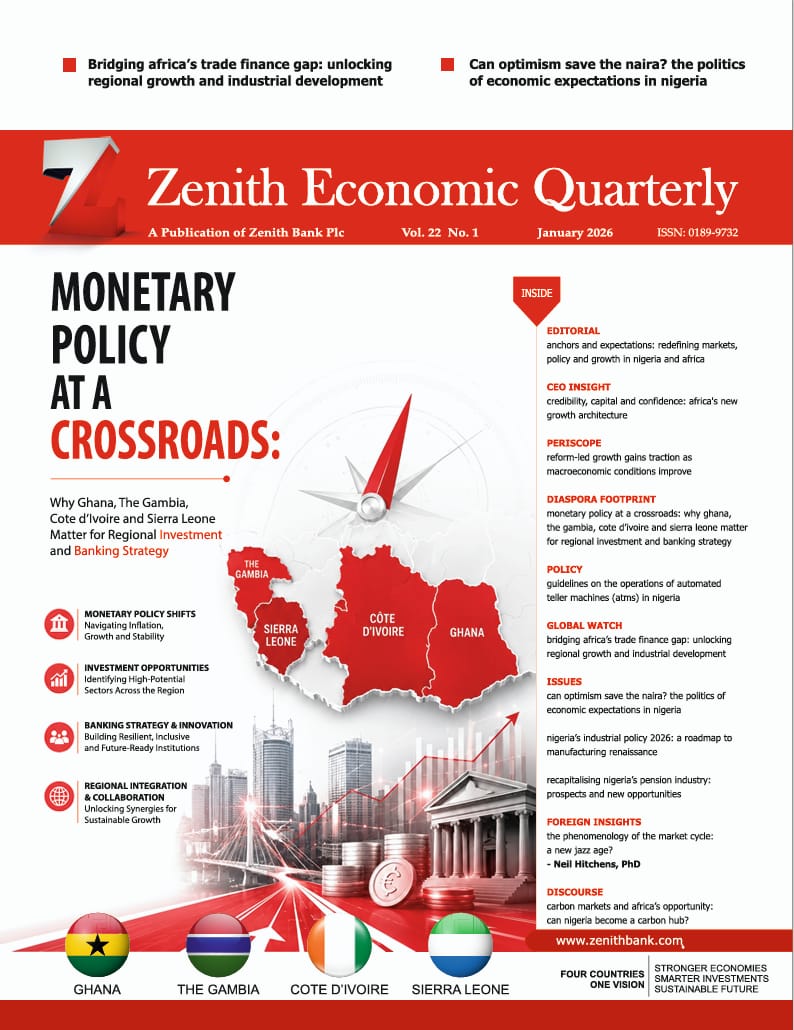 https://www.digital.zenithbank.com/ZEQ/ZEQ-jan-2026/index.html#p=1
However, this has been halted due to its impact on liquidity in the domestic forex market. Under the new guidelines, IOCs can only repatriate 50% of their proceeds immediately, with the remaining 50% to be repatriated after 90 days. The CBN has introduced rules governing cash pooling by IOCs, including requiring CBN approval before repatriating funds and agreements between the parent entities of IOCs and the CBN.
IOCs must also submit statements of expenditure and evidence of the source of foreign exchange inflow, as well as complete relevant forex forms. All banks are mandated to inform their customers and comply with these regulations. This move is part of CBN’s efforts to increase liquidity in the forex market. However, it may pose challenges for IOCs similar to those faced by operators in the manufacturing and aviation industries, who have experienced delays in forex forward payments.
The CBN has recently cleared $2.3 billion of the estimated $7 billion owed, but some multinational companies have already left Nigeria, citing difficulties operating as USD-dominated entities.
Money Market
Despite the CRR activity witnessed during the week, there was sufficient liquidity in the interbank market for the most part of the week owing to CBN refunds. Hence, interbank rates traded in a mixed sentiment with the Open Buy Back (OBB) increasing by 75 bps WoW to close at 16.25%, while the Overnight rate (O/N) recorded a 7 bps WoW decline to close the week at 16.93%.
We expect the rates to inch up slightly next week due to the expected Bonds and Treasury Bills auction settlements.
Treasury Bills
The Treasury Bills market traded mixed sentiments with demand seen at the belly of the curve and improved offers at the tail of the curve. As a result, the average benchmark yield dipped by 22 bps, concluding the week at 15.72%.
We anticipate a cautious activity next week as participants position ahead of the NTB auction.
FGN Bond Market
The FGN Bonds market also displayed a bearish stance for most of the week because of the result of the recently released Feb bonds auction issuance circular where the DMO plans to offer N2.5trillion across two new maturities- 2031 and 2034. Consequently, the average benchmark yield concluded the week at 16.17%, marking a 67-bps increase on a week-over-week (WoW) basis.
We anticipate a cautious mode as participants position ahead of the bonds auction on Monday.
Eurobond Market
Throughout the week, the FGN Eurobonds market exhibited a bullish trend, driven by the unexpected -0.80% decline in US Retail sales data, diverging from the projected -0.10% and the previous figure of 0.40%. Interpreting this data as a potential indicator of a lower US PCE for January, the FGN Eurobonds market approached the day with caution. Despite the release of January’s US CPI figures exceeding expectations at 3.10%, surpassing the anticipated 2.90%, albeit lower than the previous month’s 3.40%, and the US PPI data closing higher at 0.90% against the expected 0.60%, though lower than the previous result of 1.00%, the market maintained its bullish sentiment. Consequently, the average benchmark yield experienced a 10-bps decline WoW, concluding the week at 9.58%.
We foresee a similar trend in the upcoming week.
Currency Market
The value of the Naira to the dollar depreciated by 463 bps week-on-week to print at ₦1,537.96/$ this week at the Nigerian Autonomous Foreign Exchange Market (NAFEM).
Equities Market
The local equities market ended the week on a positive note after the NGXASI recorded a day-on-day increase of 156 bps and a week-on-week increase of 379 bps, settling at 105,722.78 points. This positive sentiment, which was propelled by improved buying interest seen on select stock giants like Geregu Powers, BUA Foods, AIRTEL Africa, amongst others, reflects a year-to-date growth of 41.39%. Assessing the overall weekly performance, while market breadth ended at 0.69x, indicating that 51 decliners outpaced the 35 advancers, market capitalization increased by ₦2.01 trillion, closing the week at ₦57.85 trillion.
The trading metrics for the week revealed that total trading volume rose by 6.41% WoW, reaching 342.52 million units, while the total traded value increased by 9.46% WoW, totaling ₦8.05 billion. FBNH, Guaranty Trust Holding Company (GTCO), and United Bank for Africa (UBA) led the volumes board with total closing values of 1.48 billion units, 1.18 billion units, and 1.01 billion units, respectively. While GEREGU, GTCO, and UBA topped the values chart with total closing values of ₦2.09 billion, ₦3.88 billion, and ₦2.40 billion, respectively.