




















Nigeria’s recent disinflation trend remains fragile and at risk of reversal as escalating global energy shocks continue to mount pressure on households and businesses, according to a new policy analysis released by the Centre for the Promotion of Private Enterprise (CPPE).
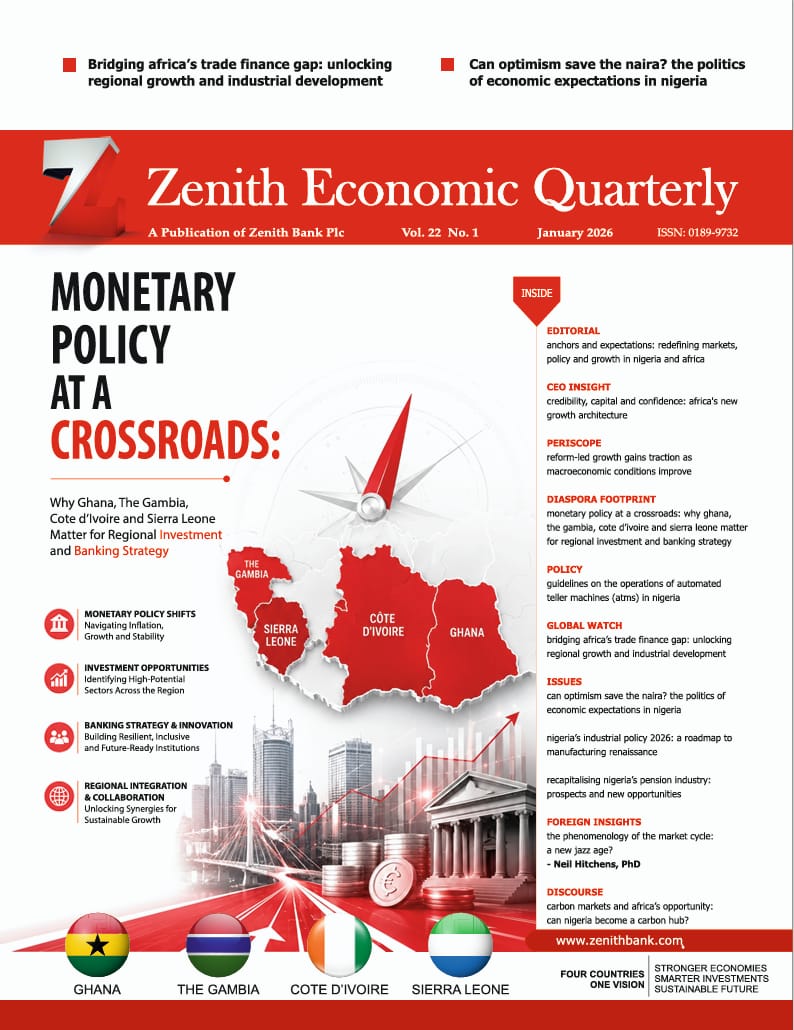 https://www.digital.zenithbank.com/ZEQ/ZEQ-jan-2026/index.html#p=1
The analysis of the February 2026 Consumer Price Index (CPI) report shows that headline inflation eased marginally to 15.06 percent year-on-year, down from 15.10 percent in January and significantly lower than 26.27 percent recorded in the same period last year. While this reflects a continuing disinflation trend supported by base effects, monetary tightening, and relative macroeconomic stability, CPPE cautions that the improvement is modest and does not yet signal a decisive shift in underlying price dynamics.
Despite the slight easing in annual inflation, underlying pressures remain pronounced. On a month-on-month basis, inflation accelerated to 2.01 percent, while food inflation rose sharply to 4.69 percent, reversing earlier signs of moderation. These trends point to persistent cost pressures that continue to weigh heavily on consumers and businesses.
According to CPPE, the cost of living remains elevated, with food, transportation, and energy costs rising at a pace that continues to erode purchasing power. Real incomes are under significant strain, particularly among vulnerable and urban households. The organisation emphasized that disinflation in this context simply reflects a slower pace of price increases rather than an actual reduction in the cost of living.
For businesses, especially small and medium-sized enterprises (SMEs), the operating environment remains extremely challenging. Elevated costs of energy, logistics, and raw materials are compressing margins, while weak consumer demand limits the ability of firms to pass on rising costs. This has resulted in declining profitability and increased vulnerability, particularly in consumer-facing sectors.
The most immediate risk to the inflation outlook, CPPE noted, stems from escalating geopolitical tensions in the Middle East involving Iran, Israel, and the United States. These developments have already triggered a surge in global crude oil prices to above $100 per barrel, driven by disruptions to energy infrastructure and heightened risks to key global supply routes such as the Strait of Hormuz.
For Nigeria, the implications are significant and far-reaching. Rising global oil prices are already feeding into higher petrol and diesel prices, increased transportation and logistics costs, elevated production costs across sectors, renewed pressure on the exchange rate, and rising food prices driven by higher input and distribution costs. CPPE warned that if these external pressures persist, there is a strong likelihood that the current disinflation trend could be reversed.
The organisation further highlighted that Nigeria’s vulnerability to energy-driven inflation is exacerbated by structural weaknesses within the domestic economy. The country’s heavy reliance on petrol and diesel for power generation—due to persistent electricity supply challenges—creates a direct and immediate transmission of global energy price shocks into domestic inflation.
Estimates indicate that unreliable electricity supply imposes annual economic losses of between ₦7 trillion and ₦10 trillion, while businesses and households spend over ₦3.7 trillion annually on generators. This structural dependence significantly amplifies the impact of global energy price fluctuations on production costs, transportation expenses, and overall price levels.
In light of these developments, CPPE has called for urgent, coordinated policy measures to protect households and businesses while sustaining the fragile gains in inflation moderation. The organisation stressed the need to strengthen domestic refining capacity by ensuring stable and reliable crude oil supply to local refineries, including the Dangote Refinery, under supportive and predictable terms. This, it noted, is critical for moderating domestic fuel prices, reducing pressure on foreign exchange demand, and enhancing national energy security.
The think tank also urged governments at all levels to scale up investment in efficient and affordable public transportation systems as a key social protection measure. With transport costs serving as a major channel of inflation transmission, easing this burden would provide immediate relief to households.
Additionally, CPPE recommended the removal of fiscal barriers to renewable energy adoption, including waivers on import duties and taxes for solar equipment, inverters, and batteries. Such measures would accelerate the transition to alternative energy sources and reduce reliance on costly fossil-fuel-based self-generation. The organisation also called for the temporary suspension of maritime charges to mitigate rising shipping costs driven by increased global marine insurance rates.
More fundamentally, CPPE emphasized the urgent need to improve electricity supply across the country. Strengthening power generation, transmission, and distribution infrastructure—alongside support for decentralized energy solutions—remains the most sustainable long-term solution to Nigeria’s high energy cost environment. Improved electricity reliability would significantly lower production costs and reduce inflationary pressures across the economy.
As a short-term mitigation measure, the organisation also encouraged the adoption of flexible and remote work arrangements where feasible, as a way of reducing commuting costs and cushioning the welfare impact of rising fuel prices.
CPPE further advised that monetary and fiscal authorities remain cautious and disciplined in their policy approach. The resurgence in monthly inflation and the emergence of external shocks suggest that premature easing of monetary policy could undermine recent gains. The organisation also recommended prudent management of oil revenue windfalls, with a focus on strengthening foreign exchange reserves and supporting productive sectors of the economy.
In conclusion, CPPE noted that while the February CPI report indicates some progress in moderating inflation, underlying price pressures remain significant and the external environment is increasingly volatile. The current geopolitical energy shock poses a serious risk to Nigeria’s inflation outlook and could reverse recent gains if not addressed through timely and coordinated policy action.
The organisation stressed that a proactive, forward-looking policy response is essential to safeguard macroeconomic stability, protect citizens, and support business sustainability in the face of growing global uncertainty.