
























In August, headline inflation eased further for the fifth consecutive month, falling to 20.12% from 21.88% in July 2025, a decline of 176 basis point. Food and core inflation also declined year on year. Food inflation fell to 21.87% in August 2025 from 22.74% in July 2025, a decline of 87 basis point. Core inflation eased to 20.33% in August 2025 from 21.33% in July 2025, a decline of 100 basis point.
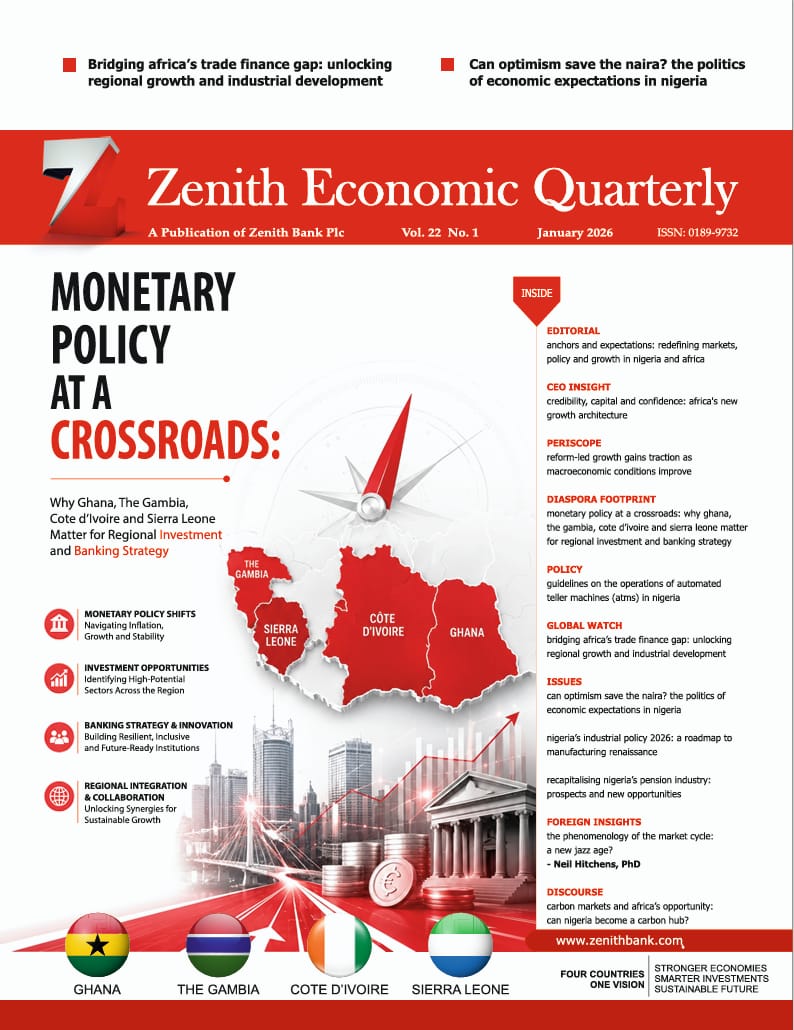 https://www.digital.zenithbank.com/ZEQ/ZEQ-jan-2026/index.html#p=1
This decline in inflation signals easing not only in core items (which exclude volatile components) but also in volatile items such as food and energy, where prices remain stable. The continued decline and stability in inflation are also positive signals for the Nigerian economy.

On a month-on-month basis, headline inflation dropped to 0.74% in August 2025 from 1.99% in July, while food inflation also declined to 1.65% from 3.12%. However, core inflation rose month on month to 1.43% from 0.97%, an increase of 46 basis point.
Stable food prices primarily drove the decline in food inflation during the month. As the harvest season continues, food prices are expected to remain stable and may even decline further, providing some relief to households and easing pressure on overall inflation.
The month-on-month increase in core inflation reflects rising prices in non-volatile items, which tend to be more persistent in nature. This suggests underlying inflationary pressures remain, particularly in goods and services not directly affected by seasonal factors. Nevertheless, it is important to note that core inflation continued to decline on a year-on-year basis, reinforcing the broader disinflationary trend.
A comparison of inflation with last year’s figures shows a sharp moderation across key indicators. Headline inflation dropped from 32.15% in August 2024 to 20.12% in August 2025, a decline of 12.03%. Food inflation fell even more significantly, declining from37.52% in August 2024 to 21.87% in August 2025, a drop of 15.65%. Core inflation also eased, falling from 27.58% in August 2024 to 20.33% in August 2025, a decline of 7.25%.
This significant reduction can be mainly attributed to the rebasing exercise, which shifted the base year from 2009 to 2024 and contributed to a higher base effect. However, beyond the statistical impact of rebasing, it is noteworthy that inflation has been declining consistently on both a year-on-year and month-on-month basis. In August 2025, only core inflation month-on-month rose. This demonstrates that the disinflation trend is not solely the result of rebasing, but also reflects genuine improvements in price stability across the economy.
Steady Relief: Inflation Continues to Ease in August
Headline inflation eased further on both a year-on-year and month-on-month basis. This decline signals growing stability in the Nigerian economy, as the country continues to outgrow the initial impact of policy changes introduced in 2023 and 2024, such as exchange rate unification and subsidy removal, which had previously driven inflation higher. The effects of these policies are proving to be transitional and are now wearing off, while also contributing to a more stable currency and reducing opportunities for arbitrage in the naira. Looking ahead, the expected rate cut by the US Federal Reserve could boost investor appetite for emerging market securities, and Nigeria stands in a particularly attractive position given the improved stability and transparency in its economy.
Food inflation declined both year-on-year and month-on-month, supported by increased commodity supply as we enter the harvest season. This easing in food inflation is a positive signal for the MPC, given that it has been a concern highlighted in previous meetings. The continued moderation in food prices is expected to give the MPC greater confidence to implement a rate cut.
Core inflation eased year-on-year but rose slightly by 0.46% month-on-month. This uptick is attributed to increases in Restaurants and Accommodation Services, Transport, Housing, Water, Electricity, and Gas. Together, these items contributed significantly to the monthly rise in inflation, with their combined weight accounting for about 32% of the inflation basket. Importantly, this uptick stems from non-volatile, more permanent items. This divergence from other inflation indicators is noteworthy, as it points to underlying pricestickiness in core components, which could pose a concern for the MPC. However, given the relative stability across other segments and the broader disinflation trend, the uptick is not overly discouraging.
Naira Remains Steady Through August
The naira exchange rate to the dollar was stable in August, trading within the₦1,530–₦1,540 band, which provided stability to the prices of goods and services. This has helped anchor inflation and strengthen investor sentiment. The stability can be attributed to steady inflows and increased use of official FX channels, as the unification of the exchange rate has minimized opportunities for arbitrage. Sustained naira stability will be critical in consolidating disinflation gains and maintaining macroeconomic confidence. While risks remain tied to external shocks such as fluctuations in oil prices or shifts in global capital flows, we do not foresee any significant near-term events that could negatively impact the currency.
Looking Ahead: What to Expect from Inflation
Headline inflation is expected to continue easing going forward, supported by the stability of the exchange rate and even an appreciation of the naira. This stability will strengthen investor confidence, particularly as the anticipated rate cut in the US could trigger a shift of funds into emerging markets. With Nigeria’s environment becoming more stable, the naira trading at a competitive level, and the high-interest-rate environment, investors are likely to remain attracted to the Nigerian market. In addition, the unification of the exchange rate has reduced opportunities for arbitrage and eased pressure on the naira, with more funds now flowing through the official market.
Food inflation is expected to decline further going forward as we move deeper into the harvest season. Existing food stocks are being sold off to make room for newly harvested produce, while the harvest itself is increasing the overall supply of food in the market. A potential headwind to this outlook could be a rise in transportation costs, given the need to move food across regions. However, we expect transportation costs to remain stable, limiting the risk of upward pressure on prices. This is expected to bring relief to overall inflation, as the drop in food prices, which carry significant weight in the CPI basket, will help reduce headline inflation in the economy.
Core inflation is also expected to ease in September, reflecting the broader stability in the economy. With exchange rate appreciation of the Naira, food prices moderating, and overall demand remaining relatively contained, the underlying components of inflation are likely to show softer movements.
Bottom Line
The August inflation data points to continued easing price pressures, with inflation falling year-on-year and Month-on-month, except core inflation, which rose by 0.46% month-on-month. This slight uptick in core reflects price stickiness in non-volatile items such as housing, utilities, and transport, which tend to be more permanent in nature. Nonetheless, the broader inflationary trend, supported by stable exchange rates and the onset of the harvest season, signals improving stability in the economy. With food and headline inflation continuing to moderate, the MPC is likely to view this as sufficient room to begin cautious easing. Overall, the outlook remains positive, with short-term pressures outweighed by sustained gains in price stability.