



























Nigeria’s inflation rate increased for the second consecutive time in April 2026 on a year-on-year basis, as headline inflation rose
to 15.69% from the 15.38% printed in March 2026, according to the National Bureau of Statistics (NBS). However, on a month-onmonth basis, headline inflation slowed to 2.13%, down from 4.18% in March, suggesting a slower pace of price increases.
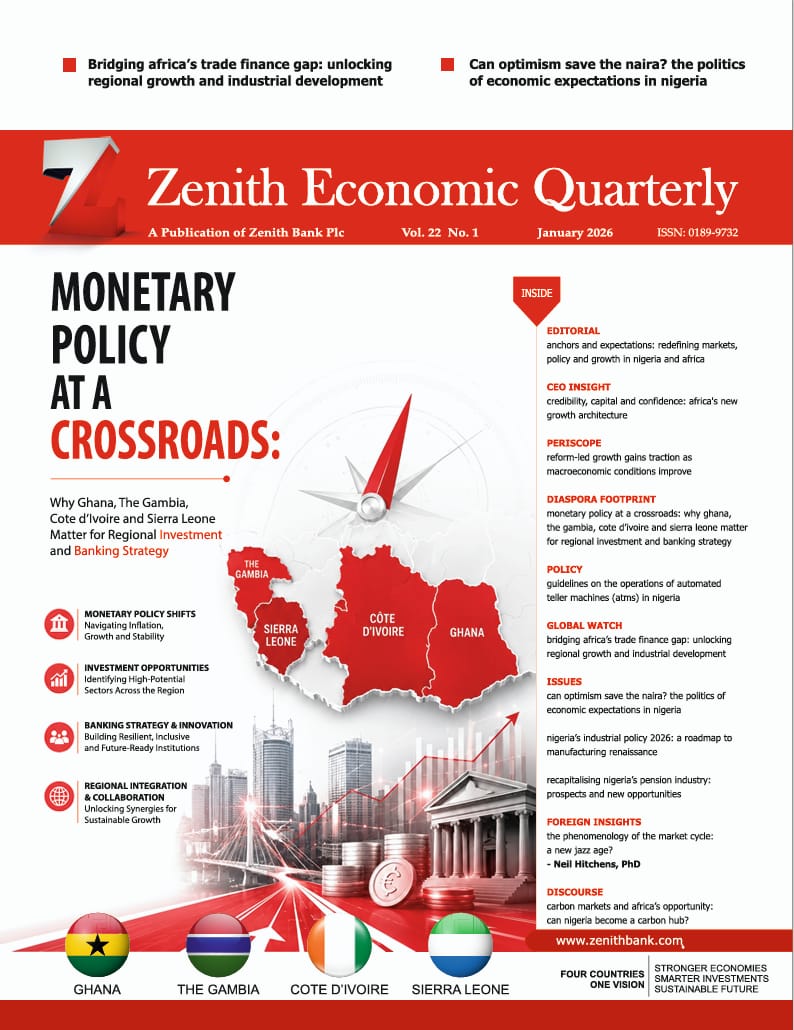 https://www.digital.zenithbank.com/ZEQ/ZEQ-jan-2026/index.html#p=1
Highlights
Headline CPI (YoY): In April 2026, the Headline CPI rose 15.69%, from 15.38% recorded in March 2026.
Headline CPI (MoM): On a month-to-month basis, the inflation rate slowed to 2.13% in April 2026 (vs 4.18% recorded in March 2026).
Food Inflation (YoY): Food inflation rate stood at 16.06% year on year, up from 14.31% in March 2026.
Food Inflation (MoM): On a month-on-month basis, it printed 3.63%, down 0.54% points from March 2026 (4.17%).
Core CPI (YoY): Core inflation, which excludes volatile food and energy prices, stood at 15.86% in April, up from 15.88% in March
2026.
Core CPI (MoM): On a m/m basis, core inflation declined to 1.03% in April, compared to 4.03% in March 2026.
A Cooler Month, But Prices Still Have Heat
Nigeria’s headline inflation rose for the second consecutive month in April 2026, increasing to 15.69% year-on-year from 15.38% in March.
This confirms that the earlier disinflation trend has weakened. However, the month-on-month reading moderated sharply to 2.13%, from
4.18% in March, suggesting that while prices are still rising, the pace of increase slowed after March’s sharp repricing.
The main pressure came from food, transport, and energy-related costs. Food inflation accelerated to 16.06%, from 14.31%, reflecting higher logistics costs, seasonal pressures, and persistent supply-side constraints in key agricultural regions. Food and non-alcoholic beverages remain the largest contributors to headline inflation, given their heavy weight in the CPI basket.
External factors also played a role. Rising global energy prices, driven partly by Middle East geopolitical tensions, increased domestic
fuel-price pressure, and higher fuel costs fed directly into transportation and logistics expenses, pushing up the cost of moving food
and other essential goods across the country.
While month-on-month inflation moderated,indicating some normalisation after March’s sharp repricing, the year-on-year comparison
still reflected these elevated price levels against a lower base from the prior year.
Core inflation eased slightly to 15.86%, from 16.21%, indicating some modest stabilisation outside food and energy, likely helped by
relative naira stability in April. Still, the risk is that higher energy and transport costs could pass through into broader services and
production costs over the coming months.
Top Contributors to YoY Headline Inflation
Overall, the April print is a mixed but cautionary signal. The year-on-year increase shows inflation remains sticky and household purchasing power is still under pressure, especially in food and transport.
From a policy perspective, the data support a cautious stance, with upside risks still coming from energy prices, food supply constraints, logistics costs, and potential FX volatility.
Food Inflation Still Bites as Price Pressures Persist
Food inflation rate in April 2026 was 16.06% year-on-year vs 14.31% recorded in the previous month, a sharp increase attributed to
changes in the average prices of products in the food basket, including Millet whole grain, Yam, flour, Ginger, Beef, Beans, among others.
On a month-on-month basis, the trend is more volatile. Food inflation fell into negative territory early in the year, which likely reflected
temporary relief from improved supply conditions. However, it remained elevated in March and April, with April food inflation at
3.63%, slightly lower than 4.17% in March, implying that food prices continued to rise at a strong monthly pace, though marginally
compared to the previous period.
However, the pace of increase slowed month on month, with food prices rising by 3.63% in April, compared with 4.17% in March. This
moderation in the monthly surge indicates that, while prices continued to climb, the intensity of the upward movement eased somewhat after the sharper repricing observed in March. The slower monthly pace can be attributed to several factors. First, there appears to have
been some normalisation and partial supply responses in certain local markets following the initial shock from higher fuel costs.
The overall month-on-month headline inflation also cooled, suggesting that the most acute phase of the energy-driven cost adjustment had begun to stabilise. Despite ongoing challenges such as supply chain disruptions and structural issues in agriculture, the reduced momentum in monthly food price changes suggests a slight breathing space from immediate pressure, rather than a fundamental reversal.
Food Inflation M-o-M
For the next month, food inflation is projected to face additional upward pressure in the short term due to seasonal factors, including the ongoing planting season and the upcoming Eid al-Adha celebration, which will likely keep prices elevated.
The current planting season, which typically runs from April to June/July for major staples like maize, yams, and rice, has already
begun reducing the supply of fresh produce in markets. This lean-season effect naturally drives prices higher, even without external
shocks.
Core Inflation Moderates 15.86% YoY
Core inflation in Nigeria moderated in April 2026, easing to 15.86% YoY from 16.21% in March, while month-on-month inflation slowed
sharply to 1.03% from 4.03%. The pullback largely reflected a normalisation in price adjustments after March’s energy-driven shock,
when many service providers front-loaded increases.
The slowdown was broad across key core subcomponents. Personal care rose by just 0.87% MoM, down from 5.21% in March; restaurants
and accommodation services increased by 2.62%, compared with 6.92% previously; while. core transport components eased to 0.74% from
3.98%. These softer increases suggest that the second-round effects of March’s cost shock began to fade in April.
Currency stability also helped contain core price pressures. The naira appreciated modestly by about 0.94% on a closing-rate basis, from
roughly ₦1,387/US$ to ₦1,374/US$, with average monthly gains estimated at 1.36%– 1.42%. Improved FX liquidity, stronger remittance inflows, and CBN policy support helped limit imported inflation, while favourable base effects provided additional relief to the YoY reading.
However, the disinflation trend is emerging alongside softer activity. The CBN Composite PMI fell to 49.4, slipping below the 50-point
threshold for the first time in 16 months and signalling a mild contraction. This underscores a key macro tension: underlying price pressures
are easing, but elevated costs continue to weigh on business conditions.
Overall, the moderation in core inflation reflects a fading of the initial shock from higher energy and transport costs, rather than a clear structural. improvement. While this gives the Central Bank of Nigeria some breathing room and suggests inflationary pressures have not broadened as sharply as feared, core inflation remains elevated and still requires a cautious policy stance.
Looking ahead, core inflation is expected to remain on a moderating path, provided exchange rate stability is sustained, and
there are no renewed energy price shocks. However, the pace of disinflation may be gradual, as businesses continue to adjust
to high operating costs, weak consumer demand, and lingering pass-through effects from earlier price increases.
Bottom Line
Nigeria’s April inflation report sends a mixed but important signal to markets and the broader economy. Headline inflation rose to 15.69% year-on-year, from 15.38% in March, confirming that the disinflation trend remains fragile. However, monthly inflation slowed sharply to
2.13%, from 4.18% in March, suggesting that while prices are still rising, the pace of increase moderated significantly during the month.
For monetary policy, the CBN has little room to ease. The rise in headline inflation means policy should remain tight, though the softer monthly number reduces the urgency for additional aggressive tightening. We, however, project a ‘HOLD’ stance at the next MPC
meeting in May.
For equities, the impact is sector-specific. Banks remain relatively well-positioned because high rates support earnings, but consumer goods and import-dependent manufacturers face pressure from weak purchasing power, high logistics costs, FX exposure, and rising input
costs. Companies with pricing power, local sourcing, strong cash flow, and defensive products should outperform.
For the broader economy, the key issue remains household welfare. Food, transport, healthcare, and energy costs continue to squeeze real incomes, limiting discretionary spending and weakening consumer demand.
April was not a panic print, but neither was it a comfort print. With May inflation expected to come in higher, largely due to ongoing geopolitical tensions between the U.S. and Israel and the likely pass-through to energy, transport, and broader cost pressures, inflation risks remain tilted to the upside.