


























Association urges CBN, banks and government to ensure monetary easing translates into affordable credit for manufacturers
The Manufacturers Association of Nigeria (MAN) has welcomed the decision of the Central Bank of Nigeria (CBN) to reduce the Monetary Policy Rate (MPR) by 350 basis points, from 26.5 per cent to 23 per cent, describing the move as a positive step towards creating a more supportive financing environment for businesses and manufacturers.
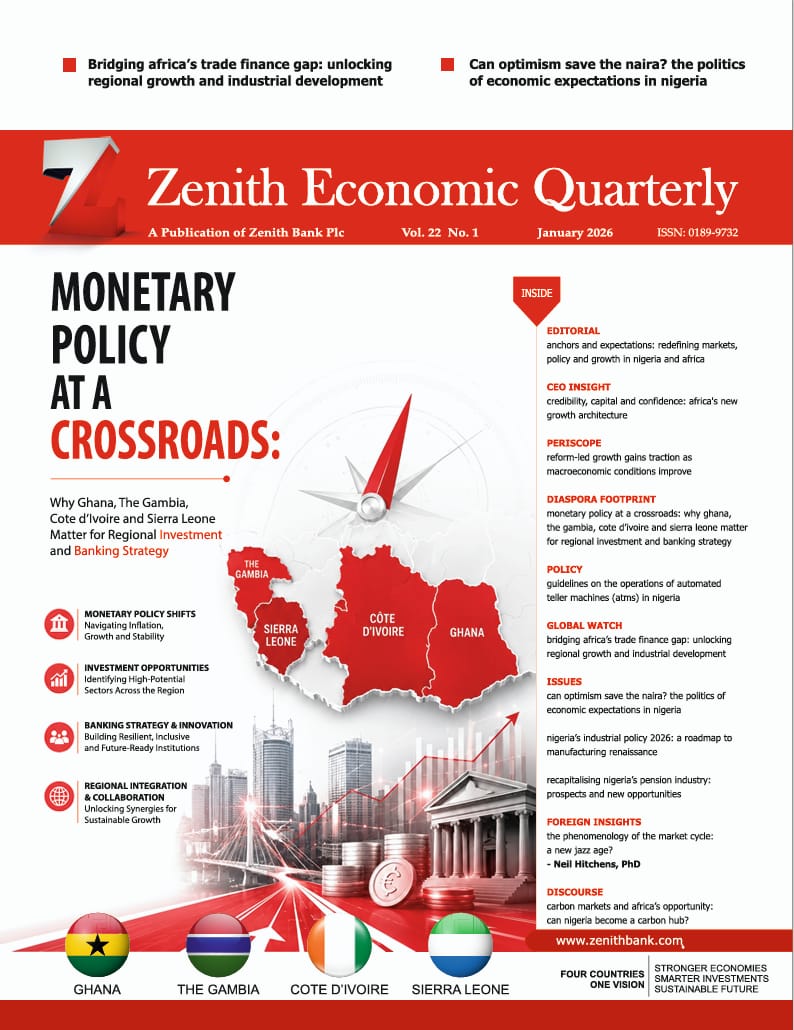 https://www.digital.zenithbank.com/ZEQ/ZEQ-jan-2026/index.html#p=1
The decision followed the 307th meeting of the Monetary Policy Committee (MPC), held on September 21–22, 2026. The CBN also adjusted the Standing Facilities Corridor to +50/-300 basis points around the MPR, while retaining the Cash Reserve Ratio (CRR) at 45 per cent for Deposit Money Banks and 16 per cent for Merchant Banks, and the Liquidity Ratio at 30 per cent.
In its response to the September MPC decision, MAN said the 350-basis-point reduction represents a significant easing of monetary conditions following a period of tight monetary policy.
The Association said the decision is consistent with its expectation that monetary easing should follow a period of macroeconomic stabilisation, noting that lower policy rates could help reduce borrowing costs and improve access to financing for manufacturers.
According to MAN, the reduction could support manufacturers in financing inventory, raw materials, production cycles, equipment acquisition and business expansion, particularly where lower policy rates are transmitted effectively to actual lending rates.
MAN Seeks Faster Transmission to Lending Rates
While welcoming the MPR reduction, MAN stressed that the ultimate benefit to the manufacturing sector will depend on the speed and extent to which the policy adjustment translates into lower commercial lending rates.
The Association expressed concern that the retention of the CRR at 45 per cent for Deposit Money Banks could continue to limit the proportion of bank deposits available for lending to productive sectors.
MAN acknowledged that high reserve requirements play a role in financial and monetary stability but argued that, where prevailing macroeconomic conditions permit, a progressive review of the CRR could create additional lending capacity for businesses without compromising financial-system stability.
The Association therefore called for closer collaboration between the CBN, Deposit Money Banks and the Bankers’ Committee to ensure that the 350-basis-point reduction in the MPR translates into lower prime and maximum lending rates for manufacturers.
Lower Interest Rates Alone Not Enough
MAN emphasised that monetary easing, while important, cannot by itself resolve the structural constraints driving up the cost of production in Nigeria.
The Association identified electricity and energy costs, transport and logistics expenses, infrastructure deficits and insecurity among the factors that continue to affect manufacturing competitiveness.
It called for stronger coordination between monetary and fiscal authorities to ensure that monetary policy easing is complemented by targeted fiscal and structural interventions.
According to MAN, such coordination is necessary to translate lower policy rates into affordable credit, increased productive investment, improved business conditions and stronger industrial growth.
MAN Calls for Concessionary Manufacturing Finance
The Association urged the government to expand access to concessionary, single-digit financing for manufacturers, particularly small and medium-sized industrial enterprises and businesses operating in strategic sectors.
It also called for the reactivation of structured, low-interest intervention windows through the Bank of Industry (BOI) and Development Bank of Nigeria (DBN) to provide long-term financing for raw-material processing, machinery acquisition and local equipment fabrication.
MAN further advocated the operationalisation of the proposed ₦1 trillion Manufacturing Stabilisation Fund at a 9 per cent interest rate, through the BOI, with transparent eligibility requirements, efficient administration and timely disbursement to qualified manufacturers.
It also called for development finance support for manufacturing SMEs at a 5 per cent interest rate, with appropriate tenors and repayment structures that reflect the production and investment cycles of manufacturing enterprises.
Energy Costs, Local Production and FX Access
MAN urged the government to intensify efforts to reduce industrial energy costs through improved electricity supply, increased domestic gas utilisation and incentives for alternative and renewable energy solutions.
The Association also called for accelerated implementation of the Nigeria First Policy, saying stronger local sourcing and domestic value chains would help reduce import dependence and create additional demand for locally manufactured goods.
On foreign exchange, MAN advocated the use of the country’s growing external reserves buffer to create a dedicated and transparent FX window for legitimate manufacturers seeking to import capital equipment and essential raw materials that are not available locally.
It said such a mechanism could help manufacturers reduce their exposure to high foreign-exchange costs associated with sourcing critical inputs.
The Association also recommended strengthening the Nigerian Incentive-Based Risk Sharing System for Agricultural Lending (NIRSAL) and similar credit-guarantee mechanisms to cover industrial SME risks, thereby giving banks greater confidence to lend without imposing excessive collateral requirements.
MAN Urges Stronger Policy Coordination
MAN further called for the full implementation of the recent Memorandum of Understanding between the Ministry of Finance and the CBN, with emphasis on measurable improvements in policy coordination, investor confidence and predictability of the business environment.
The Association also urged future MPC meetings to place greater emphasis on assessing the impact of monetary policy decisions on the manufacturing and broader productive sectors.
For MAN, the central question should be how monetary policy can contribute to improved productivity, increased investment and lower production costs.
The Association said the latest MPR reduction provides an opportunity to move towards a less restrictive financing environment but stressed that continued policy calibration and complementary structural reforms will be required to achieve meaningful industrial impact.
MAN Director-General, Segun Ajayi-Kadir, mni, said the Association appreciates the MPC’s latest decision and encouraged continued coordination between monetary and fiscal authorities to balance macroeconomic stability with the need to stimulate productive investment, industrialisation, employment generation and sustainable economic growth.
Signed:
SEGUN AJAYI-KADIR, mni
Director-General
Manufacturers Association of Nigeria (MAN)
Create richer images from your files
Upgrade to transform your uploaded files and images with more precision, consistency, and detail using increased reasoning.
Get Plus