


















Forum urges long-term financing, power reforms, lower Right of Way charges and stronger public-private partnerships to close connectivity gaps
The Nigerian Communications Commission (NCC), in partnership with Swedfund and Ookla, has called for accelerated investment in Nigeria’s digital infrastructure, stronger public-private partnerships and policy reforms to address the country’s growing connectivity needs.
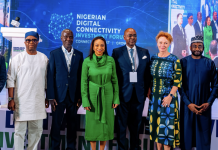
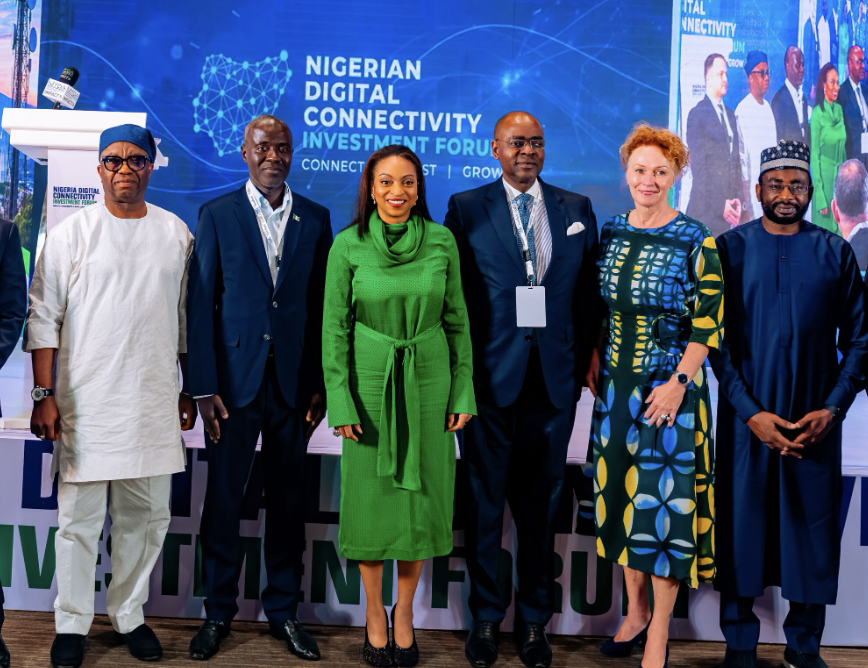
The call was made at the Nigeria Digital Connectivity Investment Forum 2026, held in Abuja under the theme, “Unlocking Infrastructure Investment through Data, Transparency and Partnerships.” The two-day forum brought together policymakers, regulators, investors, development finance institutions, financial institutions, mobile network operators, fibre and tower companies, technology providers, infrastructure developers and other stakeholders to explore investment opportunities and practical pathways for expanding meaningful digital connectivity across Nigeria.
The Forum highlighted the rapid growth in demand for digital services and the urgent need to ensure that infrastructure investment keeps pace with the country’s digital transformation.
Participants noted that Nigeria consumed approximately 1.6 million terabytes of data in July 2026, representing an increase of almost 47 per cent over 12 months, while subscriptions are projected to rise from about 195 million to approximately 350 million over the next 10 to 15 years.
The increasing adoption of cloud computing and artificial intelligence is expected to further intensify demand for telecommunications networks, fibre infrastructure, data centres and reliable electricity.
Participants therefore stressed that digital connectivity should increasingly be treated as critical economic infrastructure, rather than simply a telecommunications service.
Telecommunications and information services accounted for 9.72 per cent of Nigeria’s real Gross Domestic Product (GDP) in the second quarter of 2026, underscoring the sector’s growing contribution to economic activity. Participants also noted the expanding role of digital infrastructure in trade, financial inclusion, productivity and Nigeria’s ability to participate effectively in the African digital economy.
The Forum further observed that while mobile broadband coverage now reaches about 90 per cent of Nigerians, significant gaps remain in actual usage. Smartphone ownership was estimated at approximately 27 per cent, while broadband penetration stood at 57.4 per cent against a national target of 70 per cent.
According to participants, this gap demonstrates that expanding network coverage alone will not be sufficient to achieve meaningful connectivity.
Device affordability, digital skills and trust, they noted, have become increasingly important barriers to digital inclusion and must be addressed alongside infrastructure deployment.
Power, fibre and financing identified as critical constraints
A major concern emerging from the Forum was the cost and reliability of electricity required to operate telecommunications infrastructure.
Participants noted that for tower companies, power is no longer a peripheral operating consideration but a fundamental component of their business. They therefore called for energy and connectivity investments to be planned together, with tower clusters potentially serving as anchor customers for distributed renewable energy solutions.
The high cost of inland connectivity was also identified as a major constraint limiting the expansion of data centres and internet services beyond major metropolitan centres.
Participants consequently called for accelerated delivery of Project BRIDGE, the proposed 90,000-kilometre national fibre backbone, as a strategic response to Nigeria’s middle-mile connectivity gap.
They also emphasised the need to match the long asset life of digital infrastructure with appropriate long-term financing.
Digital infrastructure assets can have an economic life of between 20 and 30 years, participants noted, making five-year bank financing inadequate for many infrastructure projects. They called for greater access to long-tenor naira financing, blended finance and credit-enhancement structures capable of supporting infrastructure projects that may not yet be commercially mature.
Speaking from an investor perspective on “Financing Digital Infrastructure,” the Chief Executive Officer of Chapel Hill Denham, Mr. Bolaji Balogun, emphasised the importance of developing investable projects, adopting appropriate financing structures and creating conditions capable of attracting long-term private and institutional capital.
On the broader economic and financial environment, Mr. Bismarck Rewane, Chairman of the Board of FCMB and Managing Director of Financial Derivatives Company, highlighted the importance of the cost and availability of capital, investor confidence and policy predictability in supporting infrastructure investment.
He also underscored the role of digital infrastructure in enhancing productivity and driving economic growth.
States urged to reform Right of Way regime
The Forum identified conditions at the state level as another critical determinant of the pace and cost of digital infrastructure deployment.
Participants pointed to evidence from the pilot Nigeria Digital Connectivity Index across 12 States, which showed that Right of Way reforms had contributed to fibre growth ranging from 22 per cent to 95 per cent in states undertaking reforms.
The number of states charging zero fees for Right of Way was also reported to have increased from seven in December 2024 to 12.
Participants therefore urged state governments to reduce and harmonise Right of Way and site permit charges, adopt the Federal Government’s model requiring operators that lay fibre to reinstate affected roads, and shorten permitting timelines.
The Forum also endorsed the use of independently generated connectivity data to improve investment decisions and reduce uncertainty for investors.
Participants said the collaboration between the NCC, Swedfund and Ookla provides a more granular understanding of the connectivity experience across Nigeria and could help stakeholders identify the specific constraints affecting particular locations.
They recommended a model of national screening, local validation and post-intervention verification to ensure that investments respond to actual connectivity gaps and deliver measurable outcomes.
NCC, industry and investors agree priority actions
At the conclusion of the Forum, participants agreed on a series of priority actions designed to accelerate investment and improve connectivity.
The Federal Government was urged to accelerate Project BRIDGE, improve the availability and reliability of power for digital infrastructure, maintain policy consistency and support financing structures capable of reducing the cost of capital for the sector.
The NCC was encouraged to sustain reforms aimed at improving the investment environment, including tariff realignment, the designation of critical national information infrastructure and continued engagement with states on Right of Way. The Commission was also urged to publish the first national Nigeria Digital Connectivity Index report, advance open-access and wholesale regulation, and finalise the direct-to-device framework.
State Governments were urged to reduce and harmonise Right of Way and site permit charges and simplify approval processes.
Operators, infrastructure companies and technology providers were encouraged to expand shared infrastructure and neutral-host models to reduce the cost of rural and indoor connectivity, while pairing network investments with initiatives that improve access to affordable smartphones and other devices.
Investors and development finance institutions were encouraged to match long-life digital infrastructure assets with long-tenor naira capital, link infrastructure financing to independently verified network performance and deploy blended financing and credit-enhancement mechanisms where necessary.
Specific investment pathways agreed
The Forum identified a number of actions to be pursued within defined timeframes.
Within the next six months, participants agreed on the need to secure funding for community-owned rural networks powered by renewable energy in zero-connectivity communities, through partnerships involving the Universal Service Provision Fund, state governments and the Rural Electrification Agency.
Within 6 to 18 months, stakeholders called for the issuance of open-access and wholesale regulations, publication of a wholesale rate card and completion of broadband mapping. They also called for stronger regulatory backing for the Universal Service Fund as a primary source of financing for underserved-area projects, supported by blended public and multilateral funding.
Other priorities within this period include developing a business case for indoor connectivity in commercial buildings and incorporating data-centre requirements into the National Broadband Plan, alongside renewable and off-grid power solutions supported by blended finance.
Within 18 to 24 months, stakeholders proposed the establishment of a financing framework for telecommunications power, including standardised energy provision and stronger protection of telecommunications infrastructure as critical national information infrastructure.
They also recommended the development of metro and access fibre through concession arrangements, mapped against existing infrastructure and integrated with Project BRIDGE.
NCC reaffirms commitment to stakeholder engagement
The Forum concluded that Nigeria’s principal digital infrastructure challenges—including the cost and tenor of financing, Right of Way and permitting constraints, unreliable and expensive power, and gaps in trusted infrastructure data—are interconnected and require coordinated action.
Participants agreed that government, regulators, investors, financiers, technology companies and infrastructure providers must work together to create an investment environment capable of supporting the scale of infrastructure required by Nigeria’s rapidly expanding digital economy.
The Nigerian Communications Commission reaffirmed its commitment to sustained engagement with participants and relevant stakeholders to advance the agreed investment pathways and translate the Forum’s recommendations into practical action.
Participants expressed appreciation to the Federal Government of Nigeria, the relevant Ministers, the Government of Sweden, Swedfund and Ookla for their partnership, as well as the Board, Management and staff of the Nigerian Communications Commission for convening the Forum.
Improve depth for stronger writing
Upgrade to Plus and use increased reasoning to write compelling drafts.
Get Plus