




















Tag: cyberbullying

  • Spain to Restrict Social Media for Children

    Spain to Restrict Social Media for Children

    Spain announced this week that it would tighten its social media laws, aiming to ban access for children under the age of 16 as part of a global tide against electronic platforms.

    Last year, Australia became the first country to restrict social media for children, while French lawmakers voted to follow suit last month. So far, the UK, Denmark, Norway, Greece and India are considering similar moves, while German lawmakers are considering a digital law to contain the anti-competitive behaviour of global digital platforms.

    There is growing evidence of the harmful effects of social media on children, including depression, anxiety, stress and cyberbullying – alongside evidence that digital platforms such as X are influencing political outcomes by manipulating content and algorithms.

    “First, we will change the law in Spain to hold platform executives legally accountable for many infringements taking place on their sites,” Spanish Prime Minister Pedro Sanchez told the World Governments Summit in Dubai on Tuesday.

    “This means that CEOs of these techno platforms will face criminal liability for failing to remove illegal or hateful content,” said Sanchez.

    “Second, we will turn algorithmic manipulation and amplification of illegal content into a new criminal offence,” he added. “No more hiding behind code. No more pretending technology is neutral.

    “Third, we will implement a hate and polarization footprint system to track, quantify, and expose how digital platforms fuel division and amplify hate. For too long, hate has been treated as invisible and untraceable, but we will change that.”

    Sanchez added that Spain “will ban access to social media for minors under the age of 16” and platforms“will be required to implement effective age verification systems”.

    “Today, our children are exposed to a space they were never meant to navigate alone. A space of addiction, abuse, pornography, manipulation… we will protect them from a digital wild west.”

    “Fifth and last, my government will work with our public prosecutor to investigate and pursue the infringement committed by Grok, TikTok, and Instagram. We will have zero tolerance and protect our digital sovereignty against foreign coercion.”

    Elon Musk, the owner of social media platform X, responded by describing Sanchez as “dirty” and a “tyrant and traitor to the people of Spain

    However, X faces global probes after it emerged that the platform’s AI chatbot, Grok, is generating deepfake pornography, including involving children.

    Australia provides global example

    Australia’s ban on social media for children aged 15 and under came into effect on 10 December last year. It affects platforms including Tiktok, X, Facebook, Instagram, YouTube, Snapchat and Threads.

    While children and their parents are not sanctioned for breaking the ban, the Australian government will impose heavy fines on companies that allow children to have accounts.

    Days before the ban came into effect, Meta – owner of Facebook, Instagram and Threads – said it had deleted about 550,000 accounts.

    A representative survey of children aged 10-15 commissioned by the Australian government in 2024/5 found that 96% used social media, and that 71% had experienced harmful content.

    “This included exposure to misogynistic or hateful material, dangerous online challenges, violent fight videos, and content promoting disordered eating and suicide,” according to a media release on the survey.

    One in seven children reported experiencing online “grooming” from adults or children at least four years older, which included being asked questions about their private parts or to share nude images.

    Growing evidence of harms to children

    Meanwhile, global evidence keeps growing of the negative effects of social media use – particularly on the developing brains of children.

    scoping review of multiple studies published last year in PubMed linked social media to bullying, and prolonged use to depression, anxiety, and stress.

    The review notes the “alarming” increase in mental health disorders among youth and adolescents, particularly “anxiety, depression, attention deficit, hyper-reactivity disorder, autism spectrum disorder, and body dysmorphic disorder”.

    “One contributing factor that has received growing attention is the role of social media and technology in shaping adolescent brain development, behaviour, and emotional well-being,” the researchers note.

    “While digital platforms provide opportunities for social connection, self-expression, and mental health support, they also introduce significant risks, including compulsive social media use, cyberbullying, unrealistic beauty standards, and exposure to substance-related content.”

    meta-analysis of 143 studies involving over one million adolescents, published in JAMA Pediatrics in 2024, found “a positive and significant meta-correlation between time spent on social media and mental health symptoms”, particularly depression and anxiety.

  • Junior Achievement (JA) Africa, with Support from Google.org, to Equip 750,000 African Youth, Educators, and Parents with Digital Safety Skills

    Junior Achievement (JA) Africa, with Support from Google.org, to Equip 750,000 African Youth, Educators, and Parents with Digital Safety Skills

    Recent studies show that in Nigeria, more than 70 percent of children aged 6–12 use the internet but lack basic safety awareness

    Junior Achievement (JA) Africa, with support from Google.org through USD $1.5 million funding, will deliver digital literacy and online safety education to children, teachers, and parents across Ghana, Kenya, Nigeria, and South Africa.

    Through this groundbreaking initiative, JA Africa will implement Google’s Be Internet Awesome (BIA) curriculum, empowering 250,000 children aged 7–15, 6,000 teachers, and 8,000 parents and caregivers with the skills and confidence to explore the digital world safely and responsibly by 2027.

    As internet access expands across Sub-Saharan Africa, many children are coming online for the first time without the knowledge or support needed to navigate digital spaces safely. Recent studies show that in Nigeria, more than 70 percent of children aged 6–12 use the internet but lack basic safety awareness. Similar patterns appear in Ghana, Kenya, and South Africa, where online risks such as cyberbullying, harassment, and exploitation remain widespread.

    “As digital connectivity becomes the foundation of modern life in Africa, our children must be equipped not only to participate, but to be protected,” said Simi Nwogugu, CEO of JA Africa. “With funding from Google.org, we are helping young people turn access into opportunity, building a generation of smart, safe, and kind digital citizens.”

    Developed by Google, Be Internet Awesome teaches the fundamentals of digital safety through interactive lessons and Interland, a gamified online platform that makes learning about privacy, cyberbullying, and media literacy fun and accessible for children.

    “At Google.org, we believe that every child should be able to explore the internet with confidence and care,” said Alessia Scarpellini, Senior Program Manager, Child and Youth Safety and Digital Wellbeing, Stronger Communities, Google.org EMEA. “By supporting JA Africa’s proven community-based model, we’re helping educators, caregivers, and young people across the continent build the skills to be safe, confident explorers of the online world.”

    The program will be delivered through school-based workshops, teacher trainings, and community outreach, ensuring equitable access even in underserved and rural areas. It also aligns closely with national child-protection and ICT-in-education priorities, including Ghana’s National Child Online Protection Framework, Nigeria’s Child Online Protection Policy and Strategy, and Kenya’s Industry Guidelines for Child Online Protection.

    Key Program Targets by 2027

    â—Ź 250,000 children trained on online safety, cyberbullying, privacy, and digital  citizenship

    â—Ź 6,000 teachers certified as facilitators to integrate BIA into classrooms

    â—Ź 8,000 parents and caregivers engaged through workshops and digital learning modules

    â—Ź Over 750,000 people reached directly and indirectly across four countries

    The initiative will be amplified through awareness campaigns, digital storytelling, and flagship events such as Safer Internet Day 2026, ensuring that messages about online safety reach millions more across Africa. JA Africa and Google.org will also collaborate with Ministries of Education, ICT, and Communications to embed the curriculum into school systems and teacher-training frameworks for long-term sustainability.

    “This underscores the power of collaboration in safeguarding Africa’s future generation,” Nwogugu added. “When governments, educators, families, and the private sector work together, we can build a safer, more inclusive digital Africa for every child.”

  • NCC Sensitises Students on Safer Internet Practice

    The Nigerian Communications Commission (NCC) has joined the rest of the world to celebrate the Africa Safer Internet Day (ASID), which is the continent’s version of the World Safer Internet Day (WSID), held on February 9 every year.

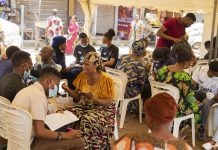
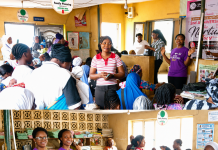
    In marking the Africa Safer Internet Day 2021, with the theme “Positioning and Partnering for Child Online Protection”, NCC’s representatives visited secondary schools in Abuja and Lagos to sensitise and educate students, on how they can use the internet productively, avoid being victims of all forms of cybercrime, and deal with cases of cyberbullying.

    The schools include Model Secondary School, and Government Science Secondary School, both in Maitama, Abuja; and Kuramo Junior College and Victoria Island Junior Secondary School, both in Victoria Island, Lagos.

    Addressing some of the students of Government Science Secondary School, Abuja, under strict observance of COVID-19 protocols, Tokunbo Oyeleye, Deputy Director, New Media and Information Security at NCC, stated that this year’s theme was in sync with one of the focus areas of NCC with respect to child online protection, noting that the a Commission constantly sensitises young Nigerians on cybersecurity and its applications.

    “We are here, as NCC representatives, to educate you, the younger generation of Internet users on what you need to know to keep safe while online as part of our efforts to ensure child online protection in our country in the use of Information and Communication Technology,” Oyeleye said.

    She further explained that the concern over child online protection should not be limited to arresting the perpetrators, but should be more of providing education and counselling that may assist in minimising the harm on younger Internet users.

    Meanwhile, at the Lagos event, Nkechi Obiekwe, Controller, NCC Lagos Zonal Office, said the protection and safety of children while they access the internet is a shared responsibility. She added that internet penetration permeates every aspect of life and adoption of the internet presents opportunities for learning.

    Earlier, in a presentation, Chioma Ibe, a Principal Manager in NCC, spoke on cyberbullying and signs to watch out for. She also highlighted ways to resist online bullying and the importance of reporting cases of cyberbullying to relevant authorities.

    “Online bullying can have a devastating impact on young people, whose online life is a key part of their identity and how they interact socially. Cyberbullying takes many forms, such as sending abusive messages, hurtful images or videos, nasty online gossip, excluding or humiliating others or creating fake accounts in someone’s name to trick or humiliate them,” Ibe said.

    Also contributing to the discussion, Chukwuemeka Monyei, the Executive Director, Like-a-Palm-Tree Foundation, educated the students on how to mute conversation with, unfollow, block, and report anybody who engages in an act of cyberbullying toward them as a way of protecting themselves.

    Oyeleye urged the students to share the knowledge they have gained during the programme with their friends and relatives towards ensuring a safer internet for all.

    Pamphlets with salient printed information on child online protection, with emphasis on cyberbullying, were distributed to the students across the four schools.

    The students, who participated in the intensive one-day sensitisation, expressed delight for being part of such a highly educational programme and thanked the Commission for its leading role in online child protection.