









Tag: Democratic Republic of Congo (DRC)

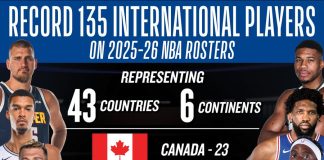
  • National Basketball Association (NBA) Rosters Feature Record 135 International Players from Record-Tying 43 Countries across Six Continents

    National Basketball Association (NBA) Rosters Feature Record 135 International Players from Record-Tying 43 Countries across Six Continents

    Opening-night rosters feature at least 120 international players for the fifth consecutive season and at least 100 international players for the 12th straight season

    The National Basketball Association (NBA) today announced that a record 135 international players from a record-tying 43 countries across six continents are on opening-night rosters for the 2025-26 season. Among the record 135 international players are more than 55 players who were either born in Africa or have at least one parent from Africa, including 2021 NBA champion and two-time Kia NBA Most Valuable Player (MVP) Giannis Antetokounmpo (Milwaukee Bucks; Greece; ties to Nigeria), 2022-23 Kia NBA MVP and seven-time NBA All-Star Joel Embiid (Philadelphia 76ers; Cameroon), 2019 NBA champion and three-time NBA All-Star Pascal Siakam (Indiana Pacers; Cameroon) and 2023-24 Kia NBA Rookie of the Year and 2025 NBA All-Star Victor Wembanyama (San Antonio Spurs; France; ties to the Democratic Republic of the Congo).

    Opening-night rosters feature at least 120 international players for the fifth consecutive season and at least 100 international players for the 12th straight season. All 30 NBA teams feature at least one international player. The previous record for international players (125) and the record for countries and territories represented (43) were set at the start of the 2023-24 and 2017-18 seasons, respectively.

    Canada (23 players), headlined by 2025 NBA champion and 2024-25 Kia NBA MVP Shai Gilgeous-Alexander (Oklahoma City Thunder), is the most-represented country outside the U.S. for the 12th consecutive season, followed by France, Australia, Germany (7) and Serbia (6).

    The Atlanta Hawks feature a record-tying 10 international players, followed by the Portland Trail Blazers and Golden State Warriors with seven apiece.

    Below are additional international player milestones and storylines for the upcoming season:

    • Four international players have won the last seven Kia NBA MVP Awards: Gilgeous-Alexander (2024-25), 2023-24 Kia NBA Rookie of the Year and 2025 NBA All-Star Nikola Jokić (2023-24, 2021-22 and 2020-21), Embiid (2022-23) and Antetokounmpo (2019-20 and 2018-19).  Last season also marked the fourth consecutive season that three international players finished top three in MVP voting: Gilgeous-Alexander (No. 1), Jokić (No. 2) and Antetokounmpo (No. 3).
    • There are a record 16 international players on opening-night rosters who have been NBA All-Stars: Antetokounmpo, five-time NBA All-Star and Kia All-NBA First Team member Luka Dončić (Los Angeles Lakers; Slovenia), Embiid, Gilgeous-Alexander, Rudy Gobert (Minnesota Timberwolves; France), Al Horford (Golden State Warriors; Dominican Republic), Kyrie Irving (Dallas Mavericks; Australia), Jokić, Lauri Markkanen (Utah Jazz; Finland), Kristaps Porziņģis (Hawks; Latvia), Domantas Sabonis (Sacramento Kings; Lithuania), Alperen Sengun (Houston Rockets; Turkey), Siakam, Nikola Vučević (Chicago Bulls; Montenegro), Wembanyama and Andrew Wiggins (Miami Heat; Canada).
    • At least three international players have made the Kia All-NBA Team each season since 2018-19.
    • In the 2025-26 NBA GM Survey (https://apo-opa.co/3JkORcR), Jokić (No. 1), Dončić (No. 2), Gilgeous-Alexander (No. 3) and Wembanyama (No. 4) were voted the players most likely to win the 2025-26 Kia NBA MVP Award (67%, 10%, 8% and 7% of votes, respectively). 
    • Three international players were voted as the players GMs would most want to sign if they were starting a franchise today: Wembanyama (83% of votes), Gilgeous-Alexander (13% of votes) and Jokić (3% of votes).
    • Opening-night rosters feature a record nine NBA Academy program alumni and more than 50 players who participated in Basketball Without Borders.
    • There are also several American players with parents from other countries, including Jalen Green (Phoenix Suns; ties to the Philippines), Karl-Anthony Towns (New York Knicks; ties to the Dominican Republic) and Jaylin Williams (Thunder; ties to Vietnam).

    The 80th NBA regular season tips off tonight with a doubleheader on NBA League Pass as the defending NBA champion Thunder hosts the Rockets (1:30 a.m. CAT) and the Warriors visit the Lakers (4 a.m. CAT). The 2025-26 season will reach fans in 214 countries and territories in more than 50 languages through the league’s broadcast partners around the world, including ESPN, Amazon Prime Video, ZAP TV and NTV in sub-Saharan Africa, and NBA League Pass, the league’s premium live game subscription service available via the NBA App.

    Below is the full list of international players on 2025-26 opening-night NBA rosters (active and inactive):

    CountryNameTeamTies
    AustraliaDyson DanielsAtlanta Hawks
    AustraliaJosh GreenCharlotte Hornets
    AustraliaJosh GiddeyChicago Bulls
    AustraliaLachlan Olbrich*Chicago Bulls
    AustraliaLuke Travers*Cleveland Cavaliers
    AustraliaTyrese ProctorCleveland Cavaliers
    AustraliaDanté ExumDallas Mavericks
    AustraliaKyrie IrvingDallas Mavericks
    AustraliaAlex Toohey*Golden State Warriors
    AustraliaJohnny FurphyIndiana PacersTies to Papua New Guinea
    AustraliaJock LandaleMemphis Grizzlies
    AustraliaJoe InglesMinnesota Timberwolves
    AustraliaRocco Zikarsky*Minnesota Timberwolves
    AustriaJakob PoeltlToronto Raptors
    BahamasBuddy HieldGolden State Warriors
    Bahamas Deandre AytonLos Angeles LakersTies to Nigeria
    Bahamas VJ EdgecombePhiladelphia 76ers
    BelgiumAjay MitchellOklahoma City Thunder
    BelgiumToumani CamaraPortland Trail BlazersTies to Mali
    Bosnia and HerzegovinaKarlo MatkovićNew Orleans PelicansTies to Croatia
    Bosnia and HerzegovinaJusuf NurkićUtah Jazz
    BrazilGui SantosGolden State Warriors
    CameroonPascal SiakamIndiana Pacers
    CameroonChristian Koloko*Los Angeles Lakers
    CameroonYves MissiNew Orleans Pelicans
    CameroonJoel EmbiidPhiladelphia 76ers
    CanadaCaleb Houstan*Atlanta Hawks
    CanadaNickeil Alexander-WalkerAtlanta Hawks
    CanadaEmanuel Miller*Chicago Bulls
    CanadaDwight PowellDallas Mavericks
    CanadaRyan Nembhard*Dallas Mavericks
    CanadaJamal MurrayDenver Nuggets
    CanadaJackson Rowe*Golden State Warriors
    CanadaAndrew NembhardIndiana Pacers
    CanadaBennedict MathurinIndiana PacersTies to Haiti
    CanadaBrandon ClarkeMemphis Grizzlies
    CanadaOlivier-Maxence Prosper*Memphis GrizzliesTies to Haiti
    CanadaZach EdeyMemphis Grizzlies
    CanadaAndrew WigginsMiami Heat
    CanadaLeonard MillerMinnesota Timberwolves
    CanadaLuguentz DortOklahoma City Thunder
    CanadaDillon BrooksPhoenix Suns
    CanadaShaedon SharpePortland Trail Blazers
    CanadaKelly OlynykSan Antonio Spurs
    CanadaRJ BarrettToronto Raptors
    CanadaAJ Lawson*Toronto Raptors
    CanadaWill RileyWashington Wizards
    Canada Jahmyl Telfort*LA ClippersTies to Haiti
    Canada Shai Gilgeous-AlexanderOklahoma City Thunder
    China Yang HansenPortland Trail Blazers
    CroatiaIvica ZubacLA Clippers
    CroatiaDario ŠarićSacramento Kings
    Czech RepublicVít KrejčíAtlanta Hawks
    Democratic Republic of the CongoJonathan KumingaGolden State Warriors
    Democratic Republic of the CongoBismack BiyomboSan Antonio Spurs
    Democratic Republic of the CongoOscar Tshiebwe*Utah Jazz
    Dominican RepublicAl HorfordGolden State Warriors
    Dominican RepublicDavid Jones Garcia*San Antonio Spurs
    FinlandLauri MarkkanenUtah Jazz
    FranceZaccharie RisacherAtlanta Hawks
    FranceNolan TraoréBrooklyn Nets
    FranceTidjane SalaünCharlotte Hornets
    FranceMoussa DiabatéCharlotte HornetsTies to Guinea and Mali
    FranceNoa EssengueChicago BullsTies to Cameroon
    FranceNicolas BatumLA ClippersTies to Cameroon
    FranceJoan BeringerMinnesota TimberwolvesTies to Benin
    FranceRudy GobertMinnesota Timberwolves
    FranceGuerschon YabuseleNew York KnicksTies to the Democratic Republic of the Congo
    FranceMohamed DiawaraNew York KnicksTies to Mali
    FrancePacôme DadietNew York KnicksTies to Ivory Coast
    FranceOusmane DiengOklahoma City ThunderTies to Senegal
    FranceRayan RupertPortland Trail BlazersTies to Morocco  
    FranceSidy Cissoko*Portland Trail BlazersTies to Senegal
    FranceMaxime RaynaudSacramento Kings
    FranceVictor WembanyamaSan Antonio SpursTies to the Democratic Republic of the Congo
    FranceAlex SarrWashington WizardsTies to Senegal
    FranceBilal CoulibalyWashington WizardsTies to Mali
    France Noah PendaOrlando MagicTies to Cameroon and Martinique
    GeorgiaGoga BitadzeOrlando Magic
    GeorgiaSandro MamukelashviliToronto Raptors
    GermanyMaxi KleberLos Angeles Lakers
    GermanyAriel HukportiNew York KnicksTies to Togo
    GermanyIsaiah HartensteinOklahoma City Thunder
    GermanyTristan da SilvaOrlando MagicTies to Brazil
    GermanyDennis SchröderSacramento KingsTies to The Gambia
    Germany Franz WagnerOrlando Magic
    Germany Moritz WagnerOrlando Magic
    GreeceAlex Antetokounmpo*Milwaukee BucksTies to Nigeria
    GreeceGiannis AntetokounmpoMilwaukee BucksTies to Nigeria
    GreeceThanasis AntetokounmpoMilwaukee BucksTies to Nigeria
    GuineaMoussa Cissé*Dallas Mavericks
    IsraelBen SarafBrooklyn Nets
    IsraelDeni AvdijaPortland Trail Blazers
    ItalySimone FontecchioMiami Heat
    JamaicaNick RichardsPhoenix Suns
    JapanRui HachimuraLos Angeles LakersTies to Benin
    LatviaKristaps PorziņģisAtlanta Hawks
    LithuaniaJonas ValančiūnasDenver Nuggets
    LithuaniaKasparas JakučionisMiami Heat
    LithuaniaDomantas SabonisSacramento Kings
    MaliN’Faly DanteAtlanta Hawks
    MontenegroNikola VučevićChicago Bulls
    NetherlandsQuinten PostGolden State Warriors
    New ZealandSteven AdamsHouston Rockets
    NigeriaAdem BonaPhiladelphia 76ersTies to Turkey
    NigeriaJosh OkogieHouston Rockets
    PortugalNeemias QuetaBoston CelticsTies to Guinea-Bissau
    RussiaEgor DёminBrooklyn Nets
    RussiaVladislav Goldin*Miami Heat
    SenegalEli Ndiaye*Atlanta Hawks
    SenegalMouhamed GueyeAtlanta Hawks
    SerbiaNikola JokićDenver Nuggets
    SerbiaBogdan BogdanovićLA Clippers
    SerbiaNikola JovićMiami Heat
    SerbiaNikola TopićOklahoma City Thunder
    SerbiaTristan Vukčević*Washington WizardsTies to Sweden
    Serbia Nikola ĐurišićAtlanta Hawks
    Slovenia Luka DončićLos Angeles Lakers
    South Sudan Khaman MaluachPhoenix SunsTies to Uganda
    South Sudan Duop ReathPortland Trail BlazersTies to Australia
    SpainHugo GonzálezBoston Celtics
    SpainSanti AldamaMemphis Grizzlies
    St. LuciaChris BoucherBoston CelticsTies to Canada
    SwedenBobi KlintmanDetroit Pistons
    SwedenPelle LarssonMiami Heat
    SwitzerlandClint CapelaHouston RocketsTies to Angola and the Democratic Republic of the Congo
    SwitzerlandYanic Konan NiederhauserLA ClippersTies to Ivory Coast
    SwitzerlandKyshawn GeorgeWashington WizardsTies to Canada and France
    TurkeyAlperen SengunHouston Rockets
    UkraineSvi MykhailiukUtah Jazz
    Ukraine Max Shulga*Boston Celtics
    United KingdomAmari Williams*Boston Celtics
    United KingdomOG AnunobyNew York KnicksTies to Nigeria
    United KingdomTosan Evbuomwan*New York KnicksTies to Nigeria
    United KingdomJeremy SochanSan Antonio SpursTies to Poland

    * – Two-Way Player

  • AGOA expiry impact on African export diversification

    AGOA expiry impact on African export diversification

    Unless the African Growth and Opportunity Act (AGOA) is renewed, African exporters of agricultural products and light manufactures could face shrinking market access to the United States, undermining prospects for diversification.
    Since its launch in May 2000, AGOA has supported sub-Saharan African exports to the US through preferential access. However, the recent expiry of the scheme would threaten export diversification and industrialization across the continent. In a country like Lesotho, for instance, approximately one third of exports are tied to AGOA, predominantly in the apparel sector, which employs between 30,000 and 40,000 workers, primarily women.

    African and non-African exporters are already facing increased trade barriers in the US market. Country- and sector-specific tariffs that have been introduced by the US since April 2025 have increased tariffs for the average AGOA country from below 0.5% to 10%. For key exports, such as agriculture and food products, metals, machinery and transportation, textiles and apparel, they have already triggered a double-digit increase in duties.

    The expiry of AGOA would disproportionately affect Africa’s light-manufacturing exports to the US, namely apparel and agro-food products, such as fish and dried fruits. Without AGOA’s preferential treatment, the 32 countries that received preferences until September 2025 would face a second wave of tariff increases as country-specific and sectoral tariffs would be added on top of most-favoured nation (MFN) rates, instead of the current preferential treatment under AGOA. Due to varying tariff rates and exceptions for sensitive raw materials, African exports of agricultural goods and manufactured products would be subject to tariffs that are 2-to-3 times higher than those applied on fuels and minerals.

    Exporters of mined commodities are the least affected by the US tariff changes on African goods. Countries like the Democratic Republic of Congo, Nigeria or Angola—whose exports are primarily fuels and minerals—face minimal tariff increases, as their main exports already benefit from low MFN tariffs, or exemptions from additional duties. More diversified economies, such as South Africa, are less exposed to AGOA’s expiry but have already experienced significant tariff increases this year due to country-specific and sectoral tariffs.

  • Governor Soludo Receives Triple Honours at Global Power Forum in New York

    Governor Soludo Receives Triple Honours at Global Power Forum in New York

    Governor Chukwuma Charles Soludo of Anambra State has been recognised on the international stage with three prestigious awards.

    The accolades include the African Public Service Excellence Award, the African Governor of the Year Award, and a certificate of special recognition from the House of Representatives of South Carolina.

    The awards given during the 2025 Global Power Forum was held alongside the 80th Session of the United Nations General Assembly (UNGA).

    According to the Governor’s Chief Press Secretary, Christian Aburime, the South Carolina House of Representatives presented Governor Soludo with a certificate commending his distinguished career, which includes his roles as a professor of economics, economic adviser to former President Olusegun Obasanjo, and as the Governor of the Central Bank of Nigeria. The commendation highlights Soludo’s pivotal contributions to elevating Nigeria’s status as an African financial powerhouse.

    The award ceremony attracted high-profile personalities from across the globe, including former Tanzanian President, Dr. Jakaya Kikwete, Prime Minister Philip Davis of The Bahamas, President Sylvanie Burton of Dominica, former Trinidad and Tobago Prime Minister Kamla Persad-Bissessar, and Prime Minister, Dr. Judith Suminwa Tuluka of the Democratic Republic of Congo, among others.

    In addition to receiving these honours, Governor Soludo was also a keynote speaker at the forum, where he addressed the topic “Africa Unleashed: Navigating the Disruptions, Enhancing Opportunities—The Anambra State Example.” His insights reflected the transformative initiatives his administration has undertaken in Anambra, positioning the state as a model for other regions in Africa and the Caribbean.

    The recognition of Governor Soludo at this prominent global event emphasizes Anambra’s increasing visibility on the world stage, showcasing the state’s advancements and leadership in various sectors.

    As the spotlight remains on Anambra, it is clear that under Governor Soludo’s leadership, the state is truly on the rise and earning international acclaim.

  • Global Energy Alliance commits $16 million to accelerate Mission 300 and Africa’s clean energy future at UNGA 80

    Global Energy Alliance commits $16 million to accelerate Mission 300 and Africa’s clean energy future at UNGA 80

    The Global Energy Alliance for People and Planet today announced $16 million in commitments to expand energy access and accelerate clean energy deployment across Africa. Unveiled on the sidelines of the 80th session of the United Nations General Assembly (UNGA 80) these commitments support Mission 300, a collective effort led by the World Bank Group and African Development Bank to connect 300 million people in Africa to electricity by 2030.

    These commitments are made possible thanks in part to existing catalytic support from the Bezos Earth Fund, which is helping to unlock energy access and accelerate Africa’s clean energy transition. The funding will help tackle persistent market barriers, scale proven technologies, and build government and community capacity, boosting both energy security and economic resilience across the continent.

    Woochong Um, CEO of the Global Energy Alliance for People and Planet, said: “Our Alliance’s work in Africa, including Mission 300, is proof of what’s possible when governments, business, and philanthropy act together with urgency and purpose—turning ambition into real power, real jobs, and real opportunity for millions across the continent.”

    Key commitments include:

    • Democratic Republic of Congo (DRC): Over $7 million through the government-backed Mwinda Fund, managed by GreenMax, is driving expansion of the country’s decentralized renewable energy (DRE) sector—an essential pillar of Mission 300. The investment will increase electricity access by advancing mini- and metro-grid projects, complemented by Castalia’s technical support to build robust pipelines and institutional capacity. Crucially, this funding is accelerating over 9 X in additional capital to help bring access to the 70 million people still living without electricity in the country. 
    • Nigeria: Over $2 million to scale interconnected mini grids in Nigeria with RMI, an effort designed to accelerate deployment of 100MW, build a 500MW pipeline, improve cost efficiency and secure clean, reliable energy for hundreds of thousands of people.  
    • Demand Aggregation for Renewable Technology (DART 3.0): $5 million to Odyssey Energy Solutions to aggregate equipment demand across Sierra Leone, Madagascar, and Nigeria – unlocking up to $125 million in clean energy investments while cutting costs and halving deployment timelines. This will enable developers to benefit from bulk procurement, standardized tech, and lower equipment pricing, making DRE more feasible in hard-to-reach areas. 
    • South Africa: A $1.5 million partnership with the Just Energy Transition Programme Management Unit to unlock new sources of capital and strengthen South Africa’s transition to an equitable clean energy future.

    600 million people in Africa lack access to electricity and billions more live with access that is unreliable or unaffordable. Lack of access to energy has been identified as one of the key constraints to Africa’s economic development.

    “Interconnected mini grids are a game-changer for Nigeria’s energy future. By combining on-site renewables with grid power, mini-grids deliver reliable, affordable electricity to underserved communities, reduce reliance on costly diesel, and create new value for developers and utilities. With support from the Energy Alliance, we’re scaling this model to accelerate energy access for millions of Nigerians,” said Jon Creyts, CEO, RMI.

    “Mobilizing clean energy investments at scale is critical to achieving universal energy access and enhancing climate resilience,” said Emily McAteer, Co-founder & CEO, Odyssey. “Odyssey is proud to partner with the Energy Alliance to advance these shared goals. By reducing costs and accelerating deployment timelines, we are creating a more efficient and investable market for distributed renewable energy. This is a pivotal moment to catalyze private sector growth and deliver reliable, affordable energy to the communities that need it most.”

    “The Alliance recognizes the tremendous challenge that energy access poses to communities across Africa, and the lack of coordination is a major brake on progress”, said Carol Koech, GEAPP’s Vice President for Africa. “We are continuing to align public, private and philanthropic partners to channel resources wherever we can to create the greatest impact. With the right coordination, we can multiply expertise, investment and action to bring energy security to millions across the continent.”

    Since its launch at COP26 in 2021, the Global Energy Alliance has awarded $503 million in catalytic funding, helping unlock $7.8 billion in total investment. Projects underway will expand energy access for 91 million people, create 3.1 million jobs and livelihoods, and prevent 296 million tons of CO₂ across more than 30 countries.

  • Royal African Society announces Film Africa 2025, 14 – 23 November

    Royal African Society announces Film Africa 2025, 14 – 23 November

     …Ten Days of African Cinema, Culture, and Conversations at the British Film Institute (BFI) Southbank and Venues Across the City of London

    London is set to be ignited with the spirit of Africa as Film Africa, the UK’s and Europe’s leading film festival celebrating African and African diaspora cinema, running from 14–23 November 2025, brought to you by the Royal African Society.

    For ten dazzling days, the city will transform into a hub of African creativity—red-carpet galas, groundbreaking films, engaging workshops delivered by leading experts, intimate panels, and unforgettable cultural encounters. This year’s edition will showcase the richness, diversity, and creativity of African filmmaking through a carefully curated programme of feature films, documentaries, shorts, panel discussions, and special events.

    The festival will open and close at the BFI Southbank, with gala screenings attended by distinguished filmmakers, artists, corporate organisations, and cultural leaders. The festival opens with My Father’s Shadow by Director Akinola Davies Jr. and will close with Katanga by Director Dani Kouyate.

    Spotlight on the Democratic Republic of Congo

    The 2025 spotlight shines on the Democratic Republic of Congo (DRC), a nation with a powerful cinematic voice and vibrant cultural heritage. The spotlight programme will feature a mix of features, documentaries, and shorts, exploring Congolese identity, memory, and history.

    The Opening Gala screening welcomes celebrated Congolese filmmaker and artist, Sammy Baloji, alongside invited guests from across Africa and Europe, marking a moment of cultural pride and connection.

    Features, Documentaries & Shorts

    Expect an explosive mix of African feature films from across the continent, bringing together both seasoned masters and daring emerging voices. These works will address themes ranging from migration, social change and resilience to the beauty of everyday life African life.

    The documentary strand will take audiences deep into Africa’s urgent social, political, and cultural realities, offering insightful perspectives on contemporary issues, while the short film programme will showcase new voices and experimental work, pushing the boundaries of traditional storytelling.

    Beyond the Screen

    Film Africa is a hub for dialogue, and the festival thrives on conversations.  Q&A sessions and panels will bring audiences face-to-face with filmmakers giving audiences insights into creative processes and thematic choices.

    The intellectual centrepiece of the festival will be the Symposium: African Cinema and Liberation, featuring a landmark conversation between Mozambican producer, Pedro Pimenta and celebrated artist-filmmaker, Sir John Akomfrah. Together, they will explore the role of cinema in resisting colonial narratives and advancing African cultural sovereignty.

    Kunle Afolayan Masterclass

    A rare highlight, Film Africa is delighted to host a special masterclass with Kunle Afolayan, one of Africa’s most acclaimed and influential filmmakers. Renowned for his distinctive storytelling and visually striking films, expect insights into his Netflix collaborations, his groundbreaking approach to storytelling, and his mission to inspire the next generation of African filmmakers. Kunle Afolayan will be in conversation with film and television executive, Tendeka Matatu.

    From his breakthrough feature The Figurine (2009) to international successes such as Phone Swap (2012), October 1 (2014), Citation (2020), and Aníkúlápó (2022), Afolayan has consistently pushed Nollywood beyond its traditional frameworks, fusing local narratives with universal themes and technical innovation.

    This is a unique opportunity to hear directly from a director whose work embodies the energy, ambition, and artistry of contemporary African cinema.

    Tribute to Souleymane Cissé

    Film Africa 2025 will also pay tribute to Souleymane Cissé, the legendary Malian filmmaker who passed away in February 2025. His groundbreaking work, including the Cannes Jury Prize–winning Yeelen (The Light), redefined African cinema and brought it global recognition. The tribute will include a retrospective of Cissé’s films alongside a personal documentary by his daughter, Fatou Cissé, chronicling his life and artistic journey.

    Looking Ahead

    From BFI Southbank to venues across London, Film Africa 2025 is cinema, culture, and conversation on a global stage. For ten days, African stories will take centre stage, resonating far beyond the screen to spark dialogue, inspire change, and celebrate creativity.

    Royal African Society’s Film Africa 2025 reaffirms its mission to provide a vital platform for African cinema and to foster dialogue between filmmakers and audiences. The ten days will unfold across multiple venues in London, creating a citywide celebration of African creativity and innovation.

    With its mix of screenings, live discussions, and special events, Film Africa is more than a festival, it is a movement, a celebration, and a meeting place for those passionate about Africa’s stories.

  • Onafriq and Visa Partner to Launch Visa Pay, Unlocking Interoperability Between Card and Mobile Money in the DRC

    Onafriq and Visa Partner to Launch Visa Pay, Unlocking Interoperability Between Card and Mobile Money in the DRC

     Onafriq, Africa’s largest digital payments network, today announced a strategic partnership with Visa to launch Visa Pay, a cloud-native Payments-as-a-Service platform designed to expand digital financial access across the Democratic Republic of Congo (DRC).

    Through this partnership, consumers in the DRC will be able to conveniently fund their Visa Pay wallets directly from mobile money channels, unlocking seamless access to everyday digital and e-commerce payments. Powered by Onafriq’s APIs, the collaboration enables mobile money collections and disbursements from M-Pesa, Airtel Money and Orange Money wallets, effectively bridging Visa’s card network with millions of mobile money wallets across the country.

    “Our collaboration with Onafriq represents our ambition to accelerate financial inclusion in the DRC,” said Sophie Kafuti, General Manager of Visa in the DRC. “By connecting Visa Pay to existing mobile money infrastructure, we’re not just adding convenience—we’re creating the interoperability foundation that will fuel digital commerce adoption across the country.

    The timing aligns with significant market growth. GSMA data projects the DRC’s mobile payments industry will reach $3.85 billion in transaction value this year, representing a 19% compound annual growth rate. This market encompasses retail payments, e-commerce, government services, bill payments, payroll disbursements, and business collections nationwide.

    “Onafriq has connected Congolese consumers to Africa and the world for years, operating as the trusted infrastructure in the background,” said Christian Bwakira, Chief Commercial Officer of Onafriq. “This partnership demonstrates how combining Visa’s global network reach with Onafriq’s deep on-ground presence creates unprecedented possibilities for innovation and financial inclusion across Africa. When you unite world-class global capabilities with trusted local networks, you unlock transformative opportunities for both partners and the millions of consumers we serve.”

    Beyond DRC, the partnership opens the door for Visa Pay to expand into other African markets, where mobile money adoption is already high and demand for interoperable, digital-first solutions is accelerating.

  • Airtel, Vodacom sign network infrastructure agreement to drive digital inclusion in Mozambique, Tanzania and the Democratic Republic of Congo (DRC)

    Airtel, Vodacom sign network infrastructure agreement to drive digital inclusion in Mozambique, Tanzania and the Democratic Republic of Congo (DRC)

     Airtel Africa and Vodacom Group have announced a strategic infrastructure sharing agreement in key markets including Mozambique, Tanzania and the Democratic Republic of Congo (DRC), subject to regulatory approvals in the various countries. 

    The agreement marks a transformative milestone in promoting digital inclusion and expanding access to reliable connectivity across Africa. 

    The initial partnership focuses on sharing fibre networks and tower infrastructure, to accelerate the roll-out of digital services in these markets, increasing connectivity for customers while reducing operators’ infrastructure costs and improving speed to market. 

    By leveraging existing infrastructure, the collaboration aims to deliver improved connectivity, faster internet speeds, and more reliable services. This will not only enhance customer experience but also assist with providing access to digital services for a broader population, particularly those in underserved areas, helping to bridge the digital divide in Africa. 

    Vodacom Group’s chief executive officer, Shameel Joosub said: “Providing connectivity to empower people is at the core of our strategy. Our partnership with Airtel Africa is a proactive step forward in creating a sustainable, inclusive, and connected digital future for the continent.  

    Through infrastructure sharing, we can provide cost-effective services to more people, more rapidly, ensuring that no one is left behind in the digital age. As we fulfil our ambition to connect 260 million customers by 2030, the need for scalable and cost-efficient network solutions becomes increasingly significant 

    This partnership provides us with the opportunity to narrow the digital divide, empowering more individuals and communities through digitalisation across the continent. It is aligned with our purpose to connect for a better future,” concludes Joosub.  

    Airtel Africa’s chief executive officer, Sunil Taldar said: “This partnership is aligned with our unwavering commitment to delighting our customers by always making our network available to them even in the remotest locations. Working with Vodacom, we will open greater access to digital and financial opportunities which will transform the lives of our customers while complying with all regulatory requirements. 

    Even as competitors, it has become a business imperative for us to collaborate in the provision of critical infrastructure required to build resilient network with strong capacity to support the emerging digital technologies as well as the growing need for data-enabled products and services. 

    Accelerating the deployment of fibre connectivity is a key enabler in the acceleration of 4G and 5G technologies in Africa to deliver the high-speed, low-latency, and reliable connections needed for modern digital applications.  

    This partnership allows for further opportunities for both operators to enhance network performance, extend coverage, and increase mobile, fixed, and financial services leveraging a broader footprint on the continent.” 

  • Africa Unveils Landmark Integrity & Equity Principles and Coordination Platform to Strengthen Carbon Markets

    Africa Unveils Landmark Integrity & Equity Principles and Coordination Platform to Strengthen Carbon Markets

    The today announced a series of bold initiatives to elevate Africa’s role in global carbon markets and ensure they deliver both climate and development benefits for the continent.

    The announcements were made at a high-level continental dialogue convened in collaboration with the Government of Kenya and Afreximbank. The consultation opened with statements from H.E. Dr. Deborah Mlongo Barasa, Cabinet Secretary for Environment, Republic of Kenya; Ambassador Ali Mohamed, Kenya’s Special Climate Envoy; Neil Wigan OBE, British High Commissioner to Kenya; and Estherine Fotabong, Director of Programme Innovation and Planning at AUDA-NEPAD — reflecting strong political and institutional commitment to Africa’s emerging leadership in carbon markets. The United Kingdom is supporting these efforts as a key technical partner to AUDA-NEPAD, including through the secondment of UK climate expert Ravi Raichoora to the agency.

    Throughout the consultation, AUDA-NEPAD engaged directly with senior representatives from African Union member states, including Madagascar, Kenya, Nigeria, Ethiopia, Ghana, Liberia, and the DRC, who shared their experiences, challenges, and aspirations in navigating carbon markets. Member States emphasised the vital role AUDA-NEPAD can play — leveraging its continental mandate to promote greater cohesion, alignment, and technical support across the region. In parallel, perspectives from global standard-setters such as the VCMI and ICVCM, rating agencies like BeZero, and leading project developers offered valuable insights into how African priorities can be better reflected in global frameworks.

    At the event, AUDA-NEPAD unveiled three major outcomes designed to advance Africa’s carbon market ambitions:

    1. The African Integrity & Equity Principles for Carbon Markets — a pioneering framework articulating Africa’s vision for high-integrity, socially inclusive carbon markets. These principles, which will be shaped through broad stakeholder engagement, place social value at the core of market participation. A draft will be presented for formal consultation at the Africa Climate Summit 2 in Addis Ababa (9–12 September).
    2. A Continental Coordinating Mechanism — comprising technical experts and focal points from across the 55 AU Member States and regional carbon market alliances. This mechanism will reduce fragmentation, promote shared priorities, and strengthen Africa’s collective voice in global carbon market negotiations, thereby fostering a more coherent, transparent, and investable environment.
    3. A Digital Tracking Platform for Article 6 Readiness — currently under development, this tool will offer real-time insights into country-level progress. It will enable governments, the private sector, and development partners to identify opportunities, monitor implementation, and direct capacity-building support where most needed. In addition, the platform will support the development of a continent-wide glossary of carbon market terminology, enhancing consistency and alignment with international best practices.

    The event also featured strong engagement from the private sector, including project developers, advisory firms, and rating agencies. Private actors and Member State representatives alike welcomed these three key outcomes as critical enablers to unlock Africa’s carbon potential.

    Tijani Nwadei, Partner and Co-founder of Visuias Limited, a carbon markets advisory firm, underlined the importance of AUDA-NEPAD’s coordinating role in catalysing participation, enabling benefit-sharing, and supporting the actualisation of a market that places Africa at the forefront of global supply. Andrew Ocama, Coordinator for the Eastern Africa Alliance on Carbon Markets and Climate Finance, welcomed AUDA-NEPAD taking on a leading coordination role for carbon markets across the continent, emphasising that such leadership is essential to prevent fragmentation and ensure coherent regional implementation. El-hadj Mbaye, Africa’s lead negotiator for Article 6, called on Member States to take an active role in understanding and engaging in carbon markets, stressing that Africa must shape the future of carbon finance — not simply participate in it.

  • US Aid Pause Comes Amid Multiple Disease Outbreaks in Africa

    US Aid Pause Comes Amid Multiple Disease Outbreaks in Africa

    Ebola in Uganda. Marburg in Tanzania. Cholera in Angola. War in Goma in the Democratic Republic of Congo (DRC) that escalated the risk of multiple disease outbreaks – and then the United States decision to halt foreign aid for 90 days and order grantees to stop all work.

    “This is not the kind of week we like,” Dr Jean Kaseya, Director-General of Africa Centres for Disease Control and Prevention (Africa CDC) told a media briefing on Thursday.

    “I was shaking, to be honest with you, when there was this US pause regarding the [Marburg] response in Tanzania,” Kaseya admitted. “And if we talk about mpox, we have a pledge of $500 million from the US. We got around 60% from what the US committed, and we are waiting for this 40%.”

    However, Kaseya expressed gratitude that the US had exempted “life-saving humanitarian assistance” from the 90-day pause. The US State Department has defined humanitarian assistance as “core to life-saving medicine, medical services, food, shelter, and subsistence assistance, as well as supplies and reasonable administrative costs as necessary to deliver such assistance”. 

    Africa CDC is waiting to engage with the US about its financial assistance once the appointment of the US Secretary for Health and Human Services (HHS) is finalised and the head of the US CDC is appointed. Trump’s HHS pick, Robert F Kennedy Jr is currently in Senate confirmation hearings.

    Uganda reports Ebola – and maybe DRC too

    Uganda announced an Ebola outbreak on Thursday, following the death on Wednesday of a 32-year-old male nurse in Kampala after five days of illness.

    Uganda has set up an incident management team and is tracing 45 contacts, mostly people working in Mbale Hospital in eastern Uganda and Abubakar Islamic Hospital in Kampala.

    Kaseya said that there was also a possible Ebola outbreak in DRC where seven out of 12 suspected cases had died. Samples from five of the cases have been sent to a laboratory in Kinshasa for diagnosis.

    Ebola in Uganda 30 January 2025

    Conditions in war-torn Goma ripe for epidemic

    Kaseya expressed deep concern about people in Goma, the capital of DRC’s North Kivu province, which was taken over by Rwandan-backed M23 rebels this week.

    Hundreds of people have reportedly died and the city is without water, electricity and the internet. 

    However, Kaseya said there was a high risk of multiple health outbreaks in the heavily congested city, home to up to three million people including almost one million who have fled fighting elsewhere.

    “We are talking about an area where so many people are together. Health infrastructure is broken. Access to basic services, even water and sanitation, doesn’t really exist. In addition to mpox, we have cholera outbreaks, measles and other diseases. I’m calling on our leaders to stop this unnecessary war that already killed 300 people. The guns cannot kill all of us, but outbreaks can.”

    Kaseya said he did not know whether Goma’s health laboratory had been affected, and if it had been destroyed in fighting this would affect the country’s disease surveillance.

    The rebels control the airport, so the L16 mpox vaccines donated by Japan that recently arrived in the DRC’s capital, Kinshasa, can’t reach Goma at present.

    Meanwhile, mpox continues to dominate the outbreak statistics on the continent with almost 10,000 suspected cases reported in the past week along with 85 deaths. The one bright spark, however, is that Burundi has finally agreed to start vaccinating its citizens after months of scepticism.

    Africa CDC is also supporting Angola to address a cholera outbreak that had already killed 51 people and infected around 1200 people. Some 2000 cholera vaccines will reach  Angola on 7 February. 

    ‘Difficult times’

    “We are facing a very difficult moment. Western countries are decreasing their aid budgets,” said Kaseya, noting that in 2023, the US gave Africa in $8 billion in assistance, mostly for health and humanitarian assistance. 

    “African countries are facing a tough economic situation. Projection from Africa CDC shows that we can expect two to four million additional deaths per year by 2025, which will push 39 million people into poverty, and reverse even the gain in mortality almost comparable to what we had 25 years ago,” said Kaseya.

    “All of these conditions can lead one day to a pandemic from Africa. And if there is a pandemic from Africa, all of us in the world will be affected.”

    African leaders are meeting on 14 February at the invitation of Rwandan President Paul Kagame to discuss more sustainable financing for health.

  • AfDB, PowerGen, and Partners Launch Transformative Renewable Energy Platform to Scale Clean Energy Access Across the Continent

    AfDB, PowerGen, and Partners Launch Transformative Renewable Energy Platform to Scale Clean Energy Access Across the Continent

    Adopting a platform approach has the potential to accelerate efforts to connect the 570 million people across sub-Saharan Africa who currently lack access to electricity, according to data from IRENA

    PowerGen Renewable Energy (PowerGen) has partnered with leading international investors to establish a scalable, distributed renewable energy platform targeting the deployment of 120 MW of renewable power, including battery energy storage solutions across Africa.

    The platform is a collaboration between PowerGen and the Private Infrastructure Development Group (PIDG), the Danish Investment Fund for Developing Countries (IFU), EDFI Management Company, through its EU-funded Electrification Financing Initiative (ElectriFi), and the African Development Bank’s Sustainable Energy Fund for Africa (SEFA). The anchor commitment from PIDG was made through InfraCo, its investment arm, with concessional capital provided by PIDG Technical Assistance.

    SEFA is a multi-donor special fund managed by the African Development Bank that provides catalytic finance to unlock private sector investments in renewable energy and energy efficiency.

    Building on PowerGen’s thirteen-plus years of experience developing, implementing, and operating projects across Africa, the funds will support the deployment of a 120MW portfolio of renewable mini-/metro-grids and commercial and industrial (C&I) power solutions, inclusive of battery energy storage.

    Initially focused on Nigeria, Sierra Leone, and the Democratic Republic of the Congo (DRC), the platform will be expanded within the wider region, leveraging PowerGen’s deep pipeline in combination with local developer and  engineering, procurement and construction (EPC) partnerships. Adopting a platform approach has the potential to accelerate efforts to connect the 570 million people across sub-Saharan Africa who currently lack access to electricity, according to data from IRENA.  The first closing of the transaction was reached in January 2025 and will catalyse additional equity and debt finance later this year.

    Dr Daniel Schroth, Director of Renewable Energy and Energy Efficiency at the African Development Bank, said: “The African Development Bank’s contribution to PowerGen’s platform reflects our commitment to catalysing private investment in sustainable infrastructure and energy access in line with the objectives of Mission 300. This project will bring electricity to underserved areas in Nigeria, Sierra Leone, and the DRC, and generate significant economic activity and create numerous employment opportunities. It’s an excellent example of our strategy to drive development through targeted partnerships.”

    PIDG’s Head of Investment Management for InfraCo, Claire Jarratt, said: “PIDG has worked with PowerGen for a number of years in Sierra Leone, and we are confident in their ability to develop, deliver and operate high-quality distributed energy infrastructure in challenging conditions. We are therefore delighted to anchor this new investment. We are pleased to be working with partners to support PowerGen to expand its offering across sub-Saharan Africa at a platform scale that has the potential to be truly transformational.”

    Luke Foley, PIDG Deputy Head of Technical Assistance, added: “This investment epitomises the PIDG mandate. It builds on PIDG’s innovative use of its blended finance tools and reinforces its dedication to support the deployment of sustainable energy solutions, which are key to both combating climate change and fostering economic resilience in the region.”

    IFU Investment Director, Henrik Henriksen, said: “There is a tremendous need for enabling access to clean energy that can assist underserved households and businesses in Africa to become more resilient to climate change and to provide them with opportunities for better living conditions without further increasing greenhouse gas emissions. Therefore, we are very proud to be a part of a joint investment enabling PowerGen to develop sustainable off-grid power solutions in sub-Saharan Africa. This aligns with our increased focus on supporting Africa’s transition to be more climate resilient.”

    Rodrigo Madrazo Garcia de Lomana, CEO of EDFI Management Company, said: “Our initial investment in PowerGen Renewable Energy in 2019 has proven to be truly catalytic, paving the way for this significant funding round. We are excited to continue supporting PowerGen’s growth as part of this round, which showcases the ripple effect of our early commitment. PowerGen exemplifies how targeted early-stage funding can unlock transformative solutions for sustainable energy access in emerging markets.”

    Aaron Cheng, CEO of PowerGen, said: “We are thrilled to announce this transformational next chapter to drive our vision of providing clean, reliable, and affordable energy across Africa. We are grateful to our terrific partners for their collaboration, and together, we look forward to contributing at scale to the energy transition and socio-economic growth across the continent.”

    With funding secured, PowerGen is well-positioned to serve the energy needs of more than 68,000 households and reduce the cost of power for 7,000 businesses. Increasing access to reliable and affordable electricity is expected to enhance business productivity, create indirect jobs and drive economic growth. 

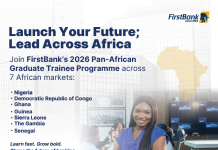
  • FirstBank plans expansion to Ethiopia, Angola, Cameroon

    FirstBank plans expansion to Ethiopia, Angola, Cameroon

    As part of corporate plans to deepen its presence in Sub-saharan Africa, Nigeria’s leading commercial bank, First Bank is looking to expand into several other Adrican countries, including Ethiopia, Angola and Cameroon.

    “There are a number of large economies with large banking pools that are of interest to us because their financial markets are opening up,” Deputy Managing Director, Ini Ebong told The Africa Report in December on the sidelines of the Africa Financial Industry Summit (AFIS).

    “So, you look at countries like Ethiopia and Angola. In francophone West Africa, we want to expand our presence in places like Côte d’Ivoire and Cameroon. The market opportunity is there, and we seek to continue to exploit it,” said Ebong.

    Ethiopia, Africa’s second most populous country, is poised to partially open its banking sector to foreign banks following a vote by lawmakers in December. The new banking law, passed by a majority in parliament, allows foreign banks to open subsidiaries in Ethiopia. Foreign firms will only be allowed to own 49% of shares, according to the Ethiopian news magazine, Addis Standard.

    Speaking during a panel session at AFIS, Ethiopia’s central bank governor, Mamo Mihretu said the country had been working on the legislation that would finally open the banking sector to foreign competition over the past one year.

    After the ratification of the legislation by the parliament, the largest economy in East Africa is “open for business” for any banks looking to come into the country, according to Mihretu.

    Previously the executive director in charge of treasury and international banking before his appointment in June 2024, Ebong said that there are growing opportunities in markets across the continent with the expansion of financial systems similar to “what we saw in the early 2000s in some of the larger African markets”. “We believe it is an opportune time to take part in the phase of growth that we see,” said Ebong.

    FirstBank, which has been operating in Nigeria for 130 years, began establishing subsidiaries in other African markets in 2011, when it acquired Banque International de Credit, one of the leading banks in Democratic Republic of Congo.

    In November 2013, it snapped up the subsidiaries of International Commercial Bank Financial Group Holdings AG (ICBFGH) in The Gambia, Sierra Leone, Ghana and Guinea. It went ahead to purchase ICB Senegal the following year, completing its acquisition of West African assets and operations of ICBFGH.

    FirstBank also has a subsidiary in the United Kingdom with branches in London and Paris, France, as well as a representative office in Beijing, China. Its parent company FBNHoldings saw its pretax profit for the first nine months of 2024 soar to N610.86bn ($395m) from N267.88bn in the corresponding period a year earlier.

    Fitch Ratings said in July last year that FirstBank, Nigeria’s third-largest lender, represented 10.7% of banking system assets at the end of 2023. “Its strong franchise supports a stable funding profile and low funding costs. Revenue diversification is significant, with non-interest income typically exceeding 40% of operating income,” it said.

  • Africa Raises $1-billion to Combat Mpox – But Weak Surveillance Clouds Continent’s Response

    Africa Raises $1-billion to Combat Mpox – But Weak Surveillance Clouds Continent’s Response

    Governments and donors have pledged around $1 billion to combat Africa’s mpox outbreak in the past few weeks, with the US pledging $500 million this week, said Dr Jean Kaseya, Director-General of the Africa Centres for Disease Control and Prevention.

    But the continent’s response is confounded by poor surveillance, problems with testing virtually non-existant contact tracing (less than 4%) and insufficient knowledge about transmission, Kaseya tols a media briefing on Thursday.

    Africa CDC and the World Health Organization (WHO), who are coordinating the continental response, were due to meet US Health Secretary, Xavier Beccera late Thursday to discuss how the US money would be allocated.

    However, the White House stated earlier in the week that the money will address a range of needs identified by the Africa CDC and WHO, including “training frontline health workers, disease surveillance, laboratory diagnostic supplies and testing, clinical case management, risk communication and community engagement, infection prevention and control, and research”. 

    The Pandemic Fund has made $129 million available for 10 countries, while African countries have availed around 10% of funds raised.

    Vaccine donations hit 4.3 million

    Some 4,3 million vaccine donations have also been pledged. The bulk – three million – are from Japan for the Democratic Republic of Congo (DRC), the epicentre of the outbreak. The US also promised one million vaccines this week.

    The Coalition for Epidemic Preparedness Innovations (​​Cepi) has allocated around $72 million (in partnership with vaccine producer BioNTech) for mpox vaccine development, and $145 million to support the expansion of the manufacturing capacity in Africa, especially in Rwanda, said Kaseya. 

    But only a small percentage of the vaccine donations have touched down on African soil. The DRC is due to roll out its vaccination efforts next week but it has to navigate poor roads, lack of trained staff and armed conflict.

    Given the scarcity of vaccines, vaccines will be confined to priority groups starting with the contacts of confirmed cases and healthcare workers, explained Dr Ngashi Ngongo, Africa CDC’s Chief of Staff, at a media briefing on Thursday.

    Dr Ngashi Ngongo, Africa CDC Chief of staff

    Others priority groups are “key populations, meaning commercial sex workers and men and having sex with men”, children, people in refugee camps, prisoners, truck drivers, cross-border traders and those who are immunocompromised, particularly those living with HIV.

    Fifteen African countries have reported mpox cases since the beginning of the year while a further 15 are vulnerable, Kaseya told the media briefing.

    In the past week, 2,910 new cases have been reported but only 436 have been confirmed, said Kaseya. Since the beginning of the year, over 32,000 suspected cases have been reported yet less than one-fifth have been confirmed.

    Major weaknesses in surveillance, laboratories and research are confounding efforts to stem the spread of mpox. 

    “Our immediate priorities are enhanced surveillance, contact tracing and laboratory testing,” said Kaseya.

    Only about half the suspected mpox cases are being tested, and around 40% positivity rate  – but the results were tainted by the quality of the specimens, poorly trained staff as well as tests picking up other diseases such as measles and chicken pox, explained Ngongo.

    About a third of cases have no apparent links to other cases, but Ngongo said this was likely because contact tracing is weak – with health workers only reaching around 3% of those who had been in contact with cases.

    “Community-based surveillance is weak because the community health workers and community health programs have not been involved fully involved into the mpox response,” Ngongo noted. 

    The mpox incidence management team, headed by Africa CDC and WHO, is encouraging countries to increase the number of community health workers, and the DRC plans to roll out the 40,000 community networkers, he added.

    West’s failure to act on mpox Clade I

    Africa CDC Director-General Dr Jean Kaseya.

    Kaseya said that “our colleagues from Western countries” are also responsible for the huge rise in mpox cases in Africa.

    “When we had the mpox public health emergence of international concern in 2022, they focused just on Clade II because that was in Europe and the US. They knew that there was a Clade I in Africa but didn’t conduct research on Clade I.”

    Clade I has mutated into Clade Ib, which appears more infectious and more deadly. But because of international neglect, there is no rapid test for Clade I.

    “We do not have a full understanding of the epidemiology of mpox and the transmission dynamics,” said Kaseya. “What are some of the factors that, for example, explain the high numbers of children that are being infected?

    “About 80% of unknowns are mostly because our colleagues and partners didn’t want to see the reality,” he added.

    Africa CDC has also sounded the alarm about possible cross-border transmission via truck drivers, who were key in transmitting HIV across the continent.

    “Uganda’s 212 cases are just the tip of the iceberg. Knowing the cross border movement, mostly with truck drivers, and the weakness of our surveillance system, no one can say that these 212 suspected cases are accurate,” said Kaseya.

     He also questioned whether Tanzania, which has not officially reported any cases, really is mpox-free given its proximity to affected neighbours.

  • African Leaders Hold Weekend Meeting to Address ‘Worrying’ Increase in Mpox Cases

    African Leaders Hold Weekend Meeting to Address ‘Worrying’ Increase in Mpox Cases

    African heads of state from countries affected by mpox will meet virtually on Sunday to address the “worrying” increase of the virus – with 2,912 new cases and 14 deaths recorded in the past week, the Africa Centres for Disease Control and Prevention reported at a media briefing on Thursday.

    “Mpox is not under control in Africa. We still have this increase of cases that is becoming worrying for all of us. In many countries, we have different clades [so] the Mpox outbreak is a combination of many outbreaks in one,” Africa CDC Director-General, Dr Jean Kaseya told the media briefing.

    Clade 1A and Clade 1B are both circulating in Kinshasa, the capital of the Democratic Republic of Congo (DRC) which is worst affected by mpox. 

    However, because the continent’s surveillance, testing and laboratory systems are not strong enough, “we cannot confirm that we don’t have this kind of joint circulation of clades” across the continent, Kaseya admitted.

    Of the 29,152 suspected mpox cases identified since the beginning of the year, only 6,105 have been confirmed by laboratory testing.

    In the past week, Morocco in North Africa reported its first mpox cases, which means that mpox now affects all regions of the continent, said Kaseya.

    Japan donates three million vaccines

    On Wednesday, the government of Japan signed an agreement with the DRC to donate three million KM Biologics’ LC16 vaccines which, unlike Bavarian Nordic’s MVA-BN vaccine, are authorised for children. Around 40% of the continent’s suspected mpox cases are in children.

    However, health workers will need special training to vaccinate people with LC16, which requires a similar process to that of smallpox, said Dr Mike Ryan, the World Health Organization’s (WHO) global head of health emergencies.

    “The LC 16 vaccine is not delivered by the same method as the MVA vaccine, and that does introduce complexity to the training and logistics,” Ryan confirmed at a WHO global press conference on Thursday.

    “The LC16 is given the same way the previous smallpox vaccination was done, which is scraping intradermally on the skin. That’s quite a skilled technique, and that will take time, and that hasn’t been used in vaccination programs for decades now.” 

    Rwanda meanwhile started its vaccination campaign earlier in the week, but it has only received 1,000 donated so far vaccines.

    The DRC will start its vaccination campaign in the first week of October, while the Africa CDC expects to soon dispatch vaccines to South Africa, Uganda, Burundi “and any other country that will be in need”. 

    It is also establishing an expert technical review committee to assist countries to develop “strong vaccination campaign plans”, said Kaseya.

    Isolating at home or hospital?

    Burundi, despite having 1,600 case, has recorded zero deaths. However, Dr Ngashi Ngongo, Africa CDC Chief of Staff, told the media briefing that all Burundi’s cases were hospitalised and in isolation.

    Dr Maria Van Kerkhove, WHO’s interim director for epidemic and pandemic preparedness and prevention, stressed that it is “really important that cases do isolate, but there are options for where they can isolate”.

    “If there’s an indication of clinical severity, if they have a risk of developing severe disease, it’s important that they get appropriate clinical care, so isolation in a hospital is helpful,” said Van Kerkhove.

    “But we do have guidance for isolation at home. For people who are presenting mildly, and people who aren’t at risk of developing severe disease, home care is completely appropriate,” she added.

    “It is really important that the scabs are covered, that we use good hand hygiene, that the close physical contact between caregivers is done appropriately so that we can prevent onward spread,” said Van Kerkhove.

    “Also, it is really critical to clean bed linen and clean clothes, etcetera and that’s very difficult in many different contexts.”

    WHO Director-General, Dr Tedros Adhanom Ghebreyesus, told the briefing that the mpox virus “is being spread primarily through close personal contact, including sex and within families, through caring for young children, breastfeeding and sharing clothing or bedding”. 

    “The response to the outbreak is made more difficult by the context with insecurity in the affected areas and concurrent outbreaks of other diseases, including measles and chicken pox,” added Tedros.

    In comparison to a year ago, there has been a 177% increase in cases and a 38.5% increase in deaths in Africa, and the Africa CDC has committed to developing an open-access dashboard that is regularly updated with information about the spread of the virus.

  • Nigeria’s Preparedness Enables it to Get First Mpox Vaccine Donations

    Nigeria’s Preparedness Enables it to Get First Mpox Vaccine Donations

    Nigeria, accounting for just 1% of Africa’s confirmed mpox cases, has become the first African country to receive a vaccine shipment outside a clinical trial. 

    This week, Nigeria received 10,000 doses of Jynneos, a vaccine manufactured by Bavarian Nordic and donated by the United States government.

    “We are pleased to receive this modest initial donation of the mpox vaccine which is safe and efficacious,” Nigeria’s Minister of Health, Muhammad Ali Pate said. “We will continue to strengthen surveillance and be vigilant to prevent and control mpox.”

    Leading up to the vaccine delivery, Dr Jean Kaseya, Director-General of the Africa Centres for Disease Control and Prevention (Africa CDC), confirmed that Nigeria was one of the two African countries to have issued regulatory approval for the vaccine’s introduction. 

    Nigeria’s preparedness, marked by a robust vaccination plan, ensured its place at the forefront of receiving these doses.

    According to Africa CDC’s latest epidemic intelligence report, nearly 21,000 suspected and fewer than 3,400 confirmed mpox cases have been reported across Africa this year. 

    While the Democratic Republic of Congo (DRC) accounts for 95% of suspected and 90% of confirmed cases, Nigeria has only confirmed 40 cases and no deaths — a mere 1% of the continent’s total confirmed cases. 

    Despite this relatively low number, Nigerian public health officials have raised the alert level and strengthened outbreak preparedness.

    ‘Very, very busy’

    Dr Jide Idris, head of Nigeria’s frontline agency for disease prevention and control, the Nigeria Centre for Disease Control (NCDC), has had action-packed days since mpox was declared a public health emergency of international concern (PHEIC) – for the second time in two years.

    The day after the announcement, Idris was too busy for interviews, his schedule crowded with preparations and briefings. 

    The atmosphere at the NCDC’s head office was intense, mirroring the urgency felt across the country as teams worked tirelessly to monitor and coordinate response to multiple outbreaks. 

    Meanwhile, requests for guidance on Nigeria’s mpox preparedness poured in. Between briefings for the health minister, press briefings and meetings with health commissioners from Nigeria’s 36 states, he found a few moments to speak to Health Policy Watch.

    “It is very busy, very busy,” he said. “We do not have Clade 1b in Nigeria. All cases are Clade 2,” Idris said. 

    Clade 1b is the new strain that is spreading fast in the DRC and neighbouring countries.

    Idris outlined Nigeria’s three-pronged mpox response strategy: enhancing surveillance at ports of entry, boosting laboratory capacity for testing and genomic surveillance, and providing medical countermeasures (MCM) commodities.

    Although mpox is currently classified as a PHEIC, the NCDC’s latest situation report for Nigeria shows a stable outlook: no surprises in case counts, no fatalities, and a consistent pattern in states reporting cases. 

    There has been no change in cases since 18 August 18, when the cumulative case count for 2024 stood at 40 across 19 states. Only five states reported more than two confirmed cases: Bayelsa (5), Akwa Ibom, Enugu, and Cross River (4 each), and Benue (3).

    Bayelsa, which reported the third highest number of confirmed cases (45) during the 2022 outbreak and ranked second the previous year, has consistently been among the top three states for mpox cases in Nigeria over the past eight years, except in 2020.

    So far in 2024, children under the age of 10 years account for 35% of confirmed cases, followed by adults aged 31 to 40 years, who make up 20%.

    “Before 2024, most of the confirmed cases were in young adults aged 10-40 years, with males being predominantly affected. In 2024, however, over 33% of confirmed cases are in children aged 0-10 years,” Idris told Health Policy Watch.

    Beyond Nigeria and beyond vaccines

    According to the official announcement, the 10,000 vaccine doses will be administered in a two-dose schedule to 5,000 individuals most at risk of mpox, including close contacts of confirmed cases and frontline healthcare workers. 

    The vaccination exercise will primarily target the five states with recorded cases, with provisions for reactive vaccination in other states as needed.

    With DRC not getting the first mpox shipment despite its central status in the outbreak, attention is on the global health players’ ability to let priority guide allocation and delivery of doses. 

    Gavi CEO Sania Nishtar revealed that, aside from donations from the US government and the vaccine manufacturer, DRC can also access 65,000 doses of mpox vaccine from Gavi immediately after it makes a request to Gavi. 

    However, Nishtar noted that the current supply of mpox vaccines will not be enough to reach everyone in Nigeria, the DRC or elsewhere that needs the shots hence the need to also bring attention to other areas, especially in the short term.

    “The first response should be to boost areas such as surveillance, data collection, case management and community engagement: these important foundations are critical for helping us to understand and ultimately contain the outbreak,” Nishtar told Health Policy Watch.

    Idris agrees. When asked what he thinks has uniquely positioned Nigeria to fully contain the spread of mpox without having to consider travel restrictions, he did not mention vaccine donations or any medical countermeasures. 

    Instead, he acknowledged Nigeria’s vast experience in responding to multiple outbreaks including more fatal ones, and the “surge capacity” it has acquired already – capacity for coordinated response mechanisms, genomic sequencing and molecular diagnosis.

    This is why Nigeria is one of the very few African countries reporting cases that do not have a wide gap between suspected and confirmed cases.

  • Africa CDC in Talks with Bavarian Nordic to Bring Mpox Vaccine Production to the Continent

    Africa CDC in Talks with Bavarian Nordic to Bring Mpox Vaccine Production to the Continent

    The Africa Centres for Disease Control and Prevention (Africa CDC) is in talks with Bavarian Nordic, the only global producer of an mpox vaccine, about technology transfer to enable African manufacturers to make the vaccine on the continent.

    “I want to recognise and thank Bavarian Nordic for accepting to do the tech transfer in Africa, for Africa to manufacture the vaccine,” Africa CDC Director General, Dr Jean Kaseya told a media briefing on Tuesday.

    Kaseya added that Africa CDC aimed to have 10 million doses available by the end of 2025, and Bavarian Nordic “tell me the doses we are talking about are not a dream”. 

    However, he acknowledged that this was a longer-term solution to the mpox outbreak affecting 12 African countries.

    More immediately, the continent expects donations from wealthier countries during what Kaseya dubbed as the “emergency humanitarian era”. He thanked the European Union (EU) for assistance in procuring 215,000 vaccines.

    In the past week, there has been an increase of 1,405 cases on the continent bringing the official total to 18,910 although Kaseya cautioned that surveillance was not optimal in some countries.

    The biggest increase was in the Democratic Republic of Congo (DRC), the epicentre of the outbreak, which now has 17,794 cases (an increase of 1,030). 

    However, armed conflict in eastern DRC is hampering efforts to curb the outbreak, and Kaseya thanked Angola’s president for his efforts to broker peace between the DRC and Rwanda, which has supported the M23 rebels in the DRC.

    Cases in Burundi jumped from 265 to 572, while the Central African Republic also recorded more cases (up from 206 to 263) as did Nigeria, (from 24 to 39).

    No new cases were recorded in Cameroon, Congo, Kenya, Rwanda, Uganda, South Africa, Côte d’Ivoire or Liberia.

    There have been 541 recorded deaths.

    Single incident management team

    For the first time, the Africa CDC, the World Health Organization and UNICEF have united to form a single African incident management team to address the outbreak, which was declared a public health emergency of international concern (PHEIC) last week.

    Professor Jean-Jacques Muyembe, general director of the Democratic Republic of the Congo  Institut National pour la Recherche Biomedicale (INRB), told the Africa CDC briefing that better communication about the causes of mpox was necessary to prevent its spread.

    Children to be warned against touching dead animals or eating jungle meat, he advised Almost 70% of mpox cases in the DRC involve children under the age of 16.

    In addition, communities had to be educated about human-to-human transmission via bodily fluid, using all the lessons from  Ebola, HIV and COVID-19 including condom use and good hygiene. Mpox clade 2 has been spread primarily via sexual contact between men.

    Muyembe also reported on a recent trial of an antiviral medicine, tecovirimat, to treat mpox. The trial was “discouraging” as tecovirimat failed to reduce the duration of mpox lesions in children and adults with clade I mpox in the DRC, he reported.

    A small study with an increased dose of tecovirimat was currently underway.

    However there was a 1.7% mortality rate in the trial – significantly lower than the mpox mortality of 3.6% in the DRC.

    This mortality rate applied to all subjects regardless of whether they received tecovirimat or a placebo, indicating that “hospitalization and high-quality supportive care” improved outcomes regardless of treatment, according to a report from the US National Institutes of Health, which sponsored the trial.

    More domestic resources

    Over the weekend, South African President Ramaphosa – the African Union (AU) Champion on Pandemic Prevention, Preparedness, and Response (PPPR) – called on member states to devote more domestic resources to mpox.

    Ramaphosa also urged the international community “to mobilise stockpiles of vaccines and other medical countermeasures for deployment in Africa” via Africa CDC.

    “This is also an opportunity to call on the international community to finalise a fair and equitable pandemic agreement—a duty that must be pursued with urgency and a spirit of equity,” added Ramaphosa.