











Tag: Devakumar Edwin

  • Standard Bank Group Backs Dangote IPO listing, Expansion Drive

    Standard Bank Group Backs Dangote IPO listing, Expansion Drive

    Africa’s largest financial institution, Standard Bank Group, has reaffirmed its commitment to support the growth of Dangote Industries Limited, pledging backing for the planned listing of the Dangote Petroleum Refinery while expressing readiness to finance future expansion projects across the continent.

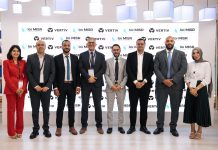
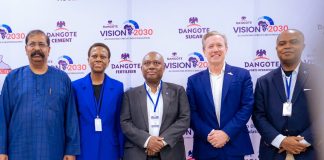
    The commitment came during a strategic visit by Standard Bank Group Chief Executive, Sim Tshabalala, and senior executives to the Dangote Petroleum Refinery and Dangote Fertiliser complex in Lagos.

    Speaking after touring the facilities, Tshabalala described the refinery as a transformational industrial project with far-reaching implications for Nigeria and Africa.

    “We are here because the Dangote Group is a large and important global player and a significant force on the African continent,” he said. “Standard Bank is the largest financial institution in Africa and we have partnered with Dangote on a variety of initiatives. We are here to lend support, to see this magnificent refinery and to discuss Vision 2030 and how we can continue supporting the Group’s growth ambitions.”

    Tshabalala disclosed that Standard Bank intends to play a leading role in the refinery’s planned Initial Public Offering and future growth initiatives.

    “As Dangote lists, there is an IPO coming up and we are a leading player in that process,” he said. “As the Group continues to expand in Nigeria and across Africa, there will be opportunities for financial advisory services and balance sheet support, and we stand ready to provide both.”

    He described the refinery as “a wonder of the world,” noting that its impact is already being felt through stronger foreign exchange earnings, improved balance-of-payments performance and enhanced energy security.

    “This is a wonder to behold. It is massive, productive and transformative. It is already making a significant contribution to Nigeria’s economy through its impact on foreign reserves, the balance of payments and the lives of ordinary Nigerians,” he said.

    Group Vice President, Oil and Gas, Dangote Industries Limited, Devakumar Edwin, said the visit represented a significant milestone in a partnership that began during the refinery’s construction phase.

    “The bank visited us during construction and understood the scale of what we were building,” Edwin said. “Today, the refinery is fully operational and they can see what their support has helped to create. It is like nurturing a tree and eventually seeing it bear fruit.”

    He added that both organisations are exploring opportunities to deepen collaboration as Dangote expands its industrial footprint across Africa.

    Managing Director and Chief Executive Officer of the Dangote Petroleum Refinery, David Bird, said the visit highlighted the importance of long-term partnerships in delivering large-scale industrial projects.

    “Standard Bank has been one of our strongest supporters throughout the history of the refinery and the broader Dangote Group,” Bird said.

    “This visit was an opportunity to demonstrate what that support has enabled. Seeing is believing, and it allows our partners to appreciate the scale of what has been achieved.”

    The visit also coincided with a major operational milestone for the refinery, which has now exceeded its original design capacity.
    Bird disclosed that the refinery recently completed performance test runs at 700,000 barrels per day, above its nameplate capacity of 650,000 barrels per day.

    “We have always believed there was engineering flexibility built into the design,” he said. “Achieving sustained production of 700,000 barrels per day is a testament to the technical capability of our people and the strength of the systems we have built.”

  • Dangote Refinery Begins Delivery of CNG Trucks for Fuel Distribution Initiative

    Dangote Refinery Begins Delivery of CNG Trucks for Fuel Distribution Initiative

    Dangote Petroleum Refinery & Petrochemicals has commenced the receipt of 4,000 compressed natural gas-powered trucks, an integral part of its fuel distribution logistics programme, which will start on August 15.

    The initiative aims to transform Nigeria’s fuel distribution landscape by reducing logistics costs and enhancing customer supply efficiency.

    The fleet of fuel tankers, being imported through Apapa Port, represents a significant capital investment estimated at N720 billion. This expenditure underscores the company’s commitment to pioneering innovative solutions as the world’s largest single-train refinery continues to expand its operational capabilities.

    The first truck consignment recently departed Apapa Port and was formally received at the refinery site in Ibeju-Lekki by Devakumar Edwin, Vice-President of Oil and Gas at Dangote Industries Ltd. The arrival was met with enthusiasm from refinery personnel and customers alike, many of whom were present to witness the tangible progress towards improved fuel accessibility.

    Members of the public who observed the convoy’s journey from Apapa to Ibeju-Lekki expressed commendation for Dangote’s proactive approach in addressing the chronic logistics challenges that have long impeded the downstream sector.

    Speaking on the rollout, Group Chief of Branding and Communication, Dangote Industries Limited, Mr Anthony Chiejina, provided further insights into the implementation strategy:

    “The commencement of the initiative marks a groundbreaking development in Nigeria’s fuel distribution network. Given the complexities inherent in global supply chains, the delivery of these specialised CNG-powered tankers is indeed commendable. This approach ensures that we maintain operational efficiency while scaling up the fleet.

    “Our unwavering commitment to this programme is reflected in our ongoing collaboration with key regulatory bodies and stakeholders to facilitate seamless deployment. We believe this initiative will significantly lower distribution costs and improve fuel availability for our customers nationwide.”

    He added that the refinery expects at least sixty shiploads of these trucks to arrive in the country over the next six weeks.

    This innovative distribution model is expected to catalyse efficiency gains across Nigeria’s downstream petroleum sector, fostering greater transparency, reducing transportation bottlenecks, and ultimately enhancing energy security for the nation.

    In June, Dangote Petroleum Refinery revealed a landmark investment exceeding N720 billion to deploy 4,000 Compressed Natural Gas (CNG)-powered trucks across Nigeria for the nationwide distribution of petroleum products. This bold initiative is projected to save Nigerians over N1.7 trillion annually in fuel distribution costs.

    The privately owned refinery will absorb more than N1.07 trillion every year in fuel logistics expenses. The scheme is expected to significantly benefit over 42 million Micro, Small, and Medium Enterprises (MSMEs) by lowering energy costs and improving profitability.

    This strategic programme is part of Dangote’s broader commitment to eliminating logistics bottlenecks, enhancing energy efficiency, promoting environmental sustainability, and supporting Nigeria’s economic development. Lower fuel distribution costs will reduce production expenses, alleviate inflationary pressures, and stimulate overall economic growth.

    The initiative is also expected to revitalise dormant filling stations, creating over 15,000 direct jobs across the logistics value chain, including positions for drivers, station managers, and attendants at the new CNG stations.

    Moreover, the refinery said that the programme would help curb cross-border smuggling of petroleum products while supporting a more efficient and environmentally friendly distribution system.

    Commercial Coordinator of the Presidential Compressed Natural Gas Initiative (PCNGI), Tosin Coker, commended the move:

    “Dangote Group’s acquisition of 4,000 CNG trucks is not only impressive in scale but also highly strategic,” he said. “It signals to the market that CNG is no longer a distant prospect but a current, practical solution to high energy costs, emissions, and supply chain challenges. PCNGI regards this as a milestone achievement in our efforts to accelerate gas-powered transport adoption.”

  • NNPC to become sole buyer as Dangote Refinery begins processing petrol

    NNPC to become sole buyer as Dangote Refinery begins processing petrol

    The Lagos-based Dangote Refinery has started processing premium motor spirit (PMS), commonly known as petrol, as the Nigerian National Petroleum Company (NNPC) Limited is set to become the initial exclusive buyer of its products.  

    This is according to a report by American media outlet, Reuters, on Monday.  

    The report confirmed that the refinery is ready to roll out petrol in the coming weeks as testing has begun in the 650,000 barrel per day petrochemical plant.  

    The vice president at Dangote Industries Limited, Devakumar Edwin, also mentioned that the national oil company is prepared to purchase its products exclusively to meet local demands.  

    “We are testing the product (gasoline) and subsequently it will start flowing into the product tanks.  

    “If no one is buying it, we will export it as we have been exporting our aviation jet fuel and diesel,” Edwin said.  

    He, however, did not mention when the product will hit the market.  

    NNPC Limited has acknowledged its debt to international oil traders, which has significantly contributed to the shortage of fuel supply to local marketers.  

    Recent reports indicate that NNPC owes these traders approximately $6 billion in subsidy obligations, leading the traders to halt the supply of imported petrol to the national oil company.  

    Although NNPC initially denied these claims, the company later admitted that its outstanding debts to suppliers have been a major factor behind the ongoing fuel scarcity across the country. 

    “NNPC Ltd. has acknowledged recent reports in national newspapers regarding the company’s significant debt to petrol suppliers. This financial strain has placed considerable pressure on the Company and poses a threat to the sustainability of fuel supply.  

    “In line with the Petroleum Industry Act (PIA), NNPC Ltd. Remains dedicated to its role as the supplier of last resort, ensuring national energy security. We are actively collaborating with relevant government agencies and other stakeholders to maintain a consistent supply of petroleum products nationwide,” NNPC said.  

    The recent announcement that the national oil company will become the exclusive buyer of petrol from the Dangote refinery could provide much-needed relief to NNPC, which is currently grappling with its international obligations to oil traders.  

    If the Dangote refinery exclusively supplies NNPC, it would significantly lower importation and logistics costs, allowing local marketers to purchase petrol from NNPC at a reduced price.  

    This arrangement could also address the persistent fuel scarcity that has plagued the country for over a month, with little progress made by the national oil company. 

    With the capacity to meet domestic demand and export to other African countries, the Dangote refinery is poised to play a crucial role in stabilizing Nigeria’s fuel supply.  

    Additionally, the Federal Executive Council has recently approved the sale of crude oil to the Dangote refinery in local currency, on the condition that the refinery will sell processed petrol to the country in the same currency.  

    These developments are anticipated to contribute to a lasting solution to Nigeria’s ongoing fuel scarcity.

  • Aliko Dangote speaks about how the Dangote oil refinery is revolutionising the industry and his succession plans

    Aliko Dangote speaks about how the Dangote oil refinery is revolutionising the industry and his succession plans

    In the latest episode of Connecting Africa, CNN International’s Eleni Giokos sits down with founder, chairman, and CEO of the Dangote Group, Aliko Dangote, to see how the Dangote Oil Refinery is revolutionising Nigeria’s oil industry, bridging gaps in energy production, and spearheading the country’s transition to self-sufficiency.

    Before the Dangote Refinery opened in 2023, Nigeria was forced to export oil to Europe to be refined and then re-import it back to the African continent. During the height of construction, the project was among Africa’s largest building sites. Devakumar Edwin, Vice President, Oil and Gas speaks about the construction, “At the peak we had 70,000 people working in the site. We bought 320 cranes, we invested in about 1,200 civil construction equipment, 1,050 trucks. And then we had to invest in 120 transit mixes, 80 concrete pumps, ready mix concrete batching plants and the world’s largest stone quarry to supply aggregate to this. So, we had to build in a lot of infrastructure.”

    Mr Dangote welcomes Giokos to the refinery, a place he calls, “the eighth wonder of the world.” He talks about the importance of the project, “Significance of this refinery is that we will become self-sufficient in Nigeria and a lot of other, especially west and central African countries, will be also self-sufficient in products. So, the crude will not now leave the continent either from Nigeria or Angola. We will be able to take those crudes and be able to refine and distribute the products.”

    When asked if there was any point at which he wanted to abandon the project, Mr Dangote replies, “There was actually no choice. It’s like we’re swimming across the ocean. So, if I stopped swimming, I would sink. We had to continue.” He continues, “I feel very proud as an African that we’ve been able to prove and demonstrate that it can be done and we’ve done it.”

    Mr Dangote believes the African Continental Free Trade Area (AfCFTA) will be beneficial for the continent. He tells Giokos, “The AfCFTA will be very, very beneficial and if you’re thinking about benefit, our company will almost be one of the top five in terms of benefiting from the free-trade agreement.”

    However, Mr Dangote says he has yet to see an improvement in cross-border trade and wants more action on the AfCFTA, “We have petroleum projects to export. We have cement also to export. So, what makes sense is to have the free-trade agreement work. […] We have to make sure that all the regional markets they have to work. We have to remove these requirements of visas. We have to allow free movement of people, free movement of goods and services. Then the AfCFTA will work. Without that, it’s almost impossible.”

    The petroleum production process also supports another vital sector, fertiliser. Urea is one of the most commonly used nitrogen-based fertilisers in the world made from the by-products of the oil and gas refining process.

    Giokos visits the Dangote fertiliser plant near to the oil refinery where Adenike Fajemirokun, Group Executive Director at the Dangote Group, explains why the company branched out into the fertiliser market, “Fertiliser is a product that all African farmers, all farmers across the world need and use. When you look at Africa and the amount of arable land we have, agricultural land, the rains, the river networks that we also have, you can see the potential for food consumption. If you look at the core of what we stand for, self-reliance for not just our nation, but for the continent as a whole. So, food security is one of the top things on our agenda. So, it was a no-brainer.”

    Although Mr Dangote has no plans for retirement, he tells Giokos that succession planning is on his agenda. His three daughters work for the company, making their own impacts on the success of the Dangote Group. Fatima Aliko-Dangote,Group Executive Director of Commercial Operations speaks about her outlook, “It’s continuing to build on what he has built over the past 40 years. We have seen how he’s inspiring business audacity in running this African organisation. I call this company Africa’s Finest, where he has taken Dangote Group to be Africa’s finest, to be one of the most diversified conglomerates on the continent.”

    Mr Dangote talks about his daughters’ roles and the future of the company, “They will take some departments, but we have also other professionals. They will run the business to the next level. They’re actually going to be the future. They’re well trained. I’m sure they do much better than myself.”

    He concludes, “We have a very good succession planning in the business where now we have myself. Then we divided the company now into two. We have myself as the group president. Then we have group president oil and gas, and we have the group president, other businesses. By the end of this year, we will have a group that will have 30 billion of revenue and that is big.”

  • Dangote, Sinoma Sign Agreement On new 6Mta Cement Plant In Itori, Ogun State

    Dangote, Sinoma Sign Agreement On new 6Mta Cement Plant In Itori, Ogun State

    Dangote Industries Limited (DIL) has signed an agreement with China Sinoma International Engineering to build a six million tons per annum cement plant in Itori, Ogun State. The agreement was signed by the Chairman of Dangote Cement Plc, Aliko Dangote alongside the Group Executive Director, Strategy, Capital Projects & Portfolio Development, DIL, Devakumar Edwin, while China Sinoma Engineering was represented by its Group President, Yin Zhisong, and the company’s Chairman, Liu Renyue. 

    Dangote speaking at the signing ceremony, said that new integrated cement plant at completion will strengthen the local production capacity of Dangote Cement, bringing its local capacity to 41.25 million tons per annum and total African capacity to 57.6 million tons per annum. He said the Itori Cement Plant will also increase Nigeria’s capacity to export cement, thereby enabling more diversification and foreign exchange inflows for the economy.  

    According to Dangote, the project is further expected to develop the domestic economy through creation of thousands of indirect and direct jobs and drive economic development in the Itori axis. Ancillary businesses, he stated will be drawn to the axis, who will be seeking to take advantage of the location of the cement plant to provide goods and services to staff, contractors and other stakeholders.  

    He added that constructing the new cement plant is in line with Dangote Group’s vision of producing locally goods that were formally imported despite the abundance of raw materials for local production of such goods. 

    He described Sinoma as a strategic partner who has been instrumental to the success of key projects in Dangote Group. He said, “We are comfortable working with your company. You have handled some of our key projects and I am positive that this project will be completed as scheduled. 

    Group President of China Sinoma Engineering, Yin Zhisong, expressed satisfaction with the commitment and determination of the Dangote Group in building cement plants across Africa. He said: “It is an honour for us to build another cement plant for Dangote Group. We are proud and happy to be on this journey with the company again. 

    When operational, the plant is expected to have two Lines x 6,000 TPD Clinker Production with an installed daily total capacity of 12,000 TPD of Clinker production. It is expected to be completed within 27 months with best-in-class equipment in the cement industry, sourced from Europe’s major equipment suppliers. 

    The plant will have its own captive power plant to generate electric power for use by cement kilns and other production processes. 

    The Itori Cement Plant will be Dangote Cement’s fourth cement plant constructed as a green field project in Nigeria, the rest are Obajana, Ibese and Okpella Plants.  

    Dangote Cement is Africa’s leading cement producer with 51.6Mta production capacity across Africa with Nigeria accounting for 35.25Mta.   

    Obajana plant in Kogi state, Nigeria, is the largest in Africa with 16.25Mta of capacity across five lines; Ibese plant in Ogun State has four cement lines with a combined installed capacity of 12Mta; Gboko plant in Benue state has 4Mta; and  Okpella plant in Edo state has 3Mta.