











Tag: Dubai

  • UBA Group to commence full banking operations in France

    UBA Group to commence full banking operations in France

    As part of President Bola Ahmed Tinubu’s state visit to France, the Chairman of UBA Group, in the presence of President Tinubu and the President of France, Emmanuel Macron, signed a landmark business cooperation agreement with the French Finance Minister, Antoine Armand.

    The agreement is a significant indication of support by the French Government for the development of UBA’s full banking operations in France. 

    Speaking at the signing ceremony, Tony Elumelu, the Chairman of UBA Group commented:“This partnership reinforces our commitment to seamless international banking services for our customers, not just across the 11 Francophone African countries we serve, but Africa as a whole; and French and European customers transacting with Africa. Expanding into France is a natural progression, with Paris serving as our European Union hub, as we continue to bring Africa and the world together, through innovative financial solutions. Paris will join London, New York and Dubai, as a critical component of our unique global network.” 

  • Emirates launches special boarding Pass to Dubai till 2025

    Emirates launches special boarding Pass to Dubai till 2025

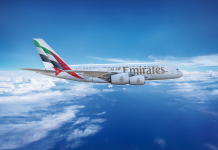
    Emirates has confirmed the rollout of a special boarding Pass to Dubai and the UAE. Starting from 1st November 2024 to 31st March 2025, My Emirates Pass, enables customers to use their boarding pass to enjoy incredible discounts at restaurants, family days out, tranquil spa treatments, luxury shopping outlets, private pools and much more.

    Emirates customers flying to or through Dubai can simply show their boarding pass and a valid form of identification to unlock incredible offers to some of the world’s most iconic attractions including At The Top Burj Khalifa, IMG Worlds of Adventure and Aquaventure Water Park.

    In addition to over 600 exclusive offers and discounts for retail, leisure, dining, renowned attractions, and luxury spas, passengers this year will also receive complimentary access to the Vision Pavilion and Expo Museum at Expo City for the season.

    This year sees the acclaimed Dubai Shopping Festival proudly celebrate its 30th anniversary, with a host of A-list performers, exclusive experiences and unforgettable entertainment lined up to mark the occasion.

    The festival will run from 6th December 2024 to 12th January 2025 across the city, offering a month packed full of unmissable retail offers. While there,Emirates customers can use their boarding pass to enjoy exclusive offers at restaurants, spas, pools, family attractions and more.

    Whether it’s indulging in world-famous hospitality offerings, unwinding on a sun-soaked beach or immersing yourself in the festive celebrations, Dubai offers a host of iconic experiences and attractions for every traveller.

    Customers can browse, create and book their own customised itineraries including flights, hotel stay, visits to key attractions, and other dining and leisure experiences in Dubai and the UAE, through the Emirates platform.

    Members of the award-winning loyalty program, Emirates Skywards can earn Miles with the worldwide partners like hotels, airlines, car rentals, retail and banking. Members can spend these Miles on reward tickets, upgrades, or even tickets for concerts and sports events.

    Customers can book their holiday to Dubai through Emirates Holidays. All packages include flexible booking options. When you book with Emirates Holidays, you also receive bonus Miles on top of the Miles you would receive for your flight.

    Emirates offers flights to more than 140 destinations around the world, across six continents and currently operates daily flights from Lagos to Dubai.

  • Aviation’s substantial contribution to Dubai’s economy revealed in latest report

    Aviation’s substantial contribution to Dubai’s economy revealed in latest report

    • The aviation sector supported 27% of Dubai’s GDP in 2023, with an economic contribution of AED 137 billion (USD 37.3 billion) – which is set to rise to almost a third of Dubai’s GDP by 2030. The total aviation sector impact includes the sector’s core impact as well as the catalytic impact of aviation-facilitated tourism
    • The aviation sector supported over 630,000 jobs in 2023 and is forecasted to add another 185,000 jobs by 2030
    • The catalytic impact of tourism facilitated by aviation contributed AED 43 billion (USD 11.8 billion) to the local economy in 2023, with its GDP contributions expected to grow by more than 40% by 2030

    Emirates Group and Dubai Airports have today released an economic impact study that reaffirms the central role aviation plays in Dubai’s economy, by quantifying its contributions and forecasting the sector’s upwards trajectory, based on financial and passenger growth projections for the sector.

    The study, compiled by global research firm Oxford Economics, includes an assessment of direct economic activity generated by the aviation sector, indirect activity generated through the sector’s supply chain, and induced activity supported through wage-funded consumption by the local aviation workforce. The study also assesses the catalytic impact of tourism spending facilitated by the aviation sector in Dubai.

    His Highness Sheikh Ahmed bin Saeed Al Maktoum, Chairman and Chief Executive, Emirates Airline & Groupand Chairman of Dubai Airports said: “Under the leadership of HH Sheikh Mohammed bin Rashid Al Maktoum, Dubai’s aviation sector has been a core pillar of our city’s economic growth strategy to date, and it will continue to play a key role in the D33 Economic Agenda.

    “Supported by strong air connectivity, Dubai has a prominent presence on the global stage for trade, investments, tourism, and is a leading player in aviation and logistics. Our ambitious plans for Dubai World Central – Al Maktoum International airport, and our ongoing investments to expand capacity at Dubai International, will unlock further economic opportunities by supporting the projected demand for air transport. Our growth plans will generate even more skilled jobs, and also help drive innovation as we work with leading technology partners to develop future solutions to enhance travel experiences and make operations more efficient and secure.”  

    Aviation sector’s contribution to Dubai economy

    In 2023, Dubai’s aviation sector, consisting of Emirates Group, Dubai Airports (including Dubai International and Dubai World Central – Al Maktoum airports), and other aviation sector entities¹ are estimated to have supported AED 137 billion (USD 37.3 billion) in gross value added² (GVA), equivalent to 27% of Dubai’s GDP.  This included the core economic impact of AED 94 billion, and AED 43 billion from the catalytic impact of aviation-facilitated tourism. These figures are projected to increase steadily, with aviation activities facilitated by Emirates and Dubai Airports contributing AED 196 billion, or 32% of Dubai’s forecasted GDP by 2030 (in 2023 prices).

    Aviation-led activity also accounted for 631,000 jobs across Dubai, equivalent to one in five jobs in the emirate in 2023. A further 185,000 aviation-linked jobs are expected to be created by 2030, with the total number of jobs supported by Dubai’s aviation sector forecast to grow to 816,000 jobs.

    A previous economic impact report released by Oxford Economics in 2014 found that the aviation sector contributed to 27% of Dubai’s GDP and supported 417,000 jobs. While the latest results indicate the share of Dubai’s GDP has remained stable, the sector’s gross value added has increased in real terms, with the current figures reflecting faster growth across other sectors, as well as diversification in the wider economy over the past decade.

    Dubai’s vital investment to futureproof its aviation sector and ensure it remains an economic driver, is evident in ongoing major investments to expand capacity and operations at Dubai International, in addition to a new generation facility at Dubai World Central – Al Maktoum International. The new AED 128 billion airport will be five times the size of Dubai International, with the first phase to be completed in 10 years. When fully completed, Dubai World Central – Al Maktoum International will consist of over 400 aircraft stands, with capacity to serve 260 million passengers annually. The expansion of Dubai World Central – Al Maktoum International is not included in the study’s main impact results3; however, the construction project is expected to contribute an estimated AED 6.1 billion to Dubai’s GDP in 2030, as well as support 132,000 jobs.

    The new airport and surrounding infrastructure will contribute to Dubai’s Economic Agenda (D33), which aims to strengthen the emirate’s trade and tourism footprint. D33’s progressive development plans also seek to make Dubai one of the most connected cities by adding 400 destinations to its foreign trade map, in addition to making it one of the top five logistics hubs in the world.

    Aviation and tourism in Dubai

    Aviation is also the driving force behind the growth of international tourism to Dubai. As one of the most frequented destinations in the world, visitors stayed an average of 3.8 nights in 20234, spending an average of AED 4,3004 on hotels, restaurants, attractions and shopping. According to the report, international visitors flying to Dubai spent an estimated AED 66 billion last year.

    In total, aviation-facilitated tourism spending is estimated to have contributed: AED 43 billion in gross value added, or 8.5% of Dubai’s GDP, supporting 329,000 jobs. More than half of GVA, AED 23 billion, was generated by those flying to Dubai with Emirates. Tourism to Dubai is projected to grow significantly over the next six years, with aviation-facilitated tourism spending expected to support AED 63 billion in gross value added, equivalent to 10% of Dubai’s projected GDP, as well as one in eight Dubai jobs.

    The full Oxford Economics report ‘The Economic Impact of Aviation In Dubai’, can be found here

  • Emirates makes its much-awaited official touchdown to Lagos, Nigeria

    Emirates makes its much-awaited official touchdown to Lagos, Nigeria

    Emirates, the world’s largest international airline, has resumed passenger services to Lagos, Nigeria, with a daily service.

    The official delegation onboard was led by Adil Al Ghaith, Senior Vice President Commercial Operations, Gulf, Middle East and Central Asia; David Broz, Senior Vice President of Aeropoliticaland Airline Industry Affairs and Sami Aqil Abdullah, Senior Vice President Emirates Airport Services Outstation and Business Support.

    The official delegation from Nigeria onboard the flight included His Excellency, Festus Keyamo, Honourable Minister of Aviation and Aerospace Development of Nigeria; His Excellency, Zayyan Ibrahim, Consul General of the Federal Republic of Nigeria in Dubai and the Northern Emirates and Adewale Babatunde Awolesi, Head of Chancery, Consulate General of Nigeria.

    Soon after landing, the airline hosted an exclusive event for VIPs, government officials, key representatives from Nigeria’s Civil Aviation Authority, Federal Airports Authority of Nigeria, Customs, Police and the Airforce, as well as trade and industry partners and corporate clients.

    Commenting on the return of services, Adnan Kazim, Deputy President and Chief Commercial Officer, Emirates Airline said, “This has been a long-awaited moment, and we are excited to resume operations to Lagos, helping reconnect travellers seamlessly to and through Dubai, coupled with a consistent, world-class experience onboard.

    We would like to thank the Nigerian authorities, including the Federal Ministry of Aviation and Aerospace Development and the Federal Airports Authority of Nigeria, as well as the UAE authorities including His Excellency Salem Saeed Al Shamsi, Ambassador of the United Arab Emirates, Abuja, Nigeria and His Excellency Dr Abdulla Almandoos, Consulate General of the United Arab Emirates in Lagos, for their support.

    “We are committed to making this route a success and look forward to contributing to the Nigerian aviation industry’s growth and offering travellers and businesses more choice and connectivity to key destinations across our network.”

    His Excellency, Festus Keyamo, Honourable Minister of Aviation and Aerospace Development of Nigeria said: “We are pleased to welcome Emirates back to Nigeria. Emirates has become a global brand and Nigeria, being the most populous black nation in the world, is the sure destination for all major airlines in the world.

    “So, this is a mutually beneficial relationship and we look forward to many years of seamless operations for the designated airlines of both countries to ply the route.”

    EK783 departs Dubai at 0945hrs, arriving in Lagos at 1520hrs; the return flight EK784 takes off from Lagos at 1730hrs and lands in Dubai at 0510hrs the following day. The daily service has been scheduled to optimise connections to and from key points in Europe, the US, the Far East and the wider Middle East and GCC, streamlining business and leisure travel to and from Nigeria.

    Strengthening business links between UAE and Nigeria
    With the resumption of operations to Lagos, Emirates provides frictionless connectivity to one of Africa’s major economic hubs, facilitating global trade and strengthening business ties, in line with the UAE and Nigeria’s strong bilateral trade relations.

    Emirates SkyCargo will support Nigerian businesses by offering more than 300 tonnes of bellyhold cargo capacity in and out of Lagos every week, into key markets such as UAE, Malaysia, Hong Kong, and Bahrain, among others.

    Anticipated commodities such as Kola Nuts, food and beverages, and urgent courier material will be transported via the airline’s state-of-the-art hub in Dubai, quickly, efficiently, and reliably via the airline’s multi-vertical specialized product portfolio. Imports into Nigeria are anticipated from key markets such as UAE, India and Hong Kong, with key commodities including a mix of general cargo, pharmaceuticals and electronics.

    The Dubai-Lagos service is operated with a Boeing 777-300ER, offering eight First class suites, 42 Business class seats and 304 economy class seats, with added comforts and perks in each cabin class. Emirates is one of only two airlines offering First Class in and out of Lagos, and offers an unrivalled experience with luxurious touches, a premium gastronomic selection of dishes and fine beverages, and one of the biggest screens in the sky, all in the midst of comfort and privacy.

    Offering the best experience across every class, passengers will dine on regionally inspired multi-course menus, complemented by a wide selection of premium beverages. Customers can tune in to over 6,500 channels of global entertainment, including 23 Nigerian movies, series and other content on ice, Emirates’ award-winning inflight entertainment system.

    To support travel to Dubai or onwards, Emirates will also facilitate 48 hour and 96 hour Dubai visa applications for travellers from Nigeria, an offer which is exclusive to the airline.

    Celebrating the resumption of services, Emirates award-winning loyalty programme, Skywards, reinstated previous tier status levels for Skywards members to ensure continuation of earned benefits and recognition.

  • Emirates hosts travel agents workshop, ahead of relaunch to Nigeria

    Emirates hosts travel agents workshop, ahead of relaunch to Nigeria

    This week, Emirates hosted key stakeholders from Nigeria’s thriving travel trade industry for a workshop to showcase its latest products and services, as well as provide a destination update on Dubai, as the airline gears up to restart operations from 1 October. With key travel agents in attendance, the workshop demonstrates the importance of Nigeria on the airline’s vast global network.

    Through interactive workshop sessions, Emirates familiarized attendees with the products and services that will be available on the soon-to-resume flight to/from Lagos, empowering them to provide even better services to their customers. The airline also highlighted its full-service offerings including gourmet and regionally-inspired dining, the award-winning in-flight entertainment system, ice, and the exceptional hospitality from its multinational Cabin Crew. Emirates Holidays, the airline’s tour operator arm, exhibited the curated holiday packages both to Dubai and other in-demand destinations such as the Indian Ocean, Southeast Asia and South Africa, in preparation to serve the pent-up travel demand from Nigeria.

    Attendees also heard from key stakeholders representing Destination Dubai, to provide a macro view at what travellers can expect when travelling to and through the UAE. Dubai Economy and Tourism (DET) representatives offered a closer look at the abundance of tourism and trade opportunities in Dubai; the Dubai Stopover Experience team highlighted some of the must-see attractions; the Dubai Health Authority (DHA) outlined the city as a leading medical tourism destination; and Dubai Visa Processing Centres provided a closer look at how to apply for UAE visas, both for tourists and those transiting the city. The information packed sessions at the Emirates Airline Travel Agency Workshop demonstrate the airline’s commitment to reinstating seamless and premium travel between Nigeria, the UAE and beyond, powered by Emirates.

    Paulos Legesse, Country Manager for Nigeria, Emirates said, “Our travel agency partners are core to our success and we have built strong and prosperous relationships over the years, driving greater tourism and travel links between Nigeria, the UAE and beyond. As we prepare to restart operations to Lagos, this workshop was essential not just to showcase our world-class product and service to these important partners, but also to hear from the wider industry on the latest services that will suit customer demand, enabling us to better tailor our offering in Nigeria. We have exciting plans and can’t wait to add our industry-leading products and services to the Nigerian market from 1 October.”

    In addition to preparing travel agents for the airline’s return, Emirates has reinstated previous tier status levels for Skywards members to ensure continuation of earned benefits and recognition. Skywards, Emirates award-winning loyalty programme, offers four tiers of membership – Blue, Silver, Gold and Platinum – with each tier enabling exclusive privileges, including: complimentary seat selection, priority check-in and boarding, excess baggage allowance, lounge access, and complimentary Wi-Fi internet on-board.

    Emirates services to Lagos, Nigeria will relaunch on 1 October, 2024.

  • Nigeria’s Olanrewaju Oniyitan, Hakeem Subair, and Josiah Olusegun Ajiboye named Finalists for Africa Education Medal 2024

    Nigeria’s Olanrewaju Oniyitan, Hakeem Subair, and Josiah Olusegun Ajiboye named Finalists for Africa Education Medal 2024

    founded by T4 Education and HP, the Africa Education Medal is Africa’s most prestigious education accolade

    Nigeria’s Olanrewaju Oniyitan, Founder and Executive Director of SEED Care & Support Foundation, Hakeem Subair, Founder and CEO of 1 Million Teachers (1MT), and, Josiah Olusegun Ajiboye, Registrar and Chief Executive of the Teachers Registration Council of Nigeria, have been named among the ten Finalists for the Africa Education Medal 2024. Founded by T4 Education and HP, the Africa Education Medal is Africa’s most prestigious education accolade.

    The Africa Education Medal recognises the tireless work of those who are transforming education across the continent – celebrating the stories of those who have lit the spark of change so others will be inspired to take up the torch. It is given to an outstanding individual who has demonstrated impact, leadership, and advocacy in the field of education.

    The winner of this year’s Africa Education Medal will be invited to attend the World Schools Summit in Dubai on 23-24 November and, in recognition of the urgent need to solve the teacher recruitment and retention crisis to tackle learning gaps, the winner will be entitled to nominate a school of their choice to receive membership of T4 Education’s Best School to Work programme – an independent, evidence-based mechanism to certify schools for their culture and help them transform their working environment to attract and retain the best teachers.

    Olanrewaju Oniyitan is Founder and Executive Director of SEED Care & Support Foundation in Nigeria, a non-profit that supports the affordable non-state education sector to deliver access to quality education for all children by providing advocacy, evidence and a learning network. A consultant, entrepreneur, author, and speaker with over two decades of experience focusing on creating wealth, jobs, and economic growth in Africa, she believes in the transformative power of education in achieving all other Sustainable Development Goals.

    Her work seeks to address the challenge that half of Nigeria’s population is under 19 years old, yet many lack access to quality education. Over 20 million are out of school and 70% of children in school are experiencing learning poverty. She believes the affordable non-state sector (low-fee private schools, faith-based schools, community schools, alternative learning centres) plays an indispensable role, in tandem with the government, in expanding access to education and improving learning outcomes and SEED Care & Support Foundation supports this sector to help build a world where all children no matter their background have access to quality education.

    The organisation amplifies the role of the affordable non-state sector by giving it a seat at the policy table, working through partnerships to shape system-wide change. It designs, pilots, monitors and adapts innovations, models, concepts and frameworks to local contexts for learning and scale, using the evidence to mobilise and persuade strategic actors to pay attention to the affordable non-state sector both locally, in Africa and around the world.

    The organisation also strengthens and grows the affordable non-state sector to enhance the quality of education it offers through its collaborative community, school transformation programme, finance, communities of practice and curated learning experiences.

    Oniyitan’s organisation aims to impact 20,000 affordable non-state schools/centres towards transforming the lives of 1 million children across Nigeria by 2035.

    Oniyitan’s extensive experience as an international development expert has led her to work with organisations and projects funded by FCDO, World Bank, GIZ, OXFAM, Stanford University, African Development Bank (AfDB), Islamic Development Bank (IsDB), Dutch Ministry of Foreign Affairs, and Lagos State Employment Trust Fund, amongst others.

    She has won multiple awards and recognitions including: Top 50 African Women In Development 2024, Outstanding Service to Humanity 2022, Service Excellence Award 2022, Nigerian Education Outliers 2020, Obama Foundation African Leader 2019, Edu-Gladiator Award 2018, and Award of Excellence in Entrepreneurship Development 2018.

    Hakeem Subair, is the Founder and CEO of 1 Million Teachers (1MT), and a prominent figure in educational innovation. His extensive academic background includes a master’s degree in Management Innovation and Entrepreneurship from Queen’s University and a Bachelor of Commerce Degree in Business from the University of Windsor, alongside a Bachelor of Finance from the University of Ilorin, Nigeria. An Edtech Fellow at Cambridge University/HP Partnership for Education, Subair’s accolades include numerous academic awards and membership in the Golden Key International Honour Society. He has also served as an adjunct professor, teaching courses in Innovation and Change Management, and Artificial Intelligence and Entrepreneurship.

    1 Million Teachers was inspired by Subair’s personal experience of the challenges in finding quality education for his daughter in Nigeria. This led to the establishment of their own school in 2008, revealing the systemic issues within the Nigerian education system, particularly the lack of qualified teachers. Driven by this realisation, Subair founded 1MT to transform education.

    1MT aims to create a wave of highly trained, innovative educators capable of driving grassroots change. Despite numerous challenges, the organisation has trained over 60,000 educators across more than 20 countries, indirectly impacting approximately 4 million students. This growth underscores the founding vision and the resilience of the 1MT community.

    One of 1MT’s flagship initiatives is the Blackbelt Program, a teacher training model inspired by martial arts. Educators progress through various levels of mastery by completing online courses, mentoring sessions, and community projects. This programme covers pedagogy, curriculum design, classroom management, leadership, and innovation, providing access to a global network of peers and experts.

    In partnership with HP and Girl Rising, 1MT launched the HP Mentor a Teacher Program, focusing on gender equity, digital literacy, leadership development, and success mindset. This programme pairs HP employees with Blackbelt educators, enhancing their ability to empower girls and advance quality education.

    1MT collaborates with numerous academic institutions and organisations to offer supplementary teacher education, global knowledge exchanges, and professional development opportunities. These collaborations ensure that aspiring teachers receive comprehensive training to meet the sector’s challenges.

    Under Subair’s leadership, 1 Million Teachers is a pioneering force in global education reform, dedicated to building a critical mass of highly trained, enterprising education changemakers. Through innovative programmes, strategic partnerships, and a deep-rooted passion for education, Subair and 1MT are shaping a brighter future for educators and students worldwide.

    Josiah Olusegun Ajiboye is Registrar and Chief Executive of the Teachers Registration Council of Nigeria (TRCN) – the regulatory body committed to the professional development and registration of qualified and competent educators across Nigeria.

    Ajiboye first worked as a secondary school teacher, before going on to become a lecturer and then Professor of Curriculum Studies: Social Studies/Civics Education at the University of Ibadan. He was appointed to the TRCN by the country’s President in 2016. He also serves as the President of the Africa Federation of Teaching Regulatory Authorities (AFTRA).

    The TRCN seeks to assure excellence and professionalism among teachers at all levels of the nation’s education system, using effective registration, licensing, accreditation, monitoring and supervision of teacher education programmes, promoting continuing professional development and maintenance of discipline as paradigms for the overall renaissance of the teaching profession in Nigeria.

    At the TRCN, Ajiboye introduced the Professional Qualifying Examination for Nigerian teachers in 2017. It is now compulsory for anyone who intends to teach in the country to pass this key examination and obtain a teacher’s license and certificate. This has led to marked improvements in teaching and learning in Nigeria.

    Today TRCN enjoys global recognition as a leading teacher regulatory body in Africa, and Nigerian teachers now enjoy mobility to all parts of the globe with a letter of professional standing issued by TRCN. Ajiboye proudly advocates for the status of teachers in the country and around the world, supporting teacher welfare and professionalism.

    Mayank Dhingra, Senior Education Business Leader at HP, said:

    “Congratulations to Nigeria’s Olanrewaju Oniyitan, Hakeem Subair, and Josiah Olusegun Ajiboye on being named Finalists for the Africa Education Medal 2024. Their passion and dedication to transforming education will inspire countless others to follow in their footsteps in building a world where quality education is enjoyed by all.

    “HP has a bold goal to accelerate digital equity for 150 million people globally by 2030. Only by joining forces and aligning with NGOs, government, educators and businesses can we truly improve the education environment. The Africa Education Medal brings together all those who are changing the face of African education, whose work we must all learn from if the world is to meet the Sustainable Development Goals by 2030.”

    Vikas Pota, the Founder and CEO of T4 Education, said:

    “The Africa Education Medal honours changemakers where change is needed most. Where learning gaps remain stubbornly persistent and where deep inequalities remain.

    “If we are to tackle these colossal challenges, and unlock the continent’s future, we must build a community of leaders from every sphere of society committed to educational transformation. Leaders like Olanrewaju Oniyitan, Hakeem Subair, and Josiah Ajiboye. Africa, and the world, has so much to learn from your inspirational stories and your vital contribution to the next generation.”

    The Finalists for the Africa Education Medal 2024 are:

    ●      Ahmed Kura, Co-Executive Director, Kenya Drylands Education Fund, Kenya

    ●      Angeline (Angie) Murimirwa, CEO, CAMFED, Zimbabwe

    ●      Christopher Khaemba, Co-Founder & Director, Nova Pioneer, Kenya

    ●      Hakeem Subair, CEO, 1 Million Teachers, Nigeria

    ●      Josiah Olusegun Ajiboye, Registrar & Chief Executive, Teachers Registration Council of Nigeria, Nigeria

    ●      Julian Hewitt, Outgoing CEO, The Jakes Gerwel Fellowship, South Africa

    ●      Mohammed Haroon, Principal Education Consultant, Ghana          

    ●      Nankunda Hope Mwijuka, Executive Director, Raising Teenagers Uganda, Uganda

    ●      Olanrewaju Oniyitan, Founder & Executive Director, SEED Care & Support Foundation, Nigeria

    ●      Taddy Blecher CEO & Co-Founder, Maharishi Invincibility Institute, South Africa

    Nominations for the Africa Education Medal opened in February 2024 for individuals working to improve pre-kindergarten, K-12, vocational and university education who are either educators or school leaders, civil society leaders, public servants, government officials, political leaders, entrepreneurs, business leaders, or technologists.

    In its third year, the Africa Education Medal is the oldest of the three World Education Medals established by T4 Education and HP.

    The winner will be announced in October. They will be chosen by a Jury comprising prominent individuals based on rigorous criteria.

  • Feature: Evolving content for changing times

    Feature: Evolving content for changing times

    by Sanad Kassem

     When you reach a particular career or personal milestone, it can often result in a moment of reflection. This happened to me recently as I marked ten years of working for CNN. Looking back over this last decade led me to think about the locations I worked from (first London, then Dubai), the incredible places I’ve visited, and, of course, the colleagues and partners I’ve met and worked with during this time. However, beyond this, what really struck me was thinking back to the seismic change that has taken place in terms of the way we work and how we deliver campaigns and content.

    At the heart of it, the ethos remains the same – when working on our campaigns, we still focus on telling a compelling story, produced to high production values and delivered to relevant audiences in a premium environment. However, even in the last ten years, the way that we devise, create and distribute engaging content has changed beyond all recognition.

    A major reason driving this change is the continued growth in the platforms where people are consuming content, with particular expansion in audio, newsletters, streaming and newer social media platforms. Some platforms have grown exponentially, and others such as TikTok did not exist a decade ago. As a forward-facing media company, it’s vital that we follow the audience – an approach that has seen us launch or grow our content offerings in all these areas and ensure that our partners can connect with our audiences in these environments as well as the tried and trusted platforms such as TV, mobile and digital.

    With over 75% of the campaigns we develop for clients spanning multiple platforms, it’s now become the norm that we are creating content and distribution strategies for several different formats and environments within a single campaign. Whilst a campaign will have a central theme and purpose, its execution will differ by platform both in terms of format and creative. What’s for sure is that a “one size fits all” approach does not work. Our brand content studio, Create, has many years of experience in this field and has developed our commercial content offering in line with the different platforms we are producing content for. This team of expert content strategists and producers know that we shouldn’t be producing a single piece of content and putting it in as many places as possible. Rather, we are cognizant of the restrictions (and opportunities) of a particular medium and, therefore, adapt our content to best suit the environment it is consumed in and the audience’s expectations. In addition to media executions, our campaigns are also increasingly involving other innovative solutions as we work with partners in new ways to expand presence to events and other experiential formats.

    Another aspect driving the evolution of content is the use of data. Whilst we have had an industry-leading data strategy throughout my time at CNN, the complexity of data’s role in content development and campaign delivery, optimisation and evaluation has changed exponentially. And in this context, complexity is good! The data we are able to draw upon in terms of audience insight, as well as campaign and content performance across multiple touchpoints, is incredibly powerful. It enables us to plan, optimise and evaluate campaigns and creative executions with true insight and for maximum impact.

    The campaigns we are now working on are of course also being supercharged with the accelerated use of AI. At CNN International Commercial we are using AI and machine learning in many ways – from powering decision-making in advertising delivery platforms to using AI tools that make our studio more efficient and free up our creators to spend more time making great content. From a content perspective, this means using generative AI to help automate some operational and previously time-consuming tasks, such as transcriptions and translations from our filmed interviews or helping with auto colour correction or object removal within filmed shots. Whilst this realises efficiencies and optimises what we can achieve with our partners, our usage of AI doesn’t detract from the fact that both our campaign planning and our content creation is very much human.

    In all, it has been a decade of change in many regards and on the surface, many aspects of what we do and how we do it have changed immeasurably. However, an enduring commitment to working with partners, telling stories and reaching engaged audiences remains so intrinsic that I remain confident to still be focusing on these core attributes if I am invited back by Campaign Middle East to write a piece in 2034 about what makes for a successful content and campaign strategy.

    Sanad Kassem is the Sales Director of CNN International Commercial

  • Emirates returns to Nigeria from 1 October

    Emirates returns to Nigeria from 1 October

    Emirates will resume services to Nigeria from 1 October 2024, operating a daily service between Lagos and Dubai, and offering customers more choice and connectivity from Nigeria’s largest city to, and through, Dubai.

    The service will be operated using a Boeing 777-300ER. EK783 will depart Dubai at 0945hrs, arriving in Lagos at 1520hrs; the return flight EK784 will leave Lagos at 1730hrs and arrives in Dubai at 0510hrs the next day. Tickets can be booked now on emirates.com or via travel agents.
    Adnan Kazim, Emirates’ Deputy President and Chief Commercial Officer said, “We are excited to resume our services to Nigeria. The Lagos-Dubai service has traditionally been popular with customers in Nigeria and we hope to reconnect leisure and business travellers to Dubai and onwards to our network of over 140 destinations.  We thank the Nigerian government for their partnership and support in re-establishing this route and we look forward to welcoming passengers back onboard.”
    With the resumption of operations to Nigeria, Emirates operates to 19 gateways in Africa with 157 flights per week from Dubai, with further reach to an additional 130 regional points in Africa through its codeshare and interline partnerships with South African Airways, Airlink, Royal Air Maroc, Tunis Air, among others.
    As a major economic hub in Africa, Nigeria and the UAE have built strong bilateral trade relations over the years, headlined by Lagos as the nation’s commercial centre. With the resumption of daily passenger flights, the airline’s cargo arm, Emirates SkyCargo, will further bolster the trade relationship by offering more than 300 tonnes of bellyhold cargo capacity, in and out of Lagos every week.
    Emirates SkyCargo will support Nigerian businesses by exporting their goods via its state-of-the-art hub in Dubai, into key markets such as the UAE, Malaysia, Hong Kong, and Bahrain, among others with key anticipated commodities such as Kola Nuts, food and beverages, and urgent courier material. Emirates SkyCargo will also import vital goods such as pharmaceuticals and electronics as well as general cargo from key markets such as the UAE, India and Hong Kong. Keeping trade flowing seamlessly, these goods will be transported quickly, efficiently, and reliably via the airline’s multi-vertical specialized product portfolio. 
    The Emirates Boeing 777-300ER serving Lagos will operate with 8 First Class suites, 42 Business Class seats, and 304 seats in Economy Class. Offering the best experience in the sky, passengers can dine on regionally inspired multi-course menus developed by a team of award-winning chefs complemented by a wide selection of premium beverages. Customers can tune in to over 6,500 channels of global entertainment, including 23 Nigerian movies, in addition to series and other content on ice, Emirates’ award-winning inflight entertainment system.
  • Feature: Nigerian Industrialists should target creating the World Largest Facilities

    Feature: Nigerian Industrialists should target creating the World Largest Facilities

    by Ayo Akinfe

    Let us forget about the Nigerian government for a moment and ask why the Nigerian Industrialists cannot set themselves the targets of creating the world’s largest manufacturing facilities in the following sectors during the course of 2024

    [1] Palm oil plantation
    [2] Cattle ranch
    [3] Coconut plantation
    [4] Solar farm
    [5] Electric car assembly line
    [6] Transformer manufacturing factory
    [7] Cocoa plantation
    [8] Oilseed crushing plant
    [9] Malaria pharmaceutical plant
    [10] Solar panel assembly plant

    When you are the world’s largest black nation, you must think the biggest, tallest, longest and fastest. Today, everything being done in China and Dubai is built with that in mind.

    Nigeria’s fundamental problem is that we are not productive enough. Solve that and you will resolve 90% of our socio-economic and political woes.

    Our watch phrase has got to be production, production, production. After World War Two, the Soviet Union was achieving something like 28% annual economic growth, which is what we should aim for in 2024.

    Between 1967 and 1971, the General Yakubu Gowon administration achieved something like 25% GDP growth annually. How do we replicate this my people?

  • Weaving the Culinary Tapestry: A Journey through the African Diaspora

    Weaving the Culinary Tapestry: A Journey through the African Diaspora

    The culinary arts points to the rich history, diversity and influence of the African diaspora, to be explored at the upcoming Global Black Impact Summit on February 27, 2024 in Dubai

    Food is a unique storyteller, a cultural bridge and a carrier of traditions. As a result, the culinary traditions and rich tapestry of cuisines belonging to the global Black community have played a valuable role in contemporary culture. These traditions not only illustrate the inspiration, creativity and shared heritage of Black people, but also serve as a common thread that connects diverse cultures and geographies. From the shores of West Africa to the vibrant streets of the Caribbean, the flavors, techniques and dishes of the African diaspora have transcended borders, uniting people from across the globe. The Global Black Impact Summit (GBIS) — which unites and celebrates the achievements of the global Black community on February 27, 2024 in Dubai — will explore the influence of the African diaspora on a wide range of industries, such as the culinary arts.

    Africa: The Roots of Flavor

    An exploration into the culinary heritage of the global Black community begins with the roots of African cuisine. The continent’s diverse landscape and myriad cultures have given rise to a vast array of ingredients, cooking methods and flavors. In West Africa, staples like yams, okra, plantains and an array of vibrant spices are central to the local cuisine, with traditional local dishes including Jollof rice, Fufu – made from cassava root – and Egusi soup. In South Africa, the fusion dish, Bobotie – a spiced minced meat bake with an egg-based topping – reflects the country’s historical influences, blending Dutch, Malay and Indian flavors. Central Africa contributes to this culinary tapestry with dishes like Saka-Saka in Congo, made from cassava leaves cooked with spices, and Poulet Nyembwe in Gabon, featuring chicken in a rich red palm nut sauce. These dishes highlight the use of local ingredients and establish the roots of traditional African cuisines across regions. 

    The African Diaspora and a Fusion of Cultures

    Starting from the 16th century, the transatlantic slave trade facilitated the movement of millions of Africans to various parts of the world, including the Americas and the Caribbean. These journeys brought with them longstanding culinary traditions, which over time, evolved and adapted to the ingredients and resources found locally, while preserving the foundations of authentic cooking methods and flavors.

    In the Caribbean, the fusion of African, indigenous and European culinary traditions and techniques gave birth to Creole cuisine. Dishes like Gumbo — a hearty stew served over rice and Callaloo — a leafy green stew — showcase the rich melding of influences. They tell the story of a resilient people who had to adapt and create new traditions, while preserving their roots. In the United States, African Americans developed Soul Food, a cuisine that celebrates their enduring connection to their African heritage. Dishes like collard greens, a flavorful leafy green dish, cornbread and fried chicken, stand apart from traditional African dishes. Yet they provide more than just sustenance; they serve as a celebration of cultural resilience, warmth, protection and identity.

    The influence of the African diaspora on global cuisine is undeniable. Dishes like Acarajé in Brazil – a stuffed fritter sold and eaten as street food – finds its roots in the Yoruba people from Nigeria, Benin and Togo, while Ackee and saltfish – Jamaica’s national dish – was initially brought to the Caribbean from Ghana and stems from the name for the Akyem people. These examples reflect how the diaspora has enriched culinary traditions around the world and are a testament to its enduring impact on food and culture.

    Pioneers and Innovators in the Culinary World

    Throughout history, pioneering Black chefs have broken barriers in the culinary world. In the US, renowned chefs like Edna Lewis and Patrick Clark paved the way for the next generation of Black chefs to innovate and shape the world of food. Chef Marcus Samuelsson, an Ethiopian-born Swedish-American, is renowned for his culinary empire that spans from Harlem to Sweden. Kwame Onwuachi, a Nigerian-American chef, has left his mark on the culinary scene with a background that includes training in the world’s top kitchens. Sheldon Simeon, a Filipino-Black chef, celebrates the fusion of two cultures by exploring the ancestral roots of Hawaiian cuisine. 

    GBIS 2024 strives to recognize and celebrate the achievements of Black individuals across industries, with a view to creating a more diverse and inclusive professional landscape. Just as culinary traditions continue to evolve and innovate, the Summit aims to unleash the full potential of the global Black community and explore the vast array of traditions and heritage associated with the African diaspora. 

  • ONE Campaign Warns of Climate Finance “Wild West” as New Data lifts lid on $343 Billion Black Hole in Reported Finance

    ONE Campaign Warns of Climate Finance “Wild West” as New Data lifts lid on $343 Billion Black Hole in Reported Finance

    Climate Finance Files highlight alarming lack of transparency and accuracy

    With world leaders meeting in Dubai for the start of the COP28 meetings today, analysis of a huge new set of data reveals the full extent to which efforts to tackle the climate crisis are being hampered by the opaque, inaccurate and inflated reporting of key financing commitments.

    The Climate Finance Files, published by anti-poverty organization The ONE Campaign, provide the world’s most comprehensive open-source data on public international climate financing. The files, which draw from public data on hundreds of thousands of climate projects, show in granular detail how lack of transparency is undermining the global fight against climate change.

    With leaders expected to formally announce they met the $100 billion annual target for financing climate action in developing countries in 2022, ONE is warning this is unlikely to be a true reflection of what countries spent. Instead, analysis of the new data has revealed that nearly two-thirds of climate finance commitments counted by the OECD between 2013 and 2021 – a staggering $343 billion – are never reported as disbursed or had little connection to climate. 

    Other key findings from the data include:

    ·       Over $1 in every $5 of climate finance commitments in the OECD’s open dataset between 2013 and 2021 – worth $115 billion — is spent on things that have little to do with climate.

    ·       Bilateral providers consistently report far less in disbursements than they have committed. Less than half of the climate finance they committed between 2013 and 2021 was reported as disbursed or was meaningfully related to climate. A difference of $135 billion. 

    ·       In 2021, the world’s 20 most climate-vulnerable countries received just 6.5% of the climate finance they need each year to address climate change.

    Dr David McNair, Executive Director of Policy at The ONE Campaign, said: “The global climate crisis threatens everything that we care about most – but we aren’t going to turn this around if no one is checking the receipts.

    “Putting the world back on track will take unprecedented investment, but instead we face the “wild west” of climate finance – where efforts to protect both people and planet are undermined by broken promises, falsehoods and dubious accounting. Without better reporting, hundreds of billions of dollars will continue to get swallowed in this black hole.” 

    “Transparency, accuracy and accountability are never just nice to haves. Faced with a global challenge of this scale, we must be sure that the money is flowing where it is needed most and is being used effectively. The Climate Finance Files finally provide people everywhere with the tools to track this finance and hold their governments and other contributors to account.”

    As COP28 gets underway, ONE is calling on countries to meet their historic climate finance commitments, including actually delivering the promised $100 billion and making up for the funding shortfall. They also must meet the commitment made at COP26 in Glasgow to double adaptation finance by 2025.

  • COP28: NASENI EVC, Halilu To Speak On Homegrown Technologies For Rural Electrification In Dubai

    COP28: NASENI EVC, Halilu To Speak On Homegrown Technologies For Rural Electrification In Dubai

    The Executive Vice Chairman/Chief Executive Officer (EVC/CEO), National Agency for Science and Engineering Infrastructure (NASENI), Mr. Khalil Suleiman Halilu is set to detail the Agency’s plans and strategies for rural electrification in Nigeria using homegrown technologies.

    The 2023 United Nations Climate Change Conference, though officially opened today, 30th November 2023, also known as Conference of the Parties (COP28), holding at the Expo City, Dubai, United Arab Emirates (UAE) will see Mr. Halilu on December 3rd, 2023, to deliver opening remarks and also participate at a panel session titled ‘Advancing Sustainable Rural Electrification through Homegrown Technologies.

    The COP28 also referred to as the UN Framework Convention on Climate Change Conference (UNFCCC) will hold from November 30 to December 12, 2023, and is intended for governments to agree on policies to limit global temperature rises and adapt to impacts associated with climate change.

    The event will be graced by Presidents and Heads of State, government officials, business leaders, investors, development partners, civil society organizations, academics and media.

    Halilu, NASENI’s EVC/CEO during the panel session, to be moderated by Al Amin Idris, CEO of Interface Africa, will speak alongside Gunther Beger, Managing Director of the Directorate for SDG Innovation and Economic Transformation, UNIDO; Gov Mohammed Umar Bago, Governor of Niger State, Nigeria; and Miklós Veszprémi, Climate & Sustainability Expert Consultant at Boston Consulting Group (BCG).

    The NASENI boss is expected to discuss the roles which NASENI currently is playing, back home, to promote development and adoption of homegrown technologies for rural electrification in Nigeria as well as other initiatives undertaken to advance sustainable rural electrification in the country.

    Mr. Halilu since assumption of office in September 2023 has made sustainable rural electrification via renewable energies one of his key priorities, having embarked on partnership commitments with government agencies and companies such as Rural Electrification Agency (REA) and Family Homes Funds Limited (FHFL) to ensure rural communities are provided with affordable renewable energy solutions and also homes. This is being accomplished through provision of fund toward research and development, facilitating technology transfer, and support for commercialization of innovative solutions.

    In September, NASENI and REA agreed to work together to deploy NASENI solar resources and other renewable energy technologies to increase electricity supply to Nigeria’s rural areas. Also in November, the Family Homes Funds Limited signed an MoU with the Agency to promote modern and sustainable building designs for affordable housing across Nigeria. According to NASENI’s EVC during the MoU signing event with FHFL, he said “the Agency will contribute toward reducing the cost of building materials so that Nigerians can build, own homes and to deploy affordable solar energy solutions”

    Family Homes Funds Ltd is a limited liability company owned by the federal government of Nigeria and represented by the Federal Ministry of Finance and the Nigerian Sovereign Investment Authority (NSIA).

  • Rural Electrification Agency (REA) deploys over 100 mini-grids for inclusive development in Nigeria in 3 years

    Rural Electrification Agency (REA) deploys over 100 mini-grids for inclusive development in Nigeria in 3 years

    Set to take the stage at COP28 in Dubai to share lessons, unlock additional impact finance

    Under the leadership of the Federal Ministry of Power, Nigeria, the Rural Electrification Agency (REA) of Nigeria is set to play a key role at the 28th Conference of the Parties (COP28) to the United Nations Framework Convention on Climate Change (UNFCCC) in Dubai, United Arab Emirates (UAE) on the 5th of December, 2023.

    As a leading force in advancing sustainable energy access and climate change interventions in Nigeria, the REA will host a multi-format Side Event at the Nigeria Pavilion themed “Renewable Energy for Inclusive Development: Optimizing Innovation for Social Impact and Economic Growth in Nigeria” on the 5th of December, 2023 at 9 AM.

    The REA will be holding a second Side Event at 4 PM on “Funding the Energy Access Gap in Last-Mile Communities in Nigeria” same day, 5th of December, in partnership with InfraCredit, an institution reputable for unlocking long-term local currency infrastructure finance in Nigeria. This second side event targets a more specialized group of renewable energy developers, financiers, and investors in the global off-grid space. Both events are scheduled to be held at the Nigeria Pavilion, Blue Zone, COP28, Expo City Dubai.

    Scheduled to be a focal point in the COP28 agenda, the REA’s side event aims to spotlight the nation’s data-driven energy transition journey as well as the agency’s suite of renewable energy interventions and their impact across the key sectors of the economy.

    With a keen focus on optimizing innovation for both social impact, economic growth, and environmental sustainability, the agency will showcase its mitigation and adaptation interventions through the use of sustainable energy solutions as it addresses the dual challenge of energy poverty, climate change, and sustainable growth in Nigeria.

    The REA, an Implementing Agency of the Federal Government of Nigeria, under the Federal Ministry of Power, is primarily tasked with the electrification of rural and unserved communities. Through data-driven and human-centered interventions, the Agency continues to partner with frontline stakeholders globally to deliver innovative solutions to power last-mile communities, healthcare institutions, tertiary institutions, market clusters, and agricultural value chains.

    In 4 short years, the Agency has deployed over 100 solar hybrid mini-grids and over 1.6 million solar home systems, catalyzing transformative development in last-mile communities in Nigeria, unlocking the economic potential of $9.2B per annum and cutting the self-generation cost of $14B in 10 years.

    Engr. Ahmad Salihijo Ahmad, the MD/CEO, of REA, explained that “The agency’s presence at COP28 is a testament to our dedication to delivering sustainable and equitable energy access interventions. We believe that renewable energy is not just a source of power but a catalyst for transformative change, touching every aspect of society and economy.

    At the REA side event, global stakeholders, including policymakers, financiers, development finance institutions, project developers, members of civil society groups and the media will be treated to engaging and informative conversations on the following key thematic areas:

    Innovation for Social Impact: Unveiling groundbreaking initiatives and technologies that are bringing renewable energy solutions to remote and underserved communities in Nigeria, positively impacting lives and fostering social equity.

    Economic Growth through Renewable Energy: Showcasing success stories and strategies on Productive Use of Energy (PUE) where renewable energy is driving economic development, creating jobs, and enhancing resilience in the face of climate change.

    Inclusive Development Strategies: Discussing policies and practices that ensure inclusivity in the deployment of renewable energy solutions, with a focus on leaving no one behind in the pursuit of universal energy access.

    Sustainability: Sharing lessons on data-driven and home-grown sustainability mechanisms designed to aid project ownership, targeted at the optimization of clean energy interventions in Nigeria.

    Reaffirming its commitment to advancing access to clean, sustainable energy in Nigeria, the REA is equipped with the requisite technical capacity and institutional frameworks and poised for strategic partnerships as it unveils investment opportunities in the nation’s renewable energy sector.

  • Experts urge Africa to rethink natural resources management to avoid adverse socio-economic consequences

    Experts urge Africa to rethink natural resources management to avoid adverse socio-economic consequences

    Africa needs to rethink how it manages its natural resources to avoid adverse socio-economic consequences that could hamper sustainable development on the continent, experts said at a recent webinar organised by the African Development Bank.

    The call came ahead of the 2023 United Nations Conference on Climate Change scheduled for November 30 to December 12 in Dubai, United Arab Emirates. The global conference (COP28) presents a milestone moment when the world will evaluate its progress on the Paris Agreement.

    Sustainable management of natural resources in Africa is critical to reducing environmental degradation and encouraging adaptation to climate change.

    The African Development Bank organised the webinar with support from the International Resource Panel and the World Resource Forum Secretariat. Participants shared challenges and best practices on the valuation of natural resources.

    Merlyn Van Voore, Head of the International Resource Panel Secretariat in Geneva, Switzerland, said the world is grappling with the lack of appropriate tools and framework to ensure sustainable management of natural resources.

    “There are overlaps between managing natural resources and what it means regarding climate and the sustainable development agenda,” she said.

    She said the manufacture of electronics demanded attention. For instance, mobile phones at the end-of-life stage require the involvement of several actors, including manufacturers, extractives workers and companies, end users, and network providers, to manage the recycling of used phones.

    Dr. Vanessa Ushie, the Acting Director of the African Development Bank’s African Natural Resource Management and Investment Center, said Africa and the world are facing a crisis of nature.

    Citing the African Development Bank’s Africa Economic Outlook 2023 report, Ushie said natural resources, including renewables and ecosystem services, generate around 62% of Africa’s GDP.

    “Nature is providing essential goods and vital services, and these are not just economic values but ecological, biophysical and environmental values as well. Without fully appreciating these services, we tend to underestimate the value of natural capital,” Ushie said.

    Dr. Hans Bruyninckx, a former executive director of the European Environment Agency, said sustainable resource management should be elevated in Africa and in economies worldwide.

    “This is important for everybody on this planet given the deeply unequal distribution of costs and benefits of how we do that today, particularly in an African context.”

    Historically, Bruyninckx said Africa has been an exporter of resources, but in a deeply unsustainable way.  He said going forward, the continent is expected to play a significant role in the energy transition and information technology that the world relies on for smart solutions. But even more so for its social development and well-being of the people.

  • The Global Black Impact Summit (GBIS) 2023 to Highlight Scientific Pioneers, Trailblazers in the Black Community

    The Global Black Impact Summit (GBIS) 2023 to Highlight Scientific Pioneers, Trailblazers in the Black Community

    The Black community is home to some of the world’s leading scientific minds, demonstrating a rich and varied history of innovation, intellectual curiosity and an unwavering commitment to creating a better future. For many Black innovators, each step forward has been made possible only by the trailblazers that came before them, who overcame racial bias and discrimination to achieve tangible progress for all.

    The Global Black Impact Summit (GBIS) – taking place on November 30-December 1, 2023 in Dubai, powered by the Black Impact Foundation and organized by Energy Capital & Power – serves to celebrate the achievements, contributions and potential of the Black community across a diverse range of industries. The scientific community, in particular, is home to innumerable Black pioneers and trailblazers that have made substantial contributions to their respective fields, changing the course of history through innovations in medicine, technology, agriculture, telecommunications, industry and aerospace, among others, and embodying the GBIS 2023 theme of #BlackExcellence.

    One of the most prominent black scientists of the early 20th century, George Washington Carver was an American agricultural scientist and inventor known for his innovations in farming, soil restoration, botany and crop science. Carver’s research led to the development of crop rotation and methods to prevent soil depletion, as well as the concept of permaculture, in which agricultural ecosystems are designed to be self-sufficient and sustainable. Other innovations by Black inventors that are still in use today include mobile refrigeration technology by Frederick McKinley Jones; the three-way traffic light by Garrett Augustus Morgan Sr.; video home security systems by Marie Van Brittan Brown; street mailboxes by Philip B. Downing; automatic elevator doors by Alexander Miles; and carbon light bulb filaments by Lewis Latimer.

    Within the medical community, Black scientists have been the driving force behind groundbreaking discoveries and treatments of modern-day diseases. American research chemist Percy Lavon Julian was a pioneer in the chemical synthesis of medicinal drugs from plants, laying the foundation for the production of steroids and birth control pills, while Charles R. Drew created the first blood bank and received several awards for his work with transfusion medicine and long-term storage of blood plasma. Sierra Leonean biomedical scientist and physician Abioseh Davidson Nicol was the first to analyze the breakdown of insulin in the human body, a breakthrough discovery for the treatment of diabetes. Congolese microbiologist Jean-Jacques Muyembe was part of the team that investigated the first Ebola outbreak in the 1970s and led the research that designed one of its most effective treatments.

    Black scientists have also been at the helm of advancements in aerospace and astronomy. Katherine Johnson was one of the first Black women to work as a NASA scientist and was brought onto the Space Task Group during the US-Soviet Union Space Race, becoming the first woman to participate in mission debriefings and actively contributing to the Freedom 7, Friendship 7, Apollo 11 and Apollo 13 spaceflights. Gladys West is another prominent female mathematician known for her development of the Global Positioning System, better known as the GPS, as well as seminal astronomical studies on Pluto and Neptune.

    While substantial contributions to the fields of science, medicine and technology have been made, the Black community – and particularly Black women – continue to be underrepresented within STEM careers. As a result, GBIS 2023 will not only celebrate the unparalleled achievements and perspectives of the global Black community, but also identify and discuss pathways to drive innovation, catalyze change and foster #BlackExcellence across every discipline.

    Join us at GBIS 2023, taking place in Dubai from November 30 to December 1, and be a part of this transformative event. To secure your participation at this important, high-level event, register now at www.GlobalBlackImpact.com.