



















Tag: Female Genital Mutilation (FGM)

  • Equality Now calls on African governments to strengthen laws on sexual violence and women’s rights

    Equality Now calls on African governments to strengthen laws on sexual violence and women’s rights

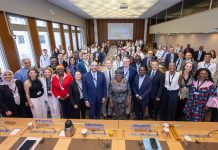
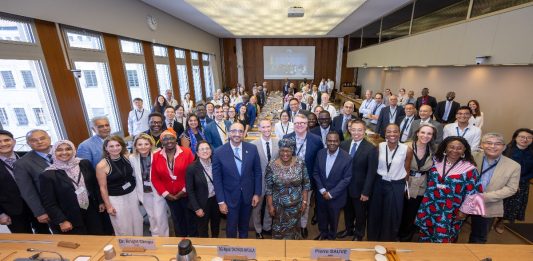
    Millions of women and girls remain without adequate legal protection due to the failure of African governments to enact and effectively enforce national laws and regional agreements, Equality Now warned at the African Commission on Human and Peoples’ Rights’ (ACHPR) 87th Ordinary Session in Banjul, The Gambia.

    Esther Waweru, Associate Director for Legal Equality at Equality Now, delivered a statement to the ACHPR on May 12, 2026, calling on African Union (AU) Member States to do more to address sexual violence, female genital mutilation (FGM), online safety, sexual and reproductive healthcare access, and discriminatory matrimonial property rights.

    “Millions of women and girls across Africa live under laws and systems that don’t uphold their human rights. Countries have made binding commitments to advance gender equality, but gaps in legal protections, weak implementation of laws, and poor accountability are leaving many without equal rights, safeguards, or justice. African governments must move beyond rhetoric to deliver the legal reforms, protections, and accountability mechanisms women and girls urgently need,” Waweru explains.

    Rape laws in Africa continue to fail survivors of sexual violence

    Equality Now’s report Barriers to Justice: Rape in Africa, Law, Practice and Access to Justice analysed rape laws across 47 countries and found significant shortcomings. Sexual violence laws in some countries still require proof that physical force, threats, or violence was used. Such restrictive definitions place undue burdens on survivors to provide evidence, and disregard the varying contexts in which sexual violence occurs, including through intimidation, coercion, fraud, or unequal power dynamics that make it impossible to give genuine consent.

    Authorities often fail to properly investigate, prosecute, or convict rape cases, while discriminatory gender stereotypes can influence judicial decisions, leading to reduced charges, lighter sentences, or perpetrators escaping punishment altogether. 

    Rape cases are sometimes resolved through out-of-court settlements via informal community mediation, with victim-blaming and social pressure often compelling survivors to withdraw legal complaints or remain silent.

    Kenya, whose State Report was reviewed by the ACHPR during its 87th session, retains a marital rape exemption allowing husbands to avoid prosecution for raping their wives.

    Equality Now called on the Commission to encourage Kenya to remove legal loopholes permitting rape within marriage, and reform sexual offences laws in line with the Niamey Guidelines which set regional standards for preventing and responding to sexual violence, and the Maputo Protocol, the landmark AU treaty outlining governments’ obligations to end gender-based violence, ensure reproductive rights, and eliminate harmful practices.

    Restrictions on sexual and reproductive health services persist, especially harming rape survivors. Equality Now commended AU Member States that recognise sexual and reproductive health and rights (SRHR) as a constitutional right. For example, in October 2025, Malawi’s High Court ruled that denying a 14-year-old rape survivor access to a safe termination of pregnancy was a SRHR violation, and forcing a child to carry a pregnancy resulting from rape constitutes “harsh and inhumane” treatment.

    Equality Now urged all African governments to prosecute sexual violence, whether perpetrated during peacetime or conflict, and to adopt a survivor-centred approach built upon comprehensive reparations frameworks that provide compensation, medical and psychosocial support, and legal assistance to survivors.

    Discrimination in matrimonial property rights laws in Africa

    Equality Now’s report, Gender inequality in family laws in Africa, maps how women face significant challenges relating to unpaid work within the family context and discrimination in property distribution during marriage annulment, separation, or divorce.

    Article 7(d) of the Maputo Protocol requires equitable distribution of matrimonial property, yet in practice, this standard is often unmet. In Nigeria, property division is based entirely on direct financial contributions, leaving many women with little or nothing following divorce. In Kenya, Malawi, and South Africa, both direct and indirect contributions should be accounted for, but courts frequently fail to adequately value women’s unpaid labour.

    All Member States should pass and implement legislation recognising the full value of women’s unpaid domestic and caregiving work within the family, and implement General Comment No. 6 on the Maputo Protocol mandating an equitable sharing of joint property based upon both financial and non-financial contributions.

    Criminalising FGM in Liberia and upholding The Gambia’s law banning FGM

    Equality Now acknowledged ongoing efforts in Liberia to address harmful practices affecting women and girls, and calls on lawmakers to criminalise FGM by fast-tracking passage of the pending Women and Girls Protection Bill.

    In The Gambia, the Supreme Court is considering a case seeking to overturn the ban on FGM under the Women’s (Amendment) Act 2015, with petitioners arguing on constitutional grounds that the law violates cultural and religious freedoms. Equality Now called on the State to defend and fully implement the Act, as repeal would endanger women and girls, undermine years of progress, and set a dangerous precedent by revoking hard-won legal safeguards.

    Online gender-based violence in Africa

    Across Africa, weak, outdated, and fragmented digital governance frameworks leave women and girls vulnerable to harm online, including tech-facilitated gender-based violence. Most countries rely on narrow cybercrime laws that lack gender perspectives, resulting in disproportionate censorship, surveillance, or penalisation of those seeking protection, while allowing online harassment, exploitation, misinformation and disinformation, and algorithmic biases to proliferate.

    The concentration of digital infrastructure and artificial intelligence systems in the Global North risks reinforcing digital colonialism and embedding racial and gender bias into technologies.

    African states should establish binding due diligence and transparency requirements for transnational technology companies, align digital governance frameworks with the Maputo Protocol, invest in gender-responsive digital capacity building for women and girls, and strengthen access to remedies for survivors of digital harms.

    Domestication and implementation of the Maputo Protocol in South Sudan

    South Sudan ratified the Maputo Protocol in 2023. Three years on, women and girls face conflict-related sexual violence, entrenched harmful practices, and weak legal protections and inadequate enforcement, underpinned by deep-rooted patriarchal norms.

    The country’s ongoing constitution-making process offers a time-bound opportunity to embed gender equality at the heart of legal and institutional reform. South Sudan needs to fully domesticate and implement the Protocol and expedite adoption of national laws that strengthen protections for women and girls.

  • Legal protections are failing to protect girls in Africa from child marriage and Female Genital Mutilation (FGM), report warns

    Legal protections are failing to protect girls in Africa from child marriage and Female Genital Mutilation (FGM), report warns

    Drawing on case studies from Chad, Cameroon, Ethiopia, Egypt, Malawi, Mali, Nigeria, Somalia, Sudan, and Zimbabwe, the Thematic Report on Harmful Practices Affecting Children in Africa finds that despite progress in strengthening legal frameworks and political commitments, harmful practices remain entrenched

    Millions of girls in Africa are still at risk of child marriage and female genital mutilation (FGM) despite bans in most countries. A new report by the African Committee of Experts on the Rights and Welfare of the Child (ACERWC), with support from Equality Now reveals how laws are often poorly enforced, with implementation varying widely and survivors facing challenges accessing justice and support. Governments must urgently close protection gaps and bridge the divide between legal commitments and the reality girls face.

    Drawing on case studies from Chad, Cameroon, Ethiopia, Egypt, Malawi, Mali, Nigeria, Somalia, Sudan, and Zimbabwe, the Thematic Report on Harmful Practices Affecting Children in Africa finds that despite progress in strengthening legal frameworks and political commitments, harmful practices remain entrenched.

    Climate shocks, conflict, and economic instability are intensifying the drivers of child marriage and FGM, weakening already fragile systems and increasing risks for girls, particularly in rural and conflict-affected areas, where access to services is limited and social pressures are stronger. Many cases go unreported due to stigma, fear of retaliation, and limited support services.

    The report was launched at the 47th Ordinary Session of the ACERWC, held in Maseru, Lesotho, on April 21, and a recording of the discussion is available to watch (the session starts at 4:56:31). The session brought together policymakers, civil society organisations, and regional stakeholders to advance dialogue and reinforce collective action to end harmful practices across Africa.

    Sally Ncube, Equality Now’s Regional Representative for Southern Africa, explains, “Failure of implementation and enforcement of the law to protect children from harmful practices is not a failure of the law alone. It is a failure of the ecosystem that should make the law protect and support children.”

    Legal gaps, climate change, and conflict exacerbate child marriage

    Less than half of African countries set the minimum marriage age at 18 without exception, leaving legal gaps that allow child marriage under parental consent, judicial approval, or customary and religious law. Many countries also lack comprehensive legislation addressing prevention, access to justice, and survivors’ rights.

    Crises like extreme weather fuelled by climate change erode economic and social structures, disrupt services, and shut schools, which are crucial for monitoring and reporting abuse. Economic hardship remains a major driver of child marriage, with families facing poverty sometimes turning to early marriage to reduce household expenses and in the mistaken belief that it will provide their daughter with protection.

    The reality is that child marriage increases a girl’s likelihood of experiencing a range of harms, including domestic violence, unwanted and early pregnancy, dropping out of education, and poverty. 

    UNICEF noted that a 2022 drought tripled the number of children at risk of dropping out of school in Ethiopia, Kenya, and Somalia. A 10% decrease in rainfall is associated with a 1% increase in child marriage rates, underscoring how environmental shocks can deepen economic pressures that push families toward early marriage as an economic survival strategy.

    Drought in parts of Ethiopia led to a doubling of child marriage rates within a year in the worst-affected regionsas families struggled with food insecurity and poverty. FGM is often carried out to prepare girls for marriage, and in Djibouti and Somalia, climate-related economic pressure has resulted in girls undergoing FGM at younger ages to increase their “marriageability.”

    In Somalia, FGM and child marriage remain deeply rooted, particularly impacting girls in internally displaced persons camps where protections are weak, while in Sudan, FGM was criminalised in 2020, but war and governance breakdown have severely undermined enforcement.

    Legal gaps and weak enforcement undermine progress on ending FGM

    Of the 27 African countries with national-level prevalence data on FGM, four countries (Liberia, Mali, Sierra Leone, and Somalia) still lack specific national legislation banning the practice, underscoring persistent legal gaps across the region.

    The medicalisation of FGM and girls being transported across country borders to be cut remain under-addressed issues in many national laws. In some cases, survivors are inadvertently criminalised, and access to redress and support services remains limited, particularly in rural and crisis-affected areas.

    In Egypt and Cameroon, FGM legal bans reflect progress, but shortfalls remain, such as FGM medicalisation in Egypt and legal inconsistencies in Cameroon. In Nigeria, laws criminalising FGM and setting the minimum age of marriage at 18 are weakened by inconsistent enforcement and conflicting customary and religious law.

    Rising authoritarianism and military takeovers have stifled progress toward ending harmful practices. The withdrawal of countries such as Burkina Faso, Mali, and Niger from ECOWAS and other regional bodies has reduced accountability and curtailed civil society’s ability to advocate for change.

    FGM laws at risk of rollback in some countries

    Debates about decriminalising FGM are resurging, as seen in The Gambia (2024), where the Supreme Court is considering repealing the country’s FGM ban, underscoring the need for sustained vigilance and advocacy.

    Proposed anti-FGM provisions in Mali were removed from the 2024 Penal Code following resistance from religious leaders, demonstrating how political and social pressures can stall reform.

    Progress towards ending child marriage and FGM

    Despite challenges, progress advances where legal reform and community leadership align. In Malawi, the report recognises the efforts of traditional leaders such as Chief Theresa Kachindamoto, who have played a key role in annulling thousands of child marriages, demonstrating the success of locally led action.

    Another progressive example is how the Constitutional Court in Zimbabwe issued a landmark ruling that prompted the amendment to the 2022 Marriage Act, setting the age of marriage at 18 with no exceptions, following a case by two young women forced into early marriage.

    Ethiopia, for example, adapted to COVID-19 restrictions by using mobile-based interactive voice recordings to reach out-of-school girls with FGM awareness content, showcasing how technology can support advocacy during a crisis.

    African governments must turn legal commitments into real protection for girls

    The thematic report recommends that all African governments implement strict legal provisions prohibiting harmful practices and fully incorporate international and regional human rights treaties, conventions, and protocols into their domestic legal systems to ensure that these instruments bind the state. It is also critical to close legal loopholes to ensure that the minimum marriage age is set at 18 without exception and to align national, customary, and religious frameworks with regional child rights standards.

    “The study illustrates that change is possible and indeed already taking place. Progress is achievable when legislation is complemented by implementation and coordination among relevant stakeholders and the promotion within the community,” said Hon. Hermine Kembo Takam Gatsing, Special Rapporteur on Child Marriage and Other Harmful Practices, ACERWC

    Strong political will, clear policy, and coordinated national action are essential. This requires collaboration among governments, civil society, and communities, backed by dedicated funding, strong accountability frameworks, and well-staffed systems.

    Efforts must address the social and cultural norms that allow harmful practices to persist. Context-specific approaches and local ownership are essential, grounded in meaningful participation of survivors and community leaders. Empowering girls through education and providing survivors with guaranteed access to protection, justice, and support services are also crucial.

    To better understand the causes and scale of child marriage and FGM, governments must strengthen national data systems, including birth and marriage registration and child protection databases. Reliable, disaggregated data can help identify risks, design evidence-based responses, track progress, and hold institutions accountable.

    “The law that cannot protect a girl in her own home is not a law; it is a broken promise. Lack of implementation is not a failure of law alone. It is a failure of the ecosystem that should make the law protect children from marriage and FGM. This report, and this moment, matter because millions of girls across Africa are waiting for the law to find them. Not for them to find the law.” Sally Ncube, Equality Now’s Regional Representative for Southern Africa

    “Equality Now and civil society organisations stand ready to continue working with ACERWC and States Parties to turn commitments into safety and justice. May this session be the turning point where Africa accelerates progress toward moving laws on paper into real-life protection in practice. Equality Now stands ready. Africa’s girls are waiting,” concludes Ncube.

  • Merck Foundation marks World Infertility Awareness Month at World Infertility Awareness Summit (WIAS)2024

    Merck Foundation marks World Infertility Awareness Month at World Infertility Awareness Summit (WIAS)2024

    … releases first animation film to raise awareness about infertility in Africa and beyond

    Merck Foundation, the philanthropic arm of Merck KgaA Germany and Africa Reproductive Care society (ARCS) together conducted the Third Edition of “World Infertility Awareness Summit (WIAS) 2024”. The Summit was co-chaired by Senator, Dr. Rasha Kelej, CEO of Merck Foundation and President of “More Than a Mother” Campaign and also Chairperson of Africa Reproductive Care Society (ARCS) together with Prof. Oladapo Ashiru OFR, President of Africa Reproductive Care Society (ARCS) and also The Nigerian Academy of Medicine Specialties.

    It was attended by Dr. Edem Hiadzi, Immediate past President of the Fertility Society Of Ghana (FERSOG); Prof. Justin E. MBOLOKO, Immediate Past President, Inter-African Fertility Research and Application Study Group (GIERAF) and Dr. Moustapha Thiam, Obstetrician Gynecologist IVF President, Senegal. This summit is conducted annually to mark the world fertility awareness month and raise awareness about infertility stigma, male infertility and infertility prevention in Africa and beyond.

    Senator, Dr. Rasha Kelej emphasized, “We marked World Fertility Awareness Month with our Merck Foundation Alumni, fertility and reproductive care experts, presidents of fertility societies and members of Africa Reproductive Care Society (ARCS) and our media partners through 3rd Merck Foundation “World Infertility Awareness Summit”.

    The summit is part of our efforts towards raising awareness about infertility. especially male infertility, and to sensitizing communities to end the stigma associated with infertility and empower infertile women & couples through access to information, education, health and change of mindset.

    I am very proud to share that we, at Merck Foundation, have provided till today more than 574 scholarships of Embryology, Fertility and Sexual & Reproductive care to young doctors from 39 different countriesin Africa and Asia.

    “Many of our Alumni are trained to be the first local experts in their countries, where they never used to have local embryologists or fertility specialists before our program, such as The Gambia, Burundi, Guinea, Chad, Niger, Sierra Leone, Liberia, Malawi, Congo and more.” Dr. Kelej added.

    During the program, Merck Foundation showcased their animation film “More Than a Mother”, adapted from their storybook, to emphasize strong family values of love and respect from a young age which will reflect on eliminating the stigma of infertility and the resulted domestic violence in the future.

    “Together with African First Ladies, and other important partners, we are making history and reshaping the landscape of fertility & Reproductive care across Africa and beyond.” She explained.

    Prof. Oladapo Ashiru OFR, President of Africa Reproductive Care Society (ARCS) said, “Infertility has a great psychological impact on the women suffering from infertility stigma due to emotional and physical distress caused to her. In some cases, women also go through physical and psychological violence and lacks the family support. Infertility is not only a medical issue but also a social issue and emotional issue. It is imperative that the community is informed and educated about the issue.”

    “Infertility can be preventive by adopting various measures like switching to a healthy lifestyle, quitting smoking, reducing stress and anxiety, and ending the practice of Female Genital Mutilation (FGM).

    I appreciate the efforts of Merck Foundation for breaking the stigma around infertility and also raising awareness through various campaigns and efforts around infertility stigma.” He emphasized.

    The objectives of the Summit were:

    1. To raise awareness about infertility especially male infertility.
    2. To highlight preventive measure in infertility in Africa and developing countries.
    3. To discuss the challenges and define solutions to improve access to quality and equitable Infertility, Sexual & Reproductive Care via building healthcare capacity and raising community awareness.
    4. Define interventions to break infertility stigma around women and couples.

    The online program was attended by over 350 participants including Merck Foundation partners and Alumni who are future Fertility Specialists, Reproductive and Sexual Care Specialists, and Embryologists, Healthcare Providers, Policy Makers, and Media Professionals from over 25 countries in Africa and beyond, and over 4500 online viewers on our social media platforms. The experts answered questions from the media.

    It was conducted under Merck Foundation “More Than a Mother”, a historic movement that defines interventions to build quality and equitable Reproductive and Fertility Care Capacity, Break Infertility Stigma and Raise Awareness about Infertility Prevention and Male Infertility.

    According to WHO data, more than 180 million couples in developing countries – that is 1 in every 4 couple, suffer from infertility. In many cultures in Africa, infertility is a huge stigma. Women are solely blamed for failing to conceive and the social stigma of childlessness, especially for women leads to isolation and stigmatization and results in discrimination and ostracism. This mostly also leads to divorce or physical or psychological violence. As a part of “More Than a Mother” Campaign, Merck Foundation has launched many initiatives to break this stigma and create a culture shift.

    Moreover, Merck Foundation has trained more than 3200 media representatives from more than 35 countries to raise community awareness and break the stigma around infertility and infertile and childless women.

    Merck Foundation’s pan African TV program“Our Africa”, that is conceptualized, produced, directed, and co-hosted by Senator, Dr. Rasha Kelej, CEO of Merck Foundation and features African Fashion Designers, Singers, and prominent experts from various domains with the aim to raise awareness and create a culture shift across Africa, has many episodes dedicated to raise awareness about infertility and breaking infertility stigma.

    Watch the episodes here:

    Episode 3: https://apo-opa.co/3X6rGHg

    Episode 5: https://apo-opa.co/46LwMMl

    Episode 10: https://apo-opa.co/3X4uTqU

    Merck Foundation has also released about 30 songs, many of these songs have been created with the aim to break the infertility stigma, as a part of their “More Than a Mother” campaign.

    Listen to all “More than a Mother” songs here: 
    https://apo-opa.co/3WN74m3

    To address this important issue of breaking infertility stigma and also a wide range of other social issues, Merck Foundation annually launches their ‘More Than a Mother’ Awards in partnership with African First Ladies, for Media, Fashion, Film making, and Musicians, students, and potential talents in these fields, to create a culture shift and break the silence about one or more of the following topics: Breaking Infertility Stigma, Supporting Girl Education, Women Empowerment, Ending Child Marriage, Ending FGM, and/ or Stopping GBV at all levels. Entries can be submitted on submit@merck-foundation.com.

    Merck Foundation also conducts MARS Awards to empower African young researchers & women researchers, advancing their research capacity and promote their contribution to STEM (Science, Technology, Engineering and Mathematics).

    Details of Merck Foundation Africa Research Summit (MARS) Awards 2024:
    Merck Foundation Africa Research Summit – MARS 2024 will have scientific support from African Union Scientific-Technical and Research Commission (AU-STRC); African Reproductive Care Society (ARCS) and Manipal Academy of Higher Education (MAHE).

    Theme: The Role of Scientific Research in Women Health and Reproductive Care

    Who can apply:
    Abstracts are invited from final year PhD students, young investigators involved in research and Medical Doctors in Postgraduate Medical Fellowship program related to either of the following topics:

    1) Women Health

    2) Infertility and Reproductive Health

    How to apply: Applications and abstracts can be submitted by clicking on:
    https://apo-opa.co/3X6Hie0