














Tag: Gary Chomse

  • Feature- The Importance of ‘Mining’ Facts and Data in Nigeria’s Oil and Gas Arena

    Feature- The Importance of ‘Mining’ Facts and Data in Nigeria’s Oil and Gas Arena

    By Gary Chomse

    As with all modern industries, the oil and gas sector globally is under pressure to embrace the critical convergence of information technology (IT) and operational technology (OT) systems to maximise efficiencies and productivities. This shift is equally important in Nigeria, where the oil and gas industry plays a pivotal role in the national economy.

    Oil production is a major source of income and a substantial contributor to the GDP of many African countries, and Nigeria remains consistently in the top spot as Africa’s largest producer of crude oil. In addition, it possesses significant quantities of natural gas reserves. The country’s oil and gas sector is critical to the economy, contributing over 85% of export earnings and approximately 30% of budget revenue, but it has been performing below its potential in recent years due to a number of challenges.

    Against this background, the newly operational Dangote Refinery and Petrochemicals in the Lekki Free Zone outside Lagos, which began production in January 2024, is a positive symbol of the hoped-for revival of the oil and gas arena in Nigeria. This newest addition to Nigeria’s oil and gas industry is Africa’s biggest oil refinery and also the largest single-train facility in the world (meaning a facility where all the major processing units for the crude oil entering the refinery are contained within a single integrated complex).

    However, despite this beacon’s positive symbolism within the Nigerian oil and gas realm, the sector is still navigating the complex regulatory landscape and fiscal reforms introduced by the Petroleum Industry Act of 2021. The Act’s intention is to restructure fiscal terms, institutional frameworks, and regulatory policies, thus attracting investment and boosting efficiency. 

    Prior to the implementation of this Act, Nigeria’s oil and gas arena had seen years of under-investment in exploration and production which, together with persistent infrastructure issues and other challenges, had suppressed growth and innovation, as outlined by Nigerian credit rating agency, Agusto & Co.

    Implementing effective technology infrastructure in the oil and gas field can support strategic business and national objectives and help overcome legacy infrastructure challenges.

    Supporting key African markets in their digitalisation journeys

    Over the past few years, Vertiv has participated in several focused events across Africa to showcase our products and solutions that are suitable for the broader industrial realm. The intention was to create greater awareness around the benefits that Vertiv can bring to these local sectors, following on from our proven success within the oil and gas field in other parts of the globe. 

    We look forward to similarly engaging with industry representatives within Nigeria also, being Africa’s largest oil producer, as well as possessing substantial natural gas reserves. Nigeria’s natural gas reserves are, in fact, estimated to be one of the largest in Africa, as outlined by global research company, Mordor Intelligence, in its report entitled ‘Oil and Gas Industry in Nigeria Market Size & Share Analysis – Growth Trends & Forecasts (2025 – 2030)’.

    Natural gas is considered a cleaner and more environmentally friendly source of energy compared to other fossil fuels, and investments in natural gas infrastructure would allow Nigeria to diversify its energy mix and meet both domestic and international demand for cleaner energy sources.

    According to the Mordor Intelligence report, it appears that, considering the issues holistically and despite certain challenges, there is much to anticipate for the growth of Nigeria’s oil and gas industry over the next few years. One important key is enabling the true convergence of IT and OT systems, to be able to ‘mine’ facts and data as well as oil and gas, and thereby drive informed planning and decision making.

    The Importance of Integrating IT and OT Systems 

    In a challenging global economy, it is critical for oil and gas companies to digitalise their systems and processes, thereby allowing for the harnessing of data volumes from day-to-day operations. As outlined by global IT consulting company BirlaSoft, the IT-OT convergence within the oil and gas sector allows companies to harvest data within the OT layer and then ‘cross-contextualize it to build valuable insights and automated control and orchestration mechanisms’.

    According to BirlaSoft: ‘IO/OT convergence in the oil and gas industry is a key step to harnessing the business benefits of big data. Operational technology generates a vast amount of data when IoT sensors are attached to various parts of critical machinery to record intended parameters. This data is usually in the form of time series. Analysing it with the right artificial intelligence (AI) and machine learning (ML) techniques can help organisations anticipate potential risks or if the operations as a whole are generating a strange footprint. In other words, IT-OT convergence is the bridge to seamless, proactive, and resilient oil and gas operations.’

    By maximising a mix of more modern IT systems intertwined with legacy OT systems, and capturing important information, oil and gas companies can derive insight for enhancing operational efficiencies, increasing performance and improving decision-making. 

    To enable such strategic aims around the necessary digitalisation to link IT and OT systems, Vertiv’s digital infrastructure solutions are designed to assist with power supplies and distribution, as well as thermal management solutions, as follows:

    • Critical power products, such as efficient, reliable uninterruptible power supplies (UPS); scalable, flexible hybrid DC power products; power distribution systems; switchgear; and Vertiv’s battery energy storage system (BESS), which delivers scalable, high-capacity battery energy storage systems for data centres and critical infrastructure;
    • Thermal management solutions, including Vertiv™ air handling and chillers for climate control of large electronic systems located outside the data room; cooling solutions for data centres, IT rooms, laboratories, and other critical applications; as well as small thermal systems, incorporating room, and row/ rack cooling;
    • Vertiv™ Integrated Solutions, including prefabricated rack, row, aisle, and modular data centres, featuring built-in flexible designs based on proven configurations; and
    • Monitoring and management options, such as Vertiv™ Avocent® DSView™ solution, a family of IT management devices and software that provides solutions in edge, enterprise and engineering lab environments. 

    There is a well-known saying which notes that ‘knowledge is power’, and in any industry, information is vital for understanding that sector’s own outlook through the harnessing of facts, statistics and trends. With the oil and gas industry in Nigeria poised for robust growth that strategic investments and technological advancements will drive, the importance of being able to access information digitally is critical. 

    The strategically-placed implementation of robust yet high-performance data centres will work to form the backbone for this critical data and support the necessary IT-OT convergence of individual oil and gas companies, while at the same time also supporting the overall aims of the Petroleum Industry Act of 2021 at a national level. 

    Gary Chomse is the Regional Director, Central-Southern Africa at Vertiv

  • Vertiv Announces New Regional Structure for Africa to Enhance Market Presence and Boost Customer Engagement

    Vertiv Announces New Regional Structure for Africa to Enhance Market Presence and Boost Customer Engagement

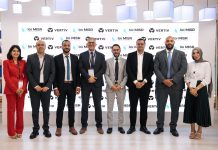
    Vertiv, a global provider of critical digital infrastructure and continuity solutions, announced a strategic restructuring of its operations across Africa to enhance and expand its market presence and customer engagement.

    Under this new structure, the organisation streamlined its focus on Africa into four distinct regions, led by regional directors as follows:

    ·       Northwest Africa – Zineb Kamri, based in Casablanca, Morocco.

    ·       Northeast Africa – Ehab El Hefnawy, based in Cairo, Egypt.

    ·       Central-Southern Africa – Gary Chomse, based in Johannesburg, South Africa, with regular operations from Lagos, Nigeria.

    ·       Eastern Africa – Rohan Patil, based in Nairobi, Kenya.

    The regional directors report directly to Vertiv’s managing director for Africa, Wojtek Piorko,each with careers in leading roles and responsibilities in their years with the company, building a wealth of knowledge and experience across the African continent and beyond. The new assignments and strategic structuring enable Vertiv to get closer to its partners and customers alike, foster deeper relationships and collaboration, and deploy components, products, training, and services for faster response times.

    Optimising structure for sharpened regional focus 

    “This strategic move positions Vertiv closer to its local customers, enabling a deeper understanding of their unique needs and a more effective response to local market dynamics within each region,” explains Piorko. “It will also facilitate the strategic alignment of resource investments with market growth and customer expectations.”

    Piorko adds, “By enhancing our regional presence, Vertiv aims to support African businesses in their digital transformation journeys, providing them with access to experienced experts and a broad portfolio of power, cooling, IT management and services solutions to help accelerate the growth of compute in the region.”

    For more information on Vertiv’s presence and offerings within Africa, please click here.

  • How Modular Data Centres Can Support Nigeria’s ICT Growth

    How Modular Data Centres Can Support Nigeria’s ICT Growth

    By Gary Chomse

    Nigeria’s information and communications technology (ICT) sector is experiencing robust expansion, fuelled by the financial services, oil and gas and fintech industries. This brings with it new investment prospects for data centres, to service advances in cloud computing infrastructure and the rollout of 5G technology[1]

    According to a 2023 research report, the size of the Nigerian data centre market is projected to grow at a compound annual growth rate (CAGR) of almost 20 percent (17.9 percent) during the period 2021-2027[2]. Critical aspects of Nigeria’s data centre ecosystem include the need to deploy next-generation data infrastructure for agility and sustainability, and the ability to scale up as required. 

    The strategic use of prefabricated modular data centres can help to address these challenges. 

    Adding data centre capacity 

    The complexity of new technologies – including machine learning (ML) and artificial intelligence (AI) – as well as the spreading of the network edge, is driving the need for enterprise data centres to add capacity. There is a growing need to upgrade data centre facilities to support the required advanced computing and higher-density architectures, including an increased complexity in power and cooling needs. 

    As a result, many local organisations will need to plan to add capacity due to increasing growth and reliance on digital applications, and the realisation that in-house options aren’t sufficient. The requirement is to be able to add capacity quickly and easily, without compromising on network security or the bottom line.

    Prefabricated modular data centre offerings provide sophisticated, customisable and scalable solutions to modern capacity challenges, offering factory-built reliability, rapid deployment, flexibility and efficiency. 

    While prefabricated modular data centres are not new, the technology has been refined since its introduction around 15 years ago, and at the same time, the building practices involved have also been improved. These sophisticated, fully integrated IT solutions can be configured to meet specific needs, as well as for quick deployment wherever computing is required. 

    Benefits of prefabricated modular data centres

    In addition to being an easy-to-implement, affordable alternative to building traditional data centres, prefabricated modular data centres offer the following benefits:  

    • Factory engineered reliability: Prefabricated solutions are engineered, assembled and tested in the factory, resulting in offerings that are rugged, reliable and repeatable. This reliability can pay dividends over the system’s lifespan, reducing the overall need for repairs and service calls.
    • Speed of deployment: Integrated modular solutions can be built while on-site activities continue. In addition, because they are fully integrated and virtually plug-and-play, these solutions can be commissioned and operational much faster than traditional data centres –  up to 30 percent more quickly, in fact. 
    • Customisable: Modern modules are custom-built to customer specs, then the configuration and build can be repeated quickly and efficiently as demand increases. This simplifies operation and service.
    • Flexible: Integrated modular solutions can be built and configured to support various architectures, including high-density computing and liquid cooling. In addition, a modular solution is portable and can be relocated as network demands change, for example to better support a low-latency application.
    • Reduced waste: These integrated, closed systems can be engineered to eliminate waste and be more sustainable than a traditional design. 
    • Cost certainty and scalability: The total cost of ownership is typically lower for integrated modular solutions, which also allow an organisation to add capacity when and where it is required

    Meeting market growth requirements  

    As outlined, the data centre industry in Nigeria is predicted to see significant growth in the next few years, being projected to reach USD 646 million by 2030, after its 2023 valuation of USD 250 million[3] – an anticipated doubling and more, in just over five years. This growth comes on the back of the increasing demand for data storage and processing through the rise of the digital economy and the growth of internet usage in Nigeria[4]

    In support of this growth, enterprise data centres looking to add compute, power or cooling in smaller increments can be enabled by these aims through modular solutions from Vertiv, a global provider of critical digital infrastructure and continuity solutions.  

    Vertiv remains committed to addressing critical data centre challenges across the continent, supporting the advancement of ICT enablement and digitalisation throughout the Central African region. The organisation established its office in Lagos, Nigeria, in 2003, manned by highly trained local sales, service and project delivery teams. During this time, Vertiv has built a strong, loyal local customer base, gaining recognition for delivering reliable prefabricated solutions tailored to regional needs. 

    Gary Chomse is the Regional Director for Consolidated, Central and Southern Africa at Vertiv