















Tag: MTN

  • Igbehinadun Primary School, Somolu Wins 3rd Dacurate Primary School Leadership Quiz

    Igbehinadun Primary School, Somolu Wins 3rd Dacurate Primary School Leadership Quiz

    300 students. 15 schools. Over ₦1 million in prizes. Lagos crowns its boldest young minds.

    Igbehinadun Primary School, Somolu has won the 3rd Dacurate Primary School Leadership Quiz, defeating 14 other schools in a live grand finale held today at the Wole Soyinka Centre for Culture and Creative Arts, Iganmu, Lagos. Over 300 students and 500 guests attended what was the largest and most competitive edition of the quiz since its founding.

    The annual competition, organised by Dacurate Insight Initiative and backed by the Lagos State Ministry of Education, tests primary school students across 12 categories of knowledge spanning Nigerian history, African leadership, women in history, governance, technology, and international bodies. Students are not drilled on textbook answers. They are examined on how well they understand the world they are about to inherit.

    The 2026 edition drew over 30 schools in the preliminary rounds before narrowing to 15 finalists who competed across rounds of General Knowledge, Current Affairs, and Critical Thinking. Lawyer and television host, Timi Agbaje served as Quiz Master, guiding the competition through each round.

    Igbehinadun emerged champions, walking away with the grand prize of ₦300,000 in prizes, including cash scholarships, tech gadgets, and leadership training sessions. Awoyaya Primary School, Victoria Island and Spring Children’s School, Okota placed second and third, receiving ₦200,000 and ₦100,000 respectively.

    “At SKLD we have spent 25 years putting resources into classrooms across this country, and we have seen what happens when you give people access and challenge them to rise. Watching these children compete at this level, I am reminded that the raw material has never been the problem. The question has always been whether we build the right environments for it to flourish. Dacurate is one of those environments, Tayo Osiyemi, CEO, SKLD Integrated Services & Co-Founder, Harde Business School, said.

    Also speaking, Mateen Korede Taomu, Convener, Dacurate Leadership Quiz said, “What Dacurate stands for is simple: every child deserves to be seen, challenged, and celebrated. Today proved that Nigeria’s next generation is more than ready.”

    The 2026 edition was made possible with the support of MTN, Sosa Fruit Drink, SKLD Integrated Services, and others, whose investment in youth development continues to expand the reach and ambition of the platform.

  • PodFest Naija Returns September 25 with Nigeria’s Leading Storytellers, Creators, and Brands

    PodFest Naija Returns September 25 with Nigeria’s Leading Storytellers, Creators, and Brands

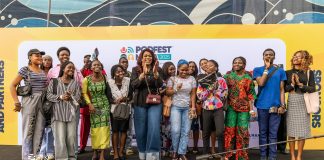
    The Muvmnt Studio, the creative force behind Nigeria’s first podcast festival, has announced the return of PodFest Naija – A Festival of Stories, scheduled to take place on September 25, 2026, at Harbour Point, Victoria Island, Lagos. Building on the success of its inaugural edition, PodFest Naija returns as the country’s premier gathering for storytellers, podcasters, creators, brands, and culture shapers. The 2026 festival will feature a diverse lineup of influential voices who continue to shape conversations, communities, and culture across Nigeria and beyond.

    Created as a convergence point for the storytelling ecosystem, PodFest Naija exists to celebrate, collaborate, innovate, and support storytellers as they elevate their craft. Attendees can look forward to insightful conversations that explore the future of storytelling, evolving audience behaviours, emerging tools and platforms, and the power of authentic narratives. Beyond the discussions, the festival offers opportunities for meaningful engagement with some of the country’s most beloved creators and storytellers, who will share personal experiences and lessons from their journeys across specially curated themed stages.

    “Storytelling remains the heartbeat of meaningful communication,” said Tosin Adefeko, Curator of PodFest Naija and Chief Executive Officer of AT3 Resources – The Muvmnt Agency.

    “At The Muvmnt Agency, we recognised a major shift: consumers have become storytellers in their own right, shaping narratives, influencing culture, and driving conversations. Yet, despite the growth of the ecosystem, many creators were still operating in silos. No one was gathering the tribe. PodFest Naija was our response to that gap. The success of our first edition validated the power and potential of storytelling. This year, we are bringing together an even broader and more influential community of voices to amplify consumer-led narratives, foster deeper connections, and strengthen the storytelling ecosystem.”

    Podfest Naija is the creative economy’s signal to the ecosystem that our voices, stories, and community deserve to be seen, heard, and invested in. This year’s festival will feature specially curated stages hosted by some of Nigeria’s most influential voices across finance, branding, culture, health, relationships, and public discourse, including Rolake Akinkugbe-Filani, Olushola Olaleye, Ife Durosinmi-Etti, Aproko Doctor, Joro Olomofin, Tochukwu Macfoy (Dr Foy), Babajide Ogunsanwo, and Francesca Uriri. They will be joined by an impressive lineup of speakers and storytellers, including Grace Ofure, Ify Mogekwu, Abdulhafees Adelani, Bola Balogun, Rosemary Egabor-Afolahan, Adefunke Arowolo, Audu Maikori, Morenike Molehin, Tomike Adeoye, Anthony Wolve, Adefunke Arowolo, William Benson, Gbemi Olateru Olagbegi, Audrey Abayomi, Bola Balogun, and many more.

    Beyond the main stage conversations and the Next Big Podcaster talent discovery initiative, designed to spotlight and support emerging podcast voices across Nigeria, PodFest Naija 2026 will also feature a Spotify-led masterclass, providing creators with practical insights to grow and sustain impactful platforms. An interactive exhibition arena will give brands the opportunity to showcase products and services, connect directly with attendees, and engage with one of Nigeria’s most vibrant and influential creative communities.

    The festival is proudly supported by Eventful Nigeria, MTN, Fan Milk, Eve Essentials, and UAC, among other leading brands, further cementing PodFest Naija’s position as the definitive gathering for Nigeria’s podcasting and storytelling community.

  • Feature- A Toast to MTN Nigeria at 25: The Network That Redefined a Nation

    Feature- A Toast to MTN Nigeria at 25: The Network That Redefined a Nation

    By Elvis Eromosele

    Twenty-five years is a long time in any industry. In telecommunications, it is an entire lifetime of disruption, reinvention, regulatory tension, and relentless technological acceleration. In Nigeria, it is also a story of national transformation told through a yellow brand that became more than a network; it became infrastructure, culture, economy, and identity.

    As MTN Nigeria marks its 25th anniversary, it is impossible to separate its corporate journey from Nigeria’s digital evolution. The company has not only witnessed the country’s shift from analogue isolation to digital integration; it has actively engineered much of it.

    When MTN entered Nigeria in 2001 following the landmark GSM liberalisation by the Nigerian Communications Commission (NCC), mobile telephony was still a luxury reserved for the privileged few. Landlines were unreliable, and communication in general was an exercise in patience and privilege.

    The NCC’s reform opened the door, but MTN walked through it with scale, ambition, and speed. In those early days, it did not merely compete; it created a market.

    The now-iconic “Everywhere you go” slogan was more than branding; it was a promise of reach in a country where geography had long dictated exclusion. For millions of Nigerians, MTN became the first real bridge to modern communication.

    From modest beginnings, the network has now grown to over 90 million active subscribers. It is today a dominant player in a market it helped build. In the quarter of a century of operations in Nigeria, MTN has evolved from a voice-centric operator into a digital infrastructure giant. Its investments in 3G, 4G LTE, fibre networks, and early 5G deployment have fundamentally reshaped consumption patterns.

    Nigeria today is a data-first society. Social media drives commerce, streaming defines entertainment, fintech powers financial inclusion, and remote work is no longer an exception but an emerging norm. MTN sits quietly beneath this ecosystem as one of its most critical enablers.

    Yet, its impact extends beyond connectivity. The company has catalysed entire value chains, SIM registration agents, tower contractors, retail distributors, fintech partners, and digital developers, forming a vast ecosystem that supports millions of livelihoods.

    In many ways, MTN did not just connect Nigeria; it industrialised communication. The telecom giant’s contribution to Nigeria’s economy is both direct and multiplier-driven. Thousands are employed directly, but millions more are supported indirectly through its expansive ecosystem.

    Billions of dollars in infrastructure investment have gone into base stations, fibre rollout, data centres, and rural expansion projects. This has helped to shrink Nigeria’s digital divide, though gaps remain in rural broadband access.

    The MTN Nigeria Foundation, funded through a portion of profits, has also become a significant force for social impact, supporting healthcare upgrades, scholarships, digital skills training, and women empowerment programmes across the country.

    It is estimated that tens of millions of Nigerians have benefited directly or indirectly from its interventions. This social footprint reinforces MTN’s position not just as a commercial entity but as a development partner.

    No honest assessment of MTN Nigeria’s journey can ignore its controversies and operational challenges. The most defining moment remains the 2015 SIM registration crisis, when the NCC imposed a record-breaking fine over compliance failures. The episode exposed the tension between regulatory enforcement and operational realities in a complex, fast-growing market.

    Beyond regulatory issues, consumer frustrations persist. Nigerians continue to experience dropped calls, inconsistent data performance, congestion in urban areas, and perceived rapid data depletion. Despite massive infrastructure investments, the gap between expectation and experience remains a recurring issue.

    There are also structural challenges: multiple taxation, vandalism of fibre infrastructure, high diesel costs due to unstable power supply, and foreign exchange volatility, all of which strain operations.

    The next phase of MTN’s journey will not be defined by traditional telecom competition alone. The battlefield is expanding.

    Fintech companies, over-the-top (OTT) platforms, satellite internet providers, and digital-native startups are redefining connectivity and value creation. MTN is increasingly operating in a space where it is no longer just a telecom operator but a digital platform company.

    Beyond the balance sheets and base stations lies a more personal reflection. Many professionals who have passed through MTN Nigeria carry with them a deep understanding of its role in shaping modern corporate Nigeria. This writer spent nearly a decade within the ecosystem, witnessing firsthand how the company’s internal discipline, innovation culture, and market aggression helped define the standards of the Nigerian telecom industry.

    MTN Nigeria’s story is ultimately a paradox. It democratised communication but still struggles with perception gaps in service quality. It built digital highways but still battles congestion on those roads. It enabled Nigeria’s digital economy but now faces rising expectations from a more demanding, digitally savvy population.

    Yet, this paradox is also its strength. It reflects a company that operates at scale in one of the most complex markets in the world.

    As MTN Nigeria turns 25, it stands at a crossroads of maturity and reinvention. The easy gains of market expansion are behind it. The next phase will be defined by intelligence, trust, efficiency, and inclusion.

    Nigeria’s digital future will demand more than connectivity. It will demand reliability, affordability, security, and fairness. MTN will remain central to that journey, but under sharper scrutiny and higher expectations.

    In truth, MTN Nigeria’s story is also Nigeria’s story: ambitious, uneven, resilient, and still unfolding.

    Elvis Eromosele, a corporate communications professional and sustainability advocate, wrote via elviseroms@gmail.com

  • FirstBank appoints Olayinka Ijabiyi as substantive Group Head, Marketing and Corporate Communications

    FirstBank appoints Olayinka Ijabiyi as substantive Group Head, Marketing and Corporate Communications

    FirstBank, West Africa’s premier financial institution and financial inclusion service provider, has confirmed the appointment of Olayinka Ijabiyi as the substantive Group Head, Marketing and Corporate Communications. The appointment takes immediate effect and reinforces strong corporate governance at a pivotal point in the Bank’s growth and transformation journey.

    Olayinka Thomas Ijabiyi is a seasoned marketing and corporate communications professional with over 25 years of experience driving brand transformation, strategic visibility, and stakeholder engagement across financial services, telecommunications, media, and international development sectors.

    Ijabiyi joined FirstBank in 2011 and has served in an acting capacity as the Group Head of Marketing and Corporate Communications from December 2024 until his recent confirmation. In his role, he leads the development and execution of integrated marketing and corporate communications strategies across the Group’s markets. He oversees brand and reputation management, executive positioning, Corporate Responsibility and Sustainability as well as strategic communications initiatives aligned to the Bank’s business objectives/aspirations.

    Prior to his current role, Ijabiyi has held leadership positions within the Marketing and Corporate Communications Department in FirstBank, including Head Brand Strategy and Special Projects, Head Digital Marketing and Head Brand and Stakeholder Management. 

    Before joining FirstBank, Ijabiyi built a diverse career across leading organizations including British Council, Multichoice, MTN and Etisalat Nigeria, where he played key roles in brand building, corporate communications and digital transformation initiatives.

    Widely recognised for his strategic mindset and leadership in translating business objectives into impactful marketing and communications strategies, he has successfully led major brand initiatives, including milestone anniversary campaigns and brand refresh programs, while consistently delivering efficiencies and enhancing brand equity.

    Ijabiyi holds a Master’s degree in Public and International Affairs from the University of Lagos and a Bachelor’s degree in English Language from the former Ondo State University, Ado Ekiti. He is a Fellow of the National Institute of Marketing of Nigeria (NIMN) and a member of the Nigerian Institute of Public Relations (NIPR), amongst other industry bodies.

  • WATRA Positions West Africa’s $216bn Digital Economy for Growth

    WATRA Positions West Africa’s $216bn Digital Economy for Growth

    …WATRA is positioning West Africa’s $216bn digital economy for growth as Working Groups conclude meeting in Ouagadougou

    The West Africa Telecommunications Regulators Assembly, backed by the Nigerian Communications Commission and other regional bodies, has reaffirmed its commitment to advancing a secure, inclusive, and resilient digital ecosystem in West Africa following the successful conclusion of its 4th Working Groups Meeting in Ouagadougou, Burkina Faso, at a time when the region’s digital economy is expanding rapidly and reshaping growth prospects.

    The meeting, hosted by the Autorité de Régulation des Communications Électroniques et des Postes du Burkina Faso (ARCEP), brought together regulators, technical experts, and stakeholders from across the region under the theme: “Building a Secure, Inclusive, and Resilient Digital Ecosystem for West Africa.”

    In his opening and closing remarks, Mr Aliyu Yusuf Aboki, the executive secretary of WATRA, described the meeting as a significant milestone in the organisation’s evolution, marking the transition from dialogue to the delivery of practical regulatory tools.

    Aboki is a telecommunications engineer and policy specialist with over two decades of experience across the ICT sector, including work with global telecommunications firms such as Ericsson and MTN in Nigeria and other markets.

    He has played an active role in cross-border regulatory coordination, spectrum policy, and digital transformation initiatives, contributing to policy harmonisation efforts across West Africa and representing regional perspectives in international telecommunications and digital economy engagements.

    Follow the latest developments with instant alerts on breaking news, top stories, and trending headlines.

    As Executive Secretary of WATRA, he leads the organisation’s strategic engagement with regional and global stakeholders, helping to shape coherent regulatory frameworks and strengthen Africa’s voice in global discussions on digital policy and telecommunications development.

    “Nearly two years after the establishment of the Working Groups, we can take pride in the progress achieved. What began as a vision has evolved into a dynamic mechanism for peer learning, coordination, and knowledge exchange,” Aboki said.

    Over the course of the meeting, the Working Groups finalised a set of technical reports covering key areas critical to the region’s digital transformation, including 5G deployment, submarine cable resilience, cybersecurity frameworks, consumer protection, and non-geostationary satellite (NGSO) regulation.

    Aboki emphasised that the outputs are intended to serve as practical instruments to guide policy and regulatory action across WATRA’s 16 member states.

    The meeting comes at a time when West Africa’s telecommunications sector is undergoing rapid transformation, driven by emerging technologies such as digital financial services, artificial intelligence, and the Internet of Things (IoT).

    Aboki noted that this shift requires more adaptive and forward-looking regulatory frameworks, particularly in areas such as data protection, cybersecurity, and digital governance.

    He further highlighted that the outcomes of the Working Groups will contribute to the evaluation of WATRA’s 2022–2025 Strategic Plan and inform the development of its 2026–2030 strategy.

    Economic Context: A Large and Fast-Growing Digital Opportunity

    The importance of WATRA’s work is underscored by the scale of the West African economy and the accelerating contribution of digital technologies.

    The ECOWAS region, comprising over 400 million people, has a combined GDP estimated at approximately $700–800 billion in nominal terms, with Nigeria accounting for more than two-thirds of economic output. This makes West Africa one of the most economically significant regions on the African continent.

    Digital technologies are playing an increasingly central role in this growth. According to industry and multilateral estimates, the digital economy contributes between 4% and 6% of GDP across many African markets, with mobile technologies alone accounting for roughly 4–5% of GDP in West Africa, and rising steadily as connectivity improves.

    Within this context, the West African digital market, spanning e-commerce, digital payments, connectivity services, and platforms, has been estimated at over $200 billion, with recent projections placing it above $216 billion in 2024, reflecting rapid expansion in mobile penetration, fintech adoption, and platform-based services.

    Beyond scale, the digital economy is increasingly recognised as a critical driver of:

    • Economic growth, through productivity gains and new enterprise creation
    • Welfare improvements, by expanding access to financial services, education, and healthcare
    • Inclusion, particularly by connecting rural and underserved populations

    Across the region, a number of leading markets are shaping this transformation:

    • Nigeria, the region’s largest digital economy and home to major telecom and fintech players
    • Ghana, a fast-growing hub for digital payments and financial innovation
    • Côte d’Ivoire and Senegal, which are emerging as key digital and infrastructure growth centres

    These dynamics reinforce the importance of coordinated regulatory frameworks—such as those being developed through WATRA, to ensure that digital growth translates into broad-based economic and social gains.

    The Executive Secretary also confirmed that the recommendations arising from the meeting will be presented to the WATRA General Assembly for consideration and adoption.

    WATRA expressed its appreciation to the Government of Burkina Faso and ARCEP Burkina Faso for hosting the meeting, commending their support and commitment to regional cooperation. Special recognition was given to the Chairman of the Regulatory Council of ARCEP, Dr Pasteur Poda, and the Executive Secretary, Mr Patrice Compaoré, for their leadership.

    Aboki also acknowledged the contributions of the Working Group members, Co-Chairs, Rapporteurs, and the WATRA Secretariat, noting that their voluntary efforts have been instrumental in strengthening the organisation’s technical capacity and relevance.

    He concluded by reaffirming WATRA’s commitment to deepening regional cooperation and supporting the implementation of harmonised regulatory frameworks to enable digital growth and inclusion across West Africa.

    The West Africa Telecommunications Regulators Assembly (WATRA) is a regional organisation of telecommunications regulators from 16 West African countries. It promotes cooperation, harmonisation of regulatory frameworks, and the development of the ICT sector across the subregion.

  • AMVCA 12 Unveils Head Judge, Sponsors and Return of Icons Night

    AMVCA 12 Unveils Head Judge, Sponsors and Return of Icons Night

    The Africa Magic Viewers’ Choice Awards ushered in its 12th edition on Thursday with a press briefing at the MultiChoice studio, convening media, industry leaders, and key stakeholders in a vibrant atmosphere charged with anticipation. The gathering drew prominent figures including Joke Silva, Ireti Doyle, Linda Ejiofor, and Ibrahim Suleiman, alongside former Big Brother Naija stars, reinforcing the cultural significance of the moment.

    With over 2,000 entries submitted, this year’s edition marks a significant milestone in the continued growth of AMVCA, reflecting the rapid expansion of Africa’s film and television industry. Over the years, the awards have evolved into a leading platform that celebrates African culture, elevates authentic storytelling, and provides a stage for both emerging and established talent across the continent.

    A major highlight of the announcement was the unveiling of Joke Silva as Head Judge for the 12th edition, a move that reinforces the credibility and prestige of the awards. Speaking at the event, she noted, “Winners will be judged based on the strength of storytelling, directing, performance, sound design, and other key categories,” emphasizing the awards’ commitment to excellence and creative integrity.

    The return of the highly anticipated Icons Night was also confirmed, signaling a renewed focus on legacy within the industry. Reintroduced to honour veterans and pioneers, Icons Night serves as a nostalgic and meaningful tribute to the individuals whose contributions have shaped the African entertainment landscape, bridging generations and celebrating enduring impact.

    In addition, sponsors for this year’s edition were unveiled, including major brands such as Don Julio Tequila, MTN, and Onga, alongside other key partners aligning with the vision and cultural significance of the awards, further highlighting growing corporate confidence in the power and influence of African storytelling.

    As anticipation builds, audiences are encouraged to tune in for the live nominee announcement scheduled for Sunday, 29 March 2026, 7: 00 PM (WAT) across all Africa Magic channels on GOtv and DStv and to actively participate in the voting process once nominees are revealed.

    With momentum now building and excitement steadily rising, the AMVCA continues to position itself as the defining moment for African film and television, a celebration of creativity, culture, and excellence as the continent counts down to one of its most prestigious nights in entertainment.

  • ‘Winning with Strategic Communications’ Launch, Targets Real-World Impact

    ‘Winning with Strategic Communications’ Launch, Targets Real-World Impact

    Godfrey Adejumoh, a seasoned top-performing Global Business Communications Strategist and Thought Leader, is set to launch a book titled, ‘Winning with Strategic Communications: Essential Strategies for the Next Generation of Leaders.’

    Winning with Strategic Communications, is a veritable playbook for navigating today’s complex world of leadership, communication, and influence. It is an important book for communications leaders of all ages. In this book, Godfrey distils years of lived experience, professional insights, and lessons from the frontline of Public Relations into clear, actionable strategies.

    At its heart, this work seeks to bridge the often-wide gap between theory and practice. While academia provides the frameworks, Winning with Strategic Communications reveals how those frameworks come alive in the real world. With practical guidance, compelling examples, and a strong grounding in strategic communications, it offers readers a toolkit to lead with clarity, confidence, and impact. Within these pages, budding leaders, communication professionals, and entrepreneurs will each discover insights to guide their journey.

    This is not just a book to be read; it is a manual to be applied. It challenges assumptions, sharpens leadership instincts, and equips the next generation of leaders to win, not by chance, but with strategy.

    Winning with Strategic Communications is a roadmap to the top!

    Godfrey Adejumoh is a seasoned top-performing Global Business Communications Strategist and Thought Leader. He has extensive experience in Public Relations, strategic corporate communications, policy advocacy, campaign planning/implementation, public affairs/government relations, sustainability/ESG, and corporate social responsibility (CSR).

    With over 15 years experience, he has contributed to the reputation management of different multinationals (Diageo, Unilever, MTN, DHL, Accenture, LG and more) across sectors. He has evolved into a trusted advisor to C-Suite Executives, board members and a rounded business leader, through his career journey that started in Public Relations consultancies.

    He is a public speaker leading the discourse on how strategic business communications play a vital role in crafting winning business strategies, contributing to growing and sustaining high performance for businesses. His public speaking and mentorship cut across various reputable platforms – O2 Academy Lagos, Orange Academy Lagos, Lagos Business School (LBS), Pan Atlantic University, Nile University, University of Lagos (UNILAG), Osun State, University, Nigeria Institute of Public Relations (NIPR), Nigeria Institute of Journalism (NIJ), among others.

    Godfrey has a keen interest in developing the next generation of business leaders through strategic business communications to contribute to high performance for businesses and developing strategies to help reposition companies to maintain growth within a sustainable development framework.

  • Dangote Group’s Anthony Chiejina Makes Global Influence 100 Again

    Dangote Group’s Anthony Chiejina Makes Global Influence 100 Again

    … Only Nigerian named among world’s most powerful communications leaders

    Anthony Chiejina, Group Chief Branding and Communications, Dangote Group, has been named to the prestigious 2025 Influence 100, reaffirming his standing as one of the most consequential communications leaders in the world and the only Nigerian on this year’s list.

    The recognition marks Chiejina’s fifth consecutive appearance on the global ranking, having previously been listed in 2021, 2022, 2023 and 2024, a rare distinction that underscores both consistency and sustained global relevance. His continued presence places him among an elite group of in-house communicators whose judgement, influence and strategic insight shape corporate reputation at the highest level.

    Published annually by PRovoke Media and now in its 13th year, the Influence 100 identifies the most impactful senior communications, corporate affairs and marketing executives worldwide. The 2025 list reflects a rapidly changing global environment in which communications has evolved from a support function into a core pillar of leadership, governance and trust building amid geopolitical uncertainty, technological disruption and heightened public scrutiny.

    According to PRovoke Media, the leaders recognised this year demonstrate strategic clarity, cultural intelligence and the ability to guide organisations through complexity. Final selections are made by the publication’s senior editorial team through proprietary research and external nominations, assessed against organisational seniority and global reach, influence over agency partnerships and budgets, and contribution to thought leadership and industry direction. The list also prioritises gender balance, racial diversity and geographic representation.

    According to the publication, Chiejina’s inclusion reflects his central role in shaping the reputation of Dangote Group, Africa’s largest industrial conglomerate. For over 15 years, he has overseen corporate communications across the group’s diverse portfolio, spanning cement, agriculture, energy, manufacturing and consumer goods. His stewardship has been instrumental in positioning Dangote as the continent’s most admired indigenous company and a symbol of African industrial ambition.

    “As group head of corporate communications, he oversees external and internal reputation across multiple sectors spanning cement, agriculture, energy and consumer goods, and has helped steer the brand’s continued recognition as the most admired indigenous company on the continent,” it said.

    Under his leadership, the group’s communications function has navigated complex regulatory environments, major industrial expansions and heightened global attention, particularly as Dangote deepens its footprint across Africa and advances sustainability and energy security initiatives.

    Before joining Dangote Group, Chiejina held senior roles at Zenith Bank, Oceanic Bank, Seven Up Bottling Company, the African Economic Digest (AED) and African Concord, experiences that have given him deep insight into Nigeria’s political economy, financial markets and media landscape. That breadth of experience continues to inform Dangote Group’s engagement with stakeholders at home and abroad.

    His sustained recognition on the Influence 100 highlights not only personal professional excellence, but also the growing visibility of African corporate leadership in global reputation management. As communications becomes increasingly central to how organisations lead and earn trust, Chiejina’s presence on the list reinforces Nigeria’s place in the global conversation shaping the future of the profession.

    The 2025 Influence 100 includes 28 new entrants, alongside several high-profile reentries by senior communications leaders who have since taken on expanded global roles. These include Michael Stewart, who moved from PwC to Unilever; Michael Gonda, from McDonald’s to Nike; and Sandy Rodriguez, also from McDonald’s to Eli Lilly.

    This year’s list reflects a powerful cross section of communications leadership from some of the world’s most influential organisations, including Walmart, Apple, Shell, Microsoft, Nvidia, Nissan, Coca Cola, Google, Lufthansa, MTN, Emirates, Ford, Marriott, Tencent and Reliance Industries among others.

    In total, 20 countries are represented, highlighting the global reach and strategic importance of senior in house communications leadership. Gender representation remains strong, with 58 women and 42 men featured, sustaining a female majority for the second consecutive year.

    The 2025 Influence 100 is also the most highly educated cohort to date, with all honourees holding at least a first degree and 56 per cent possessing advanced qualifications, up sharply from previous years.

  • Mobile data consumption reaches all-time high in November

    Mobile data consumption reaches all-time high in November

    Nigerians shattered records in November 2025 by consuming 1.236 million terabytes (1.24 petabytes) of mobile data, the highest monthly figure ever recorded, according to data released by the Nigerian Communications Commission (NCC).

    This marks a slight but significant increase from October’s estimated 1.235 million TB, capping a year of relentless growth in digital demand despite economic pressures and earlier subscription dips.

    The November milestone extends a steady upward trajectory observed throughout 2025. Data usage increased progressively from lower levels earlier in the year, reaching around 983,000 TB in April amid post-tariff adjustments, and then crossed the 1 million TB threshold by mid-year. June saw 1.044 million TB, July surged to 1.131 million TB (then hailed as a record), and August reached 1.152 million TB.

    Month-on-month gains averaged 1.8 per cent in the second half, driven by recovering subscriptions, expanded 4G coverage, and an insatiable appetite for video streaming, social media, and fintech services. This all-time high reflects Nigeria’s deepening digital integration.

    MTN and Airtel, controlling over 85 per cent of the market, benefited most, with users averaging higher per-subscriber consumption – MTN at around 13 GB monthly and Airtel nearing 10 GB.

    Seasonal factors, including holiday promotions and increased online activity, likely boosted November’s marginal rise over October.

    Broader metrics reinforce the boom: Internet subscriptions hit 144.8 million in November, while broadband penetration reached 50.58 per cent (109.7 million high-speed connections), up sharply from 45.61 per cent in January. Active telephony lines rebounded to 177.4 million, adding 2.1 million month-on-month, pushing teledensity to 81.8 per cent.

    Yet, challenges persist. 5G remains at just 3.6 per cent adoption, limited by spectrum and device costs, while the National Broadband Plan’s 70 per cent target by year-end appears elusive. Infrastructure strains, such as fibre vandalism and power issues, continue to hinder rural expansion.

    As Africa’s largest mobile market, Nigeria’s record data surge signals robust potential for operators and the digital economy. With tariff stability and ongoing investments, analysts forecast continued records into 2026, provided policy support bridges remaining gaps.

  • Feature- How MVNOs Can Unlock Opportunities in Nigeria’s Telecom Amid Challenges

    Feature- How MVNOs Can Unlock Opportunities in Nigeria’s Telecom Amid Challenges

    By Elvis Eromosele

    Phenomenal is one word that has been used to describe the growth of the Nigerian telecom sector. The rise from under half a million lines to 165 million in 24 years is truly phenomenal by any standard. It’s not surprising therefore, that the question on the lips of many today is whether the Nigerian telecom sector has reached its limit.

    Proponents of Mobile Virtual Network Operators (MVNOs) say there’s still room to grow. This was the central focus of the Telecoms Sector Sustainability Forum (TSSF 6.0) in Lagos, themed “Unlocking Nigeria’s Mobile Virtual Network Operators (MVNOs) Potential: Status, Trends, Investment, and Future Prospects.”

    With a teledensity of 79.65 per cent and broadband penetration nearing 50 per cent, telecom remains one of Nigeria’s most dynamic sectors, consistently attracting billions in foreign direct investment and driving digital transformation. Yet, challenges persist, including affordability, rural coverage, and limited service diversity. These are the gaps MVNOs are designed to bridge.

    Unlike traditional Mobile Network Operators (MNOs) such as MTN, Airtel, Globacom, and 9mobile, MVNOs lease network capacity and focus on innovation, niche segments, and pricing. Globally, MVNOs have been game-changers. The global MVNO market size in 2022 was around $78 billion and was expected to grow by gigantic margins by 2030 to over $149 billion. For Nigeria, the hope is that MVNOs will fuel competition, increase penetration, and open up new opportunities.

    Experts insist that success for MVNO depends very much on regulation, partnership, and innovation.

    South Africa is the top country in Africa with a regulatory system encouraging differentiated propositions, superior customer experience, and service bundling. MVNOs in Kenya have evolved from resale to spearhead technology-focused services for a digitally literate population.

    Argentina has mandated open networks and infrastructure sharing, which allows new entrants to compete more straightforwardly. In Thailand, however, the MVNO sector failed because of lax enforcement, as MNOs were able to effectively exclude new entrants despite regulation.

    The moral is obvious: MVNOs fail without regulatory enforcement and reasonable wholesale terms.

    Since 2023, the Nigeria Communications Commission (NCC) has licensed 46 MVNOs on five levels, ranging from simple resellers to full enablers with greater control. The early entrants have been encouraging. Vitel Wireless was the first MVNO to be assigned a dedicated numbering range (0712) and achieve full interconnectivity with all the major MNOs. EmoSIM introduced Nigeria’s very first travel eSIM for international travellers.

    These are good signs, but issues exist. Some licensees mention a delay in negotiation of the agreement for wholesale and interconnection with major operators, which is hindering rollout. Economic headwinds, primarily FX unification and the removal of fuel subsidies, have also tested new entrants.

    However, MNOs have spent over $1 billion investing in network rollout, which leaves the way open for partnership with MVNOs to leverage idle capacity and conquer underserved niches.

    The reality check: MVNOs are not just competitors; they are enablers of digital inclusion. They are the new agents of growth. They work by:

    Plugging rural gaps: They can provide services to unprofitable segments where MNOs are not willing to invest.

    Niche targeting: Whether students or SMEs, migrants or religious minorities, MVNOs are able to create tailored products.

    Low-cost offerings: With rising competition, MVNOs lower prices and extend consumer choice.

    Innovating services: MVNOs are best suited to bolt-on mobile money, e-learning, telemedicine, IoT, and gaming solutions.

    Spurring investment and employment: They attract new capital, stimulate employment, and build capacity in customer care, network management, and digital solutions.

    In a country with one of the world’s youngest and most technologically adopting populations, these opportunities cannot be ignored.

    For Nigeria’s MVNO model to take hold, three imperatives become clear:

    Regulatory Enforcement: NCC should not only set regulations but also impose wholesale obligations on MNOs. Strict regulation will discourage anti-competitive tendencies.

    Partnership Mindset: MVNOs must be viewed as partners by MNOs. Joint ventures enable them to reach new customer segments, capitalise on spare capacity, and respond to regulatory pressure.

    Brand Differentiation: MVNOs must fight hard to build consumer trust and brand recognition in markets controlled by incumbent behemoths. They must survive on unique, sharp value propositions.

    The MVNO entry appears like a game-changer for Nigeria’s telecommunications industry. With more than 46 licensees, the potential for extending access, lowering prices, and spurring innovation is immense. Potential does not suffice, however. Without regulatory power, infrastructure sharing, and genuine partnership, Nigeria will risk replicating Thailand’s mistakes rather than Argentina’s successes.

    In a speech at the forum, Bukola Olanrewaju, CEO, Business Remarks, convener of the TSSF 6.0 summit, stated that: “Nigeria can create a place where MVNOs are not only there but thriving, stimulating innovation and delivering the advantages of digital connectivity for all.”

    Nigeria faces a clear choice: treat MVNOs as an afterthought or embrace them as catalysts for the next wave of telecom growth. The nation’s response will determine the future of digital inclusion, affordability, and innovation.

    Elvis Eromosele, a corporate communications expert and sustainability activist, authored this through elviseroms@gmail.com..

  • OnePipe Responds to Consumer Payment Stress; Introduces Utility Scheduling on PaywithAccount

    OnePipe Responds to Consumer Payment Stress; Introduces Utility Scheduling on PaywithAccount

    A recent consumer survey from financial inclusion advocate EFInA revealed that almost half of Nigerian adults have missed at least one critical utility or service payment in the past year. To tackle this widespread issue, OnePipe today unveiled a new payment scheduling feature within its PaywithAccount platform, enabling Nigerians to automate essential payments including electricity, airtime, and mobile data subscriptions.

    The new scheduling solution, launched in response to rising consumer demand for simplified payments, allows users to effortlessly automate recurring payments directly from their existing bank accounts through paywithaccount.com. The feature was designed specifically to address the ongoing stress faced by consumers who struggle to manage multiple payment obligations manually, often resulting in service disruptions, penalties, and financial anxiety.

    A recent Nairametrics report highlights that nearly half of all urban Nigerians surveyed admitted facing disruptions in essential services due to forgotten or delayed payments. Many consumers rely heavily on manual reminders or mental notes, with limited success.

    Akin Olunloye, Product Manager,  PaywithAccount, emphasized the rationale behind the launch, stating, “Managing monthly payments has become a significant source of stress for many Nigerians. This scheduling feature within PaywithAccount is a direct response to the need for automation. Our goal is to help consumers streamline their payments reliably and consistently.”

    Users who tested the service ahead of its official launch expressed strong satisfaction with the convenience provided. Chinyere, a lawyer based in Lagos, remarked, “Missing electricity payments has always been a hassle in my household. Automating with PaywithAccount has eliminated that completely. I get notifications and receipts immediately through WhatsApp. It’s made a big difference.”

    Another early adopter, Sodiq, a digital marketer, noted, “I handle various payments every month for family and business purposes. Automating these transactions with PaywithAccount means I never worry about disruptions, even if I’m occupied or traveling. It’s genuinely simplified how I handle my finances.”

    PaywithAccount’s automated scheduling currently supports major electricity distribution companies, including Eko, Ikeja, Abuja, and Ibadan, as well as all primary mobile operators (MTN, Airtel, Glo, and T2). Additional payment categories, such as cooperative society dues and insurance premiums, will be added soon.

    PaywithAccount by OnePipe continues to support the financial needs of Nigerians by providing intuitive, secure, and relevant payment solutions that integrate seamlessly into everyday life.

  • Cassava Technologies Appoints Marco Gagiano as Global Head: Connectivity

    Cassava Technologies Appoints Marco Gagiano as Global Head: Connectivity

    Marco brings over two decades of leadership experience in telecoms and technology across Africa, Europe, and the Middle East

    Cassava Technologies, a global technology leader of African heritage, has appointed Marco Gagiano as Global Head of Connectivity, effective September 2025.  With this strategic appointment, Cassava has further strengthened its leadership team and reaffirmed its commitment to becoming the leading digital solutions provider in its chosen markets. Marco will be responsible for the connectivity business across Africa, including all of Cassava’s fibre, satellite, wireless and wholesale voice and connectivity services.

    Marco brings over two decades of leadership experience in telecoms and technology across Africa, Europe, and the Middle East. His has previously held senior executive roles at MTN, Vodacom and Vodafone Group, covering product strategy, digital transformation and commercial growth.

  • CNN announces new speakers and additional sponsor for Global Perspectives: On Africa event

    CNN announces new speakers and additional sponsor for Global Perspectives: On Africa event

    … New speakers include representatives from DP World, the Gates Foundation, the United Nations, African Futures Institute and Ministry of International Cooperation, Egypt

    Convening CEOs, changemakers and industry innovators, CNN’s inaugural Global Perspectives event, on 3 November, is a new forum that will cover the big ideas, bold leadership, and dynamic economies at the frontlines of global transformation.

    In addition to previously announced speakers, the stellar line-up for the first of these events, Global Perspectives: On Africa now also includes:

    ·       Sultan Ahmed bin Sulayem, Group Chairman & Chief Executive Officer, DP World

    ·       Mark Suzman, CEO and Board Member, Gates Foundation

    • H.E. Dr. Rania A. Al-Mashat, Minister of Planning, Economic Development & International Cooperation, Egypt

    ·       Cristina Duarte, UN Under-Secretary-General and Special Adviser on Africa to the United Nations Secretary-General

    ·       Professor Lesley Lokko OBE, Founder and Chair, African Futures Institute

    ·       Chimamanda Ngozi Adichie, Author

    ·       Tsitsi Masiyiwa, Co-founder and Chair, Higherlife Foundation

    ·       Ralph Mupita, Group President and CEO, MTN

    Conversations will be moderated by CNN journalists from Africa, Europe, the United States and the Middle East, with Anchor & Correspondent Eleni Giokos now joining Christiane Amanpour, Richard Quest, Jim Sciutto, Zain Asher and Larry Madowo on the network’s roster on the day.  They will anchor proceedings on stage across an agenda covering Africa at a turning point, the shape of the new global order, and how to build the next transformation economy.

    Highlights from the event and news-making interviews will also feature across CNN platforms, followed by a dedicated show to be broadcast for worldwide audiences on CNN International.

    Along with informative discussions and valuable networking, the event offers opportunity for commercial partners. MTN, Africa’s largest mobile network operator, is announced as sponsor of Global Perspectives: On Africa which will see their branding throughout the event, across marketing collateral as well as advertisements aligned with Global Perspectives, reaching audiences around the world.

  • Africa Fintech Summit Accra 2025 Welcomes Africa Finance Corporation As A DFI Sponsor

    Africa Fintech Summit Accra 2025 Welcomes Africa Finance Corporation As A DFI Sponsor

    Africa Fintech Summit is pleased to welcome Africa’s leading infrastructure solution provider, Africa Finance Corporation as the DFI Sponsor for the 14th edition of Africa Fintech Summit (AFTS) 2025, to be held at the Accra international Conference Center (AICC) in Accra, Ghana, from 8-10 October 2025. This announcement follows the publication of AFC’s recent annual report, which highlights the institution’s transformative impact across Africa, where AFC-financed projects have contributed over $50 billion to regional GDP and enabled the creation of 7 million jobs in 36 countries.

    AFC has mobilised US$15 billion to power Africa’s growth, electrifying 4.1 million homes, expanding digital access through supporting initiatives such as M-KOPA that connected 1.7 million first-time internet users, and investing in MTN and Airtel to reach over 100 million people with mobile and broadband services. The Corporation’s innovative exit from the Takoradi Port project in Ghana further demonstrated how private capital can be unlocked without compromising development impact. These achievements highlight AFC’s role in laying the foundations for a more inclusive and digital Africa.

     “It is with great delight & gratitude that we are welcoming AFC as our DFI sponsor and speaker for our 14th edition of AFTS in Accra this October. We have said that Africa’s financial inclusion is spurred, or limited, by the necessary infrastructure of connectivity, energy & data processing capability and AFC has been—and continues to be—an impactful, future-orientated, and innovative infrastructure solution provider that powers Africa’s digital future, We are keen to learn from AFC’s executives and create development bank & industry linkage with our startup ecosystem”” said Zekarias Amsalu, Co-Founder & MD of AFTS. 

    “Africa’s digital and financial transformation depends on strong foundations — from reliable power and connectivity to fintech solutions that expand access to essential services,” said Begna Gebreyes, AFC’s Director and Head, Heavy Industries, Telecoms & Technology. “At AFC, we combine critical infrastructure with strategic fintech investments to enable businesses to grow, create jobs, and drive inclusion. In Accra, we are engaging with innovators from across the continent to advance collaborative solutions that deliver lasting impact.”

    Since its first summit in 2018, the Africa Fintech Summit has become the largest annual financial technology gathering on the African continent.  #AFTSACCRA2025 will bring Keynote Speeches from the host country government & industry thought leaders, closed door roundtables, bilateral meetings, fire side-chats, a VIP dinner for Speakers and invited guests, excellence in FinTech awards ceremony, workshops, Exhibition Booths, Masterclasses for Startup Founders, Alpha Expo Mini Accelerator & Pitch Competition, Ecosystem tours around Accra for the international delegates and more. The event will conclude with happy-hour receptions for delegates and attendees on each date.

    As in the past years, the event will be hybrid, with live streaming provided for remote attendees via our website as well as via partnering educational facilities across Africa as part of our industry-academia partnership initiative. Limited in-person tickets to the 14th Edition summit are now available on our website and delegates can secure their tickets with a 15% discount by using AFC15 at checkout at https://africafintechsummit.com/event/afts-accra-2025/.

  • Leading tech brands drive future digital economy to support Nigeria’s us$1 trillion 2030 vision at West Africa’s largest tech, Artificial Intelligence (AI) & startup show

    Leading tech brands drive future digital economy to support Nigeria’s us$1 trillion 2030 vision at West Africa’s largest tech, Artificial Intelligence (AI) & startup show

    Global tech leaders including IBM, Meta, and MTN join GITEX NIGERIA 2025, driving tech opportunities that contribute to President Bola Ahmed Tinubu’s Renewed Hope Agenda across talent development & digital infrastructure

    Nigeria has risen to the forefront of Africa’s digital economy with a powerful ecosystem that is both homegrown and resilient – fuelled by government initiatives, global tech enterprises, and a thriving startup ecosystem; propelling Nigeria’s future with tech opportunities in talent development and digital infrastructure to help achieve the goal of US$1 trillion economy by 2030.

    Central to Nigeria – and Africa’s – ambitions of digital sovereignty lie in the opportunity to upskill, operate and expand grassroots talent and organisations. Perfectly timed to support these ambitions is the inaugural edition of GITEX NIGERIA which will act as a convergence point for key local and international decision makers, not only in tech but across multiple sectors embracing digital transformation.

    Held under the patronage of His Excellency President Bola Ahmed Tinubu GCFR, GITEX NIGERIA premieres across Abuja and Lagos from 1-4 September 2025. It is supported by the Federal Ministry of Communications, Innovation and Digital Economy in collaboration with the National Information Technology Development Agency (NITDA). The event is endorsed by Lagos State Government, and organised by KAOUN International, the global organiser of GITEX events.

    A high-level Government Leadership & AI Summit in Abuja takes place on the opening day on 1 September to forge a united future for international leaders driving the growth of digital infrastructure, AI, and innovation.

    Hon. Dr. Bosun Tijani, Minister of Communications, Innovation, and Digital Economy for the Federal Republic of Nigeria, said: “Building and deploying AI infrastructure and solutions for Nigeria and Africa is not only a technological advancement, but also a chance to redefine our place in the global digital economy. Our success in delivering on this will ensure that we evolve from being passive consumers of AI to becoming net producers of talent and solutions that can compete and thrive internationally. As the global tech community turns its attention to Nigeria at GITEX NIGERIA, we must seize this opportunity to demonstrate what is possible in our tech ecosystem, showcase the depth of our innovation and the boldness of our ideas.”

    The GITEX NIGERIA programme then transitions to Lagos, headlining across two locations from 3-4 September. The Eko Hotel Convention Centre hosts the GITEX NIGERIATech Expo & Future Economy Conference, while the Landmark Centre welcomes the GITEX NIGERIAStartup Festival. Combined, it will be West Africa’s largest gathering of technology visionaries, industry leaders, and decision-makers overseeing digital transformation of non-tech sectors.

    H.E. Babajide Sanwo-Olu, Governor of Lagos State Federal Republic of Nigeria, said: “Lagos is and continues to be a city that facilitates progress. As we collectively build our city into the preferred destination for innovation and digital solutions, GITEX NIGERIA’s shared ambition will place Lagos at the heart of Africa’s digital future.”

    Mr. Kashifu Inuwa Abdullahi, Director General/CEO, National Information Technology Development Agency, said: “We are committed to cultivating a Nigerian digital ecosystem that becomes a global benchmark for equitable Al advancement; one that is synonymous with inclusive access to Al technologies, infrastructure, and solutions. GITEX NIGERIA is more than an event, it is the cornerstone for Africa’s digital renaissance and a catalyst for developing world-class Al infrastructure which promotes scalability, sovereignty & global competitiveness.

    Global Tech Giants Converge in Nigeria to Enable Digital Growth Opportunities

    With a burgeoning big tech landscape, international names have flocked to Nigeria and other African markets to nurture talent, support with infrastructure or provide localised solutions for existing services. Whether driven by African diaspora or the promise of opportunity, international presence is expanding, often in the form of multi-sector, public-private partnerships.

    As IBM operated by MIBB affirms its presence in West Africa, it continues to build on IBM’s long-standing legacy of enabling Nigeria’s digital transformation. Through local engagement and ecosystem-driven growth, the focus remains on delivering impactful solutions across key sectors such as banking, telecoms, government, and education.

    Vishnu Taimni, General Manager of IBM operated by MIBB said:“Nigeria is a strategic priority for IBM operated by MIBB, anchored in decades of trusted partnerships across public and private sectors. As the country accelerates its digital agenda, GITEX NIGERIA offers a valuable opportunity to deepen collaboration and reaffirm our commitment to co-creating technologies that empower industries and communities for the future.”

    A hub for international investors to discover African startups

    Already Nigeria’s undisputed innovation hub, Lagos – home to 23 of the country’s 28 fastest-growing companies, according to the Financial Times – simultaneously hosts the GITEX NIGERIA Startup Festival. It will be Nigeria’s largest and most globally diverse investor programme and curated meetings between startups, investors, corporates, industry leaders, and prospective partners.

    To capitalise on the transformative impact of GITEX NIGERIA on Lagos’ startup ecosystem, the United Nations Development Programme (UNDP) will present its pan-African timbuktoo initiative at the event. The largest of its kind in the world, timbuktoo brings public and private capital together at a global scale to support and empower startups solving macro challenges facing the planet, and humanity.

    The event runs with support from partners AWS, Cisco, the International Finance Corporation (IFC), Kaspersky, Federal Ministry of Art, Culture, Tourism and the Creative Economy, Federal Ministry of Youth Development and Space42. For more information, news and updates on GITEX NIGERIA, please visit GITEXNIGERIA.ng.