Tag: NAMA

  • NAMA Attains ISO 9001: 2015 Certification

    NAMA Attains ISO 9001: 2015 Certification

    The International Organization for Standardization (ISO) has approved the elevation of the Nigerian Airspace Management Agency (NAMA) to its certification category of ISO 9001:2015. The agency attained the certification recently after undergoing a strenuous certification audit by representatives of ISO and coming out successful based on the listed clauses.

    The certification audit took representatives of ISO to the five international airports (Lagos, Abuja, Kano, Port Harcourt, and Enugu), Aeronautical Information Services (AIS), charts, and Aeronautical Publications. Personnel competencies, required working tools, office environment, and documentation were also audited. 

    Speaking at the presentation of the certificate at NAMA headquarters annex in Lagos, the Managing Director of NAMA, Engr Ahmed Umar Farouk who was represented by the Director of Air Traffic Services, Mr John Tayo said “As a mandatory requirement of the International Civil Aviation Organization (ICAO) Standards and Recommended Practices (SARPS), the attainment of the ISO certification is yet another landmark achievement by NAMA in its quest to continue to raise the bar in air navigation service provision.”

    He expressed confidence that the ISO certification would further enhance customer satisfaction as NAMA products and services would be timely and reliable and have a lower error rate. “For us in NAMA, this certification is a renewed assurance to airlines and other stakeholders that we are poised for excellence as we work assiduously towards enhancing the safety and reliability of the Nigerian airspace,” Farouk said.

  • NAMA signs pact with Ekiti Govt on Provision of Air Traffic Services at New Airport

    NAMA signs pact with Ekiti Govt on Provision of Air Traffic Services at New Airport

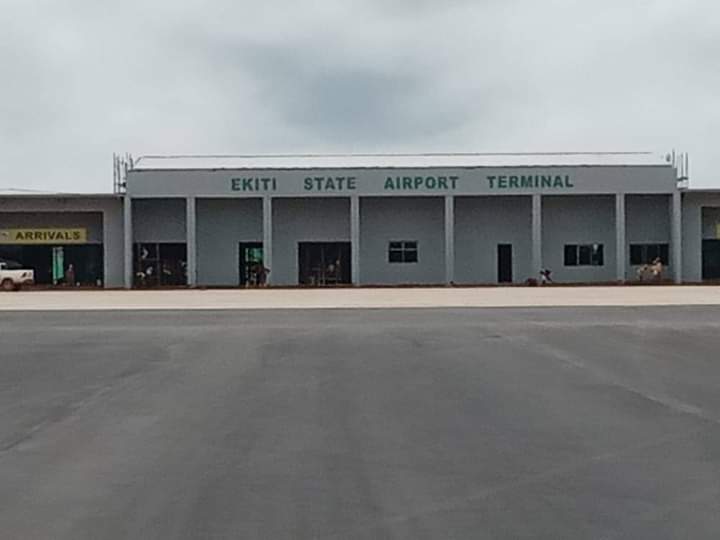
    As part of measures to ensure a seamless takeoff of the newly established Ekiti State Agro-Allied International Cargo Airport in Ado-Ekiti, the Nigerian Airspace Management Agency (NAMA), has signed a Memorandum of Understanding (MoU) with the Ekiti State Government. The MOU which was signed at the agency’s headquarters annex, Murtala Mohammed airport, Lagos, over the weekend attracted top officials of Ekiti state government as well as NAMA.

    In his welcome remarks at the event, the Managing Director of NAMA, Engr Farouk Ahmed Umar noted that the signing of the MOU or Service Level Agreement represented a mutual commitment to excellence and “a shared dedication to delivering an exceptional result,” as the MOU outlined a joint responsibility, expectation and standard for air traffic control services, adding that the epochmaking event served as a foundation for a partnership between NAMA and the Ekiti State Government, which according to him, would ensure that both parties worked together seamlessly and efficiently for the effective takeoff and operation of the airport.

    Engr Farouk who was represented by the NAMA Director of Legal Services and Company Secretary, Mrs Isemiuhonmon Rita Egbadon maintained that the MOU was more than a contract; “it is a symbol of action, cooperation and shared vision.” He described the signing of the document as “a pledge to uphold the highest standards of quality and performance by both parties, to foster open communication and transparency, to embrace credibility and adaptability in an ever-changing environment, given that aviation is a catalyst for the development of any economy.”

    “If we are able to uphold the tenets of this agreement, we would be able to reap the fruits of our labour. We shall prioritize customer satisfaction and success of this project. We are not just signing a contract. We are making a promise to each other and to our customers. Let us work together to achieve greatness and make this partnership a shining example of collaboration and excellence,” the NAMA boss said.   

    Also in her remarks, the Secretary to Ekiti State Government, Dr Habibat Adubiaro, who represented the state governor noted that the event marked a crucial moment as the state advanced towards enhancing the safety, efficiency, and reliability of airspace and air traffic management, particularly as the Ekiti State Agro-Allied International Cargo Airport in Ado-Ekiti was at the verge of full operation. She expressed optimism that the establishment of the cargo airport would boost tourism, facilitate smoother and safer air travel and subsequently contribute to economic growth, job creation, and improved connectivity for Ekiti State citizens.

     She described the partnership with NAMA as a testament to the shared commitment of both parties to advancing the development of aviation infrastructure and services in Nigeria.

    “The primary objective of this MoU is to foster a collaborative partnership that will lead to effective air traffic management systems and ensure the highest standards of safety for all airspace users. We aim to leverage NAMA’s expertise and resources to achieve these goals,” Adubiaro said. While assuring the agency of the commitment of the state to ensuring the successful implementation of the MoU, Dr Adubiaro reiterated that collaboration with NAMA would be guided by mutual respect and transparency.

  • Automation: NAMA Trains Personnel On Collaborative Procedures

    Automation: NAMA Trains Personnel On Collaborative Procedures

    The Nigerian Airspace Management Agency (NAMA), has held a three-day training workshop on Aeronautical Information Management and collaboration of procedures for top-level management staff of the agency.

    With participants drawn from the Aero-Comms and Aeronautical Information Services (AIS) departments of the agency across the country, the workshop which held in Lagos centred on the collaboration, harmonization and synergy among critical personnel of the agency, highlighting the importance of integrated procedures to enhance seamlessness and efficiency in the collection, processing, storage and dissemination of aeronautical data.

    In his remarks while declaring the workshop open, Managing Director of NAMA, Engr Ahmed Umar Farouk, noted that the training workshop had become imperative as the agency and the aviation industry in general had gone digital in most of their operations, processes and procedures. He therefore charged participants to “brace up for automation which has come to stay in NAMA.”

     The NAMA MD who was represented by the Director of Air Traffic Services, Mr John Tayo listed the benefits of collaboration between communication and information services integrated procedures to include ensuring implementation of real-time updates of critical data such as NOTAMs (Notice to Airmen) and weather reports; creating protocols for collaboration during emergencies to ensure rapid dissemination of vital information; and conducting joint training programs and simulation exercises to improve coordination and response times.

    He listed other benefits to include developing and maintaining Standard Operating Procedures (SOPs) that outline the specific roles and responsibilities of communication and information services personnel in various scenarios; ensuring that personnel are cross-trained to understand the workflows and challenges faced by their counterparts; developing automated systems for data transfer to minimize human error and enhance efficiency, among others.

    “Aero-Comms and AIS departments are the backbone of information management in NAMA given that without information and data, air traffic controllers cannot function, just as pilots cannot fly. The world has moved from analogue system into digital dissemination of Aeronautical Information hence the need for Aeronautical Information Management system which is strictly the responsibility of the two departments,”Engr Farouk said.   

  • NAMA Upgrades Surveillance Systems To Enhance Airspace Safety, Security

    NAMA Upgrades Surveillance Systems To Enhance Airspace Safety, Security

    In a bid to enhance the safety and security of the nation’s airspace, the Nigerian Airspace Management Agency (NAMA) has embarked on the upgrade of its surveillance infrastructure across the nation’s airports and other remote installations across the country. To this end, President Bola Ahmed Tinubu has approved an onsite visit to Spain by critical staff of the agency to inspect some of the facilities as well as engage technology solution providers to address security challenges as well upgrade the agency’s surveillance systems.

    The Managing Director of NAMA, Engr Ahmed Umar Farouk who made this disclosure while receiving a delegation from the Nigerian Air Force (NAF) at the agency’s corporate headquarters in Abuja noted that the Nigerian Air Force remained a valuable ally to the agency with regards to the safety and security of the nation’s airspace. He recalled that the collaboration between the two agencies over time had been critical to sustaining airspace safety and security in Nigeria. “NAMA handles civil operations, while the Air Force oversees security. Our close collaboration is vital for maintaining a safe and secure airspace,” the NAMA boss said.

    In his remarks, the leader of the NAF delegation, Air Vice Marshal Abubakar Abdulkadir stated that the Nigerian Air Force had recently enhanced its capabilities to secure the nation’s airspace with new platforms designed for national air defense and stationed with the Air Defense Group in Makurdi, stressing that the NAF had also completed its day training and was close to finishing night trainings, which would enable rapid response and interception of any intruders in the Nigerian airspace.

    He also shared an update on the NAF’s enhanced capabilities to monitor and identify all aircraft entering and exiting the Nigerian airspace, adding that improved collaboration and partnership between NAMA and the NAF would sustain the current security and safety in the nation’s airspace. AVM Abdulkadir described NAMA and NAF as “twin children of the same mother”, saying that NAF’s responsibility for airspace security complements NAMA’s role in airspace management.

    Joint training initiatives aimed at addressing the shortage of Air Traffic Controllers across the country were considered as the Nigerian Air Force training center in Kaduna which recently got accredited by the Nigerian Civil Aviation Authority (NCAA) would see at least 20 NAMA staff being trained annually.

  • NAMA, ASECNA sign MoU on Improved Airspace Coordination

    NAMA, ASECNA sign MoU on Improved Airspace Coordination

    In a bid to address challenges arising from the flow of air traffic between Flight Information Regions (FIRs), the Nigerian Airspace Management Agency (NAMA) has signed Letters of Agreement with the Agency for Aerial Navigation and Safety in Africa and Madagascar (ASECNA). The agreement, which was signed in Lagos at the end of a five-day coordination meeting with ASECNA officials from Lome and Cotonou sought to enhance air traffic coordination between the Lagos Area Control Centre (ACC) and Lome Area Control Centre as well as between Lagos ACC and Cotonou Approach Unit.

     Specified in the Letters of Agreement were procedures for separation of aircraft between the two ACCs in terms of radio frequencies, the point at which aircraft are transferred and altitudes for transfer of aircraft across the common boundaries. Also in the agreement were modalities for the coordination of air traffic along the newly created routes (UL255 and UN247) within Lome airspace terminating at POLTO.

     The ASECNA officials were assured that issues with coordination and data interchange equipment like Automatic Identification and Data Capture (AIDC) and Air Traffic Services Message Handling Services (AMHS) would soon be surmounted with the ongoing deployment of the new VISAT 10.02 network.

    The concept of Free Route Airspace (FRA) already in operation within Kano Flight Information Region (Nigeria) as well as its derivatives like increased airspace capacity; shorter travel time; reduced carbon emission, reduced operational costs to the operators and reduced workload for controllers and pilots was presented to the visitors for possible adoption and implementation.

    The visiting ASECNA team also inspected navigational facilities at the Murtala Mohammed International Airport, Lagos, like the Total Radar Coverage of Nigeria (TRACON) Site, control tower, mobile control tower at CENTREX, CAT III equipment as well as the newly installed Surface Movement Radar.

    Meanwhile, the Managing Director of NAMA, Engr Tayib Odunowo has expressed confidence that regional collaborations and synergy between adjacent FIRs were critical to the safety of the African sky. Odunowo who was represented at the signing of the Letters of Agreement with ASECNA by the General Manager, Air Traffic Control Operations, Mr. John Tayo said such collaborations would guarantee seamlessness of air traffic management as well as interoperability of Communication, Navigation and Surveillance / Air Traffic Management (CNS/ATM) systems among states on the African continent.  

  • NAMA moves to Implement Multilateration: Sensitizes Operators

    NAMA moves to Implement Multilateration: Sensitizes Operators

    Preparatory to the implementation of the Wide Area Multilateration (WAM) Surveillance Air Traffic Management System in the Gulf of Guinea, the Nigerian Airspace Management Agency (NAMA) has held a two-day sensitization workshop with stakeholders in Port Harcourt, Rivers State.

    The workshop which attracted participants such as airline operators, oil prospecting companies, the Nigerian Air Force, Nigerian Navy, NAMA engineers and air traffic controllers as well as other aviation agencies was aimed at sensitizing key stakeholders and regulatory authorities on the imperative of the project as well as the economic, security, operational and safety benefits accruable from its deployment and also extracting their buy-in and cooperation. The workshop also aimed at brainstorming and interacting with the provider of the service, users of the service and key stakeholders in order to come up with an appropriate architecture for the airspace and also evolve a system that would be efficient, safe and economical to all parties.   

    In his remarks at the forum, Acting Managing Director of NAMA, Matthew Lawrence Pwajok said the Multilateration project dates back to 2013 when a contract was awarded for the assessment of the traffic volume, complexity and architecture of the airspace in the Niger Delta, in view of the critical role of oil exploration in Nigeria and the crucial role of helicopter operations in support of oil exploration activities. He said the volume of helicopter operations in the Niger Delta had increased significantly within a very limited airspace bloc, given that helicopter operations are within very low altitude.

    According to Pwajok, the increased volume of flight operations, as well as airspace complexity, necessitated the quest for the provision of a dedicated communication, navigation and surveillance system for the safe, effective and efficient air traffic management of low-level helicopter operations in the Niger

    Delta Area of Nigeria in support of oil exploration activities. “The density of their operations, the rising number of heliports, helipads, helidecks and landing platforms around the area became very critical. Helicopters were crisscrossing each other and the mode of control within the area had been procedural and by visual flight rules (VFR). The recommendation of the assessment team was that the traffic volume was beyond flight by visual flight rules and also beyond procedural control. What we currently have can no longer sustain increased flight operations or guarantee efficiency, safety and security of flight operations within the Niger Delta area, therefore the provision of an automated system of surveillance, monitoring and control of flight operations through Multilateration became imperative,” he said.

    He expressed gratitude to the Federal Airports Authority of Nigeria (FAAN) for providing the agency the location for the Multilateration centre in Port Harcourt to control and coordinate the surveillance of the entire area, stressing that the reconstruction of the Port Harcourt MLAT centre had been completed, power and cooling systems already installed while the installation of transmitters and receivers is ongoing in 29 sites to cover the entire Niger Delta area.

    Pwajok disclosed that ahead of its commissioning by the end of the year or early next year, critical milestones in the project such as factory acceptance test and factory training for air traffic engineers and air traffic controllers had already been done in Czechoslovakia, adding that the equipment had been shipped to the country while installations are ongoing.

    He also noted that another key addition to the Multilateration system is the Unmanned Aircraft System Traffic Management (UTM) system to be used to provide surveillance for the monitoring and control of Remotely Piloted Aircraft Systems (RPAS) or drones. He said the inclusion of the UTM system in the project became imperative because of the equally significant number of unmanned aircraft (drones) operating in the same airspace bloc with manned aircraft and used by oil companies for pipeline monitoring, surveillance, security monitoring and inspection of helipads and other landing platforms.

    The NAMA boss listed the benefits of Multilateration including enhanced safety, efficiency and security of flight operations within the continental and oceanic airspace, just as he said it would enhance search and rescue in the oceanic airspace. He also said Multilateration would aid in monitoring the operation of ships as well as the search and rescue of ships in distress within the maritime area.

    Multilateration is a system that makes use of multiple remote sensors that pick signals from aircraft transponders and use them to determine the position of an aircraft by calculating the Time Difference of Arrival (TDOA) of the signals to the sensors. The system provides higher accuracy, greater update rates, better coverage and improved reliability at a much lower cost. MLAT uses small unmanned ground stations placed strategically around an airport or terminal or remote locations to provide constant and automatic air traffic surveillance. Like Secondary Surveillance Radar (SSR), Multilateration is classified as a cooperative dependent surveillance system: the aircraft has to cooperate by switching on its onboard transponder.

  • NATCA solicits Confirmation of Pwajok, inducted Newly rated ATCOs

    The Nigerian Air Traffic Controllers’ Association (NATCA) has entreated the Honourable Minster of Aviation, Senator Hadi Sirika to accelerate the confirmation of the Actg. Managing Director of NAMA, Mr. Matthew Lawrence Pwajok as the substantive Managing Director/Chief executive of the agency.

    Speaking during his welcome address at the association’s 51st annual general meeting/conference which held in Ibadan, the Oyo State capital, the President of NATCA, Abayomi Agoro said his association was impressed by the performance of the new management team in NAMA led by Pwajok and put in place by Sirika, stressing that “we speak for majority of our members in soliciting that the Honourable Minister of Aviation graciously extend his usual Midas touch in seeking the confirmation of Mr Matthew Lawrence Pwajok as the substantive Managing Director/Chief Executive of NAMA.”

    Agoro who lauded the new management team under Pwajok for the progress being made in the upgrade of navigational infrastructure across the country noted that “the Air Traffic Controller remained the centerpiece in the changes and improvements being made in NAMA with the introduction of new procedures and even the deployment of newer solutions.”

    Earlier in his remarks, the Actg. Managing Director, Mr Matthew Lawrence Pwajok said as part of management’s response to the “unacceptable increase in mortality rate among Air Traffic Controllers” and as a measure to “arrest incidences of fatal health issues among controllers,” the agency recently implemented the health insurance scheme for workers just as it was committed to increasing the medical allowances of NATCA members.

    Mr Pwajok who was represented by the Actg. Director of Operations, Mr Haske Jibrin revealed that despite the challenging fiscal environment, management had conducted more professional, operational and specialized trainings for controllers lately. He recalled that 16 Air Traffic Controllers (ATCOs) were trained in Basic Procedure Design and Airspace Planning in Cairo, Egypt in the first quarter of 2022, just as 12 ATCOs were also trained in Nairobi, Kenya in Search and Rescue Mission Operation at about the same time, and another 8 ATCOs who were in Czech Republic for the Multilateration (MLAT) operational training much earlier in the year (2022). The NAMA boss said all these trainings were part of the requirements for the development of capacity for the production of maps and charts including Visual Flight Rules (VFR) charts, in an effort to achieve a seamless conduct of the ICAO Universal Oversight Audit Programme (USOAP).

    The Actg. MD also noted that as part of the agency’s strategic plan to ensure total voice and data communication coverage for the oceanic and remote continental parts of the Nigerian airspace, as well as sequential management of arrival and departure of air traffic at terminal phase of flight, NAMA had trained 16 ATCOs in the Phase II of Controller-Pilot Data Link Communication (CPDLC) in Paris, France while an additional 12  are to undergo Search and Rescue Mission Coordinators’ Training course in Nairobi, Kenya.

    Meanwhile, a total of 9 newly rated and licensed Air Traffic Controllers have been inducted by NATCA as full-fledged members of the association. They include 5 NAMA staff, 3 Army officers (to provide air traffic services at the air wing of the Nigerian Army) and 1 Air Force officer. The induction was sequel to the Basic Aerodrome and Approach training as well as flying experience at the Nigerian College of Aviation Technology, (NCAT) Zaria. They also underwent on-the-job (OJT) for 6 months at major airports after which they sat for Aerodrome and Approach rating examination conducted by the Nigerian Civil Aviation Authority (NCAA) and were all successful.

    Administering the induction, the President of NATCA, Abayomi Agoro charged them to be of good conduct as “ambassadors of our reputable association,” stressing that NATCA as an umbrella body of Air Traffic Controllers in Nigeria was poised to see to the welfare and wellbeing of members.

  • All Nigerian Govt Airports have Approach and Landing aids -NAMA

    All Nigerian Govt Airports have Approach and Landing aids -NAMA

    The Nigerian Airspace Management Agency (NAMA) has affirmed that all Federal and State Government owned airports in the country have approach and landing navigational aids, as well as Satellite Based Performance Based Navigation procedures that can enable aircraft to operate at any time of the day in these airports. The Ag. Managing Director of NAMA, Matthew Lawrence Pwajok made this revelation in Lagos at the 26th annual conference of the League of Airport and Aviation Correspondents (LAAC), which held at the Sheraton Hotels and Suites, Ikeja.

    Mr. Pwajok, one of the panel discussants, noted that the idea of tagging some airports in the country as “sunrise” or “sunset airports” was misplaced, “given that almost all airports in Nigeria have instrument landing facilities for approach and landing, meaning they are operating based on Instrument Flight Rules (IFR) and not based on Visual Flight Rules (VFR) where they pilots are required to visually approach and land within Sunrise to Sunset time.”  According to Pwajok, “apart from one or two private aerodromes, all federal and state government-owned airports managed by NAMA are equipped with Instrument Landing System (ILS), except where they are temporarily unserviceable or the Runway and Approach lights are unserviceable, but nevertheless you cannot refer to them as sunrise or sunset airports.”

    Speaking further, the NAMA boss noted that the agency had invested heavily on navigational facilities more than any other facilities, adding that, “apart from Owerri and Calabar where the agency is working to install Category II Instrument Landing systems (CAT II ILS), and Jalingo that has no instrument landing system for now, basically all airports in Nigeria have a minimum of CAT II ILS, most of which were installed brand new, so there is nothing like obsolete navigational facilities.”

    Pwajok said in a bid to tackle visibility issues in some airports during adverse weather, the agency commenced the implementation of Category III ILS in Abuja and Lagos airports while those of Katsina, Kano and Port Harcourt were being installed and would be ready before the end of 2022. He noted that despite the high cost of diesel, the agency had always granted extended services to airlines who made such requests and will continue to do so. He also assured airlines that search and rescue services are also provided by NAMA during the hours of extension as the agency collaborates with sister agencies, National Emergency Management Agency (NEMA), and other critical stakeholders, saying that as long as an airport remained open, search and rescue will be available for the period of operation.

    On how the agency was managing the single runway operation in Lagos as a result of ongoing repairs at runway 18 Left, Pwajok said the agency developed contingency procedures for a single runway operation as against the two runways, and that the installation of lighting at the runway would complement the CAT II ILS installed there in order to bring about 24 hours operation and also serve as backup for the international runway (18 Right). “It is very important that we address this issue of domestic runway 18 Left which has been in the dark for 20 years. It is a difficult thing for the airlines, pilots and air traffic controllers, but we are coping with it, knowing that that is the only way we can increase operating capacity of the airport when we have two functional runways,”Pwajok said.  

    The NAMA MD also informed the gathering that NAMA is a 100% self-funded government agency providing air navigation services at federal, state and private airports in Nigeria at increasing cost and is also required to remit 25% of her gross revenue to the federation account, stating that it is uneconomical for the agency to operate beyond 12 hours daily at a domestic airport just for a single flight. He, therefore, assured airline operators that NAMA has and would always grant an extension of operational hours when the need arises. He however assured that the agency in collaboration with sister agencies, will be willing to extend the operational hours of busy airports like Enugu and Benin.

    Earlier in his opening remarks, the chairman of LAAC, Olusegun Koiki decried the high cost of aviation fuel and foreign exchange which he said had precipitated the vulnerability of airlines in Nigeria. This year’s LAAC conference with the theme: Sunset Airports: Economic and Safety Implications attracted industry bigwigs, investors, airlines, and stakeholders who all brainstormed on the way forward for the aviation sector.

  • Non-Automation of AIS attributed to Contract flaws- Gusau

    Non-Automation of AIS attributed to Contract flaws- Gusau

    The non-automation of the Aeronautical information Services, AIS, System has been attributed to flaws from the beginning of the signing of the contract.

    This is just as personnel of the AIS celebrates the World AIS Day  with theme, “Challenges of COVID -19 on Aeronautical Information Management Operations (AIM OPS)”, call for more personal protective equipment as they are at risk of the coronavirus pandemic.

    The General Manager, Nigeria Airspace Management Agency, NAMA in charge of AIS Nigeria, Kabir Yahaya Gusau in a chat with reporters in Lagos said, the AIS automation had taken too long and there maybe a clause not included in the contract that has delayed the completion of the project.

    He said, it was now left for the contractor and NAMA who represents the FG to sit down and look at the contract again to identify areas of  flaws and make amends, adding that if this was not done soon, the AIS automation may never see the light of the day.

    “Our system must be automated now with immediate effect, when the system is automated it is will better promote efficiency. I think there has been a mistake from the beginning maybe when we were signing the contract there may have been something that was not included, so there is need for the contractors and the FG to sit down
    together and look at that contract again so that wherever the mistakes are, we have to rectify it, if not, I don’t see this thing coming in the near future.”

    He however noted that there had been a meeting between the Management of NAMA and other vendors to clear any area of misinformation, adding that a Committee was also being constituted in this regard.

    “Some countries that started before us have even finished and they are now talking about other things, please the FG should come into this, lets do this thing and forget about it. I don’t think paucity is responsible for the delay because nearly every year the FG put this in the budget I believe there must be a gap somewhere, yes, it is misinformation. In the meeting we had yesterday, we were able to discover a lot of things, the vendor agreed everything will be done within the shortest period of time and there is another thing they will be expecting from NAMA and we will have a committee and we are trying to work toward that and I also believe the vendor has some responsibility toward that and this time around we may
    actually achieve our aim very soon.”

    “In the meeting I had with the vendor and the Director Operations, I think we are getting a way forward, I think there is a misinformation along the line but the meeting of yesterday, I think we have found a way how we can continue, I believe now we understand where we are going.”

    On the stage the automation project was, Guasau said, “it was difficult to explain the actual stage for now, to be sincere with you, but am calling on the FG to make sure this thing become a reality as soon as possible because this thing is not only AIS, they say AIS but this thing comprise every aspect of aviation so by the time this thing become a reality it is not only AIS that benefits, virtual everywhere including NEMA, so everything is to be put together, it is a big project.”

    On the challenges faced due to the Covid-19 in the operations of the AIS/AIM personnel, Guasau said they need more protective equipment for protection against the virus.

    He said the Federal government should come to their aid, as their office needed to be well equipped to do their job without fear, adding that if the system was automated, there would not be apprehension as they would not be in contact with anyone in the dissemination of their information.

    “There is need for them to equip our offices so that we can protect ourselves, we have to protect ourselves before doing the job, because we don’t even know who is carrying the virus, if there is anybody who is at risk this period it is the AIS personnel, we are calling on the
    Federal Government to come to our aid.”

    Gusau also called on the government,  to also consider making available for the AIS personnel, “the way they are giving priority to the health workers, people are only talking about health workers, AIS officers should also be talked about because we are also like health workers, the health workers have PPE but don’t have anything, so there is need for the Federal Government to come to our aid and this allowance they are giving health workers, we should be given, so am calling on the FG to do that please and please and it is a matter of urgency.”

    “And there is also need for them to equip our offices because there is need to protect ourselves fast, we have to protect ourselves before doing the job

  • Women Aviators donate items to NAMA

    Women Aviators donate items to NAMA

    In a bid to contribute towards flattening the Coronavirus curve especially in the aviation sector, professional women aviators in the industry under the aegis of International Aviation Women’s Association (IAWA) in Nigeria have donated face masks and hand sanitizers to the Nigerian Airspace management Agency (NAMA).

    Speaking while presenting the items on behalf of IAWA at the agency’s headquarters in Lagos, NAMA Legal Adviser, Dr Anastasia Gbem said as working mothers who have put in several years in different areas of specialization, their intervention was inspired by the fact that the health of personnel in the aviation industry remained central to the growth and advancement of the industry itself.

    Gbem also noted that as a global organization of professional women advancing their  careers and promoting Nextgen professionals, “IAWA has a strong affiliation and has been networking with the International Civil Aviation Organization (ICAO), International Air Transport Association (IATA), Boeing and other critical stakeholders in the sector towards moving aviation forward.”   

    Receiving the items on behalf of the agency, Managing Director of NAMA, Capt. Fola Akinkuotu recalled that from the inception of aviation, the contribution of women in the sector had been legendary, stressing that over time, women had broken several barriers and made useful impacts and contributions which have remained invaluable to the growth and development of the industry. While appreciating the gesture on behalf of management, the NAMA boss assured that the items would be judiciously used for the benefit of staff in the different directorates and departments of the agency.

  • COVID-19: NAMA  MD cautions Staff on Safety Procedures

    COVID-19: NAMA  MD cautions Staff on Safety Procedures

    Ahead of the partial relaxation of the Covid-19 lockdown billed to commence on Monday, staff of the Nigerian Airspace Management Agency (NAMA) have been tasked to ensure full compliance with the directives and safety guidelines by the Federal Government and the Nigeria Centre for Disease Control (NCDC) on COVID-.19 preventive measures, including social distancing, regular washing of and/ or sanitizing of hands and wearing of face mask.

    Managing Director of NAMA, Capt. Fola Akinkuotu who stated this in a message to staff of the agency noted that “while the health and wellbeing of workers is of utmost importance to management, a lot needs to be done by staff themselves to ensure they remain safe in the face of the Covid-19 pandemic which is still very much in our midst.”

    He assured workers that the agency had put in place procedures and measures that would guarantee their safety in the work place, stressing that “the battle against Covid-19 is a collective one and we must all join hands with the Federal Government to triumph at the end of the day.”  

  • NAMA test runs ILS at Lagos Airport

    NAMA test runs ILS at Lagos Airport

    The Nigerian Airspace Management Agency (NAMA) has commenced the trial run of the newly installed Category III Instrument Landing System (ILS) at Runway 18 Right, Murtala Mohammed International Airport, Lagos.

    The exercise which started  on Tuesday indicated that the equipment is fully operational on test basis, even as all the ILS components – Localizer, Glide Slope and Distance Measuring Equipment propagated signals optimally.

    Speaking at the commencement of the test run, Managing Director of NAMA, Capt. Fola Akinkuotu said the alignment of the facility had already been done by the engineers.

    This, according to him, was to ensure that the equipment aligned with the centre line of the runway and also that it is aligned with the descent path that will be comfortable to arrive the threshold at a good landing height to make a normal landing.

    “In a couple of weeks, we will bring a calibration aircraft to fly in and certify that the equipment is good to go,” he said.

    According to the timelines, CAT III ILS would be available at both Lagos and Abuja airports by the third week of month.

    Explaining the rationale for deploying the facility, Akinkuotu said the agency was responding to the demands and clamour by airlines for better navigational facilities in Nigeria.

    “The CAT II ILSs we have right now are 800 meters visibility.

    “With the CAT III system you will be able to come down lower and when you are closer to the runway you will be able to see it better. A CAT III operation is a precision approach at lower than CAT II minima.

    “A category III A approach is a precision instrument approach and landing with no decision height or a decision height lower than 100ft (30m) and a runway visual range not less than 700ft (200m),” Akinkuotu explained.