Tag: Uganda

  • Healthgarde to host sales heroes, announce new ‘Star of Africa’ in Lagos

    Healthgarde to host sales heroes, announce new ‘Star of Africa’ in Lagos

    Wellness and multilevel marketing giant, Healthgarde International, is revving up for its 2024 convention this weekend in Lagos, Nigeria and plans to celebrate its high-achieving sales heroes with pomp and pageantry.

    Previewing highlights of the convention in a media statement issued February 14, the Chief Executive Officer, Healthgarde International, Nneka Nwarueze, said: “We will recognize and celebrate our top achievers whose commitment and sales drive continue to give our high quality health products the marketing edge.

    “We will be crowning a new ‘Healthgarde Star of Africa’ as well as launch a new product that we are introducing to the market at the Lagos convention. At Healthgarde International, our goal is to maintain a thriving direct selling company developed in Africa by Africans for Africa. Our passion is to keep making a difference in people’s lives by creating wealth through sustained wellness” Nwarueze said.

    South Africa-based Group Chief Operating Officer, Healthgarde International, Lovelyn Bassey, who arrived today ahead of the convention, reviewed Healthgarde’s 2023 business strides for health journalists, and said: “Our products have deepened the markets in a few more countries, including Botswana.

    “We are also happy to report that quite a few Healthgarde consultants from Nigeria qualified and enjoyed a well deserved, all expenses paid five-star holiday to South Africa last year, while some others won impressive cash prizes. Our 2024 celebration of excellence this Saturday, February 17 will be very colourful and exciting too,” Bassey said. 

    Healthgarde Nigeria has an active base of over 12,000 distributors and in Southern Africa, over 20,000 active distributors. Its business network and networth is spread across the United States, Nigeria, South Africa, Namibia, Lesotho, Swaziland, Ghana, Uganda and Botswana, and is still growing.

  • Feature: Unravelling African network security trends

    Feature: Unravelling African network security trends

    The fear of cyber incidents has topped the Allianz Risk Barometer 2024 list as the most important business risk for the third consecutive year. Voted into the number one position by several countries across Africa, including Kenya, Mauritius, Nigeria and Uganda, it’s clear that cybersecurity prioritisation remains critical for many businesses.

    These concerns apply to companies of all sizes, across all industries and in every country, states Mark Campbell, principal sales engineer at NETSCOUT, adding that in today’s digitally connected world, where organisations rely heavily on networks for their day-to-day operations, cyberthreats and attacks are a constant concern, particularly considering their ever-evolving sophistication.

    The crucial role of network-based security

    According to Campbell, network-based security is the lynchpin that binds a business’s devices, servers, applications and users together. “The importance of network security cannot be overstated,” he explains. “For companies across the globe, with African organisations being no exception, the network serves as the one constant medium that holds the ‘truth’. 

    “And despite cybercriminals’ attempts to disable various security controls, like antivirus measures or endpoint security, for instance, the network remains the unavoidable pathway for bad actors. They must traverse the network to perform their reconnaissance, execute their exploits of ill intent, and exfiltrate data.

    “Looking at it from this perspective, you could say that the network sees all. Any deviation from the norm can be observed on the network, and zero-day activity can be recorded and interrogated by using network packet data. There is simply no way to hide or expunge your network traffic footprint, making it a critical component in cybersecurity today.”

    Crafting a tailored network security policy

    Campbell applauds the growing adoption of zero-trust concepts in African businesses, but emphasises the need for a customised approach, advocating for a step-by-step process to be followed. 

    “Organisations should start with defining their critical assets, next assessing associated risks, and subsequently investigating the potential impact of data loss on the company. 

    “Then, a bespoke network security policy, striking a balance between disruption and risk mitigation, is crucial. The research conducted beforehand will dictate what is applicable for your particular organisation, and continuous monitoring, facilitated by packet-based network security systems, becomes imperative to measure compliance and identify gaps.”

    Layered security: a holistic approach

    Drawing a parallel between layered security and your health, Campbell compares the importance of taking care of yourself in a holistic way, for instance exercising, eating well and taking vitamins, with that of addressing multiple facets of cybersecurity simultaneously, in order to gain positive results.

    He warns against neglecting any single area, emphasising the need for comprehensive coverage, from network intrusion, device security, software management, endpoint and perimeter protection, to identity management and privileges. 

    “It’s critical that organisations look at all areas of cybersecurity, at all times. Failure to do so might expose a weakness that could then be found and exploited by an attacker. This can be frustrating for businesses – and there is no ‘silver bullet’ to avoid all breaches. 

    “Securing enterprise networks can be a formidable challenge, making layered security not only a strategic choice but an absolute necessity when it comes to safeguarding the network against potential weaknesses that might be exploited,” he concludes.

  • Important Milestone Reached in Africa: Over 15 Communication Organisations Have Joined the Worldwide Communication Mobilization for a Healthier World

    Important Milestone Reached in Africa: Over 15 Communication Organisations Have Joined the Worldwide Communication Mobilization for a Healthier World

    INTERDECOM is pleased to announce that an important milestone has been reached in Africa in the global mobilization of communicators for a healthier world, as over 15 communication organisations are now signatories of the International Declaration of Communication Professionals and Researchers for a Healthier, Viable, Better World. Among them, national and regional associations, research chairs, educational institutions, media, information platforms, consulting groups.

    Gathering professional and academic groups committed to using their role and expertise to fulfill the vision of a future that protects nature and celebrates our humanity, this crucial pledge unites groups from different parts of Africa: Kenya, Tanzania, Southern Africa, Senegal, Democratic Republic of the Congo, Tunisia, Burundi, Malawi, Maroc, Uganda.

    “This large mobilization of communicators in Africa reveals that unity in communication is increasingly claimed in their ranks as it is everywhere around the globe,” said Solange Tremblay, president of INTERDECOM. Indeed, since its launch in January 2021 in the face of the planetary threats of our time, the Declaration has been endorsed by more than 150 organisations in over 45 countries, including over 15 major international organisations. “This worldwide surge of solidarity demonstrates the strength and power of a
    ‘one voice’ commitment in communication at a time of major global uncertainties and vulnerabilities affecting our societies in all parts of the world,” she added.

    Some Signatories in Africa
     Public Relations Society of Kenya (PRSK)
     Public Relations Society of Tanzania (PRST)
     Public Relations Institute of Southern Africa (PRISA)
     East African Communication Association (EACA)
     Public Relations Association of Uganda (PRAU)
     Association Marocaine du Marketing & de la Communication (AMMC)
     UNESCO Chair on Multimodal Learning and Open Educational Resources – South Africa
     UNESCO Chair on Community Radio for Agricultural Education, Rongo University – Kenya
     Institut Supérieur d’Informatique & Département de Communication Numérique – RDC
     Université Lumière de Bujumbura & Faculté des sciences de la communication – Burundi
     Centre d’études des sciences et techniques de l’information, UCAD – Sénégal
     Africa Communications Week – Global
     BURUNDI ECO – Burundi
     International Network for equal Gender Opportunities/INGOMAG – Burundi

    All professional and scientific communication organisations can join this wave of unity for a healthier world by signing the Declaration on the online form. More information about the Declaration, its 9 languages, its impacts, and the signatories here.

  • Access Bank to Acquire Majority Stake in Finance Trust Bank, Targets Financial Inclusion, Empowerment, and Innovation in Uganda

    Access Bank to Acquire Majority Stake in Finance Trust Bank, Targets Financial Inclusion, Empowerment, and Innovation in Uganda

    Finance Trust Bank (“FTB”) and Access Bank PLC (“Access Bank”) have announced the signing of a definitive agreement for Access Bank’s equity investment into FTB. The deal will also see Access Bank concurrently acquiring the shares currently held by FTB’s Institutional Shareholders who have sought to exit to a strategic, long-term shareholder.

    The transaction is subject to regulatory approvals by the Central Bank of Nigeria and Bank of Uganda, and is expected to close in the first half of 2024, following the fulfilment of customary conditions precedent. Following the anticipated closing of the transaction, Access Bank would own an estimated 80% shareholding in FTB.

    Coming at a time when commercial banks in Uganda are looking to increase their capital, this strategic acquisition presents an opportunity for Access Bank to partner with FTB and its stakeholders to create more significant opportunities for financial inclusion, product diversification, and, ultimately, greater customer-centricity. Access Bank’s presence in over 20 countries globally presents a robust platform that FTB’s customers can leverage to boost trade opportunities with the rest of the world.

    Commenting on the Transaction, Roosevelt Ogbonna, Managing Director of Access Bank PLC said, “The prospective acquisition of majority equity stake in Finance Trust Bank marks an important milestone for Access Bank as we strengthen our regional presence in the East African Community trade region. This also moves us closer to realizing our five-year strategic plan through continued expansion to achieve scaled benefits across key African markets. Beyond our expansion goals, this deal will enable the Bank to deepen its community and women impact initiatives, as we will be building on FTB’s mission to effectively deliver innovative financial solutions to customers and stakeholders, especially women. Our storied history and experience in gender initiatives and women empowerment will greatly benefit FTB’s current deposit and loan portfolio – which currently comprises about 40% women – and the larger Ugandan community.”

    Annet Nakawunde Mulindwa, Managing Director of Finance Trust Bank said, “Finance Trust Bank is thrilled to announce this transformative partnership with Access Bank PLC, as it marks a pivotal moment in our growth journey and presents an extraordinary opportunity for our valued customers and stakeholders. This strategic alliance will fortify our position in the financial landscape and enable us to offer our customers a broader array of innovative products and services.”

    “As we embark on this journey, we extend our heartfelt appreciation to our loyal customers, dedicated employees, and valued shareholders for their unwavering support. Leveraging Access Bank’s global presence and expertise, we look forward to reaching new heights and continuing to serve as a trusted financial partner to our customers and communities across Uganda,” she added.

    The transaction will enable both banks to merge their technological resources, providing Finance Trust Bank customers with access to secure and diversified digital platforms for seamless transactions and banking services provided by Access Bank. Furthermore, FTB would be able to leverage Access Bank’s expertise in building deep sector relevance across several industries and tap into revenue opportunities across new customer segments which cut across business and retail banking.

    Access Bank Plc remains steadfast in its commitment to driving sustainable growth and creating exceptional value for its stakeholders. The acquisition of FTB stands as a testament to the Bank’s unwavering dedication to expanding its footprint and supporting the economic progress across East Africa

  • Stears Unveils Comprehensive Africa 2024 Outlook: East Africa Leads Growth, Economic Challenges Persist in Nigeria & Kenya

    Stears Unveils Comprehensive Africa 2024 Outlook: East Africa Leads Growth, Economic Challenges Persist in Nigeria & Kenya

    Lingering Economic Challenges to Persist in Nigeria & Kenya, East Africa Leads Growth – Stears 2024 Africa Outlook

    Stears, a leading economic analysis and data-driven insights provider, has unveiled its much-anticipated 2024 African Outlook Report, delivering nuanced insights into the continent’s economic landscape. Contrary to broad generalisations, the report sheds light on the diverse growth trajectories across Africa, with East Africa emerging as a regional powerhouse.

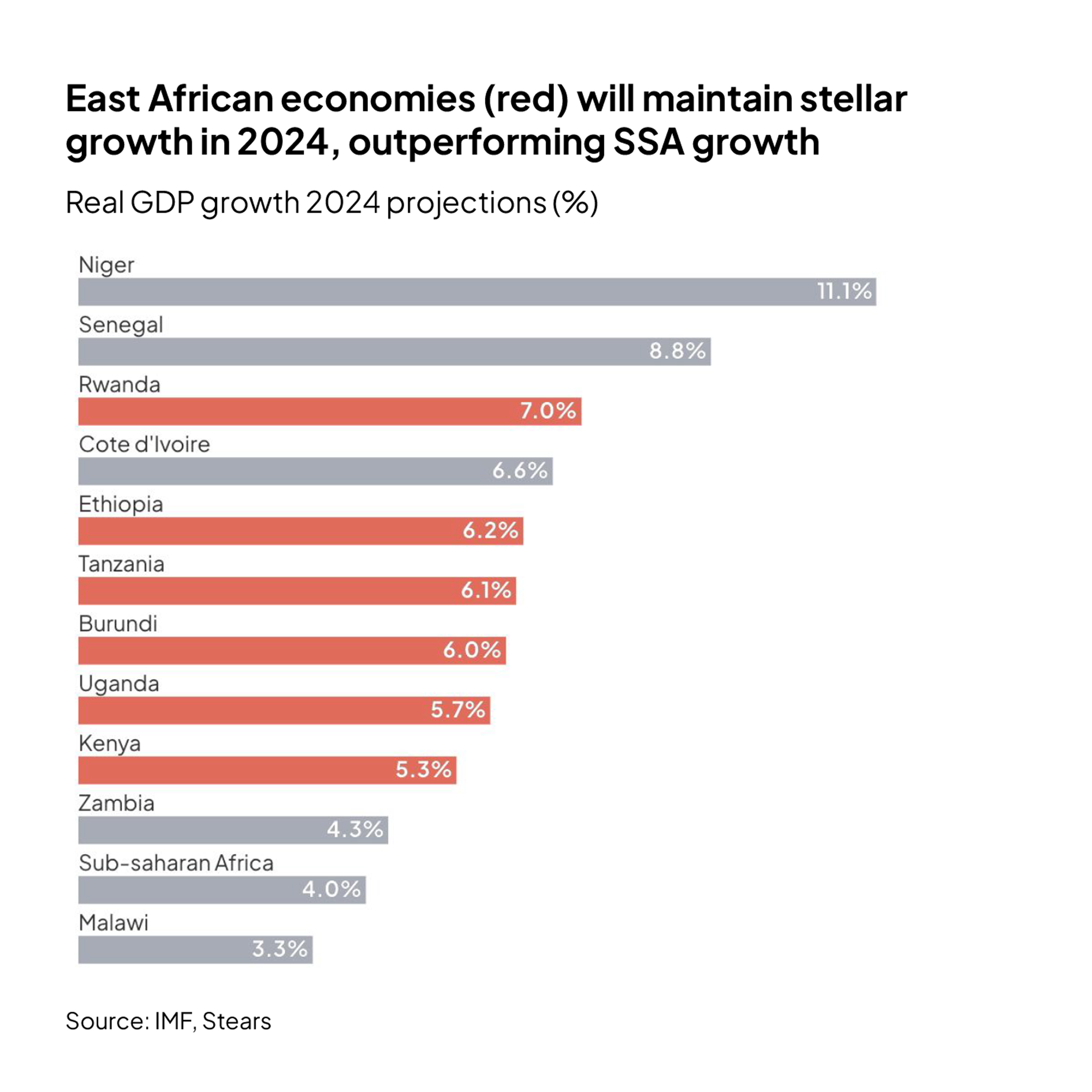
    In 2024, Africa’s overall growth is forecasted at 4.0%, a notable increase from 3.3% in 2023, positioning it as the second-highest globally, trailing only Asia (4.8%). East Africa takes centre stage in this growth narrative, exhibiting consistently higher growth rates than the rest of the continent. Rwanda, Tanzania, Uganda, and Kenya are identified as key drivers, collectively contributing significantly to the region’s economic resurgence.

    “East Africa’s growth is propelled by dynamic sectors such as natural resources, transportation, tourism, and agriculture. Significantly, there is potential for further acceleration due to increased investment from Gulf countries. These developments are shaping East Africa into a model region for economic resilience and diversification,” says Fadekemi Abiru, Head of Insights at Stears. Notably, South Africa, Egypt, and Nigeria, considered economic giants, are poised for growth rates below the regional average, emphasising the importance of recognising and navigating the diverse economic landscapes that exist within the continent.

    Stears’ 2024 Outlook further delves into key African countries, specifically Kenya and Nigeria, projecting persisting economic challenges for both nations. The macroeconomic analysis for Kenya anticipates persistent currency depreciation and inflationary pressures.  The 2024 Africa Outlook Report highlights that inflation averaged 7.8% in 2023, with a nuanced forecast ranging between 6% and 7.4% for 2024. This aligns with the Central Bank of Kenya’s (CBK) target range of 5±2.5%, reflecting a global trend targeting enhanced price stability.

    Dumebi Oluwole, Senior Economist at Stears, underscores the significance of inflation as a barometer of economic health and advocates for the urgent need to address the persistent challenge of currency depreciation. The report reveals a closer alignment of the Kenyan Shilling (KES) to its fair value, shedding light on the delicate balance between inflation dynamics and investor attractiveness.

    Nevertheless, Kenya’s GDP per capita stands 30% above the Sub-Saharan Africa average, signalling increased consumer spending and positioning the country as a significant market. The report highlights the potential for further GDP per capita growth, primarily through improved job creation in high-value sectors like manufacturing and services.

    Simultaneously, the 2024 African Outlook Report delves into Nigeria’s macroeconomic landscape, revealing a formidable challenge in the form of a high headline inflation rate, currently at 28.2%. Stears projects an average annual inflation rate ranging from 27.59% to 31.85% for 2024, necessitating proactive measures for economic stability.

    Dumebi Oluwole explains, “The elimination of petrol subsidies has significantly heightened the cost of living for consumers, leading to an overall uptick in inflation. Coupled with the devaluation of the naira, this has precipitated higher exchange rates, complicating the economic landscape for both consumers and businesses.”

    Stears emphasises the need for strategic interventions to enhance liquidity and stabilise the exchange rate, highlighting the importance of collaborative initiatives between the government, regulatory bodies, and the private sector for sustained economic growth.

    Yvette Dimiri, Director at Stears, articulates the vision behind the report, stating, “Our 2024 African Outlook Report reflects Stears’ commitment to providing data-driven insights that transcend conventional narratives. As Africa navigates its course in the global economic landscape, understanding distinctive growth trajectories and leveraging regional strengths will be key.”

    For more detailed information, download the free executive summary here: https://apo-opa.co/3tYE7Jm.

  • Feature- The University Degree Saga: Changing The Nigeria Academic Narrative

    Feature- The University Degree Saga: Changing The Nigeria Academic Narrative

    By Olutayo Irantiola

    The unfolding university degree saga in Nigeria has brought to the fore the need for our country to look inward and strengthen her academic heritage. It is pretty unfortunate where we have found ourselves as a country. I am not a beneficiary of the heydays when university students ate chicken on Sundays, but the system has continued to nosedive year in and year out.

    It is getting to a point where the federal government needs to evaluate its students across the globe so that we can effectively understand our situation. What do people want from the Nigerian educational system to ascertain where we are getting it wrong? This brings to mind the number of students who are “exiled” so that they can get globally competitive certificates. In 2022 and 2023 respectively, Nigerian students have experienced war in Sudan, Russia and Ukraine.

    One of the most disheartening things about our tertiary institutions is that despite passing the West African Examination Council Nigeria (WASC), Joint Admission Matriculation Board Examinations, and Post-JAMB of the various institutions, a student is still not guaranteed admission for their course of choice and even the university of choice. Parents, students, relatives and even associates become lobbyists in the scramble for admission; seeking a lecturer to help follow up and some other humbling experience that demerits competence. All these, I suspect gave rise to seeking admission in neighbouring countries.

    With a burgeoning youthful population, there is a need for the government to enlarge the capacity of the various institutions, but we keep tightening the admission measures as typified above. We cannot continue to allot admission quotas to institutions every session and expect parents who do not know anyone to keep their children at home for years while waiting for admission.

    Until recently, first-class degrees were rare in Federal and State Universities because many lecturers believed that God was the only one who owned first-class while the lecturer owned second-class upper degrees, and students could jostle second-class lower and third-class degrees. Whereas the labour market had labelled students with such degrees as “half-baked and unemployable”. All these made parents get loans to train their children in all these mushroom institutions in neighbouring countries.

    Aside from the deep-pocket Nigerians who can afford to send their children to Ivy League universities in Europe and America, people are looking for ways in which their wards will save years in the university due to the incessant strikes that last many months. Meanwhile, the government and the academic workforce have little or nothing to lose at the expense of the students’ lives. How long will Nigerian students have a timeline for completing a bachelor’s degree programme?

    Another issue we have as a country is the conversion of all tertiary levels of education to universities. No institution trains teachers again; it is now a university; no institution trains technicians again, and everyone wants to become an engineer. People without a university education cannot go beyond certain levels in the Nigerian Civil Service, amongst other limitations we place on our nationals. Then, people can troop into another country to get a university degree of any type. This unrealistic demand of society has pushed students out of the country.

    It might be a bitter pill to swallow, but people will want to go for any form of education, and the recent increase in fees paid in Nigerian tertiary institutions is not encouraging. Truly, the government is doing everything to reduce subsidy across the board, but Nigerians cannot see the additional value to the students. People will only go for a shortcut to beat the system as well.

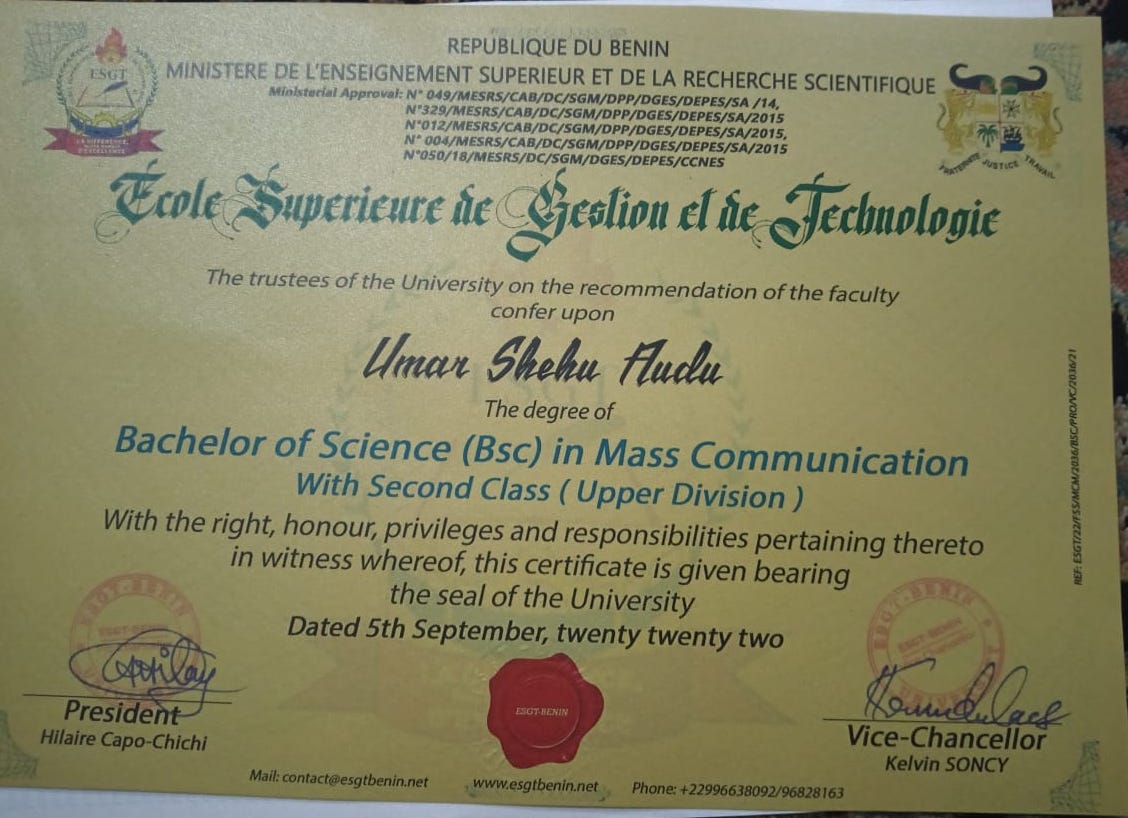
    There is a growing phenomenon now, Nigerians are gunning for honorary doctorate degrees, and all of these degrees are coming from the same institutions that the Ministry of Education is suspending the accreditation and evaluation of degree certificates from in Benin Republic, Togo, Uganda, Kenya and Niger Republic. Do we need to wait for a crisis to break out before we take the appropriate steps?

    I am not justifying wrongs, but it is a charge for the government and academic leaders to wake up from their age-long slumber; they need to find ways of redeeming the educational image of the country and overhauling the educational sector. A quote by the late sage, Chief Obafemi Awolowo, “To attain the goals of economic freedom and prosperity, Nigeria must do certain things as a matter of urgency and priority. It must provide free education at all levels and free health facilities for the masses of its citizens”. If it is not free now, we need to get it right if we will stop falling to the tricks being paid on Nigerians by other countries in our search for certificates.

    Olutayo Irantiola, a Lagos-based PR Consultant, Playwright and Biographer, blogs on www.peodavies.com

  • Nigerian independent Oranto Petroleum extends its Ugandan exploration licenses

    Nigerian independent Oranto Petroleum extends its Ugandan exploration licenses

    Oranto signed this current extension and committed to maximize the additional time granted and ensure a successful outcome

    Oranto Petroleum, a Nigerian independent energy company founded by Prince Arthur Eze has, on 22 December 2023, been granted a two-year exploration license extension to its Ngassa Deep and Ngassa Shallow exploration contract areas in Uganda. This extension allows Oranto to drill an exploration well and an appraisal well, depending on the success of the exploration well.

    In 2017, Oranto was granted two petroleum exploration licenses for the Ngassa Deep and Ngassa Shallow contract areas by the Ministry of Energy and Mineral Development in Uganda.

    Oranto signed this current extension and committed to maximising the additional time granted and ensuring a successful outcome. Oranto’s chairman, Prince Arthur Eze, said: “We thank the Ugandan government under the leadership of President Yoweri Museveni, the Ministry and the people of Uganda. This extension is very important, as it will contribute towards increasing Uganda’s oil volumes. We appreciate the extension, and want to assure the Ministry that we will fulfil the work program as planned within the designated period.”

    The Ngassa Block is located in the Hoima District and spans the Albertine Graben.

    Oranto and its sister company, Atlas Petroleum, are Africa’s largest privately-held exploration and production group by acreage.

  • We will not Sell-Out by Phasing Out: African Negotiations Urged to Fight for Africa

    We will not Sell-Out by Phasing Out: African Negotiations Urged to Fight for Africa

    Oil and gas will play an instrumental role in Africa’s economy for decades to come, and as such, African producers will not agree to any phase-out of these resources

    Despite the fact that over 600 million people are still without access to electricity and over 900 million people lack access to clean cooking solution in Africa, the continent’s COP 28 negotiators are caving into pressure from the west, stating that Africa is open to a phase-out approach regarding fossil fuels. The African Energy Chamber (AEC), as the voice of the African energy sector, clarifies that this is not true. African producers – both established and emerging – are not willing to forfeit these previous resources for a global agenda, and the negotiators should not sell out on the hopes and aspirations of Africa.

    The African Group of Negotiators, established at COP 1 in Berlin, was created as an alliance of African member states to represent the interests of the region in international climate change negotiations. As a technical body that engages in discussions during COP, the group has an obligation to reflect the needs and objectives of the continent. However, what this COP is showing us, is that this group is not averse to pressures from the west. Rather, the group is promoting that Africa is willing and open to phasing out fossil fuels.

    Chaired by Ephraim Mwepya Shitima from the Republic of Zambia, the Group, while opposing a phase-out, has claimed that the continent would be prepared for a phase-down approach. This would entail the utilization of oil and gas in line with national development agendas, and thereafter a gradual phase-out. But this leaves Africa where? Argus Media reports that Nigeria’s Environment Minister, Isiaq Adekunle Salako stated that the phasing down of fossil fuels was inevitable and that Nigeria is prepared to back a just and orderly approach. Similarly, Argus reports that Uganda’s Minister of Energy Ruth Nankabirwa would also only support a phase-down approach.

    Rather than fight for the lesser of two evils, why not defend the continent’s right to keep oil and gas in its energy mix long-term? Why not promote economic development, defend the rights of the continent’s population and commit to an industrialized and energy secure future in Africa? Choosing a phase-down rather than a phase-out simply delays the inevitable, that Africa will one day be forced to give up its lifeline: oil and gas.

    “African negotiators need to stop lying and misinforming. African producers have not agreed to, neither are they open to phasing out fossil fuels. Negotiators need to be careful and remember who they are fighting for. Don’t let empty promises about technology and money cloud your judgement. This is not the time for Africa to fall into the trap of conforming to biased agendas. Don’t sell out – oil and gas will remain in Africa,” stated NJ Ayuk, Executive Chairman of the AEC.  

    Oil and gas will be the backbone of Africa’s economic growth. Looking at countries such as Angola, Libya and Nigeria – some of the biggest oil producers on the continent – phasing down or out will essentially remove the lifeline of these economies, leaving people in the dark. In Mozambique, Uganda, Namibia and Senegal, where large-scale projects are set to come online in the coming years, oil – and more specifically natural gas – is of crucial importance. Gas provides a clean energy alternative that will power industry, households and development. The resources will generate revenue, expand infrastructure while upskilling the local workforce. Through gas, countries in Africa will be able to not only develop but thrive.

    However, if these very countries are required to phase-down, their chances of reaching their full economic potential will be significantly reduced. Broken promises of technology and capital have not gone anywhere. Going forward, these same promises being directed towards the African negotiators will meet the same fate. 

    “African producers have not and will not agree to phasing out fossil fuels. Unlike the rest of the developed world, the continent has not yet had the chance to transform its economies through oil and gas. To develop, grow and address concerns such as energy poverty and industrialization, oil and gas will need to remain central for years to come,” Ayuk concluded.

  • Afrobarometer surveys director urges young researchers to empower Africa’s narrative and showcase the continent’s analytical excellence

    Afrobarometer surveys director urges young researchers to empower Africa’s narrative and showcase the continent’s analytical excellence

    The three-week training programme equips African scholars with solid skills in research design, survey methodology, and the use of social statistics

    “Writing never stops. This is the starting point. Take the lessons that you have learnt here and demonstrate to the world that not only can we produce our own data, but that we are capable of analysing it,” Afrobarometer survey’s director Boniface Dulani told up-and-coming researchers at the closing ceremony of the Afrobarometer Pretoria summer school on Friday.

    The three-week training programme equips African scholars with solid skills in research design, survey methodology, and the use of social statistics.  Afrobarometer manages the programme in collaboration with the University of Pretoria’s Future Africa, a pan-African research institute pioneering approaches to research and innovation on the continent and beyond.

    “One thing that excites me is not only do we have access to the [Afrobarometer] data, but as Africans, we also understand the context from which the data comes,” Dulani added. 

    In his remarks to the group, Neeraj Mistry, deputy director of Future Africa, said, “In a world of mis- and disinformation, we need solid data and good analysis of it. So we are relying on you to give us the evidence base, to give us real-time analysis from the ground from real people’s contributions. That’s the kind of evidence that we need in order to make change happen.”

    The 19 summer school participants – 50% women – represented 13 countries: Benin, Botswana, Ghana, Kenya, Lesotho, Madagascar, Malawi, Mozambique, Namibia, Nigeria, South Africa, Tanzania, and Uganda. 

    Reflecting on the summer school experience, David Asante-Darko from the Ghana Center for Democratic Development commented, “The highlight of my Afrobarometer summer school was my exposure to the diverse ways in which Afrobarometer data can be analysed to speak convincingly to African realities. 

    “As a member of an African community dedicated to the fight against the decline of democracy, it is assuring to have discovered that I have unfettered access to a wealth of credible and unbiased data,” Asante-Darko further noted.

    Another participant, Caroline Nakayiza from Uganda, remarked, “As a data collector, I have picked a lot from the summer school. It has been a great journey – I have explored a new country and made new friends and connections.”

    After weeks of intense learning, the participants are producing research papers that will feed into Afrobarometer’s publications series, advancing the organisation’s goal to “let the people have a say!”

  • AfDB Group and the Prince’s Trust International Commit to Accelerate Wealth-Creating Youth Programmes

    AfDB Group and the Prince’s Trust International Commit to Accelerate Wealth-Creating Youth Programmes

    “Together, we have opportunities to create youth wealth and eradicate poverty, which is not a tradable commodity” — Akinwumi Adesina

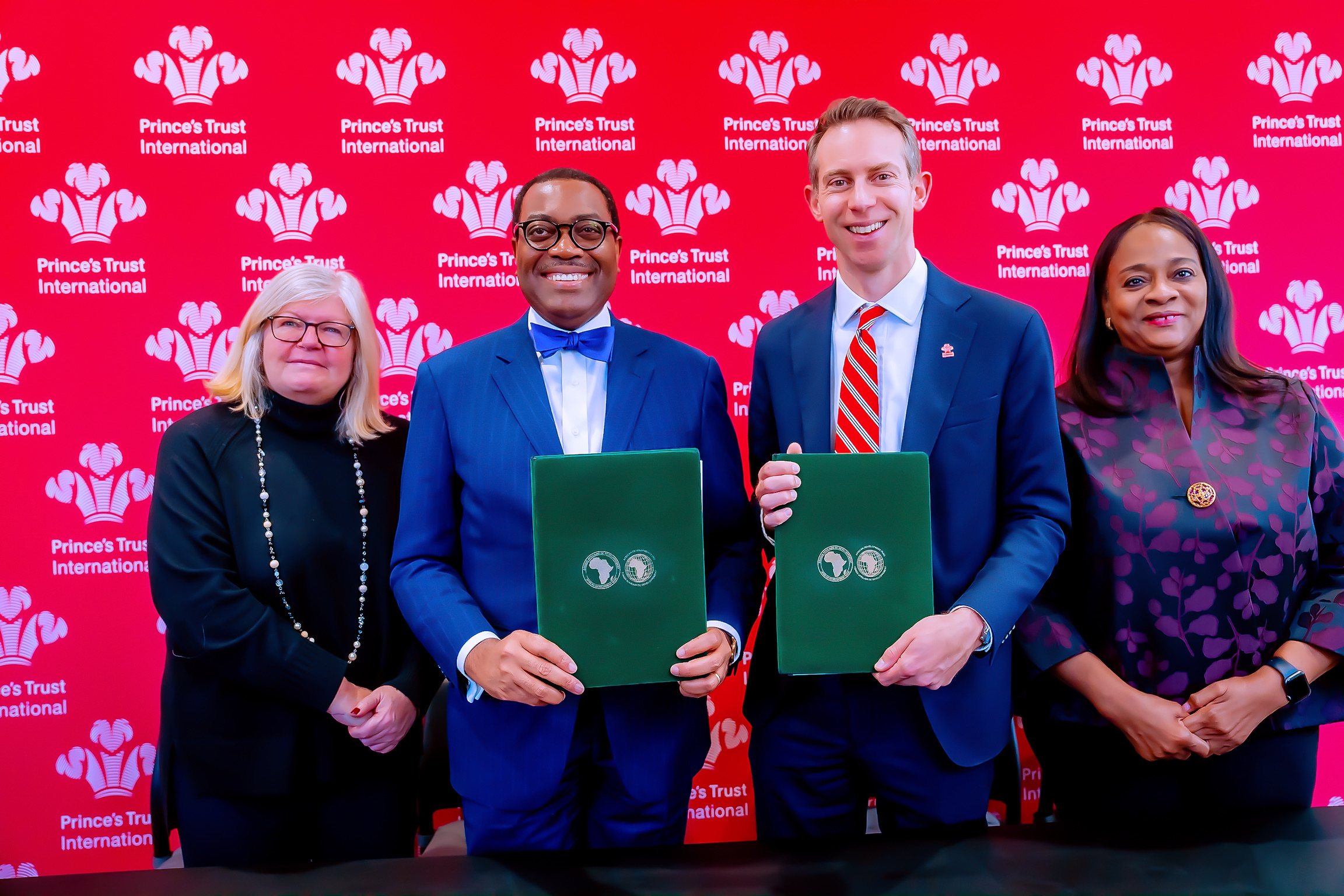
    The President of the African Development Bank Group, Dr Akinwumi Adesina and the CEO of the Prince’s Trust International (PTI), Will Straw, have met in London on 29 November 2023 to explore strategic partnerships to scale up youth employment, human capital, and entrepreneurship opportunities.

    With 1.4 billion people, Africa has the world’s largest proportion of unemployed and under-employed youth. More than 60% of the continent’s population is under the age of 30.

    Dr Adesina said, “Too often, way too much lip service is given to youth programmes. That must change. Together, we have an opportunity to create youth wealth and eradicate poverty which is not a tradable commodity.”

    Straw provided an overview of the Trust’s programmes globally and highlighted Ghana and Nigeria, where capacity building and entrepreneurial skills are having an impact on youth.

    He said the Prince’s Trust International is committed to upscaling existing youth-based initiatives and co-hosting a youth-focused investment summit in 2024 in the UK, in conjunction with the African Development Bank.

    Since 2015, the Prince’s Trust International, founded by HM King Charles (then the Prince of Wales), to tackle the global crisis of youth unemployment has supported more than 75,000 people. This follows 40 years of experience in the UK.

    Straw added, “We are delighted to build this partnership with the African Development Bank. Together, we have a shared mission to support the next generation to develop the core skills needed to succeed in finding decent work.”

    During the signing of a Memorandum of Understanding, Adesina described youth unemployment as a precursor to poverty which required a strategic multi-sectoral and multi-stakeholder holder approach.

    The MOU commits both institutions to work together to identify and develop partnership opportunities to mainstream employability skills for technical and vocational education and training (TVET) projects funded by the Bank in countries of common interest. The Prince’s Trust will participate in the preparation, design, implementation and monitoring of TVET and skills development projects.

    Others at the MOU signing included Prince’s Trust International Deputy Chair, Michelle Pinggera, Trustee, Arunma Oteh, and the Senior Advisor to the President of the Bank, Victor Oladokun.

    The African Development Bank has launched Youth Entrepreneurship Investment Banks to provide financial and technical support businesses of young people. Liberia was the first to launch the Youth Entrepreneurship Investment Bank with an initial funding of $16 million approved by the African Development Bank’s Board of Directors. This is in addition to the Bank’s ENABLE youth programme and several other youth-based programmes.

    The Prince’s Trust International runs 13 programmes in Ghana, Kenya, Nigeria, Rwanda, Tanzania and Uganda, which are designed to match the skills and expectations of young people with existing employment and enterprise opportunities.

  • Feature- Brain Drain: Africa’s Trainee Doctors Are (Barely) Holding Healthcare Together

    Feature- Brain Drain: Africa’s Trainee Doctors Are (Barely) Holding Healthcare Together

    As the Global North poaches African doctors, healthcare falls to overworked and unmentored interns, some of whom learn medical procedures from YouTube.

    Fifteen of the world’s (fiscally) richest countries have over 55,000 African doctors in their health systems, a new data analysis by The Continent shows. These are doctors who qualified before entering those countries. 

    The United Kingdom is the top culprit, followed by the United States, France, Canada, Germany and Ireland, in that order. 

    Of the African countries being drained of doctors, an analysis of the latest data from the Organisation for Economic Cooperation and Development shows that Egypt has lost the most, followed by Nigeria, South Africa, Algeria and Sudan. 

    These countries have consequently paid a significant price in the quality of healthcare they can offer their own residents. 

    Egypt, for example, has the lowest doctor-to-patient ratio of its north African neighbours. In many of the drained countries, there are so few trained doctors left that the bulk of healthcare falls to doctors in training: medical interns. 

    ‘Treated like we are nobody’

    Research in Uganda and Kenya details the cost to those interns. The study titled “We were treated like we are nobody” was published this month in the British Medical Journal for Global Health and is based on data on more than 700 medical interns in the two countries, as well as interviews with 54 junior doctors and 14 consultant physicians.

    It found that medical interns are suffering from burnout and stress because they are working unreasonable hours and frequently don’t have superiors to train and supervise them. Their working conditions continue to have the same challenges that drive more experienced doctors to seek greener pastures. 

    The research found that the lack of support and supervision also “threatened individuals’ well-being and the quality of care being delivered”. 

    “Many reported working unreasonable hours – as long as 72 hours – due to staff shortage,” according to Yingxi Zhao, one of the researchers. 

    “Sometimes interns were the only staff managing the wards or had to perform certain procedures unsupervised. These included cases where interns had to learn how to perform Caesarean sections from YouTube.” 

    Threat to patients’ and doctors’ lives

    Such conditions threaten not just the lives of patients but the trainee doctors too. Research by the World Health Organization (WHO) found that people who work 55 or more hours a week had a 35% higher risk of suffering a stroke and a 17% higher risk of dying from ischemic heart disease, compared to those who worked 35-40 hours. 

    The Kenya and Uganda findings echo those of a Nigeria study published in May in the Public Library of Science journal. 

    Researchers interviewed 628 early career doctors and nearly 40% said they felt overwhelmed by their work. About 16% said they wanted to quit the profession and twice as many said they experienced anxiety. 

    The researchers in both studies recommend capping the hours that medical interns and junior doctors work. But limited training facilities and continuing brain drain make the doctor-to-patient ratio so low that reducing working hours is all but impossible. 

    By a large margin, the best doctor-to-patient ratios are in Libya and Algeria – 22 and 17 doctors for every 10,000 residents respectively. But even Libya and Algeria compare poorly to the top importers of African doctors, the UK and US, which have between 32 and 37 doctors for every 10,000 people. 

    To a doctor looking for a liveable work-life balance, going to the Global North is a no-brainer. 

    Lucy Nyokabi, a medical trainee at a Nairobi hospital, says her workload is overwhelming and she often doesn’t have safety equipment or the supplies to do the job properly, like oxygen masks.

    “My family supports me in getting the things that I need for the job. I have to remind myself that I need this training to excel at the actual job,” she says.

    This makes leaving attractive: “We all hope to work outside the country. I believe the conditions are better out there.”

    Culled from The Continent 

  • Report: South Africa and UAE are Africa, Middle East Sustainability Leaders

    Report: South Africa and UAE are Africa, Middle East Sustainability Leaders

    In Africa, Egypt, Morocco, Uganda also perform well in key environmental areas

    South Africa, the United Arab Emirates, Egypt and Saudi Arabia are doing the most to combat climate change in the Middle East and Africa, according to a new report that compares government and business sustainability policies, investment and actions.

    Download document: (https://apo-opa.co/49FTzKm)

    The Middle East and Africa Environmental Sustainability Scorecard, released on Thursday, a detailed examination of country performance in environmental sustainability outcomes, government policies, and corporate practices in the two regions.

    The report concludes that the 17 countries covered “are relative ‘late comers’ to global sustainable development but at the same time represent regions that are rapidly stepping-up their sustainability strategies, programs and investments.”

    The report was commissioned by Agility, a global supply chain services company based in Kuwait. It was compiled by Horizon Group, a Geneva-based firm that specializes in research and analysis for governments, international organizations, and leading businesses worldwide.

    South Africa is among the leaders in four of six pillar categories. It is 2nd in Sustainable Energy & Transport; 5th in Energy Transition; 2nd in Environmental Ecosystems; and 2nd in Circularity. Among African countries, South Africa is 3rd in Green Investment & Technology behind Morocco and Egypt.

    Among the factors driving South Africa’s performance: a national Biofuel Industrial Strategy; formal code of corporate governance; ESG reporting requirements and transparency and accountability standards for companies listed on the Johannesburg Stock Exchange; a World Bank energy transition partnership to decommission a coal-fired power plant and replace the power supply with renewable energy and batteries; and steps to protect habitat and cut pollution.  

    Egypt ranks 3rd overall in the scorecard. It is 5th in Green Investment & Technology; 7th in Sustainable Infrastructure & Transport; 5th in Governance & Reporting; 3rd in Environmental Ecosystems; and 1st in Circularity, which measures resource use and waste management.

    A food security and African displacement launched by Egypt contributed to its ranking and participation in a Qatar-led carbon credit program.

    Other top performers in Africa: Morocco is 3rd in Green Investment & Technology and 3rd in Governance & Reporting; Rwanda and Kenya are 5th and 6th in Sustainable Infrastructure & Transport.

    African countries dominate the energy transition, mainly on the strength of their green transport and energy conservation efforts. Uganda, Nigeria, Rwanda, Kenya, South Africa, Ghana, Tanzania, Mozambique, Cote d’Ivoire, Egypt and Morocco are Nos. 1 through 11 in Energy Transition.The scorecard uses 48 performance and progress indicators to compare countries. The indicators include data, regulatory frameworks, policy assessments, incentives and corporate practices across six pillar areas: green investment and technology; sustainable infrastructure and transport; governance and reporting; energy transition; environmental ecosystems; and circularity. To capture corporate practices and progress, Horizon surveyed 647 business executives in the 17 countries.

    Overall, 1 through 17, here’s how the countries rank: South Africa, UAE, Egypt, Saudi Arabia, Rwanda, Kenya, Uganda, Ghana, Morocco, Qatar, Tanzania, Nigeria, Bahrain, Kuwait, Cote d’Ivoire, Oman, Mozambique.

    Key Findings

    Business isn’t paying attention to COP. Eighty-two percent of African businesses and 49% of Middle East businesses are not aware of the UN-led COP process that nations are using to push and measure efforts to tackle climate change. Few companies use COP to set their sustainability targets.

    Climate change is hurting businesses. Ninety-seven percent of companies say their business has been affected by climate change, and 49% say climate change has caused “severe damage” or has a “significant and growing” impact on them.

    Governments are leading as businesses play catch up. When it comes to climate action, governments are outpacing the private sector in both the Middle East and Africa. 

    No one size fits all. Different countries have different sustainability priorities based on income, economic strengths, energy dependency, and other factors. High-income, energy-producing Gulf countries generally invest more in sustainable infrastructure and ecosystems. African economies perform best in energy conservation and consumption.

    Green investment is expensive. High- and middle-income countries are investing the most: Qatar, UAE, Morocco and Saudi Arabia. 

    Africa is focused on green transport. African countries topped the scorecard in the move to non-fossil fuels for transport. Hydrocarbon producing Gulf countries are focused more on green buildings. For Gulf countries, the transition to cleaner energy is complicated by energy-intensive national priorities: the desire to boost manufacturing and the need for desalinated water.

    Waste management, consumption are tied to wealth. High-income countries are doing more to manage waste sustainably. Poorer ones do more to constrain consumption. Overall Egypt, South Africa, Bahrain and UAE perform best in “circularity” – cutting waste, encouraging recycling and sustainable production, and lowering consumption.

    Agility was recently named the No. 3 Middle East “Sustainability Leader” for Transport & Logistics by Forbes Middle East. Vice Chairman Tarek Sultan said the company’s strategy and investment decisions are increasingly shaped by the urgency of the climate fight.

    “As a supply chain operator and investor in the Middle East and Africa, we want to know what governments and businesses are prioritizing, and where they’re putting resources in the climate change battle,” Sultan said. “We want to know who we can partner with in green infrastructure and transport, alternative fuels, and supply chain services that reduce environmental impact without sacrificing performance.”

    Horizon, which compiled the scorecard report for Agility, said its intent was to look “beyond the selective characteristics of the Middle East being fossil fuel-dependent with high greenhouse gas emissions per capita, and African countries being low emitters of greenhouse gases but taking relatively little action on the environment.”

    The scorecard report comes on the eve of COP28, the UN-led global climate change conference convening from Nov. 30 to Dec. 12 in Dubai. Its findings amplify those in a World Economic Forum (WEF) report, issued in October, on decarbonization and energy transition in the Middle East and North Africa.

    The WEF report concluded that “MENA countries trail behind comparable regions in terms of their sustainability progress. While local governments have pledged in the past 24 months to bring 60% of MENA’s emissions under the net zero ambition, businesses overall have yet to follow suit and bridge the gap with comparable global markets –12% have set up a net zero target and 6% have established a roadmap to reach net zero.”


  • Winners emerge at the 2023 Africa Women Innovation and Entrepreneurship Forum (AWIEF) Awards

    Winners emerge at the 2023 Africa Women Innovation and Entrepreneurship Forum (AWIEF) Awards

    …FIFA Secretary General, Fatma Samoura, Receives the Inaugural AWIEF Lifetime Leadership Award

    The Africa Women Innovation and Entrepreneurship Forum (AWIEF) has announced the winners of the 2023 AWIEF Awards during a glamorous awards ceremony that took place on Friday night in Kigali, Rwanda.

    Many inspirational and outstanding African women entrepreneurs excelled this year in creating opportunities and positively impacting lives and communities, driving growth for Africa. Out of the 24 powerful women founders and entrepreneurs selected in September as top finalists by an international and independent panel of judges, 8 winners were announced at the awards ceremony that took place at Kigali Convention Centre, Kigali. The 24 top finalists represented women founders operating in a diverse range of sectors from 14 African countries: Cameroon, Egypt, Ethiopia, Kenya, Morocco, Nigeria, Rwanda, Senegal, Sierra Leone, South Africa, Tunisia, Uganda, Zambia, and Zimbabwe.

    The AWIEF Awards ceremony and gala dinner was a culmination of a highly successful two-day AWIEF2023 Conference that attracted more than 500 delegates from over 50 countries, 41 of them African countries.

    Each year the AWIEF Awards recognise, honour, and celebrate outstanding women entrepreneurs and business owners in Africa and across industry sectors, for their economic performance and contribution to Africa’s growth and social development.

    This year’s event unveiled the inaugural AWIEF Lifetime Leadership Award. This award was bestowed on Fatma Samoura, FIFA Secretary General, in recognition of her outstanding leadership and contributions to the world of sports. It was also a tribute to her inspiring impact and accomplishments on a global scale, as the first non-European, the first African and first-ever female to lead FIFA as Secretary General in its 116-year history.

    “What an honour to receive the inaugural AWIEF Lifetime Leadership Award. This award is not just for me, but all the people who have dedicated their lives to our game and helped us transform women’s football over the last few years. They have created a beautiful legacy – a FIFA that is focused on football and is respected by international organisations, and a sport that captures the hearts and minds of boys and girls around the world and brings them joy and happiness,” said Ms Samoura.

    “We have given more girls and women the chance to play football, even in countries where it would have been considered almost impossible only a few years ago.”

    Going further in her acceptance speech, Ms Samoura urged women to “invest in African football” as it offers a huge untapped potential.

    She said, “Then of course, you women need to invest in football. I will be retiring peacefully in my beautiful country Senegal if at least I got a phone call, by the next Women’s World Cup from many of you saying: ‘Madam, because we saw you in Rwanda and decided to invest in football, today we are club owners.’ So, the ball is in your court, make it happen because you have many talents.”

    “Remember one thing: football is the future for Africa, football is the future for building peace across the world. Football is a universal message, football is something that transmits love, that gives mind, that also transcends borders and brings people together.”

    Irene Ochem, AWIEF Founder and CEO, in her AWIEF Awards 2023 ceremony and gala dinner opening remarks said, “Fatma Samoura has shown exceptional leadership in such a male-dominated sector as sports, and in particular, football. She is an inspirational role model for us other women, and we are truly excited about honouring and celebrating her tonight.”

    The Winners of AWIEF Awards 2023 are:

    YOUNG ENTREPRENEUR AWARD
    Salamba Diene, CEO, Biosene Sarl, Senegal

    TECH ENTREPRENEUR AWARD
    Kidist Tesfaye, Founder & CEO, YeneHealth, Ethiopia

    AGRI ENTREPRENEUR AWARD
    Nonopa Tenza, Founder & MD, Kevinot Farming, South Africa

    ENERGY ENTREPRENEUR AWARD
    Ifeoma Malo, Co-Founder & CEO, Clean Technology Hub, Nigeria

    CREATIVE INDUSTRY AWARD
    Yasmina Belahsen, Founder, MayaDigital, Morocco

    SOCIAL ENTREPRENEUR AWARD
    Mundih Noelar Njohjam, Medical Doctor, Epilepsy Awareness, Aid & Research Association, Cameroon

    EMPOWERMENT AWARD sponsored by Ecobank
    Zulfat Makarubega, Founder, University of Tourism, Technology & Business Studies, Rwanda

    LIFETIME ACHIEVEMENT AWARD
    Dalia Ibrahim, CEO, Nahdet Misr Publishing House, Egypt

  • African Basic Education Ministers agree to collaborate, prioritise Foundational Learning for the African Union Year of Education

    African Basic Education Ministers agree to collaborate, prioritise Foundational Learning for the African Union Year of Education

    Representatives of 20 African countries recognize the urgent need to address the learning crisis as a critical enabler for wider development goals.

    Ten African Ministers of Education and a similar number of ministerial representatives collectively agreed to champion foundational learning as a priority for the 2024 African Union Year of Education (AUYoE) and beyond. They also resolved to rally their respective Heads of State to be “Champions of Foundational Learning”.

    These were part of the resolution made in Lusaka at the end of the 2023 High Level Policy Dialogue Forum on Foundational learning organized by the Association for the Development of Education in Africa (ADEA) and hosted by the Ministry of Education in the Republic of Zambia from 31st October to 1st November 2023.

    In a communique issued at the end of the Forum, Ministers, and ministerial representatives from 20 African countries agreed on a foundational learning starter pack model as a resource guide to ensure uniformity, continuity, and sustainability. They further resolved to collect relevant data, working with ADEA and partners, to inform policy and decisions on foundational learning, foster dialogue and peer learning, and share good practices on what works in foundational learning in support of AUYoE.

    The policy and decision-makers agreed to strengthen links between Early Childhood Education and Primary Education, advance the adoption of structured pedagogy, implement age-appropriate teaching methods, and harness the power of technology to increase the number of qualified teachers and enhance teachers’ well-being.

    During the Forum, countries showcased innovative and nationally contextualised solutions with concrete results, among them Benin, Botswana, Kenya, Liberia, Madagascar, Mauritius, Senegal, and Zambia among others. Thus, the Ministers and ministerial representatives committed to lead the continental response through collective advocacy during the launch of AUYoE in February 2024, supported by partners.

    Opening the policy dialogue on behalf of the host, President Hakainde Hichilema of the Republic of Zambia, the Minister of Education of Zambia, Hon. Douglas Munsaka Syakalima said: “This forum underscores the belief that foundational learning is at the base of any effort to change the course of Africa’s development. It is by building people that we will derive the resources to craft a new vision and bring such a vision to life. Without foundational skills in numeracy and literacy, there can be no further learning quality.

    The Executive Secretary of ADEA, Albert Nsengiyumva said: “I am inspired by the collective commitment of our members in tackling this crisis, and to developing globally relevant solutions that can be applied anywhere. Africa is the continent most affected by the learning crisis, and it is where the solutions must be developed. I must commend the Ministers attending for the work they have done, the leadership they are showing, and the results that they are delivering. We must build on this momentum to accelerate the progress that will make Africa a leader in the global response to the learning crisis.”

    The Director of Global Education at the Bill and Melinda Gates Foundation, Dr Benjamin Piper advocated for scaling of what works. According to him, ‘We know what works to boost foundational learning in Africa; structured pedagogy is one way; teaching at the right level is another so we need to do more of what works at scale.’

    Equally, Dr Obiageli Ezekwesili, the founder of Human Capital Africa and co-convener of the foundational learning ministerial coalition said: “Ministers need to be informed by rigorous data and evidence to design appropriate solutions for their national contexts and ensure that progress can be tracked, remedial action taken, and transparency and accountability embedded in the response.”

    During the school visits, a key aspect of the Forum, participants witnessed the nexus between policy and practice as well as the integration of social-emotional skills through play-based learning.

    The Forum was closed by Hon Conrad Sackey, Minister of Education in Sierra Leone, who urged countries to take forward the resolutions emanating from the event. Countries present at the event include Angola, Benin, Botswana, Cote d’Ivoire, Democratic Republic of Congo, eSwatini, Ghana, Kenya, Madagascar, Malawi, Mauritius, Namibia, Senegal, Sierra Leone, South Africa, Tanzania, The Gambia, Uganda, Zambia, Zimbabwe.

  • Feature: Merger with neighbouring countries will make Nigeria a Regional Giant

    Feature: Merger with neighbouring countries will make Nigeria a Regional Giant

    by Ayo Akinfe

    No matter how you cut it, Nigeria is not going to be able to compete effectively on the global stage unless she merges with some of her neighbours to create a regional giant

    [1] This here is a picture of Roman Empire at its zenith in 117AD. As you can see, it covered virtually all of Europe apart from Scotland, Scandinavia and Tsarist Russia

    [2] It was during this era that Europe prospered, emerging from the ancient world and the Dark Ages with the Period of Enlightenment, the Renaissance and then later modernity. It was only after Europe became relatively prosperous that the empire fragmented into the numerous nation-states we have today

    [3] Africa must learn from this because we were enslaved and colonised and are today being exploited because of weakness. There are too many nation-states in Africa to compete on the global stage and Nigeria desperately needs to unveil a foreign policy that will amalgamate most of these nations

    [4] For instance, on May 14 1897, Great Britain signed a treaty with Emperor Menelik II of Abyssinia, creating bilateral relationships between Ethiopia and British Somaliland. It guaranteed the rights of the citizens of both territories and opened the door to trade between them. Although not exactly an agreement between equals like say the Anglo-Prussian Pact, this agreement was a far cry from the “protection” treaties signed between Britain and say the Oba of Benin, Sultan of Sokoto, Obong of Calabar or Alaafin of Oyo, which were wholly one-sided

    [5] Abyssinia or Ethiopia was one of the few African empires actually respected by Europeans as being inhabited by civilised people. Just like Egypt, Cush and Axum, they were not enslaved as they were regarded as people with a culture, tradition, religion and history. They were certainly not categorised as “natives” like us. In plain language, native meant savage. Today, Ethiopia is making something of a comeback and claiming its place among Africa’s giants

    [6] Basically, Africa is centred around Nigeria, Egypt, South Africa, DR Congo and Ethiopia. If these big five sort themselves out, the continent will enjoy unprecedented economic growth and global political clout. We have to start asking ourselves how do we compete with the likes of China and India with their populations in excess of 1bn each

    [7] One of the biggest tragedies of Africa today is that she is balkanised into over 50 disparate nation states, many of them unviable and forever destined to be weak, poor and uneconomic. Were we back in the 19th century, this big five would just have carved up the continent between them. There is simply no justification for some nation states we see today

    [7] When I look at Sudan for instance, my heart bleeds. Khartoum, used to be the last outpost of the Egyptian Empire. In the southwest of the country, the people of Darfur are Bagarra, identical to our own Shuwa Arabs in Borno State, while in South Sudan, the people are East Africans like those of Uganda. Post-1960, Sudan should have been divided between Chad, Egypt and Uganda. One just needs to see how straight the border between Egypt and Sudan is to appreciate the fact that it was drawn with a ruler. Nigeria has to correct these anomalies going forward

    [8] We are no longer in the 17th century so Nigeria cannot march her troops across borders but alas, something needs to be done. A situation whereby Africa with its 1.3bn people out of a global total of about 8bn only accounts for 4% of world trade and 1% of world manufacturing output is totally unacceptable. The only antidote to this is a fusion of our nations to create five or six giants that can compete globally

    [9] Just to put things into perspective, on May 14 1811, Paraguay gained independence from Spain. Today, Paraguay is nowhere near as developed as Nigeria despite having a 150-year head start. With a tiny population of 7m and a GDP of just $44bn, I question whether the Paraguay is viable. Why the country has not merged with Brazil is totally beyond me

    [10] If we want to be honest, it is up to Nigeria to carry on from where Ancient Egypt and Abyssinia left off. To us falls the burden of making the African respected again. That process involves merging many of the continent’s nation states. Is President Tinubu ready for that challenge? The responsibility of being the leader of world’s largest black nation is a huge one!