Tag: Uganda

  • The Coca-Cola System in Africa Unveils Water Stewardship Initiative

    The Coca-Cola System in Africa Unveils Water Stewardship Initiative

    ‘…the Coca-Cola System’s Africa Water Stewardship Initiative’, with a nearly USD 25 million investment, will support water solutions in local communities in Africa

    The Coca-Cola Company in Africa and its bottling partners Coca-Cola Beverages Africa (CCBA), Equatorial Coca-Cola Bottling Company (ECCBC) and Coca-Cola HBC announced a nearly USD 25 million investment to help address critical water-related challenges in local communities in 20 African countries, starting this year through 2030. The work will be led by Global Water Challenge (GWC) and implemented by a consortium of partners, including The Nature Conservancy (TNC), The International Union for Conservation of Nature (IUCN) and the World Wildlife Fund (WWF).

    The effort, called ‘The Coca-Cola System’s Africa Water Stewardship Initiative’, was introduced in Cape Town, South Africa, in presence of executives from the Coca-Cola system in Africa and NGO partners. During the event, Karyn Harrington, Vice President of Public Affairs, Communications and Sustainability at The Coca-Cola Company’s Africa Operating Unit indicated “Water is a priority for The Coca-Cola Company and its local bottling partners because it is essential to life, the communities we serve and our beverages. As we face increasing water insecurity worldwide, with demand outstripping supply in many regions such as Africa, Coca-Cola is taking steps to help accelerate efforts to address water stress, protect local water resources, and build community climate resilience. Our 2030 Water Security Strategy focuses on helping enhance water security where we operate, source ingredients, and touch lives.”

    “One in three Africans face water insecurity. The Global Water Challenge and ‘The Coca-Cola System’s Africa Water Stewardship Initiative’ partner coalition will seek to improve water security for millions across the African continent, helping advance community health and resilience through abundant, clean water. We applaud Coca-Cola’s continued leadership on African water security” said Monica Ellis, CEO of GWC.

    ‘The Coca-Cola System’s Africa Water Stewardship Initiative’ aims to help protect and enhance the health of important watersheds and to help improve access to water and sanitation services in local communities. We will have projects in Algeria, Botswana, Cabo Verde, Comoros, Egypt, Eritrea, Eswatini, Ethiopia, Kenya, Mayotte, Morocco, Mozambique, Namibia, Nigeria, Somalia, South Africa, Tanzania, Uganda, Zambia and Zimbabwe.  

    “CCBA has a responsibility to help those who face water scarcity and to help protect local water resources where we operate, especially in places with the biggest challenges. We are proud to partner with The Coca-Cola Company on this project,” says Layla Jeevanantham, Chief Public Affairs, Communication and Sustainability Officer at CCBA.

    “We are proud to partner with The Coca-Cola Company and fellow bottlers on this critical initiative to help tackle water challenges across Africa. By working together, we can leverage the expertise of our partners and the knowledge of local communities to help create sustainable solutions that enhance water access and safeguard vital water resources,” said Sonia Ventosa, Public Affairs, Communications & Sustainability Manager at ECCBC.

    “Coca-Cola HBC has been part of African communities for more than 70 years, and sustainability is an important part of how we operate. We’re very happy to see this new water initiative come to life and to support the system’s water stewardship efforts,” said Marcel Martin, Chief Corporate Affairs & Sustainability Officer, Coca-Cola HBC.

    Recognizing that partnerships are critical to support this work, the company and its bottlers are collaborating with governments, businesses, and civil society organizations to design and implement strategic interventions. In addition to supporting the company’s water strategy, this effort also aims to contribute to advancing the United Nations’ Sustainable Development Goal 6, which focuses on ensuring availability and sustainable management of water and sanitation. 

    This water initiative will build upon The Coca-Cola Foundation (TCCF)’s Replenish Africa Initiative (RAIN), a groundbreaking collaboration with key partners and co-funders which helped improve access to clean water, sanitation and hygiene for 6 million people across African countries between 2009 and 2019. Through 120 projects, the initiative positively impacted homes, schools and healthcare clinics in more than 4,000 communities.

  • Africa CDC in Talks with Bavarian Nordic to Bring Mpox Vaccine Production to the Continent

    Africa CDC in Talks with Bavarian Nordic to Bring Mpox Vaccine Production to the Continent

    The Africa Centres for Disease Control and Prevention (Africa CDC) is in talks with Bavarian Nordic, the only global producer of an mpox vaccine, about technology transfer to enable African manufacturers to make the vaccine on the continent.

    “I want to recognise and thank Bavarian Nordic for accepting to do the tech transfer in Africa, for Africa to manufacture the vaccine,” Africa CDC Director General, Dr Jean Kaseya told a media briefing on Tuesday.

    Kaseya added that Africa CDC aimed to have 10 million doses available by the end of 2025, and Bavarian Nordic “tell me the doses we are talking about are not a dream”. 

    However, he acknowledged that this was a longer-term solution to the mpox outbreak affecting 12 African countries.

    More immediately, the continent expects donations from wealthier countries during what Kaseya dubbed as the “emergency humanitarian era”. He thanked the European Union (EU) for assistance in procuring 215,000 vaccines.

    In the past week, there has been an increase of 1,405 cases on the continent bringing the official total to 18,910 although Kaseya cautioned that surveillance was not optimal in some countries.

    The biggest increase was in the Democratic Republic of Congo (DRC), the epicentre of the outbreak, which now has 17,794 cases (an increase of 1,030). 

    However, armed conflict in eastern DRC is hampering efforts to curb the outbreak, and Kaseya thanked Angola’s president for his efforts to broker peace between the DRC and Rwanda, which has supported the M23 rebels in the DRC.

    Cases in Burundi jumped from 265 to 572, while the Central African Republic also recorded more cases (up from 206 to 263) as did Nigeria, (from 24 to 39).

    No new cases were recorded in Cameroon, Congo, Kenya, Rwanda, Uganda, South Africa, Côte d’Ivoire or Liberia.

    There have been 541 recorded deaths.

    Single incident management team

    For the first time, the Africa CDC, the World Health Organization and UNICEF have united to form a single African incident management team to address the outbreak, which was declared a public health emergency of international concern (PHEIC) last week.

    Professor Jean-Jacques Muyembe, general director of the Democratic Republic of the Congo  Institut National pour la Recherche Biomedicale (INRB), told the Africa CDC briefing that better communication about the causes of mpox was necessary to prevent its spread.

    Children to be warned against touching dead animals or eating jungle meat, he advised Almost 70% of mpox cases in the DRC involve children under the age of 16.

    In addition, communities had to be educated about human-to-human transmission via bodily fluid, using all the lessons from  Ebola, HIV and COVID-19 including condom use and good hygiene. Mpox clade 2 has been spread primarily via sexual contact between men.

    Muyembe also reported on a recent trial of an antiviral medicine, tecovirimat, to treat mpox. The trial was “discouraging” as tecovirimat failed to reduce the duration of mpox lesions in children and adults with clade I mpox in the DRC, he reported.

    A small study with an increased dose of tecovirimat was currently underway.

    However there was a 1.7% mortality rate in the trial – significantly lower than the mpox mortality of 3.6% in the DRC.

    This mortality rate applied to all subjects regardless of whether they received tecovirimat or a placebo, indicating that “hospitalization and high-quality supportive care” improved outcomes regardless of treatment, according to a report from the US National Institutes of Health, which sponsored the trial.

    More domestic resources

    Over the weekend, South African President Ramaphosa – the African Union (AU) Champion on Pandemic Prevention, Preparedness, and Response (PPPR) – called on member states to devote more domestic resources to mpox.

    Ramaphosa also urged the international community “to mobilise stockpiles of vaccines and other medical countermeasures for deployment in Africa” via Africa CDC.

    “This is also an opportunity to call on the international community to finalise a fair and equitable pandemic agreement—a duty that must be pursued with urgency and a spirit of equity,” added Ramaphosa.

  • International Body Proposes Moratorium on Recruitment of Nurses from Developing Countries

    International Body Proposes Moratorium on Recruitment of Nurses from Developing Countries

    The International Council of Nurses (ICN) has called on the World Health Organization (WHO) to consider a “time-limited moratorium of active recruitment of nurses” from countries on the WHO Health Workforce Support and Safeguard List.

    This follows a “dramatic surge” in the recruitment of nurses from low- and middle-income countries (LMICs) by wealthy countries, according to the ICN.

    The Safeguard List identifies 55 countries that face the most pressing health workforce challenges related to achieving universal health coverage (UHC). Health workers shortages are one of the primary causes of countries’ inability to achieve UHC.

    The ICN made this proposal in a recent report to the World Health Organization (WHO) on the implementation of the WHO Global Code of Practice on the International Recruitment of Health Personnel.

    It attributed the “dramatic surge in international nurse migration and recruitment” in large part to “attempts by some high-income countries to address their vast nursing shortages by actively recruiting from LMICs and easing the entry or professional recognition of internationally educated nurses (IENs)”.

    The proportion of overseas-trained nurses employed in the Organisation for Economic Co-operation and Development (OECD) – made up of 38 developed countries – jumped from 5% in 2011 to nearly 9% in 2021.

    The UK, USA, Canada, Australia, Germany and certain Gulf states are driving this recruitment 

    UK takes nurses from ‘red list’ countries

    In the UK, for example,  over 24,000 new international nurses were registered from September 2021 to September 2022, the highest in recorded history.

    Some 19% of new overseas nurses in the UK between 2021-2023 came from countries facing “severe health workforce deficits”, according to the WHO Health Workforce Support and Safeguard List.

    Over six months in 2022,  over 20% of new international nurses (more than 2,200) came from just two “red list” countries: Nigeria and Ghana. 

    “Although active recruitment from these countries to the National Health Service (NHS) is prohibited in the UK, nurses can be first hired by for-profit recruitment firms to work in the private sector and later apply directly to the NHS as passive recruits,” according to the ICN.

    International recruiters are also directly advertising to recruit scarce health care staff from low- and lower-middle-income countries in Africa, Asia, and the Caribbean, in breach of the code. 

    The US reported that over 17,000 nurses applied for visas in 2022, a 44% increase from the previous year.

    “Countries that have not been traditionally active in international nurse recruitment are also showing increased demand for overseas-trained nurses, including Finland as well as Scotland, where the government announced an allocation of £4.5 million to support active international recruitment of nurses as part of the overall plan for pandemic recovery and renewal,” notes the ICN.

    Low-income countries face huge nurse shortages

    Tonga and Fiji reported losing 20% to 30% of their nurses, primarily to Australia and New Zealand, at the 2024 World Health Assembly (WHA).

    In Fiji, 800 nurses in resigned in 2022, over a fifth of the nursing population. At present, the country has 2,003 remaining nurses and around 1,650 nursing vacancies. Many hospitals have less than 40% of their established Registered Nurse positions 

    Nursing representatives from Jamaica also reported at the WHA that around 20% of the country’s nurses have applied for certificates of current professional status, indicating that they are preparing to work abroad.

    Over 1,700 registered nurses in Zimbabwe resigned in 2021, and some 900 left the country in 2022, with many moving to the UK. 

    The Ghana Registered Nurses and Midwives Association recently reported that around 500 nurses are leaving that country every month, particularly experienced, specialist nurses.

    The Philippines has a current shortage of 190,000 healthcare workers and is expected to face a shortage of 250,000 nurses by 2030 

    Nurses’ right to migrate

    “The ICN recognises and supports the right of individual nurses to migrate and pursue professional achievement through career mobility and to better the circumstances in which they live and work,” according to the report.

    However, it is “gravely concerned” about the “large-scale nurse migration from the world’s most vulnerable countries, in large part driven by active nurse recruitment by a small number of high-income countries, including the United Kingdom, United States, Canada, Australia, and Germany, as well as certain Gulf States”. 

    It “condemns the targeted recruitment of nurses from countries or areas within countries that are experiencing a chronic shortage of nurses and/or a temporary health crisis in which nurses are needed”.

    “These trends are depleting already fragile health systems, preventing LMICs from rebuilding and responding to health challenges post-pandemic, and widening the significant gap in healthcare access and quality between high-income and low-income countries. 

    “This situation jeopardises the global achievement of the UN Sustainable Development Goals, including universal health coverage, by 2030.”

    Mitigating migration

    Some wealthier countries are increasingly their own nurse training. In the UK, for example, the NHS Long Term Workforce Plan aims to educate over 60,000 nurses in England by 2029, a 54% increase from 2022/23.

    Australia is developing its National Nursing Workforce Strategy to improve sustainability and self-sufficiency, while Germany’s 2024 Nursing Studies Strengthening Act aims to attract nursing students with monthly salaries to ease the workforce shortage.

    The Filipino Department of Health has recently allocated funds to provide nurses with health insurance, housing, and other benefits in an attempt to stem the tide of nurse migration.

    However, several LMICs are experiencing nursing shortages and are unable to provide employment or other measures to retain their nurses due to insufficient funding and other structural factors,

    In Lesotho, in southern Africa, for example, almost a third of professional nurses and midwives are unemployed because of a lack of funding.

    “LMICs require support to develop and strengthen their health and care workforce and systems so that they can meet their population’s needs,” the ICN stresses.

    Aside from unemployment, nurses in LMICs often face poor working conditions, low compensation and safety issues.

    “We have seen increased evidence of labour unrest and/or strike action in developing and lower-income countries in the past three years, including Uganda, Ghana, Fiji, and Tonga. 

    “This must be recognized as symptomatic of the underlying issues feeding nurse migration and clearly demonstrates the need for efforts to strengthen LMIC health systems rather than deplete them by draining their workforce.”

  • MultiChoice Talent Factory 2025 Calls for Entries

    MultiChoice Talent Factory 2025 Calls for Entries

    MTF welcomes applicants from all backgrounds across the 13 countries in Africa: Nigeria, Ghana, Uganda, Kenya, Ethiopia, Tanzania, Zambia, Botswana, Namibia, Angola, Mozambique, Zimbabwe and Malawi

    MultiChoice Talent Factory is thrilled to announce that it’s once again calling upon all aspiring filmmakers, scriptwriters, producers, and storytellers to apply for entry into the 2025 fully funded academic year.  

    Whether you’re a young professional looking to change careers and expand your horizons or a newcomer eager to make your mark in the TV & Film industry, MTF welcomes applicants from all backgrounds across the 13 countries in Africa: Nigeria, Ghana, Uganda, Kenya, Ethiopia, Tanzania, Zambia, Botswana, Namibia, Angola, Mozambique, Zimbabwe and Malawi.  

    Since its inception in 2018, MTF has welcomed 60 students each year giving them an opportunity to reach their dreams and to unleash their potential by providing a platform that nurtures and develops talent across the continent, providing opportunities for growth, networking and success in the entertainment industry.

    Through a series of rigorous training programs, MTF believes in using hands-on approach and mentorship from industry experts. Participants not only get a chance to sharpen their craft but also gain invaluable insights into the business of filmmaking. Imagine being chosen as one of the participants to learn from some of the industry’s best minds and gaining practical experience in areas such as cinematography, sound design, editing, and more. MTF gives you all these opportunities and does not stop there.

    At the end of the programme, top performing students from each academy will get further training, mentorship and internship opportunities with MTF global partners, such as the New York Film Academy (NYFA), Indian-based platform, Zee World and will get an opportunity to work on productions in South Africa. Upon completion students receive accredited and recognised qualification and get a chance to produce and direct short films showcased on MultiChoice platforms. 

    All these initiatives are indicative of MTFs commitment to supporting MultiChoice’s content selection of delivering exciting local content, which is rich in culture. Africa has many untold stories and by investing in African talent, MultiChoice gets to uncover and showcase these stories by supporting MTFs students, giving them necessary skills and the platform to produce content that resonates with Africans and the global market. Through this support, MTF alumni’s have achieved phenomenal success in their productions.

    Just last year, five alumni secured nominations across three categories at the 2023 Africa Magic Viewers’ Choice Awards (AMVCA). In addition to this, Many MTF alumni occupy significant industry roles across the continent, working as directors, producers, sound designers, camera operators, art directors, scriptwriters and editors on major African productions which include SalemTempted, Engaito, Mvamizi, Mum vs Wife, Makofi, County 49 and many others. Habtamu S. Mekonen, MTF student from the East Africa Academy in Nairobi, Kenya, recently won an International Emmy Award for a short film that he produced and directed. The success of MTF is best illustrated by the feature films produced by its students. The films highlight the talents and creativity of participants and demonstrate the programme’s profound impact.

    MTF also fosters entrepreneurial spirit, giving young people the confidence to start their own projects and businesses. To date, thirty of its alumni have registered production houses, creating employment opportunities and contributing to the economy. The knowledge and skills imparted by MTF empowers graduates to be catalysts for economic growth and cultural enrichment in their communities.

    Applications are now open and will close on 15 September 2024. Interested candidates can visit https://apo-opa.co/4cjKojb to submit their entries and learn more about the program’s requirements.

    Are you ready to unleash your talent and step into the spotlight as one of the next generation of filmmakers? Don’t miss out on this incredible opportunity to ignite your career in film and television with MultiChoice Talent Factory.

    Take the first step towards realising your dreams and apply now.

    Your journey to success starts here!

  • Nigeria’s Olanrewaju Oniyitan, Hakeem Subair, and Josiah Olusegun Ajiboye named Finalists for Africa Education Medal 2024

    Nigeria’s Olanrewaju Oniyitan, Hakeem Subair, and Josiah Olusegun Ajiboye named Finalists for Africa Education Medal 2024

    founded by T4 Education and HP, the Africa Education Medal is Africa’s most prestigious education accolade

    Nigeria’s Olanrewaju Oniyitan, Founder and Executive Director of SEED Care & Support Foundation, Hakeem Subair, Founder and CEO of 1 Million Teachers (1MT), and, Josiah Olusegun Ajiboye, Registrar and Chief Executive of the Teachers Registration Council of Nigeria, have been named among the ten Finalists for the Africa Education Medal 2024. Founded by T4 Education and HP, the Africa Education Medal is Africa’s most prestigious education accolade.

    The Africa Education Medal recognises the tireless work of those who are transforming education across the continent – celebrating the stories of those who have lit the spark of change so others will be inspired to take up the torch. It is given to an outstanding individual who has demonstrated impact, leadership, and advocacy in the field of education.

    The winner of this year’s Africa Education Medal will be invited to attend the World Schools Summit in Dubai on 23-24 November and, in recognition of the urgent need to solve the teacher recruitment and retention crisis to tackle learning gaps, the winner will be entitled to nominate a school of their choice to receive membership of T4 Education’s Best School to Work programme – an independent, evidence-based mechanism to certify schools for their culture and help them transform their working environment to attract and retain the best teachers.

    Olanrewaju Oniyitan is Founder and Executive Director of SEED Care & Support Foundation in Nigeria, a non-profit that supports the affordable non-state education sector to deliver access to quality education for all children by providing advocacy, evidence and a learning network. A consultant, entrepreneur, author, and speaker with over two decades of experience focusing on creating wealth, jobs, and economic growth in Africa, she believes in the transformative power of education in achieving all other Sustainable Development Goals.

    Her work seeks to address the challenge that half of Nigeria’s population is under 19 years old, yet many lack access to quality education. Over 20 million are out of school and 70% of children in school are experiencing learning poverty. She believes the affordable non-state sector (low-fee private schools, faith-based schools, community schools, alternative learning centres) plays an indispensable role, in tandem with the government, in expanding access to education and improving learning outcomes and SEED Care & Support Foundation supports this sector to help build a world where all children no matter their background have access to quality education.

    The organisation amplifies the role of the affordable non-state sector by giving it a seat at the policy table, working through partnerships to shape system-wide change. It designs, pilots, monitors and adapts innovations, models, concepts and frameworks to local contexts for learning and scale, using the evidence to mobilise and persuade strategic actors to pay attention to the affordable non-state sector both locally, in Africa and around the world.

    The organisation also strengthens and grows the affordable non-state sector to enhance the quality of education it offers through its collaborative community, school transformation programme, finance, communities of practice and curated learning experiences.

    Oniyitan’s organisation aims to impact 20,000 affordable non-state schools/centres towards transforming the lives of 1 million children across Nigeria by 2035.

    Oniyitan’s extensive experience as an international development expert has led her to work with organisations and projects funded by FCDO, World Bank, GIZ, OXFAM, Stanford University, African Development Bank (AfDB), Islamic Development Bank (IsDB), Dutch Ministry of Foreign Affairs, and Lagos State Employment Trust Fund, amongst others.

    She has won multiple awards and recognitions including: Top 50 African Women In Development 2024, Outstanding Service to Humanity 2022, Service Excellence Award 2022, Nigerian Education Outliers 2020, Obama Foundation African Leader 2019, Edu-Gladiator Award 2018, and Award of Excellence in Entrepreneurship Development 2018.

    Hakeem Subair, is the Founder and CEO of 1 Million Teachers (1MT), and a prominent figure in educational innovation. His extensive academic background includes a master’s degree in Management Innovation and Entrepreneurship from Queen’s University and a Bachelor of Commerce Degree in Business from the University of Windsor, alongside a Bachelor of Finance from the University of Ilorin, Nigeria. An Edtech Fellow at Cambridge University/HP Partnership for Education, Subair’s accolades include numerous academic awards and membership in the Golden Key International Honour Society. He has also served as an adjunct professor, teaching courses in Innovation and Change Management, and Artificial Intelligence and Entrepreneurship.

    1 Million Teachers was inspired by Subair’s personal experience of the challenges in finding quality education for his daughter in Nigeria. This led to the establishment of their own school in 2008, revealing the systemic issues within the Nigerian education system, particularly the lack of qualified teachers. Driven by this realisation, Subair founded 1MT to transform education.

    1MT aims to create a wave of highly trained, innovative educators capable of driving grassroots change. Despite numerous challenges, the organisation has trained over 60,000 educators across more than 20 countries, indirectly impacting approximately 4 million students. This growth underscores the founding vision and the resilience of the 1MT community.

    One of 1MT’s flagship initiatives is the Blackbelt Program, a teacher training model inspired by martial arts. Educators progress through various levels of mastery by completing online courses, mentoring sessions, and community projects. This programme covers pedagogy, curriculum design, classroom management, leadership, and innovation, providing access to a global network of peers and experts.

    In partnership with HP and Girl Rising, 1MT launched the HP Mentor a Teacher Program, focusing on gender equity, digital literacy, leadership development, and success mindset. This programme pairs HP employees with Blackbelt educators, enhancing their ability to empower girls and advance quality education.

    1MT collaborates with numerous academic institutions and organisations to offer supplementary teacher education, global knowledge exchanges, and professional development opportunities. These collaborations ensure that aspiring teachers receive comprehensive training to meet the sector’s challenges.

    Under Subair’s leadership, 1 Million Teachers is a pioneering force in global education reform, dedicated to building a critical mass of highly trained, enterprising education changemakers. Through innovative programmes, strategic partnerships, and a deep-rooted passion for education, Subair and 1MT are shaping a brighter future for educators and students worldwide.

    Josiah Olusegun Ajiboye is Registrar and Chief Executive of the Teachers Registration Council of Nigeria (TRCN) – the regulatory body committed to the professional development and registration of qualified and competent educators across Nigeria.

    Ajiboye first worked as a secondary school teacher, before going on to become a lecturer and then Professor of Curriculum Studies: Social Studies/Civics Education at the University of Ibadan. He was appointed to the TRCN by the country’s President in 2016. He also serves as the President of the Africa Federation of Teaching Regulatory Authorities (AFTRA).

    The TRCN seeks to assure excellence and professionalism among teachers at all levels of the nation’s education system, using effective registration, licensing, accreditation, monitoring and supervision of teacher education programmes, promoting continuing professional development and maintenance of discipline as paradigms for the overall renaissance of the teaching profession in Nigeria.

    At the TRCN, Ajiboye introduced the Professional Qualifying Examination for Nigerian teachers in 2017. It is now compulsory for anyone who intends to teach in the country to pass this key examination and obtain a teacher’s license and certificate. This has led to marked improvements in teaching and learning in Nigeria.

    Today TRCN enjoys global recognition as a leading teacher regulatory body in Africa, and Nigerian teachers now enjoy mobility to all parts of the globe with a letter of professional standing issued by TRCN. Ajiboye proudly advocates for the status of teachers in the country and around the world, supporting teacher welfare and professionalism.

    Mayank Dhingra, Senior Education Business Leader at HP, said:

    “Congratulations to Nigeria’s Olanrewaju Oniyitan, Hakeem Subair, and Josiah Olusegun Ajiboye on being named Finalists for the Africa Education Medal 2024. Their passion and dedication to transforming education will inspire countless others to follow in their footsteps in building a world where quality education is enjoyed by all.

    “HP has a bold goal to accelerate digital equity for 150 million people globally by 2030. Only by joining forces and aligning with NGOs, government, educators and businesses can we truly improve the education environment. The Africa Education Medal brings together all those who are changing the face of African education, whose work we must all learn from if the world is to meet the Sustainable Development Goals by 2030.”

    Vikas Pota, the Founder and CEO of T4 Education, said:

    “The Africa Education Medal honours changemakers where change is needed most. Where learning gaps remain stubbornly persistent and where deep inequalities remain.

    “If we are to tackle these colossal challenges, and unlock the continent’s future, we must build a community of leaders from every sphere of society committed to educational transformation. Leaders like Olanrewaju Oniyitan, Hakeem Subair, and Josiah Ajiboye. Africa, and the world, has so much to learn from your inspirational stories and your vital contribution to the next generation.”

    The Finalists for the Africa Education Medal 2024 are:

    ●      Ahmed Kura, Co-Executive Director, Kenya Drylands Education Fund, Kenya

    ●      Angeline (Angie) Murimirwa, CEO, CAMFED, Zimbabwe

    ●      Christopher Khaemba, Co-Founder & Director, Nova Pioneer, Kenya

    ●      Hakeem Subair, CEO, 1 Million Teachers, Nigeria

    ●      Josiah Olusegun Ajiboye, Registrar & Chief Executive, Teachers Registration Council of Nigeria, Nigeria

    ●      Julian Hewitt, Outgoing CEO, The Jakes Gerwel Fellowship, South Africa

    ●      Mohammed Haroon, Principal Education Consultant, Ghana          

    ●      Nankunda Hope Mwijuka, Executive Director, Raising Teenagers Uganda, Uganda

    ●      Olanrewaju Oniyitan, Founder & Executive Director, SEED Care & Support Foundation, Nigeria

    ●      Taddy Blecher CEO & Co-Founder, Maharishi Invincibility Institute, South Africa

    Nominations for the Africa Education Medal opened in February 2024 for individuals working to improve pre-kindergarten, K-12, vocational and university education who are either educators or school leaders, civil society leaders, public servants, government officials, political leaders, entrepreneurs, business leaders, or technologists.

    In its third year, the Africa Education Medal is the oldest of the three World Education Medals established by T4 Education and HP.

    The winner will be announced in October. They will be chosen by a Jury comprising prominent individuals based on rigorous criteria.

  • Feature: The RMB Where to Invest in Africa 2024 report highlights Africa’s top investment economies

    Feature: The RMB Where to Invest in Africa 2024 report highlights Africa’s top investment economies

    The methodology used for this edition of the Where to Invest in Africa report builds and expands on previous editions, taking into account new data sets as well as changing geopolitical and macroeconomic climates

    RMB has released the highly anticipated 2024 edition of its Where to Invest in Africa report, a comprehensive analysis of the top investment destinations on the continent. The report, which has been developed in collaboration with the Gordon Institute of Business Science (GIBS), leverages a robust methodology that has been updated to reflect new data sources, taking into account a variety of factors that have been proven to determine a country’s progress and therefore its investment potential. 

    “Africa is not a country, but a vast, diverse and complex continent with different cultures, economies and investment potential. Our report therefore is not a definitive guide, but rather it is designed to provide insight to uncover the underlying drivers of a country’s performance that inform its ranking. This offers invaluable insights for investors, policymakers, and business leaders looking to navigate Africa’s dynamic economic landscape,” says Isaah Mhlanga, Chief Economist at RMB.  

    Expanded data, extended granularity 

    Investment decisions need to be viewed through both an economic performance lens and an operating environment lens. As a result, the methodology used for this edition of the Where to Invest in Africa report builds and expands on previous editions, taking into account new data sets as well as changing geopolitical and macroeconomic climates.  

    The scorecard for the 2024 issue highlights 31 countries that collectively represent 92% of the continent’s economic activity (measured by GDP), and more than one billion people (three quarters of the continent’s population). It draws on publicly available data sets from global institutions, including the World Bank, the IMF, the African Development Bank, the United Nations, and the International Labour Organisation.  

    The model is constructed from 20 metrics across four measurement pillars: economic performance and potential; market accessibility and innovation; economic stability and investment climate; and social and human development. Each metric is weighted, which translates into a weight for each pillar, and based on these metrics a standardised scorecard is produced, with rankings that enable effective comparison across Africa’s complex and heterogeneous environment.  

    Africa’s top five investment destinations

    Combining these elements results in a ranking across the 31 countries measured. The results of the report show that the two small island economies of Seychelles and Mauritius rank first and second as the most attractive investment destinations on the continent, while the significantly larger economies of Egypt, South Africa, and Morocco rank in third, fourth and fifth places respectively. 

    Seychelles leads the rankings thanks to high levels of personal freedom, human development, and a stable economic environment. Seychelles offers a unique and attractive investment climate. Despite scoring lower on economic size and potential, Mauritius is known for innovation, economic freedom, and high GDP per capita. It continues to be a top destination for investors seeking stability and growth opportunities in a well-regulated environment.  

    Egypt represents Africa’s largest economy by GDP (2023), offering a substantial market with diverse opportunities in sectors like technology, manufacturing, and services. Its strategic location and economic complexity further enhance its attractiveness. Despite facing significant challenges, South Africa remains a crucial hub for investment in Africa. Its robust financial sector, diverse economy, and potential for infrastructure development make it a key player. Finally, Morocco’s strong performance in connectedness, innovation, and economic stability positions it as a top investment destination. Its strategic proximity to European markets adds to its appeal. 

    Distilling diversity – investment archetypes explained 

    Africa is an incredibly diverse continent, and no two markets are the same, which means there is no such thing as a universal success story. However, when we zoom out and view nations through the lenses of size and the relevant investability score, it becomes apparent that they fall into distinct groupings with shared traits. The 2024 edition of Where to Invest in Africa suggests five potential investment archetypes based on shared characteristics revealed through the four measurement pillars.  

    ‘Highflyers’ represent the large, well-established economies that offer stability and a range of investment opportunities, such as Nigeria, South Africa, Egypt and Ethiopia. Those ‘Cleared for Take-off’ are countries with high economic growth and innovation potential thanks to factors like a young population and abundant resources, including Senegal and Côte d’Ivoire. ‘People Potential’ are markets with a young and growing demographic, creating a sizeable consumer base and a future workforce, such as Kenya, DRC and Uganda. ‘Global Connectors’ are more advanced economies with a strong international presence, such as Morocco, Mauritius, Tunisia and Seychelles. ‘Low-Base Boomers’ are smaller markets with high potential for explosive growth but a corresponding higher degree of risk, including Rwanda, Mozambique, and Benin. 

    Additional insights unpacked

    The report also highlights a number of trends across the various markets, and the role of innovation and economic complexity in driving growth is a central theme. Countries such as South Africa, Kenya, and Ghana are noted for their strides in technological innovation and diversification of their economic bases, making them attractive destinations for investment. 

    The African Continental Free Trade Agreement (AfCFTA) holds significant potential for boosting intra-African trade, enhancing economic integration, and creating a more competitive continental market. Effective implementation of the AfCFTA is expected to drive economic growth and development across the continent. Africa’s young and rapidly growing population also presents a unique opportunity for economic growth, with countries like Ethiopia, Tanzania, and Uganda poised to benefit from this demographic dividend, provided they can create sufficient employment opportunities and foster a conducive environment for economic participation.  

    In addition, there are a number of emerging markets with significant growth potential, including Nigeria, Ghana, and Kenya. Despite facing challenges such as political instability and infrastructural deficits, these countries offer substantial opportunities due to their large and youthful populations, improving business climates, and diversification efforts. Africa’s vast natural resources, including minerals and arable land, are pivotal for sustainable economic growth. However, the report cautions against the “resource curse” and underscores the importance of good governance and strategic management. Angola, Mozambique, and the Democratic Republic of Congo are highlighted for their rich resources and potential for sustainable development. 

    One area that requires critical attention across the continent is the need for infrastructure investment. Improved transportation, energy, and digital infrastructure are essential for unlocking Africa’s economic potential, and South Africa, Kenya, and Nigeria are identified as key markets where infrastructure development could yield significant returns. 

    Beyond the rankings – a deeper look at African investment 

    Looking beyond metrics and scorecards, Africa holds massive potential but equally faces numerous challenges. The continent is rich in natural resources, which can be a major driver of economic growth, but they also present challenges in the form of corruption and environmental degradation. Increased activity around trade agreements can open new markets for foreign investors and boost economic activity, but lack of adequate infrastructure is a major hurdle for many African economies. Investment in this space will improve connectivity and create new opportunities, while rapid and increasing urbanisation will prove attractive to investors in consumer goods, retail, and financial services. Finally, countries in Africa are embracing new technologies, leapfrogging traditional development stages and creating new investment opportunities in the tech sector. 

    “The richness of Africa’s diversity makes fully analysing its nuance and contrast a challenging task, but an important one when it comes to understanding the varied markets that make up this vast regional economy. The 2024 RMB Where to Invest in Africa report aims to develop a balanced, robust and actionable view of the drivers, challenges and opportunities that characterise each of the 31 African markets included in the analysis,” Mhlanga concludes.  

    Download the full report here to uncover the insights and drive more informed investment decisions. 

  • British International Investment announces 2023 Annual Review with £725 million of new sustainable development commitments in Africa

    British International Investment announces 2023 Annual Review with £725 million of new sustainable development commitments in Africa

    …Increase in African investments represent 61 per of BII’s total commitments for the year

    British International Investment (BII), the UK’s development finance institution and impact investor, announced today that it had increased its commitment to African partners with £725 million of new sustainable development investments, from a global total for the year of £1.31 billion.

    BII has a mission to help countries escape poverty by providing impact investments to support the development of thriving private sectors. It invests in the people and places most in need of capital that typically receive the least from private investors. 

    The scope of BII’s activity last year was published today in its Annual Review, entitled Creating Impact Together.

    Of the total, £724.9 million went to support African businesses, compared with £692 million or 55 per cent of total investments in 2022.  BII’s capital now supports – directly and indirectly – 1,580 companies that directly employ nearly a million people in 65 countries.

    BII’s Africa portfolio now totals $5.6 billion across 812 businesses, which directly provide 499,232 jobs and pay $1.46 bn in taxes.

    Climate change continues to be one of the biggest threats to global development, with people living in some of the world’s poorest countries among the most vulnerable to its impact.

    Out of BII’s total commitments in 2023, £449 million (37 per cent) was classified as climate finance – taking the total over the last two years to over £1 billion. BII’s climate finance target over the course of its current five-year strategy period is 30 per cent. 

    BII has backed a wide range of companies that are vital to economic development and improving peoples’ lives. Its investments have covered sectors such as food and agriculture, financial services, and green and digital infrastructure. New investments have included:

    • AFEX: BII invested £21.8 million in AFEX, a leading commodities platform that currently operates over 200 warehouses in Nigeria, Kenya and Uganda and serves over 450,000 farmers. The investment will help build 20 modern warehouses to enable up to 200,000 more farmers to access low-cost storage and maximise sales from crop harvests.
    • Planet Solar: BII invested £8.5 million in Planet Solar to provide clean, affordable solar power in Sierra Leone, where only 23 percent of people have access to electricity. It will be Sierra Leone’s first large-scale solar project to be connected to the grid. It will enable more power to flow to industries and communities in the capital city, Freetown, the Western region, and four other areas throughout the country.

    BII’s total net assets increased to £8.5 billion (£8.1 billion in 2022) while the portfolio grew to £7.3 billion (£6.9 billion in 2022). The main reason for this portfolio growth in 2023 was a higher pace of drawdowns compared with realisations and foreign currency valuation gains. BII’s overall financial result was a loss after tax of £44.0 million (£167.7 million profit in 2022), a loss of 0.5 per cent on net assets over the year (2.2 per cent gain in 2022). The portfolio generated a £71.5 million return (£285.6 million return in 2022), a portfolio gain of 1.1 per cent (4.8 percent gain in 2022).

    BII seeks returns of 2 percent across its portfolio, measured on a rolling seven-year basis. This measure is consistent with its mandate to invest to support the economic stability that will improve the lives of millions of people. The company remains ahead of this financial return hurdle with a seven-year weighted average annual portfolio return of 5.2 per cent.

    Diana Layfield, Chair at British International Investment, said: “In a world facing an ever-growing climate challenge, and where inequality and access to basic water, power and economic development remains a profound human challenge, our role is as important as it has ever been.

    “We are pleased to have committed £1.3 billion during a challenging year when levels of foreign direct investment are falling in many of the countries and regions that need it the most. In Africa, FDI amounts to just $40 per person, compared with $651 in North America.”

    Chris Chijiutomi, Managing Director and Head of Africa for BII, saidWe continue to make a real difference to the lives of millions of people living in Africa on behalf of the British tax payer. Our 2023 investment performance underlines our dedication to supporting our partners across the continent as they play a key role in creating vital jobs and services and building economies that are more adaptable and resilient to the impacts of the climate emergency.”

  • BII supports faster, cheaper and more reliable remittance flows into Africa through a $20m loan commitment to TerraPay

    BII supports faster, cheaper and more reliable remittance flows into Africa through a $20m loan commitment to TerraPay

    Remittance costs for Africa are the highest globally. Reducing remittance costs is critical to increasing capital flow into Africa and building financial resilience

    British International Investment (BII), the UK’s development finance institution (DFI) and impact investor, today announced a $20 million senior secured loan to TerraPay, a global cross-border payments processor with a key focus on remittance transfers into Africa. This will contribute towards the continuing lower cost, higher speed, improved reliability and accessibility of remittance transfers into the continent, enhancing financial inclusion.

    The remittance costs for the Sub-Saharan African region remain the highest globally. For example, sending $200 to the region cost an average of 8 percent in 2022, while the global average cost for the same amount stands at 6.2 percent. According to the World Bank, this is more than double the Sustainable Development Goal target of 3 percent. 

    Through its network, TerraPay connects directly both traditional money transfer operators such as Western Union, and digital-only fintechs like Wise with some of the largest mobile money operators in Africa including M-Pesa, MTN Mobile Money, Airtel Mobile Money. Its tech-enabled model facilitates real time, lower-cost digital money transfers, tackling the bottleneck of high transfer fees and slow settlement for the African diaspora sending money back to the continent. 

    BII’s funding will be used as part of TerraPay’s working capital to pre-fund growing remittance volumes to Africa. It will prioritise key African corridors, with high volumes expected in Kenya, Ghana, Egypt, Uganda, Tanzania, Cameroon, Mali, Benin, Cote d’Ivoire, Senegal and Mozambique.

    BII is committing through Lendable’s existing senior secured facility, leveraging the partner’s expertise in fintech debt investing across Africa as well as their investment monitoring capabilities. 

    Chris Chijiutomi, Managing Director and Head of Africa, BII said: “Sending money to Africa is expensive. That is why our investment in TerraPay is critical to help increase availability of lower-cost, efficient, accessible and reliable remittances. This aligns with our goal to support resilient financing and improve economic opportunities on the continent.”  

    Suresh Samuel, Managing Director and Head of Fintech at Lendable said “We have been supporting TerraPay since 2020, as the company accelerated its growth facilitating remittances across emerging markets.  We continue to believe in the importance of increasing digital payments globally and are excited to work with BII in furthering support to TerraPay to expand this mandate.”

  • Africa Men’s Sevens: Seven Debutants in Nigeria’s Rugby 7s Squad for Mauritius

    Africa Men’s Sevens: Seven Debutants in Nigeria’s Rugby 7s Squad for Mauritius

    In Pool A, the Stallions Sevens will compete against Kenya, Madagascar, and host team Mauritius

    Nigeria Rugby Sevens, head coach, Steve Lewis, has announced his squad for the Africa Cup Sevens Tournament, which will take place over two weekends from June 26 to July 8 in Mauritius.

    The squad features significant changes, including the absence of co-captains, Declan Nwachukwu (center) and Olukolade Awobowale (winger), both sidelined due to injuries. Former captain, Onoru Jatto is also notably absent from the list.

    “This is an exciting new squad for Nigeria 7s, with seven debutants eager to make a name for themselves in Mauritius against the best teams in Africa,” said Coach Lewis.

    “We want to finish with strong momentum to help us prepare for the next season,” stated Nigeria Rugby President, Dr. Ademola Are.

    In Pool A, the Stallions Sevens will compete against Kenya, Madagascar, and host team Mauritius.

    Pool B includes Uganda, Burkina Faso, Tunisia, and Côte d’Ivoire, while Pool C features Zimbabwe, Zambia, Ghana, and Algeria.

    Nigeria Sevens Team for Mauritius Tournaments: Akpabio Samuel, Dodo Boluwatife, Sam Esukuloh, John Daniel, Richard Adeniyi-Jones, Macaulay Ogheneloyeme and Aniebonam David. Others are Odunlami Oluwadara, Ilube Matthew, Henry-Ajudua Frederick, Etim Gabriel, Obano Oghenesuvwe Osereme, Kitto Oliver Lewis and Anthony John-Oluwatobiloba.

  • The Pamoja Founders Project Awards $90,000 Seed Grants to Six Food Security Champions in Africa including Dr. Akpem Terese Shadrach from Nigeria

    The Pamoja Founders Project Awards $90,000 Seed Grants to Six Food Security Champions in Africa including Dr. Akpem Terese Shadrach from Nigeria

    Winning entrepreneurs from Ethiopia, Nigeria, Mozambique, Uganda, and Kenya each awarded $15,000 seed grants to address food security challenges in West, East, and Central Africa, backed by IREX, the PepsiCo Foundation, and PepsiCo

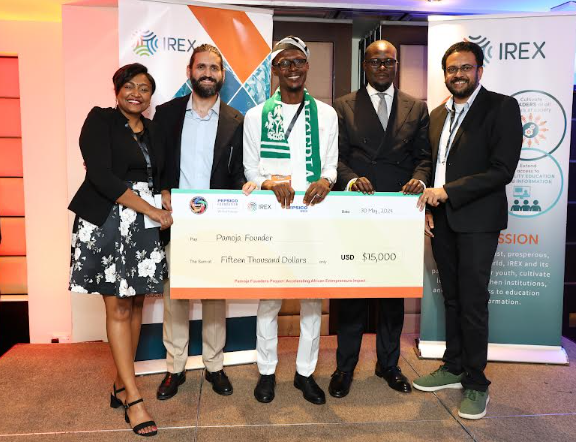
     The Pamoja Founders Project, a collaborative regional leadership development program by IREX, the PepsiCo Foundation, and PepsiCo has granted $15,000 each to six leading African enterprises as catalytic support. The announcement followed a competitive pitch competition held in Nairobi, Kenya, post a four-day boot camp for the Pamoja entrepreneurs. The winning enterprises, led by passionate young innovators, address critical food security challenges in their respective countries:

    The catalytic grants, valued at $15,000 each, were awarded to:

    ·       Abdul de Almeida, Co-Founder, Crimas, Orza and FAE; Mozambique

    ·       Juliet Namwanje, Founder, Ziimba; Uganda

    ·       Brendah Nantongo, Founder, Veathari Ventures Limited; Uganda

    ·       Elizabeth Okullow, Founder, Agriboom; Kenya

    ·       Dr. Akpem Terese Shadrach, Founder, Vet Konect; Nigeria

    ·       Nathnael Tadesse, Founder & CEO, Senaryo Trading, PLC; Ethiopia

    The Pamoja Founders Project provides comprehensive training, mentorship, and networking opportunities to equip young entrepreneurs with the skills and resources needed to scale their ventures. The champions represent the diverse landscape of food security solutions across Kenya, Uganda, Ethiopia, Tanzania, Mozambique, and Nigeria.

    The closing ceremony featured distinguished guests including representatives from IREX, the PepsiCo Foundation, and PepsiCo; H.E. Hon. Governor Sakaja Johnson, Governor of Nairobi City County, Kenya; United States Embassy officials; and prominent figures from the business and social impact sectors. Their presence underscored the importance of multi-stakeholder collaboration in addressing food security challenges across West, East and Central Africa.

    “We are here to celebrate and acknowledge the entrepreneurial spirits and journeys of the inaugural cohort of the Pamoja Founders Project,” said George Kogolla, IREX’s Country Director for Kenya and East Africa. “We also celebrate IREX and PepsiCo’s shared commitment to investing in promising young African leaders across the continent. As IREX marks 10 years of administering the U.S. Department of State’s Mandela Washington Fellowship, Pamoja exemplifies our continued support for alumni of such programs and their innovative solutions for Africa’s challenges.”

    “‘Pamoja’ is a Swahili word that means ‘together.’ At the PepsiCo Foundation we believe no single entity can solve an issue alone – working together with our partners and the communities we serve is key to ensuring our solutions are locally tailored for lasting impact.” C.D. Glin, President of the PepsiCo Foundation & Global Head of Social Impact for PepsiCo, shared. “Pamoja Founders Project and our partnership with IREX has lifted up 12 African food and agricultural entrepreneurs through a rigorous training program, with six also receiving catalytic seed grants. I’m extremely proud of the role Pamoja Founders Project is playing in making the food system more inclusive, secure, and sustainable across Africa.”

    “This exceptional cohort exceeded our expectations with their passion, thoughtfulness, and commitment to advancing food security across Africa,” said Roshan Paul, Director of Leadership at IREX. “Pamoja has affirmed that IREX’s investment in cultivating and supporting Africa’s future leaders is paying dividends.”

     “We are committed to working with innovators and changemakers to catalyze and shape a more sustainable food system for Africa. Each of the Pamoja entrepreneurs’ ventures addressed critical challenges and we look forward to being an integral a part of their journey to further success.” said Wael Ismail, Vice President – Corporate Affairs in Africa, Middle East, and South Asia (AMESA), PepsiCo.

    IREX will support the entire cohort for the next three months as they complete the program. After the project, the Pamoja Founders will join a vibrant, supportive pan-African network of IREX alumni.

    We also honor and recognize the contributions and accomplishments of the other participants in the cohort:

    ·       Benson Abila, Founder, M-Taka; Kenya

    ·       Mafeng Dangyang, Co-Founder, Kayan Gona Agro Network; Nigeria

    ·       Emmanuel Dusabimana, Founder, Agriboom; Uganda

    ·       Nalugemwa Elizabeth, Founder, Seedloans and Kyaffe Farmers Coffee; Uganda

    ·       Abdallah Mabrouk, Founder & Executive Director, Ibukia Shambani; Tanzania

    ·       Babajide Oluwase, Co-Founder and CEO, Ecotutu; Nigeria

    Read more about the members of the inaugural cohort and their ventures here.

  • Expansion of AstraZeneca’s flagship health equity programme Healthy Heart Africa

    Expansion of AstraZeneca’s flagship health equity programme Healthy Heart Africa

    The programme aims to improve health outcomes, with a focus on increasing awareness of the symptoms and risks of hypertension

    Broader range of non-communicable diseases targeted including chronic kidney disease; Programme growing across Africa, 54 million blood pressure screenings to date.

    AstraZeneca has set out a new ambition for Healthy Heart Africa, its flagship health equity initiative, to target a broader range of non-communicable diseases (NCDs), including chronic kidney disease (CKD) as well as hypertension and cardiovascular disease. The expanded programme will also launch in Egypt, reaching even more patients across the continent.

    At the 77th World Health Assembly (WHA) during an event co-hosted with the Ministry of Health for Uganda, AstraZeneca announced that the expanded Healthy Heart Africa programme will be operational in Côte d’Ivoire, Egypt, Ethiopia, Ghana, Kenya, Nigeria, Rwanda, Senegal and Uganda by the end of 2025.

    Launched in 2014, Healthy Heart Africa was established to address the increasing burden of cardiovascular diseases in Africa. The programme aims to improve health outcomes, with a focus on increasing awareness of the symptoms and risks of hypertension; providing health education and access to early screening and treatment; and delivering training to healthcare providers. This supports health system resilience by relieving the social and economic burden arising from late-stage treatment and care of cardiovascular and related diseases.

    Over the past decade, the programme has conducted more than 54 million blood pressure screenings and trained more than 11,400 healthcare workers. By March 2024, the programme achieved its initial ambition to reach 10 million people with elevated blood pressure, nearly two years ahead of target.

    HE Dr Jean Ruth Aceng Ocero, Minister of Health for The Republic of Uganda, said:  “As we confront the burden of non-communicable diseases in Uganda, which account for 36% of deaths and 81,300 annual mortalities it is imperative to strengthen our health systems. With a 21% probability of premature mortality from NCDs, resilient health systems are crucial for early detection and effective management.”

    HE Dr Jean Kaseya, Director-General of the Africa Centres for Disease Control and Prevention, said: “The rising burden of non-communicable diseases (NCDs) in Africa, which have increased from 24% in 2000 to 37% in 2019 of all deaths, highlights the urgent need for comprehensive and coordinated action. Supporting Member States to integrate NCD prevention and control into primary healthcare and strengthen multisectoral coordination on NCDs are among the priority interventions for the African CDC.”

    Ruud Dobber, Executive Vice President, BioPharmaceuticals Business Unit, AstraZeneca, said: “The public and private sectors must work hand in hand to address the escalating burden of NCDs and ensure more equitable and sustainable health outcomes for patients across Africa and beyond. Heart and kidney health are often interconnected, and with earlier diagnosis, intervention and treatment of cardiorenal diseases, we have a tremendous opportunity to prevent life-threatening complications, and reduce the economic and environmental impact of disease across the continent.”

    HE Dr Khaled Abdel Ghaffar, Minister of Health and Population for Egypt, said: “With the links between climate change and noncommunicable diseases like heart and kidney disease, it is becoming increasingly clear that we must act urgently to adapt our health systems to deal with this reality. Egypt is proud to be joining the Healthy Heart Africa program as part of our steadfast commitment to improving the health and well-being of all Egyptians. Through the signed Letter of Intent, we will be able to improve CKD public awareness, enhance early screening and diagnosis, support training for our HCPs, digitalize CKD healthcare management and update our local management protocols in line with the latest global standards.”

    At the event, global leaders in NCD care, including Ministers of Health for Uganda, Ethiopia and Egypt, as well as high-level representatives from the Africa CDC, the World Health Organization, PATH, Amref and patient advocacy groups, committed to tackle the growing burden of NCDs in Africa, emphasising the importance of early detection, evidence-based treatments, and the effective implementation of public-private partnerships such as Healthy Heart Africa.

    AstraZeneca reinforced its focus on taking a public-private partnership approach to deliver Healthy Heart Africa’s goals by signing Memorandums of Understanding with the Ministries of Health from Egypt, Uganda, and Ghana. The programme supports Sustainable Development Goal (SDG) 3 & 4 to reduce by one-third premature mortality from NCDs through prevention and treatment by 2030.

  • IREX, the PepsiCo Foundation and PepsiCo reveal 12 finalists for The Pamoja Founders Project

    IREX, the PepsiCo Foundation and PepsiCo reveal 12 finalists for The Pamoja Founders Project

    …Six entrepreneurs from West, East and Central Africa to receive seed funding to advance food security across the continent 

     The Pamoja Founders Project, a collaborative regional leadership development program by IREX, the PepsiCo Foundation, PepsiCo and D-Prize, has revealed 12 exceptional young entrepreneurs leading ventures that strengthen sustainable food systems across six African nations: Nigeria, Ethiopia, Mozambique, Uganda, Kenya, and Tanzania. Following a rigorous 9-month training program, the top six most promising enterprises will be awarded a catalytic seed grant of USD $15,000 each, funded by the PepsiCo Foundation.

    The Pamoja Founders Project provided a comprehensive support system for its 12 cohort members, equipping them to further develop innovative and disruptive solutions that address food security challenges in Africa. Through mentorship, skill-building workshops, access to professional networks, and crucial funding opportunities, the program empowered these young entrepreneurs to scale their ventures. Over the past 9 months, the cohort has undergone personal and professional growth, equipped with essential tools to amplify their impact within their sectors and markets.

    Pamoja Founders Project cohort members are leading new ventures working at the intersection of food security, sustainable supply chains, and resilient food systems in one of six countries across West, East and Central Africa. The inaugural cohort members are:

    • Benson Abila, Founder, M-Taka; Kenya
    • Abdul de Almeida, Co-Founder, Crimas, Orza and FAE; Mozambique
    • Mafeng Dangyang, Co-Founder, Kayan Gona Agro Network; Nigeria
    • Emmanuel Dusabimana, Founder, Agriboom; Uganda
    • Nalugemwa Elizabeth, Founder, Seedloans and Kyaffe Farmers Coffee; Uganda
    • Abdallah Mabrouk, Founder & Executive Director, Ibukia Shambani; Tanzania
    • Juliet Namwanje, Founder, Ziimba; Uganda
    • Brendah Nantongo, Founder, Veathari Ventures Limited ; Uganda
    • Elizabeth Okullow, Founder, Agriboom; Kenya
    • Babajide Oluwase, Co-Founder and CEO, Ecotutu; Nigeria
    • Dr. Akpem Terese Shadrach, Founder, Vet Konect; Nigeria
    • Nathnael Tadesse, Founder & CEO, Senaryo Trading, PLC; Ethiopia

    “The journey the Pamoja fellows have been on over the past nine months – both as individuals and as a cohort – has been truly remarkable,” Roshan Paul, IREX’s Leadership Practice Director, said. “Each has excelled with the challenging curriculum, and more importantly, accelerated their venture’s trajectory to impact.”

    “The Pamoja Founders Project is giving rising food and agricultural entrepreneurs a unique opportunity to engage with industry experts, receive sector-specific coaching, access professional networks, and join a vibrant community of like-minded entrepreneurs,” C.D. Glin, President of the PepsiCo Foundation & Global Head of Social Impact for PepsiCo, shared. “What makes this program different from other accelerators is the backing of one of world’s leading food and beverage companies and a renowned global NGO committed to catalyzing sustained connections and shared learning experiences that will ultimately fuel pathways to prosperity for these leaders and their communities. The Pamoja Founders Project is an investment in a more food secure and resilient future for Africa.” 

    Paul Andersen, CEO of PepsiCo West, East, and Central Africa (WECA).

    “Africa’s food security challenges demand innovation,” says Paul Andersen, CEO of PepsiCo West, East, and Central Africa (WECA). “The Pamoja Founders Project marks PepsiCo’s first program for young African agripreneurs, aligning with our PepsiCo Positive vision for a sustainable food system. By empowering these future leaders, we’re building a more resilient food future for Africa.”

  • British International Investment and Citi launch $100 million risk-sharing facility to support trade finance in frontier and emerging African economies.

    British International Investment and Citi launch $100 million risk-sharing facility to support trade finance in frontier and emerging African economies.

    • The facility targets underserved African markets such as Benin, Cameroon, Tanzania and Uganda. 
    • The funding helps to accelerate the flow of key agricultural commodities, and use of machinery and solutions that strengthen food security in vulnerable economies. 
    • This initiative seeks to address the lack of liquidity among Africa’s commercial banks. 

    British International Investment (BII), the UK’s development finance institution and impact investor, today announced the signing of a $100 million risk-sharing facility with Citi to support the trade finance needs of SMEs and corporates in frontier and emerging African economies. The initiative was announced during a signing ceremony in Washington at the World Bank’s Spring Meetings and is expected to provide a boost to businesses with high-potential but limited by a lack of finance.

    The investment seeks to address the critical lack of foreign currency in the region by providing trade finance liquidity to Citi’s extensive network of commercial banks, enabling financial institutions to increasingly support African businesses with imports of key commodities such as wheat, fertiliser, rice and sugar. 

    The BII and Citi facility will help local businesses in underserved markets to finance the import of economically productive goods, transport, essential equipment and machinery supporting the emergence of manufacturing industries in frontier and emerging economies, including Benin, Cameroon, Côte d’Ivoire, Rwanda, Tanzania, Uganda and Zambia.  

    The funding comes as local businesses struggle to secure key imports due to challenges precipitated by the COVID-19 pandemic and the Russia-Ukraine war, which have led to high inflation, rising interest rates and an increase in commodity prices. As a result, the trade finance gap in Africa has increased by approximately a third since the onset of the pandemic, climbing from $81 billion in 2019 to $120 billion in 2023. 

    BII has supported businesses in Africa since 1948 and Citi opened its first office in the continent in 1920. The new facility leverages their combined expertise and will potentially deepen Citi’s relationships with over 200 local banks who in turn can empower ambitious companies facing severe funding constraints in harder-to-reach markets.

    The UK’s Minister for Development and Africa, Andrew Mitchell said: “This investment underlines BII’s commitment to supporting fragile economies across Africa in accessing vital goods to support food production, including fertiliser and agricultural machinery. By investing in countries where support is most needed, BII continues to take a lead in the fight against food insecurity.”

    Nick O’Donohoe, CEO, British International Investment, said: “Our investment with Citi deepens BII’s footprint across the continent and supports local businesses struggling to maintain and expand operations due to a lack of capital. The facility is testament to our commitment to tackle complex issues such as food security in Africa by extending liquidity solutions to strategic sectors. This empowers local businesses to strengthen supply chains and accelerate the flow of essential trade.”

    Stephanie von Friedeburg, Head of DFI Strategic Partnerships, Citi, said: “Citi is proud to work with BII in seeking to strengthen trade, and food security in frontier and emerging African economies. Today’s announcement brings together BII’s long history of support in the region, with Citi’s unique cross-border vantage point. At Citi, we understand the transformative potential of global trade and are committed to bringing solutions that facilitate critical investments to enable economic growth.” 

    This investment contributes to the United Nations’ Sustainable Development Goals 1, 2 and 8, No Poverty, Zero Hunger, and Decent Work & Economic Growth.

  • Access Bank PLC and KCB Group PLC Sign Binding Offer on Acquisition of National Bank of Kenya (NBK)

    Access Bank PLC and KCB Group PLC Sign Binding Offer on Acquisition of National Bank of Kenya (NBK)

    Access Bank PLC and KCB Group PLC have today signed a binding agreement to acquire 100 percent shareholding in National Bank of Kenya Limited (“NBK”) from KCB.

    The successful completion of the transaction is subject to conditions that are customary for transactions of this nature including receipt all regulatory approvals from, amongst others, the Central Bank of Kenya, the Central Bank of Nigeria, the COMESA Competition Commission, and notifications to other relevant regulators.

    For Access Bank, this move underscores its commitment to bolstering its presence in Kenya and the broader East African region. Furthermore, the acquisition builds on the Bank’s growing operations in the Democratic Republic of Congo, Rwanda, as well as its impending acquisitions of a majority stake in Uganda’s Finance Trust Bank Limited, the acquisition of majority equity stake in African Banking Corporation (Tanzania) Limited (“BancABC Tanzania”), and Standard Chartered Bank’s Consumer, Private & Business Banking business in Tanzania.

    Commenting on the transaction, Roosevelt Ogbonna, Managing Director/Chief Executive of Access Bank Plc said:

    “The transaction represents an important milestone for the Bank as it moves us closer to the achievement of our five-year strategic plan through increased scale in the Kenyan market. We are building a strong and sustainable franchise to support economic prosperity, encourage Africa trade, advance financial inclusion thereby empowering many to achieve their financial dreams.

    “Trade flows in East Africa revolve around key trade corridors, with Kenya being a key player in the region. With the African Continental Free Trade Agreement, these corridors will continue to expand and by deploying our best-in-class financial solutions, we are strategically positioned to deliver sustainable value for our stakeholders. The consolidation in Kenya will support the realisation of our aspiration to be Africa’s Payment Gateway to the World. Subsequent to the completion of the transaction, NBK would be combined with Access Bank Kenya Plc to create an enlarged franchise in the pursuit of our strategic objective for the Kenyan and East African markets.

    KCB Group CEO, Paul Russo said: “This transaction represents what we believe is a great opportunity to maximise value for our shareholders while strengthening the competitive position for the Group. The past four years have been defining for NBK as a KCB Group subsidiary and this step marks the opening of new opportunities.”

    “During the period, we have made progressive investments in the Bank, and we believe that this is in the best interest of the Group and its sustainability. Our growth strategy is premised on both organic and inorganic plans, and we shall continue to seek opportunities that increase our shareholder’s value,” said Mr Russo.

    All parties will be working together in the coming months to fulfil the conditions precedent relating to the proposed acquisition, which include the regulatory approvals of the Central Bank of Nigeria and the Central Bank of Kenya. Access Bank will continue to provide a full range of banking services and continuity for its stakeholders including employees and customers in Kenya.

    In the meantime, NBK customers will continue to access seamless services across various touchpoints including through the branch network and mobile banking platforms.

    Upon conclusion, stakeholders will benefit from the from an enlarged franchise, with best-in-class customer service and governance structures committed to empowering the communities wherein the Bank operates. The combined entity will leverage Access Bank’s dedication to economic development by extending financial services to the unbanked, thereby deepening financial inclusion across the region.

    In recent months, Access Bank has embarked on a strategic expansion drive, marked by significant acquisitions. In January, the Bank completed its acquisition of Atlas Mara Zambia, thereby becoming one of Zambia’s top five banks by revenue with prospects to be in the top three by 2027.

  • Five new teams, three new countries to compete in 2024 Basketball Africa League season tipping off on March 9 in South Africa

    Five new teams, three new countries to compete in 2024 Basketball Africa League season tipping off on March 9 in South Africa

    The fourth BAL season will feature a record 48 games in Pretoria; Cairo, Egypt; Dakar, Senegal; and Kigali, Rwanda, marking the first BAL games in South Africa and the first time the league will play games in four different countries

    Defending BAL Champion Al Ahly (Egypt) Among Seven Teams That Have Competed in the BAL Before, Alongside First-Time Participants from Burundi, Central African Republic, Libya, Morocco and Rwanda. Season will Tip Off with First-Ever BAL Game in South Africa Featuring 2022 Runner-Up Petro de Luanda (Angola) Taking on First-Time BAL Participant FUS Rabat Basketball (Morocco) at SunBet Arena in Pretoria at 4:00 p.m. CAT. Tickets on Sale Now at BAL.NBA.comTicketmaster.co.za (Pretoria, South Africa) and Teewtickets.com (Dakar, Senegal); Fans Can Save Up to 35% On Group Packages.

    The Basketball Africa League (BAL) today announced that five new teams and three new countries are among the 12 club teams from 12 African countries that will compete in the 2024 BAL season, which will tip off on Saturday, March 9 at SunBet Arena in Pretoria, South Africa.  The fourth BAL season will feature a record 48 games in Pretoria; Cairo, Egypt; Dakar, Senegal; and Kigali, Rwanda, marking the first BAL games in South Africa and the first time the league will play games in four different countries.

    The 12 teams have been divided into three conferences of four teams each.  Seven of the teams have competed in the BAL before, two of which – Petro de Luanda (Angola) and US Monastir (Tunisia) – will be competing for a record fourth season.  Five teams are making their BAL debut, including the first BAL teams from Burundi, Central African Republic and Libya

     KALAHARI
     
         NILE
     
                    SAHARA
     
    Cape Town Tigers (South Africa)
     
    Al Ahly (Egypt)
     
    Armée Patriotique Rwandaise Basketball (APR; Rwanda)*
     
    Dynamo Basketball Club (Burundi)*
     
    Al Ahly Ly (Libya)*
     
    AS Douanes (Senegal)
     
    FUS Rabat Basketball (Morocco)*
     
    Bangui Sporting Club (Central African Republic)*
     
    Rivers Hoopers (Nigeria)
     
    Petro de Luanda (Angola)
     
    City Oilers (Uganda)
     
    US Monastir (Tunisia)
     

    *First-time BAL participant

    Each conference will play a 12-game group phase during which each team will face the other three teams in its conference twice.  New this season, the home team in each market will play on every gameday, including on the weekends.  The inaugural Kalahari Conference group phase will take place from Saturday, March 9 – Sunday, March 17 at the SunBet Arena.  The Nile Conference group phase will take place from Friday, April 19 – Saturday, April 27 at Hassan Mostafa Indoor Sports Complex in Cairo.  The Sahara Conference group phase will take place from Saturday, May 4 – Sunday, May 12 at the Dakar Arena in Dakar.  The top two teams from each conference and the top two third-place teams from across the three conferences will travel to BK Arena in Kigali for four seeding games followed by an eight-game, single-elimination Playoffs and Finals from Friday, May 24 – Saturday, June 1.  

    In the season opener, first-time BAL participant FUS Rabat Basketball (Morocco) will face Petro de Luanda at 4:00 p.m. CAT.  In the second game, home team Cape Town Tigers (South Africa) will take on first-time BAL participant Dynamo Basketball Club (Burundi) at 7:00 p.m. CAT.  On the opening day of the Nile Conference, home team Al Ahly (Egypt) will begin its title defense against two-time BAL participant City Oilers (Uganda) at 5:00 p.m. GMT.  The complete game schedule is available at BAL.NBA.com.

    Tickets for the Kalahari Conference group phase in Pretoria and the Sahara Conference group phase in Dakar are on sale now at BAL.NBA.comTicketmaster.co.za (Pretoria) and Teewtickets.com (Dakar).  Single game tickets start at 75 ZAR for the Kalahari Conference group phase and 2,500 XOF for the Sahara Conference group phase.  Fans can save up to 35% off single game ticket prices for group packages by emailing BalTickets@thebal.com, and up to 20% off single game ticket prices for all games during the Sahara Conference group phase by selecting two, four or all games.  Fans who purchase tickets will also have free access to BAL Fan Zones at the arena in each market.  Ticket sales information for the Nile Conference group phase in Cairo and the Playoffs and Finals Kigali will be announced at a later date. 

    Champions from the national leagues in Angola, Egypt, Nigeria, Rwanda, Senegal and Tunisia earned their participation in the 2024 BAL season by winning their respective national leagues.  The remaining six teams, which come from Burundi, Central African Republic, Libya, Morocco, South Africa and Uganda, secured their participation through the Road to the BAL qualifying tournaments conducted by FIBA Africa across the continent from October to November 2023.

    Rwanda Development Board, NIKE, Jordan Brand and Wilson will return as BAL Foundational Partners.  The league’s roster of world-class marketing partners also includes Afreximbank, Hennessy and RwandAir.

    Additional information about the 2024 BAL season will be announced in the coming weeks.