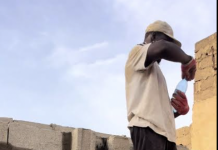












…donates waste bins to Obele Nursery and Primary School, Surulere.
As part of its commitment to making sustainable living commonplace, employees of Unilever Nigeria partnered with Wecyclers and Food and Beverage Recycling Alliance (FBRA) to commemorate World Clean-Up Day 2023. The port of call was Surulere, Lagos, where they cleaned the premises of Obele Nursery and Primary School and donated waste bins to encourage the pupils to embrace good hygiene by keeping their surroundings clean.
Speaking on the initiative, the Head, Corporate Affairs and Sustainable Business, Unilever Nigeria, Godfrey Adejumoh, said, “The World Clean-Up Day is a global initiative that brings together people from all walks of life to clean up their communities. In line with the 2023 theme “Embody Unity”, members of the staff of Unilever Nigeria Plc, staff of Obele Nursery and Primary School, Wecyclers, FBRA, and some volunteers cleaned up the premises of the school and some places in Surulere”.
Evaluating the importance of the exercise, the National Finance Director, Unilever Nigeria, Folake Ogundipe, disclosed that the significance of the celebration of World Clean-Up Day is to enlighten people on proper waste management practices and how to turn waste into wealth. Ogundipe noted that the commemoration aligns with the purpose of Unilever Nigeria as a company.
She expressed delight about the company’s partnership with Wecyclers, FBRA, the community, and Obele Nursery and Primary School to drive massive awareness for a sustainable environment among the people.
On her part, Head, Human Resources and Partnerships, Esther Chibuenyin-Fagbo said, “We are here today because we care about our world, the environment, and the people. What we are doing today aligns with Unilever’s core pillars which include- improving the health of the planet, improving people’s health, confidence, and wellbeing, and contributing to a fairer, more socially inclusive world.”
Emphasizing the purpose of sensitizing the people about waste recycling and turning waste into wealth, Fagbo said, “All they need to do is to collect their recyclables- plastic, paper, cans, cardboard, and bottles. Take them to any of Wecycler’s recycling hubs around them in exchange for cash.”
“As a company, we have been in partnership with Unilever Nigeria since 2014. Through this partnership, we have set up kiosks where you can donate your recyclables. We have developed a kiosk system in 17 locations where you can drop off your recyclables and get cash incentives“, she added.
In her remarks, the Head Teacher of the school, Nnabuenyi Obianuju expressed gratitude to Unilever Nigeria for the clean-up exercise which she considers a noble gesture that would go a long way to restoring sanity in the school environment.
Unilever Nigeria is a century old in the country this year. As the longest-serving manufacturing company in Nigeria, Unilever is committed to its vision of making sustainable living commonplace through its brands and operations.
Unilever Nigeria Plc released its unaudited interim report for the six months period ended 30th June 2023. The Company recorded Turnover of N54.2 billion in the period under review which represents 24% topline growth compared to N43.8 billion Turnover recorded in the corresponding period in 2022.
The company recorded a gross profit of N13.1 billion for the period ended 30th June 2023 which is 8% drop versus N14.2 billion reported for the same period last year.
The result showed a profit for the year from continuing operations of N2.8 billion for the period ended 30th June 2023 compared to a profit for the corresponding period in 2022 of N1.9 billion which is 45% up versus 2022.
Speaking on the results, the Managing Director, Tim Kleinebenne, said, “Unilever Nigeria remains focused on the delivery of its 4G growth model of competitive, consistent, profitable, and responsible growth. Unilever is pleased with its performance progress riding on the pillars of operational efficiency, cost optimization, purposeful brands and increasing market share across key categories.”
“Unilever Nigeria will continue to strengthen its operations in the country to meet citizen’s needs in health and hygiene through our brands and products.” He added.
As a centenary old company and the longest-serving manufacturing company in Nigeria, Unilever Nigeria is committed to ensuring continuous socioeconomic impact and investment in Nigeria through its brands and operations.
Unilever Nigeria and UNICEF today announced the launch of the Future-X Campus Ambassadors Program (FUCAP) to reach 3 million Nigerian youth and equip 700,000 of them between the ages of 16 and 24 with the requisite skills to succeed in the workplace of the future by 2026
This aligns with the Unilever Compass commitments to equip 10 million young people worldwide with essential skills to prepare them for job opportunities by 2030, and UNICEF’s Generation Unlimited Nigeria initiative – a public-private-youth partnership aimed to support 20 million young Nigerians by 2030 with skills and opportunities to transition from learning to earning, through shared-value partnerships around digital skills development, workforce readiness programmes, and young people engagement. The FUCAP initiative was launched on UNICEF’s Yoma and U-Report Platforms, a youth-centered platform, to ensure an extensive reach of young people in universities and other institutions of higher learning across Nigeria.
Speaking on the initiative, the Managing Director, Unilever Nigeria, Tim Kleinebenne, said, “FUCAP is targeted at students in Universities and Polytechnics across Nigeria. This is part of our commitment to helping young people in Nigeria reach their full potential and contribute to the development of Nigeria.”
On his part the Human Resources Director, Unilever West Africa, Ola Ehinmoro said, “our target for FUCAP which is a three-year program is to equip 700,000 young people with skills to become entrepreneurial-minded and prepared to keep re-inventing themselves for the future of work annually in the first year of kick off.”
“We will also engage 100,000 students through hybrid campus seminars that will provide students with information about the skills they need to succeed in the workplace and opportunities to network with employers and other young people. Unilever Nigeria will provide 15 Graduate Internship placements through the FUCAP initiative to immerse these talents into its workforce.” He added.
“UNICEF is happy to partner with Unilever Nigeria on this important initiative that focuses on developing critical 21st-century skills for young people,” said Cristian Munduate, UNICEF Nigeria Representative. “We look forward to seeing the positive impact this program will have on the lives of youths across Nigeria in helping them succeed in the workplace and contribute to the economic growth of their communities.”
As a centenary-old company and the longest-serving manufacturing company in Nigeria, Unilever Nigeria is committed to ensuring continuous impact and investment in Nigeria through its brands and operations. The launch of FUCAP in partnership with UNICEF is a demonstration of this commitment.
The Board of Directors of Unilever Nigeria Plc has considered and approved the resignation of Mr. Carl Cruz as Managing Director with effect from May 4, 2023, and has appointed Mr. Tim Kleinebenne as the new Managing Director with effect from May 5, 2023.
This was disclosed yesterday in a statement released by the company.
According to the statement, “On behalf of the Board of Directors, management, and staff of Unilever Nigeria, we would like to wish Mr. Cruz all the very best in his future endeavours and would like to express our sincere gratitude to him for his outstanding work which delivered positive business turnaround and significant increase in both turnover and profit, thereby setting Unilever Nigeria on a path to sustainable and profitable growth after steering the company through the difficult years of the COVID-19 pandemic.”
Unilever Africa President, Mr. Jaime Aguilera, said: “I would like to thank Carl personally for his dedication and commitment to bringing Unilever’s Compass Strategy to life. He has delivered superb results at Unilever Nigeria by serving the Nigerian consumer and his work ensuring the company continues to actively contribute to building a better society in Nigeria in its centenary year.”
Speaking further Aguilera added: “I also want to welcome Tim to his new role where his skills as a resilient entrepreneur who can deploy business and market development strategies with speed and determination will take Unilever Nigeria to the next level.”
Kleinebenne graduated in Business Economics from the University of Hamburg in Germany. He is a highly experienced General Manager and has 31 years of international experience in the Fast Moving Consumer Goods (FMCG) industry at Unilever. This includes senior sales and marketing roles as well as over 10 years as Managing Director of Unilever businesses, two of which were publicly listed. He is currently Managing Director of Unilever Côte d’Ivoire and has also served as Managing Director of Unilever Ethiopia, where he established the business and built it into a leading local consumer goods manufacturer, and as Managing Director of Unilever Caribbean.
…Funding to Help Social Enterprise Wecyclers Create Jobs and Keep the Environment Cleaner
Unilever Nigeria and Bridges Outcomes Partnerships have agreed a $2 million US partnership to help social enterprise Wecyclers expand plastic waste collection in Nigeria.
Unilever Nigeria and Wecyclers have been working together since 2014 as part of Unilever’s ‘waste to wealth’ campaign, which helps local organisations work out how to create value and jobs from the reduction, collection, recycling, and reusing of plastic waste.
Under this partnership, seed funding from a Unilever, UK Government and EY joint project called TRANSFORM helped Wecyclers expand their successful franchise and collection model. However, as an entrepreneurial social enterprise, Wecyclers lacked access to the long-term funding needed to build on that progress and significantly scale up this model.
“This funding is a major step forward for us in our work to ensure plastics waste stays out the Nigerian environment” said Mr. Carl Cruz, Unilever Nigeria Managing Director, adding “It shows there is wealth to be made from creating jobs tackling plastics waste, it cleans up the Nigerian environment and it develops a more sustainable financing model for groups like Wecyclers.”
Wale Adebiyi, the Managing Director, of Wecyclers added “We started with one bicycle and a dream, and through hard work and entrepreneurship we have built a scalable model that, thanks to this Development Impact Bond, will create hundreds of jobs, and improve the income of thousands of sorters, who will earn 25% more than they do today.”
All the partners involved hope this experience in Nigeria will inspire the further development and use of such Bonds globally to finance organisations tackling similar challenges.
Unilever has been operating in Nigeria for a century, manufacturing some of Nigeria’s leading consumer goods brands. With the vision to make sustainable living commonplace, driven by Purpose, the company will stop at nothing to continue to drive impact through its brands and operations. The Managing Director, Carl Cruz, speaks on some of the company’s key success factors in the past and the plan of the company to remain relevant in the marketplace in the next 100 years and beyond.
NW: Tell us the vision of Unilever and what has made it stand out through the years.
CC: Unilever’s journey began with our founder, Williams Lever. His vision of making products that solve environmental challenges was evident when he introduced Sunlight bar soap in the early 1890s. This milestone helped the Lever Brothers to become the first company to popularize cleanliness in Victorian England. This particular vision has become a Purpose for Unilever- a purpose that underpins our business strategy and guides our operations. Over the years, we have become a leading company in health and hygiene products. Our vision to make sustainable living commonplace permeates our global and Nigerian operations driving Purpose. In Nigeria, everything we do is centered on creating a positive social impact.
NW: Could you tell us how Unilever Nigeria PLC has evolved over the years and what makes it a truly Nigerian company?
CC: As a business that is 100 years old in the country, we have evolved into a truly Nigerian company, full of pride and positive impact through our brands that are household names in Nigeria. Our journey of impact, in the country, over the years has been made possible through various stakeholders- our employees, government, regulators, trade associations, NGOs, key distributors, vendors, suppliers, and our consumers. I have been with Unilever for decades and worked in different markets. I can clearly say that our business in Nigeria is deep-rooted in the resilient spirit of Nigerians.
NW: The Unilever story has been guided by Purpose, and this has been an exciting journey of the impact that has fuelled socio-economic development in Nigeria through partnerships. Kindly share an overview of how this Purpose has been a catalyst, driving impact through brands and operations.
CC: Purpose underpins our operations in all markets including Africa and Nigeria. Through our journey and guided with purpose, we built the Unilever Sustainable Living Plan (USLP), launched in 2010 and wound down in 2020 after making an incredible impact across our ecosystem in that particular decade. Our Purpose, now re-launched through our COMPASS strategy, is more holistic and encompassing for a more significant impact through our brands, people, and operations. Through our journey of 100 years and guided by Purpose, we are leveraging on building partnerships for impact. Our impacts cut across several sectors, enabling us to contribute to Nigeria’s socio-economic development. We are intentional about our localization agenda, diversity and inclusion, women empowerment, building capacity and capabilities of the youth in preparing them for the future of work, and most importantly, improving the planet’s health through our plastic collection drive. Unilever will stop at nothing to continue driving impact through our brands and operations, especially as we celebrate 100 years in Nigeria.
NW: Over the years, Unilever brands, Pepsodent, Closeup, Knorr and many more are household names that are stillvery much around today. How would you describe your brand’s staying power in a highly fragmented and competitive market like Nigeria?
CC: In our industry, teams and brands that engage consumers strategically will always win in the marketplace. At Unilever, the consumer is at the heart of everything we do as an organization. Over the years, we have built great campaigns for Knorr, Royco, Pepsodent, and Closeup. These campaigns have become synonymous with the Nigerian way of life. Having been here for a century, we have had to evolve how we operate and engage with consumers. This makes our brands fresh, relevant, and impactful in the country.
NW: Unilever is a leading voice in equity, diversity, and inclusion advocacy. Can you tell us more about this and how they have been entrenched into the operations of Unilever Nigeria?
CC: This is a crucial success factor for Unilever, especially in Nigeria. As a company serving a diverse consumer base, our employees representation reflects diversity such as gender, social and economic background, ethnicity, and beliefs. I am very proud to say that we exited 2022 with a female employee representation ratio of 47%. More importantly, over 51% of all new hires are female. We have also started a journey to include persons with disabilities in our employee base, which today stands at 1.4%, and our objective is to reach 5% by 2025. A key thrust of Unilever is to provide a safe zone in the organization. It is a zone where opinions, perspectives, and points of view hold the same way for consideration in decision-making. This is an excellent way for us and a critical success factor in our operations in Nigeria.
NW: The future of work is a huge conversation that has evolved differently. As a centenary-old organization with the clamour for adopting technology to take over many human-related activities, what is Unilever doing about adopting technology in the future of work?
CC: I think it is the right topic, and this is big on our agenda in Unilever Nigeria. For us, it is not about technology over humans or humans over technology. It is about finding the right balance that works well for us to engage the consumers here in Nigeria in the best possible way. We are embracing the future ways of working through our agile working. It is system that allows everyone to function at their best. It is not about hirachy, it is about ownership and responsibility to achieve set target. This agile ways of working has generated tremendous energy and momentum in the organization in Nigeria.
As we continue to embrace the future of work, we are very intentional about our hybrid ways of working. We only require our people to report to the physical office twice a week. This helps our people to avoid and significantly reduce environmental challenges associated with commuting to the workplace. We believe that our people should spend quality time focusing on important things like taking care of family requirements, attending to kids while striking a balance focusing on work essentials to achieve greater results and impact.
The hybrid way of working has done wonders for us as we walk through the challenges of our environment. It has improved significantly on the productivity of our people and their worklife balance.
In 2020, we did an end-to-end review of our processes to automate our operations, reduce waste and leverage on other Unilever markets know-how to improve our operational efficiencies. The goal is to make us an agile organisation that is data driven and quick to respond to market demands. For us, this is the future of work. We are not over-complicating things; we are making things simpler.
NW:Tell us more about the Unilever Compass strategy and how significant it is to your journey as a centenary old company in Nigeria.
CC: The Compass is the strategy for the Unilever group to be a force for good through purpose and innovation. The Compass is founded on three pillars: Brands with Purpose Grow; People with Purpose Thrive; and Companies with Purpose Last.
The Unilever Compass corporate strategy puts serving our stakeholders at the heart of everything we do and outlines how we intend to make that ambition a reality.
The Compass very much builds on the past ten years of the USLP: the successes, the failures and the lessons learnt. It lays the pathway for us to realise our vision of being the leader in sustainable business globally – as well as to finally put to bed the debate of whether sustainability is good for business. The Unilever Compass integrates the financial, environmental, social and governance dimensions of our business. The Compass forms the basis of our strategic choices in the coming years. The Compass is underpinned by existing business fundamentals of our operations, such as business integrity; safety at work; employee wellbeing; product safety and quality; responsible innovation; responsible advertising and marketing; safeguarding data; engaging with stakeholders; being responsible taxpayer; and our commitment to transparency. We have made stretching sustainable development commitments through the Compass.
Our commitments are built around three core pillars and eight sub-pillars. Our core pillars are, to improve the health of the planet, improve people’s health, confidence and wellbeing, and contribute to a fairer, more socially inclusive world. Our eight sub-pillars are focused on climate action, protect and regenerate nature, waste-free world, positive nutrition, health and wellbeing, equity, diversity, and inclusion, raise living standards, and future of work.
As centenary old company in Nigeria, the Compass is our strategy to deliver growth that is consistent, competitive, profitable and responsible. Our business simply will not prosper without a healthy planet and society. We’ve set out an ambitious sustainability agenda to tackle the issues that our consumers and stakeholders care deeply about – such as climate change, plastic pollution and inequality.
NW: Are there specifics you can share with us on your climate change action, and plastic pollution?
CC: On a global scale, Unilever has an ambitious plan to take us to net zero emissions by 2039. We’re transitioning to renewable energy across our operations, finding new low-carbon ingredients, expanding our plant-based product range and developing fossil-fuel-free cleaning and laundry products. We’re using our influence to accelerate progress in other areas of our value chain. Our brands are working to reduce the impact of our products when used by consumers. And we’re calling on governments, businesses and other partners to raise their ambitions and join the race to zero emissions.
On Plastic Pollution – The Circular Economy, Nigeria generates about 32 million tonnes of solid waste every year, of which 2.5 million tonnes are plastic waste. Most of these wastes, including plastic and non-plastic waste, end up in landfills, drainages, and water bodies. The Federal Ministry of Environment and the state’s counterparts have taken measures to improve waste management, and some businesses are geared to support the government’s efforts.
Unilever is equally taking action on plastic across our business using our framework: Less plastic. Better plastic. No plastic. Globally, we are committed to ensuring that all our plastic packaging is reusable, recyclable, or compostable. We want to collect and process more plastic than we sell by 2025, reduce virgin plastic by 50 per cent and have 100 per cent reusable, recyclable, or compostable plastic packaging by 2025. These commitments are been adopted locally.
Strategic partnerships lie at the heart of our efforts to drive transformational change in our society. Unilever Nigeria has been supporting the efforts of social enterprise, Wecyclers, to collect and recycle waste since 2014. In 2019, we signed a 3-year partnership to collect and recycle plastic waste from the environment that was the equivalent in volume to what we produce and sell using community kiosk models. We have since extended our collaboration with Wecyclers, with support from TRANSFORM, to create plastic collection and recycling franchises around the country. These partnerships creating jobs and the subscribers to our community kiosks collection model are earning more than the national minimum wage monthly from exchanging their plastics waste.
NW: How has Unilever been able to entrench its “people with a purpose thrive” belief to engender workplace growth that has ticked the boxes of creating capability through lifelong learning, unlocking capacity for change, and deepening the culture of pioneering?
CC: At Unilever Nigeria, we firmly believe that winning in the marketplace requires winning with and through people. This belief continues to guide how we work and reflects in our policies and practices at every stage of our employment cycle. We are committed to remaining an equal-opportunity employer passionate about diversity, inclusivity, and mutual respect. Our employees are our most valued assets, and as such, their well-being and Purpose are integral to building a positive work environment that drives growth. In this regard, we deployed initiatives to promote a highly engaged and productive workforce while inspiring a sense of accountability and ownership.
As part of our drive to foster a productive and inspiring environment, we re-launched initiatives such as the “agile working” campaign powered by the recently completed office renovation across our business premises. We included a crèche, eco-friendly office workspaces, optimized resource sharing, and disability-friendly infrastructure. These are in addition to initiatives such as flexible working arrangements and the maternity and paternity support (MAPS) scheme. The MAPS scheme takes effect as soon as the employee is expectant, and this triggers support from the line manager and the leadership team even until and after their return from maternity leave. We give four weeks of paternity leave, and six months of maternity leave, of which four months are paid. This has engendered an increased sense of belonging, motivation, and commitment among employees.
NW: It is one thing to have a talented team of committed professionals; it’s another to oil their commitment with developmental programs that give them a sense of belonging to the organization. How has Unilever continually gotten the best out of its people through employees engagement and talent development to drive business growth?
CC: Our employees are our most valued assets. Their well-being and Purpose are integral to building a positive work environment that drives growth. In this regard, we deployed initiatives to promote a highly engaged and productive workforce while inspiring a sense of accountability and ownership. In 2019, we pioneered a new growth culture where we introduced a management framework to encourage high performance and support employees in living out their Purpose while driving business growth. In addition to our focus on experiential development through on-the-job deliverables, we implemented robust technology-enable systems to develop better leadership, professional, and general skills in our employees for enhanced engagement and productivity to complement other traditional learning methodologies, with our business leaders being at the forefront of these initiatives. The introduction of the book club, line manager capability-building sessions, and other related activities continue to create the platform for our business leaders to engage with employees and share their experiences while also giving career coaching and mentoring to young employees within the organization.
NW: As we celebrate the centenary of Unilever in Nigeria, what should Nigerians look forward to from the company, in line with the strategic direction of building a brighter future together?
CC: The intent is to be here in the next 100 years and beyond. After being here for a century, Nigerians can expect a better and stronger, Unilever as an organization. We want to increase our relevance to Nigerian consumers by continuing to offer established products in a refreshed way and bringing in a diverse set of portfolios from other markets that will be genuinely relevant to making the lives of Nigerians much better in the next 100 years and more.
The domestic stock market, yesterday closed in the red as losses in Geregu Power Plc and 19 others dragged the All-Share Index lower by 0.10 percent. The All Share Index (ASI) decreased by 46.32 absolute points, representing a dip of 0.10 percent to close at 44,236.70 points. Similarly, the market capitalisation lost N25 billion to close at N24.095 trillion.
The downturn was impacted by losses recorded in medium and large capitalised stocks, amongst which are; Geregu Power, Unilever Nigeria, Nigerian Breweries, Multiverse Mining, and Exploration, and Fidson Healthcare.
On market outlook, GTI Securities Limited said, “we expect mixed sentiments to continue during the week, as pre-election risks amplify.”As measured by market breadth, market sentiment was negative as 20 stocks lost relative to 12 gainers. UACN Property Development Company (UPDC) recorded the highest price gain of 9.09 percent to close at N12.45, per share. Trans-Nationwide Express followed with a gain of 8.82 percent to close at 74 kobo, while Champion Breweries rose 7.81 percent to close at N3.45, per share.
Japaul Gold & Ventures went up by 7.69 percent to close at 28 kobo, while Cutix appreciated by 4.88 percent to close at N2.15, per share. On the other hand, Prestige Assurance led the losers’ chart by 9.80 percent to close at 46 kobo, per share, per share. Caverton Offshore Support Group followed with a decline of 9.38 percent each to close at 87 kobo, while SUNU Assurance lost 8.57 percent to close at 32 kobo, per share.
Unilever Nigeria lost 8.29 percent to close at N9.95, while Multiverse Mining and Exploration shed 8.23 percent to close at N4.24, per share.
The total volume traded increased by 38.5 percent to 215.154 million units, valued at N1.906 billion, and exchanged in 3,389 deals. Transactions in the shares of Access Holdings topped the activity chart with 112.334 million shares valued at N892.561 million. Transnational Corporation of Nigeria (Transcorp) followed with 16.068 million shares worth N16.713 million, while Sterling Bank traded 12.257 million shares valued at N16.641 million.
Fidelity Bank traded 9.291 million shares valued at N38.190 million, while Zenith Bank transacted 7.191 million shares worth N142.829 million.