





















As Nigeria intensifies efforts at strengthening its national software infrastructure and digital governance framework, Ericsson has re-affirmed its commitment to the development of the West African country’s telecoms industry.
 https://www.digital.zenithbank.com/ZEQ/ZEQ-jan-2026/index.html#p=1
Ericsson acknowledged its long-standing, decades-long involvement in Nigeria’s telecoms ecosystem.
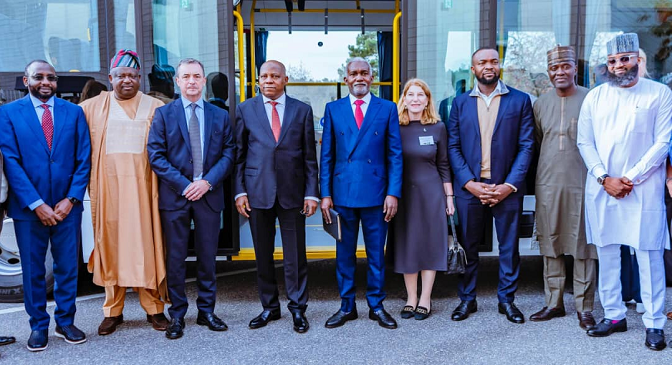
Amos Haddebe, Director for Government and Policy Advocacy in Africa at Ericsson, said this when led the Management of the company to a recent engagement with the National Information Technology Development Agency, at the GITEX Africa, held in Morocco.
Haddebe also noted that the company has operated in Nigeria for over five decades, supporting the country’s telecommunications evolution from 2G to current 5G network.
The discussions at the forum also touched on Nigeria’s initiative to develop high-standard regulatory policies that will enhance digital integration while ensuring that critical national systems remain under domestic control, in line with digital sovereignty.
Update on the 4 pillars of MoU between Ericsson and the Nigerian Government
Haddebe as well enumerated four key pillars of a Memorandum of Understanding (MoU) signed with the Nigerian Government October 2024, including the establishment of a joint innovation hub, a national hackathon, digital skills development programmes, and exchange of best practices.
Caution against the increasing competition in Africa’s telecoms ecosystem
As regards broader industry concerns in Nigeria, nay the African continent, Amos Hadebe, a Director of Government and Policy Advocacy Africa at Ericsson. At the stakeholder engagement in Morocco, he warned against rising competition in Africa’s telecoms space.
He urged governments to treat Information and Communications Technology (ICT) infrastructure as a matter of national security.
The company’s top official, therefore, advocated a diversified vendor ecosystem to ensure resilience and safeguard critical systems.
Earlier, in his contribution to discussions at the meeting with the Management of Ericsson, Malam Kashifu Inuwa Abdullahi, CCIE, Director-General of the National Information Technology Development Agency, had disclosed that Nigeria’s digital strategy remains focused on “safeguarding national interests and securing long-term technological independence, rather than aligning with global rivalries.
Inuwa also affirmed that Ericsson has continued to collaborate closely with network operators, such as MTN Group, as part of its commitment to advancing Nigeria’s digital transformation agenda.
The Director-General of the agency further disclosed that the ongoing national hackathon, launched under the supervision of Vice President Kashim Shettima, is underway, and would be integrated with broader innovation initiatives.
NITDA said the discussions between the two organisations equally highlighted Nigeria’s increasing focus on digital sovereignty, strategic partnerships, and the development of a secure and competitive digital economy.
In respect of the expanded national digital transformation agenda, the agency disclosed discussions are ongoing around data ownership frameworks, particularly in emerging technologies and industrial systems, where questions of who controls machine-generated data remain central to future regulation.
It stated the Nigerian Government is expected to unveil clearer policy direction in the coming months as part of its broader national digital transformation agenda.