
























By Bruce Malogo
Elizabeth died two weeks ago. She was my younger brother’s wife, gone at 56 years old. Her husband had died 19 years earlier, leaving her to raise their two children entirely on her own. They were just five and three at the time. Perhaps on the surface, her passing does not resound. People die every day – young and old. It’s never a matter of if, but when; everybody will die. “Once you are born into this world, you are old enough to die,” wrote the Danish philosopher Søren Kierkegaard. But it is not the fact of Elizabeth’s death that frustrates and grieves; it is the manner of it – the utter carelessness of how we lost her.
Her death story is not novel; it is intimate and familiar to Nigerians, so familiar that we now hear it and simply shrug it off – a fatalistic surrender we anchor with “Na so we see am.” She had complained to her older child of slight difficulty in breathing. No illness prior. A few hours later, the situation turned critical. The two children she had spent nearly two decades raising alone were suddenly thrust into the agonizing role of ambulance drivers, carrying their dying mother from hospital to hospital in Lagos, begging a system to notice her. Think of that image and let it sit. The very children who lost their father as toddlers, now watching their mother slip away in the back of a car, locked out by the country they call home.
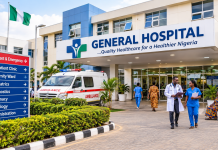
They first took her to Ikorodu General Hospital, according to them. The hospital could not take her in. They referred her onward. They took her to the Lagos University Teaching Hospital (LUTH). There, the authorities told them there was no space. They carried her across the mainland to the Federal Medical Centre (FMC) in Ebute Metta. Again, there was no space. By the time they took her to a private hospital somewhere in Surulere, she had died. She was brought in dead (BID), so the hospital authorities said.
Three public hospitals. Three rejections. One dead woman. Two traumatised children. Three hospitals had no space for a living woman. Only one van had space for her – the one that carried her dead. But we no longer marvel at such a thing; we are no longer jolted by such a bizarre possibility at this stage of human progress. We don’t, because this happens all the time, and we have somehow found ways to regard it as normal and therefore have become inured to it. But if Nigeria were a working system, where leadership was purposeful and egalitarian, would we have come to this? The answer is obvious – no!
So, you see, her case is not an isolated one. This is a refrain in Nigeria, where the ordinary citizen is left without care and protection from the system. It is the story we hear every week, in every state, in every language. A pregnant woman turned away. A road traffic accident victim left to bleed because there is no bed, no oxygen, no doctor on duty. A child dying of a preventable fever because the nearest clinic has no drugs. We have normalised the abnormal. We have turned the hospital, which should be a place of refuge, into a place of rejection – and all too often, a place where we go to die.
And here is a country where leaders have the best of everything. Even for something as common as a headache, they run to the best medical facilities abroad, at public expense – they and their families. They fly out for check-ups, for ear infections, for toothache, for routine tests that a primary health centre should otherwise handle. They return, rested and refreshed, to tell us to be patient. They preach to us that it gets worse before it gets better, even though we know they are working so hard to make it worse.
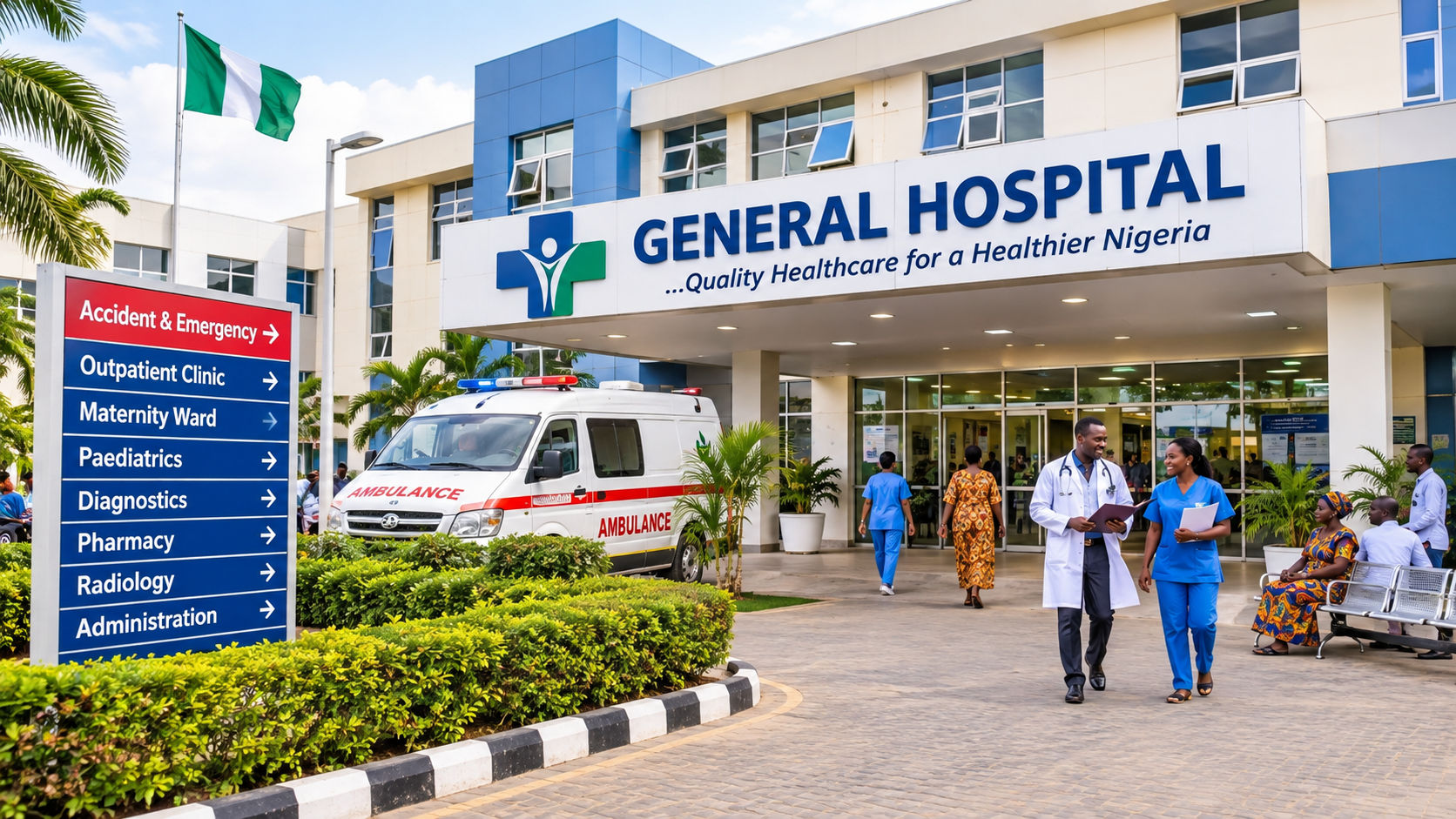
During his radio broadcast to the nation declaring the military overthrow of the government of President Shehu Shagari on December 31, 1983, the then Brigadier Sani Abacha moaned that our hospitals had become mere “consulting clinics.” Over four decades after that damnation, it would be charitable to still refer to these facilities as consulting clinics. They consult, they refer, they write a note, and they send you away to die elsewhere. They have buildings, they have signboards, they have staff in white coats, but they do not have the basic tools to save a life in an emergency: no bed space, no functional ICU, no reliable power, no blood bank, no ambulance system that works.
To think that of the ₦218 billion budgeted for the Federal Ministry of Health and Social Wlefare’s capital allocation for 2025, a measly ₦36 million was actually released. That is less than 0.02%. Let that sink in. Billions on paper. Thirty-six million in reality. What hospital can you build with that? What life can you save with that? It is not that Nigeria lacks money. It is that it lacks priority. The money is there for convoys, for estacodes, for medical tourism, for the renovation of lodges and offices, for funding a party’s 2027 elections, for buying political loyalty – the money is always there for debauchery of ill-assorted kinds. It is never there for the bed that would have saved my brother’s wife. It is never there for the oxygen that would have kept her breathing until a doctor could see her.
Serious, conscientious countries treat their citizens with consideration and sensitivity. In such countries, a citizen does not need to know a minister, a governor, a medical director, or a senior consultant to get a bed in an emergency. In serious countries, the ambulance comes. The hospital receives. The system takes responsibility. The state does not ask a dying woman’s children to become her ambulance drivers, her porters, her advocates, and finally, her mourners.
In serious countries, leaders use the same hospitals they build for their people. That is the test of a serious system. If the president, the governor, the senator, the minister would be treated in LUTH, in Ikorodu General Hospital, in FMC Ebute Metta, then those hospitals would work. They would have space. They would have power. They would have doctors. Because the men who control the budget would have a personal interest in making sure they work.
But in Nigeria, the elite have seceded from the system, the way Aso Villa has extricated itself from the decrepit, push-and-start national grid. They have built a private escape route to London, to France, to Dubai, to Saudi Arabia. They have left the rest of Nigerians behind in a system they know does not work, and they call our endurance resilience. My brother’s wife is not a statistic. She was a mother. She was an in-law. She was a sister. She had a name, a laugh, a future. Her children will grow up with the memory of carrying her, not in their arms as a child is carried, but as a burden from one locked door to another.
That memory will never leave them. And this is the country we have. A country that cannot guarantee its citizens a bed in an emergency cannot guarantee them anything. A country that budgets billions and releases millions for health is not broke; it is broken in its conscience. We do not need another committee. We do not need another promise. We need a system where no child will ever again have to carry a dying mother across Lagos looking for space.
Until our leaders are forced to use the hospitals they have built – or failed to build – for the rest of us, women like my brother’s wife will keep dying. Not because death is inevitable, but because carelessness has become policy. She did not die because she was old enough to die. She died because Nigeria was careless enough to let her die. Illness didn’t kill her; the system did!
Malogo is a director at Oscar and Halliday Media Company and a member of the Nigerian Guild of Editors (NGE). bruce.malogo@gmail.com