Category: Features

Featured posts

  • Feature: Tinubu’s wish list to the G20 Summit

    Feature: Tinubu’s wish list to the G20 Summit

    By Ayo Akinfe

    Today, President Tinubu will be off to the G20 summit in India. I hope he arrives with a wish list that looks something like this

    [1] Population-wise, we are number seven in the world. Nigeria should thus become the seventh largest foreign direct investment (FDI) destination by 2030. G20 members must pledge to invest at least $10bn annually in Nigeria

    [2] Every automobile manufacturer must be compelled to open at least one assembly plant in Africa by 2025

    [3] Any pharmaceutical giant supplying a Covid-19 vaccine must by law open a manufacturing plant in Africa before the end of 2024 to supply the continent

    [4] If Africa as a continent does not receive up to $1trn in FDI annually, the G-20 will be levied to raise such capital for investment

    [5] Any G-20 nation that takes out a supply contract in Africa in excess of $1m must be compelled to manufacture the products locally

    [6] Every G-20 nation must commit to train at least 5,000 skilled African workers annually

    [7] Every G-20 nation must pledge to add at least 50% value to any product they buy from an African nation. This should make the export of raw materials illegal

    [8] Importing African animals will be illegal and considered as poaching. Instead, the G-20 will encourage any tourist who wants to see African wildlife to visit the continent

    [9] G-20 nations shall freeze the bank accounts of all African public servants currently holding office in developed countries. This money will be handed over to Unesco for development investment

    [10] Every G-20 nation shall open up shelve space in its retail industry for African goods

  • Feature: What State Governors can do without the Federal Government

    Feature: What State Governors can do without the Federal Government

    By Ayo Akinfe

    As we ponder how to end this dependency on the Federal Government, here are 10 things Nigerian state governors could do today without having to involve President Tinubu

    [1] Kogi state can attract the likes of Siemens to build a 10,000MW hydro-electric power plant at Idah

    [2] Kogi State can build a Niagara Falls-type tourist attraction at the confluence of the rivers Niger and Benue at Lokoja

    [3] Taraba State can open the world’s largest nature reserve in Gembu

    [4] Niger State can open the world’s largest cattle ranch in Mokwa

    [5] Akwa Ibom State can attract investors to build Africa’s largest sea port at Ikot Abasi

    [6] Ondo State can woo investors to build a railway line to Apapa and Port Harcourt so its cocoa can get to port

    [7] Rivers State can attract shipbuilders to open a shipyard at Degema

    [8] Kwara State can woo the likes of Tate & Lyle to open the world’s largest sugar refinery at Jebba

    [9] Anambra State can build a railway crossing linking Nzam with Illah in Delta State

    [10] Zamfara State can open the world’s largest solar farm

    Are our governors not just hiding behind this excuse of over-centralisation? There is no law in Nigeria that prevents them from wooing investors and developing their states independent of the federal government.

    Lagos State government has proven that you can get things done on your own if you want to. We have seen it with Eko Atlantic City, Lekki, Badagry and the Lagos light railway project.

  • Feature: Can Tinubu & Edun achieve 25% GDP Growth like Gowon & Awolowo?

    Feature: Can Tinubu & Edun achieve 25% GDP Growth like Gowon & Awolowo?

    by Ayo Akinfe

    Are Tinubu and his finance minister, Wale Edun aware of the fact that in 1971, Gowon and Awolowo set a record by getting 25% GDP growth. I hope they have plans to replicate this with an audacious programme

    [1] Build at least one silo in each of our 774 local government areas to store cash crops and food crops. We then need to build processsing plants around these silos with a goal of adding at least 50% value to every agricultural product we produce

    [2] Get the Ajaokuta and Aladja steel mills running at full capacity. Nigeria needs to produce at least 10m tonnes of steel a year

    [3] Gather ever single head of cattle in the country into six mega ranches. Build industrial parks around them that produce milk, meat, leather products, animal feed and veterinary services. Basically make Nigeria a major dairy product producer

    [4] Get each of our 36 states to generate, transmit and distribute at least 1,000MW of power. The whole idea is for each state to be self-reliant when it comes to power supply

    [5] Galvanise local private investors to invest at least $10bn in the economy annually. For me, religious finance has got to be at the centre of this plan as the general overseers of the evangelical churches are the ones with liquidity at the moment

    [6] We need at least 10 ports along our Atlantic coastline. We need to be able to both clear imports and ship exports within four hours. We also want to attract all the world’s shipping lines

    [7] Tourism simply has to carry its fair share of our national economic burden. We have parts of the country, especially in the northeast that have wildlife like elephants, big cats, hyena, etc, yet we have no equivalent of Kruge National Park. A large swathe of Taraba State needs to me made a wildlife sanctuary where human habitation will be barred

    [8] Build a national railway network that will eliminate the current scourge of one third of our agricultural output going to waste due to poor roads, a lack of refrigiration, poor storage and inadequate transportation. Just imagine if all vegetable and fruit left their local government headquarters in a refrigerated rail carriage

    [9] Nigeria has the lowest tax-to-GDP ratio in the world. This needs radical action with the introduction of a raft of new taxes and the creation of a Russian-style tax police to collect them. Our government should set itself a target of raising at least $100bn from tax annually. A faith tax, for instance, could generate as much as $30bn

    [10] Pass a law making it compulsory for every local government area to have at least two technical colleges. Without vocational skills, we are going nowhere as a nation

  • Feature: Mandate for the Minister for Manufacturing

    Feature: Mandate for the Minister for Manufacturing

    Personally, I am disappointed that President Tinubu did not appoint a dedicated minister for manufacturing with a mandate to turn the following cities into specialist industrial zones:

    Ayo Akinfe

    [1] Nnewi – Automobile manufacturing
    [2] Akure – Cocoa processing and chocolate
    [3] Orlu – Pharmaceuticals
    [4] Aba – Clothing and footwear
    [5] Abeokuta – Railway carriages and engines
    [6] Kano – Groundnut, neem, millet and sorghum processing
    [7] Damaturu – Dairy products
    [8] Port Harcourt – Shipbuilding, boatmaking and fishing equipment
    [9] Calabar – Aircraft assembly
    [10] Ajaokuta – Steel, machine tools and metal manufacturing
    [11] Asaba – Wood products and furniture
    [12] Lokoja – Hydroelectric power generation
    [13] Sokoto – Solar farm
    [14] Ikot-Abasi – Port handling equipment
    [15] Maiduguri – Solar panels and electricity transformers
    [16] Uyo – Windmills
    [17] Badagry – Coconut and cashew processing
    [18] Ilorin – Sugar production
    [19] Makurdi – Yam and cassava processing
    [20] Minna – Shea nut and kolanut processing

  • Feature: Young People expect these policies from Tinubu

    Feature: Young People expect these policies from Tinubu

    by Ayo Akinfe

    As Tinubu’s cabinet finally settles down, how about him unveiling this series of policies for young people

    [1] There will be free primary and secondary education for every Nigerian child

    [2] Nigeria’s federal government will offer one free meal a day to all primary school pupils

    [3] The federal government will pay a N10,000 monthly stipend to all unemployed school leavers under 24

    [4] Every state government will be compelled by law to open at least one vocational training centre in each of Nigeria’s 774 local government areas

    [5] State government’s will be mandated to open at least one sports facility in each of Nigeria’s 774 local government areas

    [6] State governments must also offer interest-free loans to all tertiary institution students who want to open vocational workshops

    [7] Upon matriculation, the federal government will offer a one-off grant of N20,000 to all tertiary institution students

    [8] To eliminate youth corper poverty, the federal government will link the NYSC allowance to Grade Seven in the civil service

    [9] Our federal government will enter into exchange programmes with Brics and Mints nations that will facilitate the training of about 10,000 Nigerian youths annually

    [10] Nigeria’s Bank of Industry will offer loans of up to N500,000 at no more than 5% interest rate to our youths with ideas to establish enterprises

  • Comercio Partners Report: What you should know about Nigeria’s Massive Reduction in Unemployment

    Comercio Partners Report: What you should know about Nigeria’s Massive Reduction in Unemployment


    Unemployment has been a longstanding challenge for Nigeria, with significant economic and societal implications. However, a recent change in methodology for measuring unemployment has revealed a remarkable transformation in the country’s unemployment landscape. This change was driven by the need to align with international standards and provide a more comprehensive view of labour underutilization. This report explores how Nigeria’s adoption of new International Labor Organization (ILO) guidelines has led to a substantial reduction in reported unemployment rates and discusses the implications of this change for the Nigerian economy.

    The Methodology Shift and Its Rationale:
    In response to the evolving labour market landscape and the need for cross-country comparability, Nigeria embraced new guidelines set forth by the ILO’s 19th International Conference of Labor Statisticians (ICLS) in 2014. These guidelines advocated for a broader measurement of labour underutilization, recognizing all forms of work, paid or unpaid. The new standards also aimed to integrate labour statistics with GDP, thereby providing a more holistic understanding of labour’s contribution to the economy. The previous methodology, based on ILO’s 1983 guidelines, failed to capture the dynamics of the modern labour market, including the significant informal sector and the prevalence of unpaid work in Nigeria. By acknowledging and accounting for these aspects, the new methodology sheds light on a more accurate representation of the employment landscape.

    Key Changes

    Massive Reduction in Unemployment:

    The most striking outcome of this methodology shift is the substantial decline in Nigeria’s reported unemployment rate. According to the National Bureau of Statistics (NBS) report, Nigeria’s unemployment rate plummeted from 33.3% in Q4 2020 to a mere 4.1% in Q1 2023. This dramatic reduction underscores the importance of considering various forms of work, including informal and unpaid, in the measurement process.
     Source: NBS, Comercio Partners Research


    In Q4 2022 and Q1 2023, 73.1% and 75.4% of employed Nigerians respectively, worked in their own business or farming activity for their primary job. On the other hand, 13.4% (in Q4 2022) and 11.8% (in Q1 2023) of employed Nigerians were engaged as employees (being wage-employed) in their primary jobs. A further 10.7% (in Q4 2022) and 10.5% (in Q1 2023) of employed Nigerians were primarily engaged in helping in a household business, receiving pay or profit indirectly even if it was not their own business. A small proportion of employed Nigerians were primarily engaged as apprentices or interns (2.6% in Q4 2022 and 2.2% in Q1 2023).

    Those helping a household member who worked for someone else was about 0.2% in both Q4 2022 and Q1 2023.

    The revised statistics present a transformative perspective on Nigeria’s labour market and hold significant implications for the economy:

    • Informal Sector Recognition: The new methodology acknowledges the substantial contribution of the informal sector to the economy, revealing that a large proportion of working-age Nigerians are engaged in some form of economic activity. This recognition can lead to more targeted policies to support and regulate the informal sector, potentially boosting economic growth.

    • Underemployment Insights: While the headline unemployment rate has decreased significantly, the underemployment rate remains a concern. Many employed individuals work fewer hours than desired and are willing to work more. Addressing this underemployment can lead to increased productivity and job satisfaction.


    • Policy Precision: With a more nuanced understanding of the labour market, policymakers can craft interventions that align with the true challenges faced by the workforce. This might involve measures to improve job quality, skill development, and access to decent work opportunities.


    • Reduction in Misery: Since the Unemployment rate is a significant factor in the Misery Index, a decrease in unemployment would result in a lower misery score for Nigerians. However, this reduction wouldn’t lead to significant changes in individuals’ lives, as there haven’t been any fundamental improvements in living standards.

    While the adoption of the new International Labour Organization (ILO) guidelines for measuring unemployment in Nigeria has provided valuable insights and led to a significant reduction in reported unemployment rates, it’s important to acknowledge that no methodology is without limitations. Here are some limitations associated with the new methodology:

    • Complexity of Informal Sector: While the new methodology aims to capture the informal sector’s contribution to the economy, measuring informal work can be inherently challenging. Informal activities often lack formal records, making it difficult to accurately
    quantify their economic impact. Additionally, the boundaries between formal and informal work can be blurred, posing challenges in classification. The problem Is usually enhanced when the economic structure of the country has a large Informal sector.

    • Subjective Nature of Underemployment: The underemployment rate, which considers individuals working fewer hours than desired, relies on self-reported willingness to work more hours. This introduces subjectivity and potential biases in reporting, as individuals’ perceptions of suitable working hours can vary widely.


    • Unpaid Work: While the new methodology aims to capture unpaid work, accurately valuing such activities in economic terms can be difficult. Assigning a monetary value to unpaid work, such as household chores and caregiving, involves assumptions and
    approximations that may not fully reflect their true economic impact.


    • Comparability Across Time: The shift to a new methodology makes direct comparisons of unemployment rates across different periods challenging. This is especially true when trying to compare rates before and after the methodology changes. Trend analysis might require careful adjustments to account for the methodological shift.


    • Potential for Misinterpretation: The drastic reduction in reported unemployment rates could be misinterpreted as a sudden improvement in the labour market without considering broader economic and contextual factors. This could lead to misconceptions
    about the overall economic health of the country.

    • Limited Scope: While the new methodology aims to capture various forms of work, there might still be aspects of labour underutilization that are not adequately addressed. For example, the methodology might not fully account for discouraged workers who have given up looking for employment altogether.

    Bottomline
    This recalibration of Nigeria’s labour market measurement not only challenges historical perspectives but also charts an altered trajectory for policy formulation and economic assessment. The transformed landscape bears far-reaching implications for diverse stakeholders. However, it is imperative to acknowledge that while the adoption of the new International Labor Organization
    (ILO) guidelines offers invaluable insights, no methodology is devoid of limitations. These limitations warrant careful consideration, ensuring that interpretations remain nuanced and grounded in the complex reality of the Nigerian labour market.

  • Feature: Audacious Diaspora Investment plan for the New Minister of Trade and Investment

    Feature: Audacious Diaspora Investment plan for the New Minister of Trade and Investment

    I expect our new trade and industry minister to come up with an audacious diaspora investment plan aimed at making it the main source of foreign direct investment

    Ayo Akinfe

    [1] Once a year, 500 diasporans will be invited to Abuja to rub minds with the government

    [2] The presidents of the major diaspora organisations in four or five key countries will be granted observers status at Nigerian Governors’ Forum meetings

    [3] A diaspora investment desk will be established in the Minister of Foreign Affairs’ office to liaise with Nigerians living abroad

    [4] By 2027, diasporans will be allowed to vote in presidential elections

    [5] A rehabilitation agency will be established to enable diasporans who return home settle back into society

    [6] More diaspora financial investment instruments will be created to make maximum use of the $25bn they send home annually

    [7] Technical exchange departments will be established in six universities and technical schools across the country to enable young Nigerians benefit from the expertise of the diaspora

    [8] Every year, the trade and industry minister will hold a diaspora conference in the UK and US where he will rub minds with the millions of Nigerians there

    [9] Diasporans who can bring foreign investors to Nigeria will be granted direct access to the trade and industry minister

    [10] The trade ministry will have an annual target of attracting at least $1bn in diaspora manufacturing investment.

  • Feature- FIRS 2023 H1 Collection: A Reflection of the Power and Impact of Citizens’ Civic Obligations Compliance

    Feature- FIRS 2023 H1 Collection: A Reflection of the Power and Impact of Citizens’ Civic Obligations Compliance

    By Femi Onakanren

    In the aftermath of its record breaking N10 trillion tax revenue collection in the 2022 fiscal year, the Federal Inland Revenue Service (FIRS) has continued to show that its historic performance was no fluke.

    The recently announced 2023 half-year performance update is a clear pointer to this.

    The FIRS seems to be on course to completely change the trajectory of tax collections and federal revenue diversification by its unrelenting drive to surpass itself regularly.

    The FIRS’ 2023 Half-Year Collection Report showed that the Service achieved its target, 100%, for the first half of the year with a mid-year returns of N5.5 trn, as against the projected N5.3 trn target.

    According to the report, tax revenue collected from the oil sector from January to June 2023, stood at N2.03 trillion, as against a target of N2.3 trillion; while non-oil tax collection stood at N3.76 trillion, as against a target of N2.98 trillion.

    However, the most impressive part of the report was:

    Mr. Muhammad Nami, Executive Chairman of the FIRS reported

    ” This half-year performance was achieved as a result of improved voluntary tax compliance by taxpayers, the continued improvement of automation of our tax administration processes, including the updated VAT filing processes; as well as our dogged engagement with stakeholders in both the formal and informal sectors of the economy.”.

    The improved voluntary tax compliance on the part of taxpayers was a particular delight! This means the citizens are getting to understand the value and import of paying taxes. The efforts of the FIRS in educating the public are clearly yielding fruits.

    The FIRS, as custodians of public trust, is doing its part to ensure that citizens are delivering on their obligations in the social contract with the government. Thus, the FIRS as an institution has become a reference tool for social accountability.

    The improved collections mean the Federal Government has more funds at its disposal to drive the provision of social amenities, improve public infrastructure, and deploy progressive, people focused fiscal policies.

    The march towards a better country needs the support and contributions of everyone. The fact that the FIRS is leading this impressive paradigm shift is an under-appreciated feather in the services’ ever improving cap.

    Femi Onakanren is a Business Development and Socioeconomic Policy Specialist. He writes from Lagos

  • Feature: The Revenue Targets for Nigeria’s Cabinet members

    Feature: The Revenue Targets for Nigeria’s Cabinet members

    By Ayo Akinfe

    Tinubu’s new cabinet members should have been sworn-in all wearing white to symbolise purity and they should have been made to sign up to these revenue generation targets

    [1] Tourism – $20bn
    [2] Manufacturing – $50bn
    [3] Food processing – $20bn
    [4] Animal husbandry – $10bn
    [5] Aviation – $20bn
    [6] Clean energy – $20bn
    [7] Shipping and maritime – $20bn
    [8] Information and communication technology – $20bn
    [9] Clothing, textiles and fashion items – $20bn
    [10] Health and pharmaceutical services – $10bn

    This would add $210bn to our current export earnings of about $50bn. Just imagine the difference it would make.

    For me, 10 first steps that need to be taken to address these problems are:

    [1] Beefing up security
    [2] Banning the export of primary commodities
    [3] Reaching an agreement among the numerous ethnic nationalities that make up Nigeria to to ensure peace
    [4] Immediately abrogating the federal allocation formula
    [5] Launching a nationwide campaign against our me, me, me culture
    [6] Getting our National Orientation Agency to launch a war against vanity. Nothing breeds corruption as much as it
    [7] Reducing the influence of religion in the daily life of the average Nigerian
    [8] Launching an “If we can’t produce it, we don’t need it” campaign
    [9] Getting every local government area to open at least one technical vocation college
    [10] Getting every state to spend at least 30% of its budget on education. Our goal should be a 95% literacy rate and a 50% graduate rate by 2030

  • Feature: Nigeria should earnestly begin preparation for Paris Olympics

    ByAyo Akinfe

    Our new sports minister has to put the disappointment of the ongoing World Athletics Championships behind him and start preparing for the Paris Olympics today.

    [1] Team sports- When I was in secondary school, we participated in team sports every day. Handball, basketball, volleyball, football, hockey, etc were events in which we were all trained. Across the spectrum we had national games festivals for universities, polytechnics, colleges of education, police colleges, etc, in which talent emerged. We then had the National Sports Festival which produced the crème de la crème

    [2] Walking – Nobody can walk like the Nigerian villager. Some women and children have to walk 2km to the stream and back every morning just to fetch water at dawn. Olympic gold should be a Nigerian preserve

    [3] Table tennis – There is a table on every street corner in Nigeria. We should be sweeping the medals table in this event at every Olympic Games

    [4] Cycling – This one gets to me big time. Every Nigerian villager owns a bicycle and cycles to their farm on a daily basis. Nobody cycles more than the Nigerian villager

    [5] Swimming – There are about 20m Ijaws in Nigeria. We also have 853km of Atlantic coastline. Why are the Ijaws not natural swimming champions?

    [6] Triathlon – This is running, swimming and cycling. We do all three. Again, Nigeria should be sweeping the tables in this event

    [7] Long distance running. Physically, the Hausa, Fulani and Kanuri and almost identical to the East Africans the Luo, Kikuyu, Tigray and Oromo. How come the Kenyans, Ethiopians and Ugandans are excelling at marathons, steeple chase, 10,000 metres, 5,000 metres, etc and we are not?

    [8] Wrestling – Do you all remember that it was wrestling that brought Okonkwo to the fore in Umuofia? In many of our local communities, wrestling is part of the culture. Another area in which we should be excelling

    [9] Judo – Given its similarity to wrestling, we should easily excel in this sport. In Things Fall Apart, Amalinze the Cat was actually more of a judoka because you could not throw him

    [10] Archery – Every maiguard in Nigeria is a bow and arrow expert. Why has this not translated to sporting success?
    Our new sports minister will have his work cut out. With a population of 200 million, you simply have to be at the top of the sporting ladder!

  • Feature: The very least we expect from Festus Keyamo

    Feature: The very least we expect from Festus Keyamo

    by Ayo Akinfe

    This is the very least we expect from a man of your pedigree Festus Keyamo during your four year tenure

    [1] If Nigeria was a country that had any shame, we would be eternally embarrassed about the fact that the country does not have a single aviation maintenance, repair and overhaul (MRO) facility. MRO’s are an essential requirement to ensure that aircraft are maintained in pre-determined conditions of airworthiness to safely transport passengers and cargo. Airlines go through regular rigorous checks just as cars have to have an MOT every year to prove they are roadworthy

    [2] What this means in practical terms is that whenever any aircraft lands in Nigeria, it leaves immediately to be maintained elsewhere. In plain language – There is no aircraft mechanic workshop in the whole of Nigeria. Globally, the commercial aircraft MRO market is influenced by external factors in the wider air transport industry including global fleet size, aircraft utilisation and increasing and decreasing air traffic volumes for both passengers and cargo. Please sort this out Festus

    [3] In 2015, the global MRO market was worth $135.1bn, representing three quarters of the $180.3bn aircraft production market. Over the 2017–2026 decade, it is expected that the MRO market worldwide should reach over $900bn, with 23% in North America, 22% in Western Europe and 19% in Asia Pacific. Nigeria needs to get in on the act

    [4] In 2018, the commercial aviation industry expended $88bn on MRO, while military aircraft spent $79.6bn, including field maintenance. Across Africa, the only MRO providers are South African Airways Technical (Saat), Ethiopian Airlines Maintenance and Engineering, Kenya Airways Technical, Air Algerie Technics and Tunisair Technics. There are also joint ventures such as Air France Industries’ and Royal Air Maroc’s Aerotechnic Industries

    [5] Given how centrally located Nigeria is in Africa, the fact that Nigerians are the continents most travelled people and being the largest economy, we should be Africa’s aviation workshop, generating at least $20bn a year from MRO

    [6] For me, Lagos, Abuja and Calabar, the gateway to east and central Africa, should all be major MRO and aviation hubs. Our aviation policy should be geared towards making them massive depots where airlines bring their planes from all across Africa

    [7] Nigeria needs a major international airline in which the federal government has a minority stake of say 25%. This airline should be able to compete with the likes of Virgin, BA, Air France, KLM, Emirates, etc

    [8] Given the size of the African aviation market and the field day the Europeans and Americans are having ripping us off, Nigeria has got to spearhead the creating of a continental giant. Just imagine the kind of carrier we would have if Nigeria Air, Egypt Air and Ethiopian Airlines merged their operations

    [9] As a first step in all this, I expect to see Nigeria Air up and running within six months. No funny games Festus, we need an airline with at least a fleet of 20 planes flying to at least 10 African destinations and to at least another 190 global ones

    [10] Domestically, I expect Festus to bring the airports in the 36 state capitals of Nigeria up to international standards. They should all be able to operate international flights. Why should a man have to fly to Lagos or Abuja first before leaving Nigeria

  • Feature: The New Minister of Agriculture and Food Security should abolish Open Grazing and move cattle to Secure Ranches

    By Ayo Akinfe

    I hope our new agriculture and food security minister, Abubakar Kyari realises it is his job to abolish open grazing and move Nigeria’s cattle herdsmen on to secure ranches.

    [1] Nigeria currently has about 20m head of cattle. We should aim to double this to at least 40m by 2027 through an ambitious programme of industrial production, aggressive ranching, the provision of veterinary services and the provision of security for livestock

    [2] Every state government that is interested in providing land for livestock production should be encouraged to do so. We will then seek to build secure ranches there with accompanying veterinary clinics, police stations, food processing plants and animal feed compounding units. All cattle herdsmen across the country will be made to take their herds to these secure ranches. We will also tag every animal so we can ascertain its health status and monitor its progress through the food chain

    [3] As every ranch will have a fully equipped police station and all herdsmen will be disarmed as from December 2023. They will be asked to submit their weapons to the nearest police station and it will be illegal for non-security personnel to carry forearms. The state is supposed to have a monopoly of the use of force in a nation. Possession of an automatic weapon like an AK-47 will attract a minimum jail sentence of 20 years

    [4] Our agriculture ministry will aggressively woo foreign investors into our livestock industry, pushing for joint ventures between our local herdsmen and Chinese, Australian, Indian, New Zealand and Canadian investors, who have a lot of expertise in the sector. Nigeria will provide the land, our herdsmen will provide the cattle, while the foreign investors will supply expertise, investment, know-how and technology.

    [5] Worldwide, very few cattle graze by nomadic means today as most ranches feed their cows with special animal feed rations that boost productivity, enhance beef content and provide nutritious balanced diets. We will thus expand our production of animal feed compounds using local ingredients like cassava, palm oil meal, groundnut meal, maize, millet, etc

    [6] A Nigerian Livestock Agency (NLA) will be created to oversee this entire process and to manage the local ranches established. Each ranch will have an elected local management committee made of NLA officials, herdsmen, investors, security agents, veterinary experts and animal feed processors

    [7] The Miyetti Allah Cattle Breeders Association of Nigeria (MACBAN) will be dissolved and reconstituted as the Nigerian Cattle Producers Association (NCPA). Meat processing companies will be encouraged to join this new association

    [8] It will now be illegal for livestock to roam unattended in public areas. Wherever such cattle are found they will be confiscated and taken to the nearest ranch where they will be handed over to the local management committee. Owners who want such cattle returned will have to make appeals to such committees

    [9] A special compensation scheme should be announced for all victims of herdsmen attacks across Nigeria. The NLA will also establish a standing fund from which it will compensate any farmer who loses crops to herds of cattle in the future

    [10] Our ultimate goal is to become a major player in the global beef and dairy trade competing with the likes of Canada, Australia, India, Brazil, the US and New Zealand. As a result, the NLA will look to take out minority stakes in dairy factories, meat processing plants, animal feed compounders and equipment manufacturing plants that are located in Nigeria, creating jobs. Our goal is to create maybe as many as 1m jobs in the sector and generate as much as $10bn in foreign export earnings.

  • Feature: Will Dele Alake make the Solid Mineral sector a money spinner for Nigeria?

    Feature: Will Dele Alake make the Solid Mineral sector a money spinner for Nigeria?

    by Ayo Akinfe

    Dele Alake’s appointment as solid minerals minister should come with foreign direct investment and production targets that compel him to make the sector a money spinner

    [1] Nigeria needs to generate about $100bn annually to fund her infrastructural development. Sadly, we only have an annual budget of about $30bn. If President Tinubu wants to break the cycle, he simply has to give his ministers production quotas and revenue targets

    [2] As we look to diversity our economy, there has been a lot of talk about solid mineral extraction. Dele Alake, the new solid minerals minister, should see himself as one of the messiahs who will wean Nigeria off her lazy crude oil dependency

    [3] If you ask me, the solid minerals minister should be one member of the cabinet given strict foreign direct investment (FDI) and production targets. We may need to borrow a leaf from Joseph Stalin’s era whereby ministers who failed to meet their targets were sent to the gulags

    [4] Putting our thinking caps on and thinking outside the box, has it occurred to us that there is a link between religious faith and solid minerals? You know why? Many religious orders hold vigils, worship and pray on mountain tops. As we all know, most of the earth’s solid minerals are located in rock formations. Has it occurred to anyone that all these prayer meetings are actually taking place on top of rich mineral deposits?

    [5] Maybe Mr. Alake should licence faith houses to open churches and mosques on out-of-town mountain top locations. Every licence holder most prospect for minerals on their location to ascertain if it contains any hidden gems. You may find the results staggering

    [6] I do not think it is demanding too much to ask every church and mosque group in Nigeria to employ one geologist, buy two dozen pick axes and shovels and ask their young members to spend say one hour a week prospecting for solid minerals. Our Ministry of Solid Minerals should supply heavy machinery if anything is discovered or provide high-tech equipment if the geologist requires it

    [7] This is a win-win for everyone as we reduce noise pollution in our urban centres, prospect for solid minerals cheaply and if anything is discovered the faith house should get to keep about 25% of all proceeds. Over the long term, faith houses should be encouraged to create investment arms that will take out stakes in these mining companies

    [8] There is nothing dramatic or revolutionary about religious investment. This is how we got the Islamic Development Bank and how all those Quaker companies like Cadbury’s, Kellogg’s, Quaker Oats, etc were formed. Confectionery in particular benefitted immensely from Christian capital historically because it did not involve the production of alcohol. Christian groups saw it as an ethical industry in which to invest their capital, and I think we can make a similar case for solid minerals in Nigeria

    [9] In North America, coal and crushed stone are two major minerals found in the Appalachian Mountains that straddle the US and Canada. Coal is mined by a technique called mountain top removal which involves blasting away mountain tops. The removed mountain tops provide crushed stones for construction industries. There are other minor mining activities such as iron ore and gold prospecting that also take place in the Appalachian Mountains. Is there any reason why we cannot prospect for minerals this way across Nigeria?

    [10] Germany, an economy built on coal, has announced that it will shut down all 84 of its coal-fired power plants to meet its international commitments in the fight against climate change. Now, Germany has some of the most experienced and sophisticated coal miners on earth who will now be made redundant as their mines shit too. Nigeria should act fast and try to snap them up. If you examine German coal extraction techniques, you will be gobsmacked at how high tech they are. Maybe Nigeria should start off by granting the first 500 German miners citizenship with a mandate to get our solid minerals sector going

  • Feature: The Huge Responsibilities before Oyetola as the Minister for Marine Affairs and the Blue Economy

    Feature: The Huge Responsibilities before Oyetola as the Minister for Marine Affairs and the Blue Economy

    by Ayo Akinfe

    I hope Gboyega Oyetola is aware of the huge responsibilities he carries as the minister for marine affairs and the blue economy

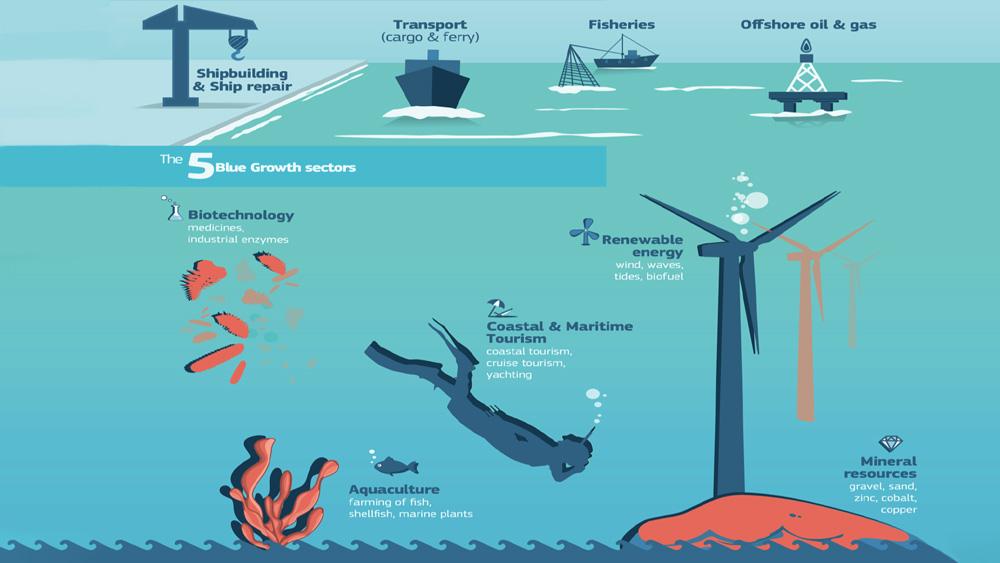
    [1] First of all, it will be his responsibility to build an 850km windmill wall along Nigeria’s Atlantic coastline. He should get Nigeria into the Guinness Book of Records as the nation with the world’s latest windmill farm

    [2] Secondly, it is his job to turn Nigeria into a maritime power. This should lead to the location of shipyards along the Nigerian coastline, especially in the Niger Delta

    [3] Mr Oyetola should have as one of his short-term goals, a plan to make Nigeria the leading global manufacturer of shipping containers. Freight containers are a reusable transport and storage unit for moving products and raw materials between locations or countries

    [4] There are about 17m intermodal containers in the world and about 85% of the world’s containers are manufactured in China. Nigeria can easily take over this market as containers are easy to manufacture

    [5] A single carrier ship can transport as many as 8,000 containers. Basically, what this means is that as global trade grows, so too will the demand for containers. Even after they are no longer deemed fit for shipping, containers are put to all other sorts of uses including being used as shops, swimming pools, quirky housing, cafes, kiosks, etc

    [6] Shipping containers are also used in the film and television industry for building temporary sets. They would be very handy for Nollywood. They can also be broken down and used for drums and other smaller metal objects and utensils

    [7] Given that Nigeria is bang in the middle of Africa’s maritime route, one of our coastal ports would be an ideal location to site a container manufacturing plant. Landlocked countries like Niger Republic, Mali, Burkina Faso, Chad, etc are very dependent on containers for their goods. They would order thousands from Nigeria if we began manufacturing them

    [8] Apart from windmills, shipyards and container manufacturing, Mr Oyetola has also got to make Nigeria a major aquaculture economy. We should be a leading global supplier of fisheries products like fish, crustaceans, fishmeal, etc

    [9] India is currently home to the world’s largest shopbreaking yards where old ships are dismantled. Can you just imagine how many jobs we would create in the Niger Delta if we opened say three such yards there

    [10] Is Mr Oyetola aware of the fact that there are oil-eating algae that can be released into the Niger Delta to clear up the slicks without damaging the marine wildlife? This is an effective and cheap way to clean up the area

  • Tribute: Celebrating the Quintessential Pa Ayo Odeku!

    Tribute: Celebrating the Quintessential Pa Ayo Odeku!

    I feel obliged to pay this tribute to Pa Ayo Odeku because his path did not just cross mine but he left an indelible mark within the short time that we encountered him.

    I had the opportunity of meeting Baba Ayo Odeku about 13 years ago at the preaching station of Yaba Baptist Church at Ikosi-Ketu, Divine Mercy Baptist Church, Ikosi-Ketu, which began at Mercy Hall. He was the Sunday School Superintendent then. We began to relate in bits. However, with time, we became close gradually. A few weeks after joining the church was the launch of my first book, and upon return, I gave him a copy of the biography. I met Egbon Tosin separately, only for me to connect the dots at a later date!

    Then, Baba drew us closer! Baba became our father, but he was many things to us simultaneously. As such, he called us friends. In June 2016, Baba gave me a book titled “Yoruba Oral Tradition: Poetry in Music, Dance and Drama, edited by Wande Abimbola a book he bought in 1981. While signing off the book he wrote, the ownership of this book was transferred to my friend, Peter Olutayo Irantiola on Sunday, 26th June 2016. In 2017, he was one of those who wrote a blurb to my play, The Okeho Exodus, which was published last year. In 2023, he sent me a best seller on a Royal family, you may guess the title and told me to read it so that I would understand that the rich also cry. As the Yorubas will say, aaye la jogun ore, ojo aba ku, omo ni jogun eni.

    He was our friend in words and deeds. Baba would tell us that we are his friends and children. He told us that he had lost many of his friends and contemporaries, but we were his friends in the twilight of his life. 

    The trio of us became Ayo Odeku Boys- Bro Patrick Oladimeji, Yemi Oyerinde, and I. Baba kept us abreast of many things around him- his life, career, contentment, and lots of good news. He equally shared in our pains and our little wins. Baba was at the christening of all my children. He was “Baba for the Girls” to our wives and many other ladies in the church. Our children had fun being around him! All their wishes got filled with him! You can imagine one of the gifts from his 85th birthday got to my daughter in the boarding house after Baba had passed.

    Our Numero Uno Cheerleader motivating one to grow into greatness. When we changed our apartment, Baba was the first Elderly guest to visit us. That spurred him to tell us about his journey to Ojodu and the birds that sang daily. From our Facebook post to our WhatsApp statuses, Baba would always cheer us on! 

    Baba became our sage! Baba knew I loved history, and he also did. Whenever I lose touch with some facts and cannot conjure an answer, even though Google, I will go to Baba to ask for the answer. He would effortlessly give me the broken part of the narrative. Voila, all the mysteries will be over! Iriri lagba

    Let me also tell you about the sage role played by Baba. If Baba postulates something, with time, it becomes vivid. You don’t need to travel miles before seeing the result. Ba ba n ge igi ni gbo, agba nii mo ibiti yoo wo si.

    If Bro Yemi had an uncompleted task with Baba, Baba would not challenge him. He will report him to me. I am the one that will speak to him and plead on Baba’s behalf. If it is something on our families, Baba will manage the delicate balance so our family is not ruffled. Bro Yemi was the best bet if Baba wants to send anything across to me.

    Let me say, this Baba can be very private and at the same time, very open to you. It depends on who you are to him! To those that Baba was a private being, they will have very little information about him, and those that he is open to, you will know his home, his itinerary and ultimately, give you access to his children’s home, in case, he was going to be on the Island for some days!

    When there was a resurgence of the giant bow tie resurfaced, Baba wore it to church on a particular Sunday and I marveled if he was still in touch with the fashion world. I call him the “King of Boys”, later when I knew he went to Kings College, I changed it to “Our King of Boys who went to Kings College”. At another time, I am sure he went through his archives, he saw one of his pictures when he was a younger man, and he shared it with me. Arugbo soge ri, Akisa a logba. Thereafter, Baba switched to wearing his agbada, dansiki with caps especially abeti aja for formal events.

    Let me tell you the final balance; when his 85th birthday of Baba was approaching, I requested Baba’s pictures, and his response was, “My children have instructed that I should not release it until it was close to my birthday.” I also kept the images jealously until midnight of his birthday when the photos returned to him as a musical video! Baba, se otun, won se osi, won o si ba ibi kan kan je.

    I had the opportunity to work with Baba Odeku as the Secretary of Divine Mercy Baptist Church. Baba was our foot soldier during the week. When I was at work, Baba would be the one doing all the secretariat work on the streets of Lagos. He would always say that he understood the challenges of our generation, and he was always willing to support us, and we shone!

    At some point, many people wondered why we appear at Yaba Baptist Church at any time at the shortest notice! Baba kept us abreast of the good deeds of the Lord in and around the church. He also made us meet many great individuals and families from the church.

    Trust me, if you do not know Baba has a good understanding of fine dining, you are yet to know Baba Ayo Odeku! Won mo iku to ba ounje, ounje to gbamuse! 

    Baba left the stage when the ovation was loudest! I can cite many instances of how Baba left the scene. His images were not on his social media handles. It was just his children and grandchildren. At DMBC, at some point, Baba left us, the young ones, to take over the helms of affairs of the church, and they were our guide so that we would not commit any grievous error. In fact, for his 85th birthday, he never posted his pictures directly on his wall, he just used them on his Facebook story.

    Baba told me that he hails from Ile Asubieye in Aawe; I hail from Ile Ologbin, Okeho. But, when we got into one of our long cultural discussions, we discovered that we are from the same Yoruba clan, the same Ologbojo clan. To cut a long story short, history says the internecine wars broke Ogbin Ile beside Ikoyi Ile centuries ago. Ara ile wa ja!

    During the get-together for his 85th birthday that my family missed because it rained and some other unforeseen circumstances, as we add in Nigeria, beyond our control, Baba called and said, “We all would have gone to our respective houses before you arrive”. Truly, before my next visit to Ojodu, he had gone to the proverbial house he mentioned about a fortnight ago!

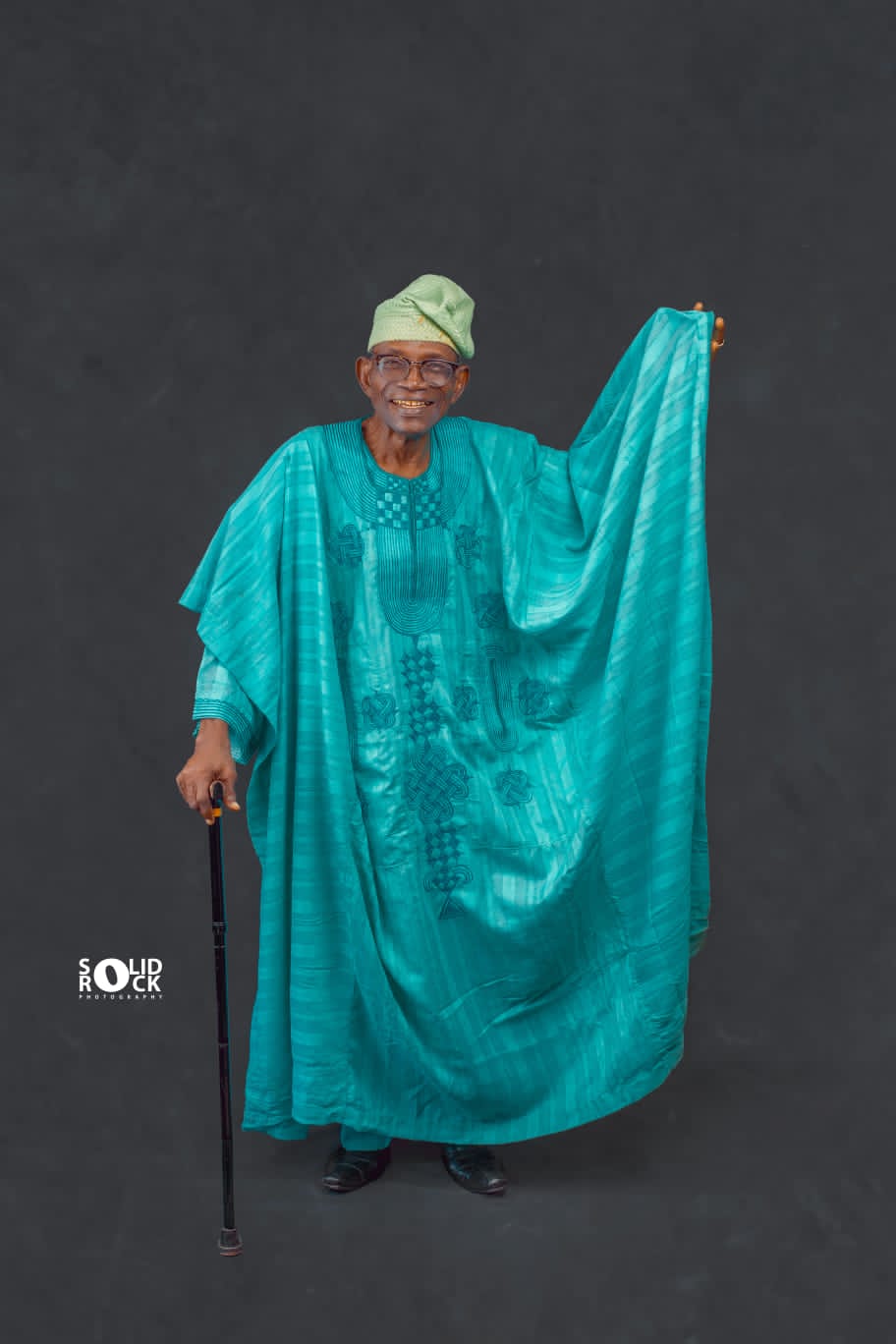
    Pa Emmanuel Ayoola Ayinde Odeku was indeed one of a kind, and he lived an optimal life! I celebrate you, Baba, in life and in death!

    I sign off just the way you called me earlier in the year, 

    Peter Olutayo Akanji-Ojo Irantiola, omo odo Agba!