Category: Features

Featured posts

  • Feature: 10 Private Conglomerates that Tinubu needs to float on five different stock exchanges

    Feature: 10 Private Conglomerates that Tinubu needs to float on five different stock exchanges

    10 private giant conglomerates that President Tinubu needs to get floated on about five major stock exchanges with the Nigerian government taking out a 25% stake in them

    Ayo Akinfe

    [1] NNPC – Oil processing, distribution and retailing and the manufacturing of industrial equipment. It should also be involved in the production of oil by-products like petrochemicals and fertiliser

    [2] Innoson – Manufacturing of industrial goods like automobiles, railway wagons, aircraft, ships, electronic consumer goods and medical equipment

    [3] Nigerian Railway Corporation – Railway carriages, engines, tracks, signalling equipment and all ancillary products associated with the rail trade

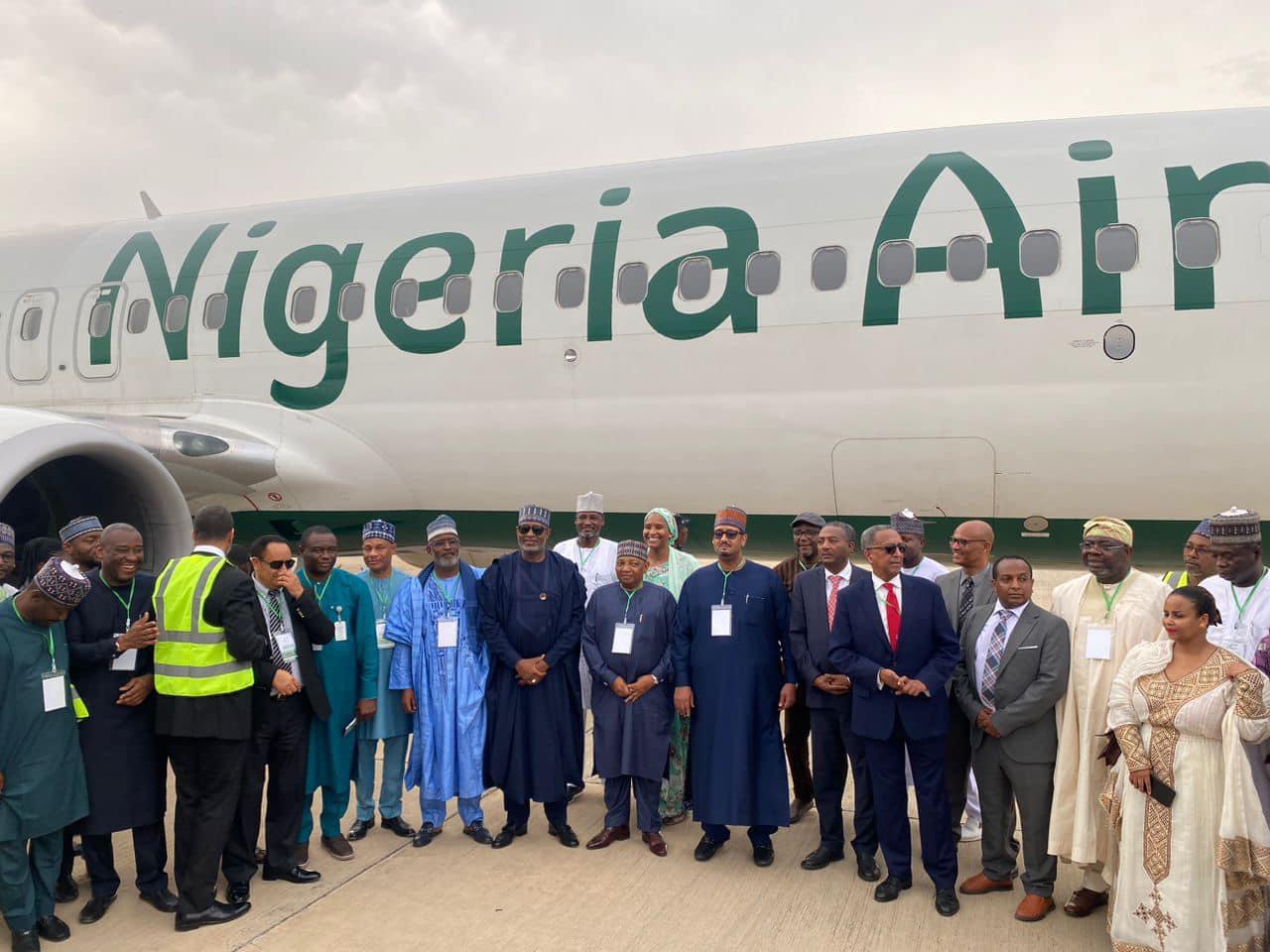
    [4] Air Nigeria – It should have a manufacturing arm that is involved in a joint venture with a company like Boeing or Embraer to assemble aircraft

    [5] Transcorp – This company simply has to be revisited. It must manufacture agricultural equipment, electricity transformers, power cables, medical equipment and be engaged in food processing

    [6] Power Holding Corporation of Nigeria – This company should have an arm dedicated to building hydro-electric, gas-fired and nuclear power plants. It should also establish solar farms and the world’s largest offshore windmill farm along Nigeria’s Atlantic coastline

    [7] The Food Processing Company of Nigeria – It would be charged with adding value to every single crop we grow in Nigeria. Its guiding principle should be nothing is to be exported unless 50% value is added

    [8] Man of God Plc – I insist that Nigeria’s rich clergymen must merge their business operations into one conglomerate. This company must be involved in food processing, road construction, running rail franchises, operating airlines and private universities

    [9] Nitel – We missed a big trick when the private telecommunications operators took over the industry. Nitel should have re-invented itself as a manufacturer of communications products like mobile phones, laptops, desktop computers, iPads, etc. Vietnam has made this transition and is now one of the world’s largest producer of handsets

    [10] Nigerian Textile and Leather Company – This outfit will be charged with manufacturing shoes, handbags, belts, clothing and industrial clothing. It will own cotton ginning plants, leather tanneries, textile factories and aim to supply all the major global fashion retailers. Nigerians shamelessly wear Gucci and Lui Vitton products without contributing one thing to these companies who make millions off them

  • LCCI and Cordros Capital release Mid-Year Economic Review and Outlook

    LCCI and Cordros Capital release Mid-Year Economic Review and Outlook

    The Lagos Chamber of Commerce and Industry (LCCI) and Cordros Capital has jointly organized the 2023 Mid-Year Economic Review and Outlook to point out opportunities for business growth and sustainability in Nigeria and the global market.  

    In his opening remarks, LCCI President, Asiwaju Dr. Michael Olawale-Cole, indicated that the half-yearly event reviewed vital policy developments and macroeconomic performance. It also discusses the outlook and expectations for the next half, focusing on risks and opportunities. The LCCI, over the last 135 years, has consistently engaged the government and advanced the growth of the private sector and the overall Nigerian economy through regular reviews of the business and economic climate and policy advocacy.

    The Nigerian economy in the first half of 2023 was quite challenging due to multiple factors. Although the general elections held in March 2023 were considered relatively peaceful and the transition completed in May, business conditions and operating environment in the first half of the year were essentially difficult due to rising interest rates, inflationary pressures, foreign exchange volatility, and the liberalization of the downstream sector of the oil & gas industry.

    As a result, the cost of living has significantly gone up. The first quarter GDP slowed to 2.31%, primarily driven by growth in the non-oil sector while the oil sector remained in recession. The country also witnessed a significant decline in foreign direct investments (FDIs), coupled with a high level of public debt stock and concerns for debt sustainability, high unemployment, and poverty levels. The International Monetary Fund (IMF), in its July 2023 World Economic Outlook (WEO) Update, lowered its growth projection for Nigeria in 2023 to 3.2% from 3.3% in 2022, reflecting security issues in the oil sector, policy risks, and persistently high inflation.

    To address long-standing macroeconomic imbalances and change the economy’s trajectory, the new government led by President Bola Tinubu introduced several reform policies, including fuel subsidy removal and foreign exchange unification. Furthermore, several palliative measures have been introduced to ease the effect on businesses, low-income people, and the most vulnerable.

    The consensus reached at the end of the Mid-Year Economic and Outlook are detailed below.

    The consensus of Stakeholders at the 2023 Mid-Year Economic Review and Outlook

    1. Government should consider the urgent need for an all-encompassing economic and fiscal plan, full/ partial divestment of state-owned real estate, improved transport sector, and energy assets as post-election priorities.
    2. The government must focus more on asset-based and equity offerings to improve revenue.
    3. Institutional reorganization is urgently needed in the CBN and the NNPC to improve transparency and accountability.
    4. The operating environment of NNPCL is somewhat opaque, which is anti-competition. The oil sector will attract the desired investment if the government liberalizes fuel import licenses and other vital activities in the midstream and downstream.
    5. Government should unlock revenue from assets by complementing tax with rent, fees, dividends, and capital gains. Economies that optimize revenue through equities have recently offset the loss from declining commodity prices.
    6. The new administration is advised to borrow better to reduce debt costs by issuing a more asset-linked debt than IOUs. The non-interest-bearing debt opportunities should be explored as emerging markets tilt towards project equity financing.
    7. BDCs should not be referred to as parallel or unofficial markets, because they are officially licensed to trade.
  • Feature: The Indispensable Power of Public Relations in Shaping National Image and Confidence

    Feature: The Indispensable Power of Public Relations in Shaping National Image and Confidence

    by Ishola Ayodele

    “If I was down to my last dollar, I’d spend it on public relations.” Bill Gates

    In an era of global interconnectedness and instant communication, the significance of public perception cannot be overstated. A nation’s image on the international stage plays a pivotal role in attracting foreign investments, fostering diplomatic relationships, and building the confidence of its citizens. However, a recent statement questioning the efficacy of Public Relations (PR) by a government ministerial nominee who is likely to supervise the Nigerian Institute of Public Relations (NIPR), an institute with the onus of guiding and regulating the practice of the public relations profession in Nigeria has ignited a debate about the role of PR in bolstering a country’s image. It is imperative to address these concerns and emphasize the undeniable impact of a well-crafted PR strategy on enhancing national image, reputation and trust.

    The art of Public Relations is not merely about glossy campaigns or superficial narratives; rather, it is a comprehensive approach that involves strategic communication, stakeholder engagement, and reputation management. A well-executed PR strategy can effectively highlight a country’s achievements, showcase its cultural richness, and convey its commitment to progress and development. This goes beyond mere optics – it is a tool that, when wielded correctly, can reshape narratives and perceptions on a global scale.

    History undeniably attests to the profound and transformative power of public relations (PR) in molding and shaping national images. The numerous illustrative examples extensively found within the pages of my book ‘PR Case Studies: Mastering The Trade Vol 1 & 2’, serve as a testament to this assertion. Within the scope of our discussion, let us delve into a select few of these compelling instances.

    1. South Korea: “Korean Wave,”

    In the 1960s, the nation was largely associated with conflict and poverty. However, a well-coordinated PR campaign, exemplified by the “Korean Wave,” elevated South Korea’s global standing through the promotion of its culture, music, and technology. This not only attracted international interest but also drove tourism, trade, and investment, ultimately contributing to the nation’s economic growth.

    • Ireland: From Economic Crisis to Global Success

    During the late 2000s, Ireland faced a severe economic downturn due to the global financial crisis. However, the country strategically utilized Public Relations to reshape its image. By highlighting its highly skilled workforce, low corporate tax rates, and vibrant culture, Ireland attracted multinational corporations and positioned itself as a tech and innovation hub. This PR-driven approach played a significant role in the country’s economic recovery and emergence as a global player in the technology sector.

    • Colombia: Redefining Perception Through Tourism

    Colombia, a country once plagued by a negative image associated with drug cartels and violence, managed to transform its reputation through a well-executed PR campaign. The “Colombia is Passion” campaign emphasized the country’s rich culture, biodiversity, and hospitality. By showcasing its positive attributes and encouraging tourism, Colombia succeeded in changing perceptions and attracting visitors, which in turn bolstered its economy and reputation.

    • Rwanda: A Vision of Progress

    Rwanda, despite its tragic history, has effectively utilized PR to rebrand itself as a nation of progress and innovation. By focusing on sustainable development, wildlife conservation, and technology, Rwanda has attracted foreign investment and positioned itself as a promising African economy. PR played a pivotal role in communicating the country’s vision and achievements to the world.

    These case studies underscore the transformative potential of Public Relations in shaping national perceptions, building confidence, and driving economic growth. In each of these examples, strategic PR efforts were integral to overcoming challenges, attracting investments, and fostering a positive image that resonated both domestically and internationally.

    In addendum, the absence of a robust PR strategy can have dire consequences for a nation’s reputation and development. Without effective communication, misinformation and negative narratives can take root and create lasting misconceptions that hinder a country’s growth. This is particularly evident in the case of some African countries, where media portrayal of conflict and instability has often overshadowed the many positive achievements and potential for development of these countries. This skewed image can deter foreign investments, tourism, and other opportunities, thereby ultimately hindering the progress of these nations. This is underscored by a study by United Nations Conference on Trade and Development (UNCTAD) which found that the perceptions of a country’s business environment significantly impact foreign investors’ decisions

    Furthermore, lack of effectively coordinated, clear and timely communication regarding policies and regulations between a government, its agencies and stakeholders can profoundly affect investor trust, potentially leading to a tarnished national reputation that discourages foreign direct investment (FDI). For instance, in 2014 the Nigerian government introduced the Automotive Policy aimed at boosting the domestic automotive industry through higher tariffs on imported vehicles and incentives for local assembly faced challenges due to uncoordinated communication and unclear directives from government agencies. Conflicting information and sudden changes in tariff rates created uncertainty, causing foreign automakers and investors to hesitate in establishing local manufacturing operations. The resulting lack of investor confidence led to delayed or canceled investment plans, illustrating how inconsistent communication and policy implementation can discourage foreign direct investment and undermine the overall business climate.

    The World Bank’s report on Governance and Foreign Investment, titled “Governance Matters highlights the strong connection between good governance (which encompasses, transparency, accountability, and effective communication) and the inflow of foreign direct investment (FDI). According to this report, countries that demonstrate transparency, accountability, and open communication through effective PR strategies are more likely to attract higher levels of FDI.

    Finally, a robust PR strategy contributes to citizen engagement and trust-building. When citizens are informed about government initiatives and achievements, they are more likely to feel a sense of ownership and pride in their nation. This fosters a positive feedback loop where citizens become active ambassadors, sharing positive stories and experiences with the international community. This can inspire a sense of national pride in citizens in the diaspora which may motivate them to invest in their own country because Diaspora investment, in particular, is often fueled by emotional ties and a sense of connection to one’s country of origin. For example, Israel has a strong and globally dispersed diaspora that has played a significant role in supporting the country’s economic development. The “Yozma” program, which aimed to attract venture capital to Israel, was partly initiated by Israelis living abroad. Many members of the Israeli diaspora invest in Israeli startups and high-tech companies.

    IN CONCLUSION,

    Although, it is widely acknowledged that past administrations in Nigeria have made successive attempts to repair the country’s battered international image; however, these efforts have often lacked the foundation of a comprehensive and strategically planned public relations approach. To attribute the failures of these governments solely to the ineffectiveness of PR in boosting the country’s image would be oversimplifying the issue. A more accurate analogy would recognize that when the archer misses the bull’s eye, it is not the arrow that is solely to blame, but rather a comprehensive evaluation of the archer’s technique and execution is necessary.

    Consequently, rather than dismissing PR as a futile expenditure, governments should recognize it as an indispensable investment in national development, reputation, and progress. In a world where perception shapes reality, Public Relations emerges not as a luxury, but as an inevitable tool for shaping the destiny of nations.

    Ayodele Ishola is a “Message Engineering” specialist. He helps Leaders, Brands & organizations communicate in a way that yields the desired result.
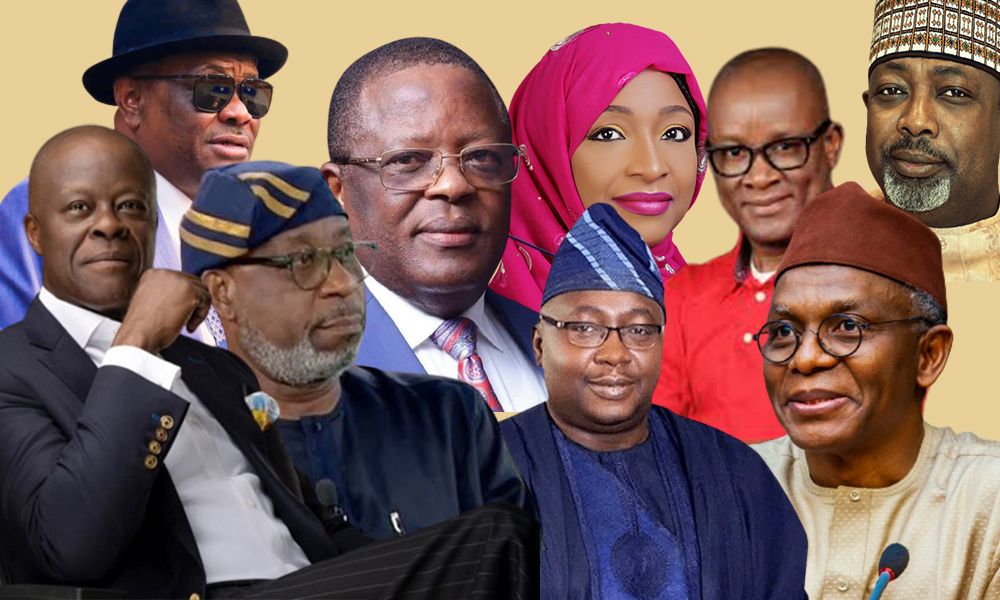
  • Feature: 10 Ministers with clearly defined tasks for the next four years

    Feature: 10 Ministers with clearly defined tasks for the next four years

    By Ayo Akinfe

    10 of the newly-appointed ministers who really have their work cut over the next four years

    [1] Tahir Mamman: Minister of Education
    With 13m our-of-school kids, Nigeria is the truancy capital of the world. We have become a nation of dropouts. Mr Mamman has to set himself a target of at least halving this by 2027. Can he please build at least two primary schools and one secondary school in each of our 774 local government areas

    [2] Uche Nnaji: Minister of innovation, science and Technology
    No nation can develop without technology as it is what makes you competitive in this hostile global economy. We simply need to start manufacturing or we will remain an eternal and perpetual importer. Minister Nnaji needs to set targets for car manufacturing, ship building, aircraft assembly and the nation becoming self-reliant when it comes to manufacturing consumer goods like TVs, fridges, laptops, mobile phones, washing machines, microwaves, etc

    [3] Doris Anite: Minister of Industry, Trade and Investment
    This is arguably the toughest job of all as Nigeria’s fundamental problem is that we are a mono economy. Unless we diversify, we will never grow our GDP and national budget. Ms Anite needs to set herself a minimum target of double digit economic growth every year between now and 2027. If we have 20% GDP growth every year between now and 2027, we be on the verge of a $1trn economy

    [4] Yusuf Tuggar: Minister of Foreign Affairs
    Nigeria has no need for foreign policy unless it is linked to investment and new markets. What we really need is a foreign investment policy. Mr Tuggar should set himself the target of attracting about $50bn in foreign direct investment each year between now and 2027. Our diaspora remits about $25bn annually, so asking for FDI of twice this amount is perfectly reasonable

    [5] Wale Edun: Minister of Finance
    In my book, this is the number three citizen in the cabinet after the president and vice president. Rather than direct his ministers elsewhere, President Timubu should ask them to make Mr Edun their first point of call. If their plans make no economic sense, they have no business in Aso Rock. Mr Edun should deliver a $1trn economy to us by 2027 or he should regard himself as a shameful failure

    [6] Abubakar Kyari: Minister of Agriculture and Rural Development
    As we debate diversification, agriculture is the one sector ready to go as we already have the raw materials there. Mr Kyari actually has an easy job. All he has to do is get processing going with a view of making sure that proceeds from the sale of agricultural products match the $25bn we are generating from crude oil annually by 2027. Cocoa, cassava, yam, kolanuts, coco yam, shea nuts, millet, sorghum, cashews, coconuts, etc are all in abundance across Nigeria

    [7] Ahmed Dangiwa : Minister of Housing and Urban Development
    No country will ever go anywhere without infrastructure. Roads, rail, airports, shopping malls, housing estates, industrial estates, town centres, etc are what fuel economic growth, attract investors and facilitate the movement of goods and services. Maybe minister Dangiwa can start off by telling us how many housing units he intends building annually and how many kilometres of road he will tar each year

    [7] Shuaibu Audu: Minister of Steel Development
    Whenever I read about Ajaokuta, Aladja, Jos, Oshogbo and Katsina steel mills, it is easy to see where Nigeria’s problems lie. We will forever remain a subsistence agrarian economy dependent on crude oil exports as its major revenue source until we start mass producing steel. How do you manufacture machine tools, get factories working and churn out finished goods without steel? Mr Audu must make us a mass steel producer

    [8] Saidu Alkali: Minister of the Interior
    Over the last decade, insecurity has taken over Nigeria in an unbelievable manner. Our problems are not external as it is Fulani herdsmen, Boko Haram, kidnappers and armed militia formed by politicians that are causing all the mayhem. President Buhari was reluctant to move against some of these vested interests, so I hope the appointment of Mr Alkali will end this. I really hope he will be able to defy the crime barons and clamp down on these miscreants. He also has to secure our borders by forming a Border Guard to stop weapons entering Nigeria

    [10] Adebayo Adelabu : Minister of Power
    We all know the score. Nigeria needs about 250,000MW of power if she is serious about becoming a global industrial giant. Mr Adelabu needs to come up with a programme that includes hydro, thermal, solar, wind and gas powered electricity. He then needs to attract investors into the distribution and transmission network. He has until 2027 to deliver on this. We only currently generate 7,000MW, of which we can distribute just 4,000MW

  • Nigeria’s headline Inflation accelerate for seventh consecutive month in July 2023- LCCI

    Nigeria’s headline Inflation accelerate for seventh consecutive month in July 2023- LCCI


    Nigeria’s headline inflation rate accelerated for the seventh consecutive month to 24.08 percent in July 2023 from 21.82 percent in January, according to the latest inflation figures released by the National Bureau of Statistics (NBS).

    The rate is the highest since September 2005. It increased by 1.29 percentage points when compared to the previous month, 22.79, and on a year-on-year basis, it went up by 4.44 percentage points compared to 19.64 recorded in July 2022. The significant rise in inflation largely reflects fuel subsidy removal and exchange rate devaluation.


    Food inflation increased by 1.73 percentage points to 26.98 percent from 25.25 percent the previous month. Core inflation also increased by 0.41 percentage points to 20.47 percent when compared to 20.06 in the previous month and increased by 4.41 percentage points when compared to the corresponding month in 2022.

    Furthermore, the data revealed that the highest increases were recorded in the prices of food and non-alcoholic beverages, housing, water, electricity, gas, and other fuel, clothing & footwear, and transport (including prices of passenger transport by air, passenger transport by road, vehicle spare parts, etc.)


    The Chamber is concerned that there may be more inflationary pressures in the coming months due to the volatility of the Naira as well as the lagged effects of subsidy removal and its transmission to general prices.


    LCCI recommends that the government should step up efforts to tackle food costs, especially staple food items. We commend the Federal Government’s declaration of a state of emergency on food security and urge them to prioritize farmers’ areas of assistance, fertilizers, and seeds to mitigate the effects of subsidy removal as well as strengthen strategic food reserves to be used as price stabilization mechanisms.

    The Chamber implores the government to hasten the provision of the anticipated palliatives to lessen the impact of the rising trend in prices on economic agents.

  • Feature: Nigeria’s New Sports Minister should host the 2030 World Cup

    Feature: Nigeria’s New Sports Minister should host the 2030 World Cup

    By Ayo Akinfe

    Nigeria’s new sports minister should hit the ground running by putting in an audacious bid to host the 2030 World Cup.

    [1] So eventually President Tinubu named his cabinet, appointing Senator John Owan Enoh as the new sports minister

    [2] Kenneth Kaunda once said: “Sports is power.” What he meant was that success in sports has the opportunity to open up openings for the betterment of society. Nigeria needs to start understanding this

    [3] Having seen how the recent Women’s World Cup has provided Australia with a big boost, one cannot deny the power of hosting global sporting tournaments. I can see Australia attracting a lot ok investors and tourists over the coming months

    [4] Nigeria last had a big boost like that in 1977 when we hosted Festac. Everyone wanted to be associated with Nigeria and every known black American traced their roots back to Nigeria

    [5] For me, Senator Enoh needs to launching two campaigns: “Winning the World Cup during my tenure” and “Hosting the World Cup Within a Decade.”

    [6] Our national team the Super Eagles have been on the verge of achieving greatness for about two decades now but at no stage have they really shown that they are set to join the elite band of sides that have won the World Cup before. We may dazzle, flatter to deceive and now and again come up with brilliant results but are nowhere near as good as the likes of Brazil, Germany, Italy, France, Holland, Argentina or Spain

    [7] In 2026, we have to make a stand and say enough of this “nearly business.” We saw it with the Falcons in Australia. They should be the ones in Sunday’s final not England

    [8] We want to use hosting the World Cup to attract investors to develop our cities. Fifa insists that all host cities must be accessible by road, rail and air, so Nigeria will be looking to significantly expand the infrastructure in about 10 of her cities

    [9] In addition, it is also time to deliver on the pitch with our own unique brand of football and start selling it as a global brand. Brazil plays Samba Football, the Dutch gave us Total Football and Spain gave us Tika-Taka. I believe it is time for Palm Wine Football to make its way up there with them. Nigerian football is based on pace, quick counter-attacks, physicality and athleticism and it is now time to turn this into a global brand

    [10] Back in the 1990s when the likes of Okocha, Kanu, Findi, Taribo, Amokachi, Oliseh, et al wooed the world, it was common to see our green-white-green jerseys being worn by Europeans. This will fund our football development. We this need an appealing kit that fans will be happy to go out and purchase. Personally, I would go for a unique green version of Croatia’s jersey. Make it our iconic kit

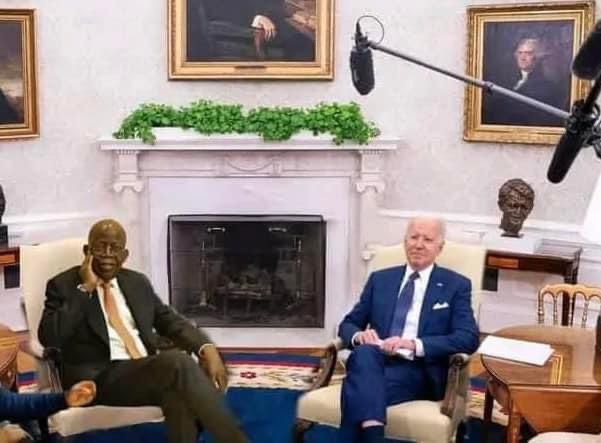
  • Feature: Tinubu should sign West African Monroe Doctrine with Biden and Macron

    Feature: Tinubu should sign West African Monroe Doctrine with Biden and Macron

    Tinubu should call Biden and Macron and offer them supplies of Nigerien uranium in exchange for them signing up to this version of the West African Monroe Doctrine

    Ayo Akinfe

    [1] Niger Republic produced 2,020 tonnes of uranium in 2022, about 5% of world mining output. This was actually down from 2,991 tons in 2020. It is this no surprise that they county is of interest to the Western world

    [2] At the moment, Niger has one major mining operation in the north operated by France’s state-owned Orano, another major mine which closed in 2021, with one under development. As a result, the French will always want to strike a deal with whoever is in power in Niamey

    [3] America has a vested interest too as the US imported about 579,900 tonnes of Russian uranium annually. Yes Russian. Do you know that Russian uranium is exempt from all the economic sanctions imposed on Vladimir Putin. America thus needs uranium from other sources, so Niger Republic comes into play big time here

    [4] Nigeria and Niger Republic will amalgamate as part of a move towards an indivisible Republic of West Africa with its capital in Abuja and this Greater Nigeria shall guarantee the US and France their current supplies of uranium for the next five years

    [5] Moving forward, the US and France will support Nigeria’s plans to eliminate landlocked states across Africa. Over the next 10 years, they will also gradually shut down their foreign military bases across the continent

    [6] All munitions manufacturers who want to supply African armies must open plants on the continent. It will be considered an act of terrorism to ship manufactured weapons to Africa

    [7] Purchasing raw commodities from Africa without adding any value to them locally will also be considered an act of war. Any multinational firm who wins a supply contract with an African nation in excess of $1m is compelled to manufacture his products on the continent

    [8] Africa accounts for about 18% of the world’s population. At the very least, 10% of global investment must go into the African continent as from 2027

    [9] The Republic of West Africa demands a permanent seat on the United Nations Security Council

    [10] It will be considered an act of war for any country to allow its banks to accept funds deposited by leaders of an African nation

  • Feature: 10 things Nigeria could do with Niger Republic

    Feature: 10 things Nigeria could do with Niger Republic

    By Ayo Akinfe

    10 things Nigeria could do with Niger Republic’s 1.2 km sq of landmass if we gobbled her up

    [1] Organise a grand slam tennis tournament on sand. If we have clay, grass and hard court tournaments, why not have sand too

    [2] Organise a Lagos to Algiers motor rally. Make it the best car rally in the world

    [3] Build the world’s largest solar farm in the desert. With 80% of Niger Republic being desert, this will be easy

    [4] Tap into the entrepreneurial spirit of Nigeria’s Igbos by letting them build purpose-built cities in Niger Republic. I take it you all know that this is how San Diego came about

    [5] Build the world’s longest railway line, linking the Atlantic Ocean with the Mediterranean Sea

    [6] Open the world’s largest uranium processing plant in somewhere like Agadez

    [7] Open a dedicated “solar city” where millions of panels and other forms of ancillary equipment are manufactured

    [8] Given the emphasis on clean energy, I would also open a purpose-built city to manufacture electric cars

    [9] I would launch the world’s most ambitious irrigation project, linking the Mediterranean Sea with the Atlantic Ocean

    [10] I would build Africa’s largest military base in somewhere like Niamey given the constant threat of terrorism in the Sahel!

  • Feature: The FIRS’ tax collection revolution

    Feature: The FIRS’ tax collection revolution

    By Salisu Na’inna Dambatta

    It is akin to a revolution: welcome to the big paradigm shift in Nigeria’s tax collection. The shift is from consistently low, inadequate and below targeted tax collection to a record-setting collection of N10.1 trillion in 2022. And the trend of raking in more revenue to finance people-oriented projects continues.

    Since his appointment as the Executive Chairman of the Federal Inland Revenue Service (FIRS) on 9th December, 2019, the country has witnessed and benefitted from his expertise in tax matters. This is unsurprising given his professional and career pedigree. As immediate past Chairman of the African Tax Administrators Forum (ATAF), Mr. Nami led the birth of a consciousness in the continent that technology was the future of taxation. He has carried that philosophy and campaign to the Commonwealth Association of Tax Administrators (CATA), where he has been President since 2021.

    The Bayero University Kano graduate, Nami is a trained and skillful Tax, Accounting and Management Professional with high qualifications and professional practicing licences from relevant professional bodies. He has been in the business of Auditing, Tax Management and Advisory Management Services to diverse clients in the Banking, Manufacturing, Services, Public Sector and Non-Profit Organisations for around three decades.

    He has transformed the revenue collection for Nigeria by deploying his vast experience, deep knowledge and patriotism to bear on his role as Chairman of the FIRS and Joint Tax Board.

    The improved tax collection in the country since his assumption of office as Chairman of the Federal Inland Revenue Service (FIRS) to date is evidenced in Tax Statistics/Report the institution has released from 2020 to date.

    Whereas the FIRS raked in N10.1 trillion in 2022, the highest ever so far; the same Service could only generate N3,741.7574 trillion out of a modest target total revenue of N4,572.2090 trillion in 2015. The total collection for 2015 at N3.714 trillion was the equivalent of slightly over one third of the 2022 collection.

    Three years later in 2018, the revenue target for the FIRS was N6,747.0344 trillion. However, that target proved ambitious as the Service was abled to generate only N5,320.8914 trillion that year. The total revenue for 2018 was just above half of the N10.1 trillion generated by Muhammadu Mami and his team in 2022.

    While briefing the National Economic Council (NEC) recently, the top tax man attributed the high tax collection success in the first half year to three factors namely: improved voluntary tax compliance by taxpayers; the continued improvement of automation of tax administration processes, including the updated VAT filing processes; and strong engagement with stakeholders in both the formal and informal sectors of the economy.

    He assured the NEC that, “the performance in the second half of the year would be better considering the continuing improvement to our tax administration processes.”

    It is heartwarming that the January to June 2023 tax collected in the sum of N5.5 trillion is more than the entire collection of N5.320 trillion in 2018.

    Also the N5.5 trillion was more than the target of N5.3 trillion set for the first six months of this year. And the FIRS joyfully celebrated it as the largest tax collected for any six months since tax collection started in Nigeria.

    Muhammad Nami disclosed that the non-oil sector contributed more revenue than the oil sector, “Tax revenue collected from the oil sector from January to June 2023 stood at N1.73 trillion, as against a target of N2.3 trillion; while non-oil tax collection stood at N3.76 trillion, as against a target of N2.98 trillion.”

    It is important to remember that he was appointed Chairman FIRS in December 2019. In that year, the revenue target was N8,802.3860 trillion. But the total collection for that year was below six trillion: it was N5,261.9163 trillion. There was a shortfall of over N3.5 trillion.

    In 2020 his first full year in office, FIRS collected N4.95 trillion a shade below the target of N5,076.8518, at 98 per cent performance. It was achieved amidst a recession, the COVID-19 worldwide economic shutdown, low oil revenue and the economic disruptions caused by the EndSARS protests.

    The NBS affirmed that the FIRS collected N6.405 trillion in 2021. The target for that year was N6.401 trillion. It was a 101 per cent success story. But it was triumphantly dwarfed by the N10.1 trillion best-ever collection so far achieved in 2022.

    Salisu Na’inna Dambatta wrote from Dambatta town

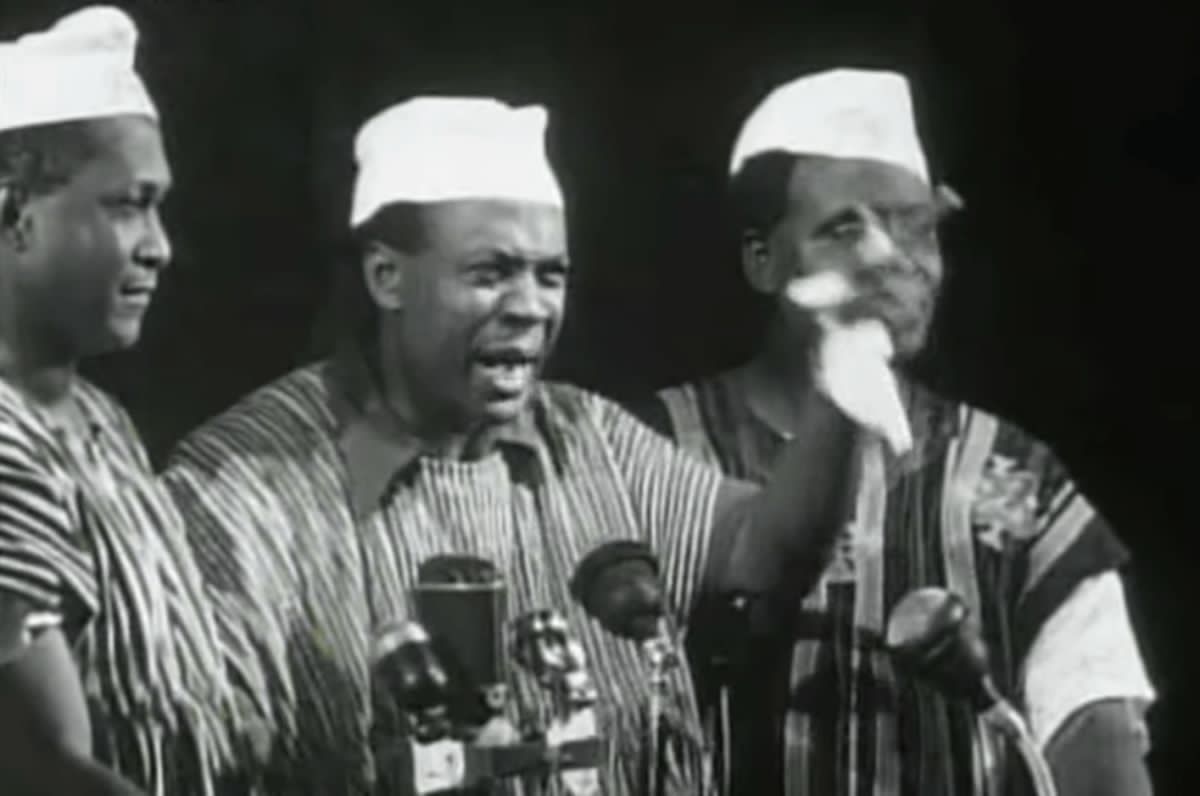
  • Feature: If Tinubu will become the new Kwame Nkrumah

    Feature: If Tinubu will become the new Kwame Nkrumah

    By Ayo Akinfe

    This Niger Republic crisis is Bola Tinubu’s chance to aspire towards being a Kwame Nkrumah.

    [1] For the first time in a long while, I was feeling very inspired in February 2021 when I read President Patrice Talon of Benin Republic’s proposals about how he would like to see Benin Republic merge with Nigeria and become her 37th state

    [2] Not surprisingly, Nigeria’s intellectually bankrupt leaders immediately distanced themselves from the idea but that is only because they are ignorant. As things stand, Africa has 54 nation states, most of which are not economically viable and the status quo is simply untenable

    [3] Africa accounts for 18% of the world’s population, just 3% of global trade and a mere 1% of world manufacturing. That is because most of her nation states are simply canon fodder for the rest of the world, producing primary commodities which are bought at rock bottom prices, then manufactured and sold back to them as finished goods with a 500% mark-up

    [4] Most African nations are simply too weak to do anything about this, so the relentless exploitation continues. The only antidote is to get rid of the nonsensical colonial boundaries and build viable economic entities with a little bit of teeth and clout. Nothing infuriates me more than hearing intellectually-challenged Nigerians calling for the balkanisation of their country even more. With your tiny weak states you face economic strangulation in the hands of giant nations like China and India with their populations that are in excess of 1bn

    [5] Just take the case of Benin Republic for instance. It has a population of 11m people but a meagre gross domestic product (GDP) of $14.3bn and paltry annual budget of $2.15bn. Most local government areas in Europe have annual budgets bigger than that of Benin Republic, even those with less than 50,000 inhabitants

    [6] Over 40% of Benin Republic’s income comes from cotton exports. In a world where everyone is moving towards synthetic fabrics, cotton simply has no future. Benin Republic’s other main money spinner is the port of Cotonou which is effectively part of Nigeria as about 90% of the goods that comes into there are destined for Nigeria. There is no justification whatsoever for the existence of two separate nation states

    [7] Kwame Nkrumah was the first person to highlight the perils of the proliferation of nation states across Africa. Indeed he made the point in 1965 when he opened the Akosombo Dam on the River Volta, constructing it to supply electricity to both Ghana and the then Upper Volta (Burkina Faso). Other West African heroes like Thomas Sankara, Amilcar Cabral, Leopold Sedar Senghor and Sekou Toure all highlighted this vision during their lifetimes

    [8] At the stroke of midnight on March 6 1957 when Ghana became independent, President Kwame Nkrumah said: “For our independence is meaningless unless it leads to the total liberation of the African continent.” By the same token, any economic development in Nigeria is meaningless unless it leads to the economic emancipation of the African continent. If all our West African neighbours are living off starvation budgets of $2.15bn a year, it is inevitable that their citizens will migrate enmasse to Nigeria if her economy is growing

    [9] This Niger Republic crisis offers Bola Tinubu a unique opportunity to etch his name in stone. He could go down in history as a legend by initiating amalgamation talks with a view to turning Ecowas into the Socialist Republic of West Africa, starting with the merger of Nigeria, Benin Republic and Niger Republic

    [10] Nigerians are the architects of their own misfortune. Where are the massive demonstrations asking the federal government to take charge of the situation by filling the vacuum created by France pulling out of Niger Republic. How dare the Nigeriens start carrying Russian flags when they should be carrying the flags of their southern neighbours and advocating an immediate merger

  • Feature: FIRS milestone H1 2023 performance, a success foretold

    Feature: FIRS milestone H1 2023 performance, a success foretold

    by Dapo Okubanjo

    For any one who has paid more than a passing attention to the activities of the Federal Inland Revenue Service (FIRS) in the last four years, the agency’s tax collection receipt in the first six months of 2023 would certainly not be surprising.

    This is because the FIRS under the leadership of Muhammad Nami has been constant in scaling new heights.

    But even at that, a N5.5 trillion total tax revenue collection between January and June this year is not a mean feat especially as this was more than the N4.95trillion the FIRS collected in the entire 2020 fiscal year and about nine hundred billion naira less than the N6.4 trillion collected in all of 2021.

    It is the highest ever tax collection by the service for the first six months of a fiscal year. But undeterred, the tax agency is convinced that it would better that number in the last six months of 2023.

    In the words of the FIRS Executive Chairman on the day he made the record- breaking announcement at the meeting of National Economic Council (NEC) a few days ago, there are “better days ahead”. And this he attributed to “continuing improvement to our tax processes and positive impact of current government’s policies on the economy”.

    A breakdown of the 2023 half year tax collection figure shows that while non-oil taxes continued to do well with N3.76 trillion, oil taxes stood at N1.73 trillion.

    And listening to Muhammad Nami on the day, it would be difficult for anyone to bet against the agency exceeding that feat at the end of the fiscal year. This is because it collected a total of N1.65 trillion tax revenues in June 2023 alone, the highest tax receipt by the agency in a single month.

    Success Foretold

    A cursory look at FIRS trajectory since at least 2020 when the Muhammad Nami-led management assumed office shows that signs of a successful tax collection regime were there from the onset. This is inspite of the grim shadow of COVID-19 on the polity which was bound to have negative consequences on the economy.

    In the year the pandemic held the world in its grips, the agency’s tax receipt fell slightly short of its N5.07 trillion target when it raked in N4.95 trillion inspite of a global slump in crude oil prices and disruption to businesses.

    One could easily recall how the FIRS Executive Chairman explained that the global oil slump impacted negatively on tax returns through the Petroleum Profits Tax which accounted for only 30.6% of the tax revenue generated in 2020, compared to previous years.

    So the country had to rely more on non-oil taxes which rose astronomically as a result of the deployment of a tax reform built on a 4-pronged approach which includes: rebuilding FIRS’ institutional framework, improving collaboration with stakeholders, making the agency a customer-centric institution and finally to turn it into a data-centric institution.

    And with COVID-19 not fully a thing of the past, the tax reforms began to manifest in 2021 with increased stakeholder collaboration and the deployment of technology. It was the year of Tax Pro-Max so not surprisingly, FIRS overshoot its N6.401trillion target for that year.

    In a personally signed performance update for the 2021 fiscal year,the FIRS helmsman said the agency collected a total of N6.405 trillion in both oil (N2.008 trillion) and non-oil (N4.396 trillion) revenues as against a target of N6.401 trillion.

    A further breakdown shows that Companies Income Tax amounted to N1.896 trillion; Petroleum Profits Tax brought in N2 trillion; Value Added Tax raked in N2.07 trillion; Electronic Money Transfer Levy topped N114 billion while Earmarked Taxes recorded N208.8 billion; among others.

    What this meant was that the non-oil sector contributed 68.64% of the total collection in 2021, while the oil sector’s contribution was 31.36% of total collection.

    But in 2022, the oil sector did better as FIRS broke the N10 trillion mark by contributing 41% of the total tax collection for the fiscal year with an unprecedented figure of N4.09 trillion to N5.96 trillion from the non-oil sector according to the year’s performance update report.

    All of these can be attributed to a quantum leap in stakeholder engagements under the watch of the current FIRS leadership, an automated system with Tax Pro-Max as the guiding light for tax administration as well as training and retraining of FIRS staff to improve their capacity.

    So it is quite easy to trace the performance index of FIRS from 2020 and come to the conclusion that its 2023 half year collection of N5.5 trillion was not entirely surprising.

    It is indeed a story of success foretold right from inception, not only because of the ongoing tax reforms but also because of improved stakeholder collaboration. And indications are that things can only get better.

    Dapo Okubanjo is a journalist/public affairs analyst based in Abuja. He can be reached on dokubanjo@yahoo.co.uk

  • Feature: Tinubu should aspire to resolve Niger Republic Crisis by September 9, same day US gobbled New Mexico

    Feature: Tinubu should aspire to resolve Niger Republic Crisis by September 9, same day US gobbled New Mexico

    By Ayo Akinfe

    Bola Tinubu should aspire to resolve the Niger Republic crisis by September 9, the anniversary of the day when the US gobbled up New Mexico

    [1] It was on September 9 1850 that the Territory of New Mexico became an organised incorporated territory of the United States. This process began in 1848, with the signing of the Treaty of Guadalupe Hidalgo that ended the Mexican-American War and allowed the New Mexico territory to be annexed to the US

    [2] This arrangement remained in place until January 6, 1912 when New Mexico officially became the 47th state of the United States of America

    [3] Signing the treaty to incorporate New Mexico was as significant as the US purchase of Alaska On March 30, 1867. On this date, the US reached an agreement to purchase Alaska from Russia for a price of $7.2m

    [4] Those founding fathers of the US were real visionaries. They knew that their new nation would be weak unless it had a significant land mass, lots of natural resources and a huge population. They then set out with a gusto to acquire all three

    [5] Today, the US has 50 states, with the last two, Alaska and Hawaii joining in 1959. America has come a long way from the 13 states that declared themselves independent from Britain in 1776, thanks a lot to how acquisitive they have been

    [6] Today, the US has a landmass of 9.834m km², a population of over 333m, it is the third-most populous nation in the world, after China and India, has a diverse population with 37 ancestry groups having more than 1m members each and 48 of its 50 states are contiguous

    [7] In terms of landmass today, the the biggest 10 nations are Russia, Canada, China, US, Brazil, Australia, India, Argentina, Kazakhstan and Algeria. If Nigeria and Niger Republic merge, we will just about match Algeria as we will have about 2.2m sq km of territory

    [8] About three quarter of Africa’s nation states are not sustainable as they are too weak, small and economically unviable. Niger Republic is one such nation. I cannot believe that the presidents of Nigeria and South Africa have not sat down to redraw the continent’s map and redistribute the nation states

    [9] Have you not noticed that the Arabs have large nations in Algeria, Libya, Sudan, Egypt, Mauritania, etc, while we Africans struggle with unviable countries

    [10] Nigeria needs to gobble up Niger Republic like yesterday. Our combined landmass of 2.2m sq km, population of 225m and resources will leave us in good stead

  • Feature: Nigeria must be transformed into Africa’s Super Power

    Feature: Nigeria must be transformed into Africa’s Super Power

    By Ayo Akinfe

    I hope this Niger Republic matter has brought home the message to Tinubu that he needs to create an African super power whether he likes it or not. Here are 10 things he must do.

    [1] President Tinubu should insist that a memorial be erected on the Burma/India border to honour the men of the West African Frontier Force and the East African Frontier Force who died there during World War Two. It was African troops who prevented the Japanese from invading India at great personal cost. Nobody ever acknowledges this

    [2] Nigeria’s president should also insist that the African Union chairman be invited to the annual wreath laying ceremonies across Europe to honour the World War Two dead. For now, the African soldier has been airbrushed out of history as if they paid no part in the defeat of the Axis powers

    [3] Every year, the Nigerian president should go for about six walkabouts in several world capitals like Washington, London, Paris, Berlin, Ottawa and Beijing. Such an annual ritual will drastically enhance the status of Africans who live in these cities

    [4] Nigeria should build six seaports along her coastline and accept responsibility for inward shipping for all of West Africa’s landlocked countries. With 853km of Atlantic coastline, Nigeria should be a maritime nation. Maybe we will get a bit more respect with more visitors

    [5] Nigeria should expand her military to at least 5m standing men and assume responsibility for security on our continent. If we keep relying on the Americans and Europeans to provide us with security, such services will always come with insults and unpalatable conditions. Libyan arms flooded into Nigeria because we did not police the country when Gadaffi fell

    [6] We need to build two huge religious sites that will serve as a place of pilgrimage for Muslims and Christians. We have over 1bn adherents of both faiths on our continent but have no Kaaba, Church of the Nativity or St Peters Cathedral. That is just not right. Nothing stops Nigeria building the tombs of Usman Dan Fodio and Samuel Ajayi Crowther into major tourist attractions of the scale of say the Taj Majal to pull in pilgrims

    [7] Festac has got to become an annual event. Those of us who remember 1977 know the prestige it brought to our continent. Festac should be the biggest cultural and arts festival on the planet with every Motown legend performing there among others

    [8] Nigeria should construct a purpose-built diaspora city. Kind of similar to the way Liberia was founded as a colony for freed African slaves in America, this our Diaspora City should be a haven for any black person wishing to relocate to Africa. Our aim should be to build it into a global financial centre that can rank alongside cities like Frankfurt, Hong Kong or Singapore

    [9] To enhance our status as a player in the global economy, Nigeria needs to buy a multinational brand and incorporate it into a local company that will become a genuine economic giant. This should be kind of similar to the way India’s Tata Tea bought Britain’s Lipton Teabags. Just imagine the change of dynamics we would see if a privatised NNPC bought say Total or Shell or if Dangote Industries bought Nestle. I want to see the Nigerian government hold a minority stake of no more than 25% in such a venture

    [10] Before any international meeting, Nigeria’s president should host all African leaders in Abuja and seek to get a consensus. On the international scene, we should be voting as a block. This would force the rest of the world to negotiate with us

  • Feature: Thoughts of Nigeria’s Ruling Elite on the Niger Republic Crisis

    Feature: Thoughts of Nigeria’s Ruling Elite on the Niger Republic Crisis

    By Ayo Akinfe

    Surely this Niger Republic crisis has got Nigeria’s ruling elite to start thinking the unthinkable as we may never get another opportunity like this in our lifetime.

    [1] Build an African giant of a nation with a landmass of about 3m square kilometres. This will include about 800,000 sq kilometres of Sahara Desert

    [2] We are looking at a socialist secular nation with a population of 1bn people where power is devolved to the federating units

    [3] An economic giant with a gross domestic product of about $30trn putting it in sharp competition with China, India, the US and a United States of Europe

    [4] Let us aim for an annual budget of about $5trn with a 99% literacy rate

    [5] Aim to have a standing army of about 10m men. One of its main tasks will be policing the Sahara Solar Farm, which will be the greatest wonder of all the wonders of the world

    [6] Aspire to have an economy that accounts for about 20% of global industrial output

    [7] Build a nation that accounts for about 25% of global agricultural output

    [8] I dream of a nation that generates 50% of the world’s solar power. Our solar desert will make the Pyramids of Egypt, Hanging Gardens of Babylon, Colossus of Rhodes, the Statue of Zeus, etc, look like child’s play

    [9] I want a country that serves as the spiritual home of the negro. If blacks people are maltreated anywhere, we will organise an immediate evacuation

    [10] Once every two years, we will host Festac in a 300,000 seater stadium. This is a nation that will ultimately spearhead living on the moon!

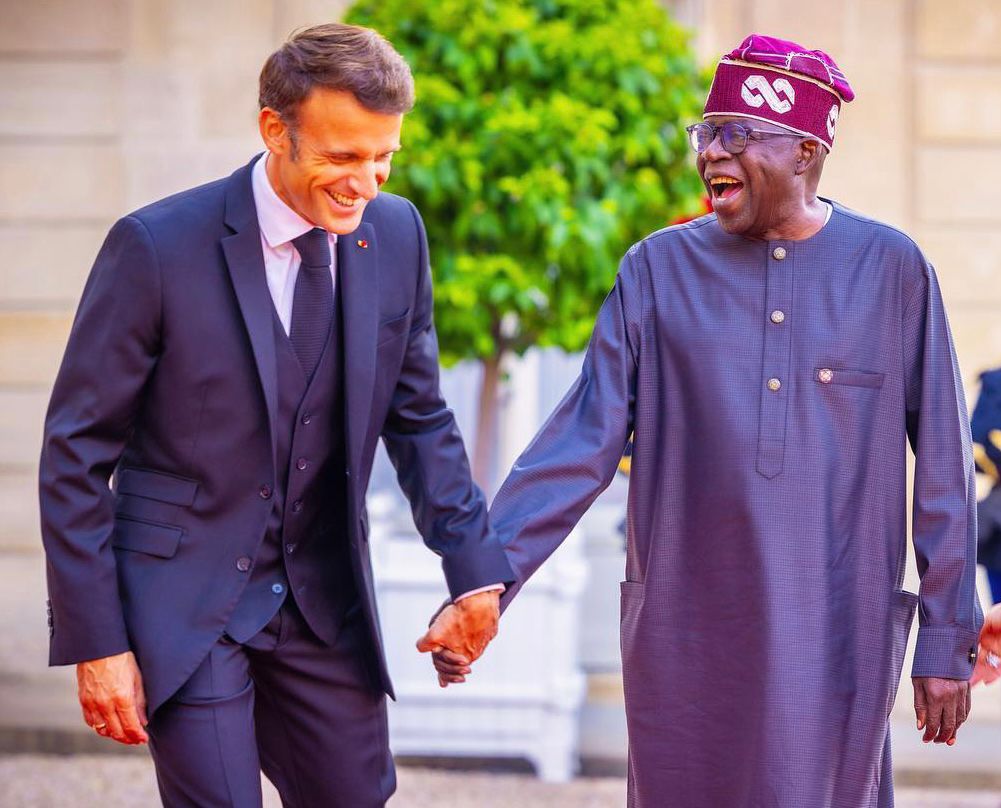
  • Feature: Tinubu’s demands from France if Nigeria must  co-operate on Niger Republic

    Feature: Tinubu’s demands from France if Nigeria must co-operate on Niger Republic

    Tinubu should draw up a list of demands for France which Macron must meet if he wants Nigeria’s cooperation on Niger Republic

    Ayo Akinfe

    [1] Nigeria needs French automobile companies Citroen and Renault to come and open manufacturing and assembly plants in Nigeria immediately as Peugeot did in Kaduna. We need them to make Nigeria the centre of electric car manufacturing

    [2] Pharmaceutical giant Sanofi should come and open a facility in Nigeria to manufacture a coronavirus vaccine. The French government should offer them a massive tax rebate for doing so

    [3] French creditors should wipe off all Nigeria’s public debts. Our states simply cannot afford to pay back these debts in this harsh post-coronavirus environment

    [4] France should grant 50% tax rebates to any of its companies that invests in excess of $1bn in Nigeria

    [5] French agricultural companies Agrocomm, the Soufflet Group and Louis Dreyfus should each commit to opening a mega cattle ranch in Nigeria. That will help immensely to combat Nigeria’s current insecurity crisis

    [6] Power giant, Électricité de France (EDF) should commit to building a 30,000MW hydro-electric power plant in Nigeria by 2025. Make it Africa’s largest hydro-electric facility with the capacity to expand and supply the rest of the continent with electricity

    [7] French banking giant, Crédit Agricole should offer Nigerian farmers, food processors and exporters loans at rates no higher than 5%

    [8] Consumer goods company, L’Oréal should open a manufacturing facility in Nigeria large enough to serve the entire African market. We are among the most fashion conscious people on earth and for decades, companies like L’Oreal have just been bleeding us dry

    [9] Entrepreneur federation, the Mouvement des entreprises de France, should set its members a target of investing at least $10bn annually in Nigeria

    [10] The Mouvement des entreprises de France should also commit to training at least 5,000 Nigerian workers and professionals annually under an industrial exchange training programme.