Category: Features

Featured posts

  • Feature: The Reunification of The Niger Area

    By Ayo Akinfe

    Were I in Tinubu’s shoes, Niger Republic’s coup would provide me with the opportunity to launch a programme known as the Unification of the Niger Area

    [1] I am a historian and know that the industrialised world would not be where it is today without all the mergers and amalgamations over the centuries. We had the reunification of Germany and Italy, England and Scotland signed a Union Treaty creating Great Britain and then of course we had the 1776 US Declaration of Independence and the subsequent growth of 13 states into 50 with a series of amalgamations

    [2] Take it or leave it but the large dominate the small and the strong dominate the weak. Africa remains the world’s punching bag today because most of her nation states are too small, weak and economically unviable

    [3] Niger Republic only has 25m people yet it has a landmass of over 1m square kilometres. It is sitting on some of the world’s richest uranium resources and in addition, 80% of the country is in the Sahara Desert, making it potentially the world’s largest solar farm

    [4] There is no way that the rest of the world will ever leave Niger Republic be. It will forever be exploited by those with imperialist ambitions. France and the US have made it clear they see the country as a piece of real estate they want. It is time for Nigeria to wake up from her slumber. President Bola Tinubu should open amalgamation talks with the new regime immediately

    [5] Were I in President Tinubu’s shoes, I would only recognise this new military junta in Niamey if they agree to an amalgamation plan. We would then set up a joint committee with a mandate to deliver a unified and democratic country within five years

    [6] Under this plan, within a year, the Nigerien generals who seized power will be retired and elected officials will replace them in the run-up to the grand unification. We will use the template adopted when East and West Germany merged in the early 1990s

    [7] I see this unification of the Niger Area as a prelude to creating the Socialist Republic of Songhai. A West African giant made up of modern Nigeria, Niger Republic, Benin Republic and Cameroon. Populated by 1bn people, Songhai will have a gross domestic product (GDP) of $70trn and an annual budget of about $10trn

    [8] Covering a total area of 3m square kilometres, Songhai will be one of the five pillars on which humanity stands. By 2050, the five nations that will dominate global affairs, politics and commerce will be China, India, America, the European Union and Songhai

    [9] Songhai must account for at least one fifth of global trade and one third of all agricultural output. It will have 20m standing troops that provide security across the African continent. We will issue our own Monroe Doctrine which prohibits outsiders from coming to divide our people, especially those using their Abrahamic faiths to foment hatred and wars

    [10] One quarter of all automobiles, half of all fridge/freezers, one third of all washing machines and 50% of all laptops and mobile phones must be manufactured in Songhai. Also, Songhai must account for at least one quarter of all tourist holidays worldwide

  • Feature: Who will be the Chairman of the National Orientation Agency

    Feature: Who will be the Chairman of the National Orientation Agency

    By Ayo Akinfe

    Tinubu’s most important appointment may be that of National Orientation Agency chairman as changing outlook as a people is key to resolving Nigeria’s economic woes

    [1] If we do not accept our shortcomings, we are never going to overcome them. Our problems in Nigeria are multi-faceted but they can be narrowed down to three things – we produce too little, intellectual laziness and ostentation greed. In 1922, Frederick Lugard spotted all this and summed us up perfectly in his book Dual Mandate

    [2] One thing that always cracks me up though is our delusional view that one day, some messiah is going to miraculously appear and solve all our woes. We are waiting for another Moses or Jesus Christ to deliver us to the Promised Land. But hey, USA for Africa summed up the realities of the real world in their song We Are The World when they said: “We can’t go on pretending day by day, there’s someone somewhere to make a change.”

    [3] Our options are simple and straightforward. We sort ourselves out and prosper or we continue to wallow in poverty like fools. For me, the fact that a majority of Nigerians are not bothered about the fact that we are the poverty capital of the world and have the highest number of out-of-school children, is extremely worrying and tells me all I need to know about our mumurity. It shows we are unperturbed about our day environment and are happy to go on with our daily chop-make-I-chop lifestyle

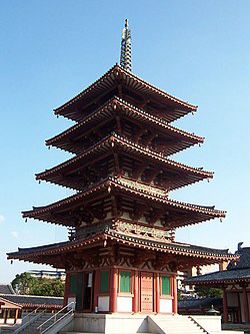
    [4] This historical intellectual laziness has been at the centre of our woes. Do you know that this five storey Pagoda of Toji in Japan was built in 1643 out of nothing but wood. We are talking of pre-industrial agrarian Japan when 90% of the population were peasants. I ask myself why we did not manage to build similar five storey buildings out of mud and wood in Umuofia

    [5] To tell you how forward thinking agrarian Japanese society was, do you know that this building was even earthquake proof? It was made of sliding joints so it could absorb shocks. Up until today, it is still standing. Now contrast that with how comical we are, as in 2023 we are still building six storey apartments in Lagos Island on foundations meant for bungalows. Do we need to be told that such buildings will collapse? Have we never heard of steel frames? Today, all tower blocks have steel frames to make them sturdy yet light, which is why they can build their walls out of glass

    [6] My people just want quick money, to show off wealth in an ostentatious way and then worship their God passionately. They then think that the responsibility of making their society better falls to the government. Everyone is hoping and praying that a set of incorruptible angels or super humans will fall out of the sky and solve all their problems. No wonder we are so passionate about religion

    [7] I wonder if my people who are Muslim fanatics wanting the purest form of Islam in Nigeria are aware of the fact that today, the tallest building in the world is in Saudi Arabia. My people pack themselves off every year to Mecca and Medina but never for once visit the 120 storey Abraj Al-Bait Towers to see how they can replicate it in Nigeria

    [8] Let me shock you further. Saudi Arabia’s Jeddah Towers is currently the tallest building in the world with 168 floors but Kuwait’s Burj Mubarak al-Kabir will overtake it in 2030 with 234 floors. Up until 2020, Dubai’s Burj Khalifa was the world’s tallest building

    [9] Likewise, my Christian friends go on pilgrimage to Israel every year but none of them have come back with their agricultural expertise. Israel has taken irrigation to new heights, showing the world how to farm in the desert. My people go to the Wailing Wall to pray but alas never visit agricultural communities like the kibbutz of moshav. Are we damned to be eternal consumers?

    [10] Some of you say I must be a Nephilim but I think all these things are just common sense. When you see other parts of humanity advancing, you look for means to replicate this. It may just be me but I do not understand how my people can go to Dubai and enjoy themselves and not feel so ashamed about how it has advanced over the last 20 years to the point that it challenges them to catch up

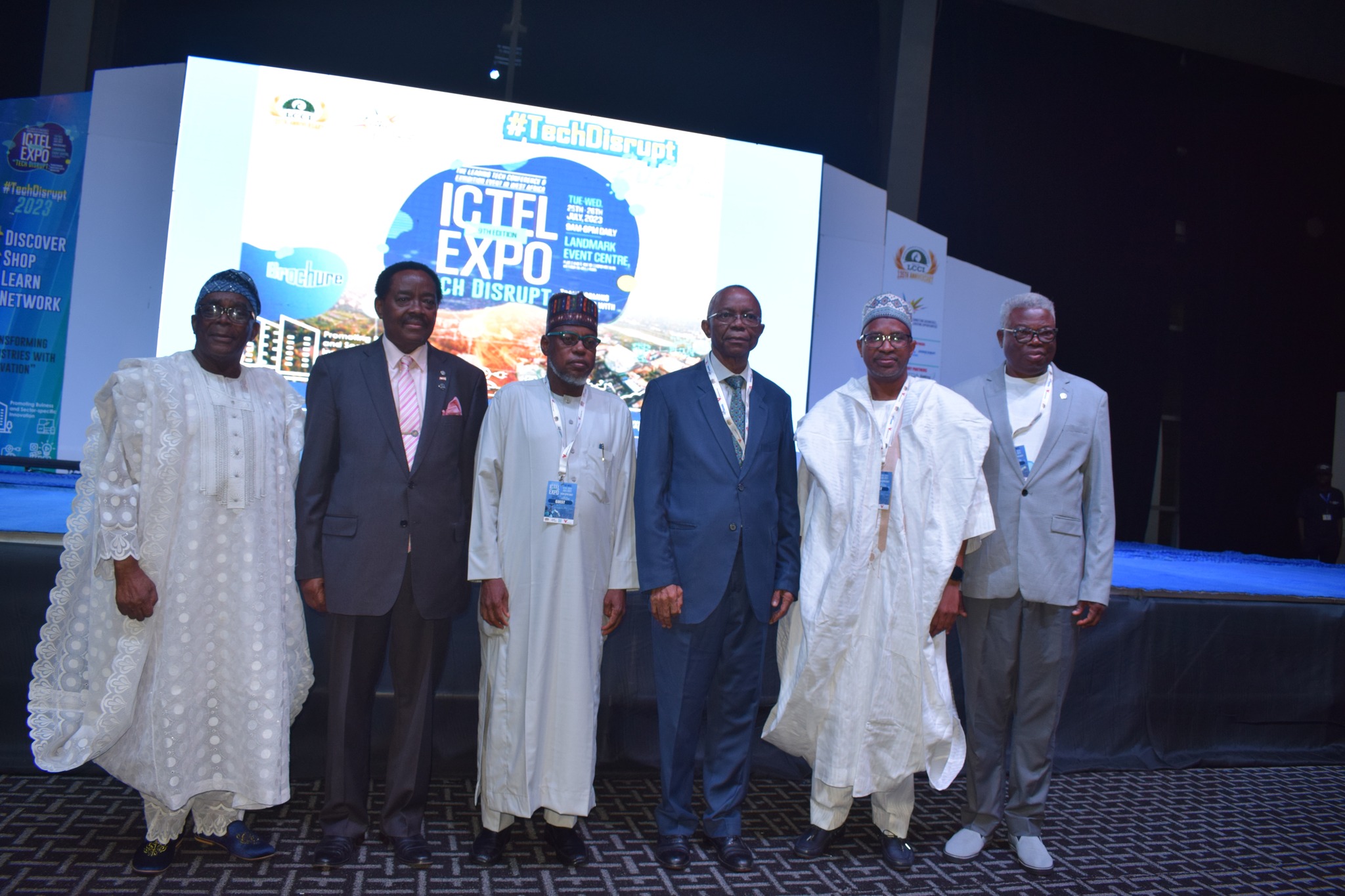
  • For the Records: Opening Remarks of Asiwaju Dr Michael Olawale-Cole at the 2023 ICTEL Expo

    For the Records: Opening Remarks of Asiwaju Dr Michael Olawale-Cole at the 2023 ICTEL Expo

    OPENING REMARKS BY THE PRESIDENT, LAGOS CHAMBER OF COMMERCE AND INDUSTRY (LCCI), ASIWAJU DR. MICHAEL OLAWALE-COLE, CON AT THE 2023 ICTEL EXPO HELD AT THE LANDMARK EVENT CENTER, LAGOS, ON TUESDAY 25TH JULY 2023.

    OUR SPECIAL GUEST OF HONOUR
    EXECUTIVE VICE CHAIRMAN, NIGERIAN COMMUNICATIONS COMMISSION (NCC)
    PROF. UMAR GARBA DANBATTA

    KEYNOTE SPEAKERS:
    MR. KASHIFU INUWA ABDULLAHI
    DIRECTOR GENERAL OF THE NATIONAL INFORMATION TECHNOLOGY DEVELOPMENT AGENCY, NITDA

    PROF. MUHAMMAD BELLO ABUBAKAR
    MANAGING DIRECTOR/CEO, GALAXY BACKBONE

    THE DEPUTY PRESIDENT, LAGOS CHAMBER OF COMMERCE AND INDUSTRY
    MR. GABRIEL IDAHOSA, FCA
    VICE PRESIDENTS AND HONORARY LIFE PRESIDENTS OF THE CHAMBER
    OTHER DISTINGUISHED OFFICERS AND MEMBERS OF THE CHAMBER
    THE DIRECTOR GENERAL
    DR CHINYERE ALMONA
    OUR VALUED SPONSORS AND PARTNERS IN THE ICT AND TELECOMMUNICATION SECTORS
    DISTINGUISHED GENTLEMEN OF THE PRESS
    LADIES AND GENTLEMEN,

    I am most delighted to make some opening remarks at the ninth edition of the yearly information communication technology and telecommunication (ictel) expo organized by the trade promotion board of the lagos chamber of commerce and industry.

    The 2023 ictel conference & expo with the theme “tech disrupt: transforming industries with innovation” creates a platform for key players and stakeholders in the nigerian information, communication & telecommunications industry to share perspectives on emerging issues and trends in the digital economy.

    This theme suggests that this year, the ictel expo will not end at the close of the event tomorrow, but will activate a learning journey of the technologies disrupting business, academia, and even lifestyles. We are determined this year to follow the theme through and ensure follow-up initiatives that would make the resolutions and learning from our robust interaction at this event a working manual for relevant stakeholders.

    With technology having more relevance in the business world, the sector is fast becoming the fastest-growing sector in the non-oil sector of the nigerian economy. Information and communication technology (ict) has continued to disrupt the practice of agriculture, healthcare, learning, and manufacturing. We are presently experiencing innovative solutions driven by artificial intelligence (ai), automation, robotics, and wearable technologies. Recent data from the national bureau of statistics (nbs) revealed that the tech sector in the first quarter of 2023 recorded a growth rate of 10.32% in real terms, year-on-year, and contributed 17.47% to the real gross domestic product (gdp) in the first quarter of 2023, higher than in the same quarter of the previous year in which it represented 16.20% and higher than the preceding quarter in which it represented 16.22%.

    Distinguished ladies & gentlemen, the digital economy is evolving and impacting more areas of life and business because of its multifaceted and dynamic nature and due to the transformational power of digital technologies. The digital economy or the internet economy enables and supports various business, social, and government activities through electronic commerce, lifestyle apps, and e-government platforms, respectively. By this, the digital economy is considered the single most important driver of innovation, competitiveness, and growth.

    The digital economy has continued to play a very critical role in building resilience against disruptions from risks, pandemics, and natural disasters. The ict sector, for instance, remains one of the most resilient sectors that thrive even in economic recessions and disruptions.

    By means of innovation, the ict sector or the digital economy powers many sectors today, driving competitiveness, cost-efficiency, and resilience in supply chains. Innovative disruptions are emerging in agric-tech, health tech, edu-tech, e-government, etc. The digital economy has become more relevant in many spheres of our lives. With sound regulations, policies, and governance, the digital economy can create new possibilities and economic opportunities for businesses and investors. Governments and organizations must leverage technology for innovation, competitiveness, and resilience in the face of risks and uncertainties.

    As an advocacy pressure group and a lead promoter of small and medium enterprises (smes), we appreciate the significance of this sector to business growth and sustainability and we are ready to lend necessary support to the actualization of the goals set out by the government to build and sustain a robust and supportive digital economy. We have assembled eminent speakers whom we are confident will do justice to various issues as they reflect on the theme of this great event and the expectations of all of us.

    By strategic design, this year, we are working with the most relevant regulators, operators, and critical stakeholders in nigeria’s digital economy space. We are pleased to announce our collaboration with credible institutions like the federal ministry of communications and digital economy, nigerian communications commission (ncc), the national information technology development agency, (nitda), galaxy backbone, nigeria internet registration agency (nira), lagos state employment trust fund (lsetf), open access data center, rackcenter, etc. We are proud to have worked with these institutions in planning and hosting the 2023 ictel conference & expo. Let me use this opportunity to urge the government at various levels to formulate policies that create a vibrant innovation ecosystem that support the deployment of more technology and the creation of more jobs in the technology sectors.

    I wish to use this opportunity to express my profound appreciation to our various partners, sponsors, speakers, and participants. Your valuable contributions to the success of this virtual expo and conference are highly appreciated by the leadership of the chamber. We look forward to sustaining these partnerships in subsequent editions.

    Once again, i welcome our guests and participants to the 2023 edition of the ictel expo and conference.

    I appreciate your kind attention.

    ASIWAJU DR. MICHAEL OLAWALE-COLE, CON
    PRESIDENT, LAGOS CHAMBER OF COMMERCE & INDUSTRY
    TUESDAY 25TH JULY 2023

  • Feature: Kolanut embodies Nigeria’s Problems

    Feature: Kolanut embodies Nigeria’s Problems

    by Ayo Akinfe 

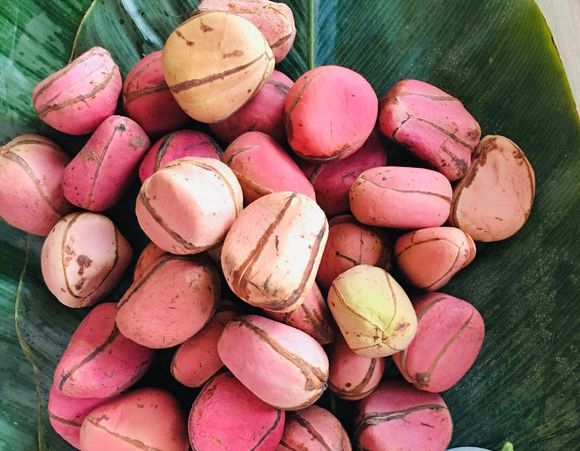
    Kolanuts symbolise everything that is wrong with Nigeria, and how Tinubu deals with this crop will provide an insight into how he thinks. 

    [1] Nigeria is the world’s largest kola nut producer accounting for about 54% of global output. We produce approximately 150,000 tonnes of kola nuts annually, which sell for $3,800 a tonne. Our export earnings from kola nuts can only be described as pathetic and derisory 

    [2] In 2023, wine distillers increasingly use kola nuts in their red wine. In 2020, the global red wine market was valued at $182bn and is projected to grow to $278.5bn by 2028. If I were in President Tinubu’s shoes, I would have my eyes firmly on this kind of revenue 

    [3] In Igboland, there is a saying that: “He who brings the kola nut brings life.” In pre-crude oil Igboland, kola nut production was widespread, but alas, we have not got around to producing kola nuts on an industrial scale. We have not got to grips with the concept of commercial farming

    [4] Coca-Cola derived its name from the kola nut, which it used to flavour its drinks. The soft drinks and confectionary market is where billions could be made. President Tinubu needs to sit down with Coca-Cola and enter into a deal that makes Nigeria their main global partner

    [5] This is where Nigeria has to learn from the West. When anything is important to their economies, laws are passed describing them as environmentally friendly and compulsory. If we could get the United Nations, WEF, UNESCO, UNICEF, the World Health Organisation, etc, to demand that, at the very minimum, every can of Coca-Cola must contain 15% kola nuts, Nigeria is sorted. It would be a licence to print money

    [6] President Tinubu needs to develop a unique programme that makes Nigeria’s tropical rainforest the world’s largest kolanut producing and processing region. This area that stretches from Cross River to Lagos to Taraba states should be littered with kola nut plantations and distilleries processing it into wine as happens in southern France and Italy

    [7] Italy is currently the world’s largest wine producer, followed by France, Spain, Germany, the US, Australia, China, Argentina, South Africa and Chile. That should not be the case with our dominance of kola nut production. Nigeria should easily be the biggest producer of red wine on the planet 

    [8] Africa as a continent only accounts for 4% of global trade and, more shockingly, only accounts for $2.1trn of the world’s $80trn gross domestic product (GDP). How can you have 18% of the world’s population but just 4% of trade, 2.6% of GDP and 1% of manufacturing? That is simply not sustainable, and Nigeria needs to lead the charge to change this

    [9] John Pemberton, the pharmacist who started Coca-Cola, decided to use his pharmaceutical skills to develop a cure for his morphine addiction, so he started experimenting with various plants, including kola nuts. In 1866, he started selling an alcoholic drink named Pemberton’s French Wine Coca, and that is how it all began. Today, Coca-Cola no longer has any kola nuts as it has artificial and synthetic ingredients, but we need to change this. We argue that it is inorganic, unhealthy, injurious to human life, environmentally unfriendly and polluting, etc, to use artificial products in Coca-Cola. If we can win that argument, poverty will be banished in Nigeria overnight

    [10] If President Tinubu can get the world’s wine distillers and Coca-Cola to start using Nigerian kola nuts in their products, our insane dependency on crude oil will end overnight. All we then have to do is expand production and then woo investors to open processing facilities in Nigeriakola nuts

  • Feature: Selected unique Agricultural Policy for Nigeria

    Feature: Selected unique Agricultural Policy for Nigeria

    by Ayo Akinfe

    If Bola Tinubu is serious about solving Nigeria’s economic woes, he needs to come up with a unique agriculture policy centred around designer farming and processing.

    [1] I have always believed that our innovative spirit will get Nigeria out of the economic doldrums and give us a gross domestic product (GDP) of $2trn in the not-too-distant future. Unfortunately, crude oil is acting as a huge distraction at the moment. It is a real fly in the ointment, and at some stage, we need to turn the taps off to get us thinking

    [2] Nigerians differ from every other African because of our ability to “manage” things and our knack for “trying.” We are a very innovative people. You just need to see the way our mechanics will get a 30-year-old gearbox to work, how we panel beat 60-year-old lorries or how we fix the compressors of 40-year-old fridges to appreciate our innovative capability

    [3] I once had a Guinean friend who wanted to ship a right-hand car back home from the UK ask me for a mechanic in Lagos who could charge over the steering wheel. It was then that I got to know that all West Africans change the hand of their cars in Nigeria before driving them to their nations

    [4] Our biggest problem remains our inability to tap into this spirit en masse. One of the positive impacts of China on Nigeria, however, is that it shows us that we can push the boundaries of innovation to whatever level we want. Today, China is growing food in factories, building glass bridges, launching artificial moons in place of streetlights and has inter-continental ballistic missiles that can probably reach Mars

    [5] By 2050, Nigeria will become the world’s third largest nation after China and India, so we must stop thinking like a developing nation and adjust our brains to think and act like citizens of an industrialised country. For starters, we carry the weight of 370m West Africans on our shoulders

    [6] Just to let you know how Nigeria has dropped the ball, do you know that Aliko Dangote’s tomato paste factory shut down in Kano in 2019 because it could not gather enough tomatoes. Clearly, Aliko Dangote did not learn the lesson of his grandfather Alhassan Dantata, who went around northern Nigeria collecting groundnuts. Dangote should have initiated a West African Tomato Collection Programme so that, if anything, he would need to open another paste factory due to an over-abundance of tomatoes

    [7] Now, the supply of farm produce is where Nigeria has a competitive edge. We are the world’s largest producer of certain tropical crops like yam, cassava, shea nuts, kolanuts, cashews, melon seeds, gourds, etc and can literally do what we want in the global marketplace with these crops

    [8] Why, for instance, can we not offer designer yams in the shapes and forms people want and deliver them anywhere in the world at a premium? If people buy bespoke wine, cars, watches, chocolate and manufactured goods, why can’t this apply to the agricultural produce we supply too?

    [9] We need to work on our food preservation technology so that, for instance, a yam tuber can last for a year without going off. Why can we not, for instance, supply a Merry Christmas sign designed of yam, deliverable to every country worldwide?

    [10] Once we have a breakthrough with one crop, the floodgates will open. I can see all the world’s major food companies coming to Nigeria to open manufacturing facilities

  • Feature: Let us salvage this situation before it is too Late

    Feature: Let us salvage this situation before it is too Late

    by Favour Adéwoyin

    In just a few months, Òkèògún has recorded some kidnappings. One of such is the kidnap of the Medical Director in charge of Baptist Hospital, Òkehò, on Sunday, July 23, 2023, with a security man. However, the two have not been released until now that I am writing this article.

    People are already praying fervently for their release, and I also joined them in prayer because our God is a prayer-answering God. But, beyond prayers, God expects us to do something. He expects us to take steps to provide security for ourselves. God would not have asked us to do it if we could not.

    However, let me examine some thoughts with you as we are praying to God to answer our prayers and are waiting to know what step to take to find a final solution to our security problem.

    The first thing is that everybody wants to be great, and it is a good and Godly desire to want to be great. But not everyone would be great because not everyone will want to pay the price of greatness. What is the price of greatness, somebody may want to know? The cost of greatness is nothing but responsibility.

    What is responsibility? Responsibility is the readiness to do something to achieve what one desires or wants. It is to work or to be diligent in carrying out an assignment in anticipation of a desired result. Responsibility is to have the duty of taking care of something. It is to be answerable for an act performed or for its consequences. It is to be accountable or amenable. Someone said responsibility is a compound word that contains the following three English words:

    1. Respond.
    2. To.
    3. Ability.

    If we bring the three words together, it will give us “Respond” + “To” + “Ability”, which equals “Respond to ability” and, then, “Responsibility”.

    Going a little bit deeper, it means there is an inherent ability that God has given to each of us, which makes one person different, unique, particular and peculiar from another. In other words, no matter how close Taiwo is to Kehinde, they are different in many ways on a closer look and consideration.

    This agrees with what a great man had in mind when he said, “Every man has a divine deposit in him. It takes vision to locate it, and it takes motion to accomplish it”. This quotation simply suggests that there is no nonentity in the creation of God. It means no one is empty because every one of us has been given a talent or a gift by God, the Creator of all beings and all things.

    But, the most unfortunate thing is that many people are burying their talents or gifts because they lack the vision to see and motion to pursue, which is why Dr Myles Munroe said the cemetery or the graveyard is the wealthiest spot on the planet Earth. Now, one indisputable truth is that anyone who buries his or her talent is an irresponsible individual who is robbing or shortchanging the world of the divine quality of God in him or her.

    Today, if you bear me witness, you will agree with me that we are now living in an irresponsible generation where our young ones have been programmed by the adult generation not to tó discover who they are (self-identity), why they are (purpose) and what they have (potential) to become contributing members of the society.

    Many of our young people have turned to crimes and anti-social behaviours because they have not discovered themselves. Those who have found themselves among them don’t believe in themselves because the society they belong to doesn’t fancy what they have to offer.

    In our society today, we worship money and what money can buy. We worship materialism. If you place a man with a good idea alongside a man with money in an election, nobody or only a few will vote for the former. The latter will win the election because we value ideas less than they do in other climes.

    Good ideas are not respected again, and people have become terribly impatient with the process. Nearly everyone, especially the youth, wants to get rich quickly, which is why crime has become a lucrative business in our time. This is why we have thieves, armed robbers, occultists, drug sellers, internet scammers, advance fee frauds, human parts sellers, kidnappers, insurgents, terrorists, etc, in our midst.

    Today, in Òkehò, the NDLEA has told us that we have more than 40 to 50 hot joints where young people are taking hard substances like cannabis, marijuana, cocaine, heroine, cocaine, colorado, tramadol and the like because cigarette, that is dangerous to human health, is no longer in vogue.


    As I want to close, the question we should all answer is: what can we do about this? The answer to this question is that:
    i. All hands must be on deck to bring back the lost values at home and in the society.
    ii. Government should review our education curriculum and introduce transformative content to what we teach our young ones in school.
    iii. Religious organizations (churches and Mosques) must change their messages to value-oriented and moral rebirth.
    iv. The media – print, electronic, social media on the net – should begin to write content that will change the people for the better.
    v. The Government must introduce sanctions and punitive measures to punish offenders.

    Bringing it to Okeho, our community, all the socio-cultural associations should come together and work out a strategy to lead to a strong, formidable, virile, dynamic, well-structured and all-inclusive Security Task Force (STF) that will be well-funded.
    Prayer is good, and we should continue to pray. But, if David had been praying in front of Goliath without confronting him, the story we read would have been different today.


    In conclusion, this is the time for proactive steps to deal with these issues. Nobody will come from outside to act on our behalf if we don’t act.


    Don’t forget what Isaac Newton said: “Everything assumes a state of rest until an external relevant force is applied”. But, maybe the scientist should help me to tell Isaac Newton that his theory can no longer be sustained in modern times, and he should permit we change his approach to: “everything will begin to decay and retrogress until something is done to prevent the fast process of decadence and retrogression”.


    As we can all see, before our very eyes, things have moved from good to bad. It has moved from bad to worse and is now moving from bad to worse. So, before we get there, let us do something to stop the decadence and retrogression.
  • Feature: Steel Production must be a prior for Tinubu

    Feature: Steel Production must be a prior for Tinubu

    by Ayo Akinfe

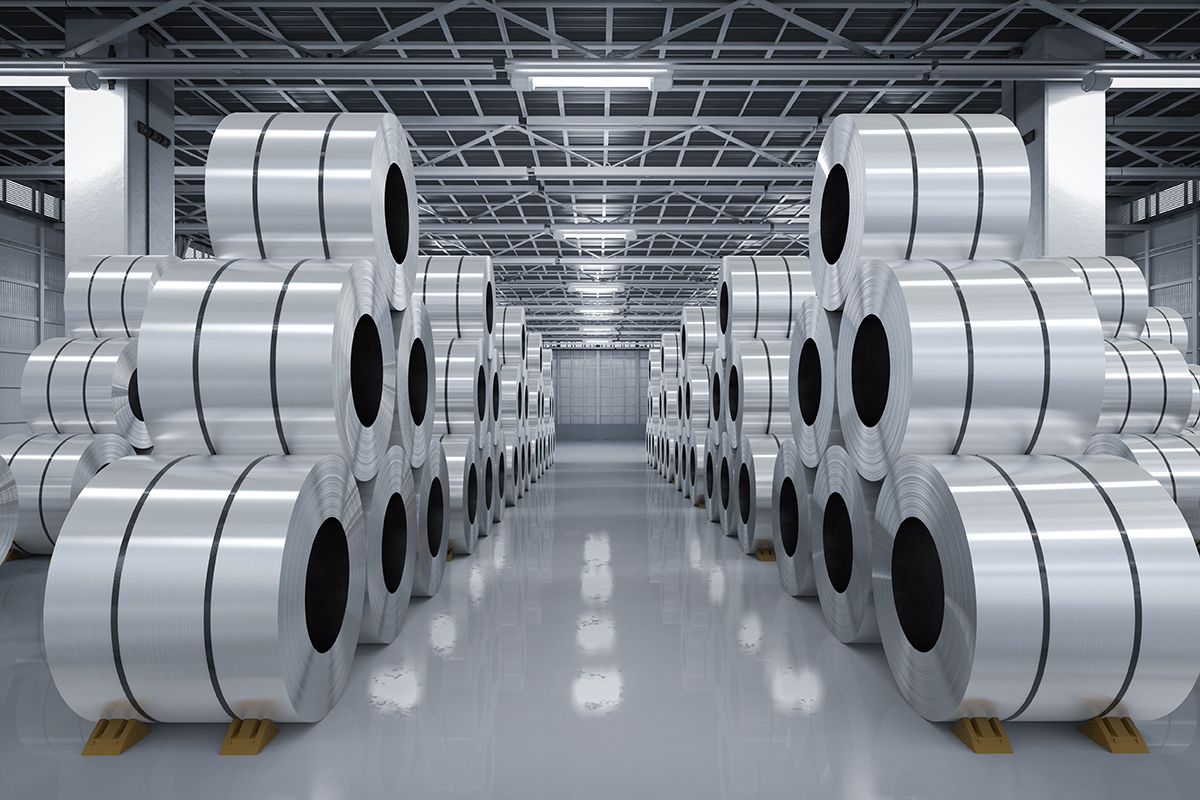
    I hope President Tinubu realises that steel production has got to be one of his top priorities as without it Nigeria cannot manufacture anything so he needs a plan they looks like this

    [1] Set Nigeria an annual target of producing 35m tonnes of steel. This will match Brazilian output and put us on the same trajectory as sister developing nations like Mexico, Iran, Taiwan, South Korea and Vietnam

    [2] Announce a radical scrap metal collection programme. This will involve using all the money collected from corrupt officials to buy all scrap metal. Maybe call it the Industrial Trader Metal Money Programme

    [3] Any local government that hands in up to 100 tonnes of scrap metal a year should get a technical college located within its domain to train its youth

    [4] Get the Russian steel giant Severstal to buy Ajaokuta and get it working. No excuses here please. Severstal Russian Steel is a leading international producer that ran plants in North America. If they can run steel mills in Russia, the US, India, etc, they can run Ajaokuta easily

    [5] Severstal alone produces about 12m tonnes of steel in Russia, so I fail to see why we should not give them a similar target in Nigeria. In 2014, Severstal sold its North American plants for $2.3bn. If they invest that kind of money in Ajaokuta, they will turn it into a modern and highly productive facility

    [6] I would then sell Aladja to India’s Tata Steel. This is another global giant. In India, Tata Steel face challenges just as daunting as we do in Nigeria but manage to forge ahead. Recently, Tata shed 3,000 jobs across its European operations. We should be wooing them to Nigeria pointing out that our labour is far cheaper

    [7] We should woo car assembly plants with the promise that all the steel they need will be provided locally. Any company that creates in excess of 5,000 jobs should get an adjoining steel plant built on its facility in which the federal government will take a 25% stake. An agreement guaranteeing this should be sent to every automobile manufacturer this year

    [8] Every one of our 774 local government areas must have at least one technical college where steel is a course. We need to make the point loud and clear that we will never get out of poverty unless we manufacture and you cannot manufacture without steel

    [9] All our mega evangelical churches should be encouraged to open metal collection points and steel furnaces on their premises. They should be given tax rebates if they do this. We can create the title of Steel Pastor for those who excel

    [10] Fulani cattle herdsmen who insist on living nomadic lifestyles should be encouraged to go around the country collecting scrap metal. They should be provided with metal bins in exchange for their AK47s and livestock and asked to clear Nigeria of every abandoned vehicle and metal object

  • “The Naira Exchange Rate Conundrum”- Dr. Muda Yusuf

    “The Naira Exchange Rate Conundrum”- Dr. Muda Yusuf

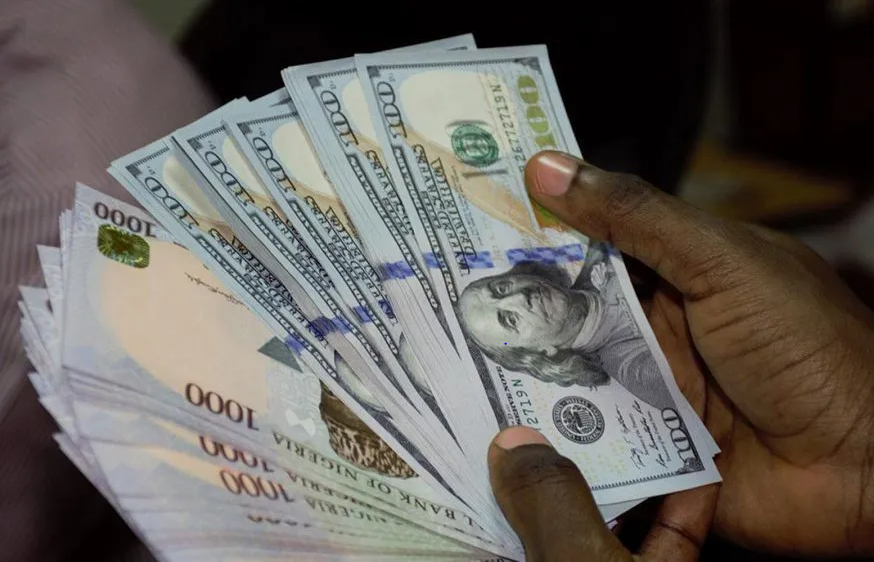
    The volatility in the foreign exchange market is naturally unsettling.  But it is not unexpected given the long period of distortions in the foreign exchange market.  Correcting the entrenched distortions would take some time.

    But in the meantime, the monetary authorities should develop a sustainable intervention framework to ensure the moderation of current volatility in the forex market.  We recognize the forex supply limitations, but the system needs to be managed in way that would not undermine investors’ confidence.  Erosion of confidence triggers speculation and influences expectations, triggering diverse responses among economic players.

    The foreign exchange market is evidently under pressure as a result of a number of factors:

    There was a curious surge in monetary expansion in the last one month.  The money supply grew by an unprecedented 15% in one month between May and June 2023.  Broad money grew by over N9 trillion, from N55.7 trillion to N64.9 trillion. This surge in monetary growth is unprecedented. Obviously, this must have had an effect on the exchange rate.  The monetary authorities should investigate this drastic growth in money supply and take steps to curb subsequent expansion.  Such dramatic growth in money supply poses a significant risk to macroeconomic stability, especially price stability.

    Over the last few years there had been a cumulative backlog of unmet foreign exchange demand, running into billions of dollars as a result of acute illiquidity in the foreign exchange market. With a more liberalized forex market, the pressure of the backlog of unmet demands and other maturing forex-related obligations have been unleashed on the investors’ and exporters’ window.

    Transiting from a repressive market environment to a more liberalized market could be a source of market instability.  However, there is need for vigilance to prevent questionable capital outflows or speculative assaults on the currency.  A free market is not synonymous with complete absence of regulation. Free enterprise has to be complemented with an appropriate regulatory framework to curb illicit financial flows.

    It is evident that the frequency and scope of CBN intervention in the forex market had decelerated compared to first five months of the year.  Recent reports from the CBN indicate a total of $17 billion intervention by the CBN in the forex market in 2022.  This an average of N1.4 billion per month.  Since the inception of the present administration, it is doubtful whether we had seen an intervention of up to $1 billion in total.  It is expected that as the scale of intervention improves, the volatile will be subdued.

    And only recently, the government paid $500m to settle matured debt service obligation on Eurobond.  This could also be a constraining supply side factor.

    The marginal decline in foreign reserves was also disproportionately amplified by the media. This also created some anxiety which could also have driven speculative activities in the forex market.

    The CPPE believes that the Tinubu administration is on the right path and that the current volatility in the foreign exchange market are challenges typically inherent in a major policy transition.  In a couple of months, we expect the instability to subside.

     On the supply side, the trajectory is that there would be an improvement in oil output, boosting forex earnings.

    The prospects of improved domestic refining of petroleum products in the coming months will reduce forex demand pressure from importation of petroleum products .

    Improved investors confidence will boost Foreign Direct Investment [FDI], foreign portfolio investments, and other remittances.

    CBN should exercise better oversight on forex demands to protect the market from speculative assault and illicit capital outflows.

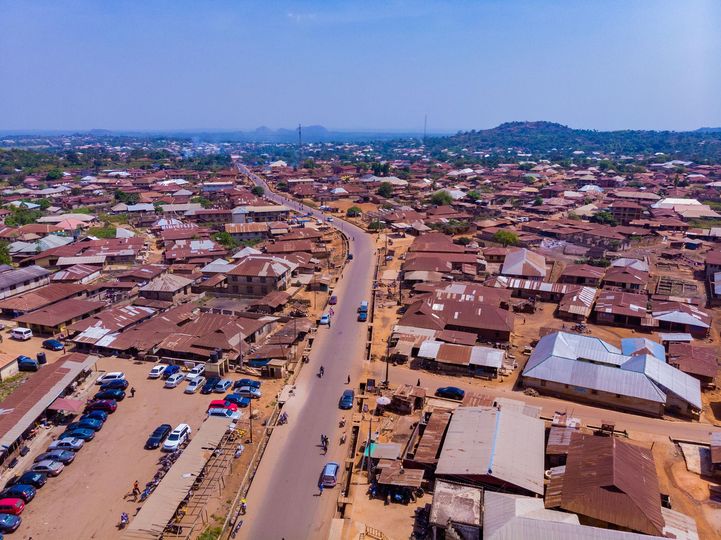
  • Feature- Òkehò To Ìgànná Road: Worse Than A Death-Trap

    Feature- Òkehò To Ìgànná Road: Worse Than A Death-Trap

    by Favour Adéwoyin

    I went to Òkehò a few days ago to carry out some community development assignments in Okeho, Ilero, Isemi, Ìgànná and Otu. But, I didn’t go with my car because it was not economical given the many places I had in mind to touch which I wasn’t able even to estimate how many litres of fuel it would cost me at a glance before I embarked on the journey vis-a-vis the current cost of fuel.

    So, I relied on Okada as a means of transportation to go to all the places I went because there are no taxis, Uber or public cabs in most towns in Òkèògùn due to the poor and unviable economic condition of our region in favour of such business.

    In fact, I had to do my inter-town itineraries with the same mode of transportation because it used to take long hours before the commuter vehicles are filled up with passengers in nearly all motor parks.

    Now, my rough estimation has confirmed that it must have been almost 30 years ago that I went from Òkehò to Ìgànná through Ìfò-erè/Akọ̀kọ̀ axis because of many years of abandonment of that road due to the terrible state of that road which kept deteriorating over the years.

    Without any attempt at exaggerating the condition, all I can say is that it is worse than a death trap. It is not only that it is impassable to any car no matter how rugged it is, it is also because it has cut off many communities from the mainstream of socio-political and economic developmental activities as this same road is the road that connects Nigeria with all the Ecowas countries like Republic of Benin, Togo, Ghana and others on that axis.

    Intermittently, the few trucks that have been managing to pass through this road have become so accustomed or, let me say, so addicted to the road that they might experience serious convulsion if they don’t pass through the road per day.

    In the word of our people, such few vehicles that are still crawling on this road fall within the category of vehicles they often describe as “ọwọ́ èèbó ti kúrò lára rẹ̀” which can be interpreted to mean that the repair of a given vehicle is no longer within the maintenance purview or jurisdiction of the original manufacturer, but a special indigenous mechatronic repairers due to several mismanagements.

    So, when I passed through the road to fulfil an important appointment that I didn’t want to miss with a community leader for 7.00 am early in the morning of Saturday, July 22, 2023, I kept wondering why people still refer to Ìfò-erè/Akọkọ̀ jungle as a road leading to any town because it was obvious there is no road, not because “men are at work”, but because “men are not at work”!

    Well, maybe, for want of words, those who are regarding Òkehò-Ìgànná as a road are trying to make a faith pronouncement that they believe that, one day very soon, either the government of Ọ̀yọ́ State or the federal government would be gripped with compassion and moved with a bowel of mercy on the many communities and people of this axis Nigeria who have entered a serious lamentation mode like the Biblical Jeremiah.

    But, on a very serious note and if the truth must be spoken, it is evidently glaring that there is no road from Ìsàlẹ̀ Alúbọ area of Òkehò to Ìgànná, an ancient town which, today, is the headquarter of Ìgànná Local Council Development Area (LCDA).

    Furthermore, it is good to add that the few trucks that still pass through that road which I mentioned above are going there to carry farm produce because that axis is also where the majority of the farm settlements of Òkehò people reside. No wonder food items are costlier in Òkehò than the neighbouring towns because there are no supplies of farm produce direct from farmers to retail buyers like in other towns. Instead, Òkehò traders often buy food items from other neighbouring markets to resell in their markets.

    Finally, the time has been far-spent, and many generations of people have come and gone while the new ones of yesterday have also become old and are passing away; there have been sunsets and sunrises and people are counting tick tick tick every moment, every day, every week, every month, year and decade, Òkehò-Ìgànná has remained the same. Now, on behalf of the good people of Òkehò, Ẹlẹ́kòkan, Ẹ̀bì, Ìṣerin, Ìgànná, Ìwéré’lé, Ìtasá, Ìdìkó’lé, Ìdìkó-àgọ́, Ìjìó, Ayégun and all the farm settlements that I don’t remember to mention, I plead again that government should do all within its power to fix this road within the shortest possible time to open up the great human, natural and material potentials of this part of Nigeria. 

  • Egbe Omo Ibile Okeho: That the lot of Okeho may change

    Egbe Omo Ibile Okeho: That the lot of Okeho may change

    by Abolade Adewale

    Every society has a model that has aided her growth and development asides from the existing traditional institution. That of Okeho is not any different; the community is organized along the lines of the conventional leadership as a town and at the various quarters that make up the entire town. As time evolved, there was a need to engage the emerging ‘power brokers’ in the scheme of leadership, and this led to the formation of Egbe Omo Ibile Okeho, loosely translated as the Committee of Indigenous People of Okeho.

    This group was founded in 1935 by the late Revd J.O. Adesina, Pastor of First Baptist Church, Isia, Okeho, he did not hail from Okeho but loved the town. Other founding members of the founding executives are Pastor Moses Afolabi Okesiji, Mr. James Bankole, Pastor J.A. Ayanlowo, Mr. John Oshin and Mr. M.K. Adelakun, and the Onjo had a representative among the group. However, for the political conflagration that engulfed the town, the group ceased functioning in 1951 and was later resuscitated in 1968.

    The group has always championed a lot of development initiatives for the community. Some of these include the construction of the Okeho Town Hall, lobbying the government to get electricity into the town, construction of maternity centre, and school buildings, amongst others. One cardinal strength of the group is its ability to link all the sons and daughters of Okeho within and outside Okeho.

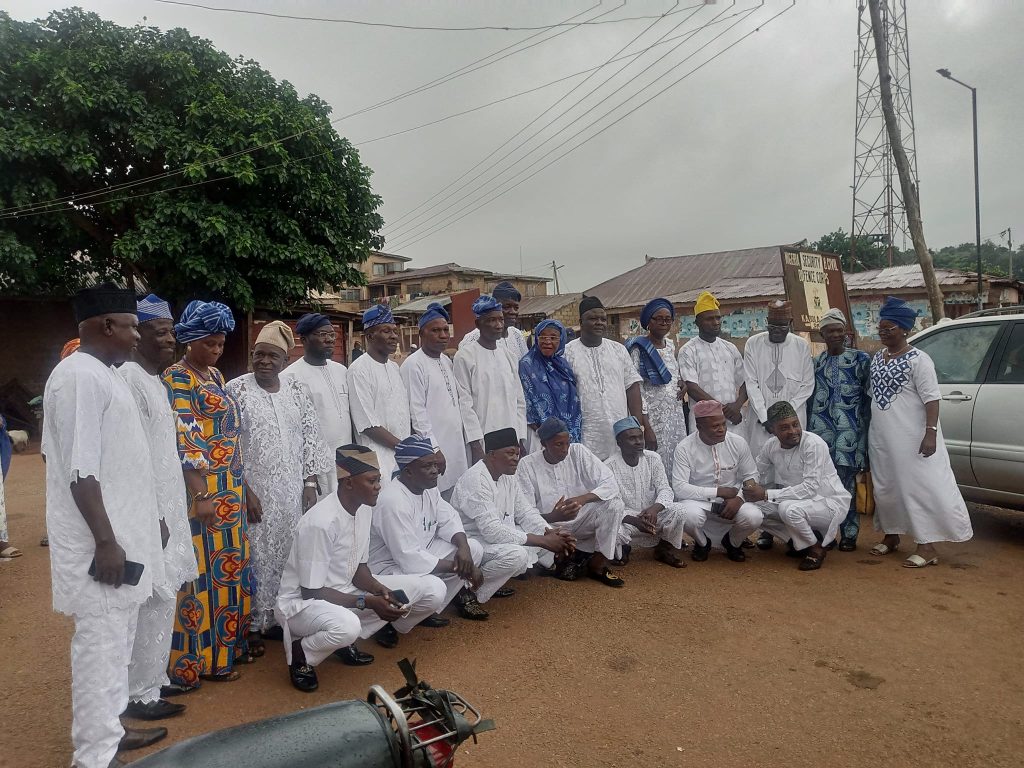
    The new Executives of Egbe Omo Ibile Okeho

    With lots of developmental strides recorded in the last seven years under the leadership of Alh Azeez Lakanla, a new set of executives led by Dr Kasali Alarape Salawu, Chairman, was inaugurated today, 222nd July 2023 in Okeho with enormous responsibility that is expected to change the lot of Okeho.

    There are many aspirations of the last executives with all sons and daughters of Okeho that we look forward to the new set of executives to help us complete. Some of these include- the completion of the Okeho-Iseyin road and the reconstruction of the Okeho-Iganna road, Okeho-Ilua road, amongst other towns that leads to the border communities where our indigenes do business in the past.

    With the near completion of the Magistrate and High Court premises in Okeho, we need the executives to work assiduously in revamping the General Hospital and getting the political elites to make the hospital constructed by Senator Abdulfatai Buhari functional.

    While the great desire of Okeho is to have tertiary institutions, there is a need to win the support of the government for the commencement of academic studies at the Oyo State College of Health Sciences and Technology that has been promised to the community since the administration of the late Governor Abiola Ajumobi. Also, the National Open University of Nigeria (NOUN) must begin operations optimally.

    One of the humongous tasks ahead of this new executive is to integrate children of Okeho born in the local and international diaspora into the community. There is a significant disconnect between the desire of their fathers for Okeho, which is not in the children; there is a discontinuity of the love of Okeho in the family. This is the fastest way for Okeho to become a desolate community now and soon. Let’s do a little mental calculation, the number of people marrying from Okeho from the early 1990s keeps reducing by the day, and the rate of divided loyalty is increasing tremendously. We need to devise a strategy in which youngsters will want to be in Okeho for festive seasons and add youthful dimensions to the Okeho Day celebrations.

    There is a need to create a strategy for building loyalty in children growing up in Okeho. The need for sustainable human capital development is very crucial. What is the academic support for indigent students growing up in Okeho? Can we locate these stars, nurture them and ensure they gain their rightful place in the society? They will be the ones to drive the next developmental agenda of Okeho.

    Also, for those interested in learning crafts, can we develop craft learning hubs (vocational training centres) within the town to start getting these crafts into the hands of those who need them? In addition, digital handicrafts should be encouraged as the world keeps tilting towards them. We need to get our people on web3, metaverse amongst others. This will help to reduce urban-rural migration and give global access to Okeho indigenes.

    With the first residential estate underway, Commonwealth Estate, Okeho, we need to encourage the promoters of the scheme by subscribing to it. The next big deal for Okeho is to motivate her sons and daughters to invest in recreational and sporting hubs for the town. It is time for us to start working on developing the Okeho Recreational Club, the Okeho Golf Course, Okeho Stadium, and Okeho Tennis Club. 

    We have been too serious in Okeho; we need some recreational facilities to put us on the world map. We have great examples, like the Hassabarry Golf Resort, Saki, Elizade Smokin Hills Golf Resort, Ilara Mokin, Ondo State, Miccom Golf Hotels and Resort, and Ada, Osun State. These facilities alone will encourage indigenes to bring their fields to town to enjoy weekend getaways that will seriously impact our economy.

    The challenge ahead is enormous; however, the will and zeal to move Okeho to the next level will propel the achievements that the next set of executives of the Egbe Omo Ibile Okeho will record.

    Let’s carry the development of Okeho from the hefty point; with God on our side, we will emerge indeed as a town set upon the hills!

  • Three Years After the First Bank Robbery, Okeho still wallows in Pains

    Three Years After the First Bank Robbery, Okeho still wallows in Pains

    by Kayode Awojobi

    It has been three years after the unfortunate visit of the men of the underworld to Okeho. Interestingly, it was a different experience when they previously visited other communities across South-West Nigeria. They met their Waterloo in the gallantry of the people of the town, who quickly mobilized the local hunters and vigilantes to foil what would have gone down in history as a catastrophic threat to the peace of the agrarian town.

    Okeho people are known to be self-reliant in all they do, and just as stated in the Oriki of the town, “Ogun Idoomi-Idoopa, ogun filaani- ofilango, apaa won se ko kawon baba to biwa lomo”. This is to ascertain that Okeho people have always defeated their oppressors, just like the case of the Dahomey Invaders and the Fulanis, who disturbed the peace of various communities over a century ago. Then, it can be concluded that Okeho is like the Biblical Jerusalem.

    July 29th, 2020, will always be a day to remember in the annals of Okeho when unknown gunmen attacked First Bank in Okeho, which happened to be the only functional commercial bank serving the people of Kajola, Itesiwaju and Iwajowa Local Governments. The financial transactions for the day had closed before this coordinated attack began. However, the robbers were waylaid; they were caught as their car had an accident in town.

    Although this wasn’t the first time a bank robbery would happen in Okeho, the occurrence happened in 1992 when Cooperative Bank, Okeho, situated a few meters away from the exact location of the attacked bank. Just like that of First Bank, it was also a failed robbery that year. The good people of Okeho stood their ground and fought the good fight for their darling hometown. Kudos to the police officers and the local hunters for a job wonderfully done.

    The attached FBN Okeho branch

    Unfortunately, history repeated itself in the town 28 years after. The indomitable spirit of Okeho indigenes remains the same as they were able to quell this challenge, especially when a former MD of First Bank Plc, Mr Moyo Ajekigbe, OFR is an illustrious son of Okeho.

    Three years after this incident, Okeho town and her environment have been battling with the challenge of not having a crisis not having a commercial bank in town, which now makes the town solely rely on POS operators or go to either Iseyin or Saki to sort out any bank-related issue.

    Special thanks must be given to another great son of Okeho Pastor Dr Olatunde Oladokun, the CEO of SEAP Microfinance Bank, who brought a branch of the bank to Okeho, and without mincing words, this has eased the burden to some extent within the bank’s capacity. 

    We wouldn’t forget easily the havoc wreaked by the newly introduced new naira notes on the nation earlier this year and the huge challenge faced by the people of Okeho and her environs. They couldn’t get cash at hand, so it became a significant threat to their livelihood. This heightened the reality of not having a commercial bank dawn on the town, at least First Bank would have eased their pain as a community.

    The possibility of having a new commercial bank in town was made through frantic efforts of some elders to attract the United Bank of Africa, UBA, last year. However, nine months after the news broke out, there is no fixed time in sight when the bank will begin operations.

    With the antecedent of losing Cooperative Bank, Okeho, which later metamorphosed into Skye Bank and later lost Skye Bank, although not to robbery, it seems we’ve also totally lost First Bank, despite all persuasions. There appears to be no hope of their return back to the town. 

    Accolades must be given to stakeholders who are working earnestly towards the development of their hometown in all ramifications, but more still has to be done, particularly in resuscitating the financial transactions of the banks we have lost or new ones and when the people of Okeho are needed to crown this effort of having a financial institution in town, either by opening an account with the bank or any form of support or contribution that will make the financial institution come to reality in our town. 

    I implore us to do so with all our strength as doing this wouldn’t make the death of our son, who was shot dead during the incident, and that of the policeman on duty that day be in vain.

    May our labour towards the growth and development of our dear hometown not be in vain! Olofin A Gbewa o!

  • Feature: Manufacturing Electric Cars is the antidote to the Incessant Petrol Price Rises

    Feature: Manufacturing Electric Cars is the antidote to the Incessant Petrol Price Rises

    by Ayo Akinfe

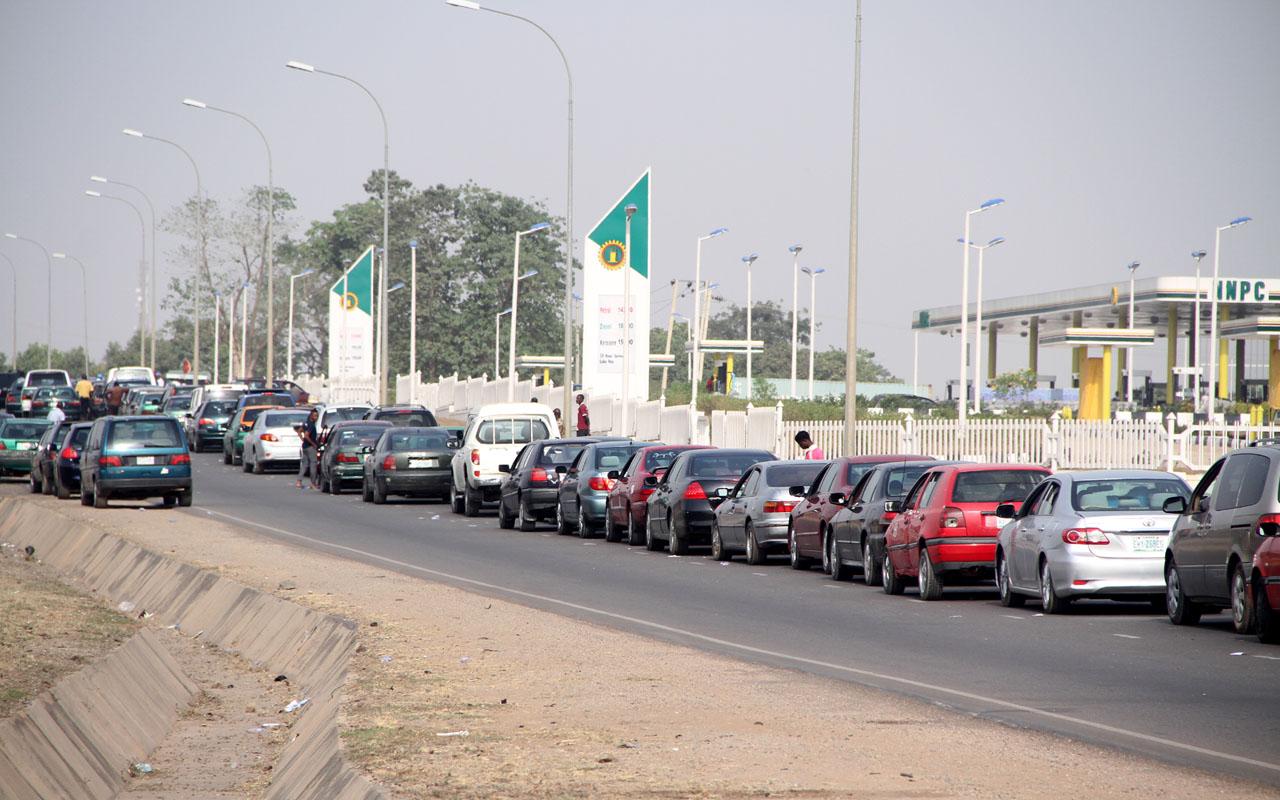
    When will Nigerians get it into their collective heads that manufacturing electric cars is the antidote to these incessant petrol price rises. Bola Tinubu is obliged to tell them that bitter truth

    [1] When I hear Nigerians complain about petrol price rises, I feel like tearing my hair out of my head. Have they been oblivious to the whole clean energy debate? Where have they been when the rest of the human race has been screaming about the need to abandon the use of fossil fuels?

    [2] Let me give them one example. Are we aware of the fact that in response to the COVID-19 pandemic, there has been a surge in the global demand for used vehicles, especially full-size pickup trucks? In the US, some buyers are traveling hundreds of miles to get what they want, regardless of the price. Obviously, car manufacturers are churning out electric trucks to fill this gap in the market

    [3] Tesla is an American electric vehicle and clean energy company based in Palo Alto, California. Its current products include electric cars, battery energy storage from home to grid-scale, solar panels and solar roof tiles, as well as other related products and services. Tesla is ranked as the world’s best-selling plug-in and battery electric passenger car manufacturer, with a market share of 16%

    [4] Can someone please explain to me why Tesla and Innoson Motors have not formed a joint venture to manufacture electric pick-up trucks, saloon cars and SUVs in Nigeria?

    [5] As we speak, Tesla is expanding its plants and building new ones, which should increase the output to around 800,000 units annually. As the company looks to cash in on the stimulus packages being offered, it needs manufacturing locations where production costs are cheap

    [6] I wonder why someone like Governor Babajide Sanwo-Olu has not approached Tesla, offering them a 50-year lease on land in the Lekki Industrial Park where they can manufacture trucks in conjunction with Innoson

    [7] Whether we like it or not, Nigeria needs a transport policy involving us moving away from private vehicle. Centre everything on trains, buses and pick-up trucks for farmers

    [8] Personally, I would ask Tesla if they could come and manufacture all three in Nigeria, opening the world’s largest electric automobile manufacturing plant in Lekki

    [9] When I look at how Aliko Dangote has just invested $15bn in an oil refinery in Lekki, I ask why investing in a car plant should be a problem for someone like him. As you can see, our problem is not just the government. I think every Nigerian should be ashamed of the fact that we do not have some of the basics that make you feel proud of yourselves as a sovereign nation such as our own national automobile manufacturer that can compete with the big boys, our own national airline, our own battlefield tank, an internationally recognised tourist attraction like Big Ben, the Eiffel Tower, the Taj Mahal, the Brandenburg Gate, the Sydney Opera House, etc and our own equivalent of Harvard, Yale, Oxford or Cambridge

    [10] As the world’s largest black nation, we must set some basic minimum goals. At the moment, the biggest problem with electric cars is that it takes two hours to charge them. Now just imagine, say Innoson Motors manufactures and patents a device that enables you to fill up your electric car within 10 minutes. If Nigeria sold this all around the world, it would end our lazy dependence on crude oil tomorrow

  • Feature: The Radical Commercial Transport Policy that will reduce dependence on automobile

    Feature: The Radical Commercial Transport Policy that will reduce dependence on automobile

    by Ayo Akinfe

    President Tinubu should use the current fuel crisis as an opportunity to introduce a radical commercial transport policy that will reduce our unsustainable dependence on the automobile

    [1] Do you know that exactly 185 years ago on July 20 1837, Euston railway station opened in London as the terminus of the London and Birmingham Railway. It was London’s first inter-city railway station and the country has never looked back since. Nigeria needs to do likewise, as she is currently at that kind of crossroads

    [2] They say necessity is the mother of invention. Our economy can no longer sustain the widespread use of private automobiles as the government can no longer afford to subsidise petrol, so something has to give. I say move at least half of our current road journeys on to rail within the next eight years and discourage the use of private cars

    [3] President Tinubu should propose a comprehensive rail network to be constructed across the country over the next 20 years linking all 36 states, employing no less than 10m people. This will also involve manufacturing carriages, tracks, signal boxes, equipment, etc. Imagine the economic impact of such a programme

    [4] As part of this plan, Lagos to Abuja should be linked by a Maglev bullet train running at a speed of about 500km per hour, enabling the journey to be made in under two hours. With time, this service will be extended to other major routes like Lagos-Kano, Lagos-Port Harcourt, Kano-Port Harcourt, Abuja-Calabar, etc

    [5] High-speed trains running at no less than 300km will connect all 36 state capitals to a national network. Then, standard gauge regular rail services running at speeds of between 60km and 100km per hour will link state capitals with other towns and cities in the states

    [6] I envisage am arrangement whereby the federal government will hold a 20% stake in the national railway service, inviting private sector partners to enter into joint ventures

    [7] Currently, 90% of journeys in Nigeria are carried out by road. By 2035, this must be reduced to 40% by moving passengers on to trains

    [8] All major industrial concerns being launched, like refineries, ports, mega churches, stadia, shopping malls, etc, will be compelled to add a railway link to their site. Similarly, any urban centre with a population in excess of 2m people will be compelled by law to establish a light railway network at the very least

    [9] A national travel card scheme will be launched which enables users to travel on state and federal coaches, buses, trains and marine transport. Also, all freight operators who move their goods on to rail and waterways will get a 20% discount over the next 10 years

    [10] Nigeria’s railway network is currently made up of 3,505 km of track. By 2035, we intend to increase this by 10-fold to 30,000km. We will also aim to phase out narrow gauge tracks by this time

  • Feature: Introduce a Robust Economic Regeneration and Security Programme for Northeast, Nigeria

    Feature: Introduce a Robust Economic Regeneration and Security Programme for Northeast, Nigeria

    Ayo Akinfe

    President Bola Tinubu has to ask the UN to declare Northeast Nigeria a heritage site and then introduce a robust economic regeneration and security programme aimed at reviving the region

    [1] First of all, the Federal Government needs to licence local vigilante groups in all 774 local government areas of the country to ensure uniformity. This way, they will all be signed up to uniform standards of operation

    [2] Then, the federal government needs to establish 20 battalions of the Nigerian Army in strategic towns across the Northeast. Maiduguri, Dikwa, Bama, Mafa, Biu, Gwoza, Chibok, Dambo, Kukawa, Monguno, Magumeri, Damaturu, Geidam, Potiskum, Nguru, Fika, Gombe, Nafada, Kaltungo, Dukku, Kumo, Jalingo, Bauchi, Yola, Gashaka, Wukari, Ganye, Mubi, etc, all need military bases

    [3] President Tinubu then needs to get the Nigerian Army to plant rows of trees along the country’s borders with Chad, Cameroon, Niger and Benin Republic actually to tell us where Nigeria starts. They should be painted green-white-green

    [4] In Borno, Yobe and Adamawa states, the governments need to offer free uniforms and school meals to all youths to encourage education. An emphasis should be placed on training wildlife rangers, veterinary doctors and animal specialists

    [5] Under a United Nations programme, we then need to get the Lake Chad Basin Authority to create 30,000 jobs in the northeast. This will be achieved by turning the lake into a major tourist attraction similar to say Niagra Falls, building a mega solar farm in Borno State and also opening the world’s largest cattle ranch in Sambisa Forest

    [6] The Federal Government then needs to build six special high-security prisons for Boko Haram fighters where they can be trained and equipped with vocational skills

    [7] Nigeria then needs to ask its military partners like the US, UK, Germany, France, Russia, etc, to help her establish a special paramilitary force trained in rescue missions to deal with matters like the Chibok girls. We need a battalion similar to the US Navy Seals or the British SAS

    [8] The Federal Government then needs to establish a special anti-terrorist brigade in Damaturu. No armed group should be able to hold the country to ransom as herdsmen, kidnappers and bandits are currently doing

    [9] President Tinubu should then double soldiers allowances and offer a special bonus to anyone asked to serve in the northeast

    [10] Then President Tinubu should designate Taraba State as an ecological national park. We should aim to make it the world’s largest wildlife zone, bigger than Serengeti and the Maasai Mara

  • Feature: The necessary Agro-Processing centrepiece of Tinubu’s manufacturing policy

    Feature: The necessary Agro-Processing centrepiece of Tinubu’s manufacturing policy

    by Ayo Akinfe

    I hope that Tinubu’s agricultural plans are centred around developing farmers’ cooperatives and making agro-processing the centrepiece of his manufacturing policy

    [1] All of Nigeria’s 774 local government areas will be obliged by law to organise their farmers into cooperative units

    [2] Farmers will be encouraged to sell their produce, buy seedlings, pesticides and fertilisers, as well as farming equipment through these co-operatives to maximise efficiency and overhead costs

    [3] Every local government area must build at least one food storage facility within its domain. These facilities must be able to hold at least six months stock of food

    [4] An agricultural tax will be paid to the local government to help provide and maintain the necessary services to support farming programmes. Farmers will pay this tax when they harvest their crops

    [5] Agricultural cooperatives will be encouraged to move into value-added activities and will be provided with loans to facilitate this

    [6] A National Bank of Agriculture will be established to offer loans to farming cooperatives at maximum rates of 5%

    [7] Farmers will be encouraged to venture into organic agriculture because of the high premiums that this commands

    [8] Cooperatives will be encouraged to buy their members high-yielding hybrid seedlings to enhance unit-per-head output

    [9] Seed companies will be offered tax holidays to come and set up plants and facilities within Nigeria

    [10] Processing companies and food manufacturers like Cadbury, Nestle, Mars, Kelloggs, Tate & Lyle, Unilever etc, will be encouraged to establish plants in Nigeria to facilitate vertical integrated production. Our ultimate goal is to export finished, packaged and shelf-ready products to international markets. Tax holidays, 100 year land leases, duty waivers, etc, will all deployed to full effect