Category: Features

Featured posts

  • World Health Day: Let’s Ensure Good Nutrition For Children Because #OurChildrenOurResponsibility

    World Health Day: Let’s Ensure Good Nutrition For Children Because #OurChildrenOurResponsibility

    World Health Day (WHD) is celebrated every April 7. This is the day that commemorates the anniversary of the founding of the World Health Organization (WHO) in 1948. WHD aims to focus on a specific theme relevant to public health each year. This year WHO is focusing global attention on urgent actions needed to keep humans and the planet healthy and foster a movement to create societies focused on wellbeing.

    Nutrition plays a very crucial role in ensuring humans are healthy.  It is an important part of an individual’s overall health and development right from a very young age. Proper and balanced nutrition is directly linked to improved infant, toddler, child, and maternal health and wellbeing. It offers stronger immunity, lowers the risk of health problems such as diabetes and cardiovascular disease, and improves longevity. Also, healthy children are not just physically strong but also mentally sound. Having balanced and healthy nutrition also helps boost their productivity and helps create more opportunities to break the cycle of poverty eventually.

    Malnutrition, in any form, poses a significant threat to human health. Not having proper and balanced nutrition can lead to malnutrition. Currently, the world faces two types of malnutrition – undernourishment, and obesity. The former tends to be more prevalent among the economically disadvantaged populations in low and middle-income countries.

    Good nutrition in the early stages of life sets the stage for lifelong health. In the words of Anne Mulcahy, “Investing in early childhood nutrition is a surefire strategy. The returns are incredibly high.”

    One of the keys to parenting healthy children is providing them with a healthy and nutritious diet..

    Key nutrients in supporting optimal growth and development… When a child consumes a balanced diet, they can develop their physical and mental skills in the present and the future. The benefits impacted by nutrition while the child is young are:

    1. Ensures proper development of the brain, which helps the neurocognitive process
    2. Improves a child’s physical health and ensures an active social life as the child grows old.
    3. Supports the immune system to ably fight against various infectious diseases

    Key nutrients for brain development… Phospholipids are known to be essential nutrients for brain development. These nutrients are structural components of neurological systems (neural networks), and deficits during early life can impact brain function long-term. Long-chain omega 3s like DHA and ARA and other brain-supportive nutrients may also benefit proper neural network development and enhance visual acuity and cognition.

    Key nutrients for physical growth… Proteins are the building blocks of physical growth. Dietary protein requirements are higher in children than in adults because they have faster growth and development rates due to their increased cell turnover. Inadequacy of high-quality dietary proteins can cause stunted growth, poor body composition, and wasting. Calcium and vitamin D play an important role in physical development too. Calcium is the main component of the skeleton, while vitamin D ensures calcium reaches the growing bones.

    Key nutrients for supporting immunity… A variety of vitamins and minerals that include micronutrients such as Vitamin A, B, C, D, E, Iron, Zinc, Magnesium, and Selenium, among others, have vital functions in the human body. Several studies have found that children provided with foods high in these essential micronutrients improve their immune system’s response rate and help them steer clear of various immune system diseases.

    Childhood is the most significant period of growth and development, both physically and mentally. Setting the foundation with good nutrition during childhood has a profound impact, even during later life, and helps develop society and the world as a whole.

    Multi-nutrient fortified Growing Up Milk such as Peak 456 formulated for children ages four to six is an excellent way to ensure optimal intake of several vitamins and minerals in a child’s daily diet.

    On this World Health Day, let’s take a pledge to support WHO’s initiative of #OurPlanetOurHealth by focusing on good nutrition for our children’s health which can help them grow strong and smart.

    —————————————————————–
  • Nigerian Spousal Anti-Corruption Bill 2022

    Nigerian Spousal Anti-Corruption Bill 2022

    By Ayo Akinfe

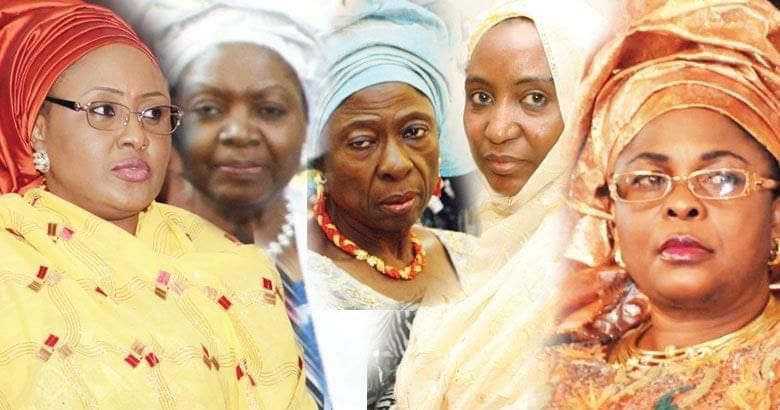
    [1] There shall be no such thing as The Office of The First Lady or Office of The First Gentleman in the presidency or in any of our 36 states. Our constitution does not make any provision for such a position so use of the office is illegal

    [2] Governors’ wives/husbands shall not be addressed as Her Excellency

    [3] No state funds shall be used to finance charities and non-governmental organisations run by governors’ wives/husbands

    [4] No state resources such as vehicles, civil servants, public buildings or budgetary allocations shall be put at the disposal of governors’ wives/husbands

    [5] Spouses of governors will be encouraged to continue their professional careers even after their husbands/wives have been elected into office

    [6] Spouses of governors are barred from bidding for or executing government contracts while their husbands/wives are in office

    [7] Government backing for spouses of governors will not extend beyond providing security

    [8] There shall be no budgetary allocation for the activities of governors’ spouses

    [9] State resources shall not be used to fund foreign trips by governors’ spouses

    [10] Applications for states funds for medical treatment by governors’ spouses must be made to the state house of assembly. It is up to legislators to approve or decline such applications based on their individual merits

  • Feature: Which Generation will help finish the Greatness of Nigeria?

    Feature: Which Generation will help finish the Greatness of Nigeria?

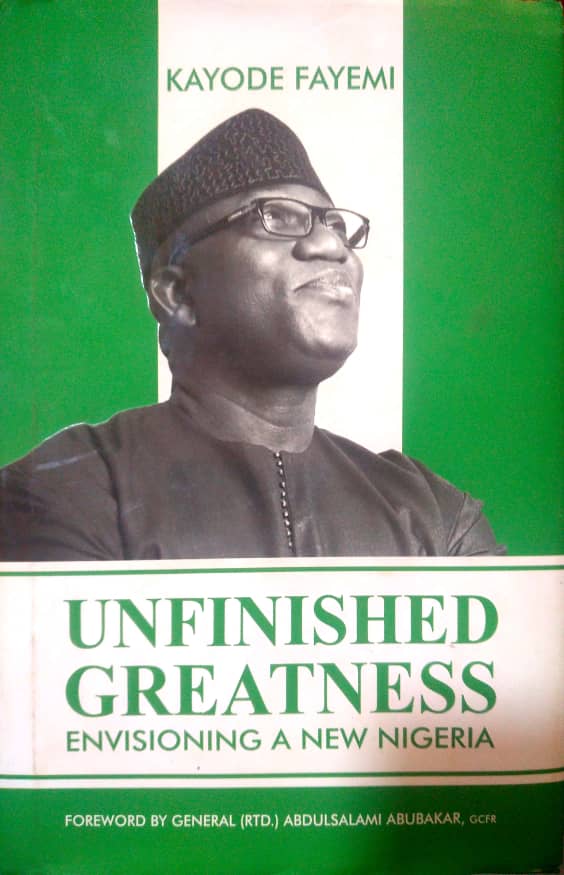
    Title: Unfinished Greatness: Envisioning a New Nigeria

    Author: Dr. Kayode Fayemi

    Year of Publication: 2022

    Publisher: Prestige Imprint

    Reviewer: Olamitayo Ebunola Irantiola

    Nigeria already has greatness within her which should be built upon from one generation to another thus the journey remains UNFINISHED. 

    The book enumerated reasons some of the popular suggestions in envisioning a new Nigeria may fail. Prominent amongst these advocacies is collapsing the nation to build a new one. The book suggested that the idea should be aborted because it is still the same unchanged occupant sheltered in the nation.

    The book illuminated the benefits of 1914 amalgamation to nation-building contrary to the popular belief that is a mishap. The benefits of our diversity were enumerated and most importantly are the existence of all these cultures across the board even before colonization. Each of these cultures has been relating with one another and it is not the colonial master that introduced the culture to one another. Emphasis should be more on justice, equity, and inclusion to discourage tribes from taking advantage of the Federal system as a national cake that must be shared during their tenure. 

    Ideas were presented on the assignment of the Federal government particularly reducing the federal list and releasing some of the federal lists to the state to handle. Revenue sharing proposals as suggested by the Governor forum were postulated in envisioning a new Nigeria. 

    The book also explained the natural endowment such as population, mineral, natural and agricultural resources, manpower all of which have helped the country in international relations. It reveals how we can influence some decisions in foreign policy in the past and the restraint we are currently experiencing as a result of distraction from domestic problems at the Federal level. The book suggests that if Nigeria works, it will positively impact Africa and the world at large. The book equally proffers suggestions on how to help us build a better country. 

    The role of intellectuals in politics starting from the time of Socrates and his students, Great Britain, and the United States of America down to Nigeria was enumerated. The importance of Intellectuals to drive political leadership rather than staying from afar off with great ideas and making agitations. The popular belief is that politics is dirty and the intellectuals cannot taint themselves with the ills associated with it. Intellectuals are endowed with a good sound judgment that cannot easily be swayed by emotions, unverified claims, superstitious speculations, and all of these are daily required in tackling challenges.

    Lessons were taken from the life of Dr. Nnamdi Azikiwe as a true Nigerian who is loyal to all the regions of the country through his birthplace, childhood, and work-life. His belief in the homogeneity of the nation fosters growth, using the dialogue approach rather than violence during the colonial era.

    The demand for more creation of states to allow government closer to people and avoid marginalization has also proven not to effectively justify fair distribution as expected. Homogeneity may seem difficult to achieve but what should be of importance is to accommodate our differences.

    The book advocated that agitations for succession should be discouraged and restructuring should be encouraged. As there could still be successions even in the small group using South Sudan as an example. War is not the way to go rather staying alive to fight the cause as would have been suggested by Dr. Nnamdi Azikiwe.

    Aminu Kano is also a notable man whose experiences were drawn from his life. A principled, courageous, and committed man to a cause and a life centers on ideas and idealogy. He had stunt followers who had faith in him not because he doled out money but because of his honesty and what he stood for which is a major lesson for our contemporary politicians. His strong desire for people to be educated is probably because he once practiced teaching as a profession. The book advocated for a new Sawaba declaration as once declared by Aminu Kano that entails access to education, healthcare, and employment so that citizens can believe in their country and their government. 

    The book delves into the history of the contribution of media to our democracy, the role of intellectuals in the media, and the role of independent media in envisioning a new Nigeria.

    Also, the book discussed the metamorphosis of the “Church” from a holiness brand that should not interfere with the outside world to the materialism brand causing the proliferation of churches in Nigeria making Nigeria be a new hub of Christianity. The theology of irrespective of what the society holds, the Christians are blessed which led to the disengagement of Christians in politics. The history of Nigeria is not complete without the impact of missionaries and even contextualization of the gospels which led to the formation of indigenous churches was born from political awakening. 

    Evidence shows Christians were involved in the first era of activism. Christians are awakened to use the sound biblical teachings of love your neighbour as yourself approach used by Obafemi Awolowo can be used in politics to guide against greed and selfishness.

    The book further schooled the Christian denomination to desist from the theology of fear, isolation, and conspiracy but instead association and cooperation. The need for the Christian denomination to speak truth to power, speak against criminality irrespective of religion and ethnicity. The new for the church to be free and fair to all political parties and engage in dialogues, criticize when need be and engage our fundamental human rights. 

    The prompt response of the government both at the Federal and State level, the Private Sector involvement in curbing COVID 19, and Strategies of how to overcome the impact of COVID 19 were enumerated to both the Federal Government and the State Government. 

    Security challenges of Nigeria were discussed and the lack of social security was traced to insecurity. The mere fact that people don’t have what to lose so they can as well destroy and be destroyed. Metamorphosis of insecurity in Nigeria and Boko Haram has been the most difficult to tackle because of the philosophy attached to it which is death is the reward. Also mentioned is the proliferation of drugs among the teeming youths. Multi-level policing and more localized power structures were advocated as some of the solutions propounded. 

    The author reviewed Nigeria’s democracy in the last twenty years and the sidelines were mainly the struggle to get the military out without proper planning of the next struggle, non-democratic approach in producing our constitutions. All of these do not discount the benefits of the Nigerian democracy although shreds of evidence from the African countries had shown that transformation is not sudden. The approach should be continuous baby steps till maturity.

    Democracy is more than just electing a leader but a lot more attached to it like strong protection for liberties, an independent judiciary, and a lot more. Confidence should be restored between the leaders and followers but the non-challant attitude of not checking the exert of power by those in authority should be discouraged. Unity must be upheld with justice, fairness, and equity.

    We really need to answer the question, “When will the Greatness of Nigeria reach maturity so that we can be sure that a new Nigeria will be delivered for generations yet unborn?” The volatility of the world has shown that a new Nigeria for Nigerians is still the best across all societal strata.

    Olamitayo Ebunola Irantiola is a pastor, author and family life practitioner based in Lagos, Nigeria. She can be reached via tayofalokun@yahoo.com

  • Feature: 10 Manifesto of a Nigerian Presidential Candidate to kick-start the Economy

    Feature: 10 Manifesto of a Nigerian Presidential Candidate to kick-start the Economy

    By Ayo Akinfe

    I dare any of the presidential candidates to come up with a manifesto with these 10 manifesto pledges, which although unpopular are what is required to kick-start Nigeria’s economy


    [1] Tell all the state governors that as from October 1, we plan to scrap the federal allocation regime. They thus have to get their states self-reliant


    [2] Scrap government subsidies on all religious pilgrimages. If you want to go to Saudi Arabia or Israel, you are on your own


    [3] Scrap all government payments to traditional rulers. If any community wants a monarch, they must find ways to fund it themselves


    [4] Give the evangelical churches an annual investment target of $50bn. They are sitting on a Pentecostal Pot of Gold and must invest that money in infrastructure, job creation and manufacturing. If they do not, we will tax that money at an 80% rate and invest it as a government


    [5] Muslim clergymen would be told they must match whatever investment the pentecostal movement comes up with. If the evangelicals invest $60bn in the Nigerian economy, I want to see $60bn worth of Islamic Finance invested in our economy too


    [6] Our agricultural boards will be given production targets for cash and food crops like cocoa, rubber, palm oil, cashews, coconuts, groundnuts, ginger, shea nuts, kolanuts, bananas, pineapples, yam, cassava, millet, sorghum, gum arabic, papaya, coco yams, etc. In all these areas, we must become the world’s undisputed number one producer. At the moment, the only area where we are that dominant is in yam as we control 70% of world production


    [7] Refuse to import products from industrialised countries that refuse to invest at least $5bn a year in Nigeria. For too long, we have been a dumping ground for their finished products


    [8] Send a bill to the National Assembly to introduce laws making it compulsory for every state contract with a foreign company to carry a caveat that they open a production facility in Nigeria to produce the goods they are selling us


    [9] Send a bill to the National Assembly on fair wages. This would link the pay of all politicians to a grade in the civil service and under it, no public servant will earn more than four times the minimum wage


    [10] Send a value added bill to the National Assembly under which it will be illegal to export raw and primary commodities. Everything we sell must have some value added to it

  • Feature: Toxic Workplaces are not Rites of Passage

    Feature: Toxic Workplaces are not Rites of Passage

    by Kelechi Eke

    Nigeria’s Twitter space was agog with an investigative report from TechCabal this week – it was an exposure to the startup culture of Bento Africa. This story stirred up an explosive conversation on Twitter about toxic workplaces in Nigeria with the hashtag #horriblebosses in which there were mentions of numerous companies.

    Working retail has now become a horrible introduction to the workplace – a taxing feat with numerous responsibilities, low pay, and insensitive bosses – that everyone must endure at one point or the other in their career journeys. Employers’ priorities must shift from focusing solely on the profits at the expense of workers to treating employees with decency and respect. Things like how an employer reacts to time-off requests, especially when concerning health and family emergencies, matter.

    According to 1.3 million Glassdoor reviews from U.S employees of Culture 500 companies collated by MIT researchers this year; these attributes – disrespect, non-inclusive environment, unethical behavior, cutthroat competition and abuse topped the list of 5 biggest signs of toxicity discovered in most workplaces. Other flaws mentioned by employees included excess bureaucracy, insularity, risk aversion, and an impersonal feel, just to mention a few. The organizational cost of toxic culture is not flowery – asides from an obvious increase in employee attrition, a poor employer brand makes it harder to attract talent. From the research, employees however prized the following attributes – putting people first, helping workers find and pursue their passions, bringing people together on a personal level, creating a space where people can be themselves, and empowering people to own their work.

    Every leader needs to worry about toxic culture – and begin to look at ways to improve. Build atmospheres where your employees feel respected. Ensure your C-suite is comprised of supportive leaders and weed out unethical behavior(s) immediately you learn of them. Share challenges and successes with your staff, hold open forums, have open-door policies, and embrace honesty (even when it is hard). It is never enough for your company to be awarded a ‘Best Place to Work’ for PR purposes.  Put in the work and earn that award on merit. No doubt, the Best Places to Work awards are a thing of pride, celebrated by the press, respected by investors, and pushed on social media, but what story do these rankings tell you? Is it the whole story? Just because a workplace has good PR or is deemed a ‘Best Place to Work’, should recruit all jump on the celebration wagon? The patterns with these workplaces (most of the big brand names) whose awards come on merit is that they lead with purpose, offer opportunity and growth, behave with transparency, listen, and adapt. Now, which of these does your company abide by? It is important to point out that what puts these companies on these award lists is much more than perks and benefits. Perks and benefits can only get you so far. They have to tie back to employees – their purpose, their goals, what helps them grow.

    I urge all employees to continually stand up for themselves and realize when they are unfairly treated. To employers, I encourage you to treat your employees as you would like to be treated.

    Kelechi Eke is the Head of Operations, DLM Capital Group

  • Feature: Africa’s rural communities will be the hardest hit by Plastic Pollution

    Feature: Africa’s rural communities will be the hardest hit by Plastic Pollution

    By Joshua Amponsem

    Plastic waste in Africa is not just an urban issue, but also a rural one. Rural communities are almost always heavily dependent on natural resources, such as water and arable land, to make a living. These resources are being irrevocably contaminated with plastic waste, the impact of which is often underestimated.

    Sub-Saharan Africa produces over 17 million tonnes of waste annually, with only 12% of plastic waste being recycled. The rest finds its way into landfills, streets and waterways. In rural areas, much of the plastic waste is burnt, largely because most rural areas have no rubbish collection or recycling facilities available.

    Plastic disposed of in this way releases toxins into the environment, killing life on land and in water, and contaminating previously fertile land. Most governments in Africa do not have the resources to police this behaviour but do acknowledge the issue and are often very willing to collaborate to find relevant solutions.

    The biggest challenge facing Africa is the fact that for millions, putting food on the table for their families is their single biggest concern. This has been further exacerbated by the COVID-19 pandemic with many people losing their source of income. We need to work together to demonstrate the extent of the risk, as it will have an impact on the livelihoods of farmers and other informal workers – as well as the overall value chain keeping economies alive.

    With the population growing and the middle class expanding, plastic waste will soon become Africa’s biggest risk, coupled with the overall climate change crisis facing the continent.

    As the waste volumes increase, individuals have seen opportunities to collect waste and sell it to recyclers. While this may make a dent in the waste problem, it raises questions around dignity, health and safety. Many of these waste pickers are women and young girls, who venture into unsafe areas and pick through waste without protective clothing.

    Africans have started to take up the challenge to clean up their communities. In rural Ghana, communities have long reused discarded plastic containers; for example, reusing them as packaging for cleaning supplies for sale, storage of oil and other non-consumable products.

    In Rwanda, the government has mandated a monthly clean-up called Umuganda – a national holiday acknowledged on the last Saturday of every month. This has received global praise for the incredible impact it has made and instilled a real sense of ‘community’. However, the reality is that this initiative is not the norm.

    To address a rural plastic waste crisis before it drives communities into poverty and urbanisation, we need innovators, influencers and industry to educate and enable people to embrace the ‘reduce, reuse and recycle’ mindset.

    Across Africa, innovators are focusing their efforts on addressing the plastic waste crisis. The Afri-Plastics Challenge, which is currently underway, has identified numerous initiatives working to combat waste in new ways.

    For example, the Recycling Scheme for Women and Youth Empowerment (RESWAYE) in Lagos State, Nigeria, is a buy-back initiative that aims to empower women and the youth through collection and recycling of plastic waste.

    Mega Gas in Kenya converts unsorted plastic waste into clean and affordable cooking gas through a patented process, and in the Democratic Republic of Congo, the Full Development Agency (FDA) is recycling plastic waste into products, including paving tiles for parking lots, sidewalks and gardens in the city of Bukavu.

    In the West African nation of Togo, Green Industry Plast collects, sorts and recycles plastic waste into building materials, tables, benches and plastic objects.

    These organised efforts take plastic waste and reuse a great deal further, but ultimately recycling is not enough: we need a two-fold approach, looking at both how to reduce waste, and what to do with existing waste. It is crucial that the plastic deluge is addressed at its source.

    These efforts could not have come at a better time. United Nations negotiators meeting at UNEA 5.2 have agreed on a roadmap for a global plastic treaty that would address plastic production and design, according to a draft resolution, which is a major step to agreeing an ambitious deal. A draft resolution, entitled “End plastic pollution: Towards an internationally legally binding instrument”, states that the treaty should address “the full life cycle of plastic”, meaning production and design, as well as waste.

    Most efforts across Africa are still in the plastic waste management phase because waste is highly visible. Too few are focusing on how to reduce the amount of plastic in use before the waste problem emerges.

    This means influencing consumer demand and consumption as well as product package innovations is the crucial next step to being successful in tackling plastic waste. It is up to community leaders, African influencers and the captains of industry to promote a ‘reduce, reuse and recycle’ mindset.

    Industry need not wait for changing consumer demand to step up: manufacturers must proactively develop environmentally friendly alternatives to single-use plastic. The issue arises about job losses, and this highlights the need for the public and private sectors to find innovative solutions while retaining jobs and fuelling growth with new opportunities.

    In Ghana, water is typically sold in plastic sachets in the streets. People prefer to carry reusable water bottles, but there are seldom taps available where they can refill their bottles. As such, they must resort to buying the sachets. There is a simple solution: portable water tanks can be installed across key locations so that people can refill their own reusable water bottles.

    It is about changing perceptions and implementing easy-to-use solutions that are practical for individual markets.

    Africa has a young and vibrant population made up of innovators capable of overcoming the plastic waste issue and broader climate change challenges. Initiatives such as the Afri-Plastics Challenge is critical to constantly reminding people about the negative impact plastic waste is having on their cities and rural communities.

    We need to focus beyond waste management and start changing consumer attitudes and put pressure on both the public and private sectors to play their part.

    Joshua Amponsem is the Founder of the Green Africa Youth Organisation and Afri-Plastics Challenge judge.

  • Feature:  The SPARK of kindness that is impacting communities through FirstBank staff initiatives

    Feature: The SPARK of kindness that is impacting communities through FirstBank staff initiatives

    by Aniekan Ezekiel

    Have you seen the videos on this link: https://www.firstbanknigeria.com/home/impact/crs-week/? Piece of advice: Please hold your handkerchief or make sure there is a good supply of tissue paper while you view.

    The initiative that inspired the efforts and results seen in the videos is not a strange one but it has a way of surprisingly leaving people teary-eyed. Viewers tear up as they get to see the positive difference it has made in the lives of ordinary people in communities across Nigeria.  

    Many people across the country are familiar with SPARK – Start Performing Acts of Random Kindness – an initiative by First Bank of Nigeria Limited, West Africa’s premier banking institution with its impact woven into the fabric of society. SPARK was initiated to spread the message of kindness and inspire people to adopt kindness as a way of life. What many may not know is how much of a kindness revolution the initiative has birthed within FirstBank itself.

    What started out in 2017 as a simple effort to reignite acts of kindness in society through events that could help to reorient people towards the right values, has turned FirstBank itself into a massive kindness enterprise. The management and staff have become part of giant machinery that constantly generates kindness. Staff of FirstBank are involved in several initiatives informed by their kind heart and disposition. A number of staff run private charities on the side, that help the underprivileged. A number are deeply involved in private charities run by other people. And every staff, by department or directorate, is involved in collective endeavours to make a positive difference with their touch of kindness in poor and challenged communities around them.

    Tagged “SPARK Amplification”, the collective endeavours involve each department or directorate within the bank and its staff using an assigned month in the year to collectively identify and fund an impactful project in a challenged community. Executed as an internal initiative under the banner of SPARK, itself a part of the bank’s impactful Employee Volunteering and Giving programme, SPARK Amplification seeks to expand and deepen FirstBank’s involvement in its stakeholders’ communities through integration and institutionalisation of acts of random kindness.

    In 2021, at least seven groups, comprising departments and directorates, took turns (in their assigned months) to fund and execute projects of their choice. The bank did not determine or contribute to support any of the projects. Each project was fully funded by the staff of the executing group, and each involved engagement through departmental champions. The projects ranged from visits and donations to the underprivileged, to business support, educational support and construction. In terms of impact or the difference made by the departmental projects, the reactions of the direct beneficiaries speak volumes.

    They are only children. So, one must forgive the occupants of Treasure Care Home, Port-Harcourt Children Home and Atunda-Olu School for Physically Challenged in Abuja, Port Harcourt and Lagos respectively, if their best attempt at defining the word “corporate” is no more than a mere description of the men and women of the Corporate Banking Group of FirstBank. Even adults may struggle to do any better when totally overwhelmed by the visits and donations of teams of august visitors from the directorate who came calling in August 2021.

    The staff of FirstBank’s Corporate Banking directorate, rather than allowing for unnecessary individualistic efforts and brilliance, aggregated all efforts and thus demonstrated that they understood the multiplied power and impact of corporate efforts. The result was the overflow of food items and other provisions delivered in Abuja and Port Harcourt, and in Lagos, water closets, empowerment training tools, food items and toiletries were donated to the physically challenged children.

    Even the 356 children in 16 orphanages and a hospice located in 11 cities across the country visited by the E-Business and Retail Products directorate could make a similar mistake if asked to define the concept of e-business. So, there should be a readiness to extend the same forgiveness to them. They were completely overwhelmed by the donation of back-to-school supplies and food items by the directorate. To create a deeper connection, men of the directorate cooked for the children in October 2021.

    Demonstrating their full awareness of risks, especially security risks, the staff of the Risk Management directorate elected to construct a perimeter fence and security gate at St. Peters African Church Schools (I and II) in Oke-Aro, Ifo, Ogun State. November 2021 was the month that witnessed this intervention to mitigate against serious security risk.

    December 2021 was the month of the learned minds manning the bank’s Legal Services department. And as expected, they did not disappoint. Knowing the power of education to elevate the mind, to inform and correct, our learned friends channelled their efforts towards visiting the Ikoyi Custodial Centre of the Nigerian Correctional Service, in Lagos, to donate educational materials, tables, chairs and fans to support education of the inmates.

    Earlier in 2021, May precisely, staff of the Marketing and Corporate Communications department had donated SPARK-branded umbrellas, tables, chairs and cash in support of small businesses. These small businesses were being run by petty traders around FirstBank head office (Samuel Asabia House) and  an annex (Elephant House) in Lagos Island.

    Staff of the Compliance department of the bank had chosen educational support as their project. The beneficiaries were students of Gbara Community Secondary School, Jakande, Lagos State. The students received mathematics and English language textbooks – the two compulsory subjects. This intervention was in June 2021. And in September 2021, staff of the Human Capital and Management Development department (HCMD) stormed the Makoko community in Lagos. Widows and aged women were the targets. They received a large donation of food items and toiletries from the HCMD team.

    The multi-million-naira projects by members of staff of the seven executing directorates and departments saw the staff committing about 10,000 volunteering hours, which value cannot be quantified in monetary terms. The projects directly impacted about 4,500 people across Nigeria’s 6 geopolitical regions. Many more thousands were indirectly impacted by the projects.

    While the bank maintains its stance of not contributing to support any of the departmental efforts, it understands the need to spur staff to continue to champion and pursue worthy causes. So, the CEO’s Office matches the value from the directorate with the highest contributions. The November 2021 efforts of the staff of the Risk Management directorate put them in pole position to receive the matching grant, which the directorate will expend in the execution of another project in this new year.

    Demonstrating a true heart of service to humanity, the executive leadership of all the implementing directorates joined their team members to volunteer in the schools and homes visited.

    And as the euphoria of the new year wanes and people begin serious efforts to make a success of 2022, staff of FirstBank are already raring to go. They kick off new rounds of implementing, by department, self-determined and -funded initiatives in underprivileged communities around them.

    The Finance directorate will seek to set the tone for other directorates or departments as its staff embark on their own project this February. The technology and Services department will follow in March and give way to Corporate Transformation in April. Many will see Customer Experience and Value Management (CEVM) in action.

    Staff of Retail and Commercial Banking (Lagos and West) will take their turn in June ahead of Retail and Commercial Banking (North) in July. Then in August, the Corporate Responsibility and Sustainability (CR&S) Week will hold. This is a full week of community-impacting activities funded by the Bank. 

    Departmental interventions will resume in September with Retail and Commercial Banking (South), followed closely by Internal Audit in October. Staff of Public Sector Group will take over in November while staff of Treasury and Financial Institutions will seek to close the year on a high when they execute their project in December.

    The line-up of FirstBank directorates/departments set to take turns in 2022 to execute their own initiated and funded projects looks really promising. Benefitting communities in 2022 are likely to see more robust engagement by FirstBank departmental staff and more impactful projects. For anyone wondering what this could mean, they should endeavour to multiply by any figure above 1 (one) the visible impact of the projects they see in the videos on this link https://www.firstbanknigeria.com/home/impact/crs-week/. They will not see any project in 2022, when the kindness revolution is set to go notches higher, that is less impactful than its 2021 version.

  • Feature: Much Ado about Digital Loan Apps

    Feature: Much Ado about Digital Loan Apps

    By Elvis Eromosele

    Today, everyone is talking about digital loan apps. They have been branded as villains and evil entities. This is not the complete story. 

    Digital loan apps provide a useful financial function. They provide loans. This is an important financial inclusion service. When people talk of financial inclusion, it is usually only in the context of opening a bank account. But it should be more. 

    Access to funds, loans, is a huge step in driving financial inclusion. Indeed, access to funds is an indispensable ingredient for socio-economic growth and prosperity. 

    Why is financial inclusion important? It is an essential enabler of developmental goals in the Sustainable Development Goals (SDGs). Consider this, whether in eradicating poverty, ending hunger, achieving food security and promoting sustainable agriculture; providing health and well-being; achieving gender equality and economic empowerment of women; promoting economic growth and jobs; access to funds can make the difference between failure and success. 

    Access to funds leads to positive economic outcomes including increasing productivity and profits and greater investment in businesses.  

    Without a doubt, access to funds can boost investment, drive consumption and spur socio-economic growth. So, if access to funds is that important, why don’t banks provide this important service? 

    They are supposed to, and in fact, claim to. The consensus, it would seem, is that the hurdles to clear to have access funds are almost insurmountable for the average person or small business. I’ll let more knowledgeable people discuss this point. 

    This is why the emergence of digital loan apps appear almost heaven-sent. They promise access to loans with only a few clicks and deliver spectacularly. They provide access to loans without cumbersome paper works. They provide a useful service and deserve commendation. 

    The problem comes when the people that collect the loans are unable to pay. Whatever the reasons they may proffer, defaulting on the loan triggers and releases “the beast” in the loan firms. 

    They want their money and want it quick. They resort to underhand methods that skirt the hem of decency and proper conduct. They cross the line and break the law. This, precisely, is the problem with these digital loan apps. They operate below the radar like they are in a jungle without laws. 

    Granted, many loan apps are on Google Playstore, but are they registered businesses in Nigeria? This is the critical question. If the loan apps are operating without regulation or guidelines, who do we blame? Some agencies of government have failed in their responsibility. The relevant personnel, agency, also needs to be penalized. 

    When a person takes a loan and defaults, they harass the contacts, blatantly invading people’s privacy, use blackmail and other underhanded tactics in seeking to get the loanee to repay the loan. Their harsh modus operandi is now their defining characteristic. The outcry against them has equally been vehement. 

    Why there is all sort of reasons why people may be unable to repay their loans as at when due. The loan apps must look at ways to recoup their funds without unduly involving and harassing other people who know absolutely nothing about the transaction. They should also be wary of unnecessary threats, harassment, and intimation.

    Aside from those on Playstore, others invade people’s DMS pledging with them to download the app via the link they send. To many, they have become a menace that needs to be curbed, curtailed, and regulated. 

    It is not surprising therefore that the federal government has determined that a number of them are operating illegally in the country. The real wonder is that the FG is only just finding this out. 

    Now, as part of efforts to regulate the loan apps, the FG through an Inter-Agency Joint Regulatory & Enforcement Task Force of FCCPC, NITDA, ICPC recently raided some of the loan apps offices in Lagos State. 

    There are reports, many of them unconfirmed, of people who have taken their lives or developed high blood pressure because of the unscrupulous activities of these loan apps. 

    The grudge against them is numerous and grievous. The twin sins of these loan apps are defamation of character and excessive interests. 

    The quest to regulate the operations of the loan apps is completely in order. The way and matter the government goes about it also needs to be in order. Government agencies can’t break the law in the haste to stop a wrong. Two wrongs can never make a right. 

    The head of FCCPC, Babatunde Irukera, has been quoted as saying that the activities of the digital money lenders would now fall under regulatory control. This is a good first step. 

    When there are guidelines, the responsible loan apps will, no doubt, work to meet and abide by them. This is the proper thing to do and this is the right way to go. 

    While the loan apps may well have a genuine reason for their operational method, it has been adjudged offensive, invasion of privacy and against the law. They urgently need to stop. 

    Furthermore, they should do proper due diligence before handing out money like confetti. Do they do KYC? Do they consider the ability to repay? Are there contingency plans in place to tackle default and defaulters? 

    Maybe we should even ask where do they get the funds that they disburse?

    Going forward, the loan apps urgently need to clean up their act. They are performing a useful service to the economy. Providing quick and easy loans at a moment’s notice is something most banks can only dream about. They should now learn to do things the way things should be done without breaking the rules and causing offense. 

    On FCCPC asking Google to remove the apps from Playstore, the truth is that Google is not under any obligation to heed the FCCPC’s directive on delisting the offending loan apps from its store unless the agency can show good cause.

    There are stringent rules for this sort of thing. It involves reporting through the appropriate channel, indicating the specific rules broken by the loan apps, and providing evidence.

    Of course, the government can in principle make representation to Google directly to help move things along smoothly. 

    Let’s not be hasty in knocking the digital loan apps. This should not be another case of throwing away the baby with the bathwater. There are issues, yes. But they can be resolved with appropriate action on the part of all the parties involved. Let the government agency lay down the proper rules and regulations. This is the right way to go. 

    Elvis Eromosele, a Corporate Communication professional and public affairs analyst lives in Lagos

  • Feature- The Future Looks Bright for Tech in Africa

    Feature- The Future Looks Bright for Tech in Africa

    By Angel Jones

    The recently concluded fourth edition of Africa Tech Summit held in Nairobi was a major eye-opener, given the rich menu of presentations and networking opportunities it offered. The summit, held under three tracks—the Africa Money and Decentralised Finance (DeFi) Summit, Africa Startup Summit and Africa Mobile Summit—brought together stakeholders in the tech space across the continent to explore opportunities and challenges within the ecosystem, while showcasing investment opportunities. As a summit participant, five focus areas were my key take-outs: regulatory systems, B2B market ecosystem, scalability, collaboration and talent acquisition.

    A report by the Tony Blair Institute for Global Change titled, Supercharging Africa’s Startups: The Continent’s Path to Tech Excellence, aptly captures Africa’s startup ecosystem and the regulatory environment. According to the report, the digital economy will contribute an estimated $300 billion to African GDP by 2025, providing much-needed employment on a continent where three to four times more people enter the job market than actual roles are created. In Nigeria, the technology sector contributed more to the country’s GDP than the oil and gas sector between 2010 and 2019. Meanwhile, Kenya’s information and communications technology (ICT) sector was on course to contribute up to 8 percent of the country’s GDP through IT-enabled services, also generating up to 250,000 jobs by the end of 2021.

    While Africa is punching below its weight in the international race to develop technology, the continent has the potential to become a startup superpower in the tech sector. Home to an exploding fintech scene and more than half the world’s mobile-money users, Africa is a pioneering space for commercial innovation and the most entrepreneurial continent. Pre-pandemic, 22% of the working-age population had set up their own businesses.

    However, cumbersome regulations, the digital-skills gap, limited funding and fragmented markets mean that Africa accounts for 0.2% of the value of global startups.

    African governments, therefore, need to rapidly build and deploy a digital economic policy that will open up and connect economies while creating opportunities for its growing youth and transforming Africa into a startup superpower by securing investments of $90 billion for tech startups by 2030. This, however, poses a challenge as it will require new investment tools, both local and foreign, to de-risk tech startup investment, with governments and donors partnering with the private sector to achieve this.

    Improving the business environment is the second challenge. The cost of unclear and bureaucratic regulatory compliance across 54 countries is high for tech startups that want to scale. Leaders need to develop a harmonised common framework that promotes easy access to the regional markets. Finally, there is a need to strengthen support networks. More connected ecosystems are stronger and grow faster. African leaders should support ecosystem players and launch a pan-African tech startup network to strengthen and support tech startups.

    To navigate through the complex regulatory environments, it is imperative that investors partner with seasoned experts. A sure bet would be partnering with Insights by Experts, that offers a rich repository of African experts curated by Homecoming Revolution, which has been in operation since 2003. This on-demand platform offers hundreds of senior and experienced African experts who can share up -to -date, on the-ground insights, advice and mentoring.

    The need for collaboration cannot be overemphasized. The power of collaboration can inject your startup with new ideas, improve your efficiency with tighter teamwork, and provide you with new resources and connections to leverage in the future. However, collaboration should extend beyond the internal team.

    According to a study by Mckinsey &Company titled Collaborations between corporates and start-ups, start-ups can benefit from corporate funding, resources, and customer access, while corporations need to innovate to stay ahead of competitors and disruption, and also access new technology. Between 2013 and 2019, there was 32% year-on-year growth in corporate venture capital (CVC) investments, and three-quarters of Fortune 100 companies had active venture units. But the growth in digitization over the past year has driven the need to innovate, putting even more spotlight on getting these partnerships right.

    That probably explains why many startups are adopting a B2B model as opposed to a B2C one. For one, consumers are habitual and are reluctant to test new products, opting instead to stick with their old brand.  B2B, on the other hand, lowers the risk and allows scale-up and focus on core strengths of building robust platforms.

    Talent Acquisition remains a key challenge for tech startups. In fact, 90% of tech startups have trouble finding the right talent, with the main reason being competition from major companies like Google, Microsoft, Amazon, and Apple, who are constantly hiring new tech talent and offering hefty remuneration and other perks.  Startups must not just offer upside incentives in order to retain talent; they should also consider pairing freelance technology mentors with their fresh interns.

    With a supportive business environment, sufficient funding flows and strong connections, Africa can become a tech superpower. To fully benefit from the tech revolution as the Blair Institute states,  African nations must be creators, not just users of tech. Vibrant tech ecosystems will put the continent on the path to digital sovereignty: this means creating the technology and setting the rules that will shape the continent’s future, while proactively driving the fourth industrial revolution.

    Angel Jones is the CEO of Homecoming Revolution Group

  • Feature: Why Media Monitoring is Vital during Political Campaign

    Feature: Why Media Monitoring is Vital during Political Campaign

    During political campaigns, the media provide an invaluable channel of information between opponents and the public. By providing a pitch for public debate and informing citizens of the policies and platforms of candidates and parties, the media enable voters to make an informed decision when they cast their ballots.

    Monitoring the media during political campaigns is as important as organizing a campaign. Electoral success is not just anchored on a widespread campaign soliciting votes and support from the masses, monitoring, evaluating and analyzing salient metrics is key to electoral success. We will be highlighting the key benefits of Media Monitoring during Political campaigns.

    Identifying negative media mentions

    You can be assured that as a political figure vying for a position, getting a lot of media mentions as elections edge close is non-negotiable. The certainty of this, calls for thorough media tracking, as your figure is exposed to both positive and negative mentions in the media.Negative media mentions, if not swiftly identified and managed, can pose a lot of threats to your candidature. It stains your image, malign your character and can serve as a weakness against your competitors.

     Media monitoring helps you identify negative media mentions, the degree of its impact, source(s) and how to be strategic about it.

    Track opposition media engagement

    Benchmarking against your competitors during an election cannot be over-emphasized. It is the principal strength you can use to achieve electoral success. As a politician vying for an elective position, tracking your opposition media engagement should be on your card. A detailed report of their media engagement, reach and influence will help you make accurate communication decisions.

    Identify key opinion leaders and influencers

    Key opinion leaders (KOLs) are people or organizations that have such a strong social status that their recommendations and opinions are listened to when making important decisions. During elections, opinion leaders act as anintermediary between politicians and potential voters. They obtain information about the candidate, summarize it, and convey it to their followers, in a bid to influence their voting decision.

    Media monitoring helps identify this set of people, the strength of their followers and possible ways to leverage their influence to your advantage.

    Track policy Agenda of parties

    In politics, a policy agenda refers to a list of KPIs or challenges to which government officials, as well as individuals outside the government, are paying serious attention. During political campaigns, parties roll out the agenda they hope to accomplish if elected into power. To a large extent, this agenda is what endears the masses to them. Most parties formulate their agenda as a solution to the lapses of the government in power.

    On the heels of a political campaign, it is important to track, evaluate and analyze the policy agenda of your competitors against yours. Knowing their strength and weakness will help you draft a more thorough and incisive agenda, addressing the yearnings of the masses.

    Understand the sentiment of voters

    Every voter possesses a biased opinion for political parties and candidates, premised on several factors like religion, ethnic affinity, geographical location, etc. These sentiments have a not too small impact on voters’ choice on the ballot paper. Understanding the basis of voters’ sentiments, how they are formed, factors influencing their sentiment and its predictable impact on their ballot decision should be paramount to any political aspirant.

    Media monitoring and analysis can help unravel these well-knotted sentiments, and how an aspirant can leverage them for political success.

    Identify upcoming events to leverage

    It’s an irrefutable fact that campaigning seasons are usually eventful, filled with camaraderie, pomp and pageantry. These events can serve as a vehicle that drives an aspiration to succeed in the polls. However, not all events political and non-political are viable means of reaching and influencing potential voters.

    The place of media monitoring is to help identify relevant events that can be leveraged to reach and influence voters.

    On account of the aforementioned, it is glaring that media monitoring is an indispensable element for a political campaign. While the list is not exhaustive, it covers key elements that should be of paramount importance to an aspiring officeholder. P+ Measurement Services a leading media monitoring and intelligence agency in Nigeria can help you leverage Media Monitoring and Evaluation as political campaigns are in motion towards the 2023 elections.

    Covenant Umoru is a Media analyst at P+ Measurement Services, a leading media monitoring and intelligence agency in Lagos, Nigeria

  • Feature- Oba Samuel Babatunde Amao @ 80: Restoring the Pioneering Throne of Okelerin, Ogbomoso

    Feature- Oba Samuel Babatunde Amao @ 80: Restoring the Pioneering Throne of Okelerin, Ogbomoso

    By Olutayo IRANTIOLA

    Okelerin, a sprawling community in Ogbomoso, is an early settlement in the town. This community dates back to many centuries, and the name can be transliterated as “Elephant Hill”. The boundaries are Osupa, Aaje, and Oke-Agbede to the south; Ojagbo, Ojajagun, Isale-Afon to the east; Taraa, Aguodo to the north and Papa to the west. The first settler in the area and indeed in the whole of the area now known as Ogbomoso set his camp in this hilly area, hence the people of this area pride themselves today as the “Genesis of Ogbomoso.” To know the traditional relevance of the community, the Areago of Ogbomoso title is from Okelerin. The Areago is next to the Soun in the traditional hierarchy of Ogbomoso and is head of the town’s army as supreme commander and head of Soun’s kingmakers.

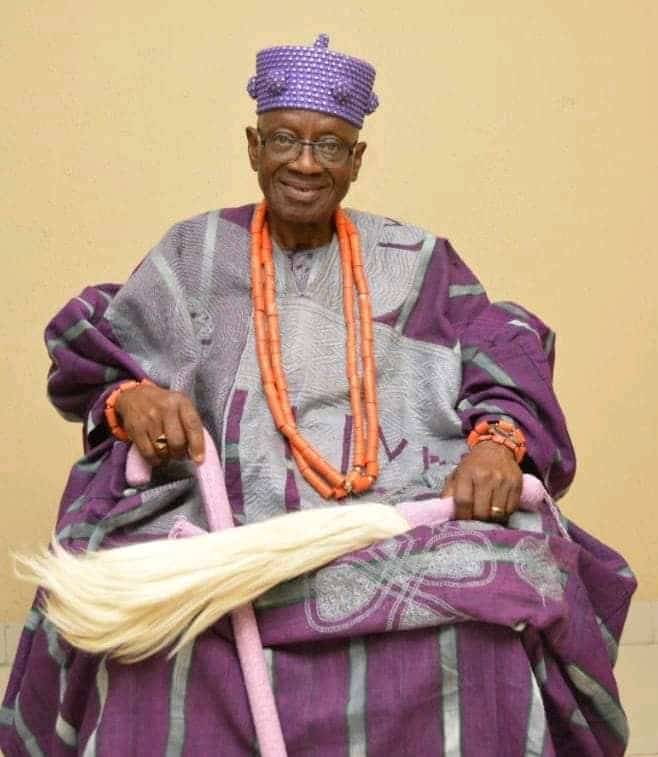
    The current Aale of Okelerin is High Royal Majesty, Oba Samuel Babatunde Oyebamiji Amao II JP. Oba Babatunde Amao has etched his name in gold in the annals of Okelerin as he was the ruler who transformed the royal stool from Baaleship to Obaship status and the title of the throne “Aale of Okelerin” has brought to the fore the name of the first leader of the community, Aale and his insignia of office is “Elephant Tusk.”

    Born on February 4, 1942, to the family of Chief Moses Oyelade Amao (the Baale of Okelerin) and Princess Deborah Adedoja Amao. He brought so much joy to the family as his birth put an end to the stigma of stillbirth associated with the family. The Aale worked in the corporate sector and had a stint with Nigersol Construction Company Limited; thereafter he worked with UAC Pan Electric Unit where he rose steadily through the ranks and he was the Vice President of the UAC African Workers Union. He left for Phono Radio Company, Mushin where he had understudied his Boss and he launch into entrepreneurship.

    He was the founder and Chief Executive of the following companies- S.B. Amao & Sons; Sabao Nigeria Enterprises, and Labatun Nigeria Limited before he ascended the throne of his forbearers’ after rejecting it on several occasions. The installation ceremony was held on Saturday, January 4, 1992. In his inaugural speech, he said, “I am humbled by the enormous responsibility heaped on me today. As I stand before you and the Almighty God, I pledge to commit all, myself, and resources to the advancement of our community. I do not promise heaven and earth, however, I will do my best to add glamour to the stool bequeathed by our great progenitor, Aale. I will not disappoint my predecessors, I will not disappoint you, my people and most importantly, I will not disappoint God, who has picked me for this position.”

    He swung into action to fulfill his promise and he ensured the advancement of the community through the elevation of the stool from just a chieftaincy title to becoming a Kingship in Ogbomoso. In 1993, The Chief Kolapo Ishola, the former Governor of Oyo State set up the Oloko Commission of Enquiry. The commission recommends that the title should change to Aale of Okelerin, the foundational title of the head of Okelerin, but the stool has not been exalted to Kingship. In 1999, the Aale took up the discussion with the Alhaji Lam Adesina, the Governor of the State. On May 16, 2003, the Aale received the Staff of Office which was presented by the Commissioner for Local Government and Chieftaincy Matters, Mr. Raji in the presence of other Royal Fathers and other eminent personalities.

    The ultimate recognition of the Aale as a King was in 2010 during the administration of the late Otunba (Dr.) Adebayo Alao-Akala and the gazette were released on May 19, 2011. During the administration of Senator Abiola Ajumobi, the Aale became recognized as a beaded crown Oba and issued the gazette to effect the pronouncement immediately and a certificate of elevation was presented to the King on October 19, 2018. With this, the pioneering and the dignified throne of the Aale was restored.

    We cannot but appreciate the staunch support of Olori Deborah Ojuolape Amao (nee Adisa) through this journey in the last 51 years. The loving duo has established the Ayotosimi Widows Foundation through which they support widows and have Christian fellowship with them. The very loving Monarch and his family are revered Baptists and they have continued to be a part of this Christian community and he is a devout member of First Baptist Church, Okelerin, Ogbomoso.

    The reign of His Royal Majesty, Aale S.B.O. Amao II has brought joy and peace to Okelerin and this has aided the growth and development of the teeming youths. Aale is always interested in youngsters and he has put a lot of effort into encouraging their advancement in the public and private sectors. Cheers to more years of being useful to God and humanity, Aale, I celebrate you now and always.

    Olutayo Irantiola is a Public Relations Specialist in Lagos, Nigeria. He blogs on www.peodavies.com and he can be reached via peodaviescomms@gmail.com & 08052048143

  • Feature- The 12 Feats expected from the Next Nigerian President

    Feature- The 12 Feats expected from the Next Nigerian President

    by Ayo Akinfe

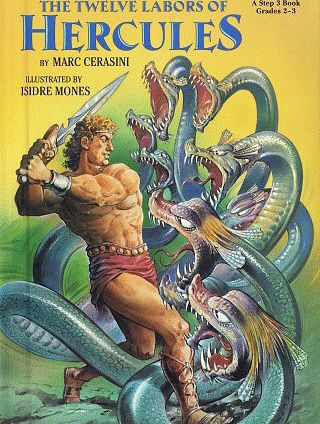
    Anyone aspiring to be the president of Nigeria in 2023 must be prepared to achieve mythical and biblical feats. Such a person must set him or herself impossible tasks to be completed by the end of eight years like the 12 Labours of Hercules such as:

    Ayo Akinfe

    [1] Wiping out Boko Haram and Islamic State of West African Province (ISWAP) in the northeast of the country

    [2] Getting every single cattle herdsman in Nigeria settled into one of six mega ranches to be located in Borno, Adamawa, Yobe, Bauchi, Kaduna, and Niger states

    [3] Generating, distributing and transmitting 50,000MW of electricity

    [4] Eliminating the current scourge of kidnapping, banditry and the crime epidemic plaguing the country

    [5] Increasing Nigeria’s current 3,600km of railway track to 40,000km

    [6] Abolishing the current federal allocation formula and getting Nigeria’s states to become wholly self-reliant

    [7] Getting every foreign manufacturer who supplies goods to Nigeria to open a manufacturing plant in the country. At the moment, Africa accounts for just 1% of global manufacturing. We need that figure to be at least 15%

    [8] Increasing the literacy rate to 95% from the current 60%

    [9] Increasing the doctor-to-patient ratio to the World Health Organisation (WHO) minimum of 1:1,000 from the current 1:2,500. India has for instance surpassed the WHO threshold

    [10] Eliminating ethnic prejudice by getting Nigerians to see their state of birth as their state of origin

    [11] Get us to generate at least 20% of our power from clean energy. This will be achieved through the construction of several mega solar farms and the world’s largest wind farm along our Atlantic coastline.

    [12] Getting at least 50% of all elected and appointed officials to be women. Maybe start off by passing a law making it compulsory that we must elect at least 18 female state governors

  • Feature- 10 things Nigeria should do with Cruel Oil as Russia-Ukraine Spat Rages

    Feature- 10 things Nigeria should do with Cruel Oil as Russia-Ukraine Spat Rages

    by Ayo Akinfe

    10 things Nigeria should do if the Russia/Ukraine spat rallies crude oil prices above £100 a barrel

    [1] All receipts that accrue from prices between $40 and $60 a barrel should go into a special infrastructure fund

    [2] All receipts that accrue from prices between $60 and $80 should go into a special economic diversification fund

    [3] All receipts that accrue from prices between $80 and $100 should go into a dedicated clean energy fund

    [4] All receipts that accrue from prices in excess of $100 a barrel should go into a special technological fund

    [5] Basically, we should see this as our last chance to diversify the Nigerian economy and invest the bonanza judiciously

    [6] For me, the bulk of the cash has got to go towards supporting manufacturing. Whether we like it or not, manufacturing has got to take over from religion, Nollywood and owambes as our favourite national past time.

    [7] We must also spend at least $20bn on key infrastructure like railway networks, ports, power plants, roads, power plants, airports and shopping malls

    [8] Whatever we do, the goal has got to be to wean our states off federal allocation, with the ambitious target of making a few self-reliant by 2025

    [9] I will not invest in education, healthcare and housing at the federal level as I believe that is the responsibility of state governments

    [10] We should also offer to manufacture munitions for Russia and Ukraine. Everyone else profits from our wars, so why shouldn’t we cash in on theirs?

    Ayo is a London-based journalist who has worked as a magazine and newspaper editor for the last 31 years. He was the founding editor of Nigerian Watch, the UK-based paper for the Nigerian community in the UK.  

    He is the current president of Ondo Union UK, the chair of Uncelebrated Nigerian Awards UK and was the chairman of the Nigerian Centenary Awards UK organising committee. He was recently appointed as the Chairman of the Central Association of Nigerians in the UK

    He is also the author of two books on Nigeria. Fuelling the Delta Fires is an expose which reveals the depth of the challenges in the Niger Delta, while Black Ladder is a narrative about the life of a Nigerian immigrant in the UK. In addition, Ayo is a columnist for several publishing houses in both Nigeria and the UK.

    Ayo has a history degree from the University of Ibadan and I did my post-graduate studies in journalism at the University of Westminster.

  • Feature: Buhari’s Expected Report from the African Union- European Union Summit

    Feature: Buhari’s Expected Report from the African Union- European Union Summit

    by Ayo Akinfe

    President Buhari should return to Nigeria from this AU-EU Summit in Brussels with a signed agreement that looks like this-

    [1] Nigeria is willing to offer European Union (EU) member states observer status at the Economic Community of West African States (ECOWAS). This is to facilitate massive investment in West Africa with an annual minimum target of $500bn

    [2] Nigeria is offering free land and five-year tax holidays to European automobile manufacturers like Citroen, Peugeot, Fiat, Volkswagen, Mercedes, BMW, Volvo. We want each of them to open assembly and manufacturing plants in Nigeria employing at least 5,000 local people each.

    [3] Any company from an EU nation that invests in a manufacturing facility in Nigeria employing at least 1,000 people will get a five-year tax holiday. In return, any state in Northern Nigeria where these investors build a manufacturing facility employing at least a thousand local people will be compelled by law to rescind its Sharia laws to accommodate their foreign workers.

    [4] Shipping industries from across the EU are welcome to open at least one shipyard in the Niger Delta to manufacture vessels for global distribution. Nigeria will offer them a 99-year lease to do this

    [5] On an annual basis, each EU nation will take in 50,000 Nigerian graduates to train them up to international standards in manufacturing, management, and commerce

    [6] Power and steel companies will be given unprecedented sweeteners when they invest in Nigeria. If they invest over $10m and employ in excess of 1,000 Nigerians, they will be offered five-year tax holidays, 99-year land leases, diplomatic status for their staff and the right to acquire Nigerian citizenship.

    [7] Pharmaceutical giants from EU member states must combine forces and manufacture a COVID-19 vaccine in Nigeria. Their Nigerian plant must manufacture up to 300m doses by the end of 2021

    [8] Agricultural giants are welcome to come and invest heavily in cattle ranches, food processing plants, storage facilities and refrigeration in Nigeria. They will be offered 100-year land leases and five year tax holidays

    [9] Most EU countries have a national airline. We want them to come and take out a 25% stake in Nigeria’s planned national carrier. Any airline that comes will become a joint partner in the venture, second only to Air Peace, taking over all the assets of Arik Air

    [10] Steel companies are desperately needed in Nigeria like yesterday. Steel giants from across the EU are to purchase the Ajaokuta, Aladja and Oshogbo steel mills with a mandate to produce 20m tonnes by 2025.

    Ayo is a London-based journalist who has worked as a magazine and newspaper editor for the last 31 years. He was the founding editor of Nigerian Watch, the UK-based paper for the Nigerian community in the UK.  

    He is the current president of Ondo Union UK, the chair of Uncelebrated Nigerian Awards UK and was the chairman of the Nigerian Centenary Awards UK organising committee. He was recently appointed as the Chairman of the Central Association of Nigerians in the UK

    He is also the author of two books on Nigeria. Fuelling the Delta Fires is an expose which reveals the depth of the challenges in the Niger Delta, while Black Ladder is a narrative about the life of a Nigerian immigrant in the UK. In addition, Ayo is a columnist for several publishing houses in both Nigeria and the UK.

    Ayo has a history degree from the University of Ibadan and I did my post-graduate studies in journalism at the University of Westminster.

  • The Comical Parts of Growing Up in Dipo Adesida’s  My French Teacher Had An Igbo Accent.

    The Comical Parts of Growing Up in Dipo Adesida’s My French Teacher Had An Igbo Accent.

    by Olamitayo Irantiola

    The book is an interesting collection of memories, memoirs, and mischiefs of Dipo Adesida: A marketing and communications Consultant.


    The text is a compendium of his fun-filled childhood exuberance spiced with his mischievous acts as the baby of the house. His wandering mind, coupled with being a foodie, brought out a humorous part of the story, leading to his academic distractions.

    The book has 12 life-lesson chapters that also read like an inspirational book. The encouragement to readers to pursue their dreams, ensuring they are happy with all that they do, rather than fitting into the status quo. It is also filled with the determination to succeed irrespective of records, gratitude, and patience.

    There are so many lessons to be learnt, and what stood out for me was the ability to correct children using writing when the rod failed to do its work, which later became an advantage for him.

    There is a comic part of the text and despite the tense environment in Nigeria, the book brought some good laughs as I read through.

    Olamitayo Ebunola Irantiola is a pastor, author and family life practitioner based in Lagos, Nigeria. She can be reached via tayofalokun@yahoo.com