

























The Centre for the Promotion of Private Enterprise (CPPE) has welcomed the moderation in Nigeria’s headline inflation rate to 14.63 per cent in September 2026 from 15.39 per cent in August, describing the development as a positive signal for macroeconomic stability, investment confidence and economic recovery.
However, the organisation cautioned that persistent food inflation and a sharp increase in monthly energy inflation could threaten the sustainability of the disinflationary trend if structural constraints in agriculture, energy and distribution are not urgently addressed.
In a policy brief on the September 2026 inflation report, CPPE Chief Executive Officer, Dr. Muda Yusuf, said the 76-basis-point decline in headline inflation, alongside a reduction in annual core inflation from 13.29 per cent to 12.95 per cent, indicated easing price pressures and strengthened the case for further monetary easing.
According to the organisation, relative stability in the foreign exchange market has also helped moderate imported inflation and improve business planning.
CPPE noted that lower interest rates could provide relief to manufacturers, agricultural enterprises, construction companies, distributors and micro, small and medium-sized enterprises (MSMEs), many of which continue to grapple with high borrowing costs and constrained access to working capital.
It, however, urged the Central Bank of Nigeria (CBN) to pursue a calibrated approach to monetary easing, taking account of inflation expectations, exchange rate conditions and emerging energy-price risks.
Food Inflation Continues to Pressure Households
Despite the improvement in headline inflation, CPPE expressed concern that annual food inflation remained elevated at 19.59 per cent in September, marginally above the 19.57 per cent recorded in August.
The organisation observed that food inflation exceeded headline inflation by 4.96 percentage points, placing a disproportionate burden on low-income households, which spend a substantial share of their earnings on food.
It warned that persistent food-price increases could erode household purchasing power, deepen poverty risks and weaken consumer demand for manufactured goods, education, healthcare and other services.
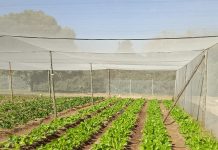
CPPE attributed the pressure to structural challenges in agricultural production and distribution, including insecurity in farming communities, inadequate rural infrastructure, high logistics costs, post-harvest losses and weak market connectivity.
It called for targeted interventions to improve agricultural productivity, strengthen food supply chains and reduce the cost of moving produce from farms to markets, stressing that monetary tightening alone would not adequately address these challenges.
Sharp Rise in Monthly Energy Inflation Raises Concern
The policy brief also identified energy inflation as a major threat to price stability, following an increase in monthly energy inflation from 0.36 per cent in August to 5.38 per cent in September. Annual energy inflation stood at 10.85 per cent.
According to CPPE, rising petrol, diesel and gas prices could increase transportation, distribution and production costs across virtually every sector of the economy, with possible spillover effects on food prices and core inflation.
The organisation further warned that geopolitical tensions in the Middle East had heightened volatility in global petroleum markets, exposing Nigeria to external energy-price shocks.
While foreign exchange stability could moderate the domestic transmission of imported inflation, CPPE said it could not fully offset increases in international energy prices.
To strengthen the economy’s resilience, the organisation recommended improvements in electricity supply, expansion of compressed natural gas (CNG) infrastructure, greater adoption of electric mobility and enhanced efficiency in domestic refining.
It stressed that sustainable inflation reduction would require lowering Nigeria’s structural dependence on expensive and volatile energy sources.
Regional Disparities Highlight Distribution Challenges
CPPE also drew attention to geographical disparities in inflation, noting that urban inflation exceeded rural inflation by 3.18 percentage points.
It said the difference reflected variations in logistics costs, market access, local supply conditions and consumption patterns.
The organisation called for increased investment in rural feeder roads, storage facilities, agricultural market infrastructure and inter-state connectivity to strengthen domestic supply chains and reduce avoidable distribution costs.
It also urged federal, state and local governments to improve security and coordinate efforts to eliminate multiple levies and checkpoints that increase the cost of moving goods across the country.
CPPE Sees Opportunity for Further Monetary Easing
The organisation said the moderation in inflation had improved the outlook for interest rates, financial planning and investment confidence.
It cited the CBN’s September reduction of the Monetary Policy Rate by 350 basis points to 23 per cent as an important foundation for further easing, while noting that lower policy rates might take time to translate into reduced commercial lending rates.
CPPE nevertheless cautioned that the inflation outlook remained mixed, pointing to an increase in monthly core inflation from -0.06 per cent in August to 1.11 per cent in September, despite the decline in annual core inflation.
It advised investors and business operators to distinguish between declining inflation and declining operating costs, noting that while lower inflation improves macroeconomic predictability, reductions in energy, logistics and financing costs are essential for stronger profitability and competitiveness.
CPPE Recommends Balanced Inflation-Management Strategy
To consolidate the gains recorded in September, CPPE recommended a coordinated policy approach that combines prudent monetary easing with structural reforms aimed at improving productivity and lowering production and distribution costs.
The recommendations include gradual interest-rate reductions as economic conditions permit, measures to improve food affordability, enhanced security for farming communities, reduced post-harvest losses and investments in agricultural infrastructure.
The organisation also called for accelerated electricity-sector reforms, expanded alternative-energy infrastructure, efficient domestic petroleum markets and improved coordination of monetary and trade policies to ease supply-side constraints in agriculture, agribusiness and manufacturing.
It urged all tiers of government to strengthen accountability and work together to improve market access, eliminate unnecessary trade barriers and reduce the cost of doing business.
Disinflation Gains Remain Fragile
Commenting on the overall outlook, CPPE acknowledged the progress reflected in the September figures, particularly the decline in headline inflation and the reduction in monthly headline inflation to 0.06 per cent from 0.71 per cent in August.
The organisation also noted that monthly food inflation turned negative at -1.55 per cent, providing a potential source of short-term relief for consumers.
However, it warned that annual food inflation of 19.59 per cent, the sharp acceleration in monthly energy inflation and renewed monthly core inflation pressures showed that the gains remained fragile.
CPPE maintained that Nigeria’s inflation-management strategy must go beyond monetary policy to address the structural factors keeping food, energy, transportation and production costs high.
It called for sustained collaboration among federal, state and local governments, with greater emphasis on productivity, infrastructure, security, energy efficiency and domestic supply capacity.