




























…Centre says import surge could undermine domestic refining, drain forex, weaken jobs and threaten Nigeria’s industrialisation drive
The Centre for the Promotion of Private Enterprise (CPPE) has raised concerns over the sharp resurgence in petroleum-product imports, warning that indiscriminate import approvals could undermine Nigeria’s emerging domestic refining capacity, weaken foreign-exchange conservation efforts and threaten investment in the downstream petroleum sector.
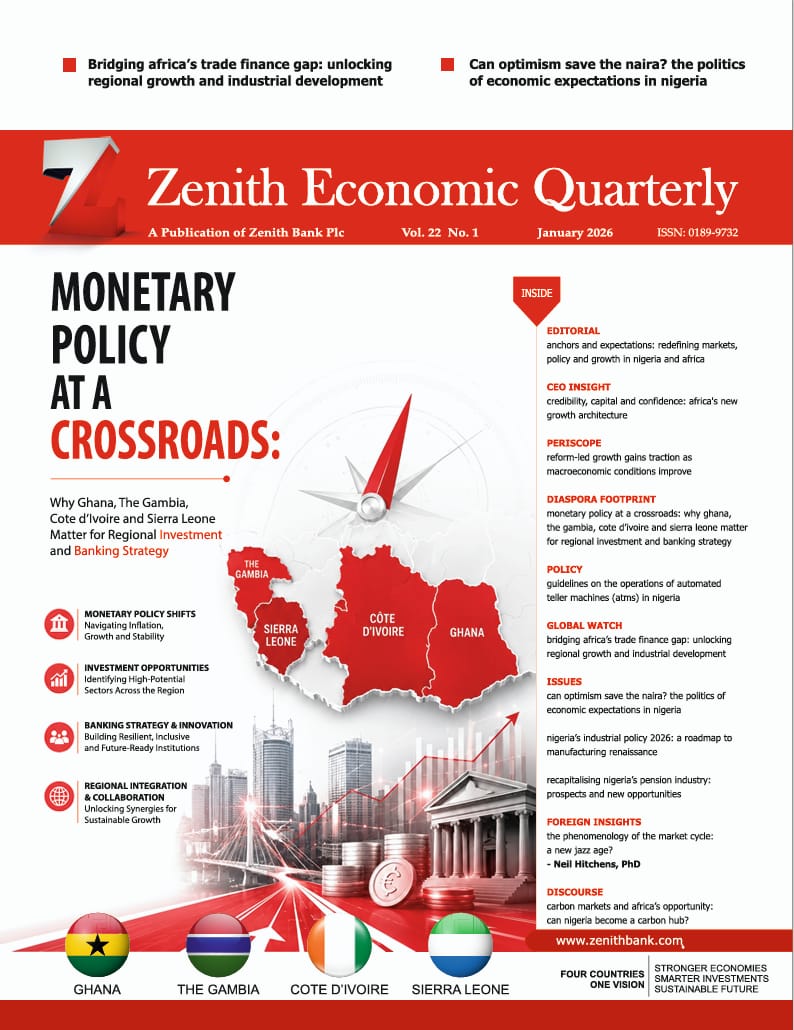 https://www.digital.zenithbank.com/ZEQ/ZEQ-jan-2026/index.html#p=1
In a new policy brief titled “Policy Brief on Rising Petroleum-Product Imports and the Future of Domestic Refining,” the CPPE chief, Dr Muda Muda Yusuf, said petroleum-product imports should serve as a transparent mechanism for addressing genuine supply gaps rather than becoming a parallel supply channel that displaces adequate domestic production.
The Centre’s concern follows a significant increase in Premium Motor Spirit (PMS) imports in recent months. According to regulatory data cited by the CPPE, average PMS imports rose from 5.9 million litres per day in May 2026 to 18.1 million litres per day in June, representing a 206.8 per cent increase, before rising further to 19.7 million litres per day in July. Consequently, the share of imports in total PMS receipts increased from 12.4 per cent in May to 43.3 per cent in July.
The CPPE said the development is particularly concerning because it has occurred alongside evidence of substantial improvements in Nigeria’s domestic refining capacity. It noted that Dangote Refinery reported a test run above 700,000 barrels per day in June, while data from the Nigerian Midstream and Downstream Petroleum Regulatory Authority (NMDPRA) showed domestic refineries operating at an average 99.12 percent capacity utilisation in April. The Centre also noted the strong increase in Nigeria’s seaborne petroleum-product exports, suggesting that aggregate refining capacity may no longer be the binding constraint it once was.
According to the Centre, the issue is not opposition to petroleum-product imports where they are genuinely required. It acknowledged that imports remain a legitimate contingency mechanism in situations involving refinery outages, seasonal demand spikes, quality gaps and strategic stock replenishment. The concern, it stressed, arises when import permits are issued without a transparent demonstration that domestic refiners cannot meet demand at acceptable quality, quantity and competitive market prices.
‘Imports Should Close Gaps, Not Displace Domestic Production’
The CPPE urged the NMDPRA to publish a product-by-product assessment of supply and demand before approving significant import volumes. It called for qualified domestic refiners to be given a fair opportunity to meet verified demand, while imports should be restricted to the quantified residual gap and limited to clearly defined validity periods.
The Centre argued that a deregulated downstream petroleum market should not translate into regulatory indifference to the structure of supply.
“Imports should close gaps—not create displacement,” the CPPE said, stressing that where domestic supply is genuinely adequate, excessive import approvals could suppress refinery offtake, reduce refinery utilisation and transfer demand, income and employment opportunities outside Nigeria.
The Centre further called for greater transparency in determining supply gaps, arguing that the regulator should disclose projected demand, verified domestic production and inventories, committed refinery deliveries, product specifications, logistics constraints and the precise residual volume requiring imports.
Forex, Jobs and Industrialisation at Risk
The CPPE said the implications of the import surge extend beyond the petroleum sector, with significant consequences for Nigeria’s foreign-exchange position, employment, industrialisation and energy security.
It noted that every avoidable litre of imported petroleum products creates additional demand for foreign exchange to finance product costs, freight, insurance and related charges. By contrast, domestic refining retains a greater share of economic value within Nigeria.
The Centre also highlighted the employment multiplier associated with refining, covering engineering, maintenance, fabrication, laboratories, haulage, storage, retail, maritime services and professional services.
Beyond fuel supply, it described refining as a strategic anchor industry capable of supporting downstream value chains in petrochemicals, plastics, fertiliser, pharmaceuticals, paints, packaging and other manufacturing activities. Policies that displace viable domestic production, it argued, could therefore undermine Nigeria’s broader industrialisation ambitions.
The CPPE further warned that unpredictable import policies could weaken investor confidence in the refining industry. Given the substantial and long-term capital required to develop refineries, the possibility that imports could be approved irrespective of domestic availability could make refinery utilisation and future cash flows less predictable, potentially discouraging further investments and expansions.
CPPE Calls for Rules-Based Import Regime
The Centre advocated a policy framework built around the principle of “domestic supply first, competition always, imports only for verified gaps.” It stressed that supporting domestic refining should not amount to protectionism, monopoly pricing or shielding inefficient producers from competition.
Under the proposed framework, the CPPE said domestic refiners should demonstrate actual deliverable volumes rather than merely installed capacity, while both imported and domestically produced petroleum products should meet identical quality standards. Domestic supply should also be assessed against transparent competitive pricing benchmarks.
The Centre recommended that the NMDPRA publish a monthly national supply-and-demand balance, covering verified refinery output, domestic evacuation, inventories, consumption, exports, committed deliveries, imports landed and stock-sufficiency days.
It also urged the regulator to establish a formal supply-gap determination before granting substantial import permits, including details of the size of the shortfall, affected products and locations, quality specifications, duration and supporting evidence.
The CPPE further recommended that domestic refiners should be given a short, time-bound opportunity to commit supply against an identified gap, with only the unmet residual demand subsequently allocated for imports. Import permits, it said, should be quantified, time-limited and subject to shipment windows and automatic expiry.
Other recommendations include stronger auditing of permitted and actual import volumes, sanctions for misreporting, publication of permit beneficiaries and landed volumes, and the establishment of objective emergency-import triggers based on indicators such as minimum stock days, refinery outages and delivery failures.
Secure Crude Supply for Domestic Refineries
The CPPE also urged closer coordination between the NMDPRA, the Nigerian Upstream Petroleum Regulatory Commission (NUPRC) and oil producers to guarantee reliable domestic crude supply to local refineries at commercially workable prices.
It warned that restricting product imports without simultaneously ensuring adequate feedstock supply to domestic refineries would be internally inconsistent and could undermine the objective of strengthening local refining.
The Centre also called on the Federal Competition and Consumer Protection Commission (FCCPC) to maintain vigilant competition oversight to prevent monopolistic pricing and abuse of market dominance as domestic refining capacity expands.
‘Nigeria Must Move Beyond Chronic Import Dependence’
The CPPE maintained that Nigeria has reached a critical point in the evolution of its downstream petroleum sector and must now move decisively from managing chronic import dependence towards building a competitive domestic refining ecosystem.
It warned that allowing petroleum-product imports without establishing a transparent and verifiable supply shortfall could undermine an important opportunity to conserve foreign exchange, create employment, deepen industrial linkages and strengthen national energy security.
The Centre stressed that the appropriate policy is not a blanket restriction on imports, but a rules-based system in which efficient domestic producers receive a fair opportunity to supply the Nigerian market, imports are deployed only to address demonstrable gaps, consumers remain protected and competition is preserved.
“Nigeria’s industrialisation agenda will be judged partly by whether regulatory decisions align with the country’s long-term productive capacity objectives,” the Centre noted, urging the authorities to provide greater predictability, transparency and consistency in downstream petroleum regulation.