


























Calls for stronger enforcement of business permits, expatriate quotas and investment regulations
LAGOS, NIGERIA — September 20, 2026 — The Centre for the Promotion of Private Enterprise (CPPE) has called on the Federal Government to review the regulatory framework governing the participation of foreign nationals in Nigeria’s retail and distributive trade sector, amid concerns over the potential impact on indigenous businesses, employment and fair competition.
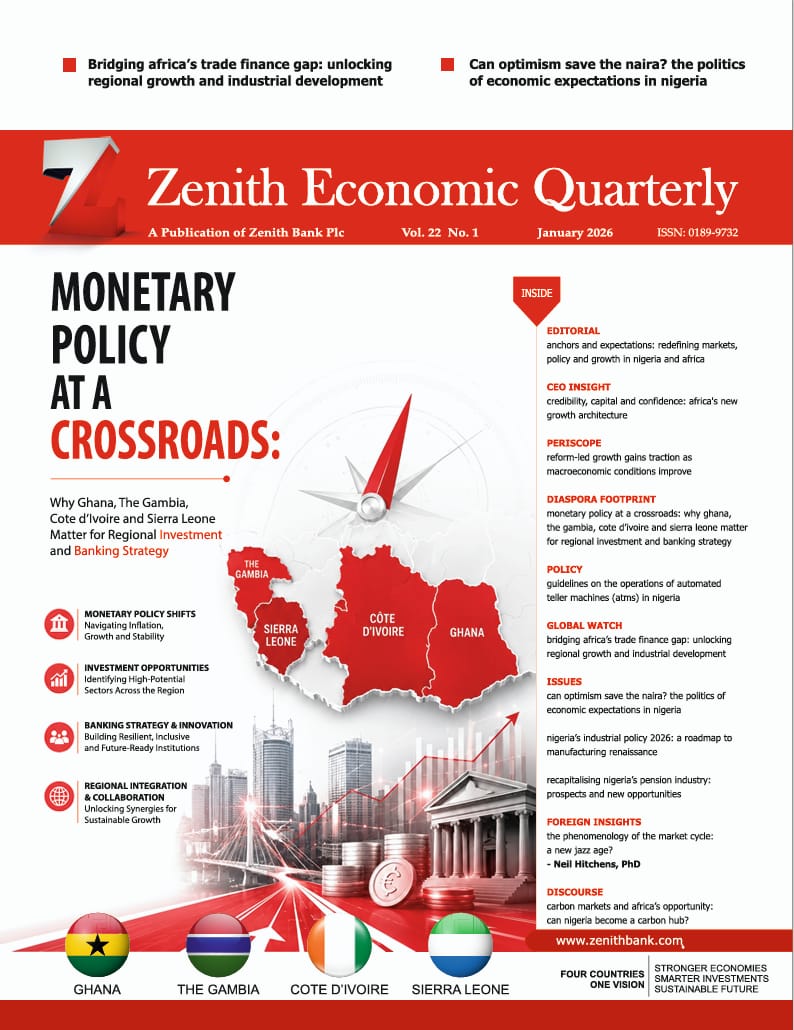 https://www.digital.zenithbank.com/ZEQ/ZEQ-jan-2026/index.html#p=1
The Centre said the growing participation of some foreign traders, particularly Chinese nationals, in segments of Nigeria’s retail economy requires urgent policy attention, especially given the importance of wholesale and retail trade to employment and livelihoods across the country.
According to CPPE, the distributive trade sector accounts for an estimated 27.5 per cent of Nigeria’s workforce, with millions of Nigerians engaged in businesses covering textiles and fabrics, ICT products and accessories, automobile spare parts and tyres, electrical products, plumbing materials, household goods and other consumer and industrial products.
CPPE Chief Executive Officer, Dr Muda Yusuf, said the Centre’s concern is not directed at Chinese investment or Nigeria’s longstanding economic relationship with China, but at the increasing downstream participation of some foreign suppliers and traders in retail segments where Nigerians already have significant capacity.
“Foreign investment remains important to Nigeria’s development, particularly where it brings capital, technology, industrial capacity, employment, exports and new capabilities into the economy,” CPPE said.
The Centre noted that China remains one of Nigeria’s major trading partners and a leading source of imports, with Nigerian businesses maintaining longstanding relationships with Chinese manufacturers, exporters and distributors.
It said these relationships have supported the supply of machinery, industrial inputs, consumer goods, technology products and other goods required by the Nigerian economy.
However, CPPE expressed concern over situations in which overseas manufacturers or major suppliers move downstream from supplying Nigerian importers and distributors to establishing operations that compete directly with the same businesses at the retail end of the market.
Concerns Over SMEs and Employment
CPPE said the issue requires particular attention at a time when Nigerian businesses are contending with unemployment, poverty, weak consumer purchasing power, high financing costs and significant operating pressures.
The Centre noted that retail trade has relatively low entry barriers and provides livelihoods for a large number of Nigerians, particularly SMEs, family businesses and self-employed persons.
It said reports from market operators indicate that concerns about foreign participation are emerging in segments including textiles and fabrics, computers and telephone accessories, automobile spare parts, tyres and plumbing materials.
The Centre also referenced protests and complaints by traders in some major commercial markets, saying such developments warrant appropriate regulatory attention.
Review Business Permits and Expatriate Quotas
CPPE called for a comprehensive review of business permits, expatriate quotas, immigration approvals and other authorisations granted to foreign nationals operating in Nigeria’s retail and distributive trade.
The Centre said expatriate quotas should principally facilitate the entry of skills, expertise and capabilities that are scarce or unavailable locally, rather than facilitate displacement of Nigerians from economic activities where substantial domestic competence exists.
According to CPPE, retail trading is generally not a specialised activity requiring scarce foreign expertise, raising questions about the effectiveness of the existing regulatory and immigration framework where foreign nationals participate extensively in such activities.
The Centre stressed that its position does not amount to a call for arbitrary restrictions on foreign investors or hostility towards foreign businesses.
Rather, it advocated consistent enforcement of existing laws, transparent rules and a clearly defined investment policy.
CPPE Advocates Calibrated Investment Liberalisation
CPPE said Nigeria should remain open to foreign investment while ensuring that investment policies reflect the country’s employment, enterprise-development and industrialisation priorities.
The Centre called for stronger encouragement of foreign investment in sectors such as manufacturing, infrastructure, technology, agro-processing, mining and energy, where Nigeria requires substantial capital and technical capabilities.
It argued that the retail segment requires a distinct policy approach because of its importance to employment, entrepreneurship and SME development.
CPPE noted that countries around the world maintain regulatory boundaries around certain economic activities to protect domestic enterprise, preserve jobs or promote indigenous participation, and urged Nigeria to ensure that its own investment regime reflects its developmental priorities.
Seven-Point Policy Recommendations
To address the concerns, CPPE called on the Federal Government to:
- Review foreign business permits and expatriate quotas associated with retail and distributive trade.
- Strengthen enforcement of immigration and investment regulations governing foreign participation in reserved or restricted activities.
- Investigate complaints from Nigerian traders regarding direct foreign competition at the retail level.
- Ensure expatriate quotas are linked to demonstrable skills gaps and specialised competencies.
- Strengthen coordination among immigration, investment, trade and labour authorities.
- Establish clearer guidelines defining permissible foreign participation across the distributive trade value chain.
- Encourage foreign businesses to invest upstream in manufacturing, processing, technology, logistics and other productive activities rather than displacing indigenous businesses at the retail end.
CPPE maintained that Nigeria’s objective should be to balance the need for foreign investment with the protection of the entrepreneurial space supporting millions of domestic businesses and livelihoods.
The Centre said such an approach should focus on fair competition, regulatory integrity, employment protection and strategic investment policy, rather than protectionism for its own sake.
CPPE further urged the government to urgently review the regulatory framework governing foreign participation in retail trade and ensure that business permits, immigration approvals and expatriate quotas are used strictly for their intended purposes.
The Centre reiterated that Nigeria’s investment policy should remain open while being calibrated to the country’s employment, enterprise-development and industrialisation priorities.