

























The Centre for the Promotion of Private Enterprise (CPPE) has described Nigeria’s April 2026 inflation outlook as a fragile disinflation process, warning that rising global and domestic cost pressures continue to pose significant risks to businesses and households across the country.
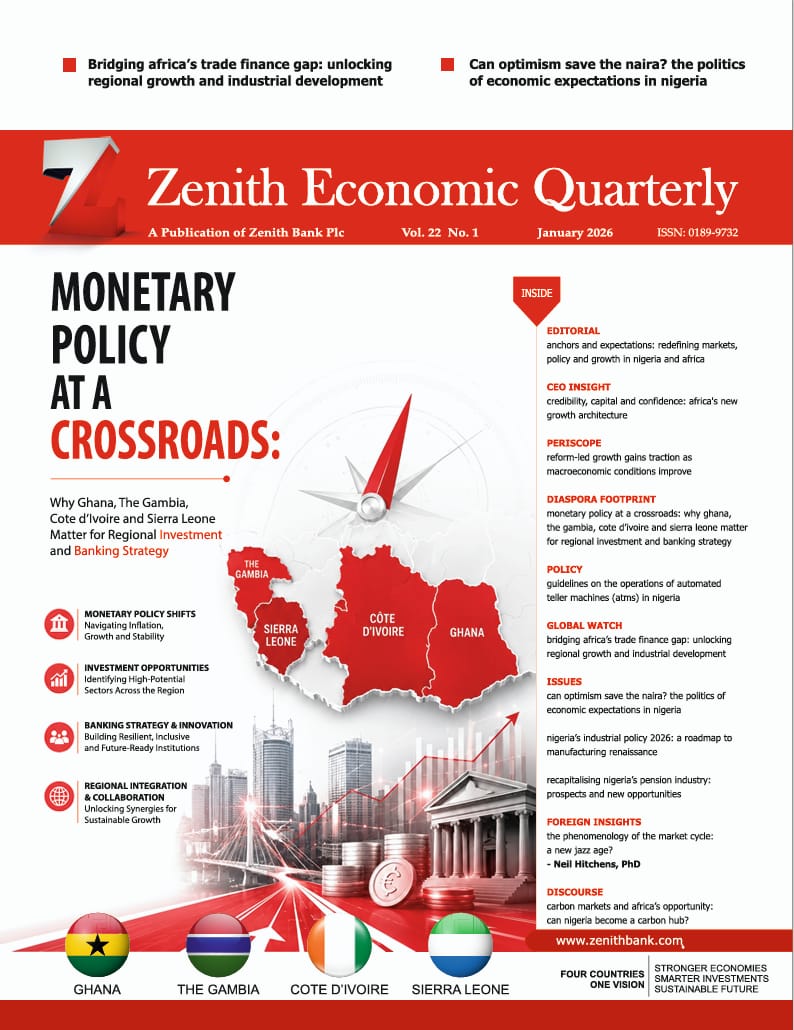 https://www.digital.zenithbank.com/ZEQ/ZEQ-jan-2026/index.html#p=1
In its latest commentary on the inflation figures signed by the Chief Executive Officer of CPPE, Dr Muda Yusuf, noted that headline inflation rose marginally from 15.38 per cent in March to 15.69 per cent in April 2026, indicating that while inflationary pressures remain elevated, the pace of increase was relatively moderate.
The economic advocacy group, however, pointed to encouraging signs in the month-on-month inflation data, which showed moderation across major indicators. According to CPPE, headline month-on-month inflation declined by 2.05 per cent, while food inflation eased by 0.54 per cent. Core inflation declined by 3.0 per cent, urban inflation moderated by 1.3 per cent, and rural inflation dropped sharply by 3.9 per cent.
CPPE stated that the trend suggests a weakening of short-term inflationary momentum, although inflation conditions remain severe from both welfare and business-cost perspectives.
The organisation explained that food inflation stood at 16.06 per cent, while core inflation remained elevated at 15.86 per cent. It added that food, transportation, energy products, healthcare, and restaurant services accounted for about 87 per cent of inflationary pressures recorded in April.
“These are essential expenditure items which absorb the bulk of household income, particularly among low-income Nigerians,” the statement noted.
CPPE also warned that the ongoing geopolitical tensions involving Iran, Israel, and the United States are intensifying inflationary risks globally and domestically. According to the group, the conflict has triggered renewed volatility in the global oil market, pushing up crude oil prices and transmitting higher energy costs into the Nigerian economy.
It explained that rising petrol, diesel, and gas prices are increasing transportation, logistics, and production costs across sectors, with significant pass-through effects on food prices and overall consumer inflation.
The organisation stressed that Nigeria’s inflation challenge remains largely structural and supply-driven, arguing that monetary tightening alone cannot effectively address inflation caused by energy costs, logistics inefficiencies, food supply disruptions, and weak infrastructure.
CPPE warned that additional monetary tightening could further worsen financing costs for businesses, weaken investment flows, and constrain productivity growth within the economy.
The group therefore called on governments at both federal and state levels to shift policy focus towards stronger supply-side interventions. It recommended intensified efforts to reduce energy costs, improve transportation infrastructure, strengthen food supply systems, enhance trade facilitation, and support domestic productivity.
For businesses, CPPE acknowledged that the operating environment remains extremely challenging. It advised firms to prioritise energy efficiency, adopt dynamic pricing models, deepen consumer segmentation strategies, and focus on affordability-driven product offerings, including smaller pack sizes, as consumers become increasingly price-sensitive.
CPPE concluded that although inflationary momentum appears to be moderating gradually, the disinflation process remains highly vulnerable to external shocks, especially developments in the global energy market.
The organisation maintained that sustainable inflation moderation would depend largely on structural reforms and targeted interventions aimed at reducing the costs of food, transportation, and energy across the Nigerian economy.