

















By Dr Oluwaseun Adeoye Oyebamiji
Nigeria’s public-sector unions want petrol at ₦500 a litre or a minimum wage of ₦500,000. Both demands respond to real hardship, and both would make it worse.
In September, the trade union side of the Joint National Public Service Negotiating Council wrote to President Bola Tinubu. It asked for petrol to be cut to ₦500 a litre, an immediate wage award for workers at all three tiers of government, and a new minimum wage of at least ₦500,000 a month for the lowest grade from 2027 (Yusuf, 2026). The council set the pump price at ₦1,430 per litre or more. The current national minimum wage is ₦70,000 a month (National Minimum Wage (Amendment) Act, 2024). Unions have since staged a three-day warning strike and threatened a longer one.
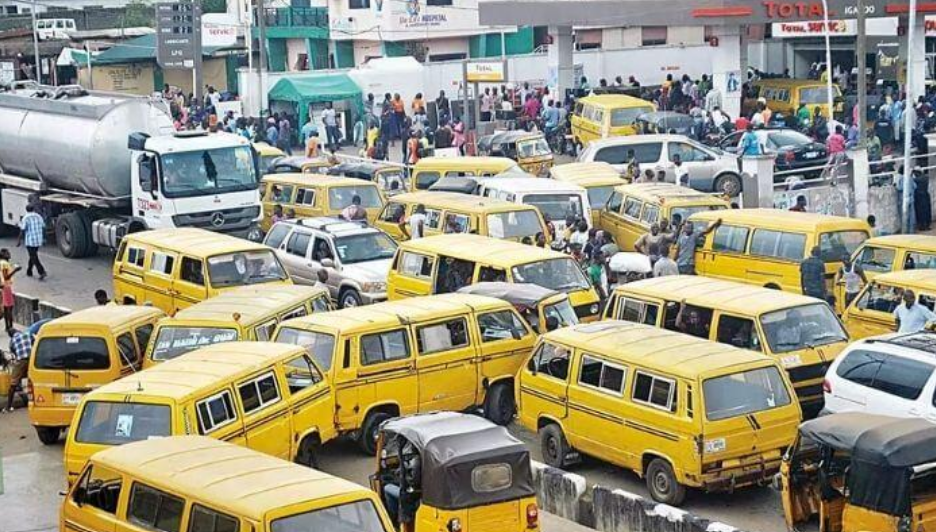
The pressure behind the letter is real. Petrol now costs about seven times the controlled price of under ₦200 a litre that applied before the subsidy was removed in 2023, food prices remain high, and a minimum wage set in 2024 has lost much of its value. But the two remedies proposed would repeat mistakes Nigeria has only recently stopped making.
In mid-September, with Brent crude above $100 a barrel, the Dangote refinery’s gantry price was ₦1,350 a litre (Oparada, 2026). A pump price of ₦500 would be little more than a third of that wholesale price, before transport and retail margins. Someone would have to pay the difference. Under the old regime, that someone was the Federation, through NNPC. Drawing on official figures, Al Jazeera put spending on the subsidy between 2016 and 2023 at about ₦11.7 trillion (Adetayo, 2023). Much of the cheap petrol was reportedly smuggled to neighbouring countries. If the government will not pay the difference, a price cap produces shortages, and Nigerians remember the queues.
In 1945 Friedrich Hayek explained why. A price is a signal. A high petrol price tells consumers to economise and tells producers and importers to supply more. Fixing it below cost blocks both messages. Ayittey (2006) described indigenous African markets in which prices were settled by bargaining between buyers and sellers rather than decreed by rulers.
The wage demand raises a different problem. The National Bureau of Statistics estimates that about 93% of Nigerian employment is informal, and around 85.6% of working people are self-employed (Tunji, 2024). The two measures differ, but both show how few Nigerians work for wages in registered firms. A minimum wage applies, in practice, to a small formal minority: civil servants and employees of registered firms. Raising it more than sevenfold would not reach the trader, the farmer or the artisan. It would raise the cost of every formal job. Nigerian evidence on how employers would respond to a rise of this size is limited, but the likely results include fewer formal jobs, more contract and informal hiring, and heavier pressure on state wage bills.
South Africa offers a useful comparison. With very high unemployment, the Free Market Foundation has proposed a Job Seekers Exemption Certificate, which would allow unemployed people to opt out of minimum wage rules and bargaining-council agreements and negotiate directly with employers. As an FMF spokesman put it, the unemployed are “priced out of the labour market” by regulation (Le Roux, 2026). It remains an untested proposal, but it recognises that a high legal minimum can exclude people outside the formal economy rather than protect them.
There is a reasonable case on the other side. Public servants are not responsible for inflation, and governments that print money or devalue the currency do transfer real income away from salaried workers. Wage reviews should be regular, and governments that are employers should pay their staff on time. But a reasonable review is not a sevenfold increase, and a demand for a fixed petrol price is a demand for the return of a subsidy that drained the Federation’s revenue for years.
What would help is attention on why living costs are high. Food prices reflect insecurity, input costs, and trade restrictions. Transport costs reflect bad roads and a network of official and unofficial levies on every vehicle. Credit is scarce because the central bank holds almost half of every deposit. Each of these is a policy choice, and each can be changed without a subsidy or a wage decree.
Labour leaders could press for exactly those reforms: lower taxes on goods that workers buy, an end to checkpoint extortion, open food trade, and a public service paid on time and promoted on merit. Such a programme would raise the real value of every naira earned.
Nigeria spent decades fixing the price of petrol and paid for it with debt, smuggling and shortages. It would be a pity to return to that path just as the country has begun to leave it.
Dr Oluwaseun Adeoye Oyebamiji is a development economist and agricultural policy researcher whose work examines food security, poverty, markets, agricultural policy and economic development, particularly in Africa. He is an Associate of the Free Market Foundation.
The views, thoughts and opinions expressed in this article are solely belong to the author and do not necessarily reflect the official policy, views, opinions, or position of News Wings NG, its management, editorial team, or staff.