



















By Chiamaka Happiness Madueke
What’s worse than being taxed? Being taxed invisibly and twice.
When the government tightens monetary policy, hikes taxes, and removes subsidies, all in one breath, you would expect the economy to breathe easier. But in Nigeria, the air seems to feel thinner.
Over the past few years, Nigeria has embraced a series of bold economic reforms. Floating the naira, removing fuel subsidies, and pushing revenue generation targets. Moves that generally can signal fiscal discipline and long-term growth. For example, the Nigerian government reportedly saved ₦3.6 trillion from subsidy removal in just the second half of 2023. But beneath the policy headlines lies a quieter story: one where debt servicing, inflation, taxation, and informal charges collide to create an invisible burden on everyday transactions.
Yes, between visible taxes, invisible inflation, and unofficial levies collected by everyone and no one, low-income Nigerians allegedly seem trapped in a system that squeezes them from every direction.
Let me digress for a second, but I’ll bring it back in a bit, I promise.
At first glance, taxation and inflation may seem like two separate forces: one a fiscal tool, the other a macroeconomic consequence. But in Nigeria’s current climate, they’re colliding in real time, shaping the daily experience of citizens and businesses alike.
THE TAXATION PUZZLE
Nigeria’s tax-to-GDP ratio remains among the lowest globally; just 10.86% as of 2022, according to the Federal Inland Revenue Service (FIRS). That’s well below the 15–25% global average, and even lower than the African average. Yet the informal economy, which contributes nearly 58% to GDP, bears much of the untracked tax burden through local levies and fees.
This mismatch reveals a chronic revenue problem.
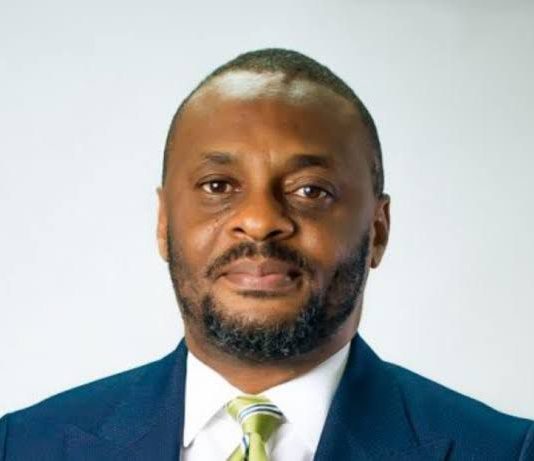
And this challenge becomes even more critical when you consider the growing cost of debt. But borrowing isn’t inherently bad, in fact, strategic debt can stimulate growth if channeled into things like power, roads, manufacturing, or digital infrastructure, projects that have a way of boosting the economy. In an interview with Arise News, the CEO of Sterling Bank, Abubakar Suleiman, said, “If you are not collecting enough revenue to service a debt, that is a problem”. But even worse? When you’re not using that debt for productive, economic reasons, that’s a structural problem.
Then I ran the numbers, in 2022, Nigeria reportedly spent a large percent of its revenue on debt servicing. That means most of what we earn doesn’t go to schools, hospitals, or industrial development, it goes to paying back interest. That’s like living on a credit card and using it to buy lunch, not build a business that would make profit.
In 2023, 64.5% of the Federal Government’s total revenue was used for debt servicing, according to a BusinessDay analysis of data from the Budget Office. Although this was higher than the 48.5% in 2022, it was still less than the 71.8% in 2021. In 2023, actual revenue was ₦11.88 trillion, slightly above the predicted ₦11.05 trillion, while actual debt service costs were ₦7.66 trillion, 16.9% higher than the projected ₦6.56 trillion.
In comparison, Nigeria’s revenue for the fiscal year 2022 was ₦7.76 trillion, falling short of the ₦9.97 trillion projection. The fact that debt servicing increased to ₦3.76 trillion from an anticipated ₦3.69 trillion in spite of this shortfall shows that debt obligations are an unavoidable burden even in cases where revenues are below budget. This pattern emphasizes how little financial flexibility the government has, particularly when it comes to financing infrastructure or social projects.
By September 30, 2024, Nigeria’s total public debt had climbed to ₦142.3 trillion, reflecting a
₦8.02 trillion increase from ₦134.3 trillion in June 2024. This 5.97% rise is attributed not only to additional borrowing but also to the depreciation of the naira, which significantly inflated the naira value of external debt. The surge in debt has not been matched by a proportional increase in productive investment, raising questions about the sustainability and strategic intent of government borrowing.
Adding to the concern, the total debt service cost reached an estimated ₦3.57 trillion in just the third quarter of 2024 alone.
With limited income from formal taxation, the government allegedly struggles to adequately fund infrastructure, education, healthcare, and essential services. In response, efforts are underway to:
● Widen the tax base by formalizing more of the informal sector, ● Improve compliance through digital platforms and data integration, ● Rationalize outdated and inefficient tax incentives.
However, increasing tax pressure and its enforcement especially now can be politically unpopular and economically dangerous. Why? Because inflation is already eating through household budgets.
THE INFLATION SQUEEZE
Nigeria’s inflation rate has remained stubbornly high, largely driven by the rising cost of food prices, currency depreciation, removal of fuel subsidy and Monetary policies like floating the naira
As of early 2024, inflation was between 28–30%, with core inflation also climbing. This diminishes buying power, worsens poverty, and increases the expenses of conducting business. Essentially, inflation operates as an unnoticed tax, one that hits the vulnerable the hardest, especially low and middle-income earners whose wages aren’t keeping pace.
One key statement caught my attention in recent times, “We must choose between Taxation or Inflation.”
At first, that sounded a bit extreme. But the more I thought about it, the more it made sense. Taxation is visible, structured, and can be progressive. Inflation, on the other hand, is unpredictable and regressive, a silent thief that spares no one, but affects the poor more because they have less to spend.
For low-income Nigerians, a controlled tax system paired with targeted public investment, might be more manageable than the current wave of inflation that raises the price of garri, beans, and palm oil every other week for Aunty Onyeka and thousands like her.
THE “OTHER” TAXES WE DON’T TALK ABOUT
But this brings me to a creeping question. What about the unofficial taxes? The ones no one talks about?
How are the indirect taxes collected from public transporters by local levy collectors accounted for? The levies collected from Mama Basirat who hawks around Oshodi market selling cooked food has watched the price of palm oil jump three times in six months while still paying a ₦500 “market ticket” every morning before selling a single plate of rice. Who tracks that revenue?
Yes, the most shocking revelation for me has been realizing that even hawkers – hawkers, who sell sachet water or fruit walking down roads and street corners are being taxed in some areas. Or rather, charged daily levies by local agents. And no, I am not condemning that, just that this issue raises some serious questions in my head:
- Where does this money go?
- Is it remitted to any official government account? ● What public service is being provided in return?
If we zoom out, the irony becomes obvious. We keep saying Nigeria’s tax-to-GDP ratio is too low. Yet many of the poorest Nigerians are already being taxed, just not in ways that show up in FIRS data.
They’re taxed by local councils, market unions, transport associations, and sometimes even self-appointed local revenue agents. And this form of taxation? It’s neither progressive, nor transparent, nor accountable.
SO, WHAT ARE WE REALLY TALKING ABOUT?
When we push for increasing tax revenue, we often picture corporate profits or high-net-worth individuals. But the reality? Many of the levies, fees, and informal charges disproportionately hit those in the informal sector; drivers, traders, hawkers, the same people inflation is already punishing the most.
It’s a vicious cycle.
Drivers hike transport fares to meet the levies. Hawkers bump up prices to stay afloat. And somewhere in the middle, people start paying more for food, transport, and basic needs. So yes, taxation may be more beneficial than inflation but only if it’s: Fair, formal, and genuinely used to improve lives
Until then, we seem to remain stuck in a system where the poorest pay the most, twice over: Once through rising prices that their income can barely meet, and again through levies that don’t even show up in the books. The informal sector is already contributing indirectly through taxes and levies. But where that money goes, that’s the real mystery.
The discussion about taxation in Nigeria must expand beyond the official tax system to consider these informal levies. And that, more than anything, is what really got my thinking juices flowing.
Maybe the conversation shouldn’t just be about taxing more, but taxing better, and ensuring value for those already overburdened.