






















By Femi Adefemiwa
 https://www.digital.zenithbank.com/ZEQ/ZEQ-jan-2026/index.html#p=1
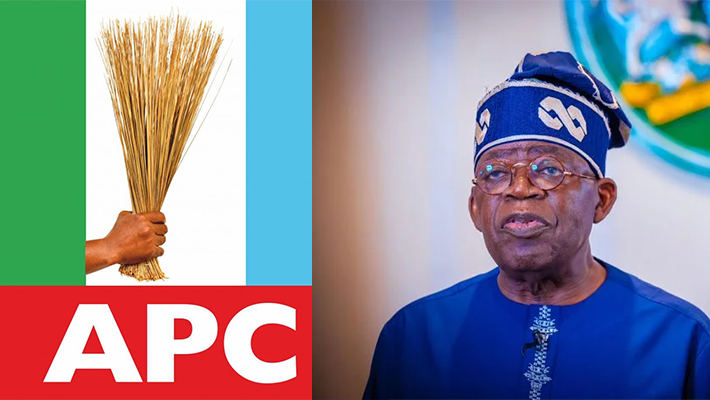
The composition of President Bola Ahmed Tinubu’s 2027 Presidential Campaign Council raises some fundamental questions about governance, institutional integrity and the increasingly blurred line between the Nigerian state and the ruling political party.
There is nothing unusual about a sitting President seeking reelection and putting together a strong campaign team. Neither is there anything wrong with a political party deploying its best hands to prosecute an election.
But there must be boundaries.
Some institutions of government are simply too sensitive to be dragged directly into partisan political activities without consequences for their credibility.
The appointment of Zacch Adedeji, Chairman of the Nigeria Revenue Service (NRS), as Deputy Director of Fundraising immediately comes to mind.
My concern is not whether Adedeji belongs to or supports the APC. That is hardly the issue. The problem is the office he occupies and the enormous powers that come with it.
The NRS collects taxes from individuals and businesses. Many of the same businesses and wealthy Nigerians from whom political parties traditionally raise campaign funds are taxpayers whose affairs come under the authority of the institution headed by Adedeji.
That creates an uncomfortable situation.
How freely can a businessman decline a fundraising request connected with the head of the country’s tax authority without wondering, even remotely, whether that decision could come back to haunt him?
Nobody needs to issue a threat. Nobody needs to promise a favour.
The mere perception is enough to raise questions about the credibility and neutrality of the institution.
This is why established democracies worry not only about actual conflicts of interest but also about the appearance of conflict.
In the United States, the Hatch Act restricts federal employees from using their official authority to influence elections and places strict limitations on partisan fundraising. Federal employees are also prohibited from knowingly soliciting political activity from persons having business before their agencies.
Imagine, therefore, the Commissioner of the American Internal Revenue Service being appointed into the fundraising arm of an incumbent President’s reelection campaign.
The controversy would write itself.
Canada provides an equally important example. Its approach goes beyond whether an official has actually abused his office. Public servants are expected to ensure that their political activities do not impair, or even appear to impair, their ability to perform their public duties impartially. The Canada Revenue Agency applies this same principle to its own employees.
That, to me, is the crux of the matter.
You do not have to establish that the Chairman of the NRS has threatened a taxpayer, demanded a political contribution or offered anyone preferential treatment before recognising the problem. Once the person responsible for administering the country’s tax system also assumes responsibility for raising money for the President’s political campaign, an avoidable question of perception has already been created.
Public institutions should not only be impartial. Nigerians must be able to believe that they are impartial.
Then there is the appointment of the Director-General of the National Identity Management Commission (NIMC), Dr. Abisoye Coker-Odusote, as Director of Data Management for the campaign.
This raises another serious question.
NIMC is the custodian of the identity information of millions of Nigerians. Nigerians supplied that information to the government for national identification, not for political purposes.
I am not suggesting that NIMC data has been or will be handed over to the APC campaign. There is no evidence before me to make such an allegation.
But why create the suspicion in the first place?
Why should the official custodian of Nigeria’s national identity database also be responsible for data management in a partisan presidential campaign?
There ought to be an unmistakable wall between the two.
The composition of the campaign council also raises questions about the message being sent by the inclusion of some individuals associated with unresolved corruption controversies.
Dr. Betta Edu readily comes to mind.
President Tinubu suspended her as Minister of Humanitarian Affairs and Poverty Alleviation in January 2024 following the controversy surrounding a request for ₦585 million of public funds to be transferred into a private account. The President subsequently directed the EFCC to investigate the matter.
Let me be clear: an allegation is not a conviction. Betta Edu is entitled to the presumption of innocence, just like every other Nigerian.
But that is not the point.
The question is much simpler.
If the matter was serious enough for the President to susp]end his own minister and order an EFCC investigation, what became of that investigation?
If she has been cleared, Nigerians deserve to know.
If she has not been cleared and the investigation remains unresolved, then her return to a prominent position as Director of Women Mobilisation in the President’s campaign naturally raises questions.
You cannot leave the public with an unfinished anti-corruption story and suddenly turn the page to political rehabilitation without explaining what happened in between.
There are other names on the council around whom similar questions may arise. Fairness, however, must remain important. Being accused or investigated does not make anyone guilty. Where matters are before the courts, the courts must be allowed to determine guilt or innocence.
But a President has another responsibility beyond determining criminal liability.
There is political judgment.
There is public perception.
And there is the credibility of the government he leads.
Surely, within a party as large as the APC, there are enough capable men and women to raise campaign funds, manage campaign data and mobilise voters without creating these unnecessary questions.
That is why I find some of these appointments difficult to understand.
Government officials participate in politics everywhere. Ministers campaign for their Presidents. Governors lead campaigns. Political appointees defend the governments they serve.
But there must be a distinction between political office holders and institutions whose effectiveness depends heavily on public confidence in their neutrality.
A minister campaigning for his President is politics.
The head of the national revenue authority helping to raise money for the President’s campaign is another matter entirely.
A party official managing voter mobilisation is normal politics.
The head of the institution holding the identity data of millions of Nigerians managing campaign data deserves closer scrutiny.
And bringing people carrying unresolved corruption controversies back into prominent political positions without explaining what became of investigations previously announced by the same government sends an unfortunate message.
This should not be reduced merely to whether any particular law has technically been broken.
It is about standards.
It is about institutions.
Most importantly, it is about trust.
The NRS must remain an institution to which every taxpayer can relate without wondering whether political considerations have entered the room.
NIMC must remain a repository of our personal information without Nigerians having the slightest reason to fear that their data could acquire political usefulness.
And when the government announces an investigation into alleged corruption, Nigerians deserve a conclusion, one way or the other.
President Tinubu should take another look at some of these appointments.
There is no weakness in correcting a decision that creates avoidable questions about the institutions of state. On the contrary, it demonstrates respect for those institutions.
In politics, what is permissible is not always prudent.
And in a democracy, public confidence is too important to be sacrificed on the altar of political expediency.
Femi Adefemiwa is a global Nigerian, public communicator, and advocate for good governance. He is the author of “Remote Working From Africa: A Practical Guide” and writes from the United States of America. He can be reached at jerome.adefemiwa@gmail.com.
The views, thoughts and opinions expressed in this article are solely belong to the author and do not necessarily reflect the official policy, views, opinions, or position of News Wings NG, its management, editorial team, or staff.