







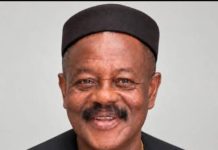

















by Pst Favour A. Adewoyin
Many of us must have heard about Vilfredo Federico Damaso Pareto (1848 – 1923), an Italian economist, engineer, and sociologist who was known for his Pareto Principle (also known as the 80/20 rule) and his contributions to economics and social sciences.
Simply put, the Pareto principle suggests that roughly 80% of effects come from 20% of causes to confirm that our world operates by the law of cause and effect, where sowing always precedes harvest. This principle of cause and effect is widely applied in economics, business, and various fields.
In this article, I use the Pareto principle to explain an important aspect of our lives that we don’t seem to take seriously. The important aspect of our lives that has suffered much indifference has to do with our attitude towards elections and voting during elections.
But before I talk about elections, permit me to first discuss the census in Nigeria to ascertain the demographic figures of our population. The last time Nigeria conducted a census was 2006. The planned 2023 census was postponed indefinitely by the administration of the former President Muhammadu Buhari to allow the incoming government to set a new date for the census.
However, in the absence of recent census data, various organisations have provided population estimates for Nigeria. The United Nations estimated Nigeria’s population at approximately 229.5 million as of July 2024. MacroTrends reported Nigeria’s population in 2024 as 229,152,217, reflecting a 2.39% increase from 2023. Statista estimated Nigeria’s population in 2023 at approximately 223.8 million, with around 112.68 million females and 115.21 million males.
These figures were based on projections and estimates, as official census data has not been updated since 2006.
Let us now use the estimate of 250,000,000 that many people have been saying is the population of Nigeria. Out of this figure, how many people registered to vote in the last elections of 2023 and how many actually voted? The Independent Electoral Commission (INEC), which is in charge, reported a total of 93,469,008 registered voters in the 2023 general elections.
This number was encouraging, but despite this high number of registered voters, voter turnout was very low. It was approximately 25,286,616 which represented 28.63 % (Premium Times) who cast their votes. But, interestingly, the 2023 election witnessed an increase in young voters’ participation as nearly 40% of registered voters were between the ages of 18 and 34, reflecting a growing political engagement among Nigeria’s youths (Wikipedia)
As we can confirm from the above statistics, the Pareto’s principle (or the 80/20 rule), which states that roughly 80% of outcomes come from 20% of the causes, has always played major roles not only in all our elections and; but, by extension, virtually in everything we do on earth as human beings.
As is always the case with the Yorùbá people of Southwest Nigeria who always have one proverb or the other for nearly every situation, which made them to conclude that proverbs are vehicles through which the lost words, ideas and concepts can be found (òwe l’ẹ̀ṣin ọ̀rọ̀), they beautifully captured the Pareto principle of 20/80, with the proverb “èèyàn péréte ní ṣè’lú”, which means: meaning, only few people always show commitment in community development.
But, on a closer consideration, this position that affirms that few people often get committed to community stands against the common political philosophy that opines that “politics is a game of numbers”, which suggests that population counts in politics. In other words, a winner must emerge in elections wherever there are large numbers of people.
But, on a very deep consideration, can we say this is true? Or, can we go further down to explore whether the Pareto principle can still hold its place when it comes to elections that have been associated with numbers? As this thought of going further flashed through my mind, a write-up that I read recently accompanied the flash as a possible material that can vividly capture the Pareto’s principle.
The story I read has to do with “Àkàrà” (bean-cake) and “ẹ̀kọ” (pap) and it goes thus:
Akara and Pap was a meal served for breakfast every morning in a hostel with a capacity of 100 people. Out of those 100 people, 80 people used to complain every day that different meal should be served instead. The remaining 80 people wanted something different for a change of taste. But, the other 20 people were happy to eat Akara and Pap.
Now, seeing this, the hostel’s Warden proposed a daily vote, as some decisions had to be reached given the chaotic situation. The Warden’s plan was that whichever team got the most votes the night before would determine what would be cooked the next day.
What happened was that 20 students who wanted Akara and Pap cast their vote accordingly, but every evening, the remaining 80 people cast their vote in a scattered manner as follows:
18 – Tea and bread.
16 – Egg Sauce and yam.
14 – Jollof rice.
12 – Spaghetti.
10 – Indomie.
10 – moimoi and pap.
With the above voting results, Akara and Pap got the highest number of votes every evening and, without option, the same was served the following morning.
There are many great lessons from this illustrative story of “Akara and Pap.” The number one lesson is that as long as 80% or the majority of the population is silent, selfish, divided, and scattered, indifferent, unconcerned, uncommitted, and lackadaisical about voting during elections, it is the 20% who constitute the minority that will continue to rule and exploit the majority.
Another related lesson we should pick is that there is power in unity, but not in numbers. We must never forget that a united minority is more formidable than a divided majority.
Finally, we must keep both the story of “Akara and Pap” and the lessons we have learnt from it always in our left palm, where we won’t eat with it. This is a silent message that should appeal to us with a view to put an end to our marginalisation and exclusion.
We must never forget that it is when we are united and give block-votes from all our towns and villages that we can get the good result that we desire. We must stop wishing things to happen, but work them out because “if wishes were horses, beggars will also ride”.
Pst. Favour A. Adéwoyin is a Writer, Community Developer, Content Creator, Youth Manager and General Secretary of Ẹgbẹ́ Àjọṣepọ̀ Fún Ìtẹsiwájú Gbogbo Wa.