
























Inflation in Nigeria took a further step back in February 2025, dropping to 23.18% from 24.48% in January. On a year-on-year basis, the inflation rate was 8.52% lower than the 31.70% recorded in February 2024. This decline was influenced by a relatively stable naira, lower petroleum prices, and the recent rebasing of the Consumer Price Index (CPI).
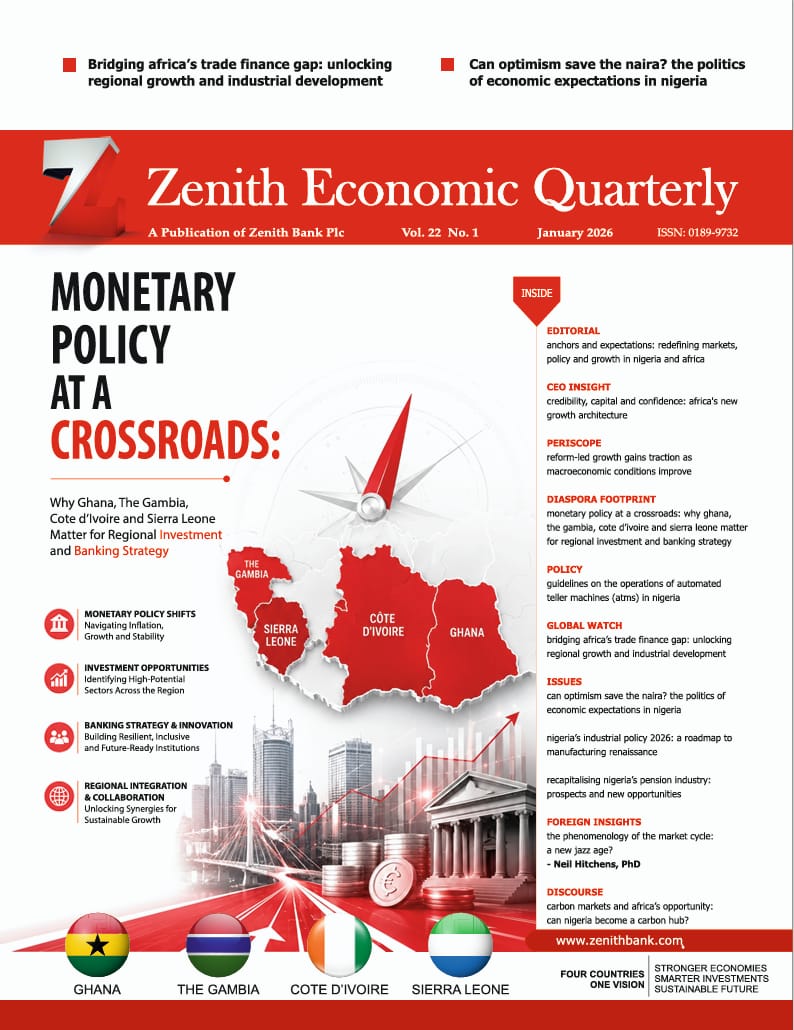 https://www.digital.zenithbank.com/ZEQ/ZEQ-jan-2026/index.html#p=1
Food inflation followed suit, dropping to 23.51% year-on-year from 37.92% in February On a month-on-month basis, food inflation stood at 1.67%, signalling a slight break in price pressures on staple foods.
Core inflation, which excludes volatile agricultural and energy prices, stood at 23.01% in February 2025, down from 25.13% in February 2024—a 2.12% decline.
The CPI rebasing played a major role in these figures, aligning inflation data with current spending patterns. While this adjustment helps make sense of price trends, it doesn’t erase the reality of high living costs. Beyond rebasing, inflation relief is coming from a slower month-onmonth price rise, cheaper key food items, and a steadier exchange rate keeping import costs in check.
The economy is showing signs of recovery, supported by a stable currency, lower food and fuel prices, and improving business sentiment, as indicated by the Central Bank’s PMI at 51.4. The CPI rebasing, the first in 16 years, reflects updated spending patterns but does not eliminate high living costs. Inflation remains a challenge despite the slowdown.

Fuel Prices Cool, Naira Holds Strong—Inflation Gets the Memo
The recent decline in headline inflation is linked to both naira stability and a reduction in Premium Motor Spirit (PMS) prices. A relatively stable exchange rate has helped contain the cost of imported goods, easing pressure on core inflation.
In February, the naira started at N1,491.25, peaked mid-month at over N1,510, and settled at N1,500.73 by month-end, according to Central Bank of Nigeria (CBN) data. Throughout the month, the naira hovered between N1,400–N1,500, providing some exchange rate stability.
The Dangote Petroleum Refinery has influenced fuel pricing through strategic price cuts, citing favourable global energy market conditions and declining crude oil prices. The refinery reduced the ex-depot price of PMS from N950 to N8904 per litre and then further the price was further lowered to N825 per litre, a N655 reduction aimed at easing consumer burdens and supporting
economic recovery policies.
Lower PMS prices have led to reduced transportation and logistics costs, contributing to downward inflationary pressure. The interplay of market deregulation and strategic pricing by major industry players like Dangote Refinery has introduced greater competition, benefiting consumers through lower fuel prices.
However, sustaining these gains requires continuous market oversight to prevent monopolistic pricing and ensure competitive dynamics remain intact. Additionally, while immediate inflationarymrelief is evident, policymakers must assess the long-term impact of fluctuating global oil prices and domestic market forces.
Also, the relative stability of the naira suggests improved forex liquidity, effective monetary policy interventions, and a better balance between forex demand and supply. However, maintaining this trend will depend on sustained foreign exchange inflows from oil exports, remittances, and foreign investments.
While inflation has slowed, core inflation remains elevated, indicating persistent cost pressures in non-food sectors. Any depreciation of the naira or external shocks could reverse recent gains.
In the near term, inflationary pressures are expected to decline, supported by naira stability, steady PMS prices, and a stable food supply—aligning with Comercio’s 2025 Outlook, which projects inflation easing to 15%-20% by mid-year. For now, inflationary pressures seem contained, thanks to naira stability, steady PMS prices, and a stable food supply. But risks are lurking. Telecom and electricity tariff adjustments and rising consumer demand during the Ramadan festive period could all trigger renewed price pressures in the coming months.
The naira’s fate—and Nigeria’s inflation outlook—will ultimately hinge on forex reserves, oil prices, and the CBN’s ability to keep monetary policy on course. Recent trends are encouraging, but inflation isn’t waving the white flag just yet.

Rate Cuts on the Horizon? MPC Weighs Its Next Move
The recent rebasing of Nigeria’s Consumer Price Index (CPI) has reshaped inflation dynamics, setting the stage for a pivotal Monetary Policy Committee (MPC) meeting. Throughout 2024, the CBN maintained an aggressive tightening stance, keeping the
Monetary Policy Rate (MPR) elevated to curb inflation. However, with recalibrated inflation figures now in play, monetary policy deliberations could take an unexpected turn.
As policymakers convene, the MPC may lean toward a dovish shift, particularly if the inflation decline is seen as a fundamental improvement rather than a technical adjustment. With the next meeting still two months away, the committee has time to assess inflation trends. If price moderation continues with minimal shocks, the CBN could move toward its first rate cut after a year of hawkish policy.
If inflation data remains moderate, the groundwork could be laid for a gradual policy pivot, signalling a shift away from the aggressive tightening that defined 2024. The May decision will be a test of whether the CBN sees inflation cooling as a sustainable trend—or just a statistical reshuffling.
Bottom line
Cooling inflation, naira stability, and lower PMS prices have eased price pressures, but risks remain. The Central Bank of Nigeria now faces a key decision—hold rates steady or make its first cut in over a year. While inflation appears to be moderating, long-term stability depends on sustained forex inflows, competitive market dynamics, and prudent monetary policy. The coming months will determine whether this disinflation trend is structural or temporary.