






















The Federal Government’s newly presented 2026–2028 Medium-Term Expenditure Framework (MTEF) signals a decisive shift toward more realistic, transparent, and credible fiscal planning. The document—presented by the Minister of Budget and National Planning, Senator Abubakar Atiku Bagudu—reflects a deliberate realignment of Nigeria’s budget framework in response to global uncertainties, domestic fiscal pressures, recurring revenue shortfalls, and anticipated pre-election year dynamics.
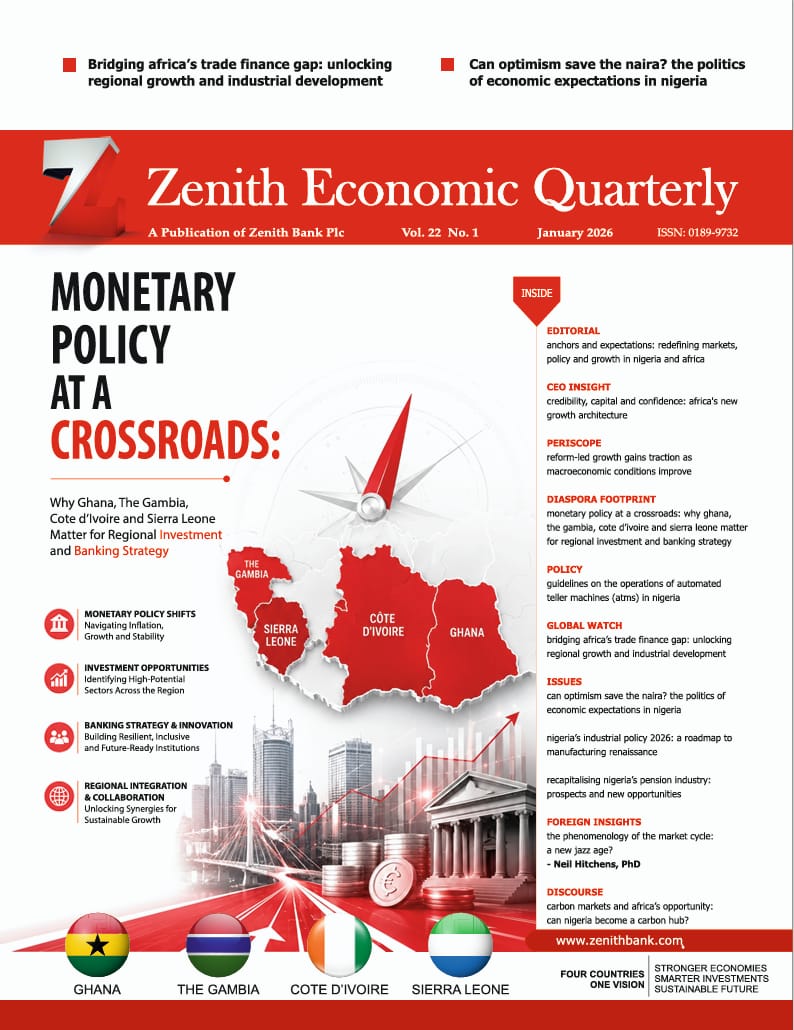 https://www.digital.zenithbank.com/ZEQ/ZEQ-jan-2026/index.html#p=1
The new MTEF adopts more conservative macroeconomic assumptions aimed at strengthening budget credibility, narrowing the gap between projected and actual outcomes, and reinforcing Nigeria’s long-term fiscal sustainability. Analysts, however, note that while progress has been made, further tightening of crude oil benchmarks is needed to safeguard the budget from volatility.
Shift Toward Realistic Revenue Assumptions
For several years, Nigeria’s fiscal performance has been undermined by optimistic revenue projections and unrealistic macroeconomic parameters. These flaws resulted in widespread implementation challenges and weakened public trust.
The latest MTEF reflects a departure from such practices. By embracing more realistic assumptions, the government signals its commitment to restoring the budget as a credible governance tool, rather than an annual procedural formality.
Improved Oil Production and Price Benchmarks
One of the most notable changes in the 2026–2028 MTEF is the introduction of dual oil production parameters:
- Technical Production Target: 2.06 mbpd
- Benchmark Production (for budgeting): 1.80 mbpd
This represents a more prudent approach when compared to the 2.06 mbpd benchmark used in the 2025 budget, especially given Nigeria’s persistent underperformance due to crude theft, vandalism, and operational constraints.
The oil price benchmark for 2026 has been set at $64.85 per barrel, lower than the $75 used in 2025. Although more conservative, it remains slightly above projections from global institutions such as the EIA, Goldman Sachs, and the World Bank, which forecast prices between $55 and $60 per barrel. Economic analysts recommend aligning Nigeria’s benchmark closer to $60 to enhance resilience.
Exchange Rate and Growth Outlook
The benchmark exchange rate of ₦1,540/$ reflects anticipated liquidity pressures linked to the 2026 election cycle and broader macroeconomic risks. While this may increase the cost of capital projects, it will also boost naira-denominated oil revenues, providing a more credible foundation for budget planning.
The GDP growth projection of 4.68% remains aspirational but does not distort revenue estimates.
Importantly, the 2026 revenue projection of ₦34.33 trillion—a 16% reduction from 2025 projections—signals a more grounded and fiscally responsible stance.
Debt Sustainability Remains a Key Challenge
Despite improved assumptions, debt servicing continues to exert significant pressure on Nigeria’s fiscal space. The MTEF allocates ₦15.91 trillion to debt service in 2026, representing 46% of projected revenues. This scale of debt burden constrains government spending in areas such as infrastructure, human capital development, and security.
Fiscal experts emphasize the need for urgent reforms focused on debt sustainability, enhanced domestic revenue mobilisation, and greater efficiency in public expenditure.
Delay in MTEF Submission
The Fiscal Responsibility Act requires the MTEF to be submitted to the National Assembly at least four months before the start of the fiscal year. The delayed submission of the 2026–2028 MTEF, therefore, limits the window for robust legislative review.
Timely submission is essential for enabling informed scrutiny, evidence-based debate, and seamless preparation of the annual budget.
The Role of the National Assembly
As the MTEF proceeds to legislative review, experts urge the National Assembly to uphold fiscal discipline by avoiding:
- Inflation of expenditure estimates
- Expansion of the budget without credible revenue support
- Reintroduction of unrealistic macroeconomic assumptions
Budget credibility, they note, depends on a cooperative commitment between the Executive and the Legislature to evidence-based fiscal governance.
Conclusion
The 2026–2028 MTEF marks a meaningful step toward institutionalizing fiscal realism, improving budget credibility, and aligning national expenditure with Nigeria’s implementation capacity. Sustained commitment to realistic assumptions, transparent planning, and disciplined spending will be critical to entrenching macroeconomic stability and restoring public confidence in Nigeria’s budget process.