






















The Centre for the Promotion of Private Enterprise (CPPE) has commended the Minister of Finance and Coordinating Minister of the Economy, Mr Taiwo Oyedele, for presenting an economic reform scorecard, describing the disclosure as an important step towards improving transparency, strengthening reform credibility and providing greater clarity on the fiscal and macroeconomic outcomes of ongoing economic reforms.
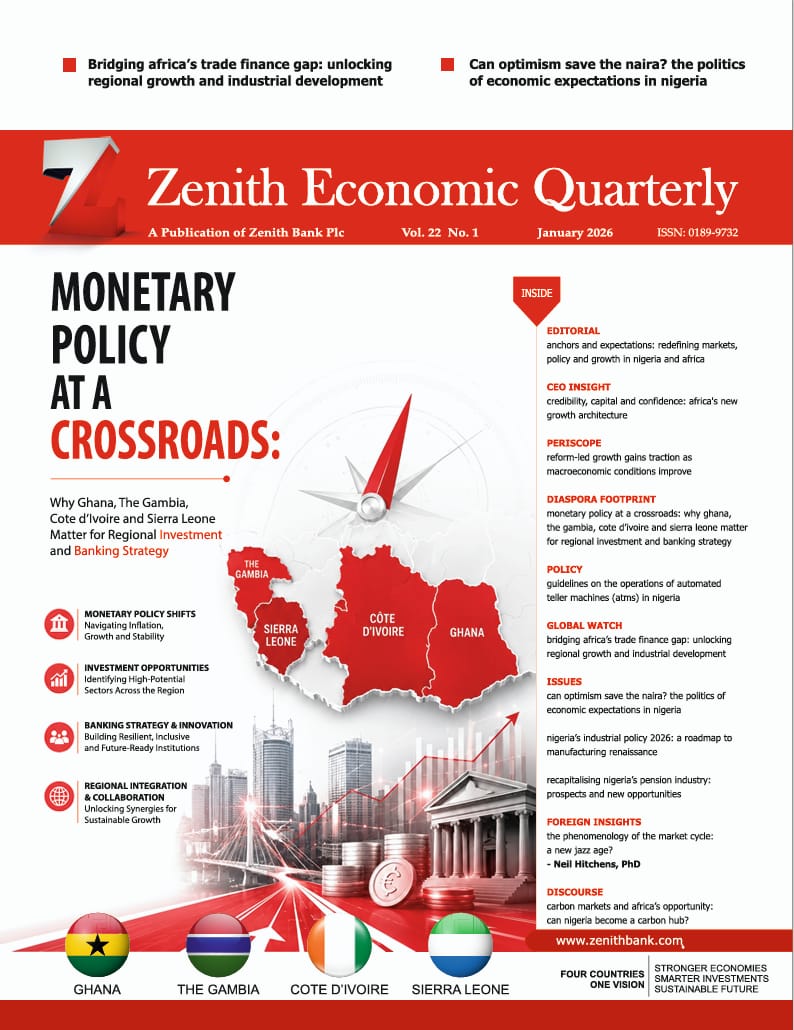 https://www.digital.zenithbank.com/ZEQ/ZEQ-jan-2026/index.html#p=1
The Chief Executive Officer of CPPE, Dr Muda Yusuf, said the presentation was particularly significant because it acknowledged both the gains recorded from the reforms and the adjustment costs borne by businesses and households.
According to CPPE, Nigeria has recorded measurable macroeconomic gains, including stronger government revenues, improved foreign exchange market stability, higher external reserves, an expanded trade surplus and renewed investor confidence.
The Centre also noted that real Gross Domestic Product grew by 3.89 per cent in the first quarter of 2026, compared with 3.13 per cent in the corresponding period of 2025.
However, CPPE stressed that macroeconomic stability should not be regarded as the ultimate objective of economic reform.
“Macroeconomic stability is a means, not an end. The real test is whether stability translates into higher productivity, stronger investment, more jobs, lower poverty and improved living standards,” the organisation stated.
CPPE observed that the transmission of macroeconomic gains into improved household welfare and business performance remained incomplete, as purchasing power continued to face pressure while businesses grappled with high energy, financing, logistics and regulatory costs.
The organisation therefore called for the next phase of reforms to focus more strongly on productivity, competitiveness and household welfare.
The Centre also noted that the reforms had significantly expanded the fiscal space of state governments through higher statutory allocations and improved internally generated revenue in many states.
CPPE said citizens should begin to demand measurable development outcomes from the increased revenues, particularly in critical areas such as roads, healthcare, public transportation, education, agricultural infrastructure, security, electricity and enterprise support.
It cautioned that increased revenues should not merely translate into higher recurrent expenditure or prestige projects.
“Higher revenues must produce a visible development and welfare dividend,” CPPE said.
According to the organisation, Nigeria’s next major reform challenge lies on the supply side of the economy.
It identified electricity, logistics, insecurity, agricultural productivity, infrastructure, regulatory costs and the cost of capital as critical structural constraints to investment and productive-sector growth.
CPPE expressed concern over the contraction of the electricity sector by 15.3 per cent in the first quarter of 2026, while manufacturing and agriculture grew by 3.29 per cent and 3.15 per cent, respectively.
The Centre maintained that accelerating growth in productive sectors would require deliberate efforts to reduce structural costs facing businesses and investors.
It also called for a trade policy framework that supports domestic productive capacity, including calibrated protection for industries and agricultural producers with credible local capacity against unfair import competition.
At the same time, CPPE said producers should have competitive access to critical inputs that are not adequately available within the country.
The organisation further expressed concern about the prevailing high-interest-rate environment, which it said remained a major challenge for businesses and investors.
CPPE called for stronger fiscal and monetary coordination as inflation moderates to create room for a gradual reduction in financing costs without compromising macroeconomic stability.
The Centre warned against any attempt to reverse the ongoing reforms, arguing that such a move could undermine investor confidence, weaken fiscal stability, destabilise the foreign exchange market and reintroduce economic distortions.
According to CPPE, reversing the reforms could trigger significant economic dislocations and erode gains already achieved.
Instead, the organisation called for the reform trajectory to be sustained while implementation strategies are continuously refined and recalibrated in response to emerging realities and evidence of their impact on businesses and households.
CPPE said the next phase of Nigeria’s economic reform agenda must focus decisively on translating improving macroeconomic indicators into real benefits for citizens.
“The next phase must move decisively from stabilisation to productivity; from higher government revenues to better development outcomes; and from improving macroeconomic indicators to tangible gains in jobs, incomes and living standards,” Dr Yusuf said.