

























The International Monetary Fund (IMF) has asked the Nigerian government to establish a more efficient tax collection system to broaden its revenue base.
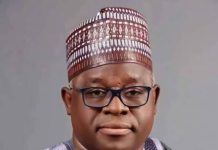
Mr. Davide Furceri, Division Chief, Fiscal Affairs Department of the IMF, expressed the Fund’s position while responding to a question on how Nigeria could best address its high debt service /revenue ratio at yesterday’s Fiscal Monitor press briefing at the ongoing IMF/World Bank Annual Meetings in Washington, DC.
He said that Nigeria’s debt service/revenue ratio was too high, leaving little resources for investments in programmes and projects that could grow the nation’s socio-economic development as fast as desired.
Though he said Nigeria’s Debt Service to GDP ratio has reduced from nearly 100 percent in the recent past to 60 percent, the IMF chief said the nation’s policymakers needed to focus more on revenue generation to further reduce the percentage of revenue that goes to debt servicing.
He stated, “There is a need to grow the revenue/GDP ratio. For a country like Nigeria, the Debt Service /Revenue ratio is about 60 percent. That means that a larger part of the country’s revenue goes into debt servicing. What we recommend for countries like Nigeria is that if they can improve their revenue mobilization, they will be able to reduce the portion of the revenue that goes into debt servicing.
“It is important to broaden the tax base in order to have more revenue and especially in Nigeria to put in place a system and mechanism that is transparent and efficient to assist the government in collecting more revenue.”
The federal government’s current debt service/revenue ratio is 68 percent, down from the 97 percent it inherited.