






















Nigeria’s inflation rate persists with its elevated trend for the 2nd month in H2, 2023. August’s numbers depict further strains in food production and distribution, with energy costs steadily dealing its hand in pushing headline inflation higher. While previously anticipating a slight relief with the ongoing Cassava and Green (maize and yam) Harvests in Southern Nigeria, heavy rainfall and floodings play the devil’s advocate against adequate harvest. Moreso, with the North in its cyclical lean season, food supply levels continue to be burdened. Along the same lines, prices of imported food items continue to skyrocket with Naira reaching N740 and N950 in the official window (NFEM) and the parallel market, respectively.
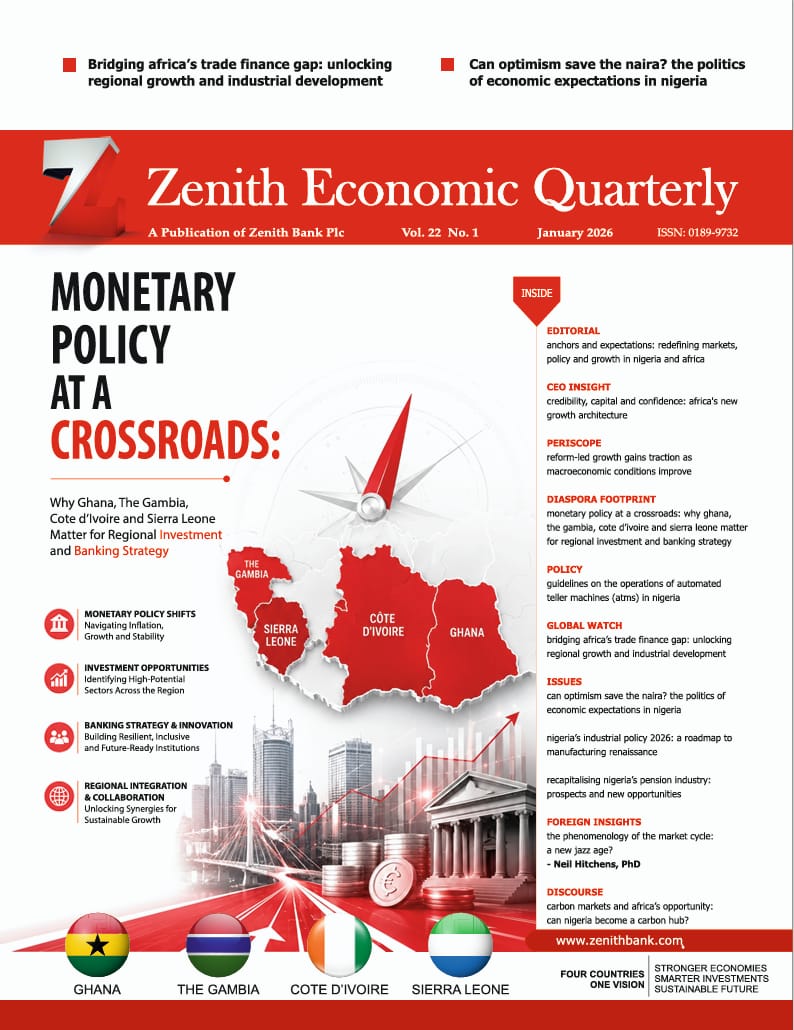 https://www.digital.zenithbank.com/ZEQ/ZEQ-jan-2026/index.html#p=1
Furthermore, while farmers face the brunt of harvesting food items, transportation of the said food items to markets pose another challenge. We see sustained ripple effects of the fuel subsidy removal continue to percolate into costs of goods and services alike. This attributes to heightened Core inflation figures.
While we persevere through the waiting period of improved oil production, products exports, security and bolstered FX investments, we envision Nigeria’s inflation outlook to remain upended in the ensuing months.