

























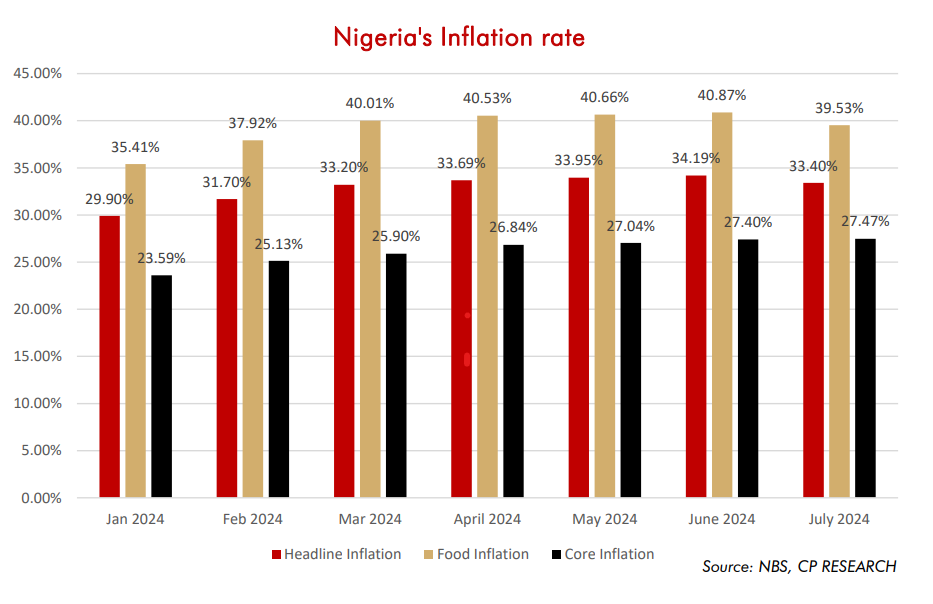
The latest inflation report for July 2024 marks a significant milestone in the nation’s ongoing economic battle against rising prices. The Headline Consumer Price Index (CPI) has recorded its first decline in 19 months, offering cautious optimism amidst persistent inflationary pressures.
In July 2024, the Headline CPI decreased to 33.40%, down from 34.19% in June, reflecting a 0.79% decline. This is the first time in nearly two years that the year-over-year inflation rate has shown a decrease, signaling a potential easing of the relentless price increases that have plagued the economy. On a month-to-month basis, the inflation rate also showed a slight decline, coming in at 2.28% in July, compared to 2.31% in June.
Despite the moderation in the Headline CPI, Core inflation, which excludes volatile food and energy prices, continued its upward trajectory, rising to 27.47% in July from 27.40% in June. Month-to-month, the Core Inflation rate increased by 0.10%, reaching 2.16% in July, up from 2.06% in the previous month. This uptick indicates that underlying inflationary pressures persist, highlighting deep-rooted economic challenges that require sustained and strategic policy interventions.
Food inflation, a major driver of overall inflation, showed signs of cooling, with the Year-over-Year Food Inflation rate declining to 39.53% in July, down from 40.87% in June. Month-to-month, food inflation also eased slightly to 2.47% in July, a 0.08% decrease from the 2.55% recorded in June. According to a survey by BusinessDay, this decrease is reflected in the significant drop in the price of a big basket of tomatoes in Lagos, which fell by 58% from N120,000 to N50,000. This decline in food prices has provided some relief to consumers, though the sustainability of this trend remains uncertain given the potential for seasonal fluctuations and other variables such as transportation costs and security issues in key agricultural areas.
The Central Bank of Nigeria (CBN) has been proactive in its efforts to curb inflation, notably through an aggressive 800 basis point increase in the Monetary Policy Rate (MPR) since February 2024. These measures have begun to yield results, as evidenced by the moderation in headline inflation. On the fiscal side, the Federal Government’s implementation of a 150-day duty-free import window for essential food commodities, including maize, husked brown rice, wheat, and cowpeas, has also played a crucial role in tempering domestic food prices. However, these interventions, while effective in the short term, are not without challenges. The temporary nature of the duty-free window raises concerns about the potential for a resurgence in food prices once the window closes.
Despite the positive developments, the persistence of high core inflation is particularly concerning. This suggests that inflationary pressures are deeply entrenched in the economy, driven by factors such as rising wages, strong consumer demand, and ongoing supply chain disruptions. Additionally, while the CBN’s tightening measures have helped moderate inflation, they have also led to slower economic growth, as businesses are more cautious in their investments, and consumers face higher borrowing costs.
The recent moderation in headline inflation is a welcome development, but the situation remains complex and fraught with risks. The Central Bank is expected to maintain its current monetary policy stance in the near term, although further rate hikes cannot be ruled out if inflationary pressures persist. Fiscal authorities have made important strides in addressing inflationary pressures in the short term, but a more comprehensive approach is needed for long-term stability. This includes targeted subsidies, improved infrastructure, and continuous monitoring to ensure that recent gains are not reversed.
While the road ahead is challenging, the recent decline in headline inflation offers a glimmer of hope. Policymakers must remain vigilant and committed to navigating the complexities of the current economic environment to achieve sustained stability and growth.