



























The National Bureau of Statistics (NBS) reported that the Consumer Price Index (CPI) declined to 15.06% in February 2026 YoY from 15.10% in January 2026, representing a 4 bps decrease from the prior month. On a year-on-year basis, the headline inflation rate was 11.21% lower than the rate recorded in February 2025 (26.27%). While on a month-on-month basis, headline inflation rose to 2.01% in February 2026, up by 489bps from -2.88% recorded in January 2026. This indicates that the average price level increased at a faster
pace in February compared to January 2026.
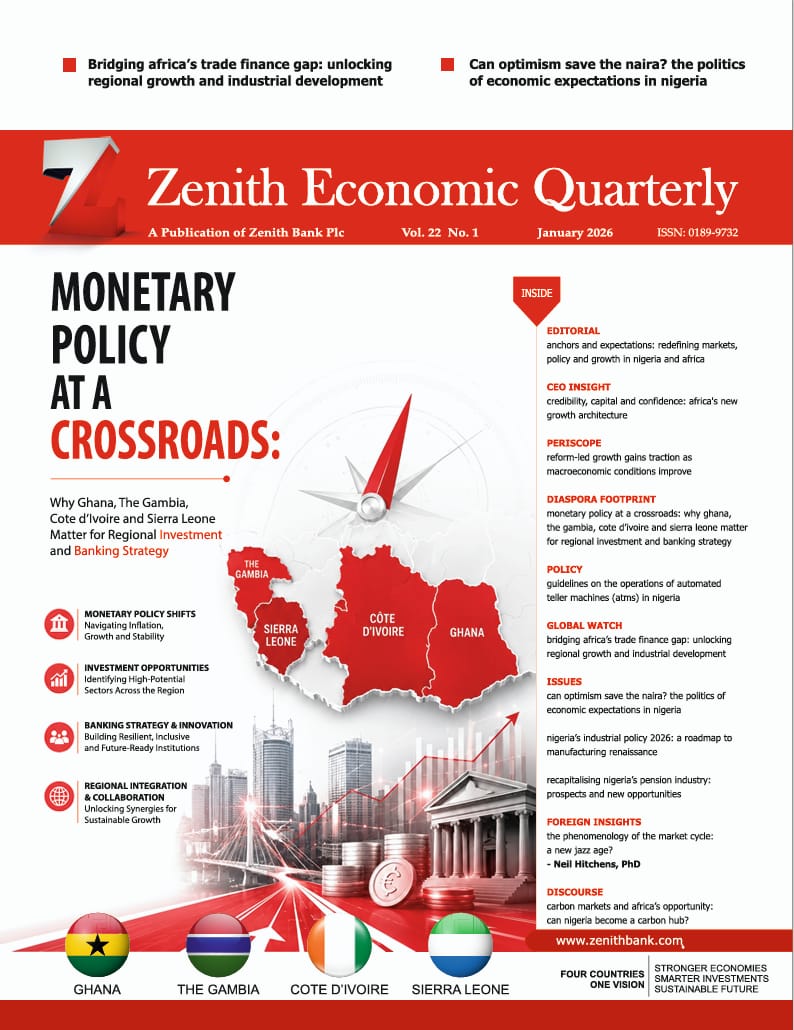 https://www.digital.zenithbank.com/ZEQ/ZEQ-jan-2026/index.html#p=1
The marginal decline was driven by moderation in both food and core inflation, which eased to 12.12% and 15.88%, respectively, from 26.98% and 25.66% recorded in February 2025. However, rising average prices of items such as beans, carrots, okazi leaf, cassava tuber, crayfish, millet flour, yam flour, snails, dried unground ogbono (Apon/Avenger), and cowpeas contributed to a month-on-month increase in food inflation, which rose to 4.69% in February 2026 from -6.02% in January 2026, reflecting a 10.70 percentage point increase.
Meanwhile, the Core Inflation rate was 0.89% in February 2026, up 2.58% from January 2026 (-1.69%) on a month-on-month basis.
All Items Inflation
In February 2026, the All-Items inflation rate on a Year-on-Year basis was highest in Kogi (23.57%), Benue (22.85%), and Anambra (22.09%), while Katsina (7.78%), Imo (11.66%) and Ebonyi (11.71%) recorded the lowest rise in Headline inflation on a Year-on-Year basis. On a Month-on-Month basis, however, February 2026 recorded the highest increases in Enugu (5.92%), Ogun (4.39%) and Anambra (4.11%), while Zamfara (-2.14%), Bauchi (- 1.23%), and Katsina (-1.06%) recorded a decline in the Month-on-Month inflation.
Food Inflation
In February 2026, Food inflation on a Year-on-Year basis was highest in Kogi (26.91%), Adamawa (23.12%), and Benue (21.89%), while Katsina (5.09%), Bauchi (7.09%), and Imo (7.65%) recorded the slowest rise in Food inflation on a Year-on-Year basis. On a Month-on-Month basis, however, February 2026 Food inflation was highest in Bayelsa (8.81%), Ebonyi (8.51%) and Edo (7.72%), while Katsina (-0.70%), Nasarawa (0.17%), and Kano (1.39%) recorded a decline in Food inflation on a Month-on-Month basis.
LOOKING AHEAD, inflationary pressures are expected to rebound in March 2026 as rising global crude oil prices and domestic energy costs feed into consumer prices. The escalation in tensions between the US/Israel and Iran has triggered a sharp surge in crude oil prices, with Brent moving from below $70/bbl to above $100/bbl, raising concerns over renewed imported inflation. Petrol (PMS) prices have risen from around ₦774/litre to over ₦1,200/litre, while diesel (AGO) climbed from about ₦950/litre to above ₦1,400/litre.
These increases are expected to drive up transportation, logistics, production, and distribution costs, with broad pass-through effects on both food and core inflation.
Consequently, we expect month-on-month inflation to trend higher in March, with the impact likely to be more pronounced in food prices, as haulage costs rise across key agricultural supply routes, and in core inflation, as manufacturers and service providers adjust prices to reflect higher operating costs. While the year-on-year headline rate may remain relatively contained due to base effects.