



























Nigeria’s ambition to become an industrial and globally competitive economy may remain elusive unless the country urgently addresses one of its biggest economic challenges—a financing gap that now exceeds ₦50 trillion, according to the Centre for the Promotion of Private Enterprise (CPPE).
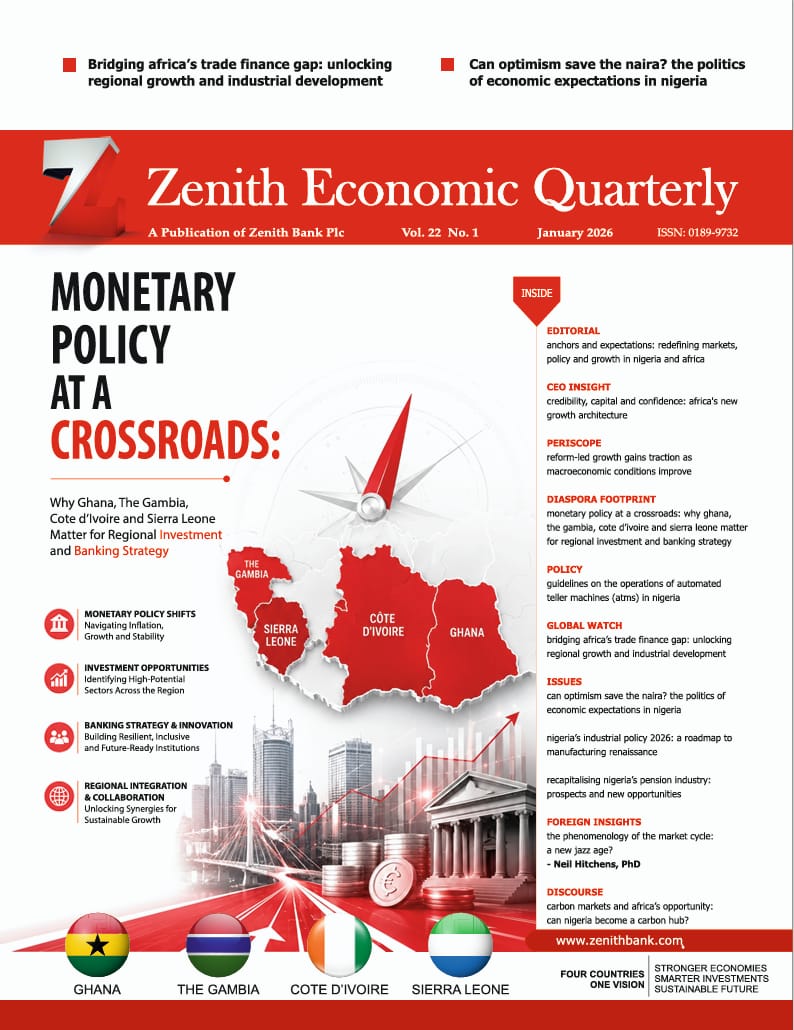 https://www.digital.zenithbank.com/ZEQ/ZEQ-jan-2026/index.html#p=1
In a policy paper, the private sector advocacy organisation argued that Nigeria’s productive sectors—including manufacturing, agriculture, agribusiness, export-oriented businesses and Micro, Small and Medium Enterprises (MSMEs)—are struggling under a financing system that is ill-suited to their long-term investment needs. The organisation believes the country needs a fundamental redesign of its development finance architecture to unlock sustainable economic growth.
The Financing Challenge
According to the CPPE, Nigeria’s real sector is constrained by a combination of prohibitively high lending rates, short loan tenors, stringent collateral requirements and inadequate access to patient capital. These challenges, it noted, go beyond liquidity shortages and reflect deeper structural weaknesses within the financial system.
The organisation estimated that the financing shortfall across manufacturing, agriculture, agribusiness, MSMEs, supply chains and export-oriented enterprises now exceeds ₦50 trillion. It observed that while agriculture contributes more than one-fifth of Nigeria’s Gross Domestic Product (GDP), the sector has historically received less than five per cent of commercial bank lending. Manufacturing, on the other hand, requires long-term financing for machinery, factory expansion, technology upgrades, energy infrastructure and export development—investments that cannot realistically be financed through short-term commercial loans.
High Interest Rates Deepen the Problem
The CPPE also linked the financing challenge to Nigeria’s current monetary environment.
With the Monetary Policy Rate (MPR) standing at 26.5 per cent and the Cash Reserve Ratio (CRR) for deposit money banks at 45 per cent, the organisation argued that commercial lending rates have become too expensive for many productive investments to remain viable. While acknowledging the Central Bank of Nigeria’s efforts to stabilise inflation and strengthen confidence in monetary policy, the CPPE maintained that macroeconomic stability should ultimately support investment, productivity, employment and sustainable economic growth.
According to the organisation, Nigeria must strike a balance between maintaining price stability and ensuring that businesses can access affordable long-term financing needed to expand production and create jobs.
Market Failures Demand Policy Action
Rather than advocating a return to indiscriminate intervention funds, the CPPE argued that Nigeria’s financing challenge stems largely from market failures that conventional commercial banking alone cannot resolve.
Commercial banks primarily mobilise short-term deposits, while sectors such as manufacturing and agribusiness require financing that can span five to ten years or more. In addition, many viable businesses struggle to secure loans because they lack traditional collateral despite having strong cash flows, inventories or purchase orders.
The organisation also pointed to what economists describe as “sovereign crowding-out,” where attractive returns on government securities encourage financial institutions to invest in government debt instead of financing productive businesses. It further stressed that manufacturing and agriculture generate broader economic benefits—including employment, food security, technology transfer, export earnings and foreign exchange conservation—that are often not reflected in traditional lending decisions.
Reform, Not Retreat
While recognising the governance challenges that affected previous intervention programmes, the CPPE insisted that those shortcomings should not justify abandoning development finance altogether.
Instead, it called for a modern, transparent and rules-based framework in which development finance institutions—not the Central Bank—play the leading role in lending, while the apex bank focuses on refinancing, risk sharing and creating incentives that encourage greater private-sector participation.
Nine Key Recommendations
To bridge Nigeria’s financing gap, the CPPE proposed a series of policy measures, including recapitalising and strengthening institutions such as the Bank of Industry and the Bank of Agriculture, expanding partial credit guarantees for manufacturers and farmers, establishing specialised long-term refinancing windows, promoting cash-flow and warehouse-receipt financing, improving credit information systems, mobilising pension and insurance funds for productive investments, reducing government borrowing from the domestic market, and strengthening governance and accountability in development finance programmes.
Development Finance and Inflation Can Coexist
The organisation also challenged the assumption that development finance necessarily fuels inflation.
According to the CPPE, a significant portion of Nigeria’s inflation is structural, driven by weak agricultural production, inadequate storage facilities, high logistics and energy costs, and dependence on imported inputs. Financing investments that expand productive capacity, it argued, would increase supply over time and help moderate inflationary pressures rather than worsen them.
The Way Forward
The CPPE concluded that Nigeria’s financing deficit is too large to be addressed by commercial banks alone. It argued that the country needs a transparent and commercially disciplined development finance framework where public institutions catalyse rather than replace private capital, helping businesses access affordable long-term financing without undermining monetary policy.
According to the organisation, closing the financing gap is essential to achieving Nigeria’s industrialisation agenda, boosting agricultural productivity, strengthening food security, diversifying exports, creating jobs and improving the country’s long-term economic competitiveness.