











Tag: Federal Ministry of Water Resources and Sanitation

  • NestlĂ© Nigeria Collaborates with the Government to Drive Nationwide Water Quality Campaign

    Nestlé Nigeria Collaborates with the Government to Drive Nationwide Water Quality Campaign

    As part of ongoing efforts to ensure safer water for all Nigerians, Nestlé Nigeria is partnering with the Federal Ministry of Water Resources and Sanitation to launch a National Water Quality Advocacy Campaign aimed at raising awareness, educating communities, and mobilizing multi-stakeholder action around water safety and sustainable water practices.

    The collaboration, announced in Abuja during a courtesy visit by NestlĂ© and members of the Organized Private Sector in Water, Sanitation, and Hygiene (OPS-WASH), reinforces the government’s commitment to advancing President Bola Ahmed Tinubu’s Renewed Hope Agenda through improved access to clean water and sanitation.

    At the meeting, the Honourable Minister of Water Resources and Sanitation, Engr. Prof. Joseph Terlumun Utsev, welcomed the partnership, noting its importance in tackling persistent public health threats such as cholera and diarrhea while also addressing challenges related to flooding and climate resilience.

    He assured the Ministry’s full support for Nestlé’s campaign and pledged timely collaboration to deliver impactful results. “The Ministry is committed to working with Nestlé Nigeria to improve water quality across the country. This partnership is in line with our mission to ensure safe water access and support the health and wellbeing of all Nigerians.”

    Speaking on the company’s role, Victoria Uwadoka, Corporate Communications, Public Affairs, and Sustainability Lead at Nestlé Nigeria, said:

    “Water is essential to life, yet millions of Nigerians remain at risk due to unsafe water sources. Our campaign is not just about raising awareness, it’s about shifting behaviors and building partnerships that deliver lasting impact. We’re working across communities, industries, and institutions to help close the knowledge gap, improve water safety, and support national health outcomes.”

    She emphasized that the campaign rests on three pillars: building awareness and knowledge, engaging stakeholders at all levels, and driving long-term, sustainable action.

    Providing additional perspective, Dr. Nicholas Igwe, National Coordinator of OPS-WASH, shared details of the initiative’s community reach:

    “We are taking a long-term, impact-led approach. In Abaji Area Council of the Federal Capital Territory, 16 communities will benefit from water quality interventions, while 8 communities in Agbara, Ogun State, are also included. In addition, two agricultural communities will receive water harvesting systems to support irrigation and food production.”

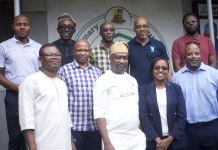
    The meeting was attended by senior officials from the Ministry and OPS-WASH, reaffirming cross-sector commitment to accelerating access to clean, safe water for all Nigerians.

  • Mitigating Food Crisis: Conlek CEO, Oluwaleke Toba, Speaks On Proposed 2025 African Regional Conference

    Mitigating Food Crisis: Conlek CEO, Oluwaleke Toba, Speaks On Proposed 2025 African Regional Conference

    As part of efforts to mitigate food scarcity, drought and to equally reverse struggles to cope with climate crisis and global economic downturn, local and international experts have expressed readiness to work out modalities on how to bring new lease of life to Nigerians and by extension, Africans.

    These experts through their collaborative and implementable initiatives with the Federal Ministry of Water Resources and Sanitation have developed strategies which would be revealed during the 6th edition of African Regional Conference on Irrigation and Drainage (ARCID), specifically designed to help farmers, government across board, private investors and other key stakeholders within the agricultural value chain to accelerate irrigation and dry season activities in order to improve livelihoods and boost food security in all the 6 geo-political zones in Nigeria.

    Reacting to the proposed conference, Oluwaleke Toba, the CEO of Conlek Enterprises Limited, an event managing company, saddled with the responsibility to officially manage the special-purpose conference through Nigerian National Committee on Irrigation and Drainage (NINCID), Oluwaleke Toba, in a chat with some media executives recently in Abuja said the conference on irrigation and how to improve planting season for better and optimum yields would kick off in FCT, Abuja, between 14th to 18th April, 2025.

    The Conlek Enterprises boss also used the opportunity to appeal to as many stakeholders as possible to key into the policy dialogue, while also shedding light on the fruitful action plans that will stem from it.

    He further stated that registration for the conference is already open to participants to book a space, noting that willing participants from all walks of life can log on to: https://6arc2025.org.ng/event/registration/

    He maintained that it was high time Nigerians took the bull by the horn and engaged in proper and informed decisions to rid hunger and sustain food security, while also combating every factor that could serve as an encumbrance to the set goals and agenda.

    He said: “Nigerians and all relevant stakeholders within the agricultural value chain are expected to be up in jubilation at a time like this just as the 6th African Regional Conference on Irrigation and Drainage (ARCID) is set to take place for four days between 14th – 18th April, 2025 in FCT, Abuja. Interestingly, expanding irrigation in Nigeria would allow farmers to sow seeds and grow crops during dry periods, extend the growing season beyond the traditional rainy season, and help Africa’s most populous country become more food secure and win the war against hunger and poverty.

    “According to the World Bank, the number of people suffering acute food insecurity increased from 135 million in 2019 to 345 million in 82 countries by June 2022, as the war in Ukraine, supply chain disruptions, and the continued economic fallout of the COVID-19 pandemic pushed food prices to all-time highs. Sadly the statistics is growing year in year out, we can not fold our hands but to use our God’s given talents and stem the tide of food insecurity, poverty and hunger which is what this proposed conference seeks to address in the nick of time. Willing participants from all walks of life can log on to https://6arc2025.org.ng/event/registration/ to secure their space.

    “More importantly, in order to mitigate the effects of climate change on food security, it is essential that governments and organizations take proactive steps to develop strategies for food production and access that can better withstand extreme weather events and climate variability.

    “These efforts should include investment in agricultural infrastructure, diversification of crops and food sources, food storage systems designed for long-term preservation, and training for local farmers on sustainable agriculture techniques. By taking actions today to address the impacts of climate change on food insecurity, we can ensure a future where food availability is not threatened by a changing climate.

    “Two billion people in the world currently suffer from malnutrition and according to some estimates, we need 60% more food to feed the global population by 2050. Yet the agricultural sector is ill-equipped to meet this demand; 700 million of its workers currently live in poverty, and it is already responsible for 70% of the world’s water consumption and 30% of global greenhouse gas emissions.

    “New technologies could help our food systems become more sustainable and efficient, but unfortunately the agricultural sector has fallen behind other sectors in terms of technology adoption. We obviously need to change the narrative in the larger interest of all and thankfully we now have officials in the saddle who are showing commitment and patriotism to nip the menace in the bud at the Federal Ministry of Agriculture and other Departments and Agencies within.

    “It may also interest you to know that the proposed seminar is taking participants beyond what they already knew in the past. For example, there are many types of irrigation systems used in Nigeria, including flood irrigation, also known as furrow or surface irrigation, this method involves flooding the soil with water through small trenches. It’s a popular choice in developing countries like Nigeria because it’s inexpensive and requires little technology.

    “We also have what is known as center pivot irrigation, otherwise known as the water wheel or circle irrigation system, this method uses a rotating equipment with sprinklers to irrigate large areas of land. It’s often used on large farms and allows for year-round farming.

    “Also, drip irrigation. This method uses a hose or pipe with emitters to deliver water directly to the roots of plants. It’s an efficient method that uses low water pressure and ensures that crops use water well.

    “Other types of irrigation systems used in Nigeria include, rain gun irrigation system, sprinkler irrigation system, and spray tube irrigation system. Some irrigation schemes in Nigeria include the Kano River Irrigation Scheme (KRIS), Bakolori Irrigation Scheme (BIS), Hadejia Valley Irrigation Scheme (HVIS), and Middle Rima Valley Irrigation Scheme (MRVIS). The seminar will extensively explore more opportunities that help to have a shift from what is currently existing and how to improve on them, explore new opportunities for better, optimum and sustainable yields which is what Nigeria currently needs and by extension the Sub-Saharan Africa.

    “With my informed understanding and based on research, food supply systems need to consider climate change at an individual and community level. Climate change has a direct and significant impact on food insecurity. As global temperatures rise, food production becomes more difficult and uncertain due to changes in weather patterns, extreme weather events, and other environmental disruptions.

    “These challenges have wide-reaching implications for food supplies around the world, as food production is impacted by rising temperatures, increased drought frequency, decreases in soil fertility, and crop destruction from floods or storms.

    “The effects of climate change on food security are particularly apparent in developing countries and can be seen in both the health of their citizens as well as the livelihoods of small farmers. When food availability is degraded due to changing climate conditions such as drought or flooding, there is a risk of malnutrition among vulnerable populations who struggle to access nutritious foods.

    “Moreover, food insecurity has a significant financial impact on farmers in these regions where drought is prevalent, as they are unable to generate enough income to meet their basic needs and/or pay for food-related inputs such as fertilizers or seed among other things. This African Regional Conference will essentially cater to all of these and I assure stakeholders that they surely will get value for their time, resources and attention for actively participating.

    “This is a rare opportunity and I implore every key stakeholder to tap into this for a positive turnaround. We also want the media to help us disseminate this information so that the awareness and participation would be huge in order not to miss the overall objective of accentuating food security and poverty eradication in our land, and we can all recall that this also formed part of the objectives of President Bola Ahmed Tinubu administration’s renewed hope agenda.”