












Tag: Mrs. Cecilia Bolaji Dada

  • Lagos State Partners with Amo Farm to Empower 50 Residents with 1,000 Noiler Birds, Boosting Economic Well-being and Food Security

    Lagos State Partners with Amo Farm to Empower 50 Residents with 1,000 Noiler Birds, Boosting Economic Well-being and Food Security

    In a commitment to empower residents and improve nutrition, the Lagos State Government, through the Ministry of Women Affairs and Poverty Alleviation, has partnered with Amo Farm Sieberer Hatchery Limited.

    This collaboration empowers 50 residents with 1,000 Noiler birds, offering a sustainable poultry solution to combat food insecurity, poverty, and malnutrition through a simple and accessible program.

    The Ministry’s initiative provides carefully selected residents from the Lagos State Social Registry with a toolkit for success. Each beneficiary received a start-up pack consisting of 20 five-week-old Noiler birds, 25kg of Amo Byng Grower Pellet, and a pack of Divertamin, a nutrient blend for optimal bird growth and production.

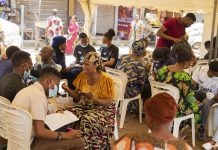
    The Noiler Empowerment program was among several presented at the micro-enterprise support ceremony hosted by the Commissioner, Ministry of Women Affairs and Poverty Alleviation, Mrs. Cecilia Bolaji Dada, on January 9th, 2024.

    The event held in Lagos was graced by distinguished guests, including the Deputy Governor of Lagos State, Dr. Obafemi Hamzat; First Lady of Lagos State, Dr. Claudania Ibijoke Sanwo-Olu; Commissioners of various ministries; Members of the State Executive Council; Permanent Secretaries; and others.

    With this empowerment project, beneficiaries received training on optimal bird care from Amo Farm’s National Sales Coordinator for Noiler, Olayinka Akorede. Noiler which is an innovation of Amo Farm not only offers a viable source of income but also provides an essential source of animal protein, particularly beneficial for children’s immune system, brain development, and overall health.

    Its hardy nature, delicious taste, and ability to thrive on kitchen waste make it perfect for low-resource farmers. Adaptable to diverse environments, the Noiler empowers communities by boosting food security, income, and sustainability. She further explained that the Noiler birds are Dual-Purpose for both egg and meat production.

    “The female Noiler will start laying eggs at 20-22 weeks, supporting their feeding and income generation,” explained Ms. Akorede. “The Male Noiler can be consumed at 14-16 weeks.”

    Amo Farm’s Business Development Manager, Mrs. Itoro Awala-Ale, further committed to assisting the Lagos State beneficiaries through extension services and support throughout their Noiler poultry ventures and they were each connected to a Farmer Satisfaction Representative. This builds on the company’s existing support of over 1.3 million small-holder farmers through Noiler farming.

    The Noiler bird’s rapid adoption of state empowerment programs is evident. Recently, Bauchi State partnered with an NGO to empower 300 women with 20 Noiler chicks each, while others have expressed interest in following suit.

    Amo Farm, led by Dr. Ayoola Oduntan and producing over a million chicks per week, remains dedicated to agricultural innovation that enhances food security and fulfills the nutritional needs of the people.

  • Nigeria and Nigerians must explore opportunities in the Digital Economy to eradicate poverty- Danbatta

    Nigeria and Nigerians must explore opportunities in the Digital Economy to eradicate poverty- Danbatta

    The Executive Vice Chairman/ CEO, Nigerian Communications Commission, Professor Umar Garba Danbatta on Thursday addressed the 9th Lagos Public Relations Stakeholders’ Conference on Leadership and Poverty Eradication.

    The EVC, represented by Mrs. Nnena Ukoha, Head, Corporate Communications, called on Nigerians to explore opportunities in the Digital Economy to eradicate poverty in the country.

    Speaking on the topic, Poverty Eradication in Nigeria: Leveraging Opportunities in a Digital Economy, he noted that ”For most developing countries, particularly those with large populations, inadequate infrastructure has made it difficult to participate as equal partners in the worldwide enterprise of knowledge production and dissemination.  This portends an unequal distribution of access, resources and opportunities in this new economy, the Digital Economy.  To avert the birth of a new type of poverty (Information Poverty), the ICT gap (digital divide) between the developed and developing nations must be bridged.”   

    That Nigeria like most developing nations is not enjoying the full benefits of the ICT revolution due to inadequate telecommunication infrastructure, capacity to maintain existing infrastructure, and policies for equitable public participation as producers and consumers of information and knowledge.

    “A nation’s development is measured in economic terms such as per capita income, Gross Domestic Product (GDP), and Gross National Product (GNP), among other indices. Indices such as level of literacy, social development, human capital development, cultural innovation and technological preparedness are not regarded as a measure of development.  If we must tap into the ICT revolution, then it is time for a paradigm shift!  The traditional economic terms are not a reflection of the new age of the Digital Economy “he said.

    On efforts made by the Nigerian government, “There are several past and ongoing efforts by the Nigerian Government to alleviate poverty through ICT using organizations and programmes like the National Information Technology Agency (NITDA), using the offices of the Nigerian Postal Service (NIPOST) across the country as ICT hubs, the Universal Service Provision Fund (USPF) to ensure that telecommunications services are accessible to the widest number of people (and communities) at affordable prices.   USPF has poverty-reducing activities like the Community Resource Centers, USPF Hackathon, RUBI Rural Broadband Initiative,  UnICC University InterCampus Connectivity,  BTS Base Transceiver Stations, IRC Information Resource Centres, SKC School Knowledge Centres, and the EHealth Project. “

    The EVC said that “NCC will continue to support the vision of the present government to put Nigeria amongst the top twenty in the comity of Nations and to align our developmental goals in keeping with the seventeen United Nations Sustainable Development Goals (SDGs) but particularly the goal to eradicate extreme poverty for all people everywhere which is currently measured as people living on less than $1.25 a day, by year 2030. 

    He listed initiatives at the NCC directly or indirectly target poverty eradication to include;

    “Advanced Digital Appreciation Programme: Transforming the Academics: Advanced Digital Appreciation Programme for Tertiary Institutions, ADAPTI is aimed at bridging the digital divide existing in academia with the provision of computers and other ICT facilities to equip the lecturers and other experts in order to improve ICT skills and also to enrich the students. The overriding objective of this intervention has been to elicit the pervasive application of ICT skills in academia for enhanced staff output, institutional efficiency, and student enculturation to e-based learning for sustainable national growth.” 

    “Digital Awareness Programme (DAP): this is a special intervention programme to address the digital information knowledge gap in the country, especially among the teeming youthful population.  On the last count, the DAP Project supports 229 Secondary Schools across the Six (6) Geopolitical Zones of Nigeria, including the Federal Capital Territory. The strategy in this programme is to expose schools and colleges to Information and Communications Technology (ICT) awareness, usage and application by facilitating access to ICT tools by the provision of twenty-one (21) Desktop Computers, Local Area Network, Printers, Scanners, VSAT Dish and deployment of one Year Bandwidth Subscription for Internet Access.”

    “NCC- Digital Bridge Institute (DBI) Projects: Nigeria’s ICT flagship institution, the Digital Bridge, DBI, came into existence in 2004 to impact on the national ICT human capital building efforts by bridging the ICT knowledge gap.” 

    “Frequency Auction: Contributing to National Purse: The Nigerian telecom regulator has contributed to the Federation Account from proceeds of frequency auctions and licensing. The frequencies auctioned, are in turn used for the deployment of services for poverty reduction and the benefit of the citizenry. The Commission has a clear understanding of this value chain and is determined to uphold it. “

    “Value Added Services (VAS): Telecommunication has given birth to several value-added services that open up benefits to all cadre of people irrespective of location and level of education. These VAS are great channels for revenue generation. Some VAT are content development, Phone repair network, IT device accessories sales market (phone pouches, screen covers etc), Ringback tones, and even government agencies providing service on telecom platform e.g NAFDAC – drug authentication code. “

    On broadband and poverty , “The Nigerian National Broadband Plan 2020–2025 (the “Broadband Plan”) devotes an entire section to targets, strategies and roadmaps to promote pervasive broadband deployment, increased broadband adoption, usage and availability to all at affordable prices.  These all point to government’s commitment to harmonizing and utilizing the benefits derivable from ICT for the good of all. “

    “In 2020, the latest National Broadband Plan was approved to foster fuller economic exploitation of ICTs. This means that there will be more pervasive deployment and usage of ICT to push the development and economic attractiveness of the nation.”

    He assured that The Federal Government of Nigeria is committed to sustainable development of the ICT subsector for the growth of the economy and the eradication of poverty.  “This was made evident during the just concluded Communications sector retreat where the Ministry of Communications and the agencies under it converged to chart a five-year plan that would make communications services, affordable, accessible, and available to all persons in Nigeria.”

    He concluded that “The credit for Nigeria’s ambitious broadband pursuit is traced to the potentials and prospects of broadband technology, the ease of deployment and the vast opportunities available through it.  The Commission will continue to put strategies in place to pursue the last mile deployment of broadband. This would ensure small businesses are positioned to compete globally and communities and individuals are able to create wealth through access to ICT.”

    “By providing access to information, making markets more efficient, fostering social inclusion, and equalizing opportunities in rural areas, ICT offers an innovative and unprecedented tool to directly reduce poverty.”

    Other speakers at the event include; Founder and Chairman, Heirs Holdings, Mr. Tony Elumelu; Mr. Segun Ajayi-Kadir, Director General, Manufacturers Association of Nigeria (MAN); Sheila Ojei, Director Strategy, Funding and Stakeholders Management, LSETF; The Commissioner for Women Affairs and Poverty Alleviation, Lagos State, Mrs. Cecilia Bolaji Dada and Dr. Oluseye Ajuwon, Economist and Consultant, University of Lagos.