












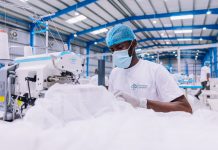










In 2024, Africa’s manufacturing sector faced a lot of macroeconomic hurdles that significantly affected its performance. These include high inflationary pressures, rising interest rates, unstable international commodity prices, persistent strengthening in the US dollar, limited infrastructures, low foreign direct investment inflows in manufacturing, high tariffs, and lingering conflicts in several African countries.
Despite the tough environment, some countries like Morocco, South Africa, and Egypt still showed a bit of resilience due to a diversified industrial base. Based on the African Development Bank report, manufacturing contributes around 11% to Africa’s GDP in 2024. The contribution was driven mostly by agro-processing (Nigeria, Kenya), automotive (Morocco, South Africa), and pharmaceuticals (Egypt, Rwanda). Nevertheless, African manufacturing value-addition notably slowed behind the global average in the past year, with expected improvement in the current year but below the pandemic period.
Manufacturing Production
Africa remains highly vulnerable to both domestic and global economic shocks. The absence of proactive policy responses exacerbates the impact of these shocks, leading to long-term consequences for the continent’s economic performance and growth prospects. Structural weaknesses including a low industrial base continue to hinder Africa’s manufacturing sector. Weak global demand further weighed down the continent’s industrial output and export performance.
In the first quarter of 2024, Africa’s share of global manufacturing output stood at 1.9%, with a marginal growth rate of 0.1% compared to the same period in 2023. Available data showed the output increased slightly, reaching a growth rate of 0.2% in the third quarter. However, the growth pattern was largely heterogeneous across countries. Egypt (0.3%), Nigeria (0.7%), and Rwanda (2.6%) recorded positive growth. However, Senegal (-0.6%) and South Africa (-0.9%) experienced declines in output compared to the previous quarter according to the UNIDO World Manufacturing Production Report.
Africa’s Manufacturing Sector in 2025
There are signs of performance improvement and better strategic opportunities for Africa’s manufacturing sector in 2025, supported by growing investment in local production, deeper regional market integration through tighter implementation of initiatives like the AfCFTA, and broader adoption of human-machine collaboration.
However, key risks remain as some persistent challenges from 2024 are expected to linger amid rising new hurdles like stricter sustainability regulations and escalating costs buoyed by factors including freight rate spikes, requiring bold innovation and strategic adaptation, and collaborative efforts to sustain growth and build resilience. In particular:
- the manufacturing sector is expected to grow moderately in 2025, driven by increased regional integration buy-in, technological upscaling, increased investor confidence, growing investment interest in local production, and a renewed push for zero-defect manufacturing to reduce waste and improve efficiency.
- While Africa will remain among the least exposed to the emergence of the protectionism wave in US international trade policy, we strongly expect the US-China trade tensions to fuel foreign investment inflows in Africa, with a focus on automotive, textiles, and electronics manufacturing.
- We expect Africa’s cross-border value chains to expand, particularly in agro-processing, textiles, metallics, and automotive.
- Many countries, including Egypt, Rwanda, Nigeria, and Angola are likely to experience upward trajectories, with manufacturing growth rates projected to be strongly positive throughout the year on overhauled investment policies and improved regulatory reforms. But, we expect slower manufacturing growth in countries facing severe conflict, including the DRC.
- Also, export price inflation of manufactures is expected to decline significantly especially in the second half of the year as global disinflation continues to feed deeply into the system.
- However, persistent inflationary pressures in countries like Zimbabwe (projected at 35%) and Nigeria (around 24.5%) could continue to erode purchasing power and demand for manufactured goods.
- Additionally, countries such as Nigeria, Egypt, and Ghana may continue to report elevated borrowing costs above 25%, limiting access to financing for capital investments particularly by the Small and Medium-size industries.
- FDI inflows into Africa’s manufacturing sector are projected to grow modestly by around 4% in 2025, as global investors seek opportunities amid improving economic conditions and the potential spillover effect of the trade shift in the West towards Africa. However, the geopolitical landscape and ongoing conflicts will still pose risks that could deter potential investors to key sectors of interest.
- We expect sea freight prices to rise above 2024 on the rising risk of shipping activities in key international sea routes, including the Red Sea due to escalating geopolitical conflicts and terrorism. However, the spillover effect of the anticipated decline in global energy and commodity prices may moderate its effect on Africa’s manufacturers.
Policy Tips
African government should:
- strengthen regional integration and industrial policies vis-à-vis:
- intensify efforts in addressing non-tariff barriers, improve customs procedures, and harmonise trade regulations.
- Provide incentives for manufacturers to invest in digital technologies, automation, and AI-driven production to boost competitiveness.
- Increase investment in cross-border infrastructure, such as roads, railways, and digital connectivity, to facilitate trade.
- Ensure they foster a conducive environment for private sector investments in the industrial sector.
- address inflationary pressures and high borrowing costs by:
- enhance production, stabilise the exchange rate, and efficiently link rural to urban to aid low-cost raw materials supply to industries.
- Strengthen central bank policies to control inflation in high-risk countries like Nigeria and Zimbabwe, and establish low-interest loan schemes for SMEs in the manufacturing industries.
- Attract Foreign Direct Investment (FDI). Create a favourable investment climate by improving ease of doing business, offering tax incentives, and provide guarantees against political risks to attract global investors.
- Diversify trade routes and invest in alternative transportation infrastructure to reduce dependence on high-risk sea routes like the Red Sea. Also, scaling up the regional air freight and rail networks to complement sea freight.
- Prioritize infrastructure improvements, particularly in transportation and energy, to support efficient manufacturing operations.
- Pool resources together to provide targeted support to countries facing severe conflict, such as the Democratic Republic of Congo (DRC), to stabilize their economies and revive manufacturing activities.
- Provide export subsidies and tax rebates for key manufacturing sectors and offer incentives for companies relocating production facilities to Africa.
- Additionally, Africa’s manufacturers should leverage the African Continental Free Trade Area (AfCFTA) framework to reduce dependency on imported raw materials that can be sourced within the African market.
Pan-Africa Manufacturers Association (PAMA) to Showcase Africa’s Manufacturing Potential at IATF2025 in Algiers!
Are you in the Small and Medium-scale Manufacturing Industries (SMIs) category?
PAMA is proud to announce its participation in the 4th Intra-African Trade Fair (IATF2025), taking place in Algiers, Algeria, from September 4 to 10, 2025, with a special consideration/discount for SMIs. IATF is the premier platform for promoting intra-African trade and unlocking the continent’s economic potential.
As the lead voice of Africa’s manufacturing sector, PAMA will showcase the innovation, resilience, and competitiveness of African manufacturers. From cutting-edge industrial solutions to high-quality made-in-Africa products, our pavilion will highlight the transformative role of manufacturing in driving sustainable development and economic integration under the African Continental Free Trade Area (AfCFTA).
Why Attend IATF2025 With PAMA?
- Explore opportunities: Connect with industry leaders, policymakers, and investors to forge partnerships and expand your market reach.
- Showcase excellence: Highlight your products and services to a pan-African and global audience.
- Drive growth: Leverage the IATF2025 with PAMA networks to access new markets and opportunities.
Join us at IATF2025 as we champion the future of African manufacturing and work together to build a prosperous, integrated, and self-reliant Africa.
- Africa Has Too Many Businesses, Too Little Business – The Economist
African policymakers love to champion their continent’s entrepreneurs. For Paul Kagame, Rwanda’s president, small and medium enterprises are the “backbone of Africa’s economy”. “We must support the youth to go beyond looking for jobs,” says Akinwumi Adesina, the head of the African Development Bank (AfDB).
Such bigwigs like to point to data that seem to show how unusually entrepreneurial Africa is. The African Youth Survey, a regular poll, suggests that 71% of young Africans plan to start a business. Male leaders also like to congratulate themselves on how more than a quarter of adult women have started, or are starting, a business—the highest share of any continent, according to data cited by the AfDB.
Yet much of this praise amounts to misplaced virtue-signalling. Though there are African entrepreneurs founding innovative startups in everything from fintech to commercial agriculture, running a business is often the result of desperation, not choice. To close the gap with the rest of the world, Africa does not need more small businesses. It needs more large ones. Large firms are productivity powerhouses. They bring people, ideas, technology and equipment together in ways that make workers more efficient, which makes people richer.
McKinsey estimates that there are 345 firms in Africa with revenues over $1bn (China has about 1,500). Yet the consultancy noted in a report in 2018 that, excluding South Africa, Africa has only around 60% of the large firms one would expect, given the overall size of the countries’ economies.
Those large firms are also not as large as the ones found in other emerging regions. Taken together, adds McKinsey, the total revenue pool of African firms (excluding South Africa) is “about a third of what it could be”. Africa is the only inhabited continent without any of the world’s 500 biggest firms, as compiled by Fortune, a magazine.
Instead of many large firms with salaried staff, Africa has lots of micro-enterprises. The two most commonly cited obstacles are capital and electricity
The World Bank surveys firms from around the world about what they see as their biggest obstacle. The results point to something akin to the business version of Maslow’s hierarchy of needs. In sub-Saharan Africa the two most commonly cited obstacles are the basics every growing firm needs: capital and electricity. In each case firms from the region are more likely to cite these barriers than those anywhere else. (A lack of “educated workers” is one of the least commonly cited obstacles in sub-Saharan Africa.)
Access to finance is the main constraint cited by firms. Less than 10% of those with under 20 employees use bank financing. Making Finance Work for Africa, an NGO, reckons that just 20% of all firms have a bank loan or a line of credit, the lowest share of any continent. The ratio of credit to GDP in sub-Saharan Africa is half of that found in South Asia and Latin America.
Small wonder when it costs so much to borrow. The average lending interest rate (the rate banks charge firms to meet short- and medium-term needs) for the 19 African countries for which the IMF had data in 2023 was 25%. In India and Vietnam, it was around 9%. In some African countries business people face even higher rates.
On a visit to Accra, our correspondent visited Muina Wosornu, founder of Prête Cashews, a snacks firm. She has relied on financing from friends and family. Asked how much it would cost to take out a bank loan, she calls up a banker who says, over the speakerphone, that it would be six to ten percentage points above the base rate, which at the time was 29%.
One reason for high rates is a lack of competition among banks. Their net-interest margins are the highest of any region. Research by the IMF shows that markups in sub-Saharan Africa are on average 11% higher than in other developing regions, suggesting that firms have outsize market power and are shielded from competition from startups.
Rates would also be lower if there were more savings to go around. But the domestic savings rate in sub-Saharan Africa from 2010 to 2021 was just 19%, against 37% in East Asia. This is partly a demographic story: when fertility rates are high there are more mouths to feed and less money to save. But some analysts caution that in parts of Africa, savings rates have remained low even as fertility rates have dipped, suggesting that other factors matter, too.
Stagnant economies do not help. Neither does a rational aversion to saving cash in countries with histories of high inflation or, as was recently the case in Ghana, state-enforced restructuring of pensions because of a debt crisis. Many Africans continue to see land and property (and in some cases cattle) as more reliable places to store wealth.
Though the rise in fintech firms should make it easier to save, the shallowness of capital markets means there can also be a lack of investment options. On a recent trip to Angola your correspondent sat in on a talk by a young investor who pitched to his peers on investing in the local stock exchange. It will be hard for them to diversify their portfolios, though: there are only four listed firms.
Then there is electricity, the second most commonly cited obstacle. Energy for Growth Hub, another think-tank, found that 78% of firms in Africa experienced annual power cuts in 2018, and that 41% identified electricity as a major constraint to their operations, the highest of any region. African firms lose on average the equivalent of 25 days of economic activity a year through power cuts.
Justice Mensah of the World Bank last year estimated that Ghana’s power crisis of 2013-16 increased the unemployment rate by five percentage points, because it stunted incumbents and made it harder for new businesses to get started. Other research shows that firms in poor countries subject to power cuts have lower productivity growth than those with a steady supply, because it stops them using their capital equipment.
Inadequate infrastructure also matters. The cost of transporting goods in Ethiopia and Nigeria, for instance, is 3.5 and 5.3 times that of America, according to analysis by David Atkin and Dave Donaldson, two economists. Sub-Saharan Africa has a road density of only about a fifth of the global average, and only about a quarter of roads are paved. When markets, domestic or regional, are poorly integrated, firms’ growth prospects are constrained.
To see the difference in good infrastructure, visit Vertical Agro, a processing firm in Kenya. It just became the first company anywhere to sell frozen avocados to China, an achievement that would have been impossible without reliable electricity for freezing. (That electricity, like most of Kenya’s, is from renewable sources, which should also help the firm export frozen vegetables into regions implementing cross-border carbon taxes, such as the EU). Being located near farms, major roads, a railway and Nairobi’s airport means goods can get to market swiftly. “If you come back in 25 years this whole valley will be full of factories,” says Tiku Shah, the firm’s boss.
Other research points to the role of market frictions in keeping African enterprises small. A study in Uganda found that when farmers were given a digital platform that allowed them to sell their goods to a wider group of buyers, they increased their revenues. It is no coincidence that some of the biggest conglomerates in Africa today, including Dangote, a Nigerian company run by Aliko Dangote, Africa’s richest man, started out as trading firms. Having access to granular market intelligence when information is scarce allowed them to build businesses serving demands about which others did not know.
Yet boosting the size, number and productivity of African firms is not simply a case of overcoming market failures. Business in Africa can be highly political, in ways that undermine the continent’s growth.
Key Lessons for African Manufacturers and Government
- Scale businesses beyond micro-enterprises for impact: African manufacturers need to transition from micro-enterprises to larger, scalable firms. Unlike micro-enterprises that are limited in resources and scope, larger businesses tend to integrate technology, attract investments, and foster industrial efficiency to drive growth. For example, successful African conglomerates like Dangote leveraged size to dominate markets.
- Invest in infrastructure: Poor infrastructure, particularly energy and transport systems, remains a major constraint. Reliable power and efficient logistics networks are essential. Kenya’s Vertical Agro demonstrates the value of good infrastructure, enabling it to export frozen avocados to China. African governments must prioritise investment in infrastructure to lift Africa’s manufacturing industries.
- Access affordable financing: With interest rates averaging 25% across Africa, access to finance is a critical bottleneck. Manufacturers must join hands together to advocate for financial reforms, explore alternative financing like venture capital, and foster a savings culture to ease borrowing constraints.
- Adopt sustainable practices: Global markets are increasingly rewarding eco-friendly manufacturers. Investing in renewable energy and adopting green production processes can improve marketability. Kenya’s renewable-powered exports to the EU set a strong example for African industries
- Focus on market intelligence: Manufacturers should invest in data and analytics to understand market trends, consumer needs, and competition. Access to accurate market intelligence has helped companies like Dangote identify untapped opportunities and expand operations
- Mozambique’s Post-Election Unrest and Economic Impacts: A Closer Look at Business Operations and Manufacturing Activities
Mozambique’s post-election unrest and the devastation caused by Cyclone Chido have severely impacted the country’s business environment, trade activities, and manufacturing sector. The politically motivated protests have further fueled chaos. More than 300 people have been killed, hundreds of businesses looted and groups of vigilantes are terrorising neighbourhoods. In December, over 1,500 inmates escaped from a prison in Maputo. Key sectors such as trade, transportation and services have been hit particularly hard and 1,200 jobs have been lost according to a local report.
One of the sectors hit hardest is mining, a critical pillar of Mozambique’s economy. However, the manufacturing sector too has faced challenges due to the ongoing instability in the country. Many businesses in Mozambique are currently on edge due to unsteady access to raw materials, and disruptions in trade routes and supply chains hurting production and distribution networks. The heightened security risks associated with the unrest have caused many manufacturers to scale back operations, affecting both output and employment in the sector.
The local business environment has been further affected by the uncertainty surrounding government policies, particularly regarding new government leadership following the political transition. This lack of clarity has slowed investment in the manufacturing industry, with many businesses taking a wait-and-see approach until the political situation stabilises.
Despite the challenges, the IMF remains cautiously optimistic about Mozambique’s medium-term economic prospects. According to Olamide Harrison, the IMF’s resident representative for Mozambique, while growth slowed from 4.5% in the second quarter to 3.7% in the third quarter of 2024, the country may experience a modest recovery in 2025, once the political transition and the impact of the cyclone have been addressed.
Given the persistent divisions within Mozambique, food crises and the fragility of its economy, ending the cycle of violence and poverty and harnessing the potential benefits of demographic changes would require a bottom-up, less centralized approach to political power. This would need to be paired with a comprehensive strategy for improving connectivity and revitalizing development corridors along key strategic routes.
- Update on Major Macroeconomic Indicators
The table below provides an update on some macroeconomic indicators for selected African countries for January 2025, serving as a guide for investors’ decision-making.
Region Country GDP Growth Inflation Exchange Rate/USD Interest Rate (MPR) Last Prev Ref: Last Prev Ref: High Low Last Prev Ref: North Africa Egypt 3.5% 2.4% Sep/24 24.1% 25.5% Dec/24 35.056 EGP 34.600 EGP 27.5% 27.5% Dec/24 Morocco 4.3% 2.4% Sep/24 0.7% 0.8% Nov/24 10.0123 MAD 9.958 MAD 2.5% 2.75% Dec/24 West Africa Nigeria 3.46% 3.19 Sep/24 34.8% 34.6% Dec/24 1680.30 NGN 1650.26 NGN 27.5% 27.25% Dec/24 Ghana 7.2% 7% Sep/24 23.8% 23% Dec/24 15.653 GHS 15.365 GHS 27% 27% Dec/24 East Africa Kenya 4% 4.6% Sep/24 3% 2.8% Dec/24 129.75 KES 128.10 KES 11.25% 12% Dec/24 Ethiopia 7.9% 7.5% Dec/23 17% 16.9% Dec/24 126.22 ETB 121.26 ETB 7% 7% Dec/24 Central Africa Cameroon 3.2% 3.7% Mar/24 4.5% 4.4% Dec/24 621.53 XAF 619.67 XAF 5% 5% Dec/24 Gabon 2.3% 3% Dec/23 3.4% 3.34.% Dec/24 621.53 XAF 619.67 XAF 5% 5% Dec/24 Southern Africa Angola 5.5% 4.1% Jun/24 27.5% 28.41% Dec/24 922.982 AOA 910.319 AOA 19.5% 19.5% Dec/24 South Africa 0.3% 0.3% Sep/24 2.9% 2.8% Nov/24 18.131 ZAR 18.018 ZAR 7.75% 8.% Nov/24
Source: PAMA, Exchangerate.org, Tradingview, Nairametrics