Category: Features

Featured posts

  • Electricity Act 2023 promises to be a major game changer for the manufacturing sector- MAN

    Electricity Act 2023 promises to be a major game changer for the manufacturing sector- MAN

    … Nigeria is the largest energy access deficit in the world

    With the turbulence experienced over the past decades, the Nigerian power sector has encountered much turbulence in its electricity value chain due to poor policy enforcement, over-regulation, instability of gas supply and bottlenecks in its transmission network. These problems have culminated into erratic electricity supply, frequent power outages and persistent collapses of national grid. For many years, the situation has stunted the growth of the economy. Consequently, access to electricity has remained a hurdle for millions of Nigerians. According to the 2021 report by the International Energy Agency, Nigeria’s 86 million is the largest number of people in the world without access to electricity.

    In light of the huge energy deficit occasioned by the age-long challenges in the power sector, newly inaugurated President Bola Ahmed Tinubu has set the ball rolling by signing the Electricity Act 2023 which is meant to be a game changer to address the numerous constraints within the sector. The assent of the Electricity Act 2023 on the 9th of June is a more crucial milestone for the operations in the power sector, sequel to the constitutional amendment signed during the last days of the Buhari-led administration which allows states to generate, transmit and distribute their own electricity.

    1.1 Highlight of the Electricity Act 2023

    In replacement of the Electricity and Power Sector Reforms Act 2005, the Electricity Act 2023 is aimed at providing an all-inclusive framework which will serve as a guide to the decentralization of the power sector in order to encourage private investment and build a competitive electricity market. Major high points from the Electricity Act are as outlined:

    • States, private companies and individuals are now legally permitted to generate, transmit and distribute electricity.

    • Power generation licensees are obligated to meet renewable energy generation as prescribed by the NERC.

    • NERC will only surrender regulatory responsibilities to states with established electricity market laws.

    • Without a license but an undertaking, the Act empowers any private individual or company to generate not more than 1MW in aggregate at a location.

    • Subject to the determination of the NERC, private individuals or companies can sign an undertaking to distribute electricity of not more than 100 Kilowatts in aggregate at a location.

    • The Act prohibits interstate or transnational electricity distribution. 

    • Generating companies are mandated to either generate or purchase electricity from renewable sources or procure instruments for generating renewable energy.

    • The Act empowers legislative committees to carry out an oversight function over the NESI

    • Except for Lagos, Kaduna and Edo with established electricity market laws, electricity in other states will still be regulated by NERC.

    2.0 IMPLICATION FOR THE MANUFACTURING SECTOR

    No doubt, the current power supply is apparently inadequate to satisfy the energy requirements of the manufacturing sector and the entire population. As the largest energy access deficit in the world, Nigeria’s shortage of electricity supply has been identified as a hindrance to the profitability of manufacturers with an annual economic loss valued at about N10.1 trillion or 2 percent share of the country’s GDP. The unfavourable situation has positioned the country among the worst countries to do business with a rank of 171 out of 190. Notwithstanding, the Electricity Act 2023, if well implemented, promises to be a major game changer for the manufacturing sector through some of the following favourable implications:

    2.1 Reduced Cost of Alternative Energy

    Last year, total amount spent by our members on alternative energy surged from N77.21 billion in 2021 to N144.47 billion. If fully implemented to the letter, the new Electricity Act will see to the drastic fall in the cost of alternative energy incurred by our members and we expect this to boost our profit margin.

    2.2 Competitive and Lower Electricity Tariff

    As an advocacy Association, MAN has always pushed for the need to charge cost-reflective electricity tariff to avoid extortion of our members. Fortunately, it is of great delight that this new Act fits like a glove as it will help actualize a cost –reflective tariff considering the healthy price competition it will bring between the states and private investors.

    2.3 Improvement in inflow of Foreign Direct Investment (FDI) and Manufacturing Performance

    The country’s epileptic power supply is one of the prominent reasons for the relocation of some of our members. Provided the new Act adequately addresses the challenges in the power sector, we are quite optimistic that such development will encourage the inflow of manufacturing FDI, boost the performance of the sector and increase the sectoral contribution to the economy.

    2.4 Increase in IGR, Improved Infrastructure and Less Tax Burden on Manufacturers

    Nigeria’s electricity market is one of the biggest in the world because of its massive population and growing demand for energy by households and businesses. Therefore, the amount of Internally Generated Revenue that each state stands to accrue from the decentralization of the power sector is delightful. If properly utilized, such huge revenue can bridge the infrastructure deficits in many states without imposing further tax burden on manufacturers.

    2.5 More Investment in Renewables 

    The new Act seeks to open greater investment opportunities in renewable energy. For manufacturers, investment in renewables like solar will not only promote cleaner climatic environment but ensure that energy consumption is cost efficient. The cost savings will directly improve profit margin and promote further manufacturing investments. 

    2.6 Backward Integration and Energy Security

    Energy is the most vital input of manufacturers. The empowerment of private manufacturing companies to generate their own electricity will unleash massive investment in backward integration activities which will no doubt be a major enabler of energy security within the sector.

    2.7 Stable Power Supply and Proper Planning

    According to Dwight Eisenhower, “plans are nothing planning is everything”. The country’s epileptic power supply often destabilizes daily business plans of many of our small and medium members that cannot afford or maintain alternative sources of energy. A distorted business plan can be highly detrimental for manufacturing operations. Apart from causing sub-optimal capacity utilization, the amount of wastage can be highly unbearable. The new Act if fully implemented can re-write the story by stabilizing the supply of electricity to infant manufactures and aid their planning for optimal delivery.

    3.0 CONCLUSION AND RECOMMENDATION

    Indeed, the signing of the Electricity Act 2023 is a major step towards the right direction. Following the removal of subsidy, this is another reflection of the boldness and commitment of the new administration towards the diversification and decentralization of the power sector. The empowerment of the State Governments and private investors, the adoption of renewable energy and the reformation of the governance structure of the power sector are capable of driving investment, improving electricity access and fostering economic growth. However, the following recommendations must be considered to avoid truncating the potential benefits of the Electricity Act:

    • Tighten the security infrastructure as no investor wants to do business in a terrorized economy.

    • Render legal, financial and technical supports to state governments yet to establish electricity market laws.

    • State governments should partner with existing agencies and operators in the power sector as the costs of building new power distribution networks can render the investment less lucrative.

    • Streamline NERC and states’ regulations to avoid bottlenecks for multistate investors.

    • Address the uneven distribution of gas to avoid delay in states’ execution of mega-power projects. 

    • While states concentrate on small confined democratized power supply systems, there is need to have in the pipeline a long-term plan of ensuring operational efficiency of the national grid.

    • The success of the Act largely rests on its effective implementation. Therefore, new President should appoint a committed and incorruptible Minister of Power that has broad experience of the operations and politicking within the power sector. 

    • The power sector is highly capital-intensive. Therefore, there is need to reduce the lending rate to encourage private investments in mini-grids and renewable energy.

    • Quickly and adequately address the hitches surrounding the fuel subsidy removal by providing transparent palliative measures and socio-economic infrastructure that directly and immediately mitigate its untold hardship on businesses and the masses.  

  • CPPE applauded the unification of Exchange Rate

    CPPE applauded the unification of Exchange Rate

    The Centre for the Promotion of Private Enterprise [CPPE] applauded the bold step taken by the Tinubu administration towards the unification of the naira exchange rate. The liberalization of the foreign exchange market would unlock the huge potentials for investment, jobs and capital flows.  Investors’ confidence would be positively impacted.

     Meanwhile, it should be clarified that this is not a devaluation policy, but a pricing mechanism that reflects the demand and supply fundamentals in the foreign exchange market.

    It is a framework which allows for flexible rate adjustments as and when necessary.  It is a model that is predictable, equitable, transparent and sustainable.  It is a policy regime that would reduce uncertainty and inspire the confidence of investors. It would minimize discretion and arbitrage in the foreign exchange allocation mechanism. 

    Rate unification does not imply that rates will be exactly the same in all segments of the market. The objective is to ensure that the differentials are very minimal, possibly between 5-10%

    A unified exchange rate regime offers the following benefits for the economy:

    1. It enhances liquidity in the foreign exchange market.
    2. It reduces uncertainty in the foreign exchange market and therefore enhances the confidence of investors.
    3. It is more transparent as mechanism for forex allocation.
    4. It minimizes discretion in the allocation of forex and reduces corruption vulnerabilities.
    5. It reduces opportunities for round tripping and other sharp practices.
    6. It would increase disclosures with respect to export proceeds and compliance with non-oil export declarations, especially the non-oil export documentation [NXP].
    7. It would boost government revenue by a minimum of N4 trillion through additional remittance of exchange rate surplus to the federation account by the CBN.
    8. The use of naira cards for limited international transactions would be restored in the short to medium term.
    9. It would facilitate the mopping up of naira liquidity in the economy in the short to medium term. This would impact positively on inflation outlook.
    10. It would deepen the autonomous foreign exchange market through the liberalization of inflows from Export Proceeds, Diaspora Remittances, Multinational oil companies, diplomatic missions etc.

    The erstwhile foreign exchange policy regime on the other hand was, for all practical purposes, a fixed exchange rate regime. It created the following distortions and negative outcomes:

    1. Widening gap between the official, other multiple windows and parallel market exchange rates which created room forex roundtripping to flourish.
    2. Collapse of liquidity in the foreign exchange market resulting in acute forex scarcity.
    3. It fueled demand for forex because of the incredible rent opportunities created by the huge parallel market premium.
    4. Created a major disincentive for forex inflows into the economy, thus suppressing forex supply.
    5. Mounting trade debts.
    6. Increasing factory closure as many manufacturers are not able to access foreign exchange for raw materials and other inputs.
    7. Many investors were not able to meet offshore obligations, creating credibility problems with their offshore suppliers.
    8. Surging inflationary pressures
    9. Sharp drop in capital inflows

    Meanwhile, it is important to reiterate that this is not a devaluation policy, it is a normalization of the foreign exchange policy regime and an adjustment of rate to reflect the fundamentals of demand and supply.  It would be dynamic; and the naira will appreciate or depreciate depending on the fundamentals.

    In the short term, we expect a depreciation of the currency in the official window because of the huge demand backlog. But as the market conditions normalizes and moves towards equilibrium, the rate would moderate.  We also expect the new policy regime to boost inflows and strengthen the supply side amidst elevated investors’ confidence.  The component of forex demand driven by arbitrage, rent seekers, speculators and other economic parasites would also fizzle out, thus restoring stability to the forex market.

    However, the CBN should position itself for periodic intervention in the forex market, as and when necessary,  to stabilize the exchange rate and prevent volatility. This should happen not by fixing rate, but by boosting supply to the extent that the reserves can support.

  • Feature: Would Tinubu & Akpabio give Nigeria an Industrialization Plan?

    Feature: Would Tinubu & Akpabio give Nigeria an Industrialization Plan?

    Now that the National Assembly leadership is sorted out, I would just love it if Tinubu and Akpabio could sit down and draw up an industrialisation plan that bears in mind you need seven things to get going

    Ayo Akinfe

    [1] Crude oil – This is vital if you want to power your economy. We have crude oil in abundance, so thankfully do not need to spend billions importing petroleum products with the Dangote refinery coming on stream

    [2] Cash crops – To process goods, you need a cheap supply of cash crops like rubber, timber, livestock, cocoa, palm oil, neem, cassava, etc. Again, we have more of this than we need

    [3] An abundant food supply – A hungry populace can never be productive. Nigeria is the world’s six largest agricultural producer and is the number one origin for yam, cassava, shea nuts, kolanuts, melon seed, coco yam, etc. These alone can feed Nigeria along with other crops we grow in abundance like onions, tomatoes, plantain, fruits, etc

    [4] A skilled workforce – Nigeria has a 60% literacy rate and produces about 600,000 graduates annually from her 300 odd tertiary institutions. This is as good a platform as investors will get anywhere. Train all these guys up for a year and they will produce anything you want them to

    [5] Adequate land – Nigeria has 923,768 square kilometres of land. This is enough to locate new plants, factories, solar farms, industrial parks, etc. To make things better, of this total, 37.33 % of this land is arable, meaning there is ample room to grow more cash and food crops if need be

    [6] Access to the Atlantic Ocean – We are not landlocked and are easily accessible by sea. Nigeria has 853 km of Atlantic coastline. When we are ready to industrialise, we will build about 10 shipping ports along this coast to export all our finished goods. How can Britain with 242,495 km² of landmass have 120 commercial ports and Nigeria with 923,768 km have just four?

    Now to the problems

    [7] The absence of a powerful local enterprueneral class – This for me is the biggest weakness of the Nigerian economy by far. We are not productive enough because there are not enough local investors investing in production. This in turn leads to all sorts of other problems like a dependence on imports, a scramble for government positions and the ensuing corruption, poor infrastructure, cronyism in the awarding of contracts, etc. A powerful and robust private sector would eliminate most of these problems. Relying on foreign investors alone will only have limited results because they only come in to cream off high yielding sectors like petroleum, telecoms, banking, etc. It is one reason why I will continue to press for the use of religious finance in Nigeria’s economy. Our general overseers are sitting on pots of gold which simply has to be invested in production

    [8] A lack of steel – No economy can even start to industrialise without steel. You need it to make machine tools, equipment, finished goods and to build any type of infrastructure. Nigeria produces no steel at the moment, compared with 34m tonnes in Brazil, 25m tonnes in Iran, 20m tonnes in Mexico, 14m tonnes in Vietnam, 8m tonnes in Egypt and 6.3m tonnes in South Africa. This just epitomises how unserious we are. Steel should be a corruption-free and crony-free zone given how vital it is to national development

    [9] Inadequate electricity supply – Another serious headache that has defied solution. Nigeria only produces 7,000MW of electricity, of which she can only deliver 4,000MW. This compares with Egypt’s 70,000MW, South Africa’s 51,309MW and Algeria’s 19,000MW. As a result, industry has to rely on expensive diesel-powered generators which makes them uncompetitive

    [10] No railway network – Too many journeys in Nigeria take place by road. As if that is not bad enough, we move heavy goods by lorries, which is uneconomical as the amounts moved are limited, it puts pressure on an over-burdened road network, leads to a high accident rate and is fuel guzzling. No serious business will move large quantities of industrial goods like steel, bitumen, limestone, coal, iron ore, livestock, cotton, tanned leather, etc around by road. Such products need a national railway network to be properly distributed

  • Feature: Back Students loan with a Nigerian Education Bill

    Feature: Back Students loan with a Nigerian Education Bill

    By Ayo Akinfe

    For Tinubu’s recently-signed students loan bill to be effective, it needs to be backed up with a Nigerian Education Bill that looks something like this

    [1] All Nigerian pupils will be offered free tuition right up until the end of secondary school

    [2] Nigeria’s federal government and the 36 states will spend 15% of their gross domestic product (GDP) on education

    [3] Free uniforms will be provided in all public schools nationwide

    [4] One free school meal will be offered in all state primary and secondary school pupils nationwide

    [5] No primary school child should have to walk more than 1km to get to school

    [6] Every local government must have at least one technical or vocational college

    [7] Private sector operators will be allowed to run schools provided they meet government guidelines provided by the ministry of education

    [8] Every local government must appoint an education commissar to ensure national standards are met

    [9] Over the next 10 years, every state must strive for 90% literacy rates

    [10] Every local government must have at least one adult literacy centre

  • Fuel Subsidy Removal: Govt should ensure Inclusive, Impactful and Sustainable Palliative Measures

    Fuel Subsidy Removal: Govt should ensure Inclusive, Impactful and Sustainable Palliative Measures

    The Centre for the Promotion of Private Enterprise [CPPE] commends the Nigeria Labour Congress [NLC] and the Trade Union Congress [TUC] for opting for dialogue in resolving the impasse triggered by the fuel subsidy removal.

    According to a statement signed by Director/CEO, Centre for the Promotion of Private Enterprise, [CPPE], Dr Muda Yusuf, “the pains inflicted on the citizens, especially the vulnerable segments of the society, were very severe. A strike action would have further exacerbated an already difficult situation for the citizens.  Opting for strike actions should only be a matter of last resort.”

    CPPE urges President Bola Tinubu to reciprocate the thoughtful stance of labour by speedily coming up with measures to mitigate the pains of the fuel subsidy removal.  The sufferings are real and affecting the citizens across all segments of our society – public service, private sector, informal sector, artisans, students, SMEs, the unemployed, the aged, pensioners etc.  There is therefore a need for urgent responsive actions from all tiers of government. The mitigating measures should be holistic and inclusive and should be driven by a combination of direct interventions, fiscal policy measures and monetary policy actions.

    NEED FOR URGENT RECIPROCAL RESPONSE BY THE POLITICAL LEADERSHIP

    The citizens have demonstrated an incredible understanding, tolerance, patience and resilience. The government cannot afford to overstretch this gesture and cannot afford to be perceived as taking them for granted. Reciprocity by the political leadership at all levels is urgent, exigent and crucial.

     The hardship mitigating measures could be classified into immediate, short term, medium and long term.  Such responses would send the right signals to citizens and demonstrate government’s sensitivity  to the devasting impact of the subsidy removal on the poor.

    In many instances, transportation costs have gone up by between 20 – 50%.  For most citizens, transportation is critical to their survival.  The hike in transport fares and the corresponding inflationary effect is already posing a threat to the livelihood of many, both within and outside the public sector. Wage earners, small business owners, informal sector operatives, artisans and the unemployed are all very vulnerable in the current circumstances. 

    This is the context in which the government needs to urgently respond to the current crisis, focusing on the scope of impact, effective targeting, inclusion and the right messaging.

    Immediate panaceas need to be activated, not just with respect to transportation costs, but the surging cost of living generally. The agreement signed with labour did not reflect the desired urgency of the mitigation measures.  It is also scanty on immediate actions and quick wins which are needed to immediately assuage the feelings of the ordinary citizens and stabilize the social environment.   

     Meanwhile, beyond the documented demands of the labour unions, the CPPE is recommending the following interventions in the interest of social justice and social stability.

    Direct Intervention Measures

    • NNPC should sell petroleum products at a price which is 10% less than that of other private sector marketers.  This is to demonstrate the desired social sensitivity by the government in this transitional phase of the subsidy removal.  It is also of great symbolic significance to do so.  Government must be seen to be concerned about the social outcomes of this reform.  This is without prejudice to the new status of the NNPC as public Limited Liability Company.
    • Acceleration of the Presidential Power Initiative to upscale power supply in the country. State governments and private investors should be supported to leverage the decentralization power supply and off grid power solutions. Quick wins in the power improvement strategy should be implemented immediately.  This would reduce the demand for petroleum products [petrol and diesel] for purposes of electricity generation by households and businesses.
    • Government must put an end to the pricing of gas in dollars for domestic use, especially for manufacturers. Necessary urgent steps must be taken by government to put an end to this dollarization framework to ensure a moderation in energy cost for the manufacturing sector.
    • Government should take urgent steps to reduce the cost of LPG to households. Recent reduction in the LPG price is laudable, but the price reduction trajectory should be sustained to ease pressure on households and prevent deforestation.

    Fiscal Policy Measures

    • Import duty, VAT and other port charges on Semi Knocked Down parts for the assembly of mass transit buses should be waived.  This would not only make mass transit buses cheaper; it would enhance industrial capacity utilization of the vehicle assembly plants in the country.
    • Import duty on passenger buses of 15 passenger capacity and above should be reduced by 50% for the next one year.
    • Import duty on fairly used cars of engine capacity of 2000cc and below should be reduced by 30%. This would enhance access of the middle class to vehicle ownership in the light of the high deficit in the provision of public transportation.
    • Drastic reduction in import duty on intermediate products for food processing industry in the country.  The government should engage major food processing companies to determine specific policy options for the realization of this objective. This would moderate food inflation.
    • Introduce incentives to stimulate private investment in pipelines. This would sufficiently reduce distribution costs of petroleum products.
    • Abolition of all forms of taxes and import duty on renewable energy equipment to boost the adoption of renewable energy by households and SMEs.  Such waivers would make renewable energy adoption affordable.  This reduction should cover relevant equipment like solar panels, inverters, batteries etc.  This would make citizens less reliant on the electricity grid.
    • All agricultural inputs – machineries, agrochemicals, fertilizer, etc. should attract zero import duty and zero VAT.  This would boost investment in agriculture, especially commercial agriculture.  Higher agricultural output would boost food production and ultimately moderate food inflation.
    • Generous tax and other fiscal incentives should be provided for private investors in healthcare.  This would help to conserve foreign exchange through a reversal of the growing medical tourism in the country.
    • Generous tax and other fiscal incentives should be given to private investors in education.  This would enable the private sector complement the efforts of government in providing quality education, especially at the primary and secondary levels.
    • Generous tax and tariff concessions to incentivize rapid growth in investment in refineries.  The outlook for growth in refineries investment is very bright given the elimination of fuel subsidy.  This is also in line with the commitment to promoting competition in the petroleum downstream sector.
    • Gross monthly salaries of N200,000 and below should be exempted from payment of Personal Income Tax [PAYE]. This will give the low-income earners some room to improve their spending capacity and reduce poverty.

    Competition Framework in the Petroleum Products Supply Chain

    • Government should immediately entrench competition in the importation and refining of petroleum products.  This would put an end to the current monopoly structure of supply of petroleum products in the country.
    • NNPC is currently a monopoly supplier of petroleum products which is partly responsible for exploitative pricing of petroleum products – diesel, aviation fuel and petrol.  The best strategy to protect consumers in any economy is to create a good and sustainable competition framework.

    Private Sector Interventions

    • Employers, especially thriving medium and large enterprises, should be persuaded by government to provide buses for their employees, if they are not already doing so.  This would complement the intervention of government in this respect. Where possible, employers should provide lunch vouchers for their staff.
    • Reduction of the number of days workers would be required to be physically present at work.  We need to entrench remote working culture in the public and private sectors, where practicable.  Employers should leverage technology in their operations as the nature of work is changing globally.
    • The private sector has a responsibility to provide palliatives for their employees.  Government should prevail on private sector employers, especially the medium to large enterprises, to complement the efforts of government in the introduction of measures to cushion the negative social effects of the subsidy removal outcomes.  It should be a call to give capitalism a human face.
    • We should see an upward revision of wages in the private sector to reflect current inflationary pressures. They should provide mass transit buses for their employees; ensure the provision of health insurance and possibly provide lunch vouchers for their low cadre staff.

    Foreign Exchange Policy Reform

    • Acceleration of reforms in the foreign exchange market, especially the unification of the exchange rate in line with the President’s pronouncement and the ruling party manifesto. 
    • This is crucial to create a level playing field in the forex market and pave way for equal access to by all players in the petroleum downstream sector to either import or refine petroleum products.  This is essential to drive competition in the industry and protect citizens from exploitation.

    Monetary Policy Measures

    • Soft loans for small businesses are an important component of the palliatives.  The microfinance banks should be incorporated into such a scheme in order to deepen inclusion.
    • This would facilitate output growth and job creation in this very important segment of the economy.

    Cutting Cost of Governance

    • The sacrifices of the moment should not be limited to the working class and ordinary citizens.  The political leadership at all levels must commit to reduction in the cost of governance.  
    • Number of political appointees, advisers, salaries and allowances, foreign trips,  etc. should be trimmed to reflect the current mood of the nation.  In addition to the its symbolic significance, this would support the fiscal consolidation agenda of the government. 
  • Feature: The Mandate of the New Finance Minister and National Economic Council

    Feature: The Mandate of the New Finance Minister and National Economic Council

    by Ayo Akinfe

    Tinubu should have named a finance minister and National Economic Council at the same time as Akume and Gbajabiamila with a mandate to implement this plan

    [1] You make all economic and investment decisions and bring them to the cabinet for approval. All submissions from you should be in the form of legislative bills

    [2] By 2025, the share of petroleum export receipts as a proportion of federal government revenue must fall from the current 90% to at least 50%

    [3] To achieve this you must prepare a Nigerian Federating Units Economic Bill that will dismantle the current unitarist structure. It must be signed into law by October 1 30 2023 at the latest

    [4] By 2024, Nigeria must enjoy double digit gross domestic product (GDP) growth as a result of diversified economic activity. A minister of double-digit economic growth will be appointed to oversee the process

    [5] Draw up legislation that will make 10% annual gross domestic product (GDP) growth the norm. Any year in which we have single digit economic growth should be regarded as Nigeria being in recession

    [6] Draft legislation that will enable the National Assembly to declare a state of emergency in any state of the federation that fails to generate its internal running costs by 2025. Failure to do this over four successive quarters should generate statutory impeachment proceedings against the governor

    [7] Ensure that by 2030 we have at least a 90% literacy rate

    [8] Create dedicated financial packages that will allow banks to offer zero interest loans for several ring fenced sectors of the economy. These include agriculture, food processing, steel production, power generation and distribution, manufacturing, etc

    [9] Turn one state into a major tourist attraction as part of a “Nigeria is Open For Business” programme

    [10] Initiate talks with neighbouring nations about amalgamating. However we look at it, Nigeria’s landmass is insufficient to cater for the fact that by 2050, she will be the third most populous nation on earth. We need to expend our land mass or we will just choke, suffocate and perish under the weight of our population growth

  • Feature- Driving Customer Satisfaction: How Fast Delivery Is Revolutionising e-commerce

    Feature- Driving Customer Satisfaction: How Fast Delivery Is Revolutionising e-commerce

    Think about a smartphone without fast internet connectivity, or a luxurious car without fuel, and you can begin to grasp the criticality of logistics in the realm of e-commerce. Logistics serve as the backbone of e-commerce operations, and within this domain, the fast-delivery system reigns supreme as the pinnacle of efficiency and effectiveness. This truth holds even more significance in today’s fast-paced world, where consumers have come to expect swift, punctual, and customer-centric delivery options that elevate their overall purchasing experience. Consequently, the element of speed has emerged as a paramount requirement within the brand experience, playing a pivotal role in fostering enduring customer loyalty and driving repeat purchases.

    How exactly is the fast-delivery system transforming African e-Commerce, and what are some of its remarkable advantages?

    Fueling Economic Growth

    Imagine placing an order online and receiving your purchases in record time, almost like a stroke of magic. However, the impact of this speedy delivery extends far beyond customer satisfaction—it is a catalyst for robust economic growth. According to a Statista survey, the revenue in Africa’s e-commerce market is projected to experience a continuous surge between 2023 and 2027, reaching a staggering total of 27 billion U.S. dollars. This exceptional growth can be attributed to the availability of fast delivery services, which has enticed a greater number of people to embrace online shopping, resulting in a surge in sales and overall market expansion. As delivery times shrink, consumers are gaining increased confidence in e-commerce platforms, leading to a substantial boost in revenue for businesses. It’s a resounding win-win situation, with heightened trust driving consumer spending and businesses reaping the financial rewards.”

    Consumer Satisfaction is Guaranteed

    When it comes to online shopping, nothing brings greater satisfaction to consumers than the assurance of a swift delivery after clicking the “buy now” button. Fast delivery is not just a perk; it is a fundamental driver of consumer happiness, and it excels in fulfilling that role. The convenience it offers is unparalleled, fostering a sense of trust and reliability that keeps customers coming back for more. This aspect is of utmost importance for businesses aiming for longevity through customer retention.

    Interestingly, data from a McKinsey survey reveals that nearly half of shoppers abandon their online carts if shipping times are too long or vaguely provided. Clearly, a functional logistics system, built on the pillars of fast and dependable delivery, is essential for sustainable business growth. The demand for such efficiency is growing exponentially, prompting e-commerce platforms like Jumia to rise to the challenge and meet consumer expectations.

    Innovation is in an Overdrive

    Fast delivery has sparked an innovation revolution in African e-commerce. To keep up with the need for speed, companies are turning to cutting-edge logistics solutions and embracing futuristic tech. This surge of innovation has also given rise to a bustling ecosystem of startups and tech-savvy logistics providers, bringing you more options and better prices. In this regard, Jumia is leading the way with its innovative logistics solutions, designed to meet the constantly evolving demands of modern-day consumers. In an era where instant gratification is the norm, with customers seeking swift and timely responses to their demands, Jumia is ensuring a positive customer experience by offering fast delivery options through the Jumia Express Service.

    Fast delivery has sparked a transformative innovation revolution within African e-commerce. In response to the demand for speed, companies are embracing cutting-edge logistics solutions and embracing futuristic technologies, propelling the industry forward at an astonishing pace. This surge of innovation has given birth to a thriving ecosystem of startups and tech-savvy logistics providers, presenting consumers with a myriad of options and improved pricing. Leading the charge in this exciting landscape is Jumia, whose innovative logistics solutions are meticulously crafted to meet the ever-evolving demands of modern-day consumers. In an era where instant gratification is the new normal, customers are seeking swift and timely responses to their needs, and e-commerce companies like Jumia are at the forefront of ensuring a positive customer experience by offering fast delivery options through their Jumia Express Service.

    In conclusion, fast delivery is not only revolutionising African e-commerce, but it is also turbo-charging economic growth, sparking innovation, and ensuring utmost consumer satisfaction. The world of online shopping in Africa is undergoing a remarkable transformation, with fast delivery at its core. In line with this transformative shift, Jumia, as the leading e-commerce brand in Africa, has implemented a range of strategic initiatives to optimise its fast delivery service, exemplified by Jumia Express. Significantly, Jumia has forged partnerships with several local logistics companies, ensuring swift and efficient order deliveries even in secondary cities and rural areas. Moreover, Jumia has a same-day delivery option in select cities, enabling customers to receive their orders on the very same day they are placed. By continuously pushing the boundaries of what is possible, Jumia is revolutionising the way e-commerce operates, setting new standards for efficiency and customer satisfaction in the process.

  • Feature: FirstBank dazzles stakeholders with growth across key metrics

    Feature: FirstBank dazzles stakeholders with growth across key metrics

    Rising from a lower profit margin of N10.2billion and a debilitating Non-Performing Loan portfolio of 45 per cent in 2015, to an impressive profit of N147billion and a significantly lowered NPL rate of 5.6 per cent in 2022, FirstBank has proven that its back-to-back profit-making is far beyond recoveries made, but rather it’s a reinforcement of a well-articulated growth trajectory driven by a committed, competent and experienced Board and management team, writes Festus Akanbi

    There seems to be a consensus among watchers of the Nigerian banking sector that these days, the changing dynamics foisted on the nation’s economy by both the current local and international economic realities are already taking their toll on Nigerian banks.

    As the nation’s population rises, so also the need for banking services by the people. However, the rise in population and the corresponding rise in the number of unbanked and underbanked Nigerians are creating a new dimension of competition among banks in the country.

    Therefore, as competition for the sphere of influence becomes fierce, analysts said only banks with a track record of consistent preparation for emerging challenges will stand the test of time, especially in a period of regime change with its attendant restructuring in the Nigerian economic policies.

    FirstBank Returns with Solid Fundamentals

    Top on the list of banks in this category is FirstBank Limited, a subsidiary of FBN Holdings Plc. This is because, from whatever angle one looks at its performance trajectory, especially in the last seven years, what is constant is the sustained growth in its deliveries coupled with its stabilisation and return to the top of the ladder of the Nigerian banking industry.

    The bank has over the years taken some far-reaching decisions, which observers said have created a new benchmark in the Nigerian banking industry, especially with its triumphant return to solid profitability within a period of seven years.

    For example, in its full-year results for 2022, the bank was been able to record tremendous improvements in all performance metrics surveyed by our correspondent. It grew the number of total customer accounts from 10 million in 2015 to 41 million customer accounts as of December 2022. Its total number of issued cards rose from seven million in 2015 to 12 million last year.

    Also within a spate of seven years, the number of its FirstMobile users rose to 6.1 million, while the number of FirstOnline users was put at 1.1 million in 2022. Its USSD users were said to have hit 14.7 million while the number of its total digital banking customers rose from 600,000 in 2015 to 22 million in 2022.

    Agent Banking

    In the same category is the bank’s agent banking business where FirstMonie agent banking is reaching out to customers in unbanked or underbanked regions to process financial requests through registered agents. This was non-existent in 2015, but by 2022, the bank could boast of 200,000 direct agents in all the crannies of the country. Analysts are quick to remind us that if we factor in the fact that most of the agent bankers usually employ about two additional staff, what it means is that FirstBank has empowered about 600,000 people.

    Performance Indicators

    To show for its policy consistency, innovation and its recovery measures since 2015, a comparative analysis of the performance indicators in the bank’s statement of account between the 2015 and 2022 figures confirmed analysts’ vote of confidence in the board and management of FirstBank.

    For instance, the bank has significantly grown its customer deposit from N2.905 billion in 2015 to N7.351 billion in 2022. Its total assets rose from N3.973 billion in 2015 to N10.605 billion in 2022.

    It improved on its profit before tax of N10.2 billion in 2015 which grew to N147.3 billion last year. Other metrics include a major improvement in the bank’s pretax return on equity from 0.6 per cent in 2015 to 17.3 per cent in 2022, while its pretax return on asset moved from 0.1 per cent to 1.6per cent. The bank also recorded an appreciable reduction in the cost of funds from 3.6 per cent in 2015 to 2.1 per cent in 2022.

    Lower Rate of Non-Performing Loans

    However, one major development is the ability of the bank’s leadership to free the institution from the burden of non-performing loans which trended down from 45 per cent in 2015 to 5.6 per cent in 2022.

    In response to the ongoing turnaround of the bank initiated in 2015, the latest performance figures showed that the African subsidiaries of the bank have shed their negative position of 2015 to profitability and they indeed contributed 21.3 per cent of its PBT for the year under review.

    Perhaps, the most visible indication that FirstBank has returned to profitability is the quantum jump in its share price which moved from N4.88 to N14.17.

    First Bank’s Laudable Firsts

    Industry watchers said the bank’s return to solid profitability can also be assessed in terms of its areas of concentration as a growing concern.

    It’s on record that FirstBank has many records of being the first. It was the first financial institution to be established in West Africa; the first Nigerian company to emerge Most Valuable Banking Brand in Nigeria for six consecutive years in the globally renowned brand Finance Surveys and the first Nigerian bank to surpass 200,000 agent banking locations as an exceptional financial inclusion pioneer.

     Other pioneering records include its emergence as the first bank to reach N1trillion ((US$8 billion) market capitalisation on the Nigerian Stock Exchange (NSE); the first financial institution to engage in a N100 billion (US$800 million) hybrid offer that marked the largest public offer on the Nigerian capital market and the first Nigerian bank to establish an off-shore subsidiary – FirstBank UK Ltd.

    Unique Products’ Offerings

    The bank is also reputed as the first financial institution to support a centre on Sustainability in partnership with the Lagos Business School.

    Then referred to as the FirstBank Sustainability Centre, it was used as a case study for global best practice in terms of “Partnerships with Business Schools to Advance Sustainability (Ideas that Inspire Action)” championed by the Principles for Management Education (PRME) and the United Nations Global Compact LEAD. It’s the commitment to advancing Environmental Social and Governance (ESG) that earned the Bank several awards including the Market Leader Nigeria (ESG) by Euromoney Market Leaders 2022.

    Q1, 2023 Results

    Expectedly, the bank has continued to receive impressive ratings ever since its first quarter 2023 result was made public, with analysts saying the transformation has further confirmed the claim of its management that it has rebuilt FirstBank with solid fundamentals.

    For instance, gross earnings recorded a substantial increase of 44.2 per cent year-on-year, while its net interest income saw a remarkable surge of 50.9 per cent year-on-year on the back of optimal asset pricing and effective management of interest-earning assets.

    Speaking on the results, the Chief Executive Officer, Dr. Adesola Adeduntan disclosed that increasing penetration of digital and transaction banking offerings supported the bank’s Q1 performance in non-interest income by 15.3 per cent growth, adding that “The increase of 21 per cent year-on-year in operating expense reflects the high inflationary environment but within revenue growth. Overall, the Commercial Banking Group delivered substantial growth of 57 per cent and 54.8 per cent in profit before tax and profit after tax, respectively, for the quarter.”

    The Making of a Transaction-led Institution

    Another game-changer in the story of the transformation of FirstBank was the conscious attempt of the board and management to make the bank a transaction-led institution.

    Analysts said the feat was achievable because of the commitment of the bank’s management to invest and deploy technology to the fullest.

    For instance, FirstBank is the first to begin the Technology Academy in Nigeria and this has helped the bank to build a transaction-led “machine” -a digital infrastructure that can accommodate huge transactions. Today, the bank has been able to grow its customer accounts to 42 million-as against the 10 million it recorded in 2015, while it has over 22 million active customers on its digital channels.

    Adeduntan explained further that “In cleaning up the bank, there was no additional fund injection, which is the most dramatic thing. That means we have been able to achieve all these without shareholders losing their business. What happened was that we did our own AMCON by cleaning our books ourselves without any external capital injection.

    Human Resources

    Realising the pivotal role of its employees, the bank decided to invest in its staff while it sought external assistance on areas it couldn’t address locally. Thisday gathered that the bank liaised with international institutions like Standard Chartered; Citibank and JP Morgan.

    The bank also has a structured succession plan having initiated a development plan in 2015 that allows most if not all the vacancies in the bank to be filled internally.

    The bank also put in place a Senior Management Development Programme (SMDP), which is an intensive modular programme for a select group of senior managers to principal managers who are proven leaders in their respective functions and have been identified as central to the Bank’s succession plan.

    Other initiatives include the Leadership Acceleration Programme (LAP), which was specifically designed to develop and infuse critical leadership and change agents within the middle management staff cadre of the Bank. The list also includes First Bank Management Associate Programme, a 24-month fast-track comprehensive programme targeted at young, dynamic and highly driven individuals that are passionate about making a difference in the financial services industry. The programme is designed to build the next generation of leaders to drive the Bank’s vision of being Africa’s Bank of First Choice.

    FirstBank’s Performance Indicators (2015 Versus 2022)

    Dec 2015                                                  Q1 2023/ Dec 2022*

    Number of Total Customers Accounts1 [millions]  10.941
    Total Number of Issued Cards [millions]712.0
    FirstMobile Users [millions]0.066.1
    FirstOnline Users [millions]0.091.1
    USSD Users [millions0.514.7  
    Total Digital Banking Customers Users [millions0.622.0
    Annual Transaction Volumes [millions]      2,00017,000
    Number of Agents0200,000                                                    
    % of Customer Induced Transaction Processed on Digital Platforms20%96%
    Transaction Momentum (Non- Interest Income as a % of Net Revenue22.7%40.59%
    Number of Total Customers Accounts1 [millions]                10.941
    Transaction Banking Platform Users                                                   01,476
  • Feature: Minister of Industry, Trade & Investment must replicate what Germany, US,  UK did after World War II

    Feature: Minister of Industry, Trade & Investment must replicate what Germany, US, UK did after World War II

    None of these Tinubu appointments excite me as what we need above all else is a Minister for Industry, Trade and Investment with a mandate to replicate what Germany, the US and the UK did during World War II.

    Ayo Akinfe

    [1] During World War Two, nations had no choice but to step up the production of new industrial goods like armaments, munitions, tanks, aircraft, ships, etc. Industrial output boomed in a manner never seen before

    [2] Hitherto the conflict, agrarian nations like Australia, Canada, India, China, etc were nobodies but alas, the war was a huge wake-up call for them. They suddenly became industrial producers and have never looked back since

    [3] Militarily, many nations, led by the US, had no armies of note before World War Two but alas, the conflict led them to go and build formidable armies, navies and air forces. These World War Two belligerent nations remain military giants today

    [4] Australia is one country that suffered a humiliating insult during World War Two as apart from the fact that the Japanese crushed their forces whenever they met, the Germans rubbished their navy as a scrap iron flotilla. It spurred the Australians on to building a modern navy

    [5] At the start of the war, Australia backed Britain in the Mediterranean by sending its flotilla of five Royal Australian Navy destroyers to protect convoys. These five ships had been British Royal Navy ships that had been built and served during the First World War and transferred to Australia in the 1930s. Nazi propaganda minister Joseph Goebbels laughed at the flotilla as floating junk and coined the phrase scrap iron flotilla. It is no surprise that the ships were soon sunk with torpedoes. Two of them survived but they were of no danger to man or beast. At best, they were fishing vessels

    [6] Today, the Australian Navy prides itself on having a fleet made up of 50 commissioned warships. Its main strength is the eight frigates and two destroyers. Among other things, Australia has a fleet of guided missile submarines. Now, that is a nation that has pride and wants to be treated as equals with everyone else

    [7] When I saw the way the world was talking about using Africans as guinea pigs to test Covid-19 drugs, it is easy to tell why. When you do not produce anything or bring anything to the table, why will the rest of the world treat you as equal human beings?

    [8] If Africa manufactured facemasks, ventilators, anti-Covid drugs, pharmaceuticals and test kits, do you think the rest of the world would disrespect and insult us in this manner?

    [9] If I had my way, the World Health Organisation should split nations into two distinct categories- Producers and consumers. The presidents of eternal consumers should be made to wear a giant C around their necks as a sign that they are just parasites. Maybe if Nigeria’s president was humiliated this way, it would spur us into action the way the German insult did the Australians

    [10] I simply cannot get my head round the fact that the average Nigerian is not ashamed about the fact that they have to import drugs, medical equipment and protective gear from other nations, many much smaller than theirs. Where is the pride in being a sovereign nation? How can the world’s largest black nation not be self-sufficient in the supply of medical equipment? This thing just beats me!

  • Feature: 10 Things that can be done with the savings of Petroleum Subsidy

    Feature: 10 Things that can be done with the savings of Petroleum Subsidy

    By Ayo Akinfe

    10 things I would do with the $8bn saved from the scrapping of the petroleum subsidy were I in Bola Tinubu’s shoes

    [1] Nigeria currently spends $8bn a year out of her paltry $30bm annual budget subsidising petrol marketers. As a nation we simply cannot afford this. One does not need to be a genius to realise that it is not sustainable

    [2] Most Nigerians are rightly scared about the inflationary impact the subsidy removal will have, so I believe these fears can be negated if the cash is used to fund infrastructural development that will improve their lives in other areas

    [3] Personally, I would spend $4bn of the cash on education. Human capital development has got to become our national slogan in the post-coronavirus era

    [4] This $4bn should be shared among the education commissioners in each of the 36 states and give each of our 774 local government chairmen a mandate to build at least one technical college within their domains

    [5] Each states must unveil a public works programme that involves getting our youth off the streets and into vocation education. I want to see all those herdsmen, potential Boko Haram recruits, bandits, area boys, prostitutes, etc trained in welding, carpentry, fashion design, mechanics, bricklaying, etc

    [6] I then want to see $2bn spent on rural roads across all 774 local government areas. This rainy season has shown that we have no rural transport network. Many villages and farms are totally inaccessible once the rains start

    [7] Given that the subsidy will result in less car usage, I will then dedicate $2bn to the construction of our national rail network. We simply have to get more people off the roads and into trains

    [8] In subsequent years, I would also dedicate about $2bn to a national bicycle programme. We need to get away from this ignorant notion that bicycles are for the “bush man” and the villager

    [9] Come 2024, $4bn of this money will also be invested in a mega hydroelectric power plant at Idah or Lokoja. I want a facility that can generate at least 10,000MW

    [10] Given that this $8bn savings will be annual, what we have to do is actually create a National Infrastructural Development Fund and pour this money into it every year. If judiciously spent, this capital could make a huge difference

  • Feature: Sail all over the world, sell Nigeria as an Investment Destination

    Feature: Sail all over the world, sell Nigeria as an Investment Destination

    By Ayo Akinfe

    Tinubu has to do something big to announce that Nigeria is open for business. He should either host another Festac or hire a business cruise liner and get it to sail to all over the world selling Nigeria as an investment destination

    [1] In this post-coronavirus era, Nigeria and most other African countries are staring into the abyss. Our reality is that the prices and exports of our primary commodities have collapsed and as we manufacture very little, we are looking at huge debts and massive balance of trade deficits

    [2] Our only way out is to start manufacturing, which will reduce our dependency on imports, create local jobs and enable us to compete with the rest of the world. Africa accounts for 18% of the world’s population but just about 3% of global trade and 1% of manufacturing . One does not need to be an economist to know that such an imbalance is not sustainable

    [3] I take the view that what we need is a major event to announce to the whole world that it will no longer be business as usual. I cannot think of any better platform than the World Black Arts Festival also known as Festac

    [4] If you look at most of the world’s vibrant economies today, it took some major event or a Big Bang to get them going. It provided them with the proverbial kick up the backside, forcing them to step up production, accelerate manufacturing and pledge never to leave themselves vulnerable again

    [5] For instance, the US quadrupled industrial output after the bombing of Pearl Harbour in 1941. They went from being an agrarian economy to becoming the world’s biggest manufacturer of ships, automobiles, armaments, etc within three years

    [6] China too has never been the same since Tiananmen Square. Faced the reality of massive social inrest and an inevitable revolution, the country decided to get its act together

    [7] When I look at Vietnam too and the way they have turned their economy around since the US aggression and invasion in the 1960s, I just marvel at how a nation can get going once the will is there. Do you know that today, Samsung produces about 40% of its phones in Vietnam?

    [8] Japan is another unprecedented wonder. After the bombing of Hiroshima and Nagasaki, it is like they pledged never to get left behind again. Just look at the technological advances Japan has made since, especially in the area of automobiles. No European car company would believe in 1945 that the likes of Toyota and Nissan would put-perform it on the international market but alas, that is the reality of today

    [9] Nigeria, as the world’s largest black nation simply has to step up to the plate and take the initiative here. Hosting another Festac with the rest of the world in attendance is more than imperative, it is compulsory. Festac 2025 or 2027 should have an investment summit attached to it, with a clear vision. Several key demands should include that at least 15% of all global investment must come to Africa, that there should be a ban on the export of raw primary African commodities and any nation that imports goods in excess of $5m from an African nation must be compelled by international law to open up a manufacturing facility there

    [10] Alternately, how about Tinubu hires s cruise liner and renames it Invest in Nigeria. He can then sail around the world in it wooing investors, holding meetings aboard the ship and docking at key financial centres for roadshows

  • Feature: Setting Agro Processing Agenda for the next Minister of Agriculture

    Feature: Setting Agro Processing Agenda for the next Minister of Agriculture

    By Ayo Akinfe

    I shall be waiting to see who Tinubu appoints as agriculture minister as the person will be central to any industrialisation programme the government is planning

    [1] Within four years we will need to raise maize output from the current 10m tonnes to match Mexico’s 28m tonnes

    [2] Increase tomato production from the current 4m tonnes to match Pakistan’s 16.6m tonnes

    [3] Increase rice production from the current 6m tonnes to match Thailand’s 25m tonnes

    [4] Raise sugarcane production from current 1.3m tonnes to match South Africa’s 15m tonnes

    [5] Increase cocoa production from the current 328,263 tonnes to match Ghana’s 883,652 tonnes

    [6] Raise plantain production from the current 3.09m tonnes to match Cameroon’s 4.31m tonnes

    [7] Increase pineapple production from the current 1.5m tonnes to match Costa Rica’s 2.9m tonnes

    [8] Raise timber production from the current 69m tonnes to match Indonesia’s 119m tonnes

    [9] Increase palm oil production from the current 1.2m tonnes to match Malaysia’s 20m tonnes

    [10] Raise milk production from the current 523,599 tonnes to match Pakistan’s 45.6m tonnes

    This expansion plan must be accompanied by a no-nonsense value-added programme. Under no circumstances whatsoever must raw primary commodities be exported without value addition.

    Surely, Tinubu is aware of the enormity of the challenge we face. We either start agro-processing and manufacturing or we die!

  • Feature: Simulating the Security Policy that will work for Nigeria

    Feature: Simulating the Security Policy that will work for Nigeria

    By Ayo Akinfe

    At yesterday’s meeting with his security chiefs I hope Tinubu was able to reach an agreement with them to proceed with a policy which looks something like this.

    [1] Given that the Nigeria Police Force (NPF) is totally overwhelmed by the security situation, it is crystal clear that we need at least one new layer of security. As things stand, the NPF lacks the capacity to respond to distress calls and attacks taking place up and down the country because it is hopelessly overstretched

    [2] We will thus create regional security forces along the same lines as Amotekun. For them to become operational, these regional security forces must be approved by their state houses of assembly and these bodies will operate across their geo-political zones to prevent governors using them as private armies

    [3] By 2025, to become an Amotekun officer or one of an equivalent body, the minimum academic qualification you must have is four O’Levels. These are going to be professional outfits that engage in community policing and treat members of the public with respect, courtesy and dignity. They will have strict disciplinary codes too that will be exemplary

    [4] Amotekun and its sister organisations will have a hierarchy structure identical to that of the NPF. If you join as a university graduate, you will be an assistant superintendent. All Amotekun operatives will be trained to provide first aid, antenatal, emergency healthcare and paramedical services. If a woman is giving birth for instance, they will be well qualified to deliver that child

    [5] In every local government where Amotekun operates, there will be a weekly meeting with the divisional police officer to share intelligence. If need be, the local military commander will be asked to attend such meetings too

    [6] Most of Amotekun’s funding will come from private sector contributors. Basically, the plan will be to brand Amotekun as Nigeria’s investment police. If for instance Nissan, Hewlett Packard, Apple or Dell want to open a manufacturing facility in Nigeria, Amotekun will provide 24 hour protection, guarding their facilities under a three shift structure

    [7] International security companies like G4S, Securitas, Mitie, Vision Security Group and OCS will provide constant training for Amotekun staff. Their uniforms must at least be of the same standard as that of airline or bank staff and the minimum wage will be N50,000 a month

    [8] Amotekun will have a dedicated anti-rape team made up of female operatives. As about one third of Amotekun’s officials will be women, there will be 24-hour attention for victims of sexual assault. Members of the anti-rape team will carry anti-rape kits on them

    [9] Each local government area will have one Amotekun office where members of the public can drop in to offer intelligence. They will also have emergency numbers and email addresses where people can offer information anonymously

    [10] Amotekun will have a 12-man board of directors who shall be the six state governors, the regional chief executive, a regional controller-general, two appointed females and other traditional military officers. The chair of the geo-political governors forum will be its chairman, while one of the appointed ladies will be a lawyer who serves as its legal adviser and acts as the secretary of the board of directors, while the other will be the finance director. The last thing Nigeria needs is for this to become another group of bandits. The memory of Bakassi Boys is still fresh.

  • Feature: Ideas that can make Tinubu dazzle and astonish

    Feature: Ideas that can make Tinubu dazzle and astonish

    by Ayo Akinfe

    In 1799, Napoleon Bonaparte became France’s first consul and declared: “A newborn government must dazzle and astonish.” Here are ten things Bola Tinubu can announce within the next week to dazzle and astonish

    [1] We will establish a special anti-kidnapping squad of the Nigeria Police Force headed by a Deputy Inspector General of Police with a mandate to eliminate what has become a banditry pandemic of late

    [2] We will build the world’s largest hydro-electric power plant at Lokoja, Kogi State with a capacity to generate 15,000MW of electricity

    [3] A 10th mechanised division of the Nigerian Army will be established in Damaturu, the Yobe State capital. It will be a specialist anti-terrorist division

    [4] As from July 1 2023, the federal government will no longer subsidise religious pilgrimages

    [5] As from October 1 2023, open grazing of cattle will be illegal across Nigeria. All cattle must be moved to secure ranches by this date or they will be seized

    [6] Domestic airlines led by Air Peace have been invited to take a 30% in the new proposed national carrier Air Nigeria. Foreign airlines will have a 20%, Ethiopian Airways will have a 20% stake and the Federal Government will have a 20% stake.

    [8] On October 1 2027, Nigeria will abolish its current federal allocation formula. Between now and then, there will be a gradual move towards resource control

    [9] The Federal Government will be accepting bids for the NNPC. It remains an albatross around our collective necks as it bleeds Nigeria dry with its petrol subsidies, so we will sell it to those who can make it work and maybe get its refineries functioning again

    [10] We shall be sending a bill to the National Assembly linking the salaries of senators, House of Rep members and governors to grades in the civil service

  • Feature: Subsidy removal is meaningless unless the Nigerian economy is diversified

    Feature: Subsidy removal is meaningless unless the Nigerian economy is diversified

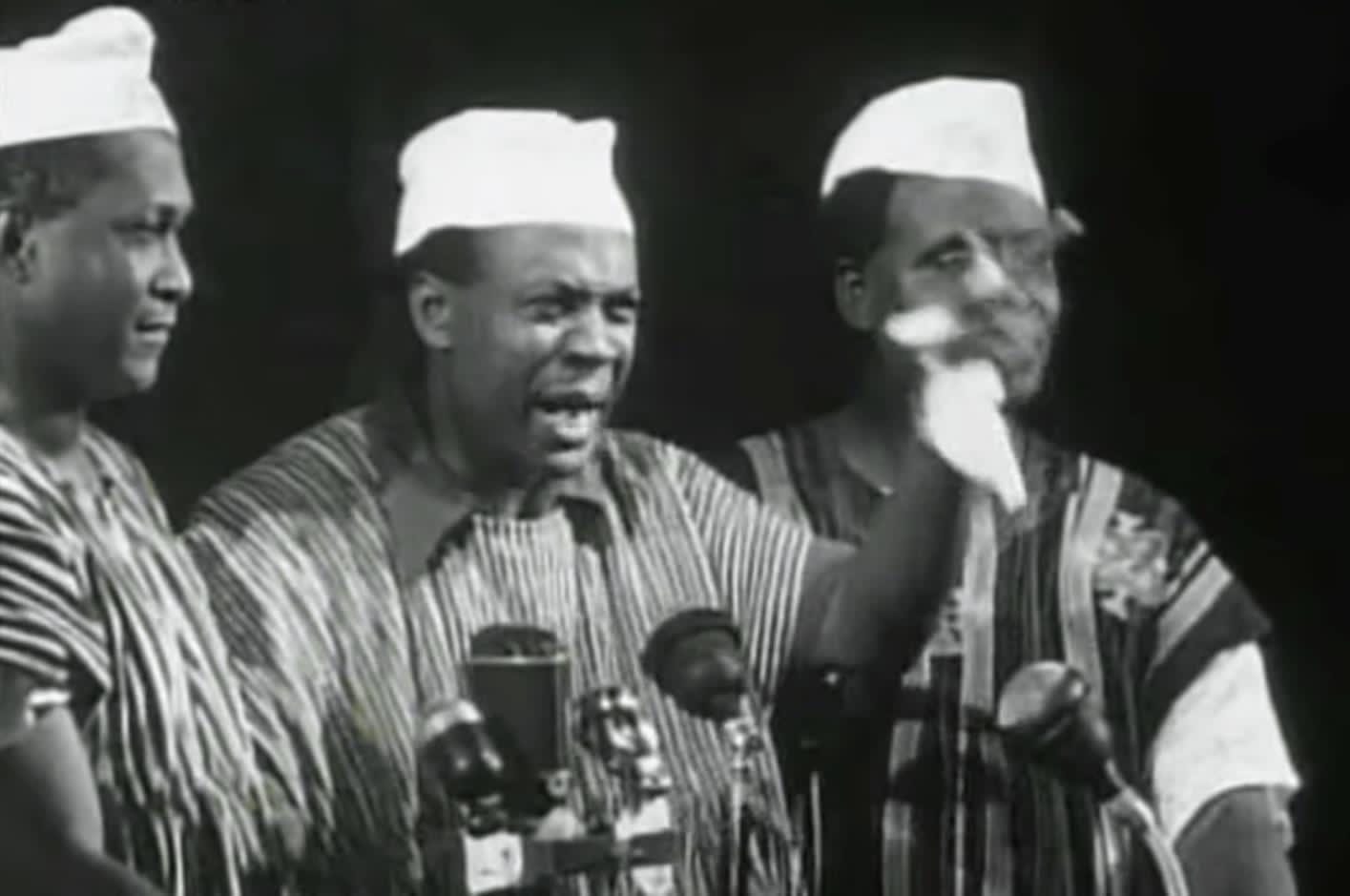
    At midnight on March 6 1957, Kwame Nkrumah said: “Our independence is meaningless unless it leads to the total liberation of the African continent. Likewise, Tinubu’s subsidy removal is meaningless unless it leads to the diversification of the Nigerian economy

    Ayo Akinfe

    [1] Nigeria needs to attract at least $50bn in foreign direct investment (FDI) annually to avoid total economic collapse

    [2] Where on earth are we going to get such FDI from? I do not know and nobody is even talking about it

    [3] Waiting for investors to just come to Nigeria to bail us out is utopian thinking.

    [4] We should be the ones aggressively pursuing them, using our control of the Ecowas market as a unique selling point

    [5] Nigeria can provide access to the sub-region’s markers to any investor. This should be a regional modus operandi

    [6] Were I in President Tinubu’s shoes, I would insist on such regional investment agreements being put in place before opening up Nigeria’s borders to the rest of Ecowas

    [7] Tinubu’s message to the rest of the world should have been simple – Invest in Nigeria and we will grant you access to the 350m Ecowas market

    [8] Nigerians love to blame their leaders for their woes but hey, there can be no good leadership without followership. A people who are only interested in stomach infrastructure have no moral right to demand good governance

    [9] Whatever savings are made from the petroleum subsidy removal should be ploughed into economic diversification and the attraction of FDI

    [10] Here are certain key sectors I think President Tinubu should target for investment:

    [1] Scandinavia – Railway construction
    [2] Russia – Steel production
    [3] Germany – Electricity generation and distribution
    [4] Japan – Automobile manufacturing
    [5] Australia – Solid mineral processing
    [6] Canada – Livestock processing and animal feed compounding
    [7] US – Food processing
    [8] India – Pharmaceutical manufacturing
    [9] China – Machine tool manufacturing
    [10] Europe’s Low Countries – Household goods manufacturing

    If we could attract just $10bn worth of investment from each origin, imagine how many jobs it would create. I do not believe that asking say Nissan, Toyota, Mitsubishi, Honda, Suzuki and Mazda to float a Nigerian joint venture is asking a lot. What is $10bn investment to these companies together?

    Opening say a gearbox manufacturing plant in Nnewi a chassis facility in Nsukka and then maybe an assembly plant in Port Harcourt to churn out a unique Nigerian four-by-four vehicle would guarantee them bumper sales. Plants manufacturing other components could be opened up across the rest of West Africa in cities like Accra, Abidjan, Dakar, Monrovia, Conakry and Banjul.

    Across the board, this model could be replicated. It cannot be business as usual in this post-Covid era my people!