Category: Features

Featured posts

  • Feature: Tinubu needs to address Unemployment and Poverty in Northern Nigeria

    Feature: Tinubu needs to address Unemployment and Poverty in Northern Nigeria

    With unemployment and poverty running riot across northern Nigeria, Bola Tinubu needs to sit down with the 19 state governors and agree a development plan that looks something like this

    Ayo Akinfe

    [1] Agree to open a 20,000 square kilometre National Game Reserve in Taraba State. Make it the world’s largest wildlife sanctuary. Designed along similar lines to South Africa’s Kruge National Park, it should employ about 5,000 park rangers to police and fight off poachers and be home to animals like giraffe, elephants, lions, leopards, zebra, hippos, rhinoceros, crocodiles, cheetahs, buffaloes, wilder beast, impala, hyena, etc

    [2] Create six mega cattle ranches of at least 1,000 square kilometres each in Borno, Bauchi, Yobe, Taraba, Niger and Kaduna states, the six states with the biggest land mass in Nigeria. Each ranch should have at least 5,000 cattle rangers

    [3] Build concrete fortifications popularly known as Dragons Teeth across the entire length of Nigeria’s northern border. Create a Border Guard to do this and then task them with maintaining and policing these borders

    [4] Source Islamic Finance funding to build a railway network linking the capitals of all the 19 states in the north of the country

    [5] Open five mega solar farms in Zamfara, Sokoto, Katsina, Yobe and Borno states with each covering at least 1,000 square kilometres. Make Nigeria the country that generates the most power through solar energy in the world

    [6] Get private investors to open at least one cattle related industry in each of the 19 states of northern Nigeria. Such plants should include dairy factories, leather tanneries, abattoirs, traditional leather goods firms, etc

    [7] Initiate an ambitious water and irrigation scheme that will see the construction of a dam in almost every local government area of northern Nigeria to store water for farming and to supply treatment plants

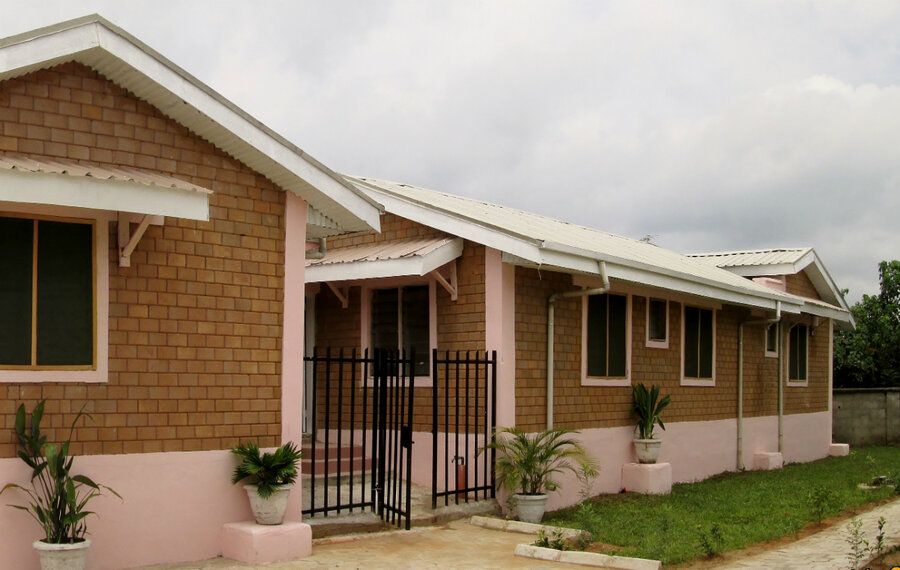
    [8] Launch an ambitious housing programme based on Ahmadu Bello’s low cost housing scheme whereby affordable homes will be build in each local government area of the 19 states. This will help stem the rural-urban migration

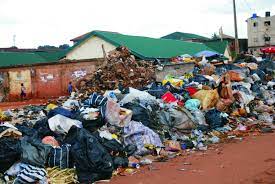
    [9] Empower every local government area to launch a refuse collection scheme based on it owning at least five refuse collection vehicles. Allow local governments to contract such services out to private sector operators if need be as long as they provide local jobs

    [10] Launch an ambitious industrialisation programme that will involve the opening of industrial estates in each capital, offering 10-year tax holidays and 99-year land leases in an attempt to woo investors. Each state should set itself a target of attracting at least $5bn a year in foreign direct investment

  • Feature: Can Tinubu resolve Electricity Crisis during his first term in Office?

    Feature: Can Tinubu resolve Electricity Crisis during his first term in Office?

    I hope Bola Tinubu is using his time abroad to brainstorm with power industry experts as he simply has to resolve the electricity crisis during his first term in office

    Ayo Akinfe

    [1] We keep debating this issue of inadequate electricity supply in Nigeria but always come up short. It is not actually rocket science as our problems can be broken down into two. In the first place, we need about 50,000MW but only generate 7,000MW and to make matters worse, we can only distribute 4,000MW of this. All we have to do is address both issues

    [2] Simply put, we have the problems of inadequate generation and poor distribution. For me, the solution is to delegate power generation and distribution to our 774 local government areas. If each local government area generated just 50MW and distributed it within its domain, we would have 24 hour electricity supply in Nigeria

    [3] Do you know that in India, mini grids that generate a minimum of 15MW are now the popular fad? As an economy, India is relying less and less on its national grid and Nigeria simply needs to follow suit

    [4] Across India today, the total amount of off-grid solar power generated is 26,000MW. Our main problem in Nigeria appears to be the national grid. If you generate 5,000MW locally within a state, you cannot use it for your own purposes. It goes to the national grid and is not even distributed properly nationwide because the regional distribution companies are not effective

    [5] Many of Nigeria’s distribution companies (Discos) cannot even afford transformers. They are heavily indebted to the banks as their owners borrowed money to buy them, so the thought of investing in new equipment is just wishful thinking. It is no surprise that they are thus struggling and we have constant blackouts

    [6] Lagos currently consumes about half of Nigeria’s distributed electricity, so the idea of it being on some sort of national grid is just ludicrous. Lagos State needs it own grid that is totally independent from whatever happens elsewhere in Nigeria

    [7] If each of Nigeria’s 774 local government areas generated just 50MW each, we would have 38,700MW. Add that to the current 7,000MW we generate centrally and power cuts will be a thing of the past in Nigeria

    [8] If Nigeria’s local government areas are allowed to distribute their own power locally, they will know when to expand generation as demand grows. In somewhere like Lagos for instance, nothing stops the state government having a mega gas-fired power stating that generates say 20,000MW and distributes it as is deemed fit

    [9] If we have five massive generating plants at Kanji, Lokoja, Idah, Lagos and maybe another gas-fired one at Bonny, these will augment what the local governments generate. I do not agree with building a power plant at Mambilla, so will not add it. Mambilla Plateau is arguably the most fertile piece of land in Nigeria and should be used for agriculture. Surveys have shown that it is ideal for coffee production

    [10] Nothing stops Nigeria’s states or geo-political zones from having their own generating plants and grids to augment what the local governments are providing. However, we need a bottom-up approach and not the other way round. I expect Tinubu to publish a blueprint on power before he assumes office on May 29

  • Feature: The next Agriculture Minister will determine the Future of Nigeria

    Feature: The next Agriculture Minister will determine the Future of Nigeria

    By Ayo Akinfe

    Whoever becomes Nigeria’s next agriculture minister will help determine the future of the country

    [1] If you want an answer as to why Nigeria is lagging behind economies we should be on a par with such as Malaysia, Indonesia, Vietnam, the Philippines, Mexico, etc, look no further than a palm tree climbing device. Asians have designed a device put together by Indian agriculturalists, Dr Renganathan that facilitates the easy climbing of trees. It is widely used across India, Sri Lanka, Indonesia, Malaysia, Thailand and the rest of Asia too boost agricultural output

    [2] It has come in particularly handy with tall trees that produce coconuts and palm oil. With this device, women can easy harvest fruits from these trees without endangering their lives. It is cheap, simple and can be moved around by individual farmers

    [3] Nigeria is currently the world’s number six agricultural producer thanks to the fact that we dominate the production of certain tropical crops like yam, cassava, kolanuts, shea nuts, egusi, etc and are also major producers of groundnuts, cocoa, pineapples, papaya, plantain, etc. However, if properly managed, agricultural revenue could easily double the $50m a year we generate from crude oil sales

    [4] In Malaysia in particular, what they have done in the palm oil sector is plant short hybrid trees which can be harvested from the ground. They then use this climbing device to harvest the few remaining tall trees out there. Do you know Malaysia generates $10bn a year in export earnings from the sale of palm oil products?

    [5] As we all know, the Malaysians took the palm oil kernel from Nigeria and planted it. Today, these are the world’s top five producers: Indonesia- 43m tonnes, Malaysia – 20.7m tonnes, Thailand – 3m tonnes, Colombia – 1.68m tonnes and Nigeria 1.05m tonnes. Nigeria actually produces more palm oil now than when she was the world’s number one producer at the turn of the 19th century but other nations have overtaken us with accelerated production. It is not just about increased production but comparative cost expansion

    [6] When you do not update your production techniques, you will find it hard to compete with rivals. Even if you produce the same volume of crops as them, if you are producing 10 per hectare and they are producing 30 tonnes per hectare, their goods will be cheaper than yours

    [7] Aliko Dangote once lamented how smuggling is hurting the Nigerian industry thanks to the porous border with the Republic of Benin. What he failed to tell us is that this happens because local produce is not cost-competitive. If a 10kg bag of Thai rice is of superior quality and costs N5,000 but an equivalent bag of Nigerian produce costs N10,000 because of high production costs, the buyers is going to want the former, hence providing a booming market for the smuggler

    [8] For example, why should Nigerian bakeries and confectionery firms be forced to buy local sugar at $20 a tonne when they can obtain it from Brazil or India at $15 a tonne? This makes them uncompetitive. We have to master the art of increasing unit per head output

    [9] Our lack of innovation in agriculture is a major problem we need to address if we are to expand our reach in this sector. We have the manpower, arable land and perfect climate. We also have a competitive edge when it comes to tropical crops but value addition and enhancing productivity are areas that desperately need addressing.

    [10] Our new agriculture minister really has his work cut out. he should be given an export revenue target of $50bn to match crude oil sales. If he does not achieve this within four years, he should be liable to arrest and prosecution for criminal neglect. Our herdsmen crisis is also an agricultural matter which the minister must address. This is a job for a thinking man or woman!

  • Feature: Implications of the KPMG Report to the Nigerian Economy

    Feature: Implications of the KPMG Report to the Nigerian Economy

    If Tinubu read the recent KPMG’s report on Nigeria’s economy he will know that he has to do something drastic, audacious and unprecedented over the next two years to get the economy off her knees

    Ayo Akinfe

    [1] I read the latest KPMG report on Nigeria yesterday and it made grim reading. It said, among other things, that unemployment is expected to hit 40% this year as we are churning out about 5m graduates daily and are not creating the jobs for them

    [2] Just to put things into perspective, our population is growing at a rate of 3% per annum, so we need at least 5% economic growth annually just to maintain living standards. We are currently getting about 2% growth, meaning living standards are falling. To become a nation at ease with ourselves, we basically need double-digit gross domestic product (GDP) growth annually

    [3] If you ask me, Bola Tinubu has to think the unthinkable and do what no mortal has done before if he wants to lift the 80m Nigerians living in poverty out of it. Those of you who are historians will know of the 12 Labours of Hercules. These were impossible and unimaginable tasks, but legend has it that Hercules achieved them

    [4] For me, Bola Tinubu needs to basically grow Nigeria’s GDP to about $2trn from its current $400bn over the next two years. He needs to create about 10m jobs annually and has to get something like 10% economic growth every year for at least the next five years

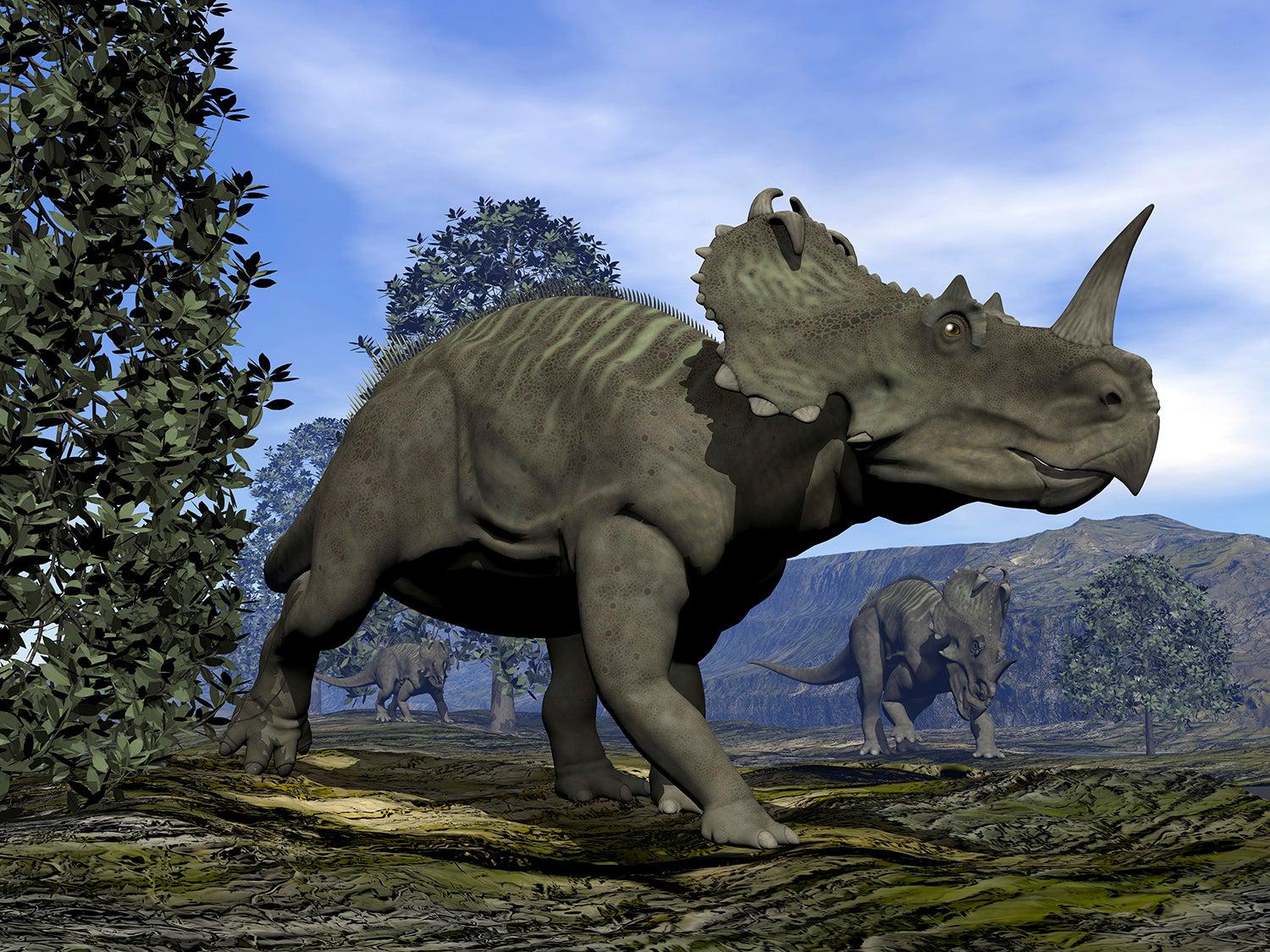
    [5] Were I in his shoes, I would do something audacious like create a Jurassic island and somewhere like Eta Oko off the coast of Lagos State and bring back dinosaurs. Yes, you heard me, I would create a genuine Jurassic Park and redefine the phrase tourism

    [6] How many Nigerians know of Nigersaurus, a genus of rebbachisaurid sauropod dinosaur that lived during the middle Cretaceous period, about 115m to 105m years ago. Its remains were discovered in the Elrhaz Formation in an area called Gadoufaoua, in the Republic of Niger. Fossils of this dinosaur were first described in 1976 but it was only named Nigersaurus Taqueti in 1999, after further and more complete remains were found and described

    [7] The genus name means “Niger reptile”, and the specific name honours the palaeontologist Philippe Taquet, who discovered the first remains. Like all sauropods, Nigersaurus was a quadruped with a small head, thick hind legs and a prominent tail. Just imagine the tourist potential of us opening up a Jurassic Park of Nigersaurus dinosaurs

    [8] Now, a team of researchers recently found what seems to be DNA in a 125 million year-old dinosaur fossil. Alida Bailleul, a palaeontologist from the Chinese Academy of Sciences and her colleagues found the biomolecules in a portion of cartilage from a Caudipteryx specimen. What this means is that we now have the DNA to artificially manufacture dinosaurs. Bola Tinubu needs to bring these scientists to Nigeria to create dinosaurs for our Jurassic Park

    [10] Everything points to the fact that we have the technology to clone dinosaurs in a laboratory. Just imagine where the Nigerian economy would be in 10 years time if we were home to the world’s only Jurassic island. Our biggest problem is that we are too scared to think the unthinkable!

  • Feature: Nigeria needs Frieght Railway programme to support Manufacturing

    Feature: Nigeria needs Frieght Railway programme to support Manufacturing

    By Ayo Akinfe

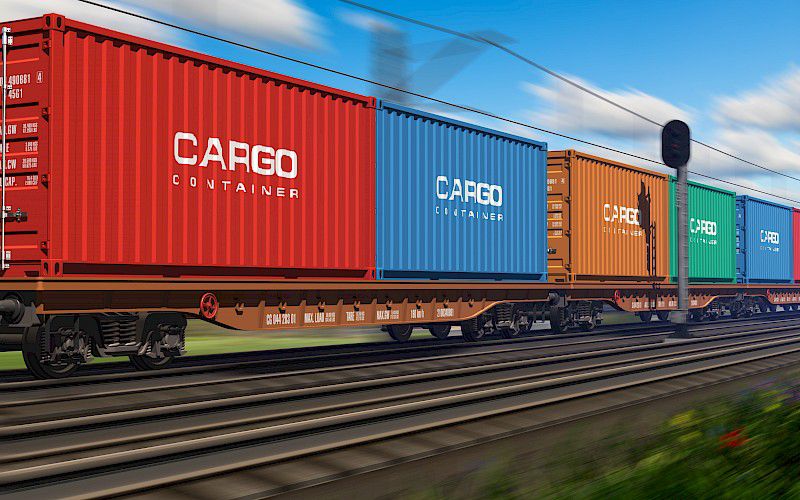
    I hope Tinubu realises that to get manufacturing going he needs to have an effective freight railway programme which is separate from the national railway passenger plan

    [1] On a daily basis, Nigeria witnesses horrific accidents on her roads, many of them involving trailers. Our transport policy has got to be based on moving freight off the road and on to rail to help cut such deaths

    [2] No country anywhere on earth has ever industrialised without a modern and efficient railway service. Nigeria’s lack of a modern railway network is a mirror reflection of how unserious we are when it comes to manufacturing

    [3] Without a modern, fast, efficient and reliable nationwide railway network, you cannot move thousands of tonnes of steel, bitumen, crude oil, cement, granite, etc around the country. They say the railways are the first signs of industrialisation

    [4] In an economy like Nigeria where we are a major agricultural producer but most of our food is grown by smallholders in rural areas, we will never get this sector fully running until we can get produce from farm to factory efficiently and swiftly. Something like a third of all Nigerian food production goes to waste due to poor storage, refrigeration and transportation facilities

    [5] Just look at the state of our rural roads and you can see where the problem with Nigerian agriculture lies. If you are a tomato farmer, how do you get your produce to a processing plant in Kano, Kaduna, Lagos, Enugu or Port Harcourt in perfect condition when the pot holes leading from your farm are four feet deep? Having a good road that leads from your farm to your local government headquarters and then a railway service from there to the state capital is the way out

    [7] There are 774 local government areas in Nigeria with at least 700 of them involved in agriculture in one way or the other. Unless they are linked together by a railway network that includes refrigerated carriages, mobile abattoirs, mobile fruit processors, on-the-move seed crushing plants and mobile trailers that can roll off upon arrival in big cities, we will get nowhere with food processing

    [7] Apart from reducing accidents and boosting efficiency, just think of the way a roll-on, roll-off railway trailer service will save the wear on tear on our roads. It will also extend the lives of the trailers themselves because they will be driving less

    [8] In India, they have managed to get one of these roll-on, roll-off services running in the west of the country. When the British left in 1947, they did not build a railway line in western India because of the monsoon rains, so in 1990, the Indians decided to build one themselves. In January 1997, they opened the Mumbai to Goa Western Indian line. This cargo service is what pays for the running of the service

    [9] In India, the man charged with building the western railway line told the government he does not want them anywhere near the project. He set up an independent agency and staffed it with young engineers and local people. Within seven years the project was delivered on schedule and the costs did not balloon out of control

    [10] Maybe what Nigeria needs is an independent public works agency tasked with addressing the twin problems of agriculture and transport together. This agency could focus on a national railway network linking all 774 local government areas, freeing up state and local governments to focus on rural and inter-city roads

  • Feature: Tax is the key to Nigeria’s Economic and Infrastructural Development

    Feature: Tax is the key to Nigeria’s Economic and Infrastructural Development

    by Musa Ilallah

    To begin this discussion, we must attempt to understand what taxes are all about.

    Taxation is defined as the imposition of compulsory levies on individuals or entities by governments worldwide. Taxation is used primarily to raise revenue to finance government expenditures. 

    The Nigerian government is primarily reliant on taxes as they are a significant source of revenue and a major source of income to the government to discharge its responsibilities.

    No one doubts the fact that the country today falls short of infrastructural development despite the unprecedented turn around on revenue generation and collection courtesy of the country’s Federal Inland Revenue Service, FIRS, under the leadership of its Executive Chairman, Muhammad Nami.

    The FIRS in Nigeria is the agency of the Federal Government Agency statutorily charged with the responsibility and powers to assess, collect, account and enforce payment of taxes accruable to the Government of the Federation. 

    Taxation is commonly said to be a contribution individuals and corporate entities make towards national development. Many see this as their obligation under the social contract where they contribute to enabling government to provide social amenities, welfare services and infrastructural development among others.

    It is not in doubt that the FIRS  has been up and doing in significantly and substantially improving revenue generation and collection in the country in the last few years. In return, the country’s infrastructural development has steadily improved across the length and breadth of the country.

    Since Government cannot provide these resources if citizens do not reciprocate by paying their taxes when due as an obligation, citizens must assist the government in providing it with resources to fund the development of the country.

    Visible and noticeable key projects the government has executed with taxes across education, roads, health, power, agriculture,  and other key sectors have dotted the country. Examples abound in the construction of the Loko-Oweto Bridge; the Second Niger Bridge, construction and equipping of Primary Health Care Centres, building and equipping schools with the necessary infrastructure among many others.

    Records show that TETFUND has disbursed over N2 trillion financed through the 2.5% education tax from the assessable profit of companies operating in Nigeria.

    The government needs taxes as sustainable sources of funding social programmes like health, education, infrastructure and other services which are important to achieve the common goal of a prosperous, functional and orderly society and most importantly to foster the country’s economic growth and development. 

    One can confidently say that governments raise revenues to pay for public goods and services. The commitment of the FIRS leadership in pursuing taxes generation and collection is very encouraging. 

    Undoubtedly, taxes are key to Nigeria’s survival, economic and infrastructural development and FIRS is at the centre of it, while doing the country proud.

    Musa Ilallah can be reached via musahk123@yahoo.com

  • Feature- Taxation: A two-way social contract

    Feature- Taxation: A two-way social contract

    by Dapo Okubanjo

    It is the norm in every society, for the authorities and the people to have what is loosely referred to as a social contract or an implicit agreement.

    It is a theory that is as old as humanity itself and it presupposes that a people’s moral and political obligation depends on an agreement among them.

    Taxation is seen as one of those obligations that the citizenry in every country is expected to abide by, but in Nigeria this is one social contract that has for years been difficult to keep.

    We are a country with the largest economy in Africa in terms of Gross Domestic Product (GDP) and at the last count, the size of Nigeria’s economy is way ahead of South Africa and even Egypt.

    But in terms of GDP to tax revenue, the country is not among the performing countries of the world and does not even compare with the two African countries mentioned above. In fact, the International Monetary Fund (IMF) has been concerned to the extent that it recently urged Nigeria to improve on its tax revenue which stood at 6% of its GDP as at 2022.

    That has been the highest the country has done in recent years but the Federal Inland Revenue Service (FIRS) on the watch of Muhammad Nami, the Executive Chairman, said it plans to raise the tax revenue to GDP ratio to 17% this year.

    On paper, this looks ambitious but the FIRS has in the last few years consistently surpassed old records and broken new grounds, so it may not be ideal to bet against the FIRS achieving a quantum increase in the country’s tax revenue.

    Chicken or egg dilemma

    Paying tax is a chicken and egg situation in many parts of Nigeria. It is usual to hear arguments among Nigerians revolving around inadequate infrastructure or outright lack of it in their immediate communities.

    But the truth is funds need to be in public coffers before these things could be done so the question of what comes first between citizens paying the necessary taxes as at when due or government putting up infrastructure and providing social amenities does not even arise.

    An aspect of the argument that vexed citizens make against payment of taxes is that not much is visible in terms of social amenities and infrastructure after citizens have done their side of the social contract.

    This may be true considering the President Muhammadu Buhari administration had in the past raised posers on what previous administrations had done with public funds based on what it met on ground.

    But this is not enough to kick against tax payment especially at a time of dwindling revenue from crude oil. It is ideal for the chicken to be well fed before it could lay eggs.

    And to put the issue in proper perspective, it is at a time of a global oil slump that the Buhari administration has been able to depend on other revenue sources and chief amongst these is tax revenue, to deliver so much.

    It is through these taxes that government is able to fund road construction, bridges including but not limited to the Loko – Oweto Bridge and Second Niger Bridge, provide medical care (Primary Health Care Centres across the country), build schools and equip them with the necessary infrastructure.

    It is pertinent to me to also note that the interventionist fund, TETFUND was able to disburse over N2 trillion in about 10 years to several tertiary institutions and this was made possible from the Tertiary Education Tax, which is 2.5% of the assessable profit of companies operating in Nigeria,

    When the FIRS made its record-breaking tax collection of N10.1 trillion in 2022, it attributed the feat to its internal revamp, its data-centric reforms, and its improved collaboration with all stakeholders including taxpayers—emphasising that it recognizes the role that the citizenry plays in achieving its set goal.

    And now that the agency has raised the bar in tax collection, the good job that the President Buhari administration is doing in ensuring that Nigerians see where their tax is going would be a further boost to FIRS target for 2023.

    So it is absolutely necessary that Nigerians continue to keep their side of the social contract which taxation represents and government, whether the incumbent or the incoming, will have little or no reason to ensure that the people reap the necessary benefits in terms of provision of social amenities.

  • Feature: Tackling Plastic Pollution: A Collective Responsibility for a Sustainable Future

    Feature: Tackling Plastic Pollution: A Collective Responsibility for a Sustainable Future

    By Elvis Eromosele

    The world is in a struggle with plastic. It can’t seem to do without it and definitely can’t live with it. It litters the landscape, cloaks the drains and gutters and fills the canals, rivers and oceans. The UN says ‘the world is choking on plastic’ and National Geographic says ‘the world is drowning in plastic’. 

    Plastic is in almost everything. It is nearly everywhere. It is the true definition of ubiquitous. Experts concede that plastic waste is one of the major challenges to the environment and human existence. Indeed, plastics hold the world in a vice-like grip. It is impossible to escape plastic. Plastic waste is a plague. 

    The Principles for Responsible Investment in its 2019 report “The Plastics Landscape: The Challenges and Possible Solutions” asserts that across the globe plastic production and consumption are on the rise. And with less than 20 per cent of plastics recycled globally, it is no surprise that plastic waste is becoming more prevalent. 

    Another factor here is that 40 per cent of global plastics production is for packaging and 95 per cent is single-use. So, growth in production and consumption pattern along with an inefficient waste management system continues to precipitate an increasing volume of plastic waste. 

    Lagos alone generates 9000 metric tons of waste daily; 86% of the waste generated consists of plastic bottles and bags according to the Lagos State Waste Management Authority.

    The real problem with plastic is that it does not break down naturally. The very properties that led to the rise in the adoption of plastics (durability, low density and non-degradability) are precisely why they are today an environmental nightmare. 

    To tackle the threat of plastic overwhelming the world every hand has to be on board. The public, as well as private, sectors, must be involved and necessarily be willing to work together. Plastics may be an environmental challenge, but they are equally a path to immense opportunities. Plastics can be a source of a great number of jobs and they are reused as raw materials for the production of other goods. Think of the circular economy: design, reuse, repair and recycling.

    The Minister of Environment, Barr. Mohammed Abdullahi while speaking in Abuja at the inaugural meeting of the project steering committee for the plastic circular economy project, lamented that “only 45 per cent of waste in Nigeria are collected, 80 per cent of plastic waste goes to dump site while only 10 per cent is recycled.” The statistics are worrying. Suffice it to say that Nigeria has no efficient waste management system in place. Plastics are a menace. 

    At the core of the plastic menace are PET bottles, or polyethene terephthalate bottles. PET bottles pose a significant environmental threat due to their non-biodegradable nature. When they end up in landfills or oceans, they can take hundreds of years to decompose and release harmful chemicals into the environment. Additionally, discarded PET bottles can cause harm to wildlife, with many marine animals consuming them, leading to serious health consequences. The scale of the issue is significant, with billions of PET bottles produced annually, and only a fraction of them being recycled or properly disposed of.

    To address the issue of plastic waste, we must explore how to tackle the proper disposal of PET bottles. 

    To make a meaningful impact in addressing the issue of PET bottles, collaborative efforts are needed from bottlers, governments, and NGOs. In the fight for a sustainable future, collaboration is indispensable.

    Firstly, bottlers can collaborate with governments and NGOs to support initiatives aimed at reducing plastic waste, such as awareness campaigns, recycling infrastructure improvements, and the promotion of reusable bottles.

    Secondly, governments can work with bottlers and NGOs to establish policies and regulations that promote sustainable packaging practices and support research and innovation in alternative packaging materials and recycling technologies.

    Thirdly, NGOs can play a critical role in raising awareness of the issue and promoting behavioural change among consumers. NGOs can work with governments and bottlers to support initiatives aimed at reducing plastic waste, including education and awareness campaigns.

    Without active and sustained collaborative efforts the battle to curb PET doesn’t stand a chance. 

    Specifically, while several potential solutions can be explored to curb the menace of plastic (PET) waste, four of them can be implemented immediately: 

    Firstly, promote the use of reusable bottles, such as stainless steel or glass bottles. They can be used multiple times and do not contribute to plastic waste. This can be done through education and awareness campaigns, or by incentivizing the use of reusable bottles through discounts or other incentives.

    Secondly, improve recycling infrastructure. This may include setting up more recycling centres, implementing effective collection systems, and creating markets for recycled PET. This can ensure that more PET bottles are recycled into new products, reducing the amount that ends up in the environment. Governments at the state and local levels must take the lead here.

    Thirdly, governments can implement a bottle deposit system. Under this system, consumers pay a small fee when purchasing bottled drinks and receive a refund when returning the empty bottle. This system can incentivize consumers to return bottles for recycling, reducing the amount of waste that ends up in the environment. Bottlers must champion this and work actively with relevant government agencies. 

    Fourthly, bottlers of drinks can explore the use of biodegradable alternatives to PET bottles. Here we are talking about plant-based materials that can decompose naturally in the environment. Additionally, bottlers can reduce the amount of packaging used, and support recycling efforts.

    There is no one size fits all solution to the problem of plastic (PET) waste management. Every option must be explored; every solution considered. 

    But more importantly, collaboration must be the watchword. In collaborating to tackle the menace of plastic pollution, we are engaged in a collective struggle for a sustainable future

    Elvis Eromosele, a Corporate Communication professional and public affairs analyst lives in Lagos.

  • Feature: Tinubu should combat Kidnapping in Nigeria

    Feature: Tinubu should combat Kidnapping in Nigeria

    By Ayo Akinfe

    I would like to see Bola Ahmed Tinubu pledge to initiate the following steps to combat the scourge of kidnapping across Nigeria.

    [1] We will impose an indefinite ban on mosque construction across northern Nigeria, insisting that all such funds go towards school construction

    [2] Jail the parents of any Almajiris or out-of-school kids for a minimum of five year

    [3] We will impose a 40% education tax on all mosques across northern Nigeria

    [4] We will seize the private jets of all northern Nigerian politicians and auction them off. I will then use the proceeds to build schools to eradicate illiteracy

    [5] I will send to the National Assembly legislation reversing Sharia law so teachers are no longer afraid to go and work in northern Nigeria

    [6] I will pass laws making it compulsory to build at least one technical college in every local government across northern Nigeria

    [7] I will place a 10 moratorium on the turbaning of emirs across northern Nigeria. This will be reviewed if after a decade when the educational divide between the north and south has narrowed

    [8] I will set Islamic finance investment targets for all the governors of the 19 northern states. At the very least, every governor must attract a minimum of $1bn in investment annually

    [9] I will place a 10 year moratorium on state governments subsidising hajj pilgrimages. Spend that money on education instead

    [10] I will open youth boot camps for all convicted criminals across northern Nigeria where everyone is trained vocationally up to City & Guild level

  • Feature: Developing a National Housing Plan for Nigeria

    Feature: Developing a National Housing Plan for Nigeria

    by Ayo Akinfe

    Were I in Bola Tinubu’s shoes I would call an immediate meeting of all the 36 state governors and governors-elect and get them to sign up to this national housing programme

    [1] As from January 1 2024, every state government and the FCT authority is compelled to construct a minimum of 10,000 housing units a year

    [2] Every one of our 774 local government areas is compelled to construct at least 1,000 housing units a year

    [3] All government ministries, agencies, departments and parastatals are compelled to offer mortgages to any employee who has spent up to three years in service

    [4] Low-cost housing loans will be offered to those who work in the informal economy by the Federal Mortgage Bank of Nigeria. These will be done through their trade associations like the Market Traders Association and the National Union of Road Transport Workers

    [5] International property developers who come to Nigeria to build housing units will be offered 99 year land leases by state governments

    [6] Before permission is given for any church or mosque to be built, the development must include at least 10 housing units

    [7] Nigeria’s housing minister is empowered to seize any empty property which serves as a third of fourth home to a wealthy individual and convert it into social housing

    [8] From henceforth, 10% of all monies recovered by the EFCC and ICPC will be spent on the provision of low-cost housing

    [9] In rural areas, banks will be empowered to attach housing addendums to farming loans so farmers can construct houses in a bid to stem the rural-urban migration deluge

    [10] Nigeria’s churches and mosques will be granted a licence to float a lending house known as House of God Bank. It will offer mortgages and housing loans to their lowest paid members at an interest rate of no more than 5%

  • Feature: The Policy Masterplan for Nigeria

    Feature: The Policy Masterplan for Nigeria

    by Ayo Akinfe

    I hope Bola Tinubu is using his convalescing time to put together an effective policy document like this Contract With Nigerians

    [1] Health policy:
    [1] 12 specialist hospitals shall be established in Nigeria with two in each geo-political zone. These shall include – Dermatology, optometrics, renal failure, cardialogy, neurology, ear/throat/nose, cancer, Hiv/Aids, orthopedia, rheumatics, tropical diseases and sickle cell anaemia
    [2] Pharmaceutical companies will be given 10 year tax holidays if they establish manufacturing facilities in Nigeria
    [3] Each of Nigeria’s 774 local governments must have at least two general hospitals
    [4] Healthcare will be free at the point of delivery to all Nigerians
    [5] Every state government must have at least one mobile clinic which visits remote and inaccessible areas
    [6] A national target of 20 minutes waiting time shall be established for all ambulance services
    [7] Nigeria shall spend 10% of its GDP on healthcare
    [8] State governments who build specialist hospitals in new areas will be given special grants
    [9] A national target of producing 20,000 doctors a year shall be aimed for
    [10] Medical equipment manufacturers will be given a five year tax holiday if they establish plants in Nigeria

    [2] Anti-corruption policy
    [1] Our party will pass laws scrapping immunity at both the federal and state levels for presidents, vice presidents, governors and their deputies
    [2] Being found guilty of embezzling anything in excess of N1m should attract a mandatory life prison sentence
    [3] The president must sell off all of the nine aircraft in his presidential fleet
    [4] The president’s salary and allowances should not exceed $200,000 per annum
    [5] No government villa, mansion or official residence should be any more than a six-bedroom house. All the existing palaces should be sold off and the money paid into the federation account
    [6] The current feeding bills of N90bn per month that the presidency and the vice presidency enjoy should be reduced to a total of N1bn a month
    [7] House of Representatives members should receive the same salary as heads of parastatals, while senators should receive the same pay as permanent secretaries
    [8] No government functionary should have more than one official car
    [9] No government official shall be entitled to foreign medical care
    [10] We shall scrap the offices of first ladies at federal and state levels

    [3] Anti-Boko Haram policy:
    [1] Register and licence local vigilante groups
    [2] Establish 20 battalions in strategic towns in the north east
    [3] Commence building of a fence along the borders with Chad/Cameroon/Niger
    [4] Offer free uniforms and school meals to all youths in the area to encourage education
    [5] Get the Lake Chad Basin Authority to create 30,000 jobs in the northeast
    [6] Build six special high security prisons for Boko Haram fighters where they can be trained and equipped with vocational skills
    [7] Establish a special paramilitary force which will be trained in rescue missions to deal with matters like the Chibok girls
    [8] Establish a special anti-terrorist brigade in say Damaturu
    [9] Double soldiers allowances and offer a special bonus to anyone asked to serve in the northeast
    [10] Sign foreign defence pacts with say South Africa and China which commits them top assisting military, supplying equipment and training personnel

    [4] Transport policy:
    [1] A high speed rail network to be constructed across the country over the next 20 years linking all 36 states
    [2] Road maintenance is to be given back to the states. The Federal Ministry of Works will ensure funds are disbursed to state governments to cater for stretches that fall within their domains
    [3] From henceforth, the Federal Ministry of Works will only be responsible for road construction. Once the road is commissioned, maintenance will be handed over to state governors
    [4] We will establish a Nigerian Waterways Management Agency who will be responsible for marine transport. They will dredge the Rivers Niger and Benue and all adjoining rivers such as River Kaduna and create a national maritime network
    [5] All states will be required to establish a state-wide bus service in which the state government will hold a minority stake
    [6] The federal government will hold a 20% stake in the national railway, maritime, coach and bus services
    [7] Currently, 90% of journeys in Nigeria are carried out by road. By 2035, we hope to reduce this to 40% by moving passengers on to trains and waterways
    [8] All freight operators who move their goods on to rail and waterways will get a 20% discount over the next 10 years
    [9] Any urban centre with a population in excess of 2m people will be compelled by law to establish a light railway network at the very least
    [10] A national travel card scheme will be launched, which enables users to travel on state and federal coaches, buses, trains and marine transport

    [5] Education policy
    [1] Free tuition right up until the end of secondary school
    [2] Nigeria will spend 15% of its GDP on education
    [3] Free uniforms in all public schools
    [4] One free school meal for all state primary and secondary school pupils
    [5] No primary school child should have to walk more than 1km to school
    [6] Every local government must have at least one technical or vocational school
    [7] Private sector operators will be allowed to run schools provided they meet government guidelines provided by the ministry of education
    [8] Every local government must appoint an education commissar to ensure national standards are met
    [9] Over the next 10 years, every state must strive for 90% literacy rates
    [10] Every local government must have at least one adult literacy centre

    [6] Economic diversification policy
    [1] Over a 35 year period, we gradually migrate back to the 1957/58 revenue sharing formula agreed by our founding fathers at the Lancaster House Conferences in London under which the federating units will control all the resources within their domains and remit 50% to the centre
    [2] Our federating units will keep 50% of all the revenue that they generate, put a further 30% into a central pot called the Excess Federation Account to which everyone can have access as the need arises and the remaining 20% will go to into the Federation Account used to run the federal government
    [3] With regards to all other resources, we shall move towards this immediately but in the case of oil and gas, the move will have to be gradual due to how dependent we have become on these two resources. A gradual migration shall take place over the next 35 years in this manner: 2022 – 13%, 2025 – 18%, 2030 – 20%, 2035 – 25%, 2040 – 30%, 2045 – 35%, 2045 – 40%, 2050 – 45%, 2055 – 50%
    [4] Every one of our 36 states will be set a target of generating at least $2bn in export revenue
    [5] Any state government that attracts inward investment to the tune of $1bn, will get a corresponding grant from the federal government
    [6] All governments will as a matter of course award supply contracts to companies that manufacture products within Nigeria
    [7] Any state that fails to generate as much revenue as it spends for two consecutive years as from 2025, will be subject to an immediate declaration of a state of emergency. It shall be administered centrally by the federal government until its books are balanced
    [8] Every of our 774 local governments must have at least one vocational training centre. Foreign and local investors who offer training at such centres will be granted tax holidays
    [9] Religious organisations will be subject to a Faith Tax, representing 20% of their profits. Those who are charitable organisations not making any money will be exempt from such tax. Religious bodies that invest in social services will be able to reclaim such investment back from the government
    [10] Every state must seek to generate at least 30 of its internal revenue from manufacturing and services, with a migration away from primary products to value added production.

    [7] Housing policy
    [1] Given that there are 170m Nigerians with about 50% of them being 18 and over, we should have a 20 year plan to build 40m housing units over the next 20 years
    [2] Of these 40m, the federal government will build 10m in Abuja and Lagos
    [3] All 36 state governments must build houses as a matter of principle
    [4] Each state must build at least 10,000 housing units a year
    [5] At least 50% of all these houses must be social accommodation for letting
    [6] State governments will be allowed to run housing corporations
    [7] State governments will also be allowed to enter into public-private partnerships with private companies
    [8] Private companies who build in excess of 1,000 units will get a one year tax break
    [9] The Federal Mortgage Bank will offer 25 year single digit loans to buyers
    [10] State governments who build more than 50,000 units a year will get a federal grant

    [8] Energy policy
    [1] Six regional powers grids will be established across the country, with each responsible for providing electricity to the states within its domain
    [2] A national grid will operate on top of this serving as a supplement whenever there are shortages in any geo-political zone
    [3] Zonal grids will be free to sell excess power generated to other zones or export it as a commercial product
    [4] Independent power plants will be at liberty to sell their produce to whichever grid offers them the most commercially competitive deal
    [5] Distribution companies will purchase power from grids. To combat uncompetitive practices, no operator will be allowed to be a supplier and distributor at the same time
    [6] To enable over-dependency on one source of energy, power plants will be encouraged to generate energy from a variety of sources including hydro, gas, wind and solar power
    [7] A national gas pipeline project will commence immediately with the aim of linking every household in the country to a network. Gas hitherto flared in the Niger Delta will be fed into this network to facilitate the constant supply of gas to every home at affordable prices
    [8] Distributor companies will be responsible for the supply, maintenance and security of transformers. They will be assisted by a special unit within the Nigerian Police Force for this purpose
    [9] Over the next 10 years, the government shall aim to increase generated electricity supply to 100,000MW from the current 4,000MW through the construction of 10 power plants across the country through a combination of public-private deals and the awarding of contracts to private operators
    [10] All power distributors will be allowed to establish industrial divisions that will supply the industrial and manufacturing sectors of the economy.

    [9] Local government policy
    [1] All of Nigeria’s 774 local government areas will be responsible for providing waste disposal services, fire services and ambulance services within their domains
    [2] Local governments will be funded internally by the charging of a local tax, which will be augmented by a federal grant representing no more than 10% of their total expenditure
    [3] All local government chairmen and councillors will be directly elected and subsequently independent of their state governors
    [4] Every local government must appoint a professional chief executive to run its operations. He will report to the fill council and be responsible for implementing and managing its annual budget
    [5] Every state is free to create more local governments provided they meet the necessary criteria which includes holding a referendum and the fact that the local government area is self-sustaining
    [6] To be recognised as a local government area, basic facilities that must exist within the domain include 20 primary schools, five secondary schools, a local government headquarters, at least one vocational training college and at least one public health centre
    [7] Local governments shall be free to employ their own staff, train them and provide them will all other services and benefits in line with what civil servants receive. For the purposes of pensions, local government employees will be treated the same as civil servants who work for the federal and state governments
    [8] All local governments must hold at least one town hall meeting a month, during which they are compelled to interact with their constituents and account for their stewardship
    [9] Local governments must vet and register all private security and vigilante groups operating within their domains
    [10] All local governments must organise at least one sporting event a year to uncover young talent. Exceptional talent will be recommended to the state government to be provided with scholarships

    [10] Sports policy
    [1] Each of Nigeria’s 774 local government areas must organise at least one sporting event a year
    [2] Scholarships must be provided for exceptional talents who will be educated up to university level at specialist sports academies
    [3] There will be a National Sports Festival held at least once a year, to which all stares are compelled to participate
    [4] A degree-awarding national sports university will be established in Abuja to train athletes, officials, umpires, health experts, and managers in all aspects of sports management
    [5] Every state must organise a state-wide sporting festival to determine the best talents within its domain
    [6] Private companies which run sports clubs will be given tax breaks
    [7] Every local government must have within its domain at least one comprehensive sporting facility
    [8] To be registered to feature for Nigeria in any sporting event, athletes must be able to provide authentic birth certificates and irrefutable proof of their ages
    [9] All major trade, professional and educational federations and bodies must organise a national sporting event once a year. These will include the army, navy, air force, fire service, ambulance service police, universities, polytechnics, colleges of education, Custom and Excise, etc
    [10] Exchange programme will be entered into with foreign sporting bodies to take a and train Nigerian officials, managers and professionals on an annual basis.

    [11] Agriculture policy
    [1] Local governments will be obliged to organise their farmers into cooperative units
    [2] Farmers will be encouraged to sell their produce, buy seedlings, pesticides and fertilisers, as well as farming equipment through their co-operatives to maximise efficiency and overhead costs
    [3] Every local government must build at least one food storage facility within its domain
    [4] An agricultural tax will be paid to the local government to help provide and maintain the necessary services to support farming programmes
    [5] Agricultural cooperatives will be encouraged to move into value-added activities and will be provided with loans to facilitate this
    [6] A National bank of Agriculture will be established to offer loans to farming cooperatives at competitive rates
    [7] Farmers will be encouraged to venture into organic agriculture because of the high premiums that this commands
    [8] Cooperatives will be encouraged to buy their members high-yielding hybrid seedlings to enhance unit-per-head output
    [9] Seed companies will be offered tax holidays to come and set up plants and facilities within Nigeria
    [10] Processing companies and food manufacturers like Cadbury, Nestle, Mars, Kelloggs, Tate & Lyle, Unilever etc, will be encouraged to establish plants in Nigeria to facilitate vertical integrated production. Our ultimate goal is to export finished, packaged and shelf-ready products to international markets.

    [12] Defence policy
    [1] The Nigerian Army shall undertake a five year programme to plant trees along Nigeria’s borders to demarcate the nation’s boundaries. Such trees shall be painted in the country’s colours
    [2] Nigeria’s maritime borders will also be marked out with cones
    [3] Each state capital shall house at least one battalion of the Nigerian Army
    [4] The ministries of defence, police affairs and internal affairs shall be overseen by the office of the vice president in what will be the Super Security Ministry. It will have overall responsibility for combating terrorism
    [5] The minimum qualification for being employed in any of the security services shall be O’Levels
    [6] Members of the security forces aiding and abetting terrorism will face statutory treason charges with the mandatory death penalty being the maximum punishment
    [7] Armed forces commanders convicted of embezzling funds meant for defence will face statutory treason charges with the accompanying mandatory death penalty being the maximum punishment
    [8] Nigeria will enter into bilateral defence agreements with friendly nations aimed at getting their equipment manufacturers to establish factories in the country
    [9] All members of the armed forces will be registered for a national compensation programme that will pay their dependents their full salaries and grant their children scholarships up to university level should they lose their lives during the course of duty
    [10] Specialist unit if the armed forces like the engineering corps of the Nigerian Army will be free to bid for government contracts in their areas of expertise.

    [13] Women’s policy
    [1] Scrapping of all laws which limit a woman’s right to inherit family property
    [2] Child marriages should become criminalised immediately with a minimum 10 year prison sentence for convicted criminals
    [3] 50% women’s representation will be guaranteed in all elected and appointed positions
    [4] Free smear tests will be made available in all states
    [5] Free childcare will be made available in all 774 local government areas
    [6] Paid maternity leave is compulsory
    [7] Free breast cancer treatment will be available in every state capital
    [8] The federal government will provide free maternity centres in every local government area
    [9] Sex with a minor becomes statutory rape carrying a five year prison sentence
    [10] Domestic violence carries a minimum of a five year sentence.

    [14] Urban renewal policy
    [1] The Federal Ministry of the Land, Housing and Urban Development will be responsible for granting settlements charters that grant them city status
    [2] To be granted city status, an urban settlement must have a cathedral, central mosque, university, central post office, at least 10 secondary schools, a city centre, a shopping mall and unemployment must have been under 5% over the last five years
    [3] In every city, the heart and soul of the community must be the city centre, which will be a downtown pedestrianised zone
    [4] Every city centre must have a car-free shopping street lined on both sides with shops and department stores
    [5] Every city will have as directly elected mayor responsible for maintenance
    [6] City councils will also be elected and will be independent of state governors
    [7] Citizenship of cities will be defined by birth
    [8] All cities will be secular zones in which religious police will be prohibited
    [9] City councils will be responsible for providing social housing and will have annual targets set. Special mortgage banks will provide low interest loans for this purpose
    [10] City councils will be set emission targets and must ensure that at least 20% of their communities are open green spaces. This will be supervised by the Federal Ministry of the Land, Housing and Urban Development and failing cities can have their charters revoked.

    [15] Tourism policy
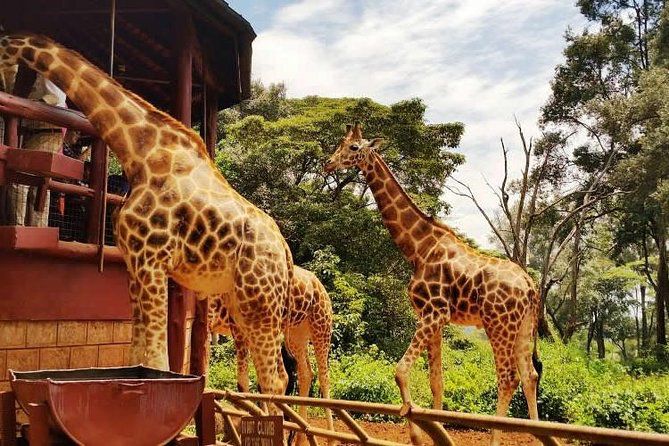
    [1] Gashaka State shall be established along the Nigerian border with Cameroon with its capital at Gembu. This state will be known as Nigeria’s wildlife state and shall be covered by special animals rights provisions
    [2] Animals will take priority over human beings in Gashaka State. Whenever there is a conflict, human settlements will be relocated, leaving the animals to roam freely under wild conditions
    [3] Half of Gashaka State shall be a game reserve, while the other half shall be used for other tourist activities like theme parks, mountain climbing, etc.
    [4] A national Park Rangers Brigade will be formed to safeguard tourism. They will be given shoot-at-sight orders whenever they confront poachers
    [5] An Eighth Mechanised Brigade of the Nigerian Army will be formed and located in Gashaka State to provide security for the tourism industry
    [6] All species of tropical animal will be brought to this new tourist haven with a view to having thriving communities of every known specie indigenous to our environment over the next 20 years
    [7] Tourist operators who build hotels, game resorts, railway links, etc in Gashaka State will be offered a five year tax holiday
    [8] An international airport shall be built at Gembu using federal funds, and a railway network shall be build connecting the rest of Gashaka State to the capital
    [9] The Nigerian Tourist Board shall put together tourist packages that will enable visitors to visit Gashaka but as part of their visit also go to other attractions like Olumo Rock, Lake Oguta, Ikogosi Warm Springs, Idanre Hills, Umuahia War Museum, Obudu Cattle Ranch, Tinapa, etc. A high-speed special National Tourist Railway Network shall be constructed, liking all these sites together
    [10] The penalty for anyone convicted of poaching animals in Gashaka State shall be death by firing squad

    [16] Marine Policy
    [1] Build a 25,000MW hydro-electricity power plant at the confluence of the Rivers Niger and Benue in Lokoja. This will involve the creation of an artificial Lake Bassa and the construction of man-made rapids to enhance the hydro-electric capability of the river
    [2] Dredge the River Niger from Port Harcourt in Rivers State to Illo in Zamfara State
    [3[ Dredge the River Benue from Lokoja in Kogi State to Yola in Adamawa State
    [4] Dredge River Kaduna so the Kaduna metropolis can be linked to the River Niger Network
    [5] Establish a Nigerian Waterways Transport Corporation to provide marine transport across the nation similar to the railway network
    [6] Launch an integrated transport plan in which a ticket will be usable on buses, marine craft and trains, so passengers can used mixed methods of transport for their journeys
    [7] Build six artificial lakes on the Rivers Niger and Benue to enhance fish production
    [8] Each artificial lake will be the centre of an irrigation policy that will provide water for nearby farmlands. A network of pipelines will be built to connect these lakes with the hinterland across northern Nigeria
    [9] Build inlands ports at Asaba, Onitsha, Lokoja, Kaduna, Jebba, Yola and Makurdi
    [10] Build a marine wildlife sanctuary in the Niger Delta, importing animals like crocodiles, manatees, dolphins, hippopotamus, etc in a bid to create a unique tourist industry.

    [17] Railway policy
    [1] Build six high-speed railway lines on which trains will runs at speeds of 250km per hour
    [2] Routes which the high speed lines will ply include: Lagos-Abuja; Lagos-Onitsha; Abuja-Onitsha; Lagos-Kano; Kano-Onitsha and Kano-Abuja
    [3] All other trains will run at speeds no less than 100 Km per hour
    [4] For long distance inter-state trains, the average speed will be at least 150km per hour
    [5] Private operators will be obliged to provide at least one train every hour
    [6] Cattle grazing reserves in the country will all be provided with freight rail links to ports and urban markets like Lagos, Abuja, Kano, Enugu, Benin, etc
    [7] Commercial hubs like the Onitsha market, Tinapa Resort, Obudu Cattle Ranch, etc will be allowed to build dedicated lines connecting them with the port at Apapa
    [8] Every state capital must have at least a light railway network
    [9] At least six manufacturing facilities will be established across the country, with one in each geo-political zone
    [10] The federal government will take out a 20% stake in each network

    [18] Foreign policy
    [1] Nigeria’s economic and human development indicators will be compared annually with those of other Mint nations like Mexico, Indonesia and Turkey and Brics nations like Brazil, India, Russia, China and South Africa, to ensure we never fall behind
    [2] At the moment, Nigeria’s human development index is on a par with Pakistan in terms of literacy rates, healthcare centres, employment, GDP, etc. We should aim to doubt this over the next 10 years
    [3] It is impossible to develop a thriving economy in the midst of a continent ravaged by abject poverty. Consequently, Nigeria will take it upon herself to oppose regimes that are inimical to Africa’s peace, prosperity and socio-economic development
    [4] Nigeria is committed to the eradication of landlocked states across the African continent. As a rule, being landlocked creates political and economic handicaps that access to the high seas averts. As of now, 15 of the world’s landlocked countries are African, denying them access to the benefits of maritime trade and other sources of revenue like fishing
    [5] Nigeria will undertake to and also encourage other African nations to mark their borders with trees painted in their national colours. This is to eliminate the menace of constant border clashes.
  • Feature: Tinubu should engage other  West African leaders to increase Regional share of Global Trade

    Feature: Tinubu should engage other West African leaders to increase Regional share of Global Trade

    I hope Tinubu has plans to meet with all of West Africa’s leaders within the next month and draw up plans to increase the sub-region’s share of global trade

    Ayo Akinfe

    [1] I do not need to tell anyone that West Africa remains a dependent and parasitic backwater, that supplies the rest of the world with the world with nothing by raw materials. You can never build any form of prosperity with that kind of rigged arrangement that keeps you a dependant consumer

    [2] As we speak, Africa still only amounts for about 4% of global trade. There is simply not enough technology transfer and capital investment is minimal. Everything I have seen so far indicates that the rest of the world is reluctant to take a leap of faith in Africa

    [3] Some people will talk about enabling conditions, bla, bla, bla but the fact remains that when a coloniser wants to invest in a conquered land, they do so with no inhibitions. In Cuba, the US poured billions into it pre-1959, seeking to make it another Las Vegas and when the Japanese invaded Manchuria they invested like $44m between 1937 and 1945

    [4] Even during the Slave Trade era, Europe never invested in Africa. How come all their plantations were in the New World and not Africa? It would have cost them less to open cotton and sugar plantations across West Africa. Was that due to poor African leadership too?

    [5] For me, this reluctance to invest in Africa is more of a psychological than economic matter. Those companies who have invested have by and large got good returns on their investment but this has still not led to a gold rush

    [6] Those of you who work in the corporate world know that most multinationals have a Europe, Middle East and Africa structure. This means that whenever they want to open a plant, they have to decide whether it is in Europe, the Middle East or Africa. This is an area where as a continent we have lost out big time

    [7] One problem Africa will always have is getting investors to decide on where to locate facilities. When you have 54 countries, it is simply impossible to have plants located in all of them. For me, there are simply too many nations in Africa and the structure is not sustainable. I expect Bola Tinubu to come up with an investment strategy to assess this

    [8] Egypt, Nigeria and South Africa cannot keep attracting all of the continent’s investment. What will become of countries like Niger Republic, Zimbabwe, Mauritania, Sudan, Mali, Burundi, Togo, etc. Realistically, the only way forward for these small countries is for the big ones to absorb them. Niger Republic for instance is 80% Sahara Desert. It should be the world’s largest solar farm, powering the whole African continent. Now, that can only happen if Nigeria gobbles up Niger Republic

    [9] At the moment, Africans are not even making regional pitches for capital. I think that is something we need to move to immediately. I want to see West Africa, East Africa, Central Africa and Southern Africa each make united bids to the likes of Nissan, General Motors, Volkswagen, Bush, Samsung, Bosch, etc to locate factories in their sub-region. Tinubu should get the ball rolling ASAP

    [10] If Africa had say just six nations, I believe she would attract a lot more investment as she would be in a better position to make competitive bids. Tinubu should make creating a single West African economy his ultimate foreign policy objective

  • Exclusive: Our Customers are Guaranteed Quality lifestyle within a Resort-like Residential Environment- Lawal

    Exclusive: Our Customers are Guaranteed Quality lifestyle within a Resort-like Residential Environment- Lawal

    Bayonle Lawal is the MD/CEO of ONEBRICK Investment Ltd, a real estate investment and development firm focused on building Residential communities and lifestyle destinations.

    He is an astute Real Estate Investor and developer who focuses on getting his clients the best of real estate deals within the Sub-Saharan African market.

    A Sales-Maverick who believes in acquiring income-generating assets over liabilities, Bayonle has done over N1,000,000,000 (One billion Naira) revenue in real estate Sales. He has a knack for studying market trends and pioneering fresh development within the built and Real-Estate sectors.

    With almost a decade of experience in the built and Real-Estate industry, he started his career in the banking sector. He later joined the Lagos State Government (LASG) teaching services as an Education Officer, imparting knowledge and helping with some policy-making decisions about education, learning and development.

    Bayonle is a graduate of the University of Ibadan (UI), and he also has an Executive MBA (Marketing) from the Obafemi Awolowo University (OAU) and a Project-Management Certification from Regenesys Business School, South Africa.

    Bayonle is happily married to his wife – with two beautiful daughters. Aside from family, spirituality and business, Bayonle’s greatest passion is giving back. During his leisure, Bayonle enjoys playing golf, sightseeing and meditating. He is a proud member of Rotary Club International.

    The News Wings NG team caught up with him; please find below the excerpt of the interview-

    NW: With your academic background, what motivated you into real estate business?

    BL: I was trained as a teacher at the University of Ibadan, where I studied Educational Management/Political science with six years of working experience with the Lagos State Government. Afterwards, I found love with the built industry, where I started as a key distributor with a key building materials manufacturing firm. My inspiration to go into real estate after my experience with Sales and distributions of building materials was due to the stability in real estate assets.

    I started as an investor to build and sustain wealth for generational purposes. As a first-generation wealth builder, I found real estate a great way to build and preserve wealth while enjoying capital appreciation and passive income.

    NW: There is an assumption that people who work around real estate businesses are in a niche profession. How did you learn the ropes of being a real estate business?

    BL: As I said earlier, I started real estate to build generational wealth with a focus on capital appreciation and passive income, so the whole idea of being an investor from scratch gave me an opportunity to learn the business from an investor point of view, not as an agent or consultant. This gave me an edge because I had to invest my own money, and I will not want to lose my hard-earned money to a bad investment. At some point, I had to go back to take NIESV to learn the basics of real estate as a professional, but I later dropped out of NIESV when I realized I was more of a business owner than a professional in any field. 

    Aside from the basic knowledge gained at NIESV, I also engaged in so many online classes before going to the field to start acquisition in landed property. My biggest knowledge for me was my first failed acquisition process that broke me after the bad deals. And this really gave me an insight into the nitty-gritty of real estate investment, especially in Lagos, Nigeria. I have learned from the mistake, which has been the guiding light for me in real estate landed property acquisition. Aside from few courses online, my best knowledge is doing the actual work while learning along the line.

    NW: Recently, especially in Lagos, there seems to be a spike in realtors across Nigeria. What are the Unique Selling Points (USP) that set yours aside?

    BL: I would not call myself a realtor because I have been more of an investor than a realtor from the beginning of my journey in real estate. I started as an investor, and the consultancy part of the job came to me. As a result, people trust me with their Real estate investment plans.

    I have a unique selling point as an investor because I know where to buy below the market price and focus most of my selling on investors, not possessors. Real estate investors don’t just buy property for home ownership purposes alone. Still, more about capital appreciation and passive income, so I focus more on investors than possessors, who only think of real estate strictly for homeowners opportunities alone. Real estate investors will always subscribe to all our projects than focus on possessors who only buy one-off.

    NW: Real estate business in Nigeria seems to be more lucrative than other investments, what do you think accounts for this?

    BL: The real estate market in Nigeria is still untapped when it comes to the opportunity that abounds in the industry. The sector will remain the best investment opportunity because other sectors of Nigeria’s economy are not so lucrative.

    Take a cue at the money market today you will realize that it is better to put your money into real estate investment than any money markets opportunities in the economy because the demand for real estate in a vast population like Lagos state and urban migration to the major city in the country will always make real estate investment, the most lucrative sector to invest your money.

    The sector can be better than it is now if the government can solve the biggest problem in the industry, some of which are financing, mortgages, regulatory imbalance and the high cost of building materials.

    NW: Looking at your career trajectory, what are the experiences garnered from other careers that have impacted your real estate business?

    BL: My biggest skill that has helped me in building my real estate business is sales. I was a salesman before anything that had to do with real estate. And also, my financial knowledge skills have really helped to differentiate between cash flow and profit. These two skills have done a lot in my real estate business growth.

    NW: What are the challenges evident in the real estate business in Nigeria today?

    BL: There are many challenges in real estate sectors, especially in Lagos; regulatory imbalance, high cost of building materials, and title issues, but the biggest in the country is financing and poor Mortgage system. It’s only in Lagos you have different regulatory bodies controling the real estate sector in Lagos.

    NW: Recently, the Lagos State Government announced the path for the proposed 4th Mainland Bridge. How have you helped your clients avoid these types of issues?

    BL: I have been able to avoid issues of right of way and committed acquisition of land due to my exposure as a real estate investor. So I can guide and help our investors/clients avoid land that falls within the right of way and government acquisition because I am an investor, not just an agent, who is mostly all about his Commission, not the client’s investment.

    NW: Prominent real estate businesses have been accused of not allotting plots of land to their customers. What are the strategies that you have adopted to avoid such scandals?

    BL: We always make sure we sell within the available plot and focus on the request of our Investors/clients to meet their demand when due.

    NW: The cost of properties along the Lekki-Epe axis has risen astronomically in recent times because of the development in that area, and there have been complaints about the infrastructure around there, and it is most likely to replicate the issues around Apapa. What do you think are the likely solutions?

    BL: The population growth is high along the Lekki-Epe corridor, so the government must be fast with the infrastructural development space to avoid the repeat of Apapa. I can say that the implementation of the Lagos State Development master plan within this axis is enough to solve the problem that arises from industrialization and population growth of the axis.

    NW: In recent times, most real estates have adopted the use of promo/price slash to improve their business, is your company into this also?

    BL: We also do promo and price slash to encourage investors to key into our projects/development.

    NW: What are the packages offered in your company?

    We have different promotional offers targeted across our different demographics. We just launched a unique platform tagged O.WIN (Onebrick Women Investment Network). This allows women to come together and co-invest and create wealth together.

    NW: Where are your real estate Project located?

    BL: We have two residential estates along the Lekki-Epe expressway, one in Epe, our fast-selling estate. We are almost sold out in all our (3) three residential estates development along the free trade zone axis. Our inaugural lifestyle destination is Project FourZero Beach Resort & spa beside Jara Beach Resort in Eleko Museyo beach. We also have an estate in Ibadan.

    NW: What are the benefits to enjoy from investments in your real estate?

    BL: You are guaranteed to buy a property with good titles, free from government acquisition, and a lifestyle that allows you to live your best life within a resort-like residential environment.

    NW: In 10 years, where do you think your company will be in terms of progression?

    BL: In the next ten years, we will be recognized as a top real estate firm with brand recognition in building residential communities and lifestyle destinations with strong corporate governance and sustainable business development.

    ONEBRICK Investment Ltd is located at KM 22, Lekki Epe Expressway, opposite FidelityBank, Abraham Adesanya, Ajah, Lagos. You can reach us on +234 903 508 8781 or via email- 

    onebrickng@gmail.com. 

    Follow us on linkedin- https://www.linkedin.com/company/onebrick-investment-limited/; instagram- https://www.instagram.com/onebrickng/; or like our facebook page- https://web.facebook.com/onebrickng

  • Feature: The Policies that will enhance Alex Otti’s Term as a Governor

    Feature: The Policies that will enhance Alex Otti’s Term as a Governor

    There appears to be a lot of excitement around the election of economist and former Diamond Bank MD Alex Otti as the Abia State governor. Let us hope he comes up with several dramatic policies like these

    Ayo Akinfe

    [1] Nothing is as responsible for Nigeria’s current socio-economic woes as the federal revenue allocation formula. It has made us dependent on one primary commodity, stifled economic growth and inhibited productivity. I am hoping that Governor Otti will initiative the process that will eventually slay this dragon. If by say 2029, Abia State has a gross domestic product (GDP) of $200bn, it has no need whatsoever for the paltry Abuja handouts

    [2] Now, three Igbo cities dominate Nigeria’s retailing industry – Nnewi with automobile spare parts, Orlu with pharmaceuticals and Abriba with clothing and All these Abriba clothing and footwear retailers operate out of Aba in Abia State. I am expecting Governor Otti to come up with a public private partnership (PPP) plan that will create the world’s largest clothing and footwear manufacturing plants in Aba.

    [3] I envisage the Abia State government owning about a 25% stake in the venture. We should be looking at a company that competes with the likes of Bata, Adidas, Dior, Hermes, Nike, etc globally

    [4] Nike currently has a turnover of about $39bn. Why should we not have a genuine multinational manufacturer in Aba, maybe call it Isuagu Enterprises and aim to have a minimum annual turnover of about $10bn

    [5] At the moment, Innoson Motors in Nnewi is the only company in Nigeria that can mass-produce industrial goods. Governor Otti has to provide it with tax-breaks and government patronage, enabling it to diversify into other areas and open plants in cities like Umuahia, Ohafia, Arochukwu and Aba

    [6] Making industrialisation his watchword, Governor Otto should aim to woo manufacturers operating in key sectors such as boat and ship making, aircraft parts manufacturing, armament production, agricultural equipment like tractors, medical equipment like ventilators, electrical equipment like transformers, motorcycles and bicycles, consumer electronic goods like fridges, freezers and washing machines, railway carriages and engines and communication equipment like mobile phones, laptops, iPads and desktop computers

    [7] Governor Otti should also press the Nigerian Governors Forum to pass laws compelling their states to buy Isuagu Enterprises products. If we want the company to compete, it needs deep pockets, which means government patronage. This was the approach adopted in Japan with Toyota, Mitsubishi and Nissan and in the US with General Motors, Ford and Chrysler

    [8] Governor Otti should also get the Abia State University in Uturu to start offering City & Guild, OND or even a HND qualifications in retailing. In my opinion, retailers have been trained in a profession

    [9] Onitsha market is the largest in sub-Saharan Africa. We need to see another city built up to share the pressure. Maybe build somewhere like Isiala Oboro in Abia State into a purpose-built city as we did with Abuja

    [10] What is there no Igbo food company that manufactures readymade cuisines like Ofe Oha, Ofe Onugbu, Ofe Nsala, Ngwongwor, Isi Ewu, etc. Abia State government can take out say a 25% stake in such a company called maybe Ofe Nmanu Enterprises and get it to operate at the level of say Kellogg, Heinz, Cadbury, Nestle, etc

  • Travelogue: Chess Coach and Arbiter on a Tour of Old Oyo Empire (Part 1)

    Travelogue: Chess Coach and Arbiter on a Tour of Old Oyo Empire (Part 1)

    by Olawale Oyeleye

    I had an exciting trip recently and would love to share it with everyone interested in this little but massive trip of mine. I have never considered going to any tourist attraction site all my life. All I do is go to venues where there are chess tournaments within Nigeria, or schools for chess coaching or homes for chess home classes (looking forward to international experience in arbitration).

    So for the first time in my entire life, I joined others to go on a tourist attraction site. I was very reluctant actually when my wonderful friend, Irantiola Gbenga, of Guzeartworld wooed me to tag along. With a little encouragement from my wife, I accepted the offer and decided to enter an unchartered territory by me.

    The Oyo State Ministry of Information Culture and Tourism organized the 2-day tour, tagged “Know Your State” and the list of the places to visit were Agbele Hills, Iya Mapo Hills, Oyo Ile and Ibuya Pool. We set out around a few minutes to 9a.m from Ibadan. Of course, the vehicle drove through Ogbomoso and arrived at Igbeti around 1:30pm. Plus the stops and all, the trip was about 5hours to the first rendezvous point.

    AGBELE HILLS

    Agbele Hill is situated at Igbeti which is nearby to the villages of Aiyetoro and Idiko-Ago. According to folklore, we learnt the naturally occurring rock formation actually resembles a woman with a basket on her head and a child on her back. There were different stories as regards the rock which includes the story of Lot’s wife in the bible. We were told there that a woman went to make a sacrifice in the middle of the night and the herbalist told her not to look back on her way home which she disobeyed and turned to the rock. 

    Another story was that it symbolised a woman who stole yams that were dried openly in the sunlight. Unknowing to her they were owned by a powerful priest on her way she turned into a rock.

    Another version described the rock as a goddess who despite her fame, wealth and prowess in wars, was a kleptomaniac. One day a passerby saw her stealing yams from the hills, in a bid to shield her pride, she turned into a stone image. (With the height of that rock, I personally don’t want to believe these stories except it can be proven that people who lived in those times were GIANTS). Of course, that what makes the rock more intriguing is the mythology around it.

    I actually enjoyed the scenery, and appreciated the wonders of the rock and its surroundings. I think the Oyo State Government or even the Federal government can make this site more attractive to allow foreigners all over the world to come around and enjoy the view. I think the Nollywood, and Nigerian Artists can also use this site for videos and all to show case some historic sites in Nigeria.

    (to be continued…)

    Oyeleye Olawale is a certified Chess in School Instructor and a licensed National Arbiter.