Category: Features

Featured posts

  • Feature: One year on, Russia’s grotesque folly in Ukraine has only united its foes

    Feature: One year on, Russia’s grotesque folly in Ukraine has only united its foes

    by Nick Paton Walsh

    Wars deserve to be measured less in geopolitical chips or swings of alliance, but more in tiny moments of personal agony or horror. A year into Russia’s war on Ukraine and the fate of Ekaterina and Valentin stays with me. Police rescued them from the shelling around their tiny apartment in Lysychansk, before it fell to Russian forces this summer.

    Their home was one tiny room, and a shared kitchen and bathroom, the smell of the latter being all Ekaterina could talk about when we met her. Valentin seemed to have dementia, both appeared dazed to the cacophony around them. When police slowly packed them into a waiting car, he clutched vividly a small, tidy briefcase of their documents. It was an act of loss – conceding he may never return – but also of blind faith that the structures around him would persist and that there would be a place in the future where his papers would be useful once more.

    Such miniature moments of inconsolable panic are the true cost of Putin’s invasion, as well as tiny symbols of hope in the future, and the reason Ukraine may win out.

    Yet perhaps the biggest surprise of the ‘now’ we are in, is what it has taught or reminded the West about its values and purpose.  Russia’s unprovoked invasion has served as the unwitting antidote to six years of clumsy populism, the seismic economic and psychological shock of the pandemic, and a looming feeling that morality and the virtue of values were becoming obsolete when faced by the challenges of a planet in permanent crisis.

    It shouldn’t have taken the deaths of tens of thousands of innocent Ukrainians, nuclear blackmail, and the leveling of so much of a country, to make this point. But it is perhaps the revulsion towards Putin’s brutal and inept war that has helped Europe and the rest of the West rediscover the spines Trump had apparently weakened.

    There are so many other moments that stay with me.  The eyes of three old men thrust into our van in Posad Pokhrovka, in the early days of the war, desperate to flee shelling that had torn their world apart, echo in me: not even the Nazis beat them like that, they said, sobbing. They never thought they’d live long enough to see worse than the 1940s.

    Wars can intensify scrutiny of both sides’ conduct to the point of ambivalence, so it’s important to pause at this point and emphasize how grotesque and ugly modern Russia is at war.

    Firstly, it won’t even admit it is at war – a key indicator of the fictional sands in which it wishes to fight and place the goalposts of victory. Secondly, Moscow has burned through its professional army so fast, it is now press ganging students to the front, and resorting to unleashing human waves of Russian prisoners at Ukrainian trenches. Coffins return empty, the injured are sent back to fight. Thirdly, the lack of sophistication – or even basic self-awareness – is show-stopping. They don’t even seem to want to address how bad they are: this is not the military of hybrid warfare and Putin’s jujitsu moves. In the background, the threat of nuclear force has been brandished so ineptly – in chest-pounding signals from a weak Kremlin who are losing the most conventional of fights – they appear to have had the almost opposite effect, galvanizing the West into concerted action because, frankly, who wants to live in a world of nuclear blackmail?

    Ukraine’s response has been further fuel to Western unity. Ingenuity has bolstered its furious defence. A territorial defence fighter, known as “Graf” could in Kramatorsk talk for hours about the complexities of syncing drone surveillance to artillery, then switch to the role of western private contractors in the war, and end with a blistering critique on the role alcoholism and corruption would have on the bones of Russia’s nuclear program. Ukraine is sending its best and brightest to fight, and hence adapting to it faster than imaginable, while Russia is forcing convicts to run at machine guns.

    Fear of Moscow has begun to evaporate in the past year. The Cold War foe that could vaporize our world – whose warheads were the menace behind so many childhood animations and movies in the 80s – has not lost the internal blindness and shoddiness that led to the Soviet Union’s collapse. It’s as bad as it was, only more desperate – its elite twice humiliated, now and in the 90s. The Russian dead I witnessed sprawled all over the roadside as Ukraine advanced in Kherson this summer were forlornly scruffy, with a sleeping mat and workout gloves for comfort, and only rusting armour at their backs. 

    There is something acutely tragic about how fast Russia has fallen. Deservedly so, yes, but pause also to remember the first Putin years contained within their massacres in Chechnya and slow strangulation of dissent, a kernel of economic reform and progress for ordinary Russians. He was at that time creating the middle class that would ultimately risk his downfall. Now all that is gone, and a shrinking population will choke and rasp on the edges of Europe for years to come. Whether Russia requires a harsh reprimand or not, the impact of its demise will be another problem Europe has to endure up close.

    What’s most startling about the choice Moscow has imposed on the West – to seek its strategic defeat in Ukraine rather than its limited appeasement – is that Europe was heading in the other direction a year ago: defence budgets were growing in recognition of Russian malice, but the broad hope was Putin would be a benign, grumpy neighbour arguing over the border fence, rather than a savage marauder bent on restoring an empire so aged in concept not even he was old enough to have seen it in full.

    The West is now engaged in an act of full-throated support of Ukraine that, it’s fair to say, most of its officials would have deemed far too provocative a year ago. Sending tanks, thinking of F16s, training troops; such things are so brazen, it’s hard to argue this isn’t already NATO’s war too, simply fought by proxy.

    Is that a bad thing? For Ukraine, whose sacrifice should never have had to happen, the answer is clearly yes. So much loss remains hidden: I recall being inside as well as shivering outside the administration building of Mykolayiv at the start of the war. Now all I can think of is how many must have been inside it when a missile tore it in two this summer.

    But this is a more limited scenario for Russia’s defeat than NATO war planners could have gamed. The Great Power was never meant to falter so explicitly, nor to so ineptly inspire unity in the foes it had worked so hard to divide.

    This pattern of miscalculation and misstep by Moscow is not entirely comforting; it still leaves the use of its nuclear arsenal as something of a wild card. We know the consequences for its victims as well as for ordinary Russians, but such concerns have not dissuaded Putin before.

    The possibility Russia’s nastiest toys also fail in their most destructive use – that the nuclear button just smokes and purrs when struck – is perhaps what is holding Putin back, or maybe it is that same streak of self-preservation that has guided his every move.  It is also perhaps the innate selfishness and myopia of Russia’s system that reduces this threat, and has enabled such a meaty Western response.

    The year ahead will likely see the non-conventional menace of a desperate Russia grow, alongside the slow tiring of Western support, as elections churn and budgets are strained.  But a wider victory has already been achieved in this costly, arduous, painful year: a unity of purpose and substance of support have usurped Moscow’s goal to sow selfishness and division. That moment of clarity can’t be erased, no matter how long it endures.

    Nick Paton Walsh is the Chief International Security Correspondent, CNN

  • Feature: Final Questions for Presidential Candidates

    Feature: Final Questions for Presidential Candidates

    By Ayo Akinfe

    With election day looming, here are 10 things all Nigerians should be asking of the presidential candidates. They should refuse to vote for anyone who cannot deliver at least seven of them.

    [1] Security- A commitment to reduce by at least 80% the ongoing insurgency, kidnapping and banditry within a year

    [2] A pledge to increase generated power to 40,000MW within four years. This power must also be distributed and transmitted

    [3] A commitment to empower Nigeria’s 36 states economically. As things stand, they have very little autonomy

    [4] An undertaking to grant local governments full autonomy

    [5] A pledge to link all our 774 local governments into a national railway network

    [6] As things stand, about 90% of federal government revenue comes from crude oil exports. A new government must pledge to cut this to at least 40% by 2027 by diversifying the economy

    [7] Nigeria currently has a gross domestic product of about $400bn and and annual budget of $30bn. Those two figures need to stand at about $2trn and $200bn respectively for the country to be at ease with itself

    [8] By 2050, Nigeria will be the third most populous nation on earth after India and China. Our current meagre landmass of 923,768 km² is wholly inadequate for this expansion. A new government needs to initiate talks with our neighbours about expanding our landmass

    [9] By 2027, there should be gender parity when it comes to political appointments and election into office. Shamefully, Nigeria does not even have one female governor at the moment

    [10] By 2024, a bill must be passed banning the export of all primary products without at least 50% value addition

  • Feature- Nigeria’s Cashless Policy: A Significant Opportunity For Growth

    Feature- Nigeria’s Cashless Policy: A Significant Opportunity For Growth

    by Adedamola Giwa

    The vision of a cashless society, while ambitious, does hold the potential to bring about a range of benefits for the country and its people if implemented correctly. These transformations in the financial landscape have significant effects on the government, businesses, and society at large.

    As the world becomes increasingly reliant on technology, the traditional way of doing business is no longer feasible. A cashless society offers a more convenient and secure alternative to physical cash. The benefits are numerous, from faster transactions to reduced costs and risks associated with physical currency, such as theft and fraud. In the past, a cashless society was not an entirely new concept. However, with digital technology, it is now more achievable than ever. Electronic fund transfers, mobile payment apps, and digital wallets are now part of our everyday lives, and Nigeria is no exception. With the Cashless Policy, the country is on a path to become a cashless or cash-lite economy, and this presents an unprecedented opportunity for digital payment providers.

    Sweden is a prime example of a country that has gone cashless, with over 85% of all transactions now made electronically. This has resulted in the creation of innovative financial solutions such as instantaneous mobile payment systems and even a national digital currency. Kenya leads the way in Africa with  at least one individual in 96% of Kenyan households using MPesa for payments.

    Why the cashless policy?

    The Central Bank of Nigeria (CBN) has been driving the effort to establish a cashless society with several initiatives aimed at promoting digital payments and reducing the country’s dependence on cash for over a decade. The 2012 digital payments directive, issued by the CBN, was a significant milestone in this journey. The directive required financial institutions to increase their investment in digital payment infrastructure, promote digital payments among their customers, and work with the CBN to develop a strong regulatory framework. This initiative aimed to modernize the financial sector, increase transparency, and enhance efficiency in the economy. As a result, the country witnessed a range of achievements, which included the expansion of financial access points such as automated teller machines (ATMs), point of sale (PoS) terminals, mobile cash (mCash) facilities, as well as the proliferation of e-payment platforms, and a significant increase in the adoption of electronic channels.

    For its more recent initiative, the Central Bank of Nigeria recently rolled out a new policy on cash transactions that imposes a fee for daily cash withdrawals exceeding N500,000 for individuals and N3,000,000 for corporate entities. According to the Apex bank, this policy aims to decrease the amount of physical cash in circulation and promote electronic transactions for payments, transfers, and other financial activities, without completely eliminating cash.

    While this recent policy has raised mixed reactions following the CBN’s introduction of the revised cash withdrawal limits, it is important to recognize that the idea of digital payments is not new to Nigerians and a lot of progress has been made with the adoption of digital payments over the last 5 years. For instance, the number of Point of Sale (PoS) terminals rapidly increased from roughly 155,000 to 1.1 million between 2017 and April 2022 reflecting the growth in merchants and agent network. According to NIBSS, the value of electronic transactions recorded under the NIP platform increased by 42 percent to N387 trillion in 2022 from N272 trillion recorded in 2021. The growth in adoption can be attributed to greater awareness and understanding of online payments and how they work. In addition, the increasing availability of digital payment services – including peer-to-peer payments, mobile wallets, point-of-sale devices, and digital coins – proffers a plethora of options for businesses and customers, each promising transparency, efficiency, and convenience.

    Amid the current shortage of Naira in circulation, Nigerians are turning to alternative payment options. Payment solutions providers, Banks and other financial institutions should ensure businesses can operate and receive payments seamlessly online. At  JumiaPay, we are committed to helping our customers grow their businesses by providing them with seamless payment solutions as well as free consumer promotion and advertising. JumiaPay offers multiple payment options to customers including cards, bank transfers, and mobile money. If you are a subscription based business or digital lender requiring recurring payments from your customers, our card tokenization services are designed to meet your needs. Small businesses selling on social media are not left out, you can use the JumiaPay payment links to receive payments from your customers without requiring a website integration. This is just to mention a few of what JumiaPay offers. Any business seeking to grow in this tough operating environment, will find a reliable partner in JumiaPay.

    Conclusion

    Despite the challenges, the push by the Central Bank of Nigeria to modernize the country’s financial system to enable individuals and businesses to enhance their financial efficiency and security is commendable. This will pave the way for new innovations from digital payment providers and also encourage financial inclusion. As Nigeria continues to embrace the shift towards digital payments, it is vital that all stakeholders work together to ensure a seamless transition and maximize the benefits that a cashless society can offer.

    Adedamola Giwa is the Managing Director, JumiaPay, Nigeria

  • Feature: Four money transfer scams to beware of in Cameroon in 2023

    Feature: Four money transfer scams to beware of in Cameroon in 2023

     By Imane Charioui

    The rapid growth of mobile money technology has disrupted the financial sector in Sub-Saharan Africa, fuelling social-economic transformation in many countries and the growth has provided considerable benefits to citizens looking to access reliable financial services. 

    In fact, Africa accounts for 70% of the world’s $1 trillion USD mobile money value. In 2021, the value of Africa’s mobile money transactions increased 39% to $701.4 billion USD from $495 billion USD in 2020, highlighting the future of banking in the continent as mobile money reduces transaction costs for users and helps households to manage their cash flows more effectively, manage risk and build working capital.

    In Cameroon, the rise of mobile money has enabled 98% of the population to be covered by a mobile GSM network (2G and above), accelerating financial inclusion and improving the welfare of low-income households.

    However, criminals have also discovered the opportunity this presents and the National Agency for Information and Communication Technologies (ANTIC) reported that cybercrime caused financial losses of 12.2 billion CFA Francs to the Cameroonian economy in 2021, double the losses reported in 2019. These losses were primarily due to scamming, and phishing, a technique used by fraudsters to obtain personal information to perpetrate identity theft amounted to 6 billion CFA Francs. 

    With these developments, managing security and privacy in a dynamic and vulnerable environment remains crucial. WorldRemit, a leading global payments company, has identified the top four money transfer scams occurring in the industry in 2023 that Cameroonian residents should look out for.

    The four scams include email scams, such as taxation scams, where scammers impersonate the ATO, and online dating scams, where scammers can play on emotional triggers to get you to send money. In 2021, Interpol’s African Cyberthreat Assessment Report indicated that the highest-reported and most pressing cyber threat in Africa was indeed online scamming.

    Additionally, online shopping scams, such as overpayment scams, where scammers ask you to ‘refund’ an overpayment before you realise the credit card has been stolen or a payment receipt is fake, and Facebook impersonation scams, including money flipping scams that promise quick cash if you invest.

    “WorldRemit takes online security very seriously and we understand many of the tricks and techniques behind some of the most popular scams. We want to educate Cameroonians on what scams look like so that our customers can understand what to avoid and protect themselves from getting scammed,” said Imane Charioui, Director of Francophone Africa at WorldRemit.

    “Always double-check who is asking you to send money, and if you are not comfortable with the transaction, don’t pursue it. Also avoid using third-party intermediaries, or agents who offer to make transactions on your behalf, and if you need to transfer money overseas, once you have checked the recipient, use a trusted money transfer service like WorldRemit to ensure that your money does arrive in time.”

    Imane Charioui shares top tips to avoid these four popular money transfer scams.

    Tips for avoiding email scams: 

    • Don’t click on links or open attachments in an unsolicited email.
    • Check the sender’s email address matches the website address of the organisation it says it’s from.
    • Be wary if the email doesn’t use your name and says something like “Dear customer”.
    • Avoid emails with a sense of urgency, asking you to act at once.
    • Beware of emails with poor grammar and spelling mistakes.
    • Never share personally identifiable information with someone who has contacted you unsolicited. This includes banking and credit card information, your birth date, and Social Security/ Social Insurance numbers.
    • Keep your devices updated with antivirus software to protect yourself from any malware.

    Tips to avoid online dating scams: 

    • Don’t trust those asking for you to share money, gifts or your bank account/credit card details.
    • Use social media channels and online to see whether their dating profile is consistent with their other online profiles. 
    • As a rule, we advise that you shouldn’t send money to someone unless you have met them in person or via video. 

    Tips for avoiding online shopping scams: 

    • Ensure the website has ‘https’ in the URL (the extra ‘s’ is for ‘secure’) and a small lock icon on the address bar. Even then, the site could be unreliable. 
    • Read reviews about the quality of the merchandise, and make sure you’re not buying cheap and/or counterfeit goods.
    • Check on the website for a clear refund policy and contact method should you have a customer query.
    • The website should not include an option to use an IMT to make the payment.

    Tips for avoiding impersonation scams:

    • Don’t accept friend requests from people you don’t know and have never met.
    • Don’t share your password with others.
    • When logging in, use two-factor authentication.
    • Avoid connecting to public and free Wi-Fi networks.
    • Keep your browser and apps updated.
    • Add an added layer of security and use proactive cybersecurity software.

    Imane Charioui is the Director of Francophone Africa, WorldRemit 

  • Feature: The Data Center Revolution in Africa – Deploying Technology for Tomorrow

    Feature: The Data Center Revolution in Africa – Deploying Technology for Tomorrow

    With the rapid growth of digital transformation in the continent, data centers play a pivotal role in ensuring that data is safely stored and made accessible for users

    By Pierre Havenga

    Africa is rapidly emerging as a major player in the global data center market, with a number of countries investing heavily in the development of data centers. This growth is being driven by a number of factors, including the increasing demand for cloud-based services, the growth of the digital economy, and the increasing adoption of Internet of Things (IoT) technologies.

    The data center revolution in Africa has become a crucial step towards deploying technology for tomorrow. With the rapid growth of digital transformation in the continent, data centers play a pivotal role in ensuring that data is safely stored and made accessible for users. This transformation has also led to the emergence of edge data centers, which bring computing closer to end-users, thereby reducing latency and improving data processing speeds. In addition, there has been a significant rise in the adoption of cloud computing services in Africa, which have allowed businesses to reduce capital expenditure and focus on their core operations.

    However, there are still challenges in the deployment of data centers, including inadequate power supply, limited fiber infrastructure, and high costs of internet connectivity. Addressing these challenges and continuing to invest in data centers will be essential for Africa’s digital transformation and overall economic growth.

    This is where Vertiv comes in – as the data center revolution in Africa has become a crucial step towards deploying technology for tomorrow.

    In this blog, we’ll take a closer look at the trends that have and are going to continue shaping Africa’s data center market in the coming years.

    Data Centers and the Future of Digitilization in Africa

    Data centers are the backbone of the digital world, powering the operations of businesses across industries. As the world becomes more digital, the demand for data centers rises, and Africa is poised to become a key player in this market.

    Vertiv provides connectivity solutions that enable businesses to leverage the power of digitalization. By connecting physical infrastructure to the digital world, Vertiv enables customers to unlock the potential of the Internet of Things (IoT). As digitalization continues to drive innovation and growth, Vertiv’s solutions can help businesses take advantage of the opportunities presented by this technological revolution.

    Additionally, the growth of the data center market in Africa presents an opportunity to create jobs and spur economic growth in the region. As data centers continue to expand, they will create new opportunities for employment, both directly and indirectly, in various verticals such as education, government, healthcare, construction and operations. Thus allowing companies to accomplish tasks with greater efficiency and flexibility. Digitalization has enabled businesses in various industries to increase their reach and revenue potential, as customers are now able to access products and services from anywhere.

    The rapid growth of the African data center market presents a unique opportunity for businesses. Finding the right balance between investment and energy efficient solutions is still a challenge for certain businesses. As the demand for data centers continues to grow, it is essential that businesses operate in a sustainable, transparent, and responsible manner, to ensure the long-term success of the industry.

    The Rise of the Cloud

    The growing demand for cloud-based services is one of the major drivers of the African data center market, with the public cloud segment accounting for the majority of the market, highlighting the importance of cloud-based services in Africa’s digital transformation. Vertiv’s technology is showcased at multiple locations across Africa, providing clients with scalable and flexible solutions supporting their need for growth and energy efficiency.

    Africa is an immensely diverse and heterogeneous continent, resulting in significant internal differences and setting it apart from other regions. Developing infrastructure that optimally fits such poses an obvious challenge. While traditional approaches may still apply in certain countries, particularly South Africa, others will require unconventional and innovative solutions. A major issue throughout the continent is grid instability and availability, with generators and UPS systems being relied on as primary power sources, while the grid serves as an unreliable backup. On-site renewables, such as solar, are gaining traction, with some colocation providers already investing in them. This trend could potentially lead to new models of revenue generation through feeding excess power back into the grid, subject to regulatory requirements in each country.

    Increased Investment in Data Centers

    The growth of the African data center market is also driven by increased investment of international data center operators to host hyperscalers as well as an increase in enterprise customers moving into the Colocation space. As reported in IntelligentCIO (https://apo-opa.info/3I2wHrD), Africa’s data center market is expected to attract $5 billion of investment by 2026.

    In conclusion, the future of digitalization in Africa is closely tied to the growth of the data center industry. The rise of the cloud and increased investment in data centers will continue to support the growth of technology in the region and drive the digital transformation of businesses and governments.

    Pierre Havenga is the Managing Director of Vertiv in Middle East and Africa (MEA). Pierre began his career with Vertiv (formerly Emerson Network Power) as Managing Director in 2011.

    Pierre is currently based in the UAE office and is responsible for the planning and execution of strategic growth for Vertiv’s across the region ensuring alignment with the company’s global vision.

    Prior to joining Vertiv in 2011, Pierre was the Managing Director at Eltek Valere for MEA region. Pierre has more than 35 years of management experience in the capacities of Finance, Treasury, Sales and Marketing, General Management, Merges and Acquisitions, working across various sectors from telecom to manufacturing to mining.

    Pierre has a Bachelor in Accounting Science (BCompt) from the University of South Africa. He has also secured certificates in Negotiation, Master Resource Planning, and Deal Making from the UNISA Business School. 

  • Feature: The Currency Scarcity Hardships should Forge Nationhood

    Feature: The Currency Scarcity Hardships should Forge Nationhood

    By Ayo Akinfe

    Nigerians should regard the currency scarcity hardships they are currently going through as part of the forging of nationhood

    [1] Do you know that on October 15 1967, the tallest statue in Europe was unveiled in the Soviet Union. Named the Motherland Calls, it was also the tallest statue of a woman in the world. This edifice was erected as part of a memorial complex in Volgograd that commemorates the Battle of Stalingrad during World War Two. Designed by the sculptor Yevgeny Vuchetich and engineer Nikolai Nikitin it stands 85 meters high. Stalingrad was were the Nazis were beaten back

    [2] I suspect the Soviets timed the unveiling to coincide with the fact that it was also on October 15 1924 that US President Calvin Coolidge declared the Statue of Liberty a national monument too. Designed by French sculptor Frédéric Bartholdi, with Gustave Eiffel designing and building the interior metal framework, the Statue of Liberty was completed in France before being disassembled and shipped to America in 1885. It was then reassembled on what was then called Bedloe Island (now Liberty Island) in New York Harbour and dedicated by President Grover Cleveland in 1886

    [3] Nigerians should consider this an eye opener. In 1886, the US could not even complete a statue and were dependent on European know-how but alas, by 1940, Europe was dependent on the US for manufacturing World War Two equipment. In 1960, we were dependent on Europe to manufacture almost everything but hey, by 2019, for every product they supply us, we should also be manufacturing for export to them

    [4] This for me is where we need to learn the lessons of the Battles and Stalingrad and Leningrad. World War Two turned at Stalingrad when the Red Army expelled the Germans from the city and drove them to the borders of Russia and Ukraine at Kursk. The whole world was shocked to find out that these primitive Slavs could defeat the almighty Wehrmacht on the battlefield

    [5] In what was the largest and bloodies battle in the history of warfare, the Red Army shattered the myth of the invincibility of the Wehrmacht, capturing about 91,000 German prisoners including 22 generals and Field Marshal Friedrich Paulus. Once word leaked out, uprisings against the Nazis broke out all over Europe. In Warsaw in particular, the Polish Jews were unbelievably heroic. They took up arms against the Germans and fought with unprecedented courage

    [6] In Leningrad, the battle was even more heroic as for 872 days the city was under seize and cut off but alas, it fought on stoically. The blockade became one of the longest and most destructive sieges in history and possibly the costliest in casualties suffered. Some historians classify it as genocide. After the war, 1,496,000 Soviet personnel were awarded the medal of honour for the defence of Leningrad from 22 December 1942 of until June 1944

    [7] As many as 1.5m soldiers and civilians died in the city of Leningrad during the 900-day siege. Also, of the evacuated 1.4m women and children, many of them died during evacuation due to starvation and bombardment

    [8] How Leningrad survived is still beyond me as civilians in the city suffered from extreme starvation, especially in the winter of 1941–42. From November 1941 to February 1942 the only food available to the citizen was 125 grams of bread per day, of which 50% to 60% consisted of sawdust and other inedible admixtures. admixtures. In conditions of extreme temperatures of minus 30 °C and with city transport out of service, even a distance of a few kilometres to a food distribution kiosk created an insurmountable obstacle for many citizens. Deaths peaked in January–February 1942 at 100,000 per month, mostly from starvation

    [9] Despite these terrible odds, Leningrad survived. It is this spirit that is lacking in Nigeria. A little bit of discomfort and we throw in the towel rather than look for solutions. If we had the Leningrad spirit, by now, we would have found private solutions to our power crisis, kidnapping, the Fulani herdsmen menace, etc and many of our pressing problems. Unfortunately, Nigerians have it in their collective heads that there is a rule book somewhere which says the government must solve all their problems

    [10] Just because we are suffering a little hardship over this currency exchange our people are throwing the towel in. If we really want to build a global super power, we need to be made of sterner stuff than that. Maybe Nigerians need learn a bit about Calvanism. It helped sustain the Afrikaners for decades as it helped reveal the concept of self-reliance

  • Feature- ChatGPT: What Cybersecurity Dangers Lurk Behind this Impressive New Technology? (

    Feature- ChatGPT: What Cybersecurity Dangers Lurk Behind this Impressive New Technology? (

    … ChatGPT, a chatbot that uses deep learning techniques to generate text and conversations that can convince basically anyone that it was written by a real person

    It is now possible to use a publicly available artificial chatbot to generate a complete infection chain, possibly beginning with a spear phishing email written in entirely convincing, human-like language and eventually causing a complete takeover of a company’s computer systems.

    Researchers at Checkpoint recently created such a plausible phishing email as a test. They only used ChatGPT, a chatbot that uses deep learning techniques to generate text and conversations that can convince basically anyone that it was written by a real person.

    In reality, there are many potential cybersecurity dangers wrapped up in this impressive technology developed by OpenAI and currently available online for free.

    Here are just a few of them:

    1. Social engineering: ChatGPT’s powerful language model can be used to generate realistic and convincing phishing messages, making it easier for attackers to trick victims into providing sensitive information or downloading malware.
    2. Scamming: The generation of text through ChatGPT’s language models allows attackers to create fake ads, listings and many other forms of scamming material.
    3. Impersonation: ChatGPT can be used to create a convincing digital copy of an individual’s writing style, allowing attackers to impersonate their target in a text-based setting, such as in an email or text message.
    4. Automation of attacks: ChatGPT can also be used to automate the creation of malicious messages and phishing emails making it possible for attackers to launch large-scale attacks more efficiently.
    5. Spamming: The language model can be fine-tuned to produce large amounts of low-quality content, which can be used in a variety of contexts, including as spam comments on social media or in spam email campaigns.

    All five points above are legit threats to companies and all internet users that will only become more prevalent as OpenAI continues to train its model.

    If the list managed to convince you, the technology succeeded in its purpose, although in this instance not with malicious intent.

    All the text from points one to five was actually written by ChatGPT with minimal tweaks for clarity. The tool is so powerful it can convincingly identify and word its own inherent dangers to cybersecurity.

    However, there are mitigating steps individuals and companies can take, including new-school security awareness training. Cybercrime is moving at light speed. A few years ago, cybercriminals used to specialise in identity theft, but now they take over your organisation’s network, hack into your bank accounts, and steal tens or hundreds of thousands of rands.

    An intelligent platform like ChatGPT may have been created with the best intentions, but it only adds to the burden on internet users to always stay vigilant, trust their instincts and always know the risks involved in clicking on any link or opening an attachment.

    Anna Collard is the SVP Content Strategy & Evangelist at KnowBe4 Africa

  • Feature: How E-Commerce Is Providing Opportunities for SMEs in Nigeria

    Feature: How E-Commerce Is Providing Opportunities for SMEs in Nigeria

    Small and medium-sized enterprises (SMEs) are the backbone of any economy and play a critical role in driving sustainable growth. However, SMEs in Nigeria face many challenges that hinder their success and growth. Some of the most pressing challenges, according to a PWC survey from 2020, include obtaining financing, finding customers, and infrastructure deficiencies. Given these challenges, SMEs in Nigeria need to establish a strong digital presence to secure their future success.

    In recent years, the shift towards digital transformation has affected businesses of all sizes, industries, and locations. However, small enterprises tend to be less digitized compared to medium-sized companies and even less digitized than large corporations. This is partly because many digital tools and solutions are designed and priced for larger organizations, making it difficult for smaller businesses to keep up.

    In the past, small business owners relied on physical storefronts to connect with customers. However, with the increasing adoption of mobile devices and internet access, there is now an opportunity for small businesses to reach a wider customer base. Yet, many small businesses struggle to take advantage of this opportunity because they lack the knowledge or resources to create an online presence.

    Online platforms like Jumia have provided SMEs with an avenue to showcase their products and services to a national and even international audience. This opens up new revenue streams and helps SMEs to grow their customer base. SMEs can operate with a leaner cost structure as they can conduct their business online without needing a physical storefront. This allows them to focus on growing their business and reaching new customers, rather than worrying about high overhead costs.

    In addition to providing a platform for SMEs to connect with customers, e-commerce companies like Jumia offer several innovative solutions to support the growth of SMEs. JumiaPay, for example, acts as a payment solution provider, allowing merchants to conduct transactions seamlessly and receive payment in real-time. Jumia Logistics provides business owners with affordable delivery options, allowing them to fulfill orders swiftly and reach customers in remote locations. Jumia Advertising provides opportunities for SMEs to increase their brand visibility and grow their business through relevant and high-quality online advertising solutions.

    The impact of e-commerce on SMEs in Nigeria cannot be overstated. By providing access to a wider customer base and enabling merchants to reduce their overhead costs, e-commerce offers a valuable and sustainable solution for SMEs to overcome the challenges they face and secure their long-term success in the digital economy.

    E-commerce has also been particularly beneficial for SMEs in rural areas of Nigeria. The lack of physical infrastructure and limited access to markets in rural areas can make it difficult for these businesses to reach new customers and expand their customer base. However, with e-commerce, SMEs in rural areas can easily reach a global market, allowing them to increase their sales and grow their business. Online platforms allow these businesses to showcase their products and services to a wider audience, increasing their visibility and reach. Furthermore, e-commerce eliminates the need for SMEs in rural areas to invest in physical shops, reducing their overhead costs and increasing their profitability. This can help these businesses to overcome some of the challenges posed by their location and reach their full potential in the growing e-commerce market in Nigeria.

    Another way e-commerce has benefited SMEs in Nigeria is the ability to easily track and analyze sales data. With access to real-time data and sales reports, SMEs can quickly respond to market trends and consumer preferences, allowing them to remain competitive and capitalize on new opportunities. By analyzing sales data, SMEs can also identify their best-selling products and services and make informed decisions about inventory management and pricing strategies. This can help SMEs to reduce waste and increase profitability, allowing them to invest in their business and reach new customers. Additionally, access to data and analytics can help SMEs to make informed decisions about their marketing strategies, allowing them to effectively target the right customers and increase their online visibility. By utilizing these tools, SMEs can increase their competitiveness and reach their full potential in the growing e-commerce market in Nigeria.

    Additionally, e-commerce has made it easier for SMEs in Nigeria to receive payments from customers. This ease of payment processing not only helps SMEs to streamline their operations, but also increases customer trust and confidence in online transactions, thus leading to an increase in sales. The use of online payment service providers also eliminates the need for SMEs to handle cash, reducing the risk of theft and making the overall payment process much safer and more secure. Furthermore, online payment service providers offer various payment options, including debit and credit card payments, mobile payments, and bank transfers, allowing SMEs to cater to a wider range of customers and increase their sales potential. The availability of these payment options also provides greater convenience for customers, as they can complete transactions from the comfort of their homes or workplaces, making e-commerce a more attractive option for both SMEs and consumers in Nigeria.

    In conclusion, the growth of e-commerce in Nigeria has presented tremendous opportunities for SMEs to establish a digital presence and overcome the challenges that have historically hindered their success. As e-commerce continues to evolve and mature in Nigeria, we can expect to see SMEs play an even more prominent role in driving economic growth and creating new opportunities for entrepreneurs and consumers alike.

  • Feature: The Nigerian Insurance Industry – Poised to Survive the Weak Macroeconomy and an Election Year

    Feature: The Nigerian Insurance Industry – Poised to Survive the Weak Macroeconomy and an Election Year

    Agusto & Co. Limited, the pan-African credit rating agency and the foremost business information provider, has released its 2023 insurance industry report. The 2023 edition of the annual report provides a comprehensive review of the insurance landscape in Nigeria and the near-term expectation for the Industry.

    The report contains a review of how the Nigeria insurance industry has fared amidst the lingering macroeconomic headwinds and outlook for the Industry in an election year. According to Agusto & Co, the Nigerian insurance industry’s estimated gross premium income (GPI) maintained its double-digit growth trend and crossed the ₦700 billion mark in FY 2022. The uptick in the Industry’s premium was driven by several factors including improved economic activities and stronger regulatory support. Furthermore, while the Industry’s performance in FY 2021 was moderated by the payout of claims emanating from the violence that trailed the #EndSARS protest, such outflows were minimal in 2022 given the non-recurring nature of the crisis. Consequently, the Nigerian insurance industry’s estimated net claims for FY 2022 rose by a slower 13% relative to the previous year. Notwithstanding, inflationary pressures continue to adversely impact claim settlements, underwriting costs, operating expenses and also moderate profitability indices. Agusto & Co. also recognises that the country’s insecurity gaps, infrastructural shocks and aftermath of the #EndSARS protest have emphasised the benefits of insurance products, particularly fire and general accident policies.

    One of the most notable highlights of the Industry in 2022 was the increase in third-party motor insurance policy rates by the National Insurance Commission (NAICOM), the apex regulator, on 22 December 2022. NAICOM raised the new premium for private motors to ₦15,000, staff buses to ₦20,000, commercial trucks/general cartage to ₦100,000, commercial tricycles to ₦5,000 and commercial motorcycles to

    ₦3,000. These policies previously had a basic rate of ₦5,000. In addition to the new premium rates, NAICOM announced that the comprehensive motor insurance policy premium rate should not be less than 5% of the sum insured after all rebates or discounts. Although the policy has received some criticisms, Agusto & Co. believes that it would cushion the rising loss rates from the associated business line and support a boost in GPI in FY 2023.

    Nevertheless, Nigeria’s political environment will define the financial year 2023 for insurance operators. The first half of 2023 would be characterised by electioneering activities while the second half would bring a new administration and fresh ideas for fiscal and economic transformation. Possible election violence poses a downside risk that could adversely impact insurance operators, especially if it is a widespread occurrence across several states. However, there will also be opportunities to secure new insurance contracts from the public sector, especially in the second half of 2023.

    In the near term, Agusto & Co. expects the introduction of a risk-based capital regime to gain momentum while NAICOM continues to implement policies and directives that would boost the Industry’s sustainability. A strong regulatory stance to claims payments which resulted in the withdrawal of the license of some insurers in 2022, though being contested in the court of law, would remain in 2023 and possibly going forward as part of NAICOM’s efforts to sanitise the Industry.

    The non-conventional takaful insurance segment which is an under-tapped area is already witnessing significant growth as evidenced by the marked 172% growth in GPI in FY 2021. We anticipate that the segment would continue on its upward trajectory in the near term. Takaful insurers offer alternatives to conventional insurance and their model is based on the concept of social solidarity, cooperation and mutual indemnification of losses of members. Agusto & Co believes that these alternative insurers would

    continue to leverage the large Muslim population in Nigeria estimated at over 100 million to grow the segment. Albeit, the relatively low awareness of these alternative products remains a challenge to be surmounted. Microinsurance is also poised for growth given the dwindling consumer purchasing power, large informal sector and relatively high poverty rate in the country.

    Overall, Agusto & Co. expects a modest performance by the Industry in FY 2023, supported by the rising yield environment. Initiatives such as the bancassurance model which would enable insurance operators to partner with the banking industry to deepen their reach in the retail market will also bolster the Industry in our view. The rate hikes for third-party motor insurance and the bullish growth track for microinsurance, takaful insurance and some new entrants in the conventional insurance landscape are also growth drivers for the Industry. Furthermore, the intensified marketing campaigns, awareness programmes and adoption of digital channels would continue to support penetration, albeit strong broker relationships would remain vital in bolstering performance. The political terrain will also shift in the year 2023, and the operators’ ability to respond promptly to these changes would be a key factor for the Industry’s performance in the near term.

  • Feature- N10.1tr Tax Revenue: FIRS breaks the Jinx

    Feature- N10.1tr Tax Revenue: FIRS breaks the Jinx

    The Federal Inland Revenue Service (FIRS), government’s agency responsible for assessing, collecting and accounting for tax and other revenues accruing to the Federal Government of Nigeria, have been recording tremendous successes and living up to it’s mandate especially under the leadership of the Executive Chairman, Muhammad Nami.

    Prior to the present leadership, the FIRS was seen to be limited in capacity as it could not efficiently facilitate an effective tax collection system through bringing more tax paying entities into the national tax net. And this reflected in low revenue generation for the Federal Government year in, year out.

    But amazingly, in 2020, the agency received commendations for exceeding its revenue target in the second quarter (Q2) of 2020; it generated N19.15 billion above its N1.27 trillion target and this was just few months after Muhammad Nami assumed office. More intriguing is the fact that that was the first time in five years (since Q2 of 2015) that the FIRS would be surpassing its revenue target.

    In 2021, the Service achieved a record tax collection of N6.405 trillion, representing over a hundred per cent of its collection target for the year and also marked the first time that agency crossed the six trillion mark. And this was despite the economic downturn experienced in the world as a result of the coronavirus pandemic. This was good, but the tax collection agency did not rest on its oars rather it went further to prove that with the right kind of visionary leadership, it can do better and that there are better days ahead for the country. And this it did by building on the success already recorded.

    More recently, the agency re-wrote Nigeria’s tax collection history when it announced in its “FIRS 2022 Performance Update” report that it collected over N10.1 trillion in tax revenue in the year 2022, signifying over 96 per cent of its collection target for the year, marking the highest tax collection ever recorded in its history and the first time that the FIRS will cross the N10 trillion mark in tax revenue collection.

    Out of the N10.1 trillion collected in revenue, oil sector collection stood at N4.09 trillion (representing 59% of the total collection) while non-oil tax contributed N5.96 trillion (representing 41%). Also, Companies Income Tax contributed N2.83 trillion; Value Added Tax N2.51 trillion; Electronic Money Transfer Levy N125.67 billion and Earmarked Taxes N353.69 billion. Also according to the report, the N10.1 trillion realized from tax is exclusive of tax waived on account of various tax incentives granted under the respective laws, which amounted to N1.8 trillion.

    Of course you would agree with me that this unprecedented milestone is not a sheer bit of luck, it did not just happen by chance. It is as a result of deliberate, well thought out plans, strategies and efforts put in place which has now metamorphosed into a jinx breaker in the history of the apex tax administration agency in Nigeria.

    The report shed more light on this. It stated that “the Muhammad Nami-led management upon assumption of office came up with a four-point focus, namely: administrative and operational restructuring; making the service customer-focused; creating a data-centric institution; and automation of administrative and operational processes”.

    It further noted that over the period of 2020 to 2022, “the management introduced reforms bordering around this four-point at different times and this is what is now gradually yielding fruits. Notable amongst this is the restructuring of the administration of the Service for maximum efficiency and achievement of internal cohesion such that all functional units now work in unison towards the achievement of set goals.

    “The Service had also automated most of the administrative and operational processes. A major leap was the full deployment of the TaxPro Max for end-to-end administration of taxes in June 2021. The module for the automated TCC went live 1st January 2023 while taxpayers had already downloaded over 1,000 TCCs this year without having to visit FIRS office.

    “It also noted that the Service had operationalised its data mining and analysis system thereby allowing for data-backed taxpayer profiling”.

    Another breakthrough that was instrumental to this historical feat in the FIRS is the opening of 25 new satellite tax offices across the country as part of the agency’s goal to “bring tax services nearer to the taxpaying public while bringing FIRS nearer to the public”. According to the FIRS, the purpose of the new tax offices was to “help bring many taxpayers into the tax net, help fill companies income tax, and value added tax as well as monitor compliance with other taxes,”

    All these conscious efforts summed up together, birthed the new era that we are witnessing today in the FIRS under the leadership of a seasoned tax consultant and administrator who has proven to be more than equal to the task. The FIRS Boss’ top notch reforms and strategies have not just ushered the agency into a whole new era but also paved way for it to achieve much more than it had achieved in the previous years.

    And like the agency rightly said, its goal is to build on the current reforms, identify more areas where it can improve in the delivery and efficiency of its collection, and plug loopholes while deploying innovative reforms in data and artificial intelligence.

    By achieving this, it will harness and even improve on its momentum in 2023 to provide sustainable tax revenue that would fund government’s projects, services, programmes and amenities.

    Ijanada Jantiku, a public affairs commentator writes from Borno State.

  • Feature: Nigeria needs a Minister to Canvass for the Manufacturing Industry

    Feature: Nigeria needs a Minister to Canvass for the Manufacturing Industry

    by Ayo Akinfe

    Our new president will need to appoint a minister that will canvass for accelerated manufacturing because at the moment he does not have manufacturers he can call on to kick-start our economy

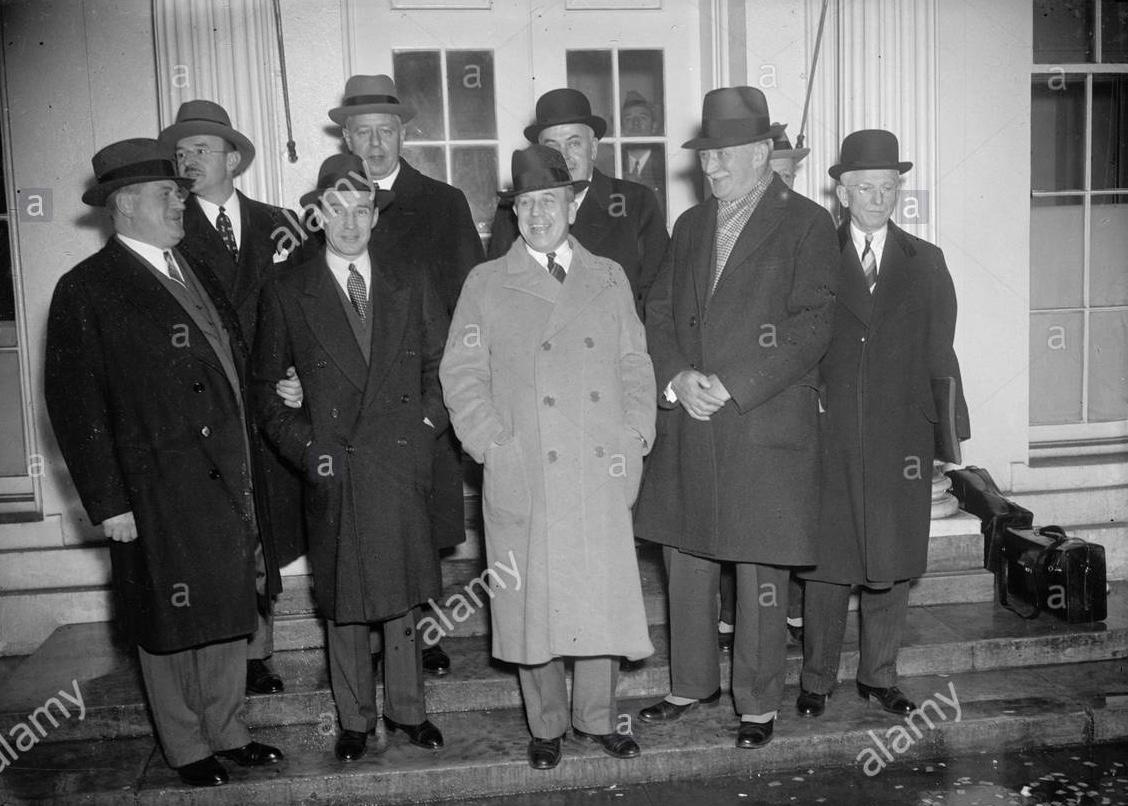
    [1] This is a picture of the chairmen on the three major US automobile companies and their directors outside the White House. It was taken in December 1941 after the Japanese attacked Pearl Harbour. These chairmen had been summoned by President Franklin Roosevelt

    [2] Totally unprepared for war, lacking military equipment and not having any armaments manufacturer who could equip a modern army, President Roosevelt knew he was in big trouble after the December 7 attack on Pearl Harbour. His country was at war with a nation that had spent the last 10 years arming itself to the teeth

    [3] On December 8 1941, the US declared war on Japan and to make matters worse for Roosevelt, Germany, Japan’s ally, declared war on the US. Subsequently, on December 11 1941, President Roosevelt signed a declaration of war against Germany too

    [4] Knowing he had zero chance of winning this war against the industrial armies of Japan and Germany, President Roosevelt summoned William Knudsen, the president of General Motors, Henry Ford, the president of Ford Motors and Kaufman Keller, the president of Chrysler to the White House for a make-or-break meeting and read them the riot act

    [5] President Roosevelt told them in plain language that they had to turn their factories into war machines or the US would be crushed. These three gentlemen did not disappoint him as they delivered big time

    [6] It took the US automobile industry 18 months to get up and running but when they did, they out-produced everybody else but such a gulf that there was only going to be one winner in the war. General Motors became the largest military contractor on earth, manufacturing 119,562,000 shells, 206,000 aircraft engines, 97,000 bombers, 301,000 aircraft propellers, 198,000 diesel engines, 1,900,000 machine guns and 854,000 military trucks.

    [7] Chrysler had never made tanks before but the company built a factory from scratch. Known as the Detroit Tank Arsenal, this Chrysler plant made roughly as many tanks during the war than all the Nazi factories combined

    [8] For its part, Ford, which became the nation’s third-largest military contractor, built a production facility called Willow Run, the largest factory under one roof in the history of the world, churning out 18,482 B-24 Liberators bombers. So many labourers worked at Willow Run, the government had to build a city from scratch. It was named Bomber City, providing the workforce with homes and infrastructure near the factory

    [9] Nigeria’s next president needs some chief executives he can invite to Aso Rock and ask them to fill the country’s production vacuum by manufacturing 2m tractors, 5m electricity transformers, six 10,000MW power plants, 500,000 railway carriages, 200m tonnes of processed foods, 100m tonnes of clothing materials, etc to kickstart the economy

    [10] Unfortunately, 60 years after independence, there are no such industrialists and manufacturers a Nigerian president can call on. Nigeria’s rich made their money shamelessly importing finished products and distributing them, looting government funds or getting government contracts. Is our problem really bad political leadership?

  • Feature: Naira Redesign, Queues and the Quest for a New Nigeria

    Feature: Naira Redesign, Queues and the Quest for a New Nigeria

    By Elvis Eromosele

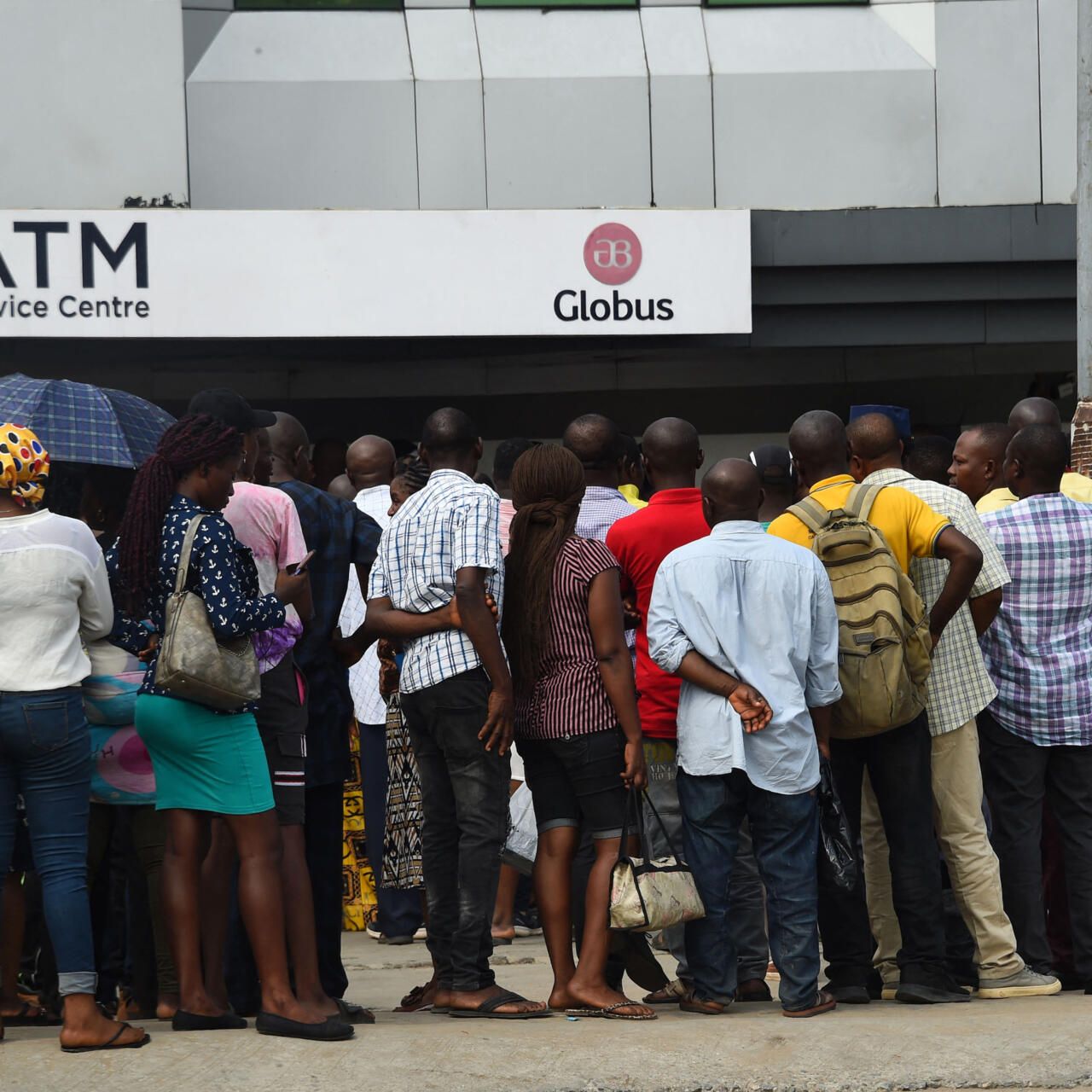
    The amount of queueing Nigerians have been subjected to in the last couple of weeks is unprecedented. It is equally unbecoming. It’s almost like the country had gone back four decades.

    Fights have broken out in queues at bank facilities, filling stations and INEC and LGAs offices across the country. There are trending videos of people stripping naked in protest inside banking halls, others hitting each other with queue dividers and one person has been confirmed dead inside a banking hall, somewhere in Asaba. Nigerians born in the 2000s, GenZs, should be forgiven for thinking the end of the world is here.

    On a typical day, a person will queue to collect new currency notes at the bank, rush to queue at the filling station to buy supposedly subsidized petrol at exorbitant prices and then drive to the closest INEC office to queue for permanent voter cards (PVCs). This is not sustainable.

    The worst part is that no one is accepting responsibility for the inanity.

    The CBN Governor, Godwin Emefiele, has consistently held that the banks are given enough stock of the new naira notes. The endless queues in and around banks question the veracity of this claim. The CBN has now alleged sabotage by the banks and has deployed a monitoring task force to keep an extra eye on their operations. This shows the frosty state of the relationship between the banks and its regulator.

    The CBN inspection and ICPC teams have caught a couple of banks hoarding the new naira notes. They should continue the good work that they’re doing to maintain control.

    The reality is that the suffering is real, the pain is widespread and anger is rising to a boiling point. The CBN must act to ease the pain. It is a case of demand and supply – make more new naira notes available across the banks, monitor the deployment and see the relief across the land.

    The naira redesign, according to the CBN, is expected to strengthen the economy, reduce the expenditure on cash management, promote financial inclusion, and enhance the bank’s visibility of naira supply. It also seeks to drive the quest for a truly cashless society. It is a good thing.

    It is a change management issue. The CBN ought to have managed it better. In systematically phasing out the old note, it should have introduced the new notes earlier and ensured availability in ATMs all over the country with a restriction on the amount that can be cashed per time.

    The cashless policy beyond the cash supply challenge is a digital banking infrastructure issue. Digital banking deals with everyday essentials, including checking balances, reviewing transactions, making payments and transferring funds, whether using USSD, banking apps or online/web-based systems. It is thus a sad commentary on the actual state of the nation’s digital financial infrastructure to see apps and servers collapse under the strain of increased traffic. It shows a lot still needs to be done to strengthen the system. Transactions are not completed; alerts fail to arrive and all sorts of strange messages occur for the first time.

    During this season of madness, some banks have been heard whispering to customers that the network fault that they are complaining about is failings from the telecommunications side. Telcos do not need to respond to this allegation. They simply need to work closely with financial institutions to make the transactions seamless. The first step in solving a problem is recognising there is one.

    One more thing, the CBN must also look at removing ALL charges for online and POS transactions in the short term. It can later look at a reduced fee for these transactions as volume has risen.

    The N100 and N50 naira notes are not being redesigned, they should be widely available. CBN must stick with the deadline and work assiduously to ease the flow of cash. The cashless economy cannot happen overnight. We can admit that progress has been made.

    On the fuel queues which have persisted for over five months, the NNPC Limited consistently claimed it had enough fuel and urged the public to shun panic buying. The problem has remained.

    The DSS, in December, gave the NNPC Limited and marketers 48 hours to end fuel scarcity. We are still here.

    The House of Representatives also gave the NNPC Limited a week ultimatum to end the artificial scarcity of petroleum. It has long expired without any respite.

    The Presidency has equally waded in with little success. The problem has proven intractable.

    The economics is difficult to follow. How can the government be budgeting trillions for fuel subsidies and Nigerians are buying at double the approved price? Something is not right here. In a season of a global oil boom, Nigeria may be the only oil-producing nation with citizens queueing long indeterminate hours for fuel. Something is missing here. Someone is not telling Nigerians the truth. Between NNPC Limited and the major Marketers, there is a gulf.

    The citizens are been made to suffer and pay for their failings.

    In addition, the federal government cannot continue to pretend to be unaware of the problems that Nigerians are going through. It must, as a minimum, look to fix it, apply necessary sanctions and ensure the availability of petroleum products across the country.

    The queue for PVCs is another queueing battle Nigerians are currently contending with. News reports indicate that no fewer than 6.7 million Nigerians have yet to collect their PVCs less than four weeks before the general elections. Over two million of this number are in Lagos and Abuja alone.

    Before we heap the blame on the citizens, let us remember the reports of missing PVCs, poor communication about collection points and claims of extortion against INEC officials since the collection of the cards commenced on 12 December. Some people have complained on social media of discrimination from compromised INEC officials stalling the release of PVCs to people from a particular tribe, especially in Lagos State. Many people were told their PVCs had not been printed after over six months of registering. That is untidy on the part of INEC. Bank ATMs cards are now printed on demand why should PVCs take forever?

    Thankfully, the umpire has been responsive. It set up collection centres in the wards, started sending text messages to people to ease the process and even extended the collection deadline.

    These are good steps. But INEC can do better. INEC must do better. Registration and collection on PVCs should be open all year round in its offices. This ad-hoc, fire-brigade approach doesn’t cut it any more.

    The PVC queue is important. It is expected to prove useful in determining the next leader of the country. February 25, 2023, Nigerians will have to queue to cast their votes. Let us queue patiently on the day. When we queue and vote wisely, we can take back Nigeria

    Eromosele, a Corporate Communication professional and public affairs analyst lives in Lagos.

  • New Technologies to Groundwater Exploration and Management may Emerge- Ojeniyi

    New Technologies to Groundwater Exploration and Management may Emerge- Ojeniyi

    Ms. Janet Ojeniyi is the Chief Executive Office of HydroNav Geosciences. She is a highly skilled hydrogeologist with a keen passion for exploring and comprehending the intricacies of groundwater systems.

    The Okeho-born has cultivated a comprehensive understanding of geology in various environments, including basement complex and sedimentary environments. 

    She has deployed her skills and knowledge to devise innovative solutions to water-related challenges that impact communities and the environment. SHe is a graduate of Geophysics from the Ladoke Akintola University of Technology, Ogbomoso, Oyo State.

    The Editor of News Wings NG, Kayode Awojobi, had a chat with her, excerpts:

    NW: Water is an essential component of human existence, and many people do not have access to safe and hygienic water. What inspired you to take up borehole drilling as a profession? 

    JO: Access to clean and portable water is crucial for maintaining good health and ensuring the well-being of communities. Borehole drilling provides a solution to the shortage of clean water in many parts of the world by allowing for the drilling of wells that provide access to this essential resource. This profession plays a duo role- it improves the quality of life for individuals and promotes economic development, as access to water is vital for many industries and agricultural activities. In addition, borehole drilling can help to mitigate the effects of droughts and water scarcity, which is becoming increasingly frequent because of climate change. By providing access to clean water, borehole drilling professionals help to create more sustainable and resilient communities.

    Ms Ojeniyi at work

    NW: As a young lady, how do you cope with the stress attached to this job?

    JO: As a young female geoscientist who has worked in borehole drilling, I understand the stress that can come with the job. To manage this stress, I prioritize self-care activities, such as exercise and mindfulness practices, which help me maintain a healthy work-life balance. I also build strong relationships with my colleagues, providing me with a supportive network to turn to during challenging times. Additionally, I stay organized and manage my time effectively to ensure that I can complete my tasks efficiently and with a sense of accomplishment. When stress becomes too overwhelming, I reach out for professional help, whether it’s through therapy or counselling. By taking care of myself and using these stress management strategies, I can stay focused and motivated as a borehole drilling professional.

    NW: What are the challenges you’ve faced so far?

    JO: Sexual harassment is a serious issue that can have a significant impact on young women who are working in male-dominated fields. This type of behaviour can range from unwanted sexual advances to physical assault, thereby creating a hostile and uncomfortable work environment.  

    To combat this issue of sexual harassment among ladies who are ready to learn but cannot, that is why HydroNav Geosciences stays. Creating a culture of respect and inclusivity, where all employees, regardless of gender, feel safe and valued, is crucial for eliminating sexual harassment in the workplace. By promoting equal treatment and opportunities, we can work together to create a more just and fair work environment for everyone.

    NW: With the avalanche of people in the borehole drilling business, how have you created a unique selling proposition that has set your business apart and attracted clients to your organization?

    JO: As a female professional in the borehole drilling business, I have established a unique selling proposition by combining my expertise with innovative strategies. Building solid relationships with clients and offering value-added services can also set my business apart. I am utilizing technology and promoting a strong brand image to make my business more competitive and attractive to potential clients.  

    Ms Ojeniyi at work

    NW: With the rate at which people are drilling boreholes in every house, don’t you think that soon, there will be an end to the request for your services?

    JO: The demand for borehole drilling services may change over time, but the need for access to clean and safe water is likely to remain constant. The world’s population is growing, and water demand is increasing along with it. As a result, the borehole drilling industry will probably continue to evolve and adapt to meet the changing needs of communities and industries. New technologies and approaches to groundwater exploration and management may also emerge, creating new opportunities for borehole drilling professionals. While the demand for borehole drilling services may fluctuate, the importance of access to clean water and the ongoing need for responsible management of groundwater resources suggests that the industry is likely to remain a vital part of the infrastructure of many communities for the foreseeable future.

    NW: People complain that borehole drilling nowadays is not as quality as before. What’s your take on this?

    JO: Several factors can affect Borehole drilling quality, including the expertise of the drilling team, the quality of the equipment being used, and the area’s geology. Quacks, or unqualified individuals who claim to be experts in the field, can certainly harm the quality of borehole drilling. If they have the knowledge and experience required to assess the geology of the area properly, they may need to properly locate and drill the borehole, leading to problems with the borehole’s stability, water yield, or quality. It is crucial for individuals and organizations looking for borehole drilling services to thoroughly vet potential contractors to ensure that they are qualified and experienced professionals.

    NW: What improvement has happened to borehole drilling over the years?

    JO: Borehole drilling technology has improved significantly over the years, becoming more efficient, cost-effective, and environmentally friendly. Advancements in drilling equipment and techniques have made it possible to drill deeper and more accurately, reducing the time and resources required to complete a borehole project. New materials and coatings have been developed to improve the durability and lifespan of drilling equipment, as well as to reduce friction and increase the speed of drilling. The integration of advanced technologies such as geophysical logging, real-time monitoring, and computer-aided drilling has greatly enhanced the accuracy and efficiency of borehole drilling. These improvements have made borehole drilling a more reliable and accessible option for many applications, including water well drilling, geothermal energy production, and mining operations.

    NW: Your advice to young ladies like you and other graduates.

    JO: As a young female hydrologist, I advise you to stay focused on your goals and continually seek opportunities to improve your skills and knowledge. It is important to be confident in your abilities and proactive in seeking new challenges and experiences. Networking is also a key component of success in any industry, also attend industry events and conferences, and reach out to professionals in your field to establish connections and learn from their experiences. It is also important to keep up with the latest trends and developments in your field and to consider obtaining certifications or advanced degrees to show your expertise and commitment to your profession.

    Finally, don’t be afraid to ask for help or guidance when needed, and always strive to maintain a positive attitude and a strong work ethic. With hard work, dedication, and a commitment to continued learning and growth, you can succeed and make a meaningful impact in hydrology. Internships provide valuable hands-on experience in a real-world work environment and allow individuals to apply the skills and knowledge gained through their education. They can also help individuals gain exposure to different industries, job functions, and company cultures, allowing them to make informed decisions about their future career paths.

    Connecting with senior colleagues can be especially beneficial in an internship, as they often share a wealth of knowledge and experience. Senior colleagues can provide guidance, mentorship and offer valuable insights into the industry and company. This will help interns build their professional network and make connections that can be valuable for their future careers. Additionally, interning under a senior colleague can provide an opportunity for interns to observe how successful professionals in their field operate and learn from their approach to work.

    To engage the services of Janet Ojeniyi, you can reach her on 09032355652

  • Feature- Currency Exchange- Birth Pains of Nationhood

    Feature- Currency Exchange- Birth Pains of Nationhood

    by Ayo Akinfe

    Nigerians have got to understand that the hardships they are enduring during this currency exchange programme is one of the birth pains of nationhood

    [1] Nigerians are currently going through a torrid time as the country redesigns its currency the naira. Unfortunately, there is no shortcut to national development. Every nation must go through these traumas

    [2] Europeans went through far worse during World War Two and they came out much stronger for it. The sacrifices they went through made them a much stronger people

    [3] Take our former colonial masters Britain for instance. For the duration of the war, they had to live with rationing, food queues and deprivations, all at a time when German bombs were raining down on them. In January 1940, the British government introduced food rationing. The scheme was designed to ensure fair shares for all at a time of national shortage

    [4] Basic foodstuffs such as sugar, meat, fats, bacon and cheese were directly rationed by an allowance of coupons. Housewives had to register with particular retailers

    [5] A number of other items, such as tinned goods, dried fruit, cereals and biscuits, were rationed using a points system. The number of points allocated changed according to availability and consumer demand. Priority allowances of milk and eggs were given to those most in need, including children and expectant mothers

    [6] As shortages increased, long queues became commonplace. It was common for someone to reach the front of a long queue, only to find out that the item they had been waiting for had just run out

    [7] Not all foods were rationed. Fruit and vegetables were never rationed but were often in short supply, especially tomatoes, onions and fruit shipped from overseas. The government encouraged people to grow vegetables in their own gardens and allotments

    [8] Certain key commodities were also rationed – petrol in 1939, clothes in June 1941 and soap in February 1942. The end of the war saw additional cuts. Bread, which was never rationed during wartime, was put on the ration in July 1946

    [9] It was not until the early 1950s that most commodities came ‘off the ration’. Meat was the last item to be de-rationed and food rationing ended completely in 1954

    [10] One way to get rationed items without coupons, usually at greatly inflated prices, was on the black market. Shopkeepers sometimes kept special supplies ‘behind the counter’, and ‘spivs’ – petty criminals – traded in goods often obtained by dubious means. By March 1941, 2,300 people had been prosecuted and severely penalised for fraud and dishonesty.

  • Feature: Nigerians need Discipline to get through this Current Crisis

    Feature: Nigerians need Discipline to get through this Current Crisis

    By Ayo Akinfe

    Nigerians need the discipline of the Tuskegee Airmen, the Samurai Warriors or the Templer Knights to get through our current crisis.

    [1] World War Two is one of my great passions as I could study it non-stop 24/7. It led to so many innovations and altered the way we live to such an extent that it deserves to be studied 365 days a year

    [2] One of the biggest revelations of the war were the Tuskegee Airmen. Four squadrons of all-black African Americans were created to fail by the racist US military high command but alas, they ended the war as the world’s best-ever pilots

    [3] Prior to World War Two, many in the US military believed that blacks would not perform well in combat and were incapable of flying. A 1925 study conducted by the Army War College concluded that blacks were inherently ill-suited for combat physically and psychologically. These Tuskegee Airmen put such racists to shame

    [4] They were the best fighter escort ever seen in history. The Tuskegee experiment was expected to fail but not only was the programme a milestone in training blacks as military pilots, but they also went on to succeed with flying colors. Tuskegee pilots garnered some of the most envied military records in history and more importantly, advanced the civil rights movement by setting the precedent that would force the American military to begin to integrate fully in 1948

    [5] Also, the Tuskegee programme forged a group of men who would earn advanced degrees and make notable achievements in the fields of law, social policy, politics, medicine, education and finance. Surprisingly, aviation was not on this list as private aviation industries were closed at the time to blacks

    [6] That the 926 service members who graduated from Tuskegee succeeded at a time when racist attitudes were officially sanctioned in the military is a testament to the men’s extraordinary determination to succeed as pilots, which by its nature is one of the most academically and psychologically challenging areas of military service

    [7] What the racist recruiters failed to realise was that because they set the entry bar so high for the Tuskegee Airmen, they created an elite by default. Only the best of the best made the cut, compared with the mainstream airforce anyone could join

    [8] Also, because most of the Tuskegee Airmen had some form of post-secondary school education, intellectually, they were top notch. They found it easy to outmanoeuvre the more experienced Luftwaffe German pilots

    [9] What Nigerians need to learn from the Tuskegee Airmen is that when you are set up to fail, the best way to respond is to excel beyond the wildest dreams of your detractors. Put them to shame by refusing to fail as they were hoping you would

    [10] With elections looming, a chronic scarcity of cash and the Nigerian elite once more preparing for office with no programmes, policies of programmes of action, it is time for the masses to say we will make this work despite all the odds. Our politicians are only going into office to enrich themselves but can we the masses not just choose to do a Tuskegee Airmen on them?