Category: Features

Featured posts

  • LCCI release Statement on the outlook of the Nigerian Economy

    LCCI release Statement on the outlook of the Nigerian Economy

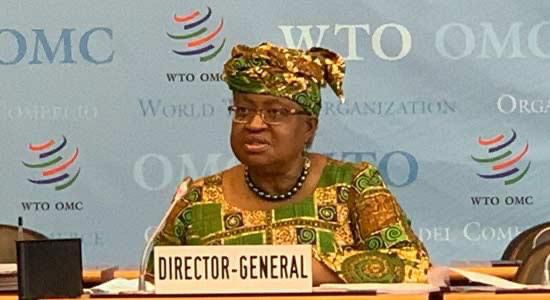
    The Lagos Chamber of Commerce and Industry (LCCI), the foremost economic thinktank and advocacy body, has considered various issues as they emerged looking at how these issues affected the business community has reviewed the year 2022 and projected an outlook for the year 2023.

    In a statement signed by Dr. Chinyere Almona, FCA, Director-General, Lagos Chamber of Commerce & Industry, considered various issues as they emerged looking at how these issues affected the business community and made very useful and practical recommendations towards having a thriving and enabling business environment

    Excerpt from the statement goes thus-

    Global Economy

    As we enter the year 2023, the global economy, beyond the mounting uncertainties, may continue to face a confluence of challenges. From persistently high inflation and aggressive global monetary policy tightening to the continued disruptions caused by the Russia-Ukraine war and the energy crisis, weak consumer demand and political upheavals, our projected outlook remains a hard landing. With several shocks suffered by many economies and over a greater portion of 2022, various projections and analysis of economic conditions across regional blocs point to the likelihood of a recession or a significant slowdown of growth in 2023 due to spiralling inflation, high energy cost, monetary policy tightening, and weakening consumer demand. Global growth, though positive, slowed down by about 50 percent between 2019 and 2022.

    Looking further into 2023, the war in Ukraine and mounting sanctions on Russia may all continue to impact supply chains for commodities and shocks to financial systems across the world. The likely failings of the G7 countries’ agreement on Russian oil price cap, resurgence of Covid infections and likely return of restrictions, and renewed tensions in the Middle East may all continue to keep oil price upward and volatile in the short term.  Oil prices rose by 44.87 percent in 2022, the highest in five years.

    Domestic Economy

    For Nigeria, the base factors that may continue to drive the major economic indicators are the rising inflation rate, tight monetary policies, an unstable currency, foreign exchange scarcity, debt burden, currency management, food supply disruptions, exchange rate volatility, and election spending.

    Monetary Policy Developments

    During the year 2022, the Central Bank of Nigeria (CBN), in response to the spiralling inflation rate, deployed a tightening monetary policy to stabilize prices. The rates rose from 11.5% in January and peaked at 16.5% as at November 2022. This is expected to rise further during the MPC meeting in January to 17% to curb the persistent inflation and prevent capital flight. The Chamber had earlier recommended that rate hikes alone would not curb inflation except the real factors like food supply disruptions, high energy cost, scarcity of FOREX, and the security challenges around agricultural production locations that have fuelled low production and high logistics cost. In 2023, we need fiscal interventions to support strategic sectors like manufacturing, agriculture, transport logistics, and more allocation of FOREX to productive sectors.

    Economic Growth

    The Nigerian economy in 2022 recorded growth in the first three quarters but slowing down from 3.54% in Q2 to 2.25% in Q3. We expect to have a growth reported for the last quarter of 2022. The slowdown was driven by decline in aggregate demand in the face of inflation spikes, commodities’ supply chain disruption, high energy cost, and FOREX scarcity. In 2023, we expect to see growth in sectors like manufacturing, agriculture, transport, telecommunications, and trade.

    With Nigeria having the third largest subscriber base in Africa (after South Africa and Egypt), the telecoms sub-sector is expected to record growth above the 10.1% achieved in Q3 2022 driven by the growing deployment of Payment Service Banks (PSB) by the telcos, increase in subscribers using more telcos’ services, and the expected innovation coming with the launch of the 5G technology. The Government needs to be more sensitive to the regulation of the ICT sector to promote growth and support private sector operations.

    Agriculture Sector

    The agriculture sector witnessed quite a lot of challenges ranging from insecurity, poor road network to connect markets, high cost of farm inputs to recently, the flooding disaster caused by climate change. Despite these challenges, the sector recorded growth all through the year 2022. In 2023, government’s intervention through targeted financing support to this sector can boost agricultural production, create jobs, and lower the spiking food inflation that has been responsible mainly for the rising headline inflation all through 2022. The African Continental Free Trade Agreement (AfCFTA) provides huge opportunity to explore the African markets with our agricultural products. We urge the Federal Government to scale up plans of establishing special economic zones where agro-processing activities are supported to produce finished food products for our markets and for export. With some of these challenges resolved, we expect to see a higher growth rate at above 3% higher than the less than average 2% recorded in 2022. We reiterate our call earlier made that government at all levels should invest more on prevention of climate change-induced natural disasters like flooding.

    Manufacturing

    The manufacturing sector suffered from headwinds like scarcity of FOREX for import of inputs, weakened consumer demand due to weak purchasing power, high energy cost, logistical challenges, policy uncertainties, and harsh regulatory environment. With these factors persisting into 2023, we may likely record a growth in the sector away from the negative growth of -1.9% as at Q3 of 2022. With lowering imports due to forex scarcity, local manufacturing could rev up in growth to meet the growing unmet local demand for hitherto imported finished products. However, this can only happen if we address issues like rising inflation, scarcity of FOREX, high energy cost, high interest rates, and logistics challenge due to insecurity in most parts of the country. In the case of subsidy removal by the new administration, we should expect some shocks to the economy in the short term with possibility of adjusted pricing and demand in response to market forces in the long run. The Dangote Refinery coming into operations by mid-year will boost production levels and support growth in the manufacturing sector. However, the contribution of manufacturing to GDP may fall from the 8.2% recorded during the third quarter of 2022 except the Government takes urgent and targeted financing support to critical productive infrastructure in the country.

    Construction and Real Estate Sector

    The construction and real estate sector will respond positively to a rise in investment from people wishing to store value through real estate investment. The last quarter of 2022 may have witnessed huge investment in this sector that would transmit into real growth in the first quarter of 2023. The coming on stream of Ajaokuta Steel Company is expected to support a solid growth in the construction sector. The recently approved access to pension funds for mortgage policies can have a positive effect on the real estate sector as more people are able to afford a mortgage to purchase houses. Some of these innovative financing options may support a robust growth in connected sectors. This, again, calls for best practice regulation by the Government to create an enabling environment where private sector operations can thrive. The windfall from the electioneering campaigns by some actors may also find their way into the real estate sector. With the dire need to boost foreign exchange earnings, the Government should invest more in export support infrastructure and create linkages into the African market where we can export more products like steel from the Ajaokuta Steel Company to earn foreign exchange in the long run. With all of these, the sector can contribute higher rate than the 5.2% recorded in Q3 2022.

    Public Debt

    As at the end of the first half of 2022, Total Debt Service stood at ₦2.597 trillion, higher than the prorated sum of ₦1.978 trillion .by ₦619.81 billion (31.33 percent). Also, the interest payments on Ways and Means collected from the Central Bank of Nigeria amounted to ₦714.74 billion. According to data from the Budget Office of the Federation, the sum of ₦1.333 trillion was used for domestic debt servicing, a difference of ₦52.34 billion (4.09 percent) from the prorated half year projection, while ₦549.70 billion was spent on external debt servicing during the period under review. With the approved plan of the Federal Government to restructure its Ways and Means loans of N23 trillion, Nigeria’s total debt stood effectively at N67.7 trillion by end of 2022. Clearly, we must watch the cost implications of our borrowing and spending.

    The Lagos Chamber implores the Federal Government to sustain its targeted interventions in selected critical sectors like agriculture, manufacturing, export infrastructure, tackling insecurity, and free more money from subsidy payments. It is very imperative that we need sound monitoring and evaluation over the budget allocations to capital projects and defense spendings to respectively tackle infrastructural deficit and the fight against insurgency. We urge the government to tackle oil theft to earn more foreign exchange, borrow from cheaper sources to reduce the burden of debt servicing, and pave way for the removal of the fuel subsidy by the incoming government. With increased spending by the government for census and general elections, the government must block revenue leakages, reduce costs, and empower the private sector to create jobs and generate more revenue to the government.

  • Feature: Transformative ideas for South- East Nigeria

    Feature: Transformative ideas for South- East Nigeria

    By Ayo Akinfe

    With Igbo traders now returning to their bases across Nigeria, it is time to cash in on this mass movement. I expect Peter Obi to come up with a plan that looks something like this

    [1] Get Innoson to purchase the rights of The Beetle from Volkswagen so it can manufacture electric cars in Nnewi

    [2] Establish a massive cattle ranch in Abia State to supply the leather for a shoemaking conglomerate in Aba

    [3] Get a pharmaceutical giant like Pfizer to open a plant in Owerri or Orlu

    [4] Expand on Rochas Okorocha’s statue parks across Imo State to quadruple Nigeria’s tourism revenue

    [5] Convert the old Enugu Coal Mine into a conference centre, tourist attraction, restaurant hotel, theme park and underground swimming pool

    [6] Build the Third Niger Bridge from Illah to Nzam. I want to see something dramatic like the world’s first river crossing that is also an aquarium

    [7] Dredge the port of Onitsha and converting it into a massive inland port. I want to see a container port the size of say Felixstowe

    [8] Industrialise the Uburu salt lakes. I want to see manufacturing plants there that mass produce salt for the global market

    [9] Manufacture bomb-proof vehicles at the Ohafia military facility. In Afghanistan, the US is now using armoured personnel carriers that are IED-proof. There is no reason why we should not be their major supplier

    [10] Turn the Umuahia War Museum into an international tourist attraction like the Nazi Concentration Camps. Do you know how many people visit Treblinka every year?

  • Feature: What Buhari needs to incorporate in His New Year Speech

    Feature: What Buhari needs to incorporate in His New Year Speech

    By Ayo Akinfe

    look forward to President Buhari saving his best for last and giving us this New Year’s Day speech as his departing gift to Nigerians

    [1] We will boost generated electricity from the current 7,000MW to South Africa’s 50,000MW

    [2] This government will increase the kilometres of tarred roads from the current 200,000km to South Africa’s 750,000km

    [3] Between now and when we leave office, we will increase the length of our railway network from the current 4,000km to Pakistan’s 8,000km

    [4] By May 2023, we will increase our literacy rate from the current 60% to Brazil’s 91.7%

    [5] This government will boost steel production from the current zero level to Egypt’s 7m tonnes

    [6] We will increase sugar production from the current 37,500 tonnes to the 762,000 tonnes of Sudan

    [7] This government will increase annual rice production from the current 7m tonnes tonnes to Thailand’s 32m tonnes

    [8] We will boost palm oil production from the current 1.4m tonnes to Malaysia’s 19m tonnes

    [9] Nigeria will increase her natural rubber production from the current 150,000 tonnes to India’s 900,000 tonnes

    [10] We will set ourselves the long term goal of increasing the ratio of hospital beds from the current 0.5 per 1,000 people to the Turkish level of 2.7 per 1,000 people

    Nigeria is supposed to be a Mint country made up of Mexico, Indonesia, Nigeria and Turkey and a member of the D8 leading developing eight countries. The D8 is made up of Iran, Indonesia, Bangladesh, Pakistan, Turkey, Malaysia, Egypt and Nigeria, so our standards should always match up.

    At the moment, we are lagging behind in too many areas. As you can see, I have not compared Nigeria with any industrial giant like Germany, Japan, France or the UK but I do not think it is too much to ask that we keep up with other developing nations.

  • Feature: Nigeria has the potential of building these 10 largest facilities in the world

    Feature: Nigeria has the potential of building these 10 largest facilities in the world

    By Ayo Akinfe

    Were I running for president I would deliver a New Year’s Day broadcast in which I would announce that Nigeria would build the 10 largest facilities in the world in these sectors between 2023 and 2027.

    [1] Palm oil plantation
    [2] Cattle ranch
    [3] Coconut plantation
    [4] Solar farm
    [5] Electric car assembly line
    [6] Transformer manufacturing factory
    [7] Cocoa plantation
    [8] Oilseed crushing plant
    [9] Malaria pharmaceutical plant
    [10] Solar panel assembly plant

    When you are the world’s largest black nation, you simply have to think biggest, tallest, longest and fastest. Today, everything they do in China and Dubai is built with that in mind.

    Nigeria’s fundamental problem is that we are not productive enough. Solve that and you will resolve 90% of our socio-economic and political woes.

    Our watch phrase has got to be post-coronavirus growth. After World War Two, the Soviet Union was achieving something like 28% annual economic growth, which is what we should aim for post-Covid-19.

    By 2050, we will be the third most populous nation on earth. That brings with it the responsibility of earth-shattering edifices.

  • Feature: Proposed Aviation Masterplan for Nigeria

    Feature: Proposed Aviation Masterplan for Nigeria

    By Ayo Akinfe

    Has any of the presidential candidates come up with an aviation masterplan as part of their manifesto?

    [1] When you have a population of 200m, are located bang in the middle of your continent and your populace love travelling, you should have a one of the most lucrative aviation industries in the world. Indeed, Nigeria should be an African aviation hub

    [2] Nigeria is a currently a mono-economy. When 95% of government revenue comes from crude oil sales, we have no choice other then to look for alternative sources of income if we do not want to perish as a people

    [3] By my calculations, Nigeria needs to find something like $30bn from alternative sources during the course of 2023 and for me, aviation has got to be one of the cashcows at the top of the list. Why? Because it is a readily available resource, there is a ready-made market available and we actually have the expertise to deliver on it

    [4] In 2019, Ethiopian Airlines generated revenue of about $4bn. A well-run Nigerian national carrier with several different facets targeted at the diverse sectors of the market could easily double that. It simply has to be a goal we set ourselves

    [5] For starters, analysts believe something like 60% of the world’s airlines will go bust as a result of the coronavirus pandemic. This means a lot of them are available on the cheap, so Nigeria should be looking to purchase at least two going concerns and merge them into one aviation giant with a global reach

    [6] One area where we can develop a unique niche in which we are the global market leader is the private jet sector. There are about 12 jets in the presidential fleet and most of our general overseers own at least one Gulfstream or Bombardier private jet. I think the presidency should donate its planes to this new carrier and the pastorprueners should be patriotic and do likewise. The donating of their aircrafts to the venture should purchase them a stake in the airline. For instance, if David Oyedepo hands over his five private jets, that should grant him a 10% stake in this new company

    [7] If we start off with a fleet of say 20 donated private jets and buy an existing couple of airlines with a combined capacity of say 100 planes, we are good to go. That recent $3.4bn loan we got from the IMF should be enough to fund this project and get the venture going. With the dire straits these airlines are in, they will happily hand over their assets for anything they can get

    [8] Nigeria is Africa’s most populous nation, in the centre of the continent and the seventh most populated country on earth. We simply have to turn the nation into an aviation hub where everybody flies through when they want to travel to the African continent. We have the potential to generate the passenger volume to make this a gold mine

    [9] We are all aware of how our people ruined Nigeria Airways, so as a safeguard, we should insist that any deal involves the professional managers of any purchased airline running the operation for the next 10 years at least, that the Nigerian government has no more than a 25% stake in the venture and that private sector operators like Allen Onyeama are Nigeria’s representatives on the board of directors

    [10] A well run Nigerian airline could easily replace oil as our national cashcow. Figures do not lie so if you look at the revenue generated by major airlines prior to this pandemic, you will realise that our obsession with oil is nothing but a mental illness of sorts. See – Delta Airlines ($44.9bn), American Airlines ($44.5bn), Lufthansa ($42.3bn), Air France ($31.3bn). Our fixation with crude is just psychological, kind of like the fear of the unknown.

  • Feature: 10 Top Priorities for Nigeria in 2023

    Feature: 10 Top Priorities for Nigeria in 2023

    By Ayo Akinfe

    Just as Lionel Messi set himself the target of wining the World Cup with Argentina, Nigeria should give herself the following top 10 priorities going into 2023

    [1] Increasing generated power from the current 7,000MW to about 50,000MW through a variety of sources like wind, solar, thermal, gas, hydro and waste recycling

    [2] Initiating a Lagos Underground tube network. Lagos is the largest city in the world without an underground network. With 12m people and no metro, you will always take five hours to drive from one end of the city to the other

    [3] Getting Nigeria Air going. We have a massive aviation market and it is crazy that we are not tapping into it. Foreign airlines are having a field day ripping us off

    [4] Starting a high speed railway network, beginning with the Lagos-Abuja route. South Africa has shown us the way with the Johannesburg-Durban line

    [5] Getting the ports of Warri, Calabar, Port Harcourt, Ikot-Abasi and Uyo up to the capacity of Apapa

    [6] Raising our GDP from the current $450bn to about $1trn through an ambitious agribusiness expansion programme that will see us expand production and start processing cash crops like cocoa, palm oil, cashews, coconuts, groundnuts, neem, papaya, cassava, guar gum, kolanuts, shea nuts, yam, etc

    [7] Tapping into the growing automobile market by getting manufacturers to open assembly plants in the country. They should also be encouraged to open at least a plant that is the worldwide manufacturing facility for one car component. It could be that rubber along the door, gearboxes, headlamps, windscreens, wipers, etc

    [8] Crushing Boko Haram once and for all. If need be, drop napalm on Sambisa Forest. Likewise, the Fulani herdsmen need to be given the “Maitatsine treatment.”

    [9] We currently have about 193,000km of tarred roads. We need to bring it up to South Africa’s level of 947,000km or at least Pakistan’s level of 262,000km. Africa as a continent is “roadless” with South Africa and Nigeria in a league of their own. However we need to catch up with the South Africans

    [10] Our literacy rate is currently around 60% but we have 13m out of school children. We need to raise the literacy level to 75% over three next four years and bring the number of out of school kids down to 3m in the first instance

  • Feature: Nigeria needs Bilateral Trade to create wealth

    Feature: Nigeria needs Bilateral Trade to create wealth

    By Ayo Akinfe

    Do any of Nigeria’s Presidential candidates understand the importance of bilateral trade deals in creating wealth?

    [1] Has it occurred to most of us that Abuja does not have any understandable and beneficial bilateral trade agreements with any other nation on earth. Everything is done on a case-by-case basis

    [2] Were we a thinking people for instance, we would have long signed a free movement of goods and people agreement with South Africa, effectively granting citizenship of each country to nationals of both nations. That would have shut up all those South African xenophobes and forced them to up their game to the level of the migrant Nigerian shopkeeper. The message would be simple – Measure up or starve!

    [3] Nothing cuts the ground from underneath the feet of a man with an “entitlement complex” as forcing him to compete on an equal basis. It could be Brexiteers in the UK, Omo Oniles in Lagos, unskilled South African youths, illiterate born-to-rule Fulani herdsmen, secessionist-leaning Ipob youths or outright fascists and Neo-Nazis. They all have the same thing in common. They hate “outsiders”, feel threatened by competition, want to “do their own thing” but above all, believe they are superior to the people they look down on and are of the opinion that Mother Nature owes them a debt

    [4] Going forward, we simply need bilateral and regional deals to make it clear that the era of the isolated kingdom is over. You have to compete in a global world if you want to survive. Why should jobs be reserved for you when there are others who can do them better, be more productive, generate more wealth and deliver customer service better than you can?

    [5] This is where Nigeria’s foreign ministry comes in. We need to have about 12 or so well-targeted bilateral agreements covering areas like commerce, manufacturing, security, tourism, agriculture, transport, etc, which deliver long term benefits for both parties

    [6] One area where we could easily do this today is in fashion. Is it just me but has nobody else noted that the one European nation most similar to Nigeria is Italy? We have the same dress sense, fashion habits, love for shoes and both appear addicted to designer labels. In an ideal world, Italy should have been Nigeria’s former colonial master, not Britain

    [7] Can someone please explain to me why Nigeria is not wooing Italian fashion chains like Gucci, Giorgio Armani, Byblos, Bottega Veneta, Roberto Cavalli, Costume National, Brunello Cucinelli, Diesel, Dolce & Gabbana, Etro, Fay, Fendi, etc to come and open manufacturing plants in Nigeria? It is a logical step to take as all the necessary factors are present. Labour is cheap, there is a huge domestic market and from Nigeria, the Italians can supply all their distribution chains worldwide

    [8] Italian fashion became prominent during the 11th to 16th centuries, when artistic development in Italy was at its peak. Cities such as Palermo, Venice, Milan, Naples, Florence and Vicenza started to produce luxury goods, hats, cosmetics, jewelry and rich fabrics. Today, Milan is considered the fashion capital of the world. Many Nigerian cities like Lagos, Abuja, Uyo, Port Harcourt, Owerri and Calabar are currently going through a similar transition. Tailors in all these cities are designing mind-blowing outfits but alas, there is no branding and near-zero marketing

    [9] I still find it hard to get my head round the fact that Nigeria has no national iconic fashion company. We should have a company as recognisable as say the NNPC, Shoprite, Dangote Industries, MTN, etc that is renown for quality, the imaginative use of African fabrics and is the world’s leading expert in agbadas, isiagwus, danshikis, kaftans, iro & buba, etc. Its order books should be brimming with international requests. Maybe call it Agbada Enterprises

    [10] How many Nigerians know that the German clothing company Hugo Boss produced Germany’s World War Two uniforms? It was a smash hit as they were top quality, coming with shiny leather boots, belts and jackets that looked like suits. They were a huge morale booster and lifted the Wehrmacht’s spirits in the early stages of the war. That is the kind of company we need to give birth to in Nigeria and Italy is the perfect partner we need for this

  • Feature: Nigeria needs the Ministry of Coastal Affairs

    Feature: Nigeria needs the Ministry of Coastal Affairs

    By Ayo Akinfe

    Not one of the presidential candidates has suggested renaming the Niger Delta ministry the Federal Ministry of Coastal Affairs with a mandate to regenerate the Atlantic seaboard

    [1] Were I runnning for president, a new Federal Ministry of Coastal Affairs would be created. One of its major priorities would be to oversee the construction of a Lagos to Calabar railway line. This would be a high speed rail link that runs at about 250km an hour

    [2] One other big task this ministry would have is that a six lane motorway should also be built along Nigeria’s 853km coastline. It should be pot hole free and tolled to cover its cost

    [3] This ministry would also be tasked with developing, dredging and expanding the ports of Aiyetoro in Ondo State, Warri, Escarvos and Burutu in Delta State, Brass in Bayelsa State, Port Harcourt in Rivers State, Ikot-Abasi in Akwa Ibom State and Calabar in Cross River State

    [4] This ministry would also build an 800km wind farm stretching from Badagry to Calabar and manage the power stations that distribute the generated electricity. It should have a power subsidiary called Coastal Electric

    [5] This ministry would be charged with attracting shipbuilders and ship breakers into Nigeria. It is highly embarrassing that Nigeria does not have one shipyard. How can a nation have 800km of coastline and not even one boatyard

    [6] Our Federal Ministry of Coastal Affairs would also establish and have oversight for a Nigerian Coastguard Service. It should be their job to patrol our waterways and combat criminal acts like piracy, oil theft, arms smuggling, etc

    [7] This ministry would also be handed the responsibility for eliminating gas-flaring in the Niger Delta. Its mandate should be to attract companies to build gas-fired power stations in the region. I want to see one or two companies also given contracts to build a massive Nigerian gas pipe network to distribute its products to every home in the country

    [8] Our Federal Ministry of Coastal Affairs should also be responsible for expanding trade with central Africa. It should expand the Calabar air and sea ports and have daily flights and shipping services to places like Yaoundé, Douala, Libreville, Gaborone, Malabo, Brazzaville, Kinshasa, Luanda, etc

    [9] This ministry should also build a six lane motorway linking Ikot Nakanda in Cross River State with Cameroon. At the moment, if you want to drive into Cameroon you have to go all the way up to Ikom in central Cross River State. Along the coastline, if you want to cross the border, embarrassingly, you need to go by boat

    [10] This enlarged ministry should also set up the West African Maritime Transportation Company. It should have a cargo shipping arm and a passenger service. The ultimate aim is to build it up into an global shipping company that can compete with the big boys

  • Feature: Era of Right Tax Revenue Utilisation in Africa Beckons

    By Kelechi Okoronkwo

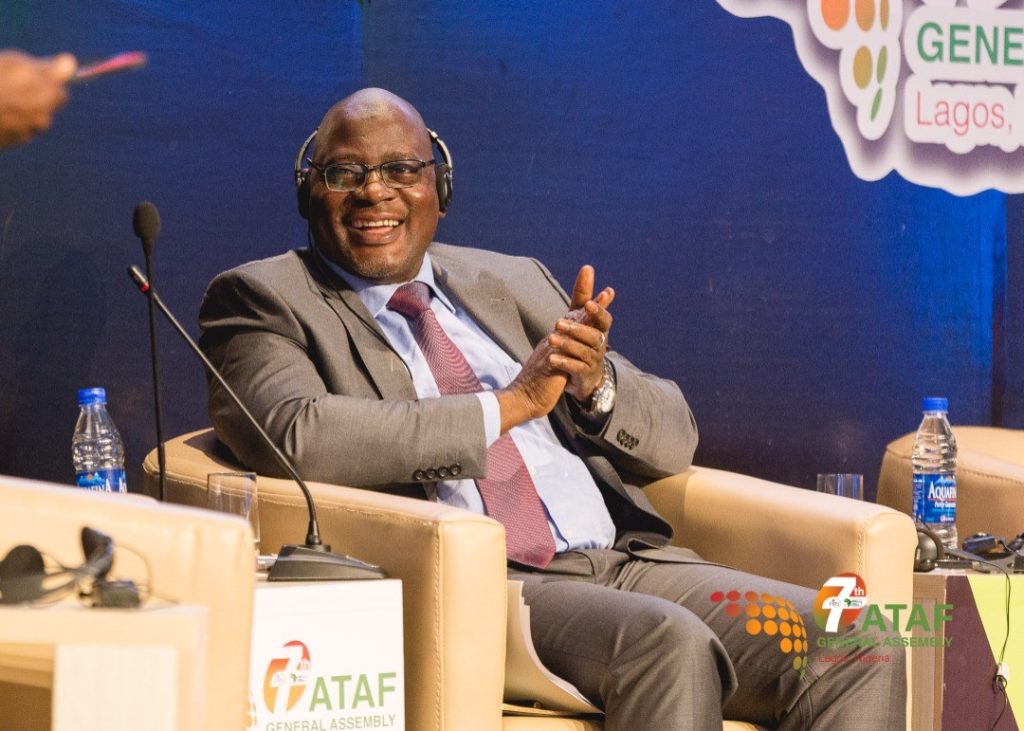
    Success thrills: The Executive Chairman of FIRS, Muhammad Nami, takes his message of rethinking utilisation of tax revenue to ATAF General Assembly.

    A major take-away from the just concluded Seventh General Assembly of the African Tax Administration Forum (ATAF) which held in Lagos, Nigeria, from October 31 to November 4, 2022 is that tax money must be put into good use if more tax revenue is to be generated. Heads of tax agencies from 42 African countries and more than 500 other participants, comprising of 380 registered participants who attended physically, 100 registered participants who participated virtually and about 65 participants who were members of dignitaries’ entourage, were welcomed in Lagos with that simple statement of fact; and that statement reverberated in all discussions throughout the five-day continental tax engagement.

    Over the years, taxmen have avoided this sore part of tax administration. In most tax jurisdictions in Africa, the constitutional responsibility of taxmen ends with the generation or collection of tax revenue. The utilisation of the revenue is left for the government to decide. As a result, taxmen did not even attempt to remind the government of the social contract between the taxpayer and the government.

    The subsisting social contract is that while taxation represents a compulsory transfer of wealth from private citizens to the state, it is publicly desirable only if tax revenue is consistently translated in improvements in publicly provided goods and services, and broader improvements in the quality of governance. In other words, while it is the obligation of the citizens to pay taxes to the government, it is the responsibility of the government to utilise the tax revenue properly to provide the citizens with needed services and infrastructure.

    Taxmen literally endured confrontations by taxpayers who always demanded evidence of tax revenue utilisation. Reports from field show that taxmen often faced stiff resistance from taxpayers during tax compliance drives. As a result, tax administrators lose revenues; and in some cases, get humiliated or even manhandled by angry taxpayers who demanded value for money paid as taxes.  The outcome statement of the Chartered Institute of Taxation of Nigeria (CITN) in its collaborative meeting with the Kwara State University (KWASU) in August 2022 noted that the major cause of low tax compliance in Nigeria was ‘Trust Deficit’ of the taxpayer for the government. A taxman, during the ATAF conference, shared his experience during a tax drive in one market his country’s capital city. The moment the traders identified the group of taxmen who were on tax drive to some offices in the market, the traders mobilised and chased the taxmen out of the market, saying that the government neither constructed access road to the market nor provided power supply to the market after many years of mobilising revenue from the market.

    In Nigeria, the Executive Chairman of the Federal Inland Revenue Service (FIRS) has been championing calls for public office holders to ensure right utilisation of the taxpayers’ money. Nami had observed that taxmen in Nigeria faced resistance from taxpayers because Government at various levels are not doing enough to produce evidence of good use of the taxpayers money. He then started open campaign for judicious and effective deployment of tax revenue. Nami took the call to the ATAF General Assembly in Lagos. In his welcome remarks, Nami urged heads of tax administrations in Africa never to shy away from highlighting the strong nexus between improved tax revenue collection and improved utilisation of the tax revenue. In Nigeria for instance, while available records show that the government at some levels, is making effort to provide the taxpayers with basic social amenities, it is also true that the culture of right tax utilisation needs to permeate the system such that it becomes anathema for any public office holder to divert or misuse the taxpayers’ money. This is the central theme of Nami’s effervescent messages on tax revenue utilisation.

    Interestingly, the theme of the ATAF conference was “Rethinking Revenue Strategies: The Human Face of Taxation”. Nami seized the opportunity to further escalate his thoughts to his colleagues, that giving a human face to taxation involves making the tax money work for the taxpayers, insisting that governments across Africa must begin to rethink governance, engender public confidence and trust in government by providing value for taxpayers’ money in line with the responsibilities of governments under the social contract they have with citizens. He added that it was imperative for African tax administrators to mobilise and speak with one voice as a regional bloc on global tax issues for their collective interests.

    “The fiscal social contract which hinges on the willingness of the citizens to pay tax in return for the provision of public service, is a clarion call on the government at all levels in Africa to rethink governance.

    “In my view, if we must transform the tax system and enhance revenue collection in Africa, there is the need for the government at all levels to engender public confidence and trust in government by providing value for taxpayers’ money,” Nami said.

    Nami also stated that governments should reconsider how projects are reported in the public space, with such reports communicating to convey the idea that taxpayers’ money’s is used to fund infrastructural projects. 

    Also, Lagos State Governor, Babajide Sanwo-Olu who was represented by chairman of the Lagos State Internal Revenue Service (LIRS) Mr. Hamzat Ayodele Subair, in the same vein said that there was the need to give taxation a human face, by implementing projects with taxpayers’ moneys that impact the lives of the citizens. Taking Lagos state for instance, Sanwo-Olu said there can be no development without funding. And in return, the Lagos State Government has given a human face to taxation by providing the taxpayers with their basic needs.

    “There is no development without funding. We have amongst others, embarked on major transformational infrastructure projects cutting across transport, health, education, agriculture, and technology amongst others.

    “These major infrastructural interventions are designed to improve the quality of life of our citizens and re-engineer economic growth and development trajectory with improved productivity of our citizenry, which invariably improves our tax generating abilities. In a bid to save the human face of taxation, communication and feedback from the taxpayer are of paramount importance,” Mr. Subair noted.

    Similarly, in his remarks, the Executive Secretary of the African Tax Administration Forum, Mr. Logan Wort noted that a critical component of rethinking Domestic Revenue Mobilisation is to ensure that the government has an impact on the lives of citizens.

    “While we consider strategies or frameworks within which to enhance Domestic Resource Mobilization on the continent, we must always put into perspective its primary objective—being the impact on people’s lives as reflected by ATAF’s mandate in the new decade which is to serve the higher purpose of enabling and assisting African governments to mobilize their own domestic resources through taxation in order to build states that foster economic growth and social development in the interest and wellbeing of all their citizens.

    “This mandate, especially the latter part, is one we all share in various capacities across our jurisdictions, and one that must drive our Domestic Resource Mobilization objectives”, Mr Wort said.

    Nami’s call for right tax revenue utilisation by African governments dominated discussions throughout the conference; and became a profound peg for rethinking taxation strategies in Africa. With the dramatic acceptance of Nami’s speech amongst the tax administrators, as evidenced by various reactions of participants in the tax conference, there is already a silver lining in the cloud; and one could be optimistic that African Governments would heed these calls for effective tax revenue utilisation; which will in turn cause upshoot in tax compliance and revenue mobilisation in Africa.

    Kelechi Okoronkwo is a Media Support Staff of the Executive Chairman, FIRS.

  • Feature- Naira Redesign: An Economic or a Sociopolitical Solution?

    Feature- Naira Redesign: An Economic or a Sociopolitical Solution?

    By Dr. Harrison Eromosele

    The current economic and sociopolitical environment in which the Central Bank of Nigeria (CBN) possesses certain monopolistic, statutory powers in the creation and management of national currency and foreign reserves is characteristically pained, complicated and stressed. For instance, on the macroeconomic front, there is the unprecedented presence of virulent stagflation (the concurrent existence of unemployment and inflation) following import restrictions side by side with undue applications of ways and means which conspired with a series of external and internal debts that both aggravated the multiplier effect of money supply and crowded out private sector investment respectively. 

    This is, in addition, to exchange rate volatility in a heavily import-dependent economy, the uncontrollable balance of payments deficits resulting in dwindling foreign reserves, frightening national budget deficits leading to escalating national borrowings, and grappling with the existential challenge of a huge underground economy.

    Like never before, political gladiators now wield state powers to restrain opposition parties from campaigning in certain strategic locations. With the rising wave of impunity, there are reports of stack naira bills running into billions, held ahead of the 2023 general elections, apparently for vote buying and other political mischiefs. Physical cash estimably put at hundreds of millions are paid daily across the 36 states and FCT as ransoms to bandits, terrorists, kidnappers, etc. in the land where hunger roars like a ferocious beast in the face of heightening insecurity.

    The above structural background is of great national concern and should be tackled with a great sense of national urgency. However, it does appear from the body language of the CBN Governor and as contained in the CBN fact sheet that much of the solution lies in the CBN currency redesign. This is not surprising as the CBN Governor has since interpreted its mandate beyond its conventional jurisdiction to include agriculture, industries, production, curbing of criminal activities oozing from the political and socio-cultural atmosphere and the moves to cushion the effect of COVID-19. 

    Is the CBN biting more than it can chew? Well, for one, the CBN Act mainly charged it, inter-alia the responsibility “to promote monetary stability and sound financial structure in Nigeria”. This mandate reveals that the monetary authorities have limited powers to single-handedly address the above sociopolitical and economic crises hunting the Nigerian state. This symbolic warfare can only be won in the spirit of the sincerity of purpose, patriotism and proper policy coordination between the monetary and fiscal authorities. 

    Sadly, there are clear signs of rising discordant tones between both authorities. Earlier in October, the Minister of Finance had opened up on national media that her office (which is at the apex of the fiscal authorities) was not carried along with the initiative of currency redesign, even when the extant law made room for the Ministry to be adequately represented through the presence of the permanent secretary of the Federal Ministry of Finance in any of the CBN board of Directors sessions. Meanwhile, the CBN Governor, rather than resolving the purported information gap quietly, chose to use the same media to inform Nigerians that he has the backing of the President.

    Looking at the circumstances, first the economic realities; between December 2015 and September 2022, currency in circulation doubled from N1.46 trillion to N3.23 trillion. This period coincided with the heavy quantitative easing of currency production via the monetary printing press which was a clear violation of section 38 of the CBN Act of ways and means lending, alongside the massive central bank intervention funds, particularly during the COVID-19 era to October 2022. Unfortunately, about 85 per cent of N3.23 trillion (i.e. N2.7455 trillion) in circulation is outside the vaults of commercial banks. In effect, monetary policy becomes impotent, as a chunk amount of currency is not within the CBN monetary control space. 

    The CBN is, no doubt, attempting to reverse the ugly trend it earlier induced through currency redesign. Nevertheless, the CBN Governor should not brush aside the fact that the potency of monetary policy also depends on the spread differential between the nominal interest rate and the real interest rate. Presently in Nigeria, the nominal interest rate is higher than the real interest rate which is a potential culprit that may truncate the efficacy of monetary policy.

    The current, unusual boom-and-bust behaviour in the foreign exchange market (FOREX) cannot be largely attributed to the currency redesign program as FOREX can importantly be characterized as one exhibiting the animal spirit syndrome. Indeed, a host of forces ranging from diaspora remittances, oil receipts and theft, FDI, FPI, the tremendous quest for foreign education, and heavy reliance on imported refined products like petro to remote forces like significant political upheavals, flooding etc. all play a role in determining who buys what and who sells what in the FOREX. By elementary principle, if the demand for the dollar is higher than the supply of the dollar in the Nigerian FOREX then the value of the dollar will appreciate over the value of the naira and vice versa. However, there seem to be some extravagant expectations over the strengthening of the naira against the dollar following the new currency redesign policy. Well, the naira redesign no doubt has its share of influence on FOREX. For one, it complements the CBN policy move to contract the money supply. This means that there will be fewer naira units chasing the dollar. Hence naira will at best only tend to gain value over the dollar in the interim. 

    This effect is inconsequential to the impact the currency redesign will have on the naira via the naira dollar speculative channels. Lastly, currency redesign cannot earn seignorage (the real revenue government earns from printing national currency) for the government as it is meant to replace existing currency in circulation from which seignorage had already been earned at the time of print. 

    In all, the currency redesign as an economic solution will not have much of the desired effect on tackling the macroeconomic crises confronting the masses, particularly as stagflation typically poses a policy dilemma. The monetarists believe that inflation is a purely monetary phenomenon, yet empirical studies have shown that prolonged stagflation succumbs to supply-side solutions, an option that largely depends on the operations of the fiscal authorities. 

    However, the currency redesign will be an enabler in achieving certain secondary objectives that are within the purview of the fiscal authorities. First, currency redesign will considerably mop up much liquid in circulation used for terrorist financing and other related criminal activities like banditry, kidnapping, narcotics etc. It will also aid in minimizing money politics (i.e. guarding against vote-buying activities) in the upcoming general elections in February 2023. Quite frankly, whether these laudable goals will see the light of day strongly depend on the willingness, credibility and preparedness of institutions (EFCC, DSS, NSA, security agencies etc.) which operate within the fiscal authorities. If these institutions are ready to pursue national interest against all odds, then we will be confident that the sociopolitical environment will once again occupy its pride of place in society where insecurity will be significantly minimized and a newly credible-electoral process is installed to usher in men and women of character, capacity and competence in governance.

    One major reason the CBN was granted independence is to be free from any form of political influence. Hence, the CBN Governor should remain politically neutral. This implies that while the primary reasons for the naira redesign to address currency counterfeiting, the high cost of physical cash management, worsening shortage of clean and fit banknotes in circulation, the enhancement of digital/electronic transacting channels of the naira and the strategic move to bank the unbanked are laudable, he should avoid the temptation of throwing his weight around critical national assignments like tackling social vices and political mischiefs. The truth is the primary reasons for currency redesign are complementary (not competitive) to the secondary reasons which lie within the scope of the fiscal authorities. 

    Though the speed at which physical cash flows from the unbanked to the banked is still very unimpressive given the January 31st 2023 deadline, but then, any extension beyond this date will grossly compromise the checks and curbs of money politics.

    I hereby strongly appeal to both authorities (fiscal and monetary) for the sake of national interest to put aside their differences having in mind that money is a ‘social contrivance’, a national instrument that makes the sociopolitical and economic alignments inseparable.

     Dr. Eromosele teaches at the Federal University Otuoke, Bayelsa State

  • Feature: How Peter Obi can finance his N100,000 National Minimum Wage Plan

    Feature: How Peter Obi can finance his N100,000 National Minimum Wage Plan

    by Ayo Akinfe

    10 ways in which Peter Obi could generate the funding to finance his plans for a N100,000 national minimum wage

    [1] An annual 30% tax of the value of every private jet in the country

    [2] A 50% tithe tax compelling all clergymen to hand over half of all they receive in offerings

    [3] A Dubai party tax that levies 50% of the value of any party Nigerians throw abroad

    [4] An Owambe tax which attracts a flat fee of around N50,000 per party

    [5] A luxury goods tax which attracts around N100,000 for all Gucci, Armani, Luis Vitton, etc products imported into the country

    [6] A multiple-car tax which charges an individual for owning more than one private car. The tax will add up to the average value of an extra car

    [7] A multiple homes tax which will levy people for owning more than two homes. This will attract an annual fee of about N200,000

    [8] An overseas health tax which attracts a minimum of N100,000 for health tourism per patient

    [9] A head tie and agbada tax of about N500 which is payable by all adults who attend owambes

    [10] An alumni tax payable by all old school associations whenever they organise gala dinners. This tax will specifically go towards funding education. This too will be a flat fee of maybe around N100,000 per party

  • Report: Over Half of Businesses in Nigeria Planning to Expand Locally Despite Supply Chain, Cyber-Security, and Recruitment Challenges

    Report: Over Half of Businesses in Nigeria Planning to Expand Locally Despite Supply Chain, Cyber-Security, and Recruitment Challenges

    Nigerian survey data also shows that 34% of IT decision-makers in Nigeria are planning to move to a new region and 33% into a new country; 58% of IT decision-makers in Nigeria view a shortage of personnel with IT skills as one of the main threats to their business; Equinix completed the acquisition of Nigeria’s MainOne (http://www.MainOne.net) earlier this year

    As part of the Equinix 2022 Global Tech Trends Survey (https://bit.ly/3P4YpHt), 100 business leaders in Nigeria were interviewed about the opportunities and challenges their organizations are facing – and their plans for the future.

    As Equinix’s survey data highlights, there are huge opportunities for Nigeria’s businesses to successfully expand into new markets and reach new customers.

    The survey in Nigeria revealed that 54% of respondents are planning on expanding in an existing country in the next 12 months, 34% into a new region and 33% into a new country.  And that 93% of IT leaders in Nigeria said enhancing customer experience is a priority.

    However, a number of potentially limiting factors were identified by businesses when it came to global growth including concerns and challenges in supply chain, cyber security, and staff retention and recruitment.

    Supply Chain Challenges

    55% said their business was plagued by global supply chain issues and shortages, while 50% specified the global microchip shortage as a threat to their business.

    Cyber Security

    There remain significant concerns around cybersecurity in Nigeria. Ensuring expansions are supported by resilient digital models is business-critical, particularly at a time of increasing volatility and emerging global threats.

    As part of their digital-first strategies, 85% of respondents in Nigeria confirmed a key priority is improving cybersecurity. 88% said complying with local market data regulations is critical, while 85% highlighted the need to future-proof their businesses. According to IT specialists in Nigeria, the most feared threats were cyberattacks (73%), security breaches and data leaks (68%).

    Staff retention and recruitment

    Despite having one of the youngest populations and workforces in the world, 58% of IT decision-makers in Nigeria view a shortage of personnel with IT skills as one of the main threats to their business.  The survey showed that among the most common concerns for businesses in Nigeria are candidates with the wrong skill sets applying for jobs (56%), pay and compensation (49%), changing expectations around ways of working (41%), and the retention of current talent (38%).

    Additionally, In Nigeria, the most in-demand tech employees are those with skills in areas such as AI/machine learning, data analysis, cloud computing specialists, data protection, security software development, IT technicians and security analysis

    Tools To Grow Businesses

    To help grow their businesses, 77% of IT leaders in Nigeria said they plan to move more business functions to the cloud including business-critical applications and security functions.

    Hybrid cloud models were the preferred approach for 36% of respondents in Nigeria, although 18% still rely on a single cloud provider and 2% not using the cloud at all.

    40% in Nigeria said they plan to facilitate global expansion plans by deploying virtually via the cloud, with over a quarter (26%) – 21% among IT decision-makers in Nigeria – doing so using a bare metal solution.

    Meanwhile, 47% globally (46% in Nigeria) said they expect increased spending on carrier-neutral colocation solutions to facilitate the planned rise in digital deployments, while even more (59% at global level, 70% in Nigeria) said they intend to increase investment in interconnection services as they plan to progress digital transformation and build resilience.

    COVID accelerates digital evolution

    The pandemic also continues to have a significant impact on businesses’ digital strategies. More than half of IT leaders in Nigeria (64%) say they are accelerating their company’s digital evolution because of the COVID-19 crisis. Indeed, over half (64%) confirm their IT budgets have increased as a direct outcome of its legacy—an insight into the now broadly acknowledged necessity for robust digital infrastructure to pivot to evolving business needs in an instant. Furthermore, almost three-quarters of respondents (73%) believe the technology changes and investments implemented during the pandemic are here to stay.

    Funke Opeke, Managing Director, MainOne, An Equinix Company said:

    The acceleration in digital transformation in Nigeria reinforces the need for businesses to have access to single points to interconnect locally. Increased speed of connectivity, increased flexibility of connectivity, and reduced cost of connectivity were identified by IT decision-makers in Nigeria as the most beneficial aspects of interconnection.  MainOne provides a rich interconnection ecosystem that allows customers to connect to each other on multiple telecoms networks, and Cloud, Payment and Content Providers in a single location.’’

    Earlier this year Equinix, Inc. (https://www.Equinix.com/) (Nasdaq: EQIX), the world’s digital infrastructure company™, expanded into Africa through the US$320m acquisition of MainOne, a leading West African data center and connectivity solutions provider, with presence in Nigeria, Ghana and Côte d’Ivoire

    To download a copy of the Global Tech Trends Survey – Nigeria report, please visit: https://bit.ly/3Pba3ka

    To read more about the Global Tech Trends Survey or download a copy, please visit: Equinix 2022 Global Tech Trends Survey (https://bit.ly/3P4YpHt)

  • Feature- FirstBank DECEMBERISSAVYBE: If your December is not Vybing, You ain’t in December

    Feature- FirstBank DECEMBERISSAVYBE: If your December is not Vybing, You ain’t in December

    by Bolaji Israel

    In Nigeria, the first day of December ushers in the advent of the festive season which runs through the month progressively till early January when businesses and official duties resume fully again. December, in the world’s most populous black nation, is characterised, with fascinating scenery, shops, streets, offices and homes getting decorated with twinkling lights and dazzling ornaments.

    The month also welcomes the religious festivities of Christmas, the biggest celebration for Christians globally which takes place just a week before the New Year rolls in amidst a celebration unmatched by any other from the rest of the year. The season is generally enveloped by festive concerts, feasts, celebrations, carnivals, musical shows, colourful decorations and family reunions.

    For almost everyone, it’s a time to merry with friends and family, attend celebratory events, give and accept gifts, enjoy entertainment and feast together. December is such a big deal in Nigeria and the people know just how to savour the moments well. Interestingly, the celebration is not limited as it cuts across all classes and shades irrespective of social status, religion, personality or age – the rich, poor, young, old, cool and radicals. It’s usually a time everyone earnestly awaits for fun, merrymaking and relaxation, mentally and physically. In fact, to get ample time for merry making, employees in Nigeria push hard in offices to get annual leave approvals for the period.

    Another key, exciting hallmark of the festive season is the homecoming visits of Nigerians who have travelled abroad for greener pastures, a trend popularly called ‘Japa’ in local parlance. It’s a common belief that the Nigerian spirit is a hustling one, and no distance is too large to scare a Nigerian from a potential source of income, be it the journey from the remotest village to Lagos, or from there to the farthest corners of the world. The December period thus presents an opportunity to reunite families.

    The returnees constitute an essential ‘life of the party’ as they hit the country ready to visit places, mingle and bond, to the admiration and embrace of peers and family members. It’s always a great period for the returnees and their loved ones to create great memories, spending time, going round town for great entertainment and having fun together.

    Their presence also commands attention and adds colour to village and town hall meetings, community projects and social gatherings, especially wedding parties, as well as other family functions deliberately fixed around the season to court the beloved presence of the “I just got backs” who bask endlessly in the euphoria.

    First Bank of Nigeria Limited as a company with the mantra of being woven into the fabrics of society has continued to demonstrate its understanding of the uniqueness and essence of the festive season with its consistent support for same through the ‘December Is a vybe’ campaign.

    Unfortunately, the Nigerian economy has struggled sluggishly for some time with attendant harsh impact on individual and household finances and sliding purchasing power. This gets worsened by the galloping inflation, increasing cost of living and the sky rocketing price of premium motor spirits (PMS) locally called petrol.

    Yet, the average Nigerian craves for great fun and quality entertainment during the Yuletide season. So, the December festivities come as added weight with tickets as high as N70K for A-list musical acts like Asake, Kizz Daniel, Burna Boy, Davido, Wizkid and others.

    To throw off the weight, the December Is a vybe campaign offers free VIP tickets from FirstBank to Nigerians for access to coveted A-list musical concerts, opera, comedy shows, stage plays, dance and other genres of entertainment throughout the festive season to assure maximum pleasure.

    Folake Ani-Mumuney, FirstBank Global Head, Marketing and Corporate Communications said, the premier financial institution which has operated in Nigeria for over 125 years deliberately orchestrated the campaign to create platforms for Nigerians at home and those returning from abroad to enjoy entertainment, bond well and enjoy the best of the festive season together after a period of separation in pursuit of excellence and success.

    “Through ‘December Is a vybe’, FirstBank has always brought Nigerians the best exciting, fun-filled, memorable experience in December with the sponsorship of concerts, creative arts; food Fiesta; fashion etc and it’s set again with a bang in 2022 ready to enable people relive the experience and live their dreams, ” she stated.

    She noted that the 2022 edition offers fresh opportunities and platforms for yet another memorable Homecoming experience this December for Nigerians visiting from abroad; wedding celebrants; friends and family reunions. FirstBank ‘December Is a vybe’ offers the returnees a good opportunity to reunite and enjoy premium entertainment with family and friends.

    She explained: “The programme has not slowed down since it kicked off. We supported Waka the Musical in 2017 which was also taken to Abuja in 2018. We gave Nigerians premium access to Davido show amongst others in 2017, Burna Boy in 2018, Future in 2019, Davido and Burna in 2021 and for 2022, we will start with VIP access to Kizz Daniel’s show, followed by many more.

    The foremost banking giant has in recent years made December quite memorable. From the exciting Alternative Sound 4.0, held at Terra Culture on 5 December, 2019 to the memorable Cardi B live in Lagos by Livespot Concert on 7 December 2019 and the unforgettable “An Evening with FBNHoldings” held on 13 December, 2019 to the pleasure overload of Island Block Party at Oniru Lagos on 14 December, lucky customers and followers of the Bank’s social media handles were given free tickets to have loads of fun!

    Also, in the bouquet of fun extravaganza was Teni – The Billionaire Experience musical concert held at Eko Hotel on Monday, 16 December 2019 which had many thrilled to the finest of tunes by the Billionaire crooner and other guest artistes present.

    The annual Nativeland music festival at Muri Okunola Park was another fun spot which has since its inauguration in 2016, featured breathtaking performances by A-list artistes.

    Youth and teenage fashionistas were not left out; as with Street Souk, they had a feel of current trends and creativity in the fashion industry. The event held on 18 December 2019. For those keen on getting the best and latest designs, wears and fabrics in fashion, the African Fashion Week Nigeria was another port of call. The event which held 20 – 21 December, 2019 attracted leading players in the fashion industry and deepened the fashion appetite and interest of participants.

    Building into Christmas was Flytime Rhythm Unplugged, which started on 20 December at the Eko Hotel and Suites. The 5-day music festival had performances from leading artistes in the country. Olamide, Burna Boy, Tiwa Savage, MI, Ycee, Patoranking, Mayorkun, Teni, Zlatan, Joeboy, Fireboy, B Red, Tolani, Jeff Akoh, Oluwadamilola thrilled fun lovers to the best of charts topping tunes not just in Nigeria but the continent. On the wheels of steel was DJ Neptune, DJ Consequence, DJ Obi, and DJ Cuppy.

    Kizz Daniel’s Toro concert on 26 December 2019 and Tu Face’s musical show on 28 December built up to the wrap-up of the list of December events with Future, the American rap music sensational performance live in Lagos.

    The Future Live in Concert held on 29 December 2019 at the Eko hotel. The 80s boy band, New Edition performance at the FlyTime Music Festival in Lagos was also electrifying with Burna Boy Live, Davido Live and many more in action!

    For plays, the December Issavybe train featured sponsorships of Moremi and Oba Eshugbayi plays which focused on highlighted history of Lagos: the struggle over water tax imposed by the British on the people of Lagos and the expulsion of Oba Esugbayi, who stood against tax, to Abeokuta. The play was from the stable of Joseph Edgar of the iconic Duke of Shomolu Production.

    Two lucky fans, Tina Ediale and Timilehin Anibaba, amongst others got to see their favourite star Davido Live in Concert; another winner, Azeez Animashaun couldn’t believe his luck when he got a VIP Rhythm Unplugged ticket while some got special treat watching ace actress, Omotola Jalade Ekeinde as Esumirin in Moremi The Musical. Social media followers also scored invitation to parties including Island Block Party, All Black Everything; conferences Golas Grit Grind 2.0; festivals: Native Land, Palmwine Festival; and pop-up sales: Mente de Moda.”

    For the 2022 campaign, FirstBank says it will start the festive season with VIP access to rave of the moment, Kizz Daniel’s show. Kizz is so loved right now and many Nigerians especially women can’t seem to get enough of his monster hit, Cough (Odoyewu). He also has many songs that will make his show a delight any day, including Buga, Lie, No Wahala, Oshe, Yeba, One Ticket, Woju, Laye, Jaho, Sofa and many others. With First Bank, December promises to be an awesome experience!

  • Feature: Proposed Security Policy for Nigeria at Chatham House

    Feature: Proposed Security Policy for Nigeria at Chatham House

    by Ayo Akinfe

    Were I invited to talk about Nigerian insecurity at Chatham House, I would unveil policy plans that look something like this

    [1] Insecurity is by far our biggest problem in Nigeria today. I would appoint a coordinating minister for security who will coordinate the affairs of the defence, police and internal affairs ministries

    [2] I will also appoint a coordinating minister of the economy who will oversee the finance, agriculture, labour & employment, trade & industry and petroleum ministries

    [3] I am amazed that none of the presidential candidates picked a former soldier a running mate. Tinubu could have picked Martin Luther Agwai, Atiku could have gone with Onyabor Ihejirika, while Peter Obi could have selected Luka Yusuf and Rabiu Kwankwaso could have gone with Kenneth Minimah. As Nigeria stands today, the combination of an economist and a former soldier would be ideal for the presidency

    [4] When I look at the calibre of military hardware being supplied to Ukraine, I shudder. I am particularly gobsmacked with the high tech High Mobility Artillery Rocket System (Himras) systems currently being delivered. They can hit targets about 300km away, are highly mobile and are fully digitised. Nigeria demands similar support in its fight against terrorism

    [5] I want the US, EU and UK to supply Nigeria with surveillance equipment, high tech drones and Himras systems that can enable us take out the likes of Boko Haram, Iswap, kidnappers, etc in their dens and forests

    [6] Since February 2022, the US has offered military aid of up to $7bn to Ukraine. Nigeria demands likewise

    [7] Similarly, the European Union has sent equipment worth €2.5bn to Ukraine since hostilities began

    [8] Not to be left out, the UK has equally sent £2.5bn worth of equipment to the Ukraine

    [9] All these nations pledging to be friends of Nigeria need to be put on the spot. If they can do it for Ukraine, why can’t they do it for Nigeria?

    [10] I will launch a public works programme to provide jobs for up to 30m youths. This is to combat terrorism, kidnappings and banditry which appeal to our youths a lot at the moment

  • Feature: Nigeria should alter the Electric Car Market

    Feature: Nigeria should alter the Electric Car Market

    By Ayo Akinfe

    Nigeria should be using the brainstorming sessions ahead of the 2023 elections to come up with plans to radically alter the electric car market.

    [1] We appear not to have got the message yet but fossil fuels is old school

    [2] As we proceed into the 21st century, mankind simply has to wean himself of fossil fuels like crude oil and coal

    [3] With a population of 200m, Nigeria actually has an inbuilt advantage when it comes to producing renewable energy. With waste-to-power for instance, 200m people generate a lot of waste and offer a massive head start

    [4] We also have an 853km Atlantic coastline, which offers openings for a solar windmill farm

    [5] In the far northern fringes of Nigeria, we are encroaching on the Sahel, with its abundant sunlight that makes solar farms a delight

    [6] We should aim to make Nigeria the biggest manufacturer of electric cars globally by say 2035. Our approach should be to woo every single automobile manufacturer on the planet

    [7] Electric cars have one drawback though, which we need to address. Filling them up takes about two hours compared with the 10 minutes at the petrol pump

    [8] This is where Nigeria needs to steal a march and fill the vacuum. If we come up with a device to enable motorists charge their cars in 10 minutes as they can do at the petrol pumps, we have come up with a licence to print money

    [9] Globally, presidential elections are rallying points where debates like this are thrashed out but sadly in Nigeria, our campaign is bereft of ideas. No one is even debating the issues

    [10] Just imagine if a company like Innoson Motors manufactures and patents a device that enables you to fill up your electric car within 10 minutes. If Nigeria sold this all around the world, it would end our lazy dependence on crude oil tomorrow