Category: Features

Featured posts

  • Feature: Resolving the Congestion Crisis at Apapa Port

    Feature: Resolving the Congestion Crisis at Apapa Port

    By Ayo Akinfe

    Has any of our presidential candidates come up with proposals to solve the congestion crisis we have at Apapa port?

    [1] We have a port crisis on our hands. Simply put, Apapa cannot deal with the amount of cargo coming into and going out of Nigeria. In addition, Apapa does not have the rail links to connect it to the rest of the country, which has resulted in the area becoming one of the most polluted ghettos on the planet. It is an environmental time-bomb waiting to explode, which will have disastrous consequences when it detonates

    [2] Over the medium to long term, we need to expand Port Harcourt, Calabar, Ikot-Abasi and Warri ports. I would also do a few dramatic things like build a dedicated cocoa export terminal at Ayetoro in Ilaje Local Government Area of Ondo State an agricultural export terminal in Burutu in Delta State and a dedicated shipyard in Dagema in Rivers State. All this is desperately needed to ease the congestion at Apapa and also generate the economies of other parts of the country

    [3] Apapa Port can only handle 22,000 tonnes of Twenty-Foot Equivalent Unit (TEU) containers, giving it a maximum annual capacity of 1.5m TEUs compared with say the 3.3m TEU of Morocco’s Tanger Med Port. Nigeria’s annual consumption will be about 5m TEU, hence why a lot of our imports are diverted to Cotonou, Lomé and Tema in Ghana

    [4] West Africa’s six largest ports are Abidjan, Lagos, Tema, Dakar, Lomé and Cotonou in that order. What makes them unique is that they are all natural harbours, so expanding them is not as expensive as say building a greenfield port along the coastline as happened in say Port Harcourt. Frederick Lugard built Port Harcourt from scratch but could not expand it to become as large as Lagos because it was not a natural harbour. It also failed to attract major international shipping lines as Apapa did

    [5] Now, we all want to build more ports but we should realise what it entails. We should be prepared to go out and look for substantial foreign investment, get ready for extensive dredging, brace ourselves for the relocation of fishing villages, make sure we have plans for the construction of railway links to these facilities and above all, appreciate the fact that we are looking at a five year project at the very minimum

    [6] During the last election campaign, Babajide Sanwoolu said he will resolve the Apapa gridlock within 60 days. He was just dreaming as he could not build a railway link or new port within 60 days of assuming office. There is a much quicker solution on offer to the problem of Apapa my people. Enter into negotiations with the Republic of Benin about merging our nations. Having the port of Cotonou as part of an expanded Nigeria would more of less halve our congestion woes overnight

    [7] As we speak, about 80% of the cargo that arrives at Cotonou port is destined for either Nigeria or Niger Republic. I was at an event once where President Yaya Boni joked about Benin Republic being Nigeria’s 37th state. I really fail to see the justification for Nigeria and Benin Republic being separate nation states given that they are happy to merge with us

    [8] Do you know that the managing director of PTML terminal, Ascanio Russo, revealed that over 50% of the vehicles destined for Nigeria are now discharged in Cotonou port to avoid the high tariff imposed by Abuja. They are then smuggled over the border. Why create a black economy when you can have a legitimate one? Benin Republic and Nigeria share ethnic groups, produce the same crops and in their major cities like Cotonou and Port Novo, English is widely spoken because of the Nigerian influence

    [9] I also like the fact that Benin Republic is a major cotton producer. Cotton exports account for about 80% of its foreign exchange earnings. Benin produces 660,000 bales of cotton a year and is the world’s 15th largest producer. In a merged nation, this could be the catalyst for Nigeria to revive her cotton dream which was abandoned the day Ahmadu Bello died

    [10] Let us be prepared to think that unthinkable my people as drastic problems require drastic solutions. Why can’t both governments negotiate a merger and then put the package to the people in a referendum?

  • Feature: Nigeria is not a Producing Nation

    Feature: Nigeria is not a Producing Nation

    By Ayo Akinfe

    Pre-COVID-19 manufacturing figures from these 10 developing nations tell you all you need to know about Nigeria’s problems. We are simply not productive enough. Do Tinubu, Atiku and Obi understand this?

    [1] South Korea – $416.9bn
    [2 India – $394.54bn
    [3] Indonesia – $220.5bn
    [4] Mexico – $217.85bn
    [5] Brazil – $173.68bn
    [6] Turkey – $143bn
    [7] Australia – $78.66bn
    [8] Malaysia – $78.28bn
    [9] Vietnam – $43.17bn
    [10] Nigeria – $38.32bn

    [1] As you can see, I have not looked at any Western industrialised nation. I have looked at our contemporaries and Nigeria’s basic problem is the fact that she is not productive enough.

    [2] Every other problem we face as a nation stems from this fact. Cast you minds back to around 1970 and 1971 when Nigeria was enjoying 25% GDP growth. There were no religious extremists, terrorists, armed bandits, secessionists, public officers stealing their whole budgets, civil servants looting pension funds, etc.

    [3] Create wealth and 90% of our problems will disappear. When we are serious about building a vibrant and viable nation, we will give investment top priority in all we do.

    [4] I shall be mentioning religious finance on a daily basis from now on because it is the only way out. Our faith houses are the ones with liquid cash in Nigeria today and unless we invest this in manufacturing, we shall remain the poverty capital of the world forever.

    [5] Were I in President Buhari’s shoes I would force the issue with one simple law – As from January 1, 2023, no faith house will be given permission to open a church or mosque unless the facility also contains a factory which employs at least 50 people.

    [6] Ask yourselves what Nigeria’s manufacturing output would be if we had a factory on each street corner the way we have churches and mosques. How many of Nigeria’s 774 local government areas actually have industrial estates?

    [7] For me, it should be considered a treasonable offense for a local government area not to have an industrial estate. Their local government chairman should do at least 10 years in prison for economic sabotage.

    [8] Anyway, when we are serious, we will address all these issues. For now, we are content to keep opening churches and mosques, hold owambes every weekend, live off petroleum receipts and then sing God’s praises for it all.

    [9] We are not the poverty capital of the world by accident. The only problem with Nigeria is Nigerians

    [10] With 2023 looming, I do not see any desire among Nigerians to change. Well, the fact that the APC and PDP presidential tickets went to the candidates who dropped the most dollars says it all!

  • Feature: The National Railway Manifesto for Nigeria

    Feature: The National Railway Manifesto for Nigeria

    By Ayo Akinfe

    Nigeria’s main political parties should all have a national railway manifesto that looks something like this

    [1] We should set ourselves the target of linking all our 774 local government areas by rail by 2030

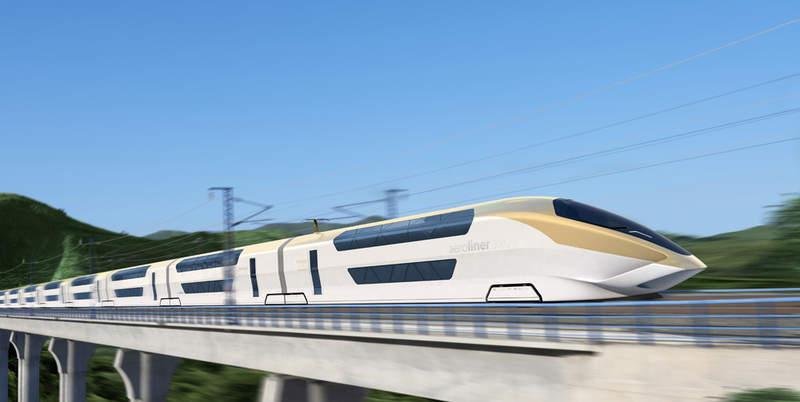
    [2] Abuja and Lagos should be linked by a high speed network allowing travel within two hours

    [3] We should have a coastal high speed rail link that connects Calabar to Lagos within two hours

    [4] We should launch an Ecowas service linking Accra, Abidjan, Dakar, Freetown, Niamey, Bamako, Ouagadougou, Banjul, etc

    [5] All components, carriages, engines, signalling equipment, etc used in the industry must be manufactured locally

    [6] By 2030, the entire Nigerian railway network must be electric-powered

    [7] Nigeria’s railway network must have its own electricity generating and distribution capability, so it has nothing to do with the national grid

    [8] Every state capital in Nigeria must have an urban metro as part of our commitment to cut carbon emissions and green house gases

    [9] Lagos and Abuja must have underground services similar to those of all other capital cities in the world

    [10] Every port, airport, refinery, heavy manufacturing facility and major industrial estate in Nigeria must have a railway link by 2030

  • Feature- Telecom Tariff Increase Reversal: Matters Arising

    Feature- Telecom Tariff Increase Reversal: Matters Arising

    By Elvis Eromosele

    The Nigerian telecommunications sector has remained, perhaps, the most dynamic section of the economy for over two decades. It is a major newsmaker. One day it is news for new milestones, new technologies and new vistas and the next day regulatory restrictions, multiple taxations by the government and its agents or else disruption of service by the same. It is a real roller-coaster ride. 

    Yet, the sector has proven resilient, even before resilience was a thing. To get to where it is today, the players have invested heavily, struggled with and overcame myriads of obstacles, and continue to stretch to do new and exciting things. It strives to keep abreast of the latest development across the globe.  

    It is clear that the telecommunication revolution championed widespread access to broadband internet services and the attendant benefits, enabled the growth of e-commerce and precipitated the emergence of the digital economy. This is, in addition, to direct contributions to the economy through taxes paid, job creation and sustenance of many MSMEs.

    While some experts point to government policies and fair regulatory practices as the biggest enabler of growth in the sector over the years, some argue that the government and its agents are also the greatest obstacles to the sector achieving its full potential. 

    One simply needs to look back to the recent SIM/ NIN policy and attempt to evaluate the cost: millions of lines were lost, businesses closed, people lost jobs and the economy constricted. 

    Last week, the Nigerian Communications Commission (NCC), the regulator of the telecommunications industry, ordered operators, MTN and Airtel, to immediately reverse the hike in their data tariff plan which they implemented on their respective networks the previous week.

    News reports indicated that MTN and Airtel subscribers suddenly realised that the operators had commenced a new data tariff plan which was an upward review of the cost of their voice and data plan, without prior notice.

    The NCC immediately stepped in. It ordered the mobile network operators to reverse the hike in response to the complaints by the telecom subscribers. In a statement signed by the Director, Public Affairs at NCC, Mr. Reuben Muoka, the commission stated, “The attention of the NCC has been drawn to media reports of unilateral implementation of the recently approved 10 per cent upward tariff adjustments for some voice and data services by the service providers, on their networks.

    “The consideration for 10 percent approval for tariff adjustments for different voice and data packages was in line with the mandates of the Commission as provided by the Nigerian Communications Act, 2003, and other extant Regulations and Guidelines, as this was within the provisions of the existing price floor and price cap as determined for the industry.

    “The decision was also taken after a critical and realistic review and analysis of the operational environment and the current business climate in Nigeria, as it affects all sectors of the economy.

    “Furthermore, even though the tariff adjustment was proposed and provisionally approved by the management, pending the final approval of the Board of the Commission, in the end, it did not have the approval of the Board of the Commission. As a result, it is reversed.”

    This simply means that the NCC agreed with the operators that the tariff increase was due in the light of the prevailing economic situation but its board thought otherwise and failed to approve the new tariff. In the meantime, operators had gone ahead to implement the new tariff and have now been directed to reverse it. 

    In truth, the matter extends beyond the NCC. Everything rests squarely on the table of the Minister of Communications and Digital Economy, Dr. Isa Ibrahim Pantami. He has maintained that his priority is to protect the citizens and ensure justice for all stakeholders involved. This is not mere rhetoric. He has this demonstrated severally. 

    It will be recalled that he recently obtained the approval of President Muhammadu Buhari for the suspension of the proposed five percent excise duty, in order to maintain a conducive enabling environment for the telecom operators. The industry rightly commended him. 

    In this case of tariff increase, he argues that as much as there is an increase in the cost of production, the provision of telecom services is still very profitable and the subscribers mustn’t be subjected to a hike in charges.

    The Commission in its statement noted that it will also continue to abide by its time-tested process and international best practices to ensure efficient pricing mechanisms for the telecommunications industry in Nigeria.

    Nice sounding words no doubt but the reality is that in situations like this someone is getting the short end of the stick and it’s definitely not the regulator. 

    The NBS reveals that inflation has exceeded 20 percent with food and power as the biggest drivers of the rise. 

    Has anyone bothered to ask how the operators are coping? In under a year, the cost of diesel has risen significantly and hovers around N850 per litre. Of course, the discos, the electricity distribution firms, have also increased their tariffs even though the service has not improved in any way. A certain paid cable service has ignored threats from the national assembly and gone ahead and increased its tariff. The case is in court. 

    Telcos find themselves in a pickle, whatever course of action they take they will likely end up as villains. 

    If the tariff rise holds, Nigerians will no doubt consider them insensitive. And if the tariff remains the same when everything else is rising, it erodes profit, deprives the shareholders and impacts negatively new investments. 

    For the telcos, it is a zero-sum game. 

    I’ll be the first to admit that I’m biased in this matter. I’m both a stakeholder and a shareholder. I want the low tariff to remain but equally worry about the sustainability of the current practice. 

    I wonder about how it would affect the injection of new funds and the need to keep the industry in step with global developments. 

    I am convinced that something has to give and soon. 

    This brings to mind, the story of boiling an egg and potato. The same hot water that makes the egg hard equally makes the potato soft. In this hot water of policy summersault, how the operators will react is anyone’s guess. 

    Let’s keep an eye on the telecom operators, the next couple of weeks promise to be exciting. 

    Elvis Eromosele, a Corporate Communication professional and public affairs analyst lives in Lagos.

  • Feature- Reel Life: A Review of the Autobiography of Vincent Maduka

    Feature- Reel Life: A Review of the Autobiography of Vincent Maduka

    By Dr. Yemi Ogunbiyi

    I consider it a rare honour to be called upon to review the Memoirs of so distinguished a Nigerian as Engr Vincent Bamidele Maduka. Even if I had other assignments today, the fear of being ‘mounted’ and punished by an outstanding old boy of undeniably the best secondary school in Nigeria was such that I was bound to accept to do this assignment! I had to be here! I had no choice in the matter!! So, you have to believe me, whether I mean it or not, when I say that the pleasure of being here with you this afternoon is entirely mine!!!

    In its barest form, this four-hundred-plus paged book, Reel Life, is the story of Engr Maduka’s twenty-five-year public service career. The first sixteen years of that enviable and exceptional career were spent at the Western Nigeria Broadcasting Corporation, WNTV-WNBS, while the other nine years (apart from a twelve-month interregnum in the Ministry of Communications) were spent at the Nigerian Television Authority, NTA.

    When as a young 26-year-old, Engr Maduka arrived in Nigeria with a freshly-minted degree in Electrical Engineering from the University of Leeds in England and joined the services of the WNTV-WNBS as a Broadcast Engineer in 1961, nobody would have thought, certainly not Maduka himself, that that seemingly modest beginning, would take him through a career path that would bring him to the pinnacle of a profession in broadcast journalism. And what a career it was!

    Under the tutelage of his mentor and boss at the WNTV-WNBS, Engr Teju Oyeleye, to whom, by the way, this book is partly dedicated, Maduka threw himself at his first job at Ibadan with much enthusiasm and vigour, and in the process, picked up so much that fully equipped him for the more considerable challenges of his headship of NTA, Lagos, in 1977. And as I will show presently, that foundational training at Ibadan ultimately led to the transformation of TV broadcast journalism in Nigeria. So, if we start from the premise that Engr Oyeleye was, perhaps, the grandfather of TV broadcast journalism in Nigeria, Engr Maduka was certainly its father!

    Written in parts rather than chapters, there are eighteen parts in the book, apart from an epilogue which attempts to summarise the book and drive home, whether intended or not, a greater import to the book’s title. While the REEL in the book’s title comes from a camera reel, that cylinder on which film can be wound, the title is understandably a clever play on the homophones REEL and REAL. Suddenly, Maduka’s reel life, a life given to the production of films, is juxtaposed with his real, ordinary daily life, where he had to face challenges to survive! I think it’s also proper to add at this stage that the book comes with a copious body of relevant appendices, much of which, in my view, should have been incorporated into the book’s main text.

    For review purposes, even at the risk of an oversimplification, since the book’s storyline dispenses with strict chronology, I think it’s better to break the eighteen parts of the book into FOUR sections. The first section, which is much of part one, covers the author’s early years at Ibadan, where as I said earlier, he learnt the ropes under the watchful eyes of his mentor, Engr Oyeleye, while the second section, which I have dubbed his first coming to NTA, will include all of part two through to part nine. My section three is a stand-alone part ten, the author’s limbo year in the wilderness of the Ministry of Communications, while the final section, that is, parts twelve through to eighteen, would cover his second coming to NTA, plus his retirement in 1986 at the young age of 51!

    The first section, as short as it seems, is crucial because it tells the story of the beginning of television in Nigeria; how Chief Obafemi Awolowo took umbrage at the denial of his right to reply to an attack on a radio broadcast from the Central colonial government and decided that the regional government would set up its own television and sound radio station as a tool for education and entertainment.

    After a series of bureaucratic and ‘ethnic’ twists and turns in his career at Ibadan, one that included a traumatic experience in the days leading up to the Nigerian civil war and the race for the position of General Manager of the organisation, following Mr Oyeleye’s retirement in May 1973, Engr Maduka emerged as General Manager of WNTV-WNBS at the end of 1973.

    It is instructive to note that while there were nimble protests as to why a Vincent Ifeanyichukwu Maduka should occupy the position of General Manager in Ibadan, the newly-founded Television station of Mr Maduka’s supposedly ‘home’ state, mid-western region, had appointed him to the same position of General Manager a year before, a position he had turned down to enable him to remain in the region that had trained him and which, for him, was home. And then, by a curious twist of fate, the Military Governor of the old western region at the time, Colonel Wole Rotimi, whose lot it was to appoint a replacement for Engr Oyeleye after a detailed and comprehensive selection process, was a detribalised prominent old boy of King’s College, Lagos, where Maduka had himself been a student.


    Incidentally, the other two contestants for the position of General Manager at Ibadan in 1973 were Ayo Ogunlade and Kunle Olasope. Then, four years after, fate reran its course! Just months before Engr Maduka assumed office as the first Director-General of the Nigerian Television Authority (NTA), the same Ayo Ogunlade was appointed Federal Minister of Information, the supervisory ministry of the new NTA!

    With the military take-over of state television stations and their amalgamation with the old NBC-TV into a federal monopoly and the subsequent appointment of Engr Maduka two months after as Director-General of the new NTA, the story of the book Reel Life, as recounted by its author, picks up steam. The new DG hit the road running. Under the leadership of Alhaji Babatunde Jose as Chairman of a distinguished Board, with such names of Board members as Mrs. Folake Solanke, Dr. Garba Ashiwaju, Dr. Bala Usman and Dr. Galadanchi.

    Engr Maduka worked assiduously to redefine the seemingly monstrous structure of the new NTA and, in the process, lay down a set of rules that have remained an integral part of TV culture in our country to date. In his attempt to quickly sort out the vexatious issues of the delineation of power in the NTA governance structure and institute objectivity and balance, he sent the Board a seminal paper entitled: “The Relationship Between Government and Board and Between Board and Management of Statutory Corporations.’ Here is how Maduka remembers the moment: ‘I tried to identify the key functions that would distinguish these three interacting parties involved in running a government company. They derived basically from what should obtain in any business enterprise between shareholders (owners), board and management. My experience from WNTV at Ibadan was that the government (officials) and the board tended, more often than not, to usurp the role of the lower rung, sometimes as if there were really no boundaries.’ Fortunately, Engr Maduka received the support of his Board for his reorganisation proposals.

    Unfortunately, two years later, after the civilian administration of Alhaji Shehu Shagari got into office and appointed a one-man ‘Board’ in the person of Chief Olu Adebanjo, who also doubled as Special Adviser to the President on Information, all the gains from the Jose board appeared to disintegrate.

    Undeterred, Maduka trudged on. In between several brushes with obsequious and nauseatingly sycophantic politicians/bureaucrats and the support of some of the finest names in the history of Nigerian television, he set down even firmer parameters for the running of the organisation. Those who collaborated with him at this time included James Audu, John Chiahemen, Mohammed Ibrahim, and even Chris Anyanwu and Frank Olizie.

    Without question, one of the more fascinating stories in the book is the story of the search for a substantive Director of Programmes for the organisation. The time it took and the energy expended in that search tell the story of committed leadership that was eminently focused. And when the DG finally found his dream catch for the job in the person of Dr Victoria Ezeokoli, it completely transformed the organisation. Barely days after she was appointed, Dr. Ezeokoli plunged head-on into the production of Cock Crow At Dawn. Working in close collaboration with Peter Igho, Grace Egbagbe and Cordelia Eke, the drama series was released and remained, in the words of Peter Igho, ‘the most defining programme of the NTA.’


    Buoyed by the success of that production, the focus shifted strategically to raising production standards in the organisation. And as the DG puts it, ‘with regard to programme making, the programme department of NTA headquarters was charged with the role of driving growth and quality.’

    For instance, in 1982, with the full support and encouragement of the DG, Dr. Ezeokili’s team organised a significant Retreat at the Oguta Lake in Anambra State where prominent Nigerian writers such as J P Clark, Zulu Sofola, Elechi Amadi, Cyprian Ekwensi and two British Resource persons, Victor Pemberton and David Spencer, brainstormed with the staff of NTA on the techniques for writing for television.


    Indeed, one of the stars of that period, Cordelia Eke, deserves to be quoted extensively from her incisive recollections of those memorable years:
    The doors of the Authority were thrown open to actively engage performing artists within and without, with viable national programme proposals in the process of programming. In the documentary cadre, programmes like Horizon, Kings and Kingdoms, featuring Nigerian cities, ancient kingdoms, heroes like Queen Amina of Zaria, King Jaja of Opobo, etc, were produced. Those projects were presented on network in close collaboration with intellectual icons like Professor Ade Ajayi of the University of Ibadan and Professor Alagoa of the University of Port Harcourt….In Entertainment programmes, the Authority encouraged, through collaborations and outright commissioning, music productions like the Bala Miller Show, Sam Akpabot Show, Nelly Uchendu, Gloria Usang, and Sonny Oti musicals to promote the growth of artists in this field….In drama, Basie & Co, by Ken Saro-Wiwa (with its catchphrase, ‘Who wants to be a Millionaire’), Winds against my Soul by Laolu Ogunniyi, and Mirror in the Sun, by Lola Fani-Kayode were parts of the production actively executed in collaboration with artists outside the Authority to encourage creative endeavours in the television industry.

    Those were NTA’s finest moments; nothing has come close to those years. And as the author himself notes, ‘by 1982, the Authority had over 7,000 employees, 21 production centres and 40 Transmitting stations.’

    Then, suddenly in January 1983, Engr Maduka was removed as Director-General.

    Unable, presumably, to contain his leadership style, the Shagari government transferred him to the Ministry of Communications as Technical Adviser. Indeed, considering the harassment that he went through during the first four years of the Shagari administration, it was a miracle that he was not ‘sacked’ before 1983!

    But a few months after that transfer, a military coup d’etat toppled the Shagari government, and the Buhari administration brought him back as DG of NTA.


    On his return to NTA, Maduka immediately revisited his desire to professionalise NTA’s flagship, the NTA News. Convinced that the premier position occupied by news was explorable, he devoted his energy to redefining NTA News and shaking off its preponderance ‘for hand-out stories in the form of government and political party releases.’ By relying, among other services, on the NBC Training School at Oshodi, in Lagos, a lot was put into effective speech training that led to a new generation of newscasters who were not only celebrities in their own right but who also took their work quite seriously.

    Those were the glorious days of NTA News, the days of such stars as Bode Alalade, Taiwo Obileye, and later, Sola Omole and John Momoh. And although Mike Enahoro and Joe Ebuwa had been at NTA before Engr Maduka, they were also veritable members of that dream team. The ladies of those glorious years included Joan O’Dwyer, Bimbo Oloyede, Sienne Allwell-Brown, Ruth Beniemesia, Ronke Ayuba and Sola Adelehin (later Mrs Sola John-Momoh).
    There’s what I consider a digression here, from this phase of the author’s career, that I should comment on briefly, essentially because I was involved in bits of the episode that the author recalls in part 12 of the book. In the section sub-titled ‘War between NTA and the Print media,’ the author asserts that ‘the Guardian (newspapers) had been hammering away at NTA as being a government media tool and a handmaid of military dictatorship.’

    Looking back now, as a senior member of the management of the Guardian newspapers at that time, I do not recall anything personal about the newspaper’s position in respect of NTA in 1984. But I remember that the national public mood was heavily weighted against the Buhari administration when Engr Maduka returned to NTA.

    Two factors were at play. First was the fact that the after-effect of the deplorable role played by the NTA in relaying the 1983 election results remained a sore point in the collective memory of the Nigerian people. And even the author himself acknowledges that when he says on page 277 that ‘NTA’s reputation among the discerning public had plummeted drastically over its recent coverage of the 1983 general elections with its report of landslide victories for the governing party and such partisan broadcasts.’

    The NTA that Engr Maduka had so proudly built up between 1977-1983 had virtually gone under by the time he returned in 1984.

    Somehow, a culture of subservience to power had crept into the organisation on a scale that Engr Maduka was probably unaware of. It was that incipient culture of subservience that was of concern to us in the print media.

    But even more fundamentally, the Buhari/Idiagbon government was one of the most repressive governments in the history of our country, at least up until 1984. As I have written elsewhere, that government embarked on a frenetic corrective measure that unleashed terror and fear on the Nigerian people on an unprecedented scale. No one was spared. From Tai Solarin to Dr Beko Ransome-Kuti, Beko’s brother, Fela and hordes of politicians; they were all imprisoned and handed humongous prison sentences. It was also a period of grisly public executions under a bizarre retroactive Drug Trafficking Decree which prescribed death by firing squad, even if the drug trafficking crimes were committed before the decree came into force! Those executions were publicly televised.

    Then, to cap it all, the same government promulgated an obnoxious press law called Decree 4 that targeted the print media. Decree 4 was designed to punish authors of supposedly ‘false’ statements that exposed the administration or its officials to ridicule or contempt, even if the reports were accurate! And before we knew it, two of our senior journalists, Nduka Irabor and Tunde Thompson, were detained and tried before a tribunal and imprisoned under this terrible law. Understandably, the print media was literally at war with that government.

    That was the country’s mood when Engr Maduka returned to NTA as DG in 1984.


    And in all this time, NTA (as an institution) enjoyed a cosy and ‘very cordial’ relationship with this government. Again, we have Engr Maduka’s word to prove this, when, talking of the Buhari government, he says: ‘we were happy to enjoy a freedom to be objective for a change and do not recall any pressure on us to dance to the tune of the government.’ ‘That was the state of affairs,’ he continues, ‘that we wanted very much and had not had under the previous civilian administration.’


    I certainly can’t speak for the entire print media at that time. But for us at the Guardian newspapers, this was not simply the case of a friend to an enemy becoming an enemy! It was a little bit more than that. Under the leadership of Dr Stanley Macebuh and in the best traditions of print journalism, we were committed to holding the government, any government, to account. And in our view, media organisations that remained silent in the face of tyranny by any government were considered vicariously guilty of the misdeeds of that government!

    Ironically, in his attempt to infuse the NTA with intellectual depth, Engr Maduka turned to the print media for help.

    According to him, ‘I called the Daily Times Managing Director, Dr. Dele Cole, who had recently hired some smart people, notably from America, and asked him how he came to find people like Dr. Stanley Macebuh!’


    Similarly, in his search for models to guide him in the revamping of NTA, Engr Maduka also turned to the print media, to the Al Ahram of Egypt, the Times of London and, curiously, the New Nigerian. These print media outfits he admired stood out because, to use Maduka’s words, they commanded ‘credibility and authority.’ But as we all know, credibility and authority do not come from cosiness with any government, certainly not with a military dictatorship, but rather from a position of studied combativeness that speaks truth to power. And the longest serving editor of the Al Haram, Muhammed Heikel, adumbrated this point so brilliantly in his Memoirs, The Road to Ramadan. So, the Guardian’s position was undoubtedly never a personal thing on the leadership of NTA at the time.


    Dr Macebuh, who was the Guardian’s Managing Director at the time, and who, (by the way), was also a distinguished King’s College old boy like the author, was far too polished to indulge in mudslinging and muckraking. Stanley knew only too well how not to treat a more senior and highly respected Kingsman!

    But to bring this digression to a close on a lighter note, I suspect that, somehow, between the author and print journalists, there was no love lost! Just listen here to the sweeping aspersion that Engr Maduka casts on print journalists in a tangential reference to them: ‘In the main, newspaper people in Nigeria were not known for any high pretensions to good spoken English and so, NBC came to rely more on actors, than on writers, to deliver the news!’ Haba, Oga!! It’s like saying that engineers can’t write good English!! Yet, before us, here is one of the most lucid pieces of writing I have read in a long time, written not by a graduate of English Literature but by an Electrical Engineer!!! Oga, you don’t like print journalists! Period!! But there’s God!!!

    In ending, let me state again that this is a lovely book.

    It’s a must-read for those who wish to familiarise themselves with the growth and development of TV broadcast journalism in our country and with snapshots of our contemporary history. For instance, the author’s account of the several military coup d’etats he witnessed in the country and how they impacted his life provide invaluable insights into his thoughts and mind.
    Yet, brilliant as it is, the book suffers from a minor structural problem.

    Like an engineering structure constructed from different interrelated parts with a fixed location, usually on the ground, a Memoir works better and is easier to read if the other interlinked parts of the story are put together in a chronology. True, chronology is not everything and can be dispensed with in memoirs, but it’s usually at the risk of some repetition of material, especially if the book’s writing extends over a long period.

    And to drive my point home, I refer to a remarkably tortuous story of how the author took a degree in Electrical Engineering from the University of Leeds.

    This is the fascinating story of a young, twenty-one-year-old who, after securing admission to Leeds and a government scholarship to study abroad, was disappointingly told that the scholarship was tenable only at the new Nigerian College of Technology, Zaria, which offered only diplomas at that time; and how the young Maduka persisted and insisted that he would go abroad! And what does the young man do? He travels to Ibadan to see the Minister of Education. When he fails to see the Education Minister, this daring twenty-one-year-old literally badges his way into the office of the Minister of Home Affairs, Chief Anthony Enahoro, flashes his school tie at the minister’s impertinent expatriate secretary and insists on seeing the prominent old boy of his school! Of course, he is allowed to see Chief Enahoro, following which his foreign scholarship is restored on its merit.

    But the young man’s tribulations do not end there. When he arrives in the UK, some fastidious official at the Western Nigeria Regional office tries to hoodwink him into accepting a place at the lower-ranking Woolwich Polytechnic instead of his place at Leeds University. Again, armed with his admission papers to Leeds, the young, audacious man puts his foot down and insists on going to Leeds University. In the end, he gets his way and heads out to Leeds.

    Now, this captivating story, an inspiring study of human perseverance that is told in lucid prose and, in my view, should have been in the opening sections of this book to prepare you for what to expect, is tucked away at the end of the book! The story comes across alright. But it would, in my view, have been more effective as part of the book’s opening sections. That’s the point I make about chronology and its benefits.

    There are also a few minor typographical errors in the book, which I am sure will be cleaned up if, and when a second edition is published. There’s also a wrong picture caption of a former Chairman of the Daily Times of Nigeria, Alhaji Turi Muhammadu, which carries Mamman Daura’s name, which I am sure will also be corrected in future. And as I said earlier, the appendices in this book are a trove of information that deserves to be accorded as much time and attention as the book’s main text.

    But these do not detract from the enduring value of this book. Memoirs have historical importance. They give us a sense of continuity, offer us potential solutions to contemporary problems, and even guide us in our effort to solve them. There are many lessons to learn from Maduka’s skills in handling overbearing government bureaucrats in rather tricky situations. His recollections of how he related to successive Ministers of Information and overzealous government spokespersons who always wanted you to jump when they sneezed brought back memories of my own encounters with a particular Information Minister during my time as Managing Director of the Nigerian Daily Times.

    And yet, even in his recall of these problematic moments with ill-tempered and, sometimes, ill-mannered officials, there was not a trace of guile or bitterness in Engr Maduka’s writing; just frank recollections that contained even admissions of his own shortcomings in places. That’s rare in a country where we are quick to apportion blame and eager to take credit for everything.

    I think we should all commend Engr Maduka for writing this book. The times we live in call for inspiring works like Reel Life, works by distinguished Nigerians who have given so much to our country and got nothing literally in return. At a time when much of our contemporary political space has been taken over by all kinds of scammers and misfits, Memoirs like this that recall outstanding public service and love for country serve as reminders of not only where we came from but where we should be heading as a country.

    Thank you for listening.

    Yemi Ogunbiyi
    October 2022

  • Feature- Anikulapo The Movie: The Realities in Oyo Yoruba History

    Feature- Anikulapo The Movie: The Realities in Oyo Yoruba History

    by Dr. Mutiat Oladejo

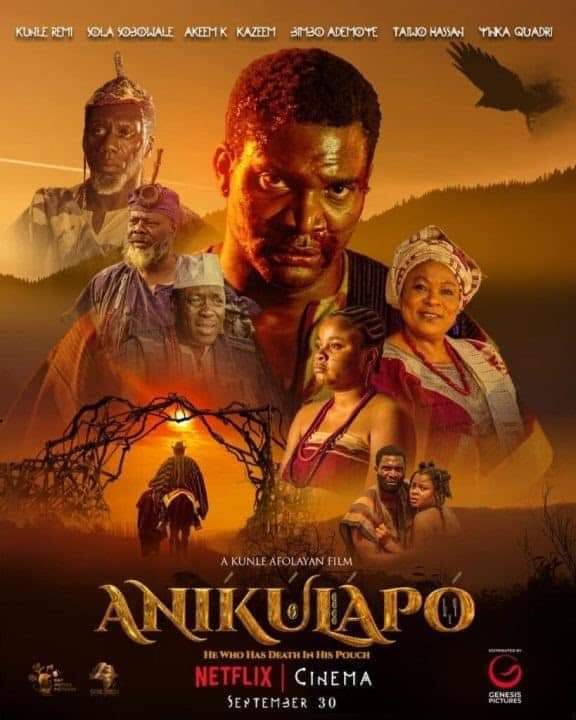
    The film titled Anikulapo was set in the 18th century Oyo history. Beyond perhaps the distortion that comes with films to become fiction, the story represents some socio-economic realities in Oyo-Yoruba history.

    First, Saro’s sojourn as a boy began by being sold into pawnship from Gbongan led him to wander through several Yoruba towns while growing up. In the process he learnt textile weaving. Saro’s entrance into Oyo depicts him as a young man seeking for livelihood without any means or guarantee. Then, indebtedness was a norm, it was a source of raising capital which has to be paid back through labor exchange. Kings, chiefs and few merchants controlled wealth, and they take pawn (Iwofa) as means of loan recovery.

    Saro’s encounter with Sola Sobowale indicates the fact that men are also sexually vulnerable in the process of seeking livelihood. Saro had to survive through Sola a wealthy female merchant. He got a house and was able to establish his weaving work.

    Arolake is a victim of girl child early marriage, it depicts how women had little or no choices in choosing their spouse. She was betrothed as the king’s fourth wife. She grew up in the marriage, but unable to conceive. She had the palatial treatment and she appeared as the favorite of the King. But, being unable to conceive and polygamous troubles became unbearable for her. Arolake’s polygamous experience is typical.

    Saro’s invitation to the palace to offer weaving services changed the narrative as he met Arolake. Both had the connection of love at first sight. Arolake was choked in her marriage, and she went after Saro.

    It is normal for women to want to leave unsatisfactory unions in the past, but then she is a queen. No man goes after a queen in the same Yoruba town where the king lives. They were banished into the forest. Forests before colonialism were dangerous zones to punish offenders. Hope of survival was slim.

    Saro and Arolake’s sojourn in the forest showed that the forests were actually links among Yoruba towns. Meeting Yinka Quadri (the hunter) shows that Yoruba hunters were geographers and explorers. He gave them a clue as to the dangers of continued wandering in the forest. It was the era of Trans Atlantic slave trade, thus there was high probability of being captured as slaves. Of course, the kings, chiefs and wealthy merchants were complicit in capturing people for slave trade. The duo accepted the hunters protection in his hut.
    The film depict the value of charms in Yoruba life as a welcomed mystery. Arolake discovered a charm while battling wild attacks. She was so much in love and she had to give it to Saro to perform wonders to resurrect the hunter’s son. That belief in resurrection is not real, but then, was there even a modern technology to certify death?

    Saro became a resurrection sorcerer. He lived on the power accrued to him as he was treated like a king in the kingdom that accommodated them. He was recognized because of his ability to resurrect the dead. He leveraged on the power to acquire more wives who gave Arolake the same problems that choked her while she was a queen. Arolake was still unable to conceive! She had to leave Saro, but she detonated the charm, before leaving.

    Arolake was a victim of early marriage and polygamous intrigues. Ultimately, the film depict the social realities of marriage, sex, survival, friendship, among others. The economic realities set in the film depict how Oyo was entangled between the Trans Sahara and Trans Atlantic trade. The walls, the horse, design of the kings clothes have connections with Trans saharan cultures. The setting of the Market explains the relevance of Oyo in large scale commerce.

    However, I don’t think there is any Yoruba kingdom that disallows the king from speaking to the public. Depicting a Yoruba king that can’t speak to the public is off. Baba Wande as usual is naturally funny with his ways and words. It is also interesting that the daughter of the immediate Alaafin of Oyo acts as the princess Saro wants to marry by force.

    Dr. Mutiat Oladejo is a lecturer in the Department of History, University of Ibadan

  • Feature: How do we Build Powerful Defense with Data Storage

    Feature: How do we Build Powerful Defense with Data Storage

    A Cybereason report shows that 49% of enterprises who pay the ransom either get only part of their data back, or none at all

    by

    Ransomware is striking at an alarming rate. Information technology research and consultancy company, Gartner predicts, by 2025, at least 75% of IT organizations will face one or more attacks. Refined hacking tools and extortion strategies have made ransomware the biggest threat to individual, enterprise, and national data security.

    Constant ransomware attacks cause huge damage

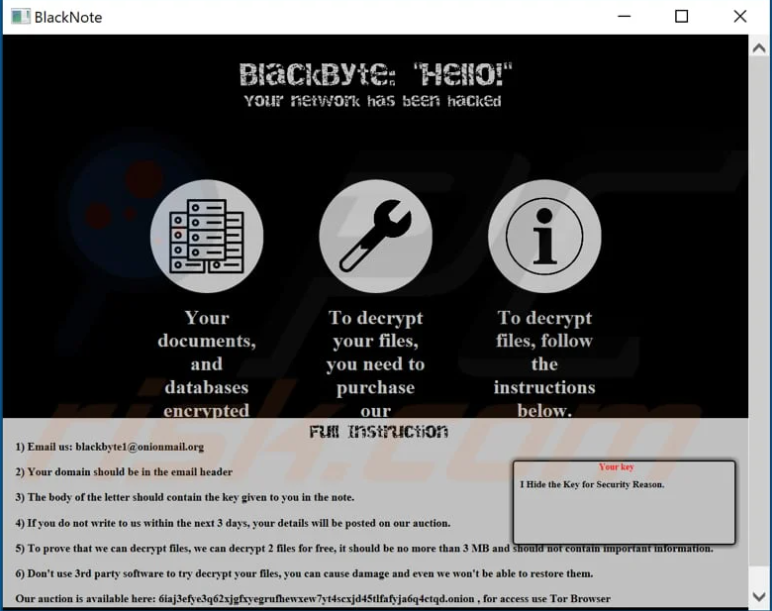
    When ransomware strikes, it steals and encrypts valuable data. Encrypted data can be decrypted only by paying the hackers a ransom. Hackers, working through darknets, usually demand Bitcoin to make the payment as difficult as possible to trace. The damage ransomware creates is great, as are hackers’ profits.

    According to leading investment consulting firm Cybersecurity Ventures, by 2031, ransomware is expected to attack a business, consumer, or device every 2 seconds. In 2021, this number was only 11 seconds. Even at that lower frequency, that same year, global ransomware damages reached US$20 billion — 61 times more than in 2015 (US$325 million). The largest ransom — so far — was US$70 million. But do ransoms solve the problem? No. A Cybereason report shows that 49% of enterprises who pay the ransom either get only part of their data back, or none at all. 80% of enterprises who pay the ransom are targeted a second time. Ransoms are also not the only problem: ransomware damages brands, causes long service interruptions, exposes enterprises to legal liability, and more. Such collateral damage can be enormous: as much as 23 times the ransom.

    • In March 2021, hackers encrypted 15,000 devices belonging to an insurance corporation. Vast numbers of customer data files were at risk of being leaked. The company paid US$40 million to retrieve the data.
    • In May 2021, ransomware halted all the operations of an oil pipeline giant for 11 days. Gasoline prices in the country rose to their highest level in seven years, leading to panic buying. The company paid a ransom of US$4.4 million.
    • In April 2022, a leading car manufacturer had to cut its annual production by 500,000 vehicles following an attack on its suppliers which resulted in a 1.4 TB data leak.
    • In May 2022, two attack waves caused a country to declare a cyber security emergency. They damaged basic services like healthcare, and even international trade.

    There are many more examples. Hackers target large, high-value enterprises and industries. Government, energy, transportation, finance, manufacturing, and healthcare are their main objectives, but no one is safe.

    Ransomware trends to know

    Ransomware is extremely good at disguise. It has many ways to get into your system, for example storage, phishing emails, Trojans, social networks, and malicious insiders. It is difficult to detect and defend against. A typical attack encrypts or deletes all local data copies and can even target disaster recovery (DR) centers, making it impossible to quickly restore data. What follows, according to a ZDNet report, is an average of 16 business days system downtime. The average cost to recover from an attack, calculated by Sophos, is US$1.85 million.

    There are four important ransomware trends:

    Hackers focus on large enterprises and infrastructure

    Instead of launching broad campaigns, ransomware attacks now increasingly focus on high-value targets. The research that hackers need to do for this approach to work is difficult, and time-consuming — weeks or even months! — and expensive, but the potential profits make it worthwhile. Elaborate attacks make even previously well-protected organizations potential victims, and also threaten government departments.

    • Ransomware as a Service (RaaS)

    Rapid development of network and information technologies as well as encrypted digital currencies has created a hotbed for malicious actors. Ransomware operators now sell ransomware-related services to other attackers through customized solutions, memberships, or subscriptions. This lowers the barrier to entry for launching ransomware attacks, resulting in explosive ransomware growth.

    Double extortion becoming the new normal

    Ransomware is not limited to encrypting data and demanding ransoms. Attackers also steal data, and threaten to leak it. Even if an enterprise has a recent backup, it still cannot risk a leak of confidential information and subsequent public scrutiny and compliance proceedings.

    APT-like attack capabilities

    Advanced Persistent Threat (APT) refers to a complex continuous network attack customized by expert attackers to take full advantage of a victim’s vulnerabilities. Ransomware attacks, featuring greater and greater precision and planning, are beginning to show a strong resemblance to APT attacks.

    Data security needs

    Complex ransomware poses a great challenge for many current defense measures. Traditional data security protection focuses on the network (such as the firewall and security gateways) and on hosts to prevent ransomware intrusions and limit spread. This, however, neglects ransomware’s ability to disguise itself and lurk in the system for a long time in order to get access permissions to a large volume of key data. In other words, once the system is infected, traditional data security protection is useless. A better solution is needed.

    The Defense-in-Depth framework developed by defense contractor Northrop Grumman provides good ideas on how to move forward and build stronger protection. This approach to cybersecurity features five defensive mechanism layers: perimeter, network, endpoint, application, and data security.

    • Perimeter and network security protection, established at the network layer, defends using firewalls, sandboxes, and situation awareness.
    • Endpoint and application security protection, established at the host layer, defends using access control, security patches and audits, and antivirus software.

    The last layer, data security, is where data storage comes in. In the modern, digital age, data storage needs to do more than just store data. It needs to serve as the last line of defense: protect data with anti-tamper technologies, detect abnormal I/Os generated by ransomware, and prevent data leaks using encryption technologies. In addition to all this, it needs to ensure it is possible to recover clean, uninfected data by keeping data copies in backup storage and in a physically isolated zone.

    Building powerful ransomware defense with professional storage

    Providing dual protection with production and backup storage, Huawei ransomware protection storage solution uses four key technologies to build a complete solution which prevents viruses from hiding and stealing or tampering with data: ransomware detection, data anti-tampering, air gap replication, and end-to-end data encryption. Let’s take a look at why dual protection and the four key features are so effective:

    • Dual ransomware protection with both primary and backup storage

    In this solution, both primary and backup (OceanProtect Backup Storage) storage provide all-round ransomware protection features, ensuring the system always has a clean data copy for quick service recovery. OceanProtect Backup Storage also provides an ultra-fast recovery speed: up to 172 TB/hour, five times faster than the benchmark in the industry. This helps enterprises slash service downtime and economic losses.

    • Four key technologies for comprehensive protection

    Ransomware detection (ransomware has nowhere to hide): Huawei ransomware detection and analysis feature delivers 99.9% accuracy for production and backup storage before, during, and after attacks. Before an attack, the storage works to intercept ransomware before it has a chance to strike. If an attack does still occur, the storage acts quickly to secure the system, working with security devices such as firewalls to isolate hosts that send abnormal I/Os, preventing ransomware from spreading to other hosts. After the attack, the storage examines data copies to ensure they are clean.

    Data tampering prevention (data cannot be modified): WORM file system and secure snapshot technology block file tampering. The WORM system supports setting a protection period, preventing modification or deletion of production or backup data for the duration of the period. Read-only secure snapshots provide similar protection: they do not allow deletion or modification of data during a configured protection period.

    Physical isolation (clean data copies are physically isolated): Air-gap technology enables storing a clean copy of production and backup storage data in a physically isolated zone. Even if — unlikely though it may be — both production and backup storage are compromised, the isolation zone will have a clean copy that can be used to quickly restore services. Setting the replication Service Level Agreement (SLA) will automatically replicate periodic data copies from the production or backup storage to the isolation environment. Since the replication link is active only during replication, the possibility of ransomware accessing data in the isolation zone is relatively low. For added security, the isolation zone storage also features multi-layer data protection, supporting anti-tamper features such as secure snapshots.

    End-to-end encryption (data will not be leaked): Huawei storage ensures zero data leaks on the storage transmission network and storage through encryption of: protocol, production and backup storage, air-gap replication link, and remote replication transmission of data and backup copies. Even if hackers break the storage or intrude the storage network, they have no access to the confidential data thanks to the encryption deployment.

    End-to-end encryption (data will not be leaked): Huawei storage uses end-to-end encryption technology to ensure no data leaks either on storage devices or on the storage transmission network. The encryption covers protocol, production and backup data, the air-gap replication link, and remote data replication. Even if hackers manage to enter a system, they will not crack confidential data.

    Defending against ransomware

    Huawei’s ransomware protection storage solution is working 24/7 around the world for large customers in energy, finance, transportation, manufacturing, and government.

    Better safe than sorry. Installing ransomware protection after the fact is too late. A comprehensive ransomware protection storage solution is the best way to stop or mitigate ransomware.

    Ning Yun is the Director of Data Storage Department of Huawei SAR

  • Feature: How to Develop Northern Nigeria

    Feature: How to Develop Northern Nigeria

    by Ayo Akinfe

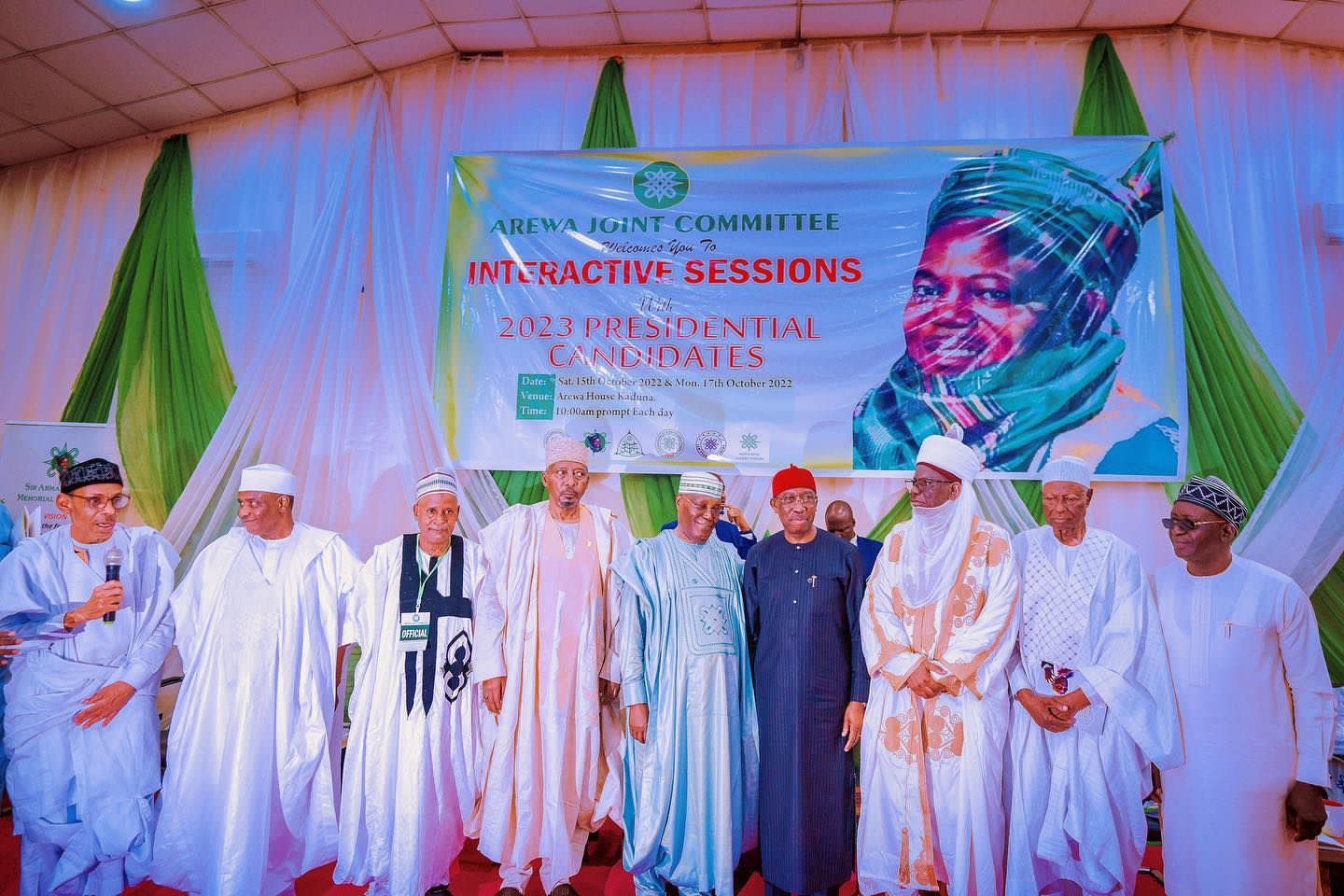
    Were I one of the presidential aspirants asked to address the Arewa Joint Committee, these would have been the proposals I would have presented on how to develop northern Nigeria

    [1] I would make sure that by 2027, every one of the 19 states in Northern Nigeria generates enough revenue to at least meet its running costs

    [2] Every state in northern Nigeria must be twinned with a state in the south as part of our education policy. By 2027, every northern state must match its southern twin in terms of literacy, secondary school leavers, graduates and post-graduates

    [3] Every local government across northern Nigeria must have at least one technical college. We must aim for a 100% vocational skills target by 2030

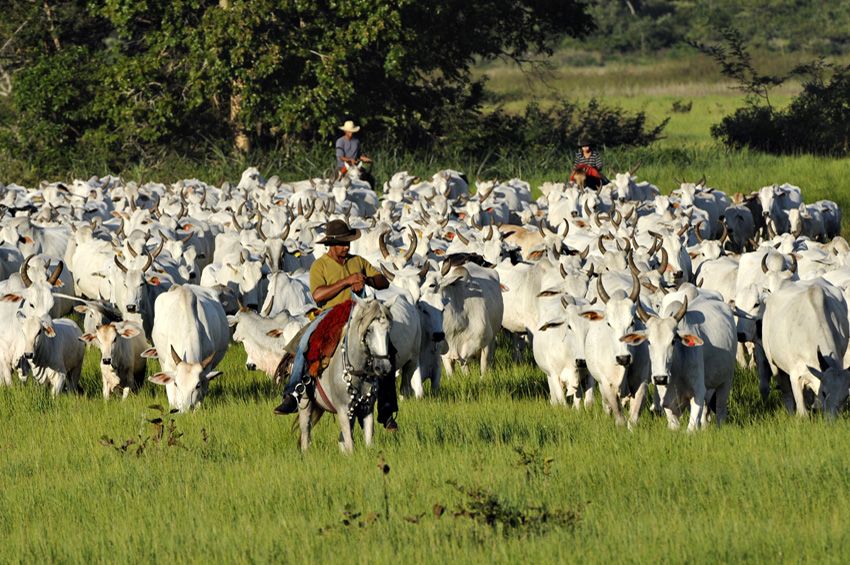
    [4] I will meet with the Arewa Consultative Forum regularly and press it to use its influence to facilitate the construction of five mega cattle ranches in Borno, Kano, Adamawa, Niger and Zamfara States. The aim is to make Nigeria the world’s leading leather goods producer

    [5] By 2027, I will make sure every state in northern Nigeria dismantles its sharia laws. These religious restrictions are very off-putting to foreign investors and only serve to perpetuate the economic gulf between the north and south of the country. No foreign investor is keen on going to a state where its male and female staff cannot associate freely

    [6] An automatic and statutory fatwah will be placed on any state governor, commissioner, or public servant across northern Nigeria who appropriates a sum of N10m or more while in office. I will maintain Sharia-like punishments for corruption offences

    [7] Every state governor must attract a minimum of $1bn in Islamic finance investment a year. To facilitate this, an Arewa Sukuk Bank will be opened with its headquarters in Abuja

    [8] Taraba State will be designated as Nigeria’s wildlife state. The aim is to make the state the world’s largest wildlife sanctuary that attracts as many tourist as say the Taj Mahal, the Giza Pyramid, Eiffel Tower or Niagara Falls

    [9] My government will commit to developing the economies of our 19 northern states and would like our politicians to follow suit. At the moment, our politicians appear distracted by the lure of Abuja but all evidence shows that the more this happens, the more impoverished northern Nigeria becomes. Ideally we would advice placing a moratorium on northern Nigerians running for president until we bridge the economic gulf

    [10] Every state across northern Nigeria must specialise in one area of economic activity, be it tourism, power generation, manufacturing, food processing, etc. The aim is to ensure northern Nigeria matches the south in terms of generated revenue by 2030

  • Feature: Emergency Admissions, Acute Bed Shortages and Duty Of Care: Let’s Get It Right- Fabamwo

    Feature: Emergency Admissions, Acute Bed Shortages and Duty Of Care: Let’s Get It Right- Fabamwo

    There are news items now and again alluding to the fact that in some public hospitals, there is usually a scarcity of bed spaces for emergency admissions.  Consequently, there will be a need for referrals to other hospitals where beds are presumed available. It is, however, usually negatively reported that such hospitals that do not have beds administer first aid inside the vehicles that brought the patients, before referral. 

    First and foremost, available bed spaces in public hospitals are finite. When they are all occupied, there is no magic the system managers can wield. To start with, given a population of about 22 million people in Lagos State, social welfare services are definitely tensioned. The massive influx or gravitation of patients to public hospitals these days clearly has a direct correlation with the economic situation in the country.  The cost of health care is now very high, more so in private health facilities compared to the public facilities.

    In Lagos State, the current administration of Governor Babajide Sanwoolu, in line with its T.H.E.M.E.S. agenda, significantly and substantially subvent the cost of healthcare in the government health facilities.  The result is a huge differential in healthcare cost between private and public health facilities. It is no surprise then that public health facilities are now severely oversubscribed.  There is no doubt that the state government is reacting positively to this development.  A lot of new health facilities have been commissioned and quite a number are in the pipeline.

    In the interim, the administrators of the health system have put in place a functioning referral mechanism between the state’s health facilities.  Each institution has an idea of available emergency beds in the different facilities and telephone communication is instituted whenever cases have to be referred.

    It is a gold standard, best practice and indeed a duty of care to resuscitate and stabilise patients before referral and this is mandatorily practiced in all Lagos State health facilities.  It is therefore not an aberration or abnormality to see patients being administered medical care inside the vehicles that brought them. This step is critical to ensure that they arrive at the next port of call without decompensation. It is a good step, it is necessary and should be applauded, not badmouthed.

    This information needs to be put out in order to erase the nasty impression being created about emergency patients being attended to inside their vehicles. 

  • Feature: What Nigeria’s Cattle Ranching Policy should look like

    Feature: What Nigeria’s Cattle Ranching Policy should look like

    By Ayo Akinfe

    Can someone please explain to me why the candidates vying for Nigeria’s presidency have not reached a consensus on the vexed issue of cattle ranching and come up with a policy that looks like this

    [1] We will open six mega cattle ranches in the six states with the largest land masses in Nigeria – Niger, Borno, Taraba, Kaduna, Bauchi and Yobe

    [2] When these mega cattle ranches are fully operational, they will dramatically increase the number of cows in Nigeria from the current 20m to say the 189m produced in India today. Zero interest loans will be provided for this purpose

    [3] There has to be a dramatic increase in the number of dairy plants, leather factories, abattoirs, meat cold storage facilities, refrigerated lorries, etc. Nigeria’s federal government shall thus get state governments to build industrial estates over the next two years so we have factories that will manufacture all these associated, ancillary and by products

    [4] Livestock transportation facilities will be dramatically upgraded. We will thus establish a cattle railway network linking all the 36 state capitals in the country

    [5] All this requires a massive industrialisation programme as we have to manufacture railway wagons, rail tracks, refrigerated trucks, leather processing equipment, milking machines, etc. We will ensure this is all manufactured locally in Nigeria by providing industrialists with zero interest loans

    [6] In the Niger Delta, we will manufacture livestock ships to specifically ferry cattle, sheep, goats etc across oceans. Our plan is to make Nigeria the world’s manufacturing capital of such vessels

    [7] Innoson Motors will be supported to manufacture unique refrigerated trailers and trucks that can serve as mobile abattoirs. Such vehicles will be electric-powered, with solar panels on their roofs

    [8] Local ranches will be required to furnish the market, so two ranches in each geo-political zone would be built by state governments to meet domestic demand

    [9] Private investors with deep pockets like our evangelical churches will be encouraged to invest in the sector, building ranches, abattoirs, leather tanneries, machinery plants, etc

    [10] Each cattle ranch will have schools, technical colleges, bandit rehabilitation centres, a veterinary clinic, an animal feed compounding plant, an adjoining milk processing plant and a police station built on its premises

  • Feature: More Questions Than Answers on the Illegal 4km Pipeline

    Feature: More Questions Than Answers on the Illegal 4km Pipeline

    By Elvis Eromosele

    Nigeria is in a precarious situation, financially. The Federal Government claims it doesn’t have money, so it is borrowing, from all sorts of places for all sorts of reasons. Some say that the government is borrowing even to pay the salaries of federal workers. In June, we learnt that the nation is borrowing to pay the interest on the loans that it has taken. It is a difficult season. Things have never been this bad.

    Today, inflation stands at over 20 percent, according to the National Bureau of Statistics (NBS), the exchange rate is N730 – $1 (black market rate), and over N10 trillion has been spent on subsidies in the first nine months of the year with the fuel selling at around N180/litre in many places, unemployment is hovering around the 33 percent mark with Youth unemployment at 42 percent and the national debt is set to hit $100 billion. To say, Nigeria is in a precarious situation, financially, may well be an understatement. 

    Insecurity (banditry and kidnapping) is at an all-time high. In addition, university students were home for almost eight months, the result of a contractual dispute between the Federal Government and the Academic Staff Union of Universities (ASUU) that had only just been called off. 

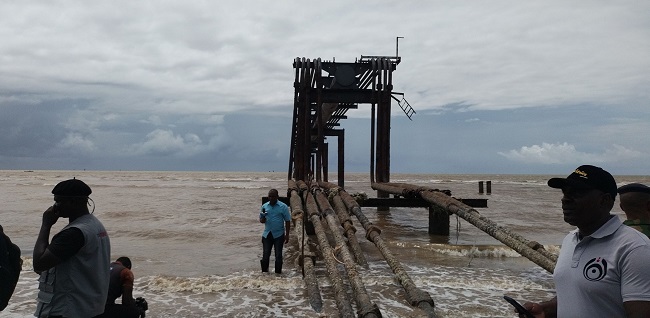
    In the midst of all these, the discovery of the illegal 4km Pipeline in the Niger Delta produced unprecedented furore. This takes the cake in insanity. How is it possible that someone can lay those pipelines without anyone in the government noticing? How are Nigerians supposed to believe the security agencies missed it?

    How can the NNPC claim it is unaware? Do the pipelines have no basic pressure indicators? 

    Are there no systems for monitoring the pipelines, whether through drones or boots on the ground? It would have been laughable if it wasn’t too serious and depleting.  

    It is a sad commentary on the state of the nation. Nigeria must the laughingstock of the world.

    At a time when oil-producing countries are making a killing, courtesy of the Russian war in Ukraine, Nigeria can’t even meet its OPEC quota. Think of it like this, when the country desperately needs money to stay afloat, vast amounts of crude are been stolen right under its bellies. Its beggar’s belief. It is heart-wrenching. 

    The Nigerian National Petroleum Company Limited (NNPCL) which disclose the existence of the illegal 4-kilometre (km) pipeline from Forcados terminal to the sea, and a loading port that had operated claimed that it had remained undetected in the last nine years.

    Mele Kyari, Group Chief Executive Officer (GCEO), NNPC Limited, revealed this when he appeared before the Senate Joint Committees on Petroleum (upstream and downstream), and gas. He said the pipeline was found during a clampdown on theft in the past six weeks.

    In his words, “Oil theft in the country has been going on for over 22 years but the dimension and rate it assumed in recent times is unprecedented.” 

    Oil industry watchers have asked how the MD came about nine years tale. What proof is available that the system has been operating for that long? Or maybe the Corporation needs to tell Nigerians when it actually discovered the illegal pipeline.

    So far, it’s been crickets.

    Conspiracy theories insist that the NNPC is trying to deflect. They posit that one, there are other such pipelines but this one was given up to distract the people and reduce questions; two the people involve know that their time might be up if a new government comes in next year, so this is simply a housecleaning operation. 

    Whatever the case, it is a sight for sore eyes. It is unsustainable. As Kalu Aja, author and finance expert, revealed in a tweet, reports show that from 1999 to 2015, Nigeria’s crude oil output NEVER dropped below 2mbpd. From 2016, it dropped below 2mbpd. in fact, from 2016, in only one year did, Nigeria’s output surpass 2mbpd.

    If this is the reality, rubbishes all claims by NNPC Limited. Nigerians deserve to know the truth. 

    It is disheartening that while everyday Nigerians have been required to tighten their belts, some criminals among us have been reaping the common patrimony.

    It is not enough to discover the illegal pipeline; the culprits must be brought to book and made to pay the full price including restitution. This is the only acceptable outcome.

    Some others argue that the Labour Party Presidential Candidate’s Peter Obi comments about the government and its officials’ involvement in the stealing of Nigeria may have prompted these impromptu discoveries. According to the latest reports, 16 illegal pipeline tapping have been found so far. Who knows how many more may be awaiting discovery? 

    Amid the discoveries, operatives of a newly-contracted private oil pipeline surveillance team, Tantita Security Services, arrested a vessel alongside its seven-member crew on 6 October. They were arrested on the creeks of Escravos, while crude oil was being loaded illegally into a waiting ship, according to a report by Punch newspaper.

    About 600 to 650 cubic metres of illegally lifted crude oil in five compartments were said to be on board the vessel with registration number L85 B9.50 as of the time of the arrest.

    Wait for this. Two days later the Nigerian Navy destroyed an illegal oil bunkering vessel arrested with stolen crude oil in the creeks of the Niger Delta. News reports said that the Navy personnel set the bunkering vessel ablaze on Warri River, Delta State, at about 3 p.m. on Monday after the ship’s captain, Temple Manasseh, confessed that the vessel was laden with crude oil.

    The Navy officials who destroyed the oil vessel did not speak to journalists after the incident.

    This incident is the new definition of suspicious. Where is the place of recovery? What of investigation? Several questions are begging for answers.

    Who owns the oil-laden vessel? Will the perpetrators ever be brought to the book? Did anyone not think of the damage to the environment that destroying the vessel with crude would cause? 

    Is the destruction of the vessel an attempt to resolve or derail the issues? Who is the Navy trying to protect by that action?

    This is Nigeria, so we may never get answers to these questions. But one thing is clear to Nigerians, systematic and state-sanctioned theft of the country’s oil resources is ongoing and the powers that be find it convenient to turn a blind eye.  

    The 4 km illegal pipeline may just be the tip of the iceberg. The citizens will take the opportunity to have a say on this matter during the election. This is the only way to truly stop the rot and #TakeBackNigeria 

    Elvis Eromosele, a Corporate Communication professional and public affairs analyst lives in Lagos.

  • Feature: Nigeria needs a Luxury Goods Tax

    Feature: Nigeria needs a Luxury Goods Tax

    By Ayo Akinfe

    Nigeria’s next government needs to unveil a mini budget within days of assuming office in June next year with a luxury goods tax at the heart of it

    [1] For starters, we need a database to determine what are luxury goods. This will include designer clothing, jewellery, automobiles, footwear and fashion accessories. All such items will be subject to a 20% luxury goods tax at the point of purchase

    [2] All private jets will be subject to an annual tax worth 40% of their value

    [3] All luxury cars from manufacturers such as Rolls Royce, Porsche, Lamborghini, Ferrari, etc, will be subject to an annual tax worth 10% of their value

    [4] This bill will seek to raise $10bn in taxation which will go towards funding education and training. Its goal is to raise the revenue to get every single one of the 13m out-of-school children in Nigeria back into full time education

    [5] A 200% tariff will be placed on the importation of branded luxury items from the likes of Luis Vuitton, Gucci, Armani, . Dolce & Gabbana, Yves Saint Laurent, Dior, Hermes, Versace and Chanel

    [6] Any of these brand designers who wants to come and open a factory in Nigeria, however, will be granted a two year tax holiday and a year’s free land lease provided they employ a minimum of 500 Nigerians

    [7] If any of these brands opens a facility in Nigeria, all elected officials, civil servants and public servants will be obliged to purchase made in Nigeria whenever buying luxury items with public funds

    [8] Clergymen who purchase luxury automobiles will be obliged by law to also make corresponding purchases of at least two 40-seater buses for their congregation before their imported cars are cleared

    [9] Politicians, monarchs, public officials and senior civil servants such as permanent secretaries are barred from wearing non Made in Nigeria goods at public functions

    [10] State governors who attract such manufacturers that generate in excess of $1m a year in revenue for their states, will be given a special bonus in the form of a 5% Allocation Incentive Payment by the federal treasury

  • Feature: Investors that Nigeria’s Presidential Candidates need to Woo

    Feature: Investors that Nigeria’s Presidential Candidates need to Woo

    By Ayo Akinfe

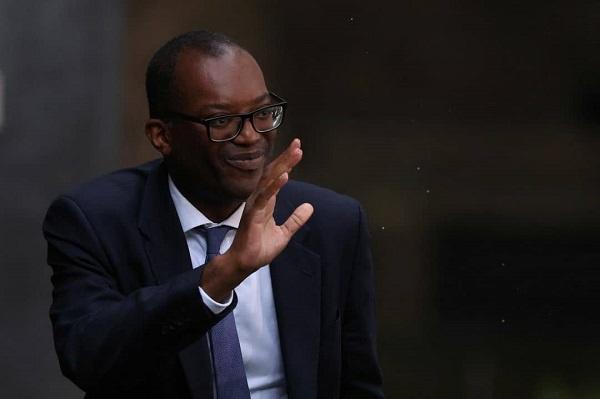
    One lesson to take from the sacking of Kwarteng is that investors need to have confidence in your government. Now, if I were a Nigerian presidential candidate I would promise to woo all the following investors to placate the markets-

    [1] Jeff Bezos
    Jeff Bezos is the founder of Amazon which is the largest eCommerce marketplace and is used by millions of customers worldwide

    [2] Bill Gates
    William Henry Gates (popularly known as Bill Gates) is one of the top entrepreneurs in world. He’s an American business magnate, investor, author, and philanthropist. He is the founder of Microsoft, which he launched along with Paul Allen in 1975

    [3] Mark Zuckerberg
    There are very few people who don’t know who Mark Zuckerberg is, as he’s the founder of the widely popular social media platform Facebook

    [4] Larry Page And Sergey Brin
    Lawrence Edward Page (commonly known as Larry Page) is one of the most successful entrepreneurs who co-founded Google with Sergey Brin

    Sergey Mikhaylovich Brin (popularly known as Sergey Brin) is also an American entrepreneur and investor who partnered up with Larry Page to launch Google back in 1997 on September 15th

    [5] Richard Branson
    Sir Richard Charles Nicholas Branson (popularly known as Richard Branson) is best known as the founder of Virgin Group which is comprised of more than 400 companies worldwide

    [6] Tim Cook
    He is an American entrepreneur and investor, he took over from Steve Jobs in 2011. If you’re using a smartphone, specifically an iPhone, you probably know Tim Cook.

    [7] Larry Ellison
    Lawrence Joseph Ellison (commonly known as Larry Ellison) is one of the most famous entrepreneurs today who is the co-founder of Oracle Corporation

    [8] Ritesh Agarwal
    Have you ever heard of Oyo Rooms? If you’re an Indian, especially one who loves to travel, you might have already stayed at Oyo Rooms at least once. Oyo Rooms was founded by Ritesh Agarwal

    [9] Vijay Shekhar Sharma
    Have you heard about Paytm? If you’re an Indian, chances are you’ll most likely be using it, and if you’re not, just Googling the word “Paytm” tells you how popular it is in India. Paytm (Pay Through Mobile) is India’s biggest eCommerce payment system which also offers a digital wallet that was founded by Vijay Shekhar Sharma, who’s one of the top entrepreneurs in the world

    [10] Elon Musk
    How could we curate the list without including the REAL Iron Man, Elon Musk himself? Elon Reeve Musk is a technology entrepreneur and also an engineer who holds multiple citizenships including South Africa, Canada, and the U.S. He is famously known for SpaceX.

    Elon Musk is an all-rounder entrepreneur who was the co-founder of the famous online payment system PayPal. He is currently the founder, CEO, and lead designer of SpaceX, co-founder, CEO, and product architect of Tesla, and the founder of The Boring Company

  • Feature: What will your cup of coffee look like in 2030?

    Feature: What will your cup of coffee look like in 2030?

    By Scott Coles

    There is nothing quite like that first cup of coffee in the morning. For me, it’s a moment to gather my thoughts before the day really begins. However, this daily ritual isn’t something we can take for granted. 

    Climatologists have warned that without action, coffee farmers in Africa will lose their livelihoods. So, if we want to keep enjoying that precious cup, we need to ensure our coffee is sustainably sourced. 

    Coffee farming in Africa 

    The continent produces 12% of the world’s coffee, with over ten million farmers across 30 countries. Whilst demand for coffee is forecast to grow significantly, crops have been declining in Côte d’Ivoire – the largest coffee producer in West Africa.

    Nestlé has been manufacturing coffee in Côte d’Ivoire for over 60 years, and we have seen first-hand the challenges farmers are facing. 

    Climate change creates rising temperatures, drought, and flooding which makes coffee more difficult to grow. Under this pressure farmers have turned to environmentally harmful practices such as deforestation and are substituting old coffee trees for crops that are easier to grow. 

    The case for sustainable coffee farming and transition to regenerative agriculture

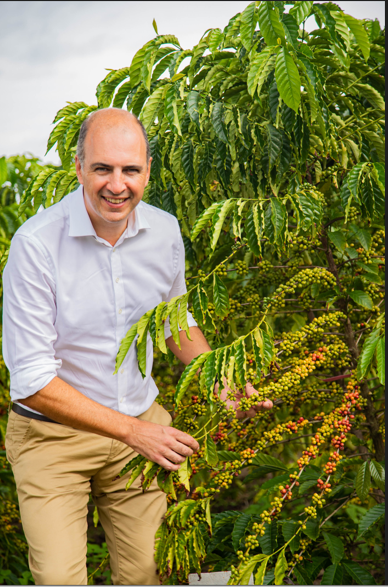
    It’s not too late to reverse this decline. On a recent farm visit to the village of Yobouekro, I saw for myself the impact climate change is having. I met with Amani Ahou, a female coffee farmer who, until recently planned to abandon her plantation as the crop from her aged trees had fallen to depressingly low levels. 

    Over the last few years, Amani has received training from Nescafé agronomists. She has learnt pruning techniques, composting and the importance of planting shade trees. She is now more upbeat about the prospect of reviving her coffee farm. ‘My plantation has rejuvenated, my old trees are starting to flower again, and are producing good coffee’, she said. 

    It was great to see for myself how improving technical knowledge, building stronger partnerships between farmers and industry can have a real and lasting impact for farmers like Amani.

    Regenerative agricultural techniques like these play a critical role in the future of coffee farming. They will improve soil health, restore water cycles, increase biodiversity, and reduce greenhouse gas emissions. By planting more coffee trees and encouraging greater biodiversity, farmers can create an environment for bees, insects and birds to thrive on their farms. This will have a positive impact on the ecosystem and reduce the effects of climate change.

    The responsibility and cost for transitioning to regenerative agriculture cannot lie solely with the farmers. It’s been 10 years since we launched the Nescafé plan, during this time we have worked closely with farmers to improve agricultural practices, sharing our knowledge and expertise from across the planet. The plan builds farming skills to help farmers produce higher quality beans and achieve higher premiums, so they can support their families and contribute meaningfully to their local communities. 

    However, we know there is much more to be done, which is why we are going further and last week announced the Nescafé Plan 2030 to accelerate regenerative agriculture, reduce greenhouse gas emissions, and improve coffee farmers’ livelihoods.   

    Nescafé has committed to investing over 1 billion Swiss francs globally. The aims of the plan are:

    • 100% of our coffee to be sourced responsibly by 2025
    • 20% of coffee sourced from regenerative agricultural methods by 2025 and 50% by 2030.

    In Côte d’Ivoire, we are committed to supporting farmers that take on the risk and costs associated with transitioning to regenerative agriculture. We will be piloting a financial scheme that includes conditional cash incentives for adopting regenerative agriculture practices.

    We have a long way to go, but if the whole coffee industry in Africa supports this transition to regenerative agriculture, we will ensure no farmer is left behind, so we can continue to uplift lives and livelihoods with every cup we drink.

    Scott Coles is the Coffee Business Executive Officer for Nestlé Central and West Africa

  • Feature: Nigeria needs an Audacious Tyre Supply Plan

    Feature: Nigeria needs an Audacious Tyre Supply Plan

    By Ayo Akinfe

    Were I a Nigerian presidential candidate I would come up with an audacious plan to make Nigeria the tyre supplier of the world keying into the electric car boom.

    [1] On August 3, 1900, the Firestone Tire and Rubber Company was founded by a gentleman named Harvey Firestone. Cashing in on the booming automobile market, Mr. Firestone soon saw the huge potential for marketing tyres and his company was a pioneer in the mass production of them

    [2] In 1926, the company opened one of the world’s biggest rubber plantations in Liberia, West Africa, spanning over 1m acres. Why Nigeria did not seek a similar faculty at independence is beyond me

    [3] As recently as around 2010, the world’s six major natural rubber producers were Indonesia, Malaysia, Ivory Coast, Thailand, Liberia and Nigeria. They had an association called the International Natural Rubber Organisation. Basically, you can only grow natural rubber in the tropical rain forest, kind of like cocoa

    [4] Natural rubber is not cultivated widely in its native continent of South America due to the existence of South American leaf blight, and other predators. This has taken the likes of Brazil and Colombia out of the market. Countries like Nigeria should be making the most of this

    [5] More than 28m tonnes of rubber were produced in 2017, of which approximately 47% was natural. Since a slight majority of world rubber is synthetic, derived from petroleum, the price of natural rubber is determined to a large extent by prevailing crude oil prices

    [6] Nigeria is one country that has the capacity to produce both natural and synthetic rubber in abundance, so should automatically be the world’s number one tyre producer. We have crude oil and once upon a time had rubber plantations. Obafemi Awolowo once had a huge rubber plantation but I doubt if that is functioning anymore

    [7] As of today, the three largest producers Thailand, Indonesia and Malaysia, together account for around 72% of all natural rubber production. I find that totally unacceptable. They have formed the International Tripartite Rubber Council (ITRC), which determines export volumes, stocks and price

    [8] In 1991, Nigeria became Africa’s largest rubber producer with an annual output of 155,000 tonnes. In 2016, production peaked at 156,000 tonnes but since then, output has been on the decline mainly because we have refused to replenish old trees. Estimates suggest that Nigeria is losing upwards of $6bn in potential revenues because of its inability to supply rubber exports to the rest of the world

    [9] Can someone please explain to me why the Nigerian government has not invited the likes of Firestone, Dunlop, Michelin, Goodyear, Pirelli, etc to open rubber plantations in Nigeria? They should all have massive manufacturing plants churning out millions of tyres on a daily basis, employing probably about 1m people

    [10] Analysts say that in total, the rubber industry generates about $18bn in the US each year. If Nigeria could maximise its potential for rubber production, it would be able to provide up to one-third of the US market with affordable rubber. If we are serious about rubber and tyre production, we could easily match the $25bn a year we get from crude oil exports from this sector alone but is the political will there?