Category: Features

Featured posts

  • Feature: Towards Achieving a Cleaner Lagos

    Feature: Towards Achieving a Cleaner Lagos

    Folashade Kadiri

    Driving through the city of Lagos, Nigeria’s commercial capital, one cannot help but observe the practical steps taken by the administration of Mr. Babajide Sanwo-Olu to establish environmental sustainability in the state.

    Following the blueprint of the T.H.E.M.E.S. agenda introduced by Mr. Governor as soon as he assumed office in 2019, the state has prioritised cleanliness and environmental sustainability.

    Spearheading the government’s quest to establish a cleaner and livable environment for Lagosians, is the Lagos Waste Management Authority (LAWMA).

    The Authority since the inception of the present administration has introduced various programmes and initiatives, which have all been instrumental in helping the state achieve its objectives on environment.

    One of the key initiatives embarked upon by LAWMA in tackling the menace of indiscriminate waste dumping and plastic pollution is recycling.

    In 2019, the Authority launched the Blue Box programme, which later metamorphosed into the Lagos Recycle Initiative, aimed at encouraging separation of waste at the point of generation, for recycling purposes.

    Massive media advocacy campaigns have been carried out to educate residents on the need to embrace recycling as a way of life. Also in the last one year, recycling companies in the state have grown from three to 100, with over 12,500 jobs created.

    On the recent traction gained by recycling in Lagos State, the agency’s Managing Director/Chief Executive Officer, Mr. Ibrahim Odumboni has this to say:

     “Since the launch of the recycling initiative by Governor Babajide Sanwo-Olu, we’ve grown from three recycling companies to 100 recycling companies and still counting. We currently have more than 600 aggregators, and over 12,500 jobs created in the sector so far. Therefore, you can see that we have started a movement and a growth. It’s over two years now and the progress that is being made is enormous”.

    What LAWMA is doing in the area of recycling deserves the support of all and sundry. Lagos, with a population of over 20 million people, is said to be generating about 13,000 metric tonnes of waste daily, with plastic materials constituting 17% of the wastes. Imagine dumping these huge numbers in landfill.

    The picture of the Bottle-to-Bottle facility at Lagos Ibadan Expressway.

    The implication of this is that there might be no landfill to dump on. This is why LAWMA has engaged recycling as a veritable tool to make sure that the above-painted scenario does not happen.

    Apart from being handy in tackling environmental challenges in the state, the recycling initiative has been used to create jobs for the unemployed. This has made a massive impact on the lives of many citizens, thus alleviating unemployment challenges, with over 12,500 of such jobs created until date.

    On the Authority’s plan to consolidate on the efforts made in the area of recycling, Odumboni revealed that LAWMA had concluded plans to set up 114 recycling collection centers in all the Local Government Areas (LGAs) and Local Council Development Areas (LCDAs) in Lagos before the end of the year.

    The LAWMA boss added that a $65 Million bottle-to-bottle recycling facility, built by a private firm, in partnership with the Authority, would soon commence operation, on 16 acres of land located at Lagos Ibadan Expressway.

    The Authority, working in consonance with PAKAM Technology, has also introduced the PAKAM app 2.0, an all-inclusive waste management software application that connects residents to recyclers, for the exchange of their recyclable items, in real-time.

    The revamped app, unveiled during the recent 3rd-anniversary celebration of the Lagos Recycle Initiative, would go a long way in encouraging households to key into the opportunities presented by the seamless integration of technology, to tackle waste management challenges in the state.

    LAWMA, with the support of the government, is relentlessly exploring all avenues to maximize the inherent opportunities in recycling, which has brought about numerous environmental and economic benefits, turning waste to wealth and providing means of livelihood to many who without jobs would have constituted nuisance in society.

    There is no doubt that the recycling initiative in Lagos is work in progress and will get better with time. The cheering news is that refuse heaps are fast disappearing from the Lagos landscape and all well meaning residents are applauding this.

    While this is not to say that Eldorado is already here, the signs are obviously good and it is just a matter of time before we get there. In order to sustain and surpass the momentum, Lagos residents must come to terms with the significance of an improved environmental habit. When we deliberately choose to act in manners that could endanger the environment, we are the ones that would certainly bear the consequences of such actions.

    What is required to maintain a sane and friendly environment is not just about what the government is doing, but also about the people’s attitude. Lagosians need to stop all practices that could put a clog in the wheel of the government’s efforts at waste management. Everyone must be ready to imbibe a positive attitude in the area of waste disposal. Residents are enjoined to call LAWMA toll-free line 07080601020 to report waste management challenges in their areas.

    Ours is still work in progress and with the support of all residents and stakeholders in the state, we will achieve the Sanwo-Olu administration’s vision of attaining a Greater Lagos.

    All hands need to be on deck to achieve a cleaner, healthier, wealthier and livable Lagos of our dreams. Together, we can achieve this!

    Folashade Kadiri is Director, Public Affairs, LAWMA

  • Feature: Rwanda leads Africa in Plastic Waste Management

    Feature: Rwanda leads Africa in Plastic Waste Management

    by Radhia Mtonga

    The production, use and disposal of plastics pose the biggest challenge in waste management. While individual governments have instituted legislative measures and even signed international conventions aimed at stemming the tide of the plastic waste menace, the world is yet to see an end to plastic pollution.

    Across Africa, plastic pollution remains a serious problem, devastating communities’ health, the environment, and the ecosystem that millions depend on for their livelihood. But amidst this challenge, Rwanda remains at the forefront of waste management, earning its capital city, Kigali, the moniker “Africa’s cleanest city”. Rwanda’s efforts began with a 2008 ban on non-biodegradable plastic bags, which was subsequently followed by the outlawing of single-use plastic items, as one of the long-term strategies for becoming a green and climate-resilient nation.

    The ban was aimed at minimising the dangers of plastic pollution to humans, farm animals, aquatic life and the environment. According to a World Bank Report, Rwanda’s current strong institutional and political will, legal frameworks and citizens active in eliminating plastic pollution foster socio-economic development and environmental protection. The national motto for sustainable environmental management is: “whatever cannot be recycled or reused must not be produced”.

    National policies and laws that make it happen

    The country also has a host of national policies and laws concerning general pollution management: Vision 2020 (2000); Rwanda Green Growth and Climate Resilience Strategy (2011); Regulations of Solid Waste Recycling (2015); and the Law on Environment (48/2018 of 13/08/2018), among others. In addition, there are specific laws or policies that focus directly on plastic waste control in Rwanda. These include Law No. 57/2008 of 10/09/2008 relating to the prohibition of the manufacturing, importation, use and sale of polythene bags in Rwanda (2008).

    Coming Together in Common Purpose

    Furthermore, as a signatory to international conventions, Rwanda has adhered to its commitments to achieve ambitious changes in the use, management and disposal of plastics in the country. For instance, as a signatory of the Paris Agreement on Climate Change, the country seeks to contribute to the ambitious goals of the Paris Agreement. The management of plastic pollution in Rwanda falls within a wider strategic, regulatory and policy framework, which sets the foundation for the management of waste. In order for these commitments to really take root however, the backing of the local community is needed. In Rwanda, this has come in the form of “Umuganda“, a Kinyarwanda word that means “coming together in common purpose”. It’s a monthly community work (including community cleanup) reintroduced to Rwandan life in 1998 as part of the efforts to rebuild the country after the 1994 genocide. Today, it takes place on the last Saturday of every month from 08:00 and lasts for at least three hours, with every able-bodied Rwandan aged 18 to 65 taking part.

    Home to Innovators

    Furthermore, Rwanda has also created a dedicated community of innovators in the field of plastic waste management. These include CareMeBioplastics and Toto Safi, who are both finalists in the Afri-Plastics Challenge. Small and medium enterprises like these illustrate the growing role for the private sector within the plastic value chain, particularly in the African context where government infrastructure and services are limited, even non-existent in some places. CareMeBioplastics is involved in the collection and recycling of plastic, using a mobile app to collect the plastics from the end-users and processing the collected plastic, and turning the plastic waste into valuable items such as school desks, and both indoor and outdoor furniture. Toto Safi’s solution is a reusable cloth diaper service so that parents do not have to choose between convenience and pollution. Through this app, parents will be able to receive a fresh bundle of sterilised and affordable cloth diapers. These two innovators represent the wider activity and commitment that the Rwandan landscape is facilitating. They also demonstrate the importance of public-private partnership in plastic waste management.

    Significant Challenges

    Despite impressive success, delivery of waste management services in Rwanda still faces significant challenges if the governments, industries and businesses do not invest and develop effective and efficient waste management systems. Another challenge is a lack of data and data management systems for waste management, which makes it difficult to understand and design policies for waste management and assess the impact of plastics policies on plastic waste recycling reduction in Rwanda.

    The government could address these challenges by developing a robust data management system to gather, record and report on plastics data. Such a system is essential to facilitating policy performance measurement and improvement. It will allow the nation to better track waste accumulation, waste movements and end destinations (e.g. tonnages recycled, recovered, or disposed of) including public behavioural changes toward plastic waste management practices, and enable the government to identify and assess opportunities for future interventions.

    The government also needs to step up its support to separate waste at the source and to handle separated waste during its collection and transportation with the right financial incentives. Gradually increasing landfill tipping fees, fines for illegal dumping, deposit refund schemes, and other financial incentives according to society’s increasing affluence will help encourage both households and entities to separate recyclable plastics from other wastes, reduce landfill disposal and curb illegal dumping in Rwanda.

    The private and public sector need to stop working in silos as the problem affects both sectors. Where the public sector falls short, the private sector may be able to provide support through innovation and research as demonstrated by the above-listed tech startups.  Education and awareness also play a key role in making sure these initiatives succeed. It would be prudent to incorporate within the education system, the importance of proper waste management, recycling and the overall circular economy. This encourages a holistic, systems approach to the problem which in turn ensures the sustainability of the overall solutions.

    Finally, the government needs to develop effective mechanisms and provide financial incentives to support local industries – such as the construction and manufacturing sectors – to incorporate recycled materials into their manufacturing processes and products.


    These are challenges that governments face across Africa and globally. There is no doubt that Rwanda is a global leader in plastic waste management and its efforts should be emulated by all governments to spur the growth of their economies, sustain a clean environment and improve the health and well-being of their citizens.

    Radhia Mtonga is the Network Coordinator of the African Circular Economy Network & Co-Founder of Ulubuto

  • Feature: Beyond the Photo Opportunities of Asiwaju Tinubu with Christian leaders

    Feature: Beyond the Photo Opportunities of Asiwaju Tinubu with Christian leaders

    Rather than all these photo opportunities, Tinubu should prove he is a true friend of the Christian faith by giving the churches real economic power

    Ayo Akinfe

    [1] Nigeria has three comatose oil refineries in Port Harcourt, Warri and Kaduna that are bleeding her dry. They are costing millions to maintain on a daily basis yet do not refine one barrel of oil. This nonsense must stop immediately

    [2] In any sane society, by now, these refineries would have been sold off but alas, Nigeria just loves mediocrity. Our NNPC has proven to be one of the most inefficient and incompetent companies on planet earth and it is time to get rid of what is now an albatross around our collective necks. We are wasting money on them that should he spent on schools, healthcare, roads, housing, etc

    [3] A first step towards the privatisation of the NNPC must be the sale of these three refineries. I would consider selling all three together as going concerns to one buyer and cannot think of a better purchaser than our rich pastorprueners. Nobody in Nigeria today has the deep pockets of the pastorprueners. They are sitting on billions of dollars of what is known in economics as dead capital

    [4] Just imagine the likes of Oyedepo, Adeboye, Oyakhilome, Okotie, Oritsejsfor, Suleiman, Ashimolowo, etc joining forces to float a conglomerate known as the Anointing Oil Petroleum Company and then purchasing these three refineries from the federal government in one go

    [5] This holding company can raise up to $10bn on the international money markets, using about $3bn to purchase these three refineries and then maybe using another $6bn to refurbish them and bring them up to modern production standards

    [6] What I have in mind is a Christian company run according to ethical principles like the Quaker Companies such as Kellogg’s, Cadbury’s, Rowntree, Barclays, Quaker Oats, etc. In every industrialised country in the West, religious finance was at the centre of industrial production and wealth creation

    [7] I would like to see these general overseers constitute the board of directors and lay down firm ethical guidelines that would help eliminate corruption in the Nigerian oil industry. For instance, they should ban the payment of even $1 in petrol subsidies to anyone as that is by far the biggest source of corruption in Nigeria today

    [8] Their Christian company should also have exemplary guidelines when it comes to corporate social responsibility. For instance, there should be a set threshold of spending a minimum of say 10% of profits in any community where the conglomerate operates

    [9] When it comes to job creation too, I expect an example to be set. For instance, any international supplier providing goods in excess of $100,000 must be compelled to come and manufacture such products in Nigeria, creating local employment under these ethical standards

    [10] If we had this Anointing Oil Petroleum Company competing directly with Dangote Industries, it would bring fair, decent, healthy and productive competition into the Nigerian crude oil and petrol industries. There will be no monopoly and the need to be competitive will eliminate nepotism when it comes to appointments. At the moment, the NNPC is the epitome of corruption and nepotistic behaviour. I believe Buhari’s daughter even sits on one of its boards

  • Feature: Nigeria cab offer Britain a Fruit Deal

    Feature: Nigeria cab offer Britain a Fruit Deal

    With the UK raising interest rates as she slides into recession and inflation approaches 11%, Nigeria could offer them a helping hand with a mutually beneficial British-Nigerian Fruit Deal

    Ayo Akinfe

    [1] One huge problem the UK is facing outside the European Union (EU) is that she will no longer enjoys duty-free supply of certain products. For instance, she now has to pay top dollar for fruits and vegetables from the Mediterranean region. Trust the Spanish, Italians, Greeks, French and Portuguese, they demand full market price for all the tropical fruits they sell to the UK

    [2] Companies like Sainsbury’s, Tesco, Asda, Iceland, etc now have to buy their fruits from Southern Europe at global market prices. With the EU protection gone, countries like Nigeria should be able to compete for access to the UK market alongside Southern European suppliers

    [3] Nigeria is actually a significant fruit producer globally. We are the seventh largest pineapple producer (1.6m tonnes), sixth largest papaya producer (837,000 tonnes), 10th largest mango producer (917,000 tonnes) and 10th largest guava producer (790,000 tonnes)

    [4] We need to start thinking about how to get our produce on to UK supermarket shelves. Matters that need addressing include supply guarantees, meeting international food safety standards and avoiding damage in transit

    [5] During the last UK-Africa Summit in London, I did not see any farmers on President Buhari’s entourage. What would have been ideal would have been if our main fruit producers had come over and sat down with the likes of Sainsbury’s, Asda, Tesco, Iceland, etc to thrash out supply deals

    [6] Just imagine if at that summit President Buhari and Prime Minister Boris Johnson had been invited to witness the signing of a historic fruit supply deal at that summit. Trust Boris the showman, he would have bragged about it non-stop, heralding it as the great new chapter in British history and a vindication of the decision to leave the EU

    [7] In Nigeria, our supply costs are lower than many other global fruit producers due to lesser wages. Also, the fact that we are just below Europe geographically gives us a competitive edge over suppliers in Asia and the Americas. Post-Brexit, fresh Nigerian fruit should be arriving in the UK every day in the hundreds of thousands tonnes

    [8] What our producers need are refrigerated trucks to convey their fruit from farm to port, government approved warehouses that are secure and refrigerated and then training on modern pest control methods and international food safety standards. In return, they should be asked to offer supply guarantees underwritten by the Nigerian government for long term deals

    [9] I would have like to see President Buhari pick up the phone to new prime minister Liz Truss and tell her that Nigeria assures the UK retail trade that it will meet all their tropical fruit requirements over the next 10 years unfailing

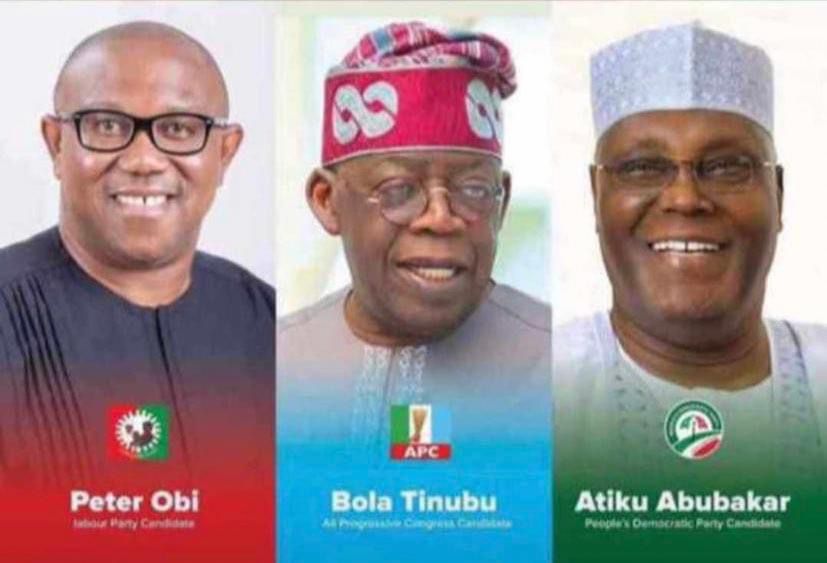
    [10] I am surprised that none of the 2023 presidential aspirants who have all been in London lately have announced one policy initiative in this regard. Over the last month, Tinubu, Atiku and Obi have all been in the UK and neither of them saw it fit to meet with the British retail giants to open talks about shelf space.

  • Feature: Kuda’s N6 Billion Loss and The Need to Reinvent The Model

    Feature: Kuda’s N6 Billion Loss and The Need to Reinvent The Model

    By Elvis Eromosele

    Universal access to financial services is today widely regarded as a fundamental human right. Firms helping to drive access to financial services are highly regarded as enablers of financial inclusion. 

    “Financial inclusion,” according to the World Bank, “means that individuals and businesses have access to useful and affordable financial products and services that meet their needs – transactions, payments, savings, credit and insurance – delivered responsibly and sustainably.” It is viewed as a key enabler in reducing poverty and boosting prosperity.

    Across developing countries, fintechs are at the forefront of bridging the financial inclusion gap. 

    Over the past half-decade, Kuda Bank, in Nigeria, has emerged as a key player in this space. Experts insist that it is helping customers access financial services with its mobile-first, personalized and often cheaper set of banking services built on newer, API-based infrastructure. 

    During this period, the firm has experienced impressive growth both in the number of users and volume of transactions. There are talks that it’s seeking to expand its operations to other cities across the African continent to drive financial inclusion. To fuel its expansion, it has grown its personnel base and raised several rounds of funding.

    Funding Rounds

    In the last couple of years, investors have been all over Kuda, like a rash. The fintech startup has had several successful fundraising campaigns. The digital-only bank raised $1.6 million in pre-seed funding in 2019. 

    It followed it with $10 million in a seed round, the largest-ever seed round raised by a startup out of Africa, at that time, in December 2020. In March 2021, Kuda raised $25 million in a Series A round to continue, according to company sources, to provide a modern banking service for Africans and the African diaspora. 

    And then in August of the same year, the startup closed, via its London entity, a Series B of $55 million. Again, it indicated that the fund would go into the introduction of new services for Nigeria and equally push its launch into more countries across the continent in furtherance of its goals to reach “every African on the planet.” The funding was made at a valuation of $500 million. 

    Operating loss

    Flushed with cash, the assumption in many quarters, until recently, was that the firm was doing well. The 2021 financial report has successfully dispelled that notion, as it showed that the bank has incurred a loss of more than N6 billion. 

    According to the financial report of the bank, it incurred a loss of N868 million in 2020. This indicates that between FY 2020 and 2021, Kuda Bank’s losses increased by a staggering, wait for it, over 600 percent. 

    A closer look indicates that Non-Performing Loans (NPL), which stood at 69 percent as of the end of the 2021 financial year, contributed significantly to the loss. 

    The bank’s new overdraft product, which was launched last year, has been fingered, and rightly so for the poor result. The sheer number of defaults literally ate into its balance sheet, eliminating funds and affecting the bank’s profitability. On the contrary, the traditional banking industry, who generates a big part of its revenue from lending, saw a drop to 4.8 percent within the same period. 

    It is interesting to note that revenue increased by 4,315 percent from N72.6 million in 2020 to N3.2 billion in 2021. Impressive figures but the firm now needs to urgently curtail its expenses, starting with better management of loans to curb defaults. 

    Kuda’s Operation 

    Kuda has been described severally as a neobank. Neobanks refer to a new generation disruptive of banking services based on more modern interfaces and infrastructure and around the concept of API-driven embedded finance. Africa, with its immense underserved and financially excluded population, is perceived as one of the few remaining growth areas. 

    Kuda is unique among the neobanks in that it is building its services with its banking license in its back pocket. So, naturally, it can be more flexible, more agile and more in-tuned with regulatory demands.

    With over two million registered users, the fintech company is doing something right. 

    Challenges

    Undoubtedly, it is not enough to be disruptive. Kuda apparently didn’t get the memo. In keeping with its payoff, “The Bank of the Free” Kuda offered customers, starting from when it launched, free bank transfers on its app, and zero card maintenance fees among other freebies. Of course, it is impossible to operate a sustainable business while offering almost everything for free. 

    The Etisalat Nigeria experience is there for all to see. We should talk about this on another day when we find the time. 

    The bank has recently started charging fees on transfers and deposits, a move that it claims to be ‘in line with directives from the CBN’. It makes sense that a financial services provider should make some money from its operations. 

    The truth is that to make money, Kuda may need to rethink its business model. It is clear that while it is taking in loads of funds, it’s currently operating at a huge loss. How long can this continue? Would the investors get to pull the plug at some point? What can Kuda do to reinvent itself? For starters, it needs to break even and then begin to make some money. 

    Conclusion 

    Kuda entered the market with a unique value proposition, providing a service that meets a genuine need and contributing to closing the financial inclusion gaps across the African continent. It had implemented and continues to implement a clear plan to acquire and retain customers. 

    Kuda now needs to explore how to monetize its services. There is a strong case for getting the customers to pay for the solution the firm is providing. Isn’t this the whole idea of business? 

    Experts argue that the best revenues are repeatable and healthy revenues. Kuda must find its niche here. If the current revenue model is flawed, then it needs to be changed. There are no two ways about it. 

    In addition, as the bank pushes its solutions across the African continent, it needs to scale effectively to reduce the cost of serving users. Reducing operating costs is a good way to make money.

    So, there is hope yet. But Kuda has to do things differently, going forward, if it wants to remain in business. It is time Kuda learns how to actually make money!

    Elvis Eromosele, a Corporate Communication professional and public affairs analyst lives in Lagos.

  • Feature: Africa poised to become a Global Leader in Fintech

    Feature: Africa poised to become a Global Leader in Fintech

    By Tapfuma Musewe and Kyle Hiebert

    Africa — one of the world’s least developed and often misrepresented regions — is leading the creation of a new wave of financial tech (fintech) products. In the process, the continent’s entrepreneurs are showing how digital access to non-traditional banking and financial services can be key to overcoming financial exclusion in emerging markets.

    Even casual market watchers will have noticed lately how venture capital is drying up around the world. Runaway inflation stemming from war in Ukraine, stubborn supply chain issues and rich world economies re-animating from their pandemic stupor have prompted central banks to raise rock-bottom interest rates at a blistering pace. This has ended a great stretch beginning after the 2008 financial crisis that saw global investors funneling record investments toward start-ups based on seemingly limitless access to cheap money.

    However, Africa has defied this trend — its start-up funding grew by 139% during the first six months of 2022 compared to 2021, on top of raising a record $5 billion last year.

    The fundamental strengths and long-term viability of the continent’s fintech sector became more apparent during the pandemic, when observers including the World Bank predicted in early 2020 that remittances to the region would collapse. Instead, outside of Nigeria they collectively rose in Africa that year by 2.3% thanks to the underappreciated phenomenon of how remittances are counter-cyclical and tend to increase during economic downturns.

    African fintechs are also unique in another way, given how their growth is being driven by the mother of all innovation: necessity.

    Even after three decades of economic expansion, large swathes of Africa remain bereft of essential goods and services. And as the world’s sole region still experiencing robust population growth — and one dominated by informal economies where the majority of workers remain unbanked — financial inclusion will become an even more salient issue over time.

    Here’s where mobile phone technology has been a gamechanger. Amid the convergence of a new generation of digital-savvy youth, rapid urbanization, underserved middle classes and a landmark continental free trade agreement, mobile phones have reached a 46% penetration across Sub-Saharan Africa, a rate higher than in India.  

    It should come as no surprise then that most of Africa’s ‘unicorns’ (firms valued at over $1 billion) are fintechs working to promote financial inclusion by reinventing remittances, mobile money, consumer lending, personal savings accounts and customisable payment applications for businesses. At the same time, Africa is home to more than 50% of user accounts and 70% of the value exchanged within the global $1tn mobile money market.

    Africa’s fintech ecosystem also reached a new milestone in June, when MFS Africa, the continent’s largest facilitator of digital payments whose network integrates more than 320 million mobile money accounts across dozens of African countries, purchased an American firm to accelerate its growth strategy in a deal reportedly worth US$34 million. The rare move is indicative of how African companies are becoming more confident and assertive in their plans to become global giants within the fintech industry, and in turn provide answers for finance and development issues across the Global South.

    But there are still challenges. New tax regimes and regulatory mandates could materialize down the line, as governments try to exercise more control over their digital environments through introducing domestic legislation. However, the hope is that African nations will follow the lead of influential countries, Nigeria and South Africa; the continent’s two largest economies have both embraced digital finance.

    Policy harmonisation between countries and within regions must be improved as well, although rectifying this is a key pillar of the new African Continental Free Trade Area, launched in January 2021. The continent also suffers from perceived risks around its political stability — true or otherwise — especially considering the re-emergence of military governments and strongman regimes, particularly in west Africa.

    However, it’s important to consider such challenges in their proper context. The overwhelming need and utility mean Africa’s fintech sector will still grow and evolve despite some degree of political dysfunction.

    Therefore, actors in the fintech industry outside the continent are arguably staring at a generational opportunity to forge innovative and meaningful connections with their African counterparts. However, far from its frequent portrayal as a homogenous bloc, Africa is incredibly diverse — no singular approach will work for every country.

    For forward-thinking companies who want to learn more about the opportunities for interaction between Africa and Canada — a widely-recognized global leader in fintech funding, development and innovation — the Afrifursa Fintech Summit, AFRIFIN will bring together dynamic founders, coverage of the latest innovations in fintech, and exciting opportunities for collaboration between Africa and Canada.

    More specifically, participants will learn:

    For the African side:

    How to engage Diaspora communities that contribute significantly to tech innovation, to gather opportunities for remote jobs globally, to attract investment from other global regions and,

    For the Canadian side:

    How to go global and diversify trade partners, to engage African newcomers and Diaspora communities more, to attract FDI from foreign tech firms.

    The Afrifursa Fintech Summit, AFRIFIN will be held on the 22nd of September 2022 from 10 am – 4 pm ET/ 4 pm – 10 pm CAT. Register to secure your virtual seat at: afrifin2022. Access is free

    Tapfuma is a trade and investment executive with expertise in connecting African markets and other regions of the world. Having grown up a Canadian citizen, his passion led him to spend most of his working life across Africa. He began in community development, then pivoted to entrepreneurship and established a couple of companies including a logistics company that moved FMCG’s for a blue-chip company. He then worked in market intelligence, consulting multinational clients seeking to penetrate African markets. Tapfuma possesses a unique understanding in establishing business and achieving growth in challenging economic environments.

    Tapfuma has a diverse academic background, having obtained a Global Executive MBA and B.Sc. Biology from the University of Toronto, as well as an MA Theology from Akrofi-Christaller Institute. He is also passionate about leading high-performance teams and is a certified Project Management Professional. He is now based in Toronto, Canada where he founded Afrifursa – an initiative that seeks to shift the narrative around Africa in the Diaspora and hosts the annual Afrifursa Fintech Summit. He is currently a Managing Director at private equity firm Raygan Mills, which has roots in Cameroon and invests in growth companies across Africa. Tapfuma enjoys empowering others to succeed and currently mentors young professionals, as well as, advises several firms.

    Kyle Hiebert, former deputy editor of the Africa Conflict Monitor, is an independent researcher and analyst, and contributing writer to the Centre for International Governance Innovation focused on globalization, conflict, climate change and
    technology.

  • Feature: Using The Amotekun blueprint to create State Police

    By Ayo Akinfe

    Which presidential candidate will take the Amotekun blueprint and use it as a basis to create state police forces nationwide?

    [1] With Nigeria increasingly veering towards state police forces as the centralised Nigeria Police Force is hopelessly overwhelmed by the current insecurity epidemic, Amotekun is looking like the best template to use

    [2] I like the fact that all sorts of safeguards are being put in place to prevent the Amotekun Corps becoming a band of thugs, political hoodlums, an ethnic militia or an uncontrollable congregation of hooligans. We need a bill sent to the National Assembly on this matter if the Amotekun blueprint is to be adopted nationally

    [3] Among the checks and balances I have read about are suggestions that recruits be given psychiatric tests, that they get their forms attested to by the traditional rulers, district police officers or local government chairmen and that an insurance scheme be provided for all operatives. This is a good start

    [4] For now, what is also lacking is a commercial masterplan to make the project an exemplary initiative in self-sustainability. A State Police Security Bill needs to address all this too. Every geo-political zone will have to make its regional police force self-sustaining. In the southwest for instance, what I would do is clear 10,000 square kilometre of land in Irepo, Olorunsogo, Orelope and Ori Ire local government areas of Oyo State extending into Ejigbo, Ola Oluwa, Iwo, Orolu and Odo Otin local government areas of Osun State. There, we will open a leopard colony which I will call Amotekunville. I will import 200 leopards from DR Congo and open Nigeria’s first big cat sanctuary. Getting the project going will involve resettling villagers as happened when we built Kainji Dam in 1964

    [5] I will also import about 5,000 impala antelopes so the leopards have a food source. The idea is to make the sanctuary self-sustaining so animals can feed as if they are in the wild. By 2024, I will look to include zebras, buffaloes, wild boars and baboons to Amotekunville

    [6] By 2025, I will start construction on 500 tourists cabins, three hotels, a nature trail, restaurants, etc to facilitate the growth of an unprecedented tourist industry. The whole idea is to make Amotekunville self-sustaining to the point whereby it can fund the Amotekun Corps without government intervention. My plan is that by December 2025, a bustling tourist industry is up and thriving

    [7] I will also invite textile manufacturers to open a clothing factory in somewhere like Ijebu Ode to make Amotekun attires from Aso oke, adire, ankara, guinea brocade, etc. We will produce designer agbadas, head ties, laptop cases, IPad covers, etc

    [8] A keyring and other memorabilia factory will be opened in say Akure with a mandate to produce as many mementos as possible. They will churn out Amotekun mugs, T-shirts, pens, rulers, baseball caps, trainers, etc. Annually, this factory should be generating at least $50m

    [9] I would sell Amotekun rights to our food producers so they start producing Amotekun Ikokore, Amotekun Gbegiri, Amotekun Asun, Amotekun Lafun, Amotekun Gari, Amotekun Elubo, Amotekun Jollof Rice, Amotekun Ogi, etc. Over the next two years, I would also open the Amotekun Electronics Company in say Epe. It will manufacture finished household goods like fridges, TV sets, laptops, washing machines, etc. The idea is for it to become the local equivalent of Phillips

    [10] I would also build an Amotekun cocoa grinding plant, sawmill and palm oil processing plant at Ore. Given Ore’s location on the Sagamu-Benin Expressway, it is well located to ship these goods to the rest of the country. A regional railway link will be built, linking all five states together. A dedicated line will then be constructed linking them with Abuja

  • Feature: The basic manifesto pledges of Nigeria’s Presidential Candidates

    Feature: The basic manifesto pledges of Nigeria’s Presidential Candidates

    By Ayo Akinfe

    Should Nigeria’s 2023 Presidential candidates just have three basic manifesto pledges – Security, power and tourism

    [1] I am sure a lot of you get asked why Nigeria is so populated often. How come about half of the 360m people living in West Africa are Nigerian and one in five Africans is Nigerian? Even countries with more arable land like DR Congo, Angola and Tanzania are not as populated as us. How many of you have the answers?

    [2] Nigeria is essentially seven African countries put together- Oyo Empire, Niger Delta City States, Benin Empire, Igbo City States, Middle Belt City States, Kanem-Borno Empire and the Sokoto Caliphate. These old nations are not homogeneous and are complex. Your average African country like say Ghana, Zambia, Mozambique, Ethiopia, etc is the equivalent of one of these seven component parts of Nigeria in terms of complexity and diversity

    [3] I wonder how many artefacts are buried somewhere in remote villages that could shed more light on the history of these seven component parts of Nigeria. For instance, a skull, found in the Iwo Eleru cave in Nigeria in 1965, does not look like that of a modern human. It is longer and flatter with a strong brow ridge and features closer to a much older skull from Tanzania, thought to be around 140,000 years old. Are there more of such skulls littered across Nigeria?

    [4] Is it possible that Nigeria was ever home to some ancient civilisation we do not yet know about? Well the answer lies in our savannah belt as the tropical rain forest was not suitable to human habitation until relatively recently. Even then, when people moved into the forest, they did so in small groups and lived in little hamlets and villages, not massive savannah empires like Mali, Ghana, Songhai, Kanem-Borno, Sokoto, Oyo, etc. By and large, West Africans are not a forest people like those from the Congo

    [5] One place that has always fascinated me in Nigeria is Lokoja. For me, it should have the same mythical status as Mesopotamia as it is the confluence of the two rivers in the world’s largest black nation. Bearing in mind humanity came from Africa, why is Lokoja not a candidate for the Garden of Eden and the birthplace of humanity?

    [6] It is not disputed that human settlements first sprung up on river banks, confluences and river valleys like Mesopotamia between the Tigris and Euphrates in modern day Iraq, the Nile Valley in Ancient Egypt, the Ghanges Valley, etc, so why is the Niger-Benue confluence not an automatic candidate? As usual, we are waiting for our Abrahamic faiths and their so-called holy books to tell us so before we even think about it. Well, if that is what works, I can think of a way around it

    [7] Present day Lokoja was established in 1857 by the British explorer William Baikie at the site of an earlier model farm constructed during the failed Niger expedition of 1841. However, who is to say that earlier settlements of Homo Erectus, Homo Habilis, Homo Neanderthalis, Homo Heidelbergis, etc do not exist there. Why could a colony of Neanderthals not have lived happily in Lokoja prior to the Ice Age

    [8] Do you know that we are still to find fossils of many of our ancestors as we evolved? Somewhere in Africa there are bones of every early man and I think we should set ourselves the task of uncovering these fossils. I am inclined to start from our major towns on the Rivers Niger and Benue like Lokoja, Jebba and Yola

    [9] One other place that desperately needs a major expedition is the Nigeria/Cameroon border. These two countries account for about 3% of the world’s population between them, yet 10% of its languages. It is common sense that if the Tower of Babel exists, it is out there on their border somewhere near the Mambilla Plateau. Who knows, those Koma people may have descended from its original custodians kind of like the Knights of the Templar

    [10] You know, these are the kind of thoughts that your tourism minister should toy with on a daily basis. Nigeria has the added advantage of having a lot of clergymen who could give religious legitimacy to any new discovery. If I was Nigeria’s tourism minister and we found the ruins of a castle along the border with Cameroon, on my first visit there, I would take along Adeboye, Oyedepo, Ashimolowo, Oritsejafor, Okotie, etc. As from that year onwards, Nigeria would generate a minimum of $100bn in foreign exchange earnings from tourism annually

  • Feature: Re- Who Benefits when Western Museums return looted Art?

    Feature: Re- Who Benefits when Western Museums return looted Art?

    (an email conversation with her Dad)

    By Torera Fagbenle

    I just finished reading the article, Who Benefits when Western Museums return looted art? written by David Frum. He’s a good writer and covers a lot here, over centuries.

    However, the writer annoyed me greatly in many areas of the piece, and I disagree with his ultimate conclusion that the art should be spread around the world just because the three Nigerian stakeholders do not currently agree, and just so the greatest number of people can benefit from its ‘easy access’ in the west (‘easy’ for whom exactly?). In one breath he says this, but then both heralds the museum in Bilbao as a great example of what a museum can do for a place, and talks about all the benefits that would come with the building of such a museum in Benin.

    He says ‘because it is not clear who will take control of the art, and how, it could stay in Western museums and money could be paid to Benin or money could be used to support modern African art’.

    His conclusion smells a lot like the old, “Weeelll they might not be looked after well (read: how ‘we’ have been looking after them’), so they should stay here for now.”

    He fails to properly highlight the symbolic and spiritual importance of returning the art. Every moment they spend in British and wherever museums, is a reminder of the mess Europe made of Africa. That they were stolen is reason enough to return the art, no matter their supposed end in Nigeria.

    He should stay out of this conversation. Europeans/Americans lost all moral authority on the matter of Benin art when they repressed and continue to repress African people for 500 years. He failed to mention just how Nigeria came to be so corrupt, in any descriptive way. He talks about the world back then as ‘a place where all but the elite were suffering’ — a veiled attempt to downplay the unique and continued pain and rape of Africa. He failed to mention the complexities of the Benin slave trade, and painted a ‘they sold slaves for Portuguese metal’ picture as if that was anything like the brutal and vicious transatlantic slave trade, and as if they were dealing on fair terms.

    Lastly (can you tell I am annoyed? Hahaha), he has no say or stake in this matter except that his parents collected African art and pushed for African art to be seen in western museums. This story that ‘the last generation worked so hard to get African art in western museums and now people are working hard to get the art back out again o woe is us o woe Europe woe woe’… that might read well in The Atlantic piece but I don’t buy it for one moment. Not least because: THE BENIN ART DIDN’T BELONG IN THOSE WESTERN MUSEUMS IN THE GODAMNN FIRST PLACE. This is not at all like that Greek piece he talked about. Where was the theft there? What the hell kind of comparison is that to make?

    His writing was patronisingly annoying. That he was a speechwriter for the president who invaded Iraq under falsehoods, and whose pitiless inaction on Hurricane Katrina led to many deaths of Black people, and that he used this connection as his ‘in’ to interview the oba, speaks volumes.

    He thinks the return of art cannot wipe away the past, or ‘absolve white people of guilt’. That is not the aim of the return, at least not on the African end, in my view. Their European guilt will remain their guilt (because they were and are devilish), whether the art is returned or not. The aim of the return is in step with Africa’s demand that Europe stops its devilish ways. The aim is an attempt to make amends for a past wrong done unto African people (I think the impact would go beyond Benin), it’s to return African glory to Africa, not least because Europe tried to decimate us to the ashes, spiritually, economically, politically, socially, racially, culturally(!!!)…. and it damns near succeeded. They have no say in what happens on the other end. Once the works are returned, we can goddamn feel good that we recovered something that is OURS, even if some of the European institutions were simply caving in under pressure, without any remorse for their, again, devilish ways.

    Returning the art is simply ‘the right thing to do’… whether the Federal government looks after it, whether the oba looks after it, whether the Trust looks after it… sha it is returned. David Frum of The Atlantic, is not the custodian of Benin art, as interested as he may be in their end.

    I am so annoyed by his suggestions. What do the Benin works have to do with supporting modern art? What do they have to do with modern virtual reality ‘experiences’ for European people in European museums? Why is he talking about some unknown future when this conversation is firmly about the past? What do the works goddamn have to do with anything but Benin?

    Ughhhh!!! Why is he so concerned about what happens to objects he does not own? He spends hundreds of words talking about the importance of art, then belittles art by saying it cannot do X, Y, or Z… when throughout history there are examples of it doing just that and more. Art is used as a token of immense gratitude, it’s used to broker peace, it’s used as collateral, it’s used as a fierce political statement. Some art is destroyed when those in ‘power’ are fearful of its impact on people they wish to subjugate, or those whose history they wish to dabaru. Art, and who owns it, is powerful. Oh, he is so annoying — how can he say that the return of art doesn’t have the power to right a wrong like theft?

    The art isn’t being returned because of any goddamn benevolence of western institutions, just like the slave trade didn’t end because of a sudden change of heart. People all over the world are demanding that the looted art be returned, thus the return would signal a powerful victory of the oppressed over the oppressor. Those are like ‘extreme’ terms, but isn’t that what we’re talking about? A win for Africa?

    Tracing the history and movement of artwork can tell us so much about the minds and desires of people, and if those works are not returned, that would be a sorry end to this history. Interestingly, he mentions that the Benin works were not created to be traded in the way the modern world trades art… so art, here, amongst its other ‘powers’, was also art for art’s sake. Benin should have its art, for whatever reason they so choose. The writer has never had culturally significant art stolen from his land by the most savage of pillagers and held abroad in institutions paid for by racist imperialists and colonialists and enslavers and neo-colonialists, whose actions devastated his people for generations past and to come, in every conceivable way, and some of whom are now, again, devilishly suggesting that the art stays exactly where it is — how the hell could he begin to know?

    I believe the art should be returned to Benin where it belongs, has always belonged, and will always belong, and the people of Benin can decide what to do with it.

    Ọmótómirera, ọmọ Fágbénlé, a Law student based in London and Ìbàdàn. I write whenever the spirit moves me, and can usually be found listening to Abami Eda.

  • Feature: Buhari should propose the new British- Nigerian Clean Energy Initiative

    Feature: Buhari should propose the new British- Nigerian Clean Energy Initiative

    By Ayo Akinfe

    As a mark of respect to the Queen, President Buhari should proposing this new bilateral British-Nigerian Clean Energy Initiative

    [1] British firms will be given tax holidays to build a 853km wind farm along Nigeria’s Atlantic coastline

    [2] British firms will be given tax holidays to build four mega solar farms in Borno, Yobe, Katsina and Zamfara states

    [3] Nigeria will open the world’s largest solar panel manufacturing plant in Sokoto with British investors invited to take a 50% stake in the venture

    [4] Nigeria will build a waste-to-power plant in Lagos. British investors who participate in it will get a 10 year tax holiday

    [5] Nigeria will seek to attract British automobile manufacturers to open electric car assembly plants in Nnewi, making it the world’s Electric Detroit

    [6] British food processors will be given tax holidays and invited to open ethanol plants in Nigeria

    [7] British agricultural firms will be given five year tax holidays to invest in tree planting as a means of replenishing our tropical rain forest

    [8] Nigeria will aggressively woo steel firms to open scrap metal processing plants across the country. British firms will get land leases and tax rebates if they invest in Nigeria

    [9] Nigeria will woo railway companies to build new lines in a bid to reduce the number of cars on our roads. Again, investors will get 10 year holidays

    [10] British agricultural firms who plant trees across our northern border to combat desertification will also get 10 year tax holidays and 99 year land leases

  • Feature: Nigeria needs Bilateral Agreements with Industrialised Nations

    Feature: Nigeria needs Bilateral Agreements with Industrialised Nations

    By Ayo Akinfe

    With world leaders arriving in London, President Buhari should be pushing for bilateral agreements on the sidelines with industrialised nations

    [1] Our insecurity crisis has spiralled out of control. We need a whole mechanised division of the Nigerian Army trained into a commando unit of special forces up to the standards of say the US Navy Seals or British SAS. They must become the world’s leading force at hostage rescue

    [2] We need at least $10bn invested in cattle ranches, dairy plants, animal feed compounders and leather factories to address our chronic Fulani herdsman crisis

    [3] Nigeria currently only generates 7,000MW of power compared with say Egypt’s 24,700MW and South Africa’s 58,000MW. We desperately need investment in this sector. We need the G-7 for instance to pledge an annual investment sum of at least $5bn in the sector

    [4] Any supplier who recieves a contract to supply any Nigerian government with finished goods in excess of $1m must commit to opening a manufacturing facility in the country. Failure to do so should be classified as money laundering

    [5] All the pharmaceutical giants that have developed a Covid-19 vaccine must commit to opening a manufacturing plant in Nigeria to supply the African continent

    [6] Governments of industrialised nations must offer automobile manufacturers generous tax rebates to encourage them to site their new generation of electric car factories in Nigeria

    [7] Nigeria is the world’s major producer of at least 10 agricultural crops and is among the top 10 producers of about 50 other tropical products. Industrialised nations must offer their food processors export credits to come and open processing plants in Nigeria

    [8] To industrialise, a nation needs power, crude oil, steel and manpower. Of all these areas, the one place where Nigeria is totally lacking is steel as we do not produce one tonne. As a matter of utter urgency, steel manufacturers must be offered tax rebates of up to 80% to locate to Nigeria as without it, we will remain perpetually under-developed

    [9] All Nigeria’s foreign debts must be converted into investment grants. We have an annual infrastructural deficit of $100bn and a paltry annual budget of about $33bn, so simply cannot afford to be servicing loans. Basic arithmetic shows that our economy cannot accommodate paying all these foreign loans

    [10] All G-7 nations must pledge to ensure that 10% of all investment by their industrialists comes to Africa as from 2023. To facilitate this, they must offer them a combination of tax rebates, export credits, green credits, relocation allowances, etc

  • Feature- Amotekun Corps: A Case Study of Community Policing in South West Nigeria

    Feature- Amotekun Corps: A Case Study of Community Policing in South West Nigeria

    by Kayode Awojobi

    Since the launch of the security network, Operation Amotekun by the Governors of the Southwestern states in Nigeria on January 9, 2022, ears have heard and eyes have seen tremendous feats towards stemming the tide of insecurity. Thereby ensuring that there is tranquility. The governors that developed this security network should be given accolades for taking the bull by the horns. Despite all, the unnecessary challenges brought their way by the Federal Government.

    To be factual, Amotekun Corps have been known for its swift response, sagacity or passion to secure the lives and properties of the people. Indeed, Amotekun has done well so far, if not for them, possibly the farmers and herdsmen crises would have become more devastating. This provocative menace has reduced to a very large extent, which now made the farmers in the region go to their farms with no or little fear of being attacked by the unusual unknown bandits.

    In the southwest today, if there’s any iota of criminal suspicion anywhere, the people in that area would prefer to call on the Amotekun Corps, instead of other security officers who have been perceived to handle issues with levity, thereby putting the lives of the people in danger. With a single call, Amotekun in their good numbers will bombard the place while returning sanity and bringing the suspected criminals to book, unlike other security agencies who might initially come up with excuses of not having fuel in the van or possibly having a flat tyre. The Omoluabi ethos has attracted the people of the South to the Amotekun Corps, thus making them their last resort in the provision of adequate security.

    The outfit has reduced the problem of inadequate manpower in the Nigeria Police, as they complement police personnel in undertaking robust routine patrols in the nooks and cranny of the region. The initiative as well is to serve as grassroots intelligence network for conventional security. Hence, it is expected that operatives would gather information about crimes and suspicious activities from the communities for necessary action. The role of the outfit in combating criminality such as kidnapping, armed robbery, ritual killing, and herdsmen/ farmer clash has made them progress from just providing intelligence for the police and other security operatives to being in charge.

    Across the Southwestern part of Nigeria, the menace of kidnapping and maiming, which was the order of the day, has drastically reduced and this has made people move around their region freely without the fear of being potential victims.

    While commending the Amotekun operatives for standing tall to their duties, we encourage them to tighten their belt more and not relent, while proving the relevance of state policing to the Federal Government for adoption, either now or in the years to come.

  • Feature- FirstBank: The Embodiment of Corporate Responsibility & Sustainability

    Who should corporate responsibility and sustainability lessons be taken from? Some companies are still unclear about the concept but latching onto the sustainability mantra anyway, because it has become a marketing buzzword for business? Or a company through whose creed and deeds, over the many decades it has been around, people can see corporate responsibility and sustainability lived (first) and preached (subsequently)?

    If the above set of questions constituted a question in an examination hall, it would be one of the easiest of questions to answer. Not one person would fail it. Outside the examination hall, the answer to this question that seems as easy and simple like the question of 2 + 2 may not be as easy and simple. It may be complicated by all the cleverly arranged noise and claims projected at people to make it difficult for them to see and accept the obvious.

    So, it is incumbent on people who know, and care enough (like this writer), to keep stating and restating the obvious. This is in the hope that doing so would help others to take full cognisance of the obvious and not allow themselves to be bamboozled by image without substance and rhetoric without pedigree.

    The concept of corporate responsibility and sustainability is not about the clever or manipulative use of marketing buzzwords by corporate citizens. It is about impact, net positive impact, in the lives of real, not imagined, people through the deliberate and well-planned activities of socially-responsible corporate citizens.

    Even if history is no longer taught in most schools in Nigeria, the records are there. The records show that Nigeria has been blessed to have standing by her, at all times, a corporate citizen which understands the concept of corporate responsibility and sustainability.

    This corporate citizen has been standing by Nigeria before the country’s founding, through its amalgamation, Independence and all the conflicts and crises Nigeria has gone through and still faces. Today, the corporate citizen still stands by Nigeria.

    First Bank of Nigeria Limited, a lender of unmatched pedigree, a bank with a history of unparalleled support to Nigeria and Nigerians (right from the colonial era to date, even serving as Nigeria’s central bank at some stage of our national development), has been a corporate citizen like no other.

    A brand that has backed innumerable groundbreaking projects across Nigeria and beyond, FirstBank has demonstrated that real impact that can be seen and felt by all, and not mere marketing buzzwords, is the real measure of an institution’s understanding of corporate responsibility and sustainability.

    It is incontrovertible that whichever way corporate responsibility and sustainability is understood or defined, FirstBank is sure to tick all the boxes. Just name every parameter for assessing a company’s efforts in corporate responsibility and sustainability and match each against what FirstBank has been doing. Is there any parameter that FirstBank has not surpassed?

    FirstBank has been living corporate responsibility and sustainability for most, if not all, of its existence as a going concern. Knowing it cannot do it alone, the bank has also devoted resources to efforts that will enable it to preach or pass the message so other corporate citizens, groups and individuals will emulate it.

    One platform the bank has used effectively for this purpose is its Corporate Responsibility and Sustainability (CR&S) Week. The CR&S Week is a full working week that the FirstBank Group, in-country and across the world where it operates, dedicates to the promotion, execution and celebration of social responsibility initiatives.

    The Sustainability Week also includes a huge kindness campaign to reorient citizens towards the right values and reignite acts of kindness in society. It is only one of the many ways FirstBank is living true to its brand promise to always put customers first.

    And the Sustainability Week seeks to invite others (individuals and corporate citizens) to follow the bank’s example and begin to intentionally create positive impact in their immediate communities.

    From the inaugural edition in 2017, where the theme was “Promoting Kindness: Putting You First”, the Sustainability Week has helped to reinforce FirstBank’s role as a nation-builder that is driving sustainable development across communities where it operates. It was an opportunity for the bank to encourage others (individuals and corporate citizens) to follow in its steps, even if all they can afford to take are small steps.

    Taking small steps may have informed the choice of theme for the second edition of the Sustainability Week in 2018: “Touching Lives: You First”. The bank sought to debunk the notion that touching lives in meaningful ways and making an impact on society require big-ticket projects, whilst emphasising the power in the little things people do and the small steps they take.

    After all, is it not little drops of water that make a mighty ocean, like the saying goes? And does the journey of a thousand miles not begin with a (small) step, like another saying puts it?

    Just take a look at SPARK (Start Performing Acts of Random Kindness), a values-based initiative that raises consciousness promoting kindness to one another in society, which the bank started during the inaugural Sustainability Week in 2017.

    Aimed at reinforcing FirstBank’s corporate culture of encouraging giving and volunteering among its staff and the larger society, its magnitude today and the many kind initiatives it has sparked off across the country could not have been imagined when the seed was planted five years ago. Incalculable manhours and financial resources from FirstBank staff and partners have been contributed willingly.

    Children in orphanages, internally displaced persons (IDPs) in various IDP camps, widows and other underprivileged or vulnerable groups have been visited and their challenges alleviated if not totally eliminated. Scores of career counselling sessions with secondary school pupils across Nigeria has also been organised as part of the Sustainability Week, which has been the first of its kind in Nigeria’s financial services industry.

    In 2019, the third edition of the Sustainability Week with the theme: “Ripples of Kindness: Putting You First” enunciated the values (or pillars) of the SPARK initiative to include Compassion, Civility and Charity. FirstBank believes that these values and the acts of kindness that flow as a result of embracing the values are critical to promoting and building peaceful co-existence and prosperity in society.

    Among the key highlights of the 2019 Sustainability Week was a “Nice Comments Day” that was a day set aside to foster words of encouragement, support and kindness to people around one, regardless of ones’ familiarity or close ties, in recognition of the instrumental role kind words play in lighting up people’s day and bringing out the best in them.

    Another highlight was the SPARK School Engagement that promoted the SPARK initiative in schools, with the objective of embedding the values of SPARK amongst school children at a young age so the values become part of, and habitual to, them as they develop into adulthood.

    Due to COVID-19 pandemic and government-imposed lockdown, the year 2020 witnessed no edition of the Sustainability Week. Any attempt to stage the kinds of activities and events that usually accompany the Sustainability Week would have been counterproductive, spreading infections and possibly deaths instead of kindness and joy that the Sustainability Week has become synonymous with.

    However, FirstBank’s avowed commitment to corporate responsibility and sustainability would not allow it fold its hands and just watch while COVID-19 and its debilitating effects tried to make living and learning difficult for most Nigerians.

    Working virtually or remotely and, where it could not do otherwise, physically but in strict adherence to COVID-19 safety protocols, FirstBank executed several initiatives meant to ameliorate the very difficult situation in Nigeria then.

    The bank contributed to efforts to provide palliatives to vulnerable Nigerians, announced a moratorium on repayment of loans, set up a special loan fund for businesses run by women, established another for school proprietors in collaboration with a state government and drove an e-learning initiative that sought to move one million school children to a safe online learning platform so their educational progress would not be set back due to COVID-19 restrictions, government-ordered lockdown and the closure of educational institutions for the greater part of 2020

    “Kindness: A Way of Life” was the theme for the fourth edition of the Sustainability Week held in 2021. Highlights of activities of the 2021 Sustainability Week, designed to entrench a culture of kindness, included a practical-oriented training webinar for staff to embed a culture of kindness in the bank by driving understanding of how kindness (or the lack of it) can impact the workplace, the marketplace and the communities in which staff live and work.

    Another important feature of the Sustainability Week was the “Kind Comments Days” that ran all week to inspire a consciousness of kind choice of words and consideration for others. There was also a dedicated programme in secondary schools designed to institutionalise SPARK by using school SPARK champions (including students and teachers) alongside other partners such as Junior Achievement Nigeria (JAN) and Lagos State government to inculcate the SPARK values in school children.

    One other feature was the ground-breaking ceremony for the Lagos State government’s OCAAT (One Community At A Time) initiative to provide the Primary Health Care Centre at Ijedodo community in Alimosho LGA. Set up as an initiative to improve the health and welfare of the members of various communities in Lagos State, FirstBank partnered the government on the project as part of its contribution to global efforts to meet some specific Sustainable Development Goals (SDGs).

    There were also webinars: a general webinar with the sub-theme: “Education: Does Kindness have a Role?”; and a millennial webinar with the sub-theme: “Making the Cyber World a Kinder Place” which sought to proffer solution to the question of how people could become kinder on social media platforms.

    All the past editions of FirstBank Sustainability Week highlight the longstanding and relentless commitment of FirstBank not only to continue to live but also to preach the message of corporate responsibility and sustainability.

    Given its unmatched pedigree in corporate responsibility and sustainability, FirstBank has earned the right to address all other corporate organisations as well as individuals and groups on matters of sustainability. The bank has earned its right to the people’s audience.

    It is against this backdrop that FirstBank’s forthcoming 2022 Corporate Responsibility and Sustainability Week should be welcomed by other banks and corporate citizens, irrespective of industry, as an opportunity to come together and take lessons from Nigeria’s foremost corporate citizen with regard to corporate responsibility and sustainability.

    FirstBank does not consider itself too big to take lessons from other corporate citizens in areas where they have distinguished themselves. So other corporate citizens should not feel too big to take lessons from FirstBank in this area where the bank stands highly distinguished.

    Or can anyone claim not to know that if the concept of corporate responsibility and sustainability were to be represented by one corporate citizen per country on a world map where countries are denoted by their foremost corporate entities, it is unarguable that FirstBank would be the company eminently representing Nigeria on that map?

    Culled from Leadership Newspaper

  • Feature- Osteoarthritis: Exercises can be Helpful

    Feature- Osteoarthritis: Exercises can be Helpful

    by Dr. Dorcas O. Adebimpe

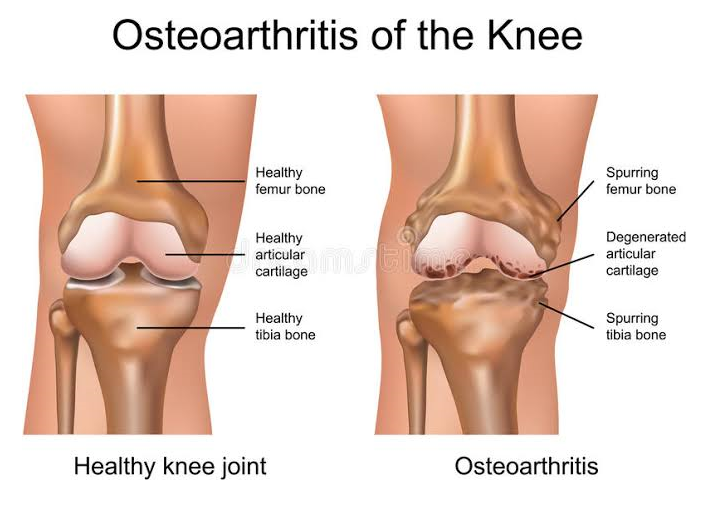
    Osteoarthritis is a common musculoskeletal disease, traditionally regarded as a degenerative joint condition. It is a common joint condition (disease) predominantly affecting the knee, hip, and hand joints. Some signs and symptoms of osteoarthritis are pain, muscle weakness, joint instability, joint stiffness, and reduced range of motion at the joint.

    It is prevalent in people over 55 years, although arthritis in its various forms can start as early as infancy. Hand OA is associated with pain, reduced grip strength, loss of range of motion (ROM), and joint stiffness, leading to impaired hand function and difficulty with daily activities.

    The World Health Organization stated that OA is one of the ten most disabling conditions among people above 30 years. It is also suggested that OA will be the fourth leading cause of disability by 2020.          

    However, an exercise that is a well-planned, structured, repetitive physical activity done to maintain and improve physical fitness has been found helpful in managing osteoarthritis.

    Exercise has generally a positive effect on healthy cartilage depending on the type of activity and its intensity. The following effects are expected; pain reduction, increase in muscular strength, increase in range of motion/flexibility available at the joints, improved balance, and reduce joint stiffness.

    Physiotherapists are trained to manage osteoarthritis and prescribe exercises to be carried out to reduce these signs and symptoms and one can effectively use these body parts forthwith.

    Dr. Adebimpe Dorcas. O (Pt) is a Physiotherapist who’s interested in improving the quality of health of individuals through educative content

  • Feature: The Proposed Outlook of Nigeria’s International Trade Policy

    Feature: The Proposed Outlook of Nigeria’s International Trade Policy

    By Ayo Akinfe

    What Nigeria’s international trade policy should be in response to the current Russia-Ukraine conflict

    [1] Nigeria currently supplies the European Union [EU] with 14% of its gas requirements. We plan to increase this to 50% by 2023 and 75% by 2024

    [2] A fresh gas pipeline will be built linking the Bonny liquified natural gas terminal with London. It must be completed by January 2023

    [3] Nigerian maize output will be increased to 25m tonnes in 2023 from the current 11.6m tonnes. By the end of 2024, the output will be expanded to 40m tonnes to enable Nigeria to take over from Ukraine as the world’s fifth largest producer

    [4] Nigeria’s millet crop will be increased to 10m tonnes by 2024 from the current 5m tonnes

    [5] Nigeria’s sorghum crop will increase to 10m tonnes by 2023 from the current 7m tonnes

    [6] Nigeria’s cassava crop will be increased to 65m tonnes by 2024 from the current 47.4m tonnes

    [7] Gas companies who come to open plants in Nigeria employing at least 500 local staff will be given 10-year tax holidays

    [8] Cereal companies like Kellogg, Quaker Oats, Nestle, etc who open factories in Nigeria employing at least 500 local staff will be given five-year tax holidays

    [9] Animal feed compounders who open processing plants in Nigeria employing at least 500 local staff will be given a five-year tax holiday

    [10] International breweries who come to open plants in Nigeria using our raw materials and employing up to 500 staff will also be given five-year tax holidays